
Don’t Leave Home Without It
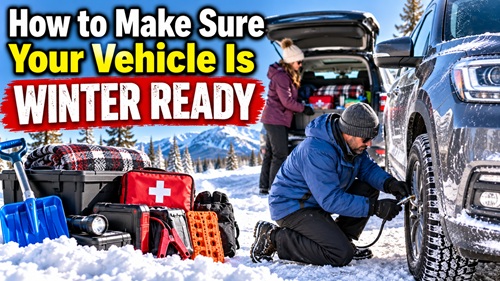
Winter driving can turn an ordinary trip into a serious situation much faster than most people expect. A dead battery in the driveway is an inconvenience. A dead battery on a rural road in freezing temperatures can become a completely different problem. The same goes for a flat tire, getting stuck in deep snow, sliding into a ditch, losing cell service or sitting for hours because an accident or storm has closed the highway.
Making a vehicle winter ready involves more than putting a blanket and flashlight in the trunk. There are really two parts to the job. The first is making the vehicle less likely to leave you stranded in the first place. The second is preparing yourself and anyone travelling with you to remain safe if the vehicle does stop moving. Both matter, and the best place to begin is with the vehicle itself.
Start With the Vehicle, Not the Emergency Kit
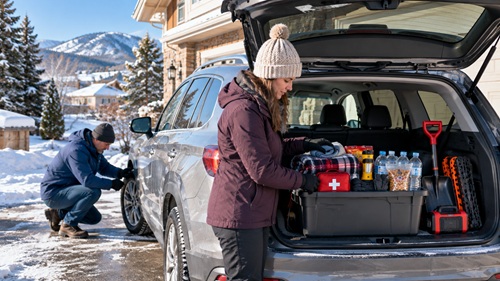
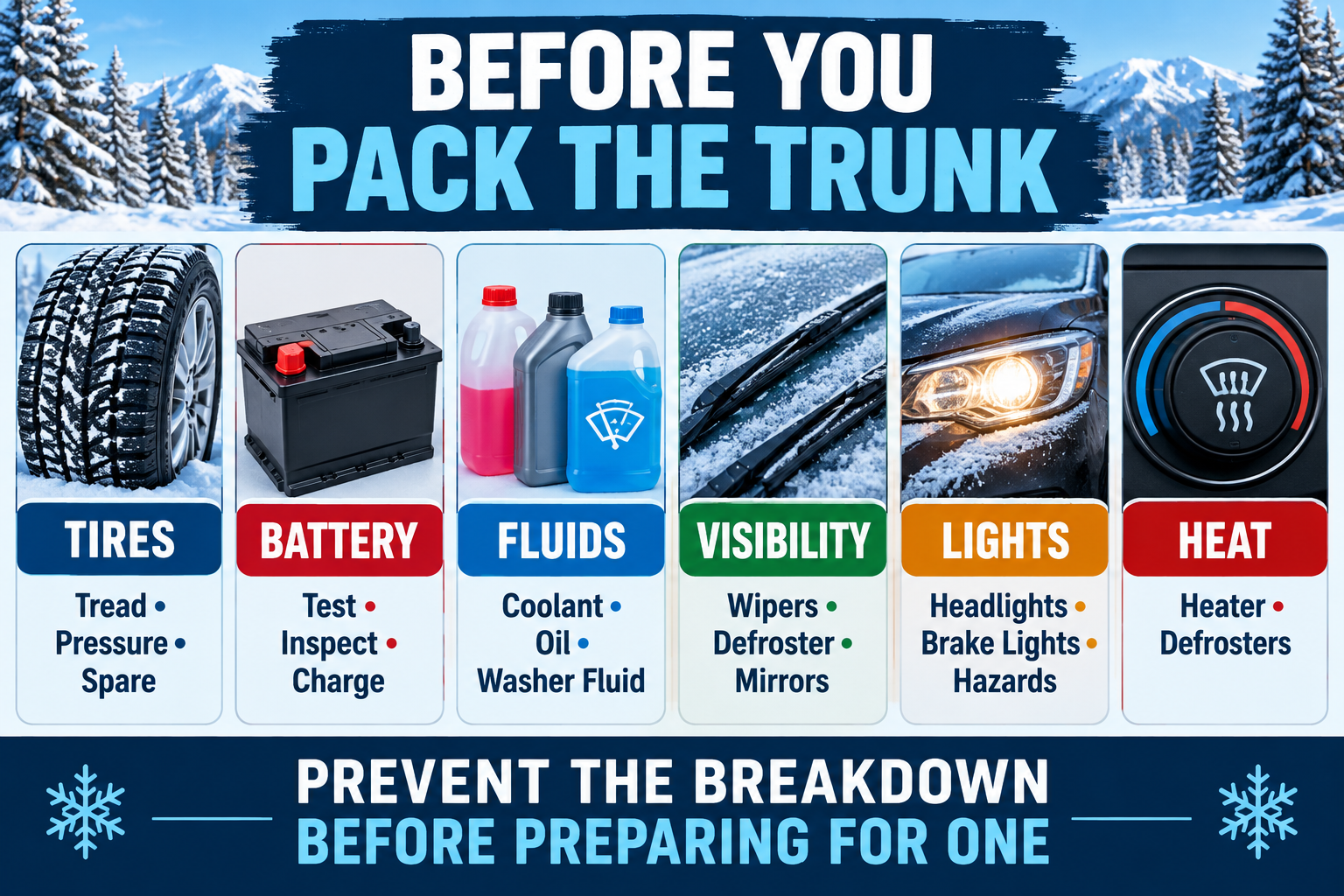
Before buying emergency equipment, make sure the vehicle is mechanically ready for colder weather. Tires, battery condition, fluids, windshield equipment, lights and heating systems should all be checked before winter conditions become routine. A little maintenance beforehand can prevent many of the situations that would otherwise force you to use your emergency supplies.
Tires deserve particular attention because they’re your connection to the road. Check all four for damage, uneven wear and adequate tread. Check tire pressure when the tires are cold and compare it with the vehicle manufacturer’s recommendation. Temperatures affect tire pressure, so something that appeared fine during warmer weather may need attention when temperatures drop.
If winter tires are appropriate for where you live and travel, don’t wait until the first major storm to think about them. Install them before severe winter driving becomes normal. The objective isn’t simply getting through snow. Good winter traction affects your ability to accelerate, steer and, most importantly, stop.
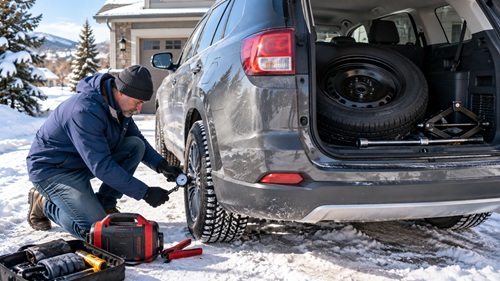
Don’t forget about the spare tire. It can sit untouched for years while slowly losing pressure. Check its condition and inflation, then locate the jack, lug wrench and any locking-wheel-nut key your vehicle requires. The original material also emphasizes checking the spare and practicing a tire change before you’re forced to learn in the snow.
Actually practice accessing the spare and finding the correct jacking points. You don’t necessarily need to perform a complete tire change every winter, but you should understand how the system works. A dark roadside during a snowstorm is a terrible classroom.
Make Sure the Battery Is Ready for Cold Weather
Cold weather has a way of exposing a weak battery. A battery that seemed perfectly adequate through summer can suddenly struggle when temperatures drop and the engine becomes harder to turn over.
If the battery is getting older or you’ve noticed slower starting, have it tested before winter. Look at the terminals for corrosion and make sure the connections are secure. Starting with a healthy battery is much better than depending on emergency equipment to compensate for one you already know is failing.
A portable jump starter adds another layer of protection. These units allow you to boost many vehicles without needing another driver and can often provide backup power for phones and other small electronics as well. The source material recommends keeping an emergency power pack available and checking its charge regularly during winter.
The important part is maintaining it. A booster that hasn’t been charged for eight months isn’t much of an emergency plan. Put electronic emergency equipment on a regular inspection schedule and follow its manufacturer’s temperature and storage recommendations.
Visibility Matters More Than People Realize
Winter creates difficult visibility from several directions at once. Snow, freezing rain, road spray, darkness and dirty windshields can make driving difficult even when the vehicle itself is functioning perfectly.
Inspect the windshield wipers and replace them if they’re damaged or leaving streaks. Fill the windshield-washer reservoir with fluid suitable for the temperatures you expect to encounter. Check the defroster and heater before you actually need them, and make sure the rear-window defroster works if your vehicle has one.
Walk around the vehicle and test the headlights, high beams, brake lights, turn signals and hazard lights. Clear lenses matter too. A perfectly functioning light covered in snow isn’t doing much for you.
These checks aren’t exciting preparedness projects, but that’s exactly the point. Good preparedness often comes down to dealing with ordinary problems before they become emergencies.
Prepare for Losing Traction
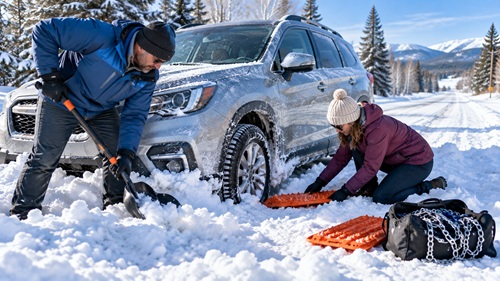
Eventually almost every winter driver encounters a situation where the tires can’t find enough traction. Sometimes the vehicle isn’t seriously stuck. A relatively small amount of packed snow underneath the vehicle or around the drive wheels can be enough to stop progress.
A sturdy compact shovel is one of the most useful pieces of winter vehicle equipment. It can clear snow from around the tires, underneath the vehicle and along the path you’re trying to follow.
Traction mats or other appropriate traction aids can also help when tires are spinning on snow or ice. What works best will depend on your vehicle and where you drive, but whatever you carry should be something you’ve actually examined and understand how to use.
If tire chains or other traction devices are appropriate or legally required on routes you travel, make sure they’re the correct size for your tires. More importantly, practice installing them at home. The original source makes this same recommendation because trying to figure out unfamiliar chains for the first time while kneeling beside a tire in blowing snow is unnecessarily difficult.
This illustrates a larger preparedness principle: if a piece of emergency equipment requires a skill, learn the skill before the emergency.
Prepare to Stay Warm Without Depending on the Engine
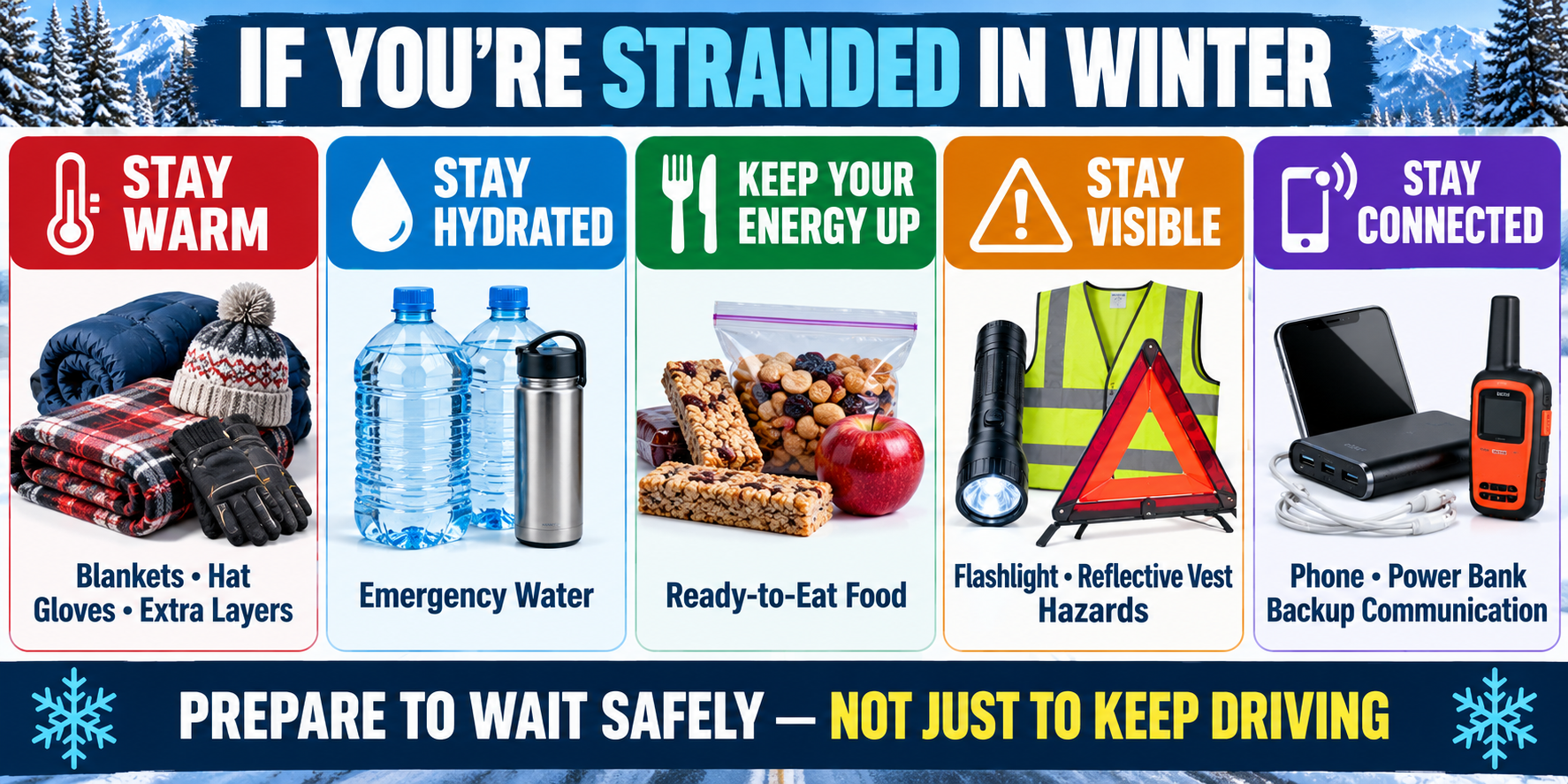
One of the most dangerous assumptions in winter travel is that the vehicle’s heater will always be available. If the engine stops running, fuel becomes limited or the exhaust system becomes obstructed, that source of heat may disappear.
Your winter kit should therefore allow everyone in the vehicle to retain body heat without depending entirely on the engine.
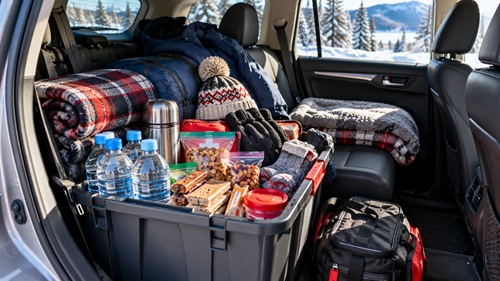
Keep warm clothing in the vehicle even if you normally leave home properly dressed. Extra gloves, warm socks, a winter hat and insulating layers don’t require much room. Clothing can become wet, and someone may eventually travel with you who isn’t dressed for an extended period outdoors.
Blankets or an appropriate sleeping bag provide another layer of protection. Wool blankets and emergency reflective blankets serve different purposes, so a combination can make sense depending on your climate and available space. The source material specifically identifies blankets as an important way to maintain warmth when stranded.
Plan for the number of people who regularly use the vehicle. One blanket in a five-passenger vehicle isn’t much of a cold-weather plan.
Water Still Matters in Winter
People naturally associate dehydration with hot weather, but water remains important in winter. Being stranded for several hours—or much longer during a severe road closure—doesn’t eliminate the body’s need for fluids.
The difficulty is storing water in an environment that may fall below freezing. Choose containers appropriate for the conditions they’ll experience and allow room for expansion when necessary. Inspect stored water periodically for cracked containers, leaks and contamination. The source similarly warns that vehicle water storage needs to account for freezing.
Don’t put water in the vehicle at the beginning of winter and assume it’s taken care of until spring. Vehicle emergency supplies live in a harsh environment and need periodic inspection.
Pack Food That Works When Everything Is Cold
Emergency vehicle food doesn’t need to be elaborate. Its job is to provide useful calories when a short delay turns into several hours or an overnight wait.
Choose foods that require no cooking and that you would actually eat. Trail mix, suitable energy bars, nuts, dried fruit and other compact shelf-stable foods can work well. The source recommends high-energy foods that can be eaten without preparation and reminds drivers to rotate them.
Temperature matters here too. Some foods become extremely hard when frozen, while others deteriorate after repeatedly cycling between hot and cold conditions. Vehicles can be freezing in winter and extremely hot in summer, which makes them poor places for forgotten food.
Treat vehicle food as a rotating supply. Inspect it seasonally, eat the older food while it’s still good and replace it with fresh supplies.
Carry First Aid, but Also Know How to Use It
A first-aid kit belongs in every winter vehicle, but simply owning one isn’t enough.
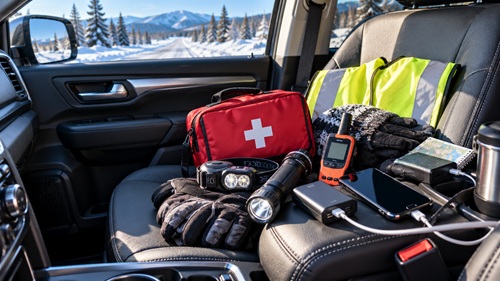
The kit should be capable of handling common minor injuries until professional care is available. The exact contents should reflect your level of training, the number of people normally travelling with you and any individual needs that should reasonably be accommodated.
The source recommends keeping a stocked first-aid kit and adding basic instructions when the user isn’t trained.
Learning basic first aid is one of those preparedness investments that follows you everywhere. Supplies are useful, but knowledge allows you to use those supplies correctly.
Lighting Should Be Within Reach
A breakdown that seems manageable during daylight becomes considerably more difficult after dark.
Keep a dependable flashlight in the vehicle and consider carrying a headlamp as well. A headlamp leaves both hands available for changing a tire, installing traction equipment, looking under the hood or helping someone who is injured.
Check the batteries periodically and carry suitable replacements if the device uses replaceable batteries. The source also recommends checking flashlight batteries as part of seasonal preparation.
Think about accessibility. If your flashlight is underneath three suitcases and a week’s worth of groceries, it isn’t where you need it. Some equipment belongs within reach of the passenger compartment rather than buried in the trunk.
Protect Your Hands
Working around a vehicle in winter is hard on your hands. Snow chains, jacks, tow equipment and shovels can all be cold, wet and difficult to handle.
Keep insulated work gloves in the vehicle. Ideally they should provide some protection from moisture while still allowing enough dexterity to operate your equipment. The original source recommends keeping an extra pair because gloves can become wet.
This is another item worth testing. Put the gloves on and see whether you can operate your flashlight, booster pack, jack and other equipment while wearing them.
Make Yourself Easy to See
If your vehicle is disabled beside a road, being visible can become just as important as staying warm.
Keep a high-visibility or reflective vest somewhere you can reach quickly. If you need to leave the vehicle near traffic, especially at night or during snowfall, reflective clothing gives approaching drivers a better opportunity to see you. The original material recommends keeping visibility equipment accessible rather than buried underneath other supplies.
Appropriate roadside warning equipment can add another layer of visibility where safe and suitable to use.
The goal is simple: don’t assume drivers can see you just because you can see their headlights.
Have More Than One Way to Communicate
For most people, a cellphone will be the primary way to request assistance. Start every winter trip with a charged phone and keep the appropriate charging cable in the vehicle.
A portable power bank or properly maintained jump starter with USB charging can provide backup power if the vehicle cannot.
Remote travel creates another problem: sometimes the phone works perfectly but there’s simply no cellular coverage.
If you regularly travel beyond normal coverage, consider whether another communication method is appropriate for your situation. Satellite messengers and similar devices can provide another option in remote areas. The source also identifies communications as an important part of winter vehicle preparation, particularly outside normal cellular coverage.
Preparedness doesn’t mean carrying every communication device available. It means knowing where your normal system stops working and deciding whether you need a backup.
Add the Small Things That Solve Common Problems
Once the major needs are covered, several inexpensive items can make a winter kit much more useful.
An ice scraper and snow brush should be standard equipment. Hand warmers can provide additional warmth. Basic tools and duct tape may help with minor problems. Appropriate traction equipment can help when tires can’t find grip. A properly rated recovery or tow strap may be useful in suitable circumstances if you understand its limitations and safe use.
The source suggests many of these as useful additions beyond the core winter kit.
Avoid filling the vehicle with equipment simply because it appeared on somebody else’s survival checklist. Every item adds weight and takes up space. Ask what problem it solves, whether that problem is realistic for you and whether you know how to use the equipment safely.
Organize the Kit So You Can Actually Find Things
A trunk full of loose preparedness equipment isn’t the same thing as an organized emergency kit.
Use a sturdy tote, bag or vehicle organizer to keep related supplies together. Water and food can occupy one area, vehicle-recovery equipment another, while first aid, lighting and communications should remain particularly easy to access.
Some items shouldn’t be in the trunk at all. Consider keeping a flashlight, warm clothing, communication equipment and high-visibility gear where they can be reached from inside the passenger compartment.
Imagine being stuck at night during heavy snowfall. The vehicle is tilted into a snowbank and one door won’t open. Now ask yourself where your flashlight, coat, gloves and phone charger are.
That thought exercise often reveals whether your kit is actually organized for an emergency or merely stored for one.
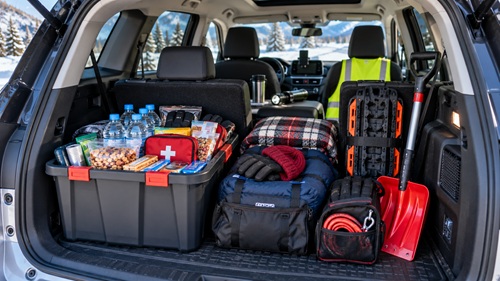
Know What to Do if You’re Stranded
Equipment is only part of winter preparedness. Your decisions after becoming stranded can matter just as much.
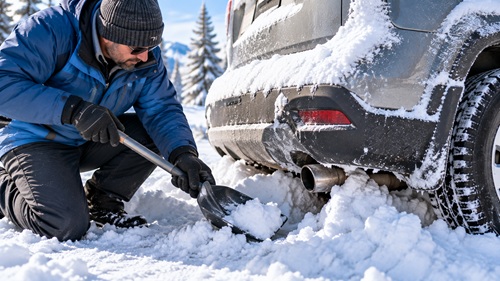
If you’re stuck in snow and running the engine for heat, pay attention to the exhaust area. Snow can accumulate around the vehicle, particularly during heavy snowfall or drifting conditions. Keeping the exhaust outlet clear is important because carbon monoxide is dangerous and cannot be reliably detected by smell.
This gives the shovel another purpose beyond getting unstuck. It can also help keep important areas around the vehicle clear while you’re waiting.
Don’t automatically assume that walking away from a stranded vehicle is the best option either. Weather, distance, clothing, terrain, traffic and whether rescuers know your location all affect that decision. In many situations the vehicle provides shelter and is much easier for rescuers to locate than a person walking through snow.
The important lesson is to think before acting. A mechanical problem doesn’t need to become a second emergency because of a rushed decision.
Do a Quick Check Before Longer Winter Trips
You don’t need to conduct a full vehicle inspection every time you drive to the grocery store, but longer trips, remote travel and approaching storms deserve a little more attention.
Walk around the vehicle. Look at the tires. Make sure snow and ice are cleared from the windows, mirrors, lights and other areas needed for safe operation. Check that you have adequate fuel or vehicle range for the trip and possible delays.
Make sure your phone is charged and your winter kit is actually in the vehicle.
Check weather and road conditions before leaving. If you’re travelling somewhere remote, tell someone where you’re going, the route you expect to use and approximately when you expect to arrive.
These simple actions create additional layers of protection without requiring expensive equipment.
Maintain Your Winter Kit Throughout the Season
A winter kit isn’t something you assemble once and forget.
Electronics discharge. Batteries deteriorate. Food gets eaten. Water containers leak. Gloves get borrowed. Flashlights migrate into the house. Someone uses the shovel and forgets to put it back.
Set a reminder to inspect the kit periodically throughout winter.
Recharge the jump starter and power banks. Test the flashlights. Check food and water. Make sure warm clothing is dry and still present. Inspect your first-aid supplies and verify that the tire equipment hasn’t disappeared underneath other cargo.
Ten minutes of maintenance can prevent a very unpleasant surprise months later.
Build the Kit Around Your Actual Winter
Not everyone needs exactly the same vehicle kit.
Someone commuting ten minutes through a city has different risks than someone driving mountain highways, logging roads or long stretches of rural highway. Temperatures also matter. Winter preparedness in a relatively mild coastal climate isn’t identical to preparing for prolonged temperatures well below freezing.
Your vehicle matters too. A small commuter car has different storage space and recovery requirements than a pickup truck or four-wheel-drive SUV.
Use preparedness lists as a starting point rather than a shopping order. Consider where you travel, how far you travel, who normally travels with you and how long it might realistically take for assistance to arrive.
That’s how a generic emergency kit becomes your winter vehicle system.
Don’t Leave Home Without It
A properly prepared winter vehicle doesn’t need to look like a rolling survival bunker.
It needs to start reliably, maintain traction, provide good visibility and contain enough equipment to handle the problems you’re realistically likely to encounter. More importantly, the people inside need to understand what they’ve packed and how to use it.
Winter preparation should focus first on preventing problems and then on managing the ones you can’t prevent. Tires, batteries, fluids and basic maintenance reduce your chances of becoming stranded. Warmth, water, food, lighting, first aid, communications and recovery equipment give you options when something still goes wrong.
The objective isn’t to prepare for every imaginable disaster. It’s to make sure a dead battery, flat tire, sudden snowstorm, highway closure or several hours stuck on a remote road remains a manageable problem rather than becoming a survival situation.
Preparedness Action Plan
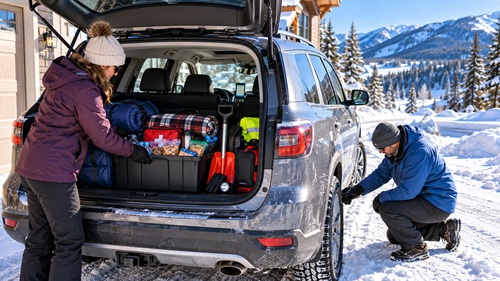
Before your next significant winter trip, spend some time with the vehicle while you’re safely at home. Check the tires and spare, locate the jack and tools, inspect the battery, check the appropriate fluids, test the lights, heater and defrosters, and make sure the windshield equipment is ready for freezing conditions.
Then inspect your winter supplies. Make sure you have a way to stay warm, drinking water, ready-to-eat food, dependable lighting, first-aid supplies, communication and charging capability, visibility equipment and something appropriate for dealing with snow or loss of traction.
Finally, practice anything that requires a skill. Locate the vehicle’s jacking points. Learn how the booster pack operates. Try the traction equipment. Find the spare tire. Put on your winter gloves and see whether you can actually handle your equipment while wearing them.
Preparedness improves considerably when the first time you use something isn’t during the emergency.
Key Takeaways
Winter vehicle preparedness starts before you ever leave the driveway. A maintained vehicle reduces the likelihood of becoming stranded, while a well-designed emergency kit gives you options when prevention isn’t enough.
Focus on realistic winter problems: cold, darkness, poor visibility, loss of traction, dead batteries, flat tires, travel delays and loss of communication. Build your supplies around those problems, keep everything organized and maintain the kit throughout the season.
Most importantly, don’t just carry equipment. Know where it is, know what it does and know how to use it.
That’s what makes a vehicle truly winter ready.
© Prepping Communities. This content is for informational purposes only and not professional advice. Use at your own risk.
Terms | Privacy | Guidelines