

Coffee is one of those everyday supplies that can become surprisingly difficult to replace when transportation, stores, or supply chains are disrupted. Storing extra coffee helps, but stored supplies eventually run out. Another approach is learning how locally available plants can provide alternatives to some of the things a household normally purchases.
Chicory is one of those plants. The root of chicory can be harvested, cleaned, dried, roasted, ground, and brewed into a dark beverage with an earthy roasted flavor. It contains no caffeine, so it does not completely replace coffee, but it can provide a satisfying hot drink and can also be blended with regular coffee to make a limited supply last longer.
For preparedness purposes, the important lesson is bigger than finding a substitute for coffee. Chicory demonstrates how a common plant can become a renewable household resource when someone knows how to identify, grow, harvest, process, store, and use it.
Learning to Recognize Chicory
Chicory, Cichorium intybus, is a perennial plant related to dandelions and other members of the Asteraceae family. It develops a substantial taproot, which is the part used for making the roasted beverage. During flowering season, chicory is particularly noticeable because of its blue flowers. It commonly establishes itself in disturbed ground, open fields, and other areas where hardy plants thrive.
Knowing that description, however, is not enough to safely forage the plant. Wild plants should never be consumed based on a photograph or a single identifying feature. Learn what chicory looks like throughout its growth cycle and confirm identification with a dependable regional field guide or knowledgeable local source.
This is something worth practicing before an emergency. Stress and hunger are terrible conditions under which to learn wild-plant identification for the first time.

Where You Harvest Matters
Finding chicory does not automatically mean it should be harvested. Plants growing beside busy roads can be exposed to vehicle pollution and contaminated runoff. Plants near industrial properties, treated lawns, railway corridors, agricultural fields, or other questionable locations may have been exposed to herbicides, pesticides, or other contaminants.
Growing chicory yourself provides much greater control. You know the soil it grew in, whether chemicals were used around it, and exactly what plant you are harvesting. Cultivation also turns chicory from something you hope to find into a resource you deliberately maintain.
That is a much stronger preparedness position.
When to Harvest the Root
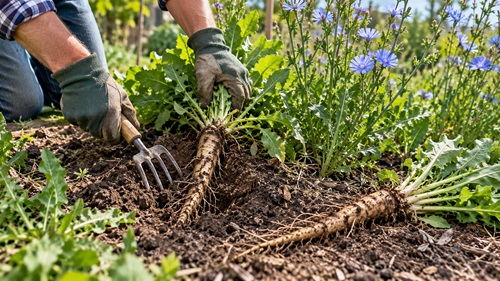
The root is the important part when making chicory coffee. Rather than simply pulling on the leaves, loosen the soil around the plant with a garden fork or small shovel. Chicory develops a taproot that can break underground, so working the surrounding soil loose first can help recover more of it.
Once harvested, remove the leafy portion and inspect the root. Healthy, solid root material is what you want. Badly damaged, rotten, moldy, or questionable portions should be discarded. Processing should never be viewed as a way to make spoiled or contaminated material safe.
How to Make Chicory Root Coffee
The complete process is straightforward, but each stage affects the final result. Your first batch should be treated as practice. Keep notes about drying time, roasting time, color, grind, and brewing strength so you can reproduce the results you like.
Step 1 — Harvest the Chicory Root
Harvest correctly identified chicory from clean, uncontaminated soil. Loosen the ground around the taproot and carefully lift the plant rather than pulling hard on the top.
Remove the leaves and inspect the root. Keep healthy sections and discard anything rotten, moldy, badly damaged, or otherwise questionable.
Step 2 — Wash and Scrub the Roots
Rinse away loose soil and briefly soak the roots if necessary to loosen stubborn dirt. Scrub the root thoroughly under clean water, paying particular attention to grooves and irregular surfaces where soil can remain trapped.
Once clean, pat the roots dry.
This step matters because anything left on the root will eventually be roasted and ground along with it.
Step 3 — Cut the Roots Into Small Pieces
Slice the clean roots into relatively small pieces. They do not have to be perfectly identical, but keeping them reasonably similar in size helps them dry and roast evenly.
Very large pieces may remain moist inside while smaller pieces begin to darken. Some older roots may also contain hard, woody portions that are difficult to process. These can be separated rather than included in the batch.
Step 4 — Dry the Chicory
Remove excess moisture before roasting. A food dehydrator works well, as does a low oven. The objective is to reduce the moisture inside the pieces so they can roast properly rather than steam.
In a situation without electricity, air drying may also be possible when conditions are warm, dry, clean, and well ventilated. Protect the pieces from insects, dust, animals, and moisture.
Do not rush this stage. Properly dried material is easier to roast and easier to store.
Step 5 — Roast the Chicory
Spread the dried chicory pieces across a baking sheet in a single layer.
Roast at approximately 300°F (150°C), checking and stirring the pieces periodically. Depending on their size and remaining moisture, the process can take roughly 60 to 90 minutes, sometimes longer.
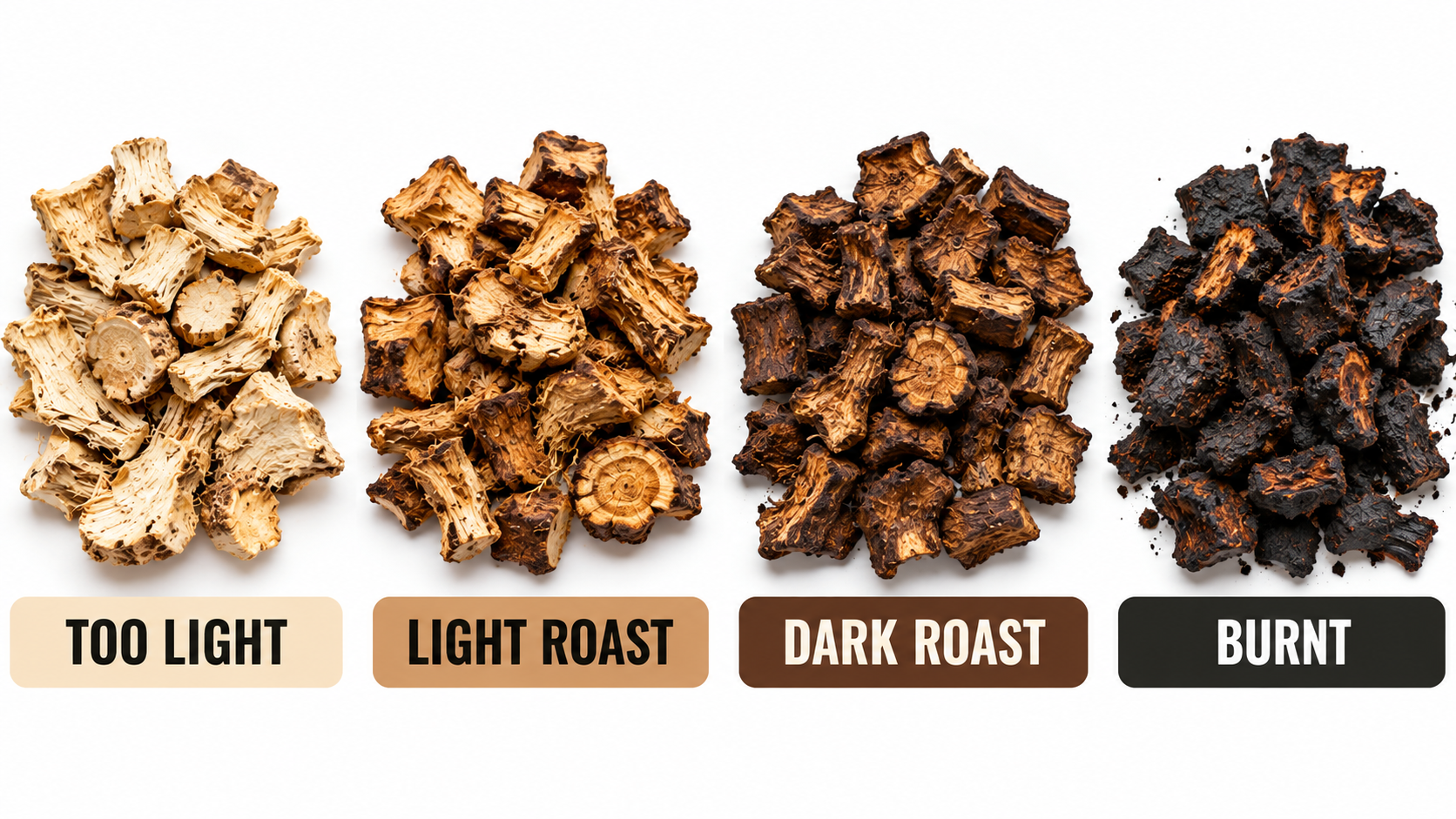
Watch the chicory rather than depending entirely on the clock. The pieces should gradually become brown and develop a stronger roasted aroma.
A lighter roast produces a milder result. A darker roast develops stronger roasted flavors, but pushing the process too far can burn the root and create an unpleasant bitterness.
The ability to recognize a good roast is something that improves with practice.

Step 6 — Cool Completely
Remove the roasted chicory from the heat and allow it to cool completely before grinding or storing it.
Do not place warm roasted chicory directly into a sealed container. Warm material can create condensation inside the container, reintroducing moisture to something you just worked to dry.
Step 7 — Grind the Roasted Root
Once completely cool, grind the roasted chicory using a coffee grinder or another grinder capable of handling hard, dry material.
You do not necessarily need to grind the entire batch immediately. Keeping some roasted root in larger pieces and grinding smaller quantities as required can be useful for longer-term storage.
For preparedness purposes, having a manual grinder is worth considering. An electric coffee grinder is not particularly useful during an extended power outage unless you also have a dependable source of electricity.
Step 8 — Brew the Chicory
Start with approximately 1 tablespoon of ground roasted chicory for an ordinary mug of hot water.
Allow it to steep and then separate the grounds using a French press, reusable coffee filter, fine strainer, or another suitable method. A drip coffee maker can also be used when electricity is available.
Taste the first batch before changing anything. If it is too weak, use more chicory or allow it to steep longer. If it is too strong or bitter, use less.
There is no reason every household needs to use exactly the same ratio. The useful skill is knowing how to make a cup that you actually enjoy.
Making Chicory Coffee Without Electricity
A preparedness skill should still work when the equipment normally associated with it does not.
Practice making chicory coffee without an electric coffee maker. Heat water using a safe backup cooking method, add the ground roasted chicory, allow it to steep, and filter out the grounds manually.
This simple exercise can expose weaknesses in your setup. You may discover that you need a manual grinder, kettle, reusable filter, French press, or better method of heating water.
That is exactly why these skills should be practiced before an emergency.

Stretching Your Coffee Supply With Chicory
Chicory does not have to completely replace coffee. It can be mixed with regular coffee to stretch a limited supply.
A useful starting point is approximately three parts coffee to one part chicory. From there, the amount of chicory can be increased or decreased according to taste.
This can be particularly useful during a prolonged disruption. Instead of consuming stored coffee at the normal rate until it suddenly disappears, adding chicory can make the supply last considerably longer.
There is also an advantage to introducing it gradually. People can become accustomed to the different flavor while ordinary coffee is still available rather than encountering an unfamiliar substitute when everything else is already disrupted.
Remember That Chicory Does Not Contain Caffeine
Although roasted chicory can provide some of the flavor and routine associated with coffee, it does not provide caffeine.
That distinction is important for people who consume coffee every day. Suddenly stopping substantial caffeine intake can result in headaches, fatigue, irritability, and difficulty concentrating.
Someone concerned about dependence on coffee during an emergency should therefore think about two separate problems. One is having something enjoyable to drink when coffee becomes unavailable. Chicory can help with that. The other is dependence on caffeine itself. Chicory does not solve that problem.
Preparedness includes recognizing dependencies before they become vulnerabilities.
Storing Roasted Chicory
Completely dried and roasted chicory should be stored in clean, airtight food-safe containers away from moisture, heat, and direct light. Label the container with its contents and processing date so older supplies can be used first.
Keeping at least some chicory as larger roasted pieces rather than immediately grinding everything can also be useful. Grind what you expect to use and leave the remainder protected until needed.
Stored chicory should still be inspected periodically. If moisture, mold, pest activity, unusual odors, or other signs of deterioration appear, discard it.
Long storage life never replaces proper inspection.
Growing Your Own Supply
Foraging is useful because it teaches people to recognize resources already growing around them. Growing chicory provides something even more valuable: predictability.
A few plants established on your property allow you to learn how chicory grows, what it looks like during different seasons, how large its roots become, and when harvesting works best in your climate.
You can also harvest part of the crop while maintaining plants for future production.
This is how preparedness gradually moves beyond stockpiling. Instead of storing only finished products, the household develops the ability to produce some of those resources again.
Important Safety Considerations
Chicory contains inulin, a type of fiber that some people tolerate better than others. Consuming a large amount when you are not accustomed to it may cause gas, bloating, or digestive discomfort. Starting with a small amount allows you to determine how your body responds.
People with known sensitivities to plants in the Asteraceae family should use additional caution. Pregnancy, existing health conditions, medications, or unusual reactions are also good reasons to speak with an appropriate healthcare professional before making chicory a regular part of the diet.
Most importantly, never consume wild chicory unless the identification is certain and the harvesting location is safe.
Natural does not automatically mean harmless.
Build the Skill Before You Need It
The best time to make your first batch of chicory coffee is when you still have regular coffee sitting beside it.
Harvest or obtain a small amount of chicory root and work through the entire process. Clean it, cut it, dry it, roast it, grind it, and brew it. Make another batch and change the roast slightly. Try different brewing strengths. Mix some with ordinary coffee.
Then make a cup without using electricity.
Write down what worked.
Those notes are valuable because they transform general information into household knowledge. Instead of trying to remember instructions years later, you have a process that you have already tested.
That is the real preparedness value of chicory. The root itself is useful, but knowing how to turn it into something useful is far more important.

Preparedness Action Plan
Determine whether chicory grows naturally in your area or whether it can be cultivated on your property. Learn to identify the plant accurately using a dependable regional reference before attempting to forage it.
Grow or harvest enough root for a small experimental batch. Work through the entire process from cleaning to brewing and record your drying method, roasting time, preferred roast level, grind, and brewing ratio.
Once you have a recipe you like, prepare another cup without relying on grid electricity. Confirm that you have a manual grinding method, safe way to heat water, and reusable filtering method.
Finally, consider growing a small renewable supply and storing some properly dried or roasted root alongside your other preparedness foods.
The objective is not simply to have chicory.
The objective is to know how to use it.
Key Takeaways
Chicory root can be turned into a useful caffeine-free roasted beverage using relatively simple equipment and techniques. It can be consumed on its own or mixed with coffee to make a limited coffee supply last longer.
The complete skill involves more than brewing. Safe identification, clean harvesting locations, proper washing, drying, roasting, grinding, storage, and preparation all matter.
Chicory does not replace caffeine, and individual tolerance should be established before it becomes part of an emergency food plan.
Most importantly, practice the entire process while normal supplies are available. A plant becomes a preparedness resource only when someone knows how to reliably turn it into something useful.
© Prepping Communities. This content is for informational purposes only and not professional advice. Use at your own risk.
Terms | Privacy | Guidelines