
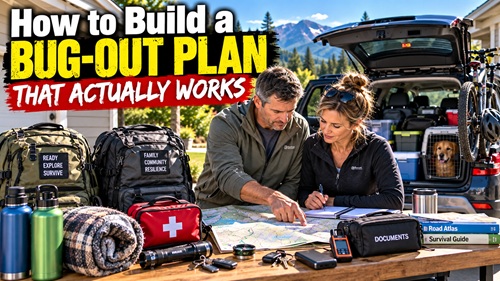
A bug-out bag is easy to understand. You put emergency supplies into a backpack, keep it somewhere accessible, and grab it if you need to leave. But the bag is only a small part of actually getting yourself and your household to safety. The harder questions begin after you walk out the door. You need to know where you are going, how you will get there, what would cause you to leave in the first place, and what you will do when the plan does not unfold the way you expected.
For Prepper Offline, bugging out should be treated as a practical evacuation skill rather than an adventure into the wilderness. In most situations, the objective is simply to move from a location that has become dangerous to one that is safer. Sometimes that might mean leaving ahead of a wildfire. It could mean getting away from flooding, a chemical release, prolonged loss of essential utilities, or another emergency that makes remaining at home unsafe. The important part is having enough preparation in place that leaving is a controlled decision rather than a last-minute reaction.
Know What Would Make You Leave
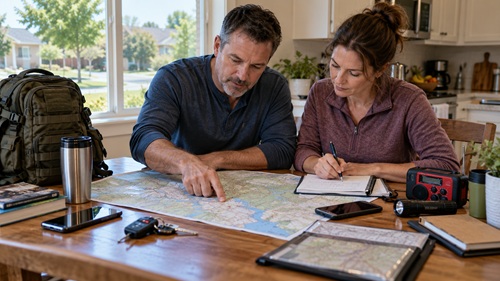
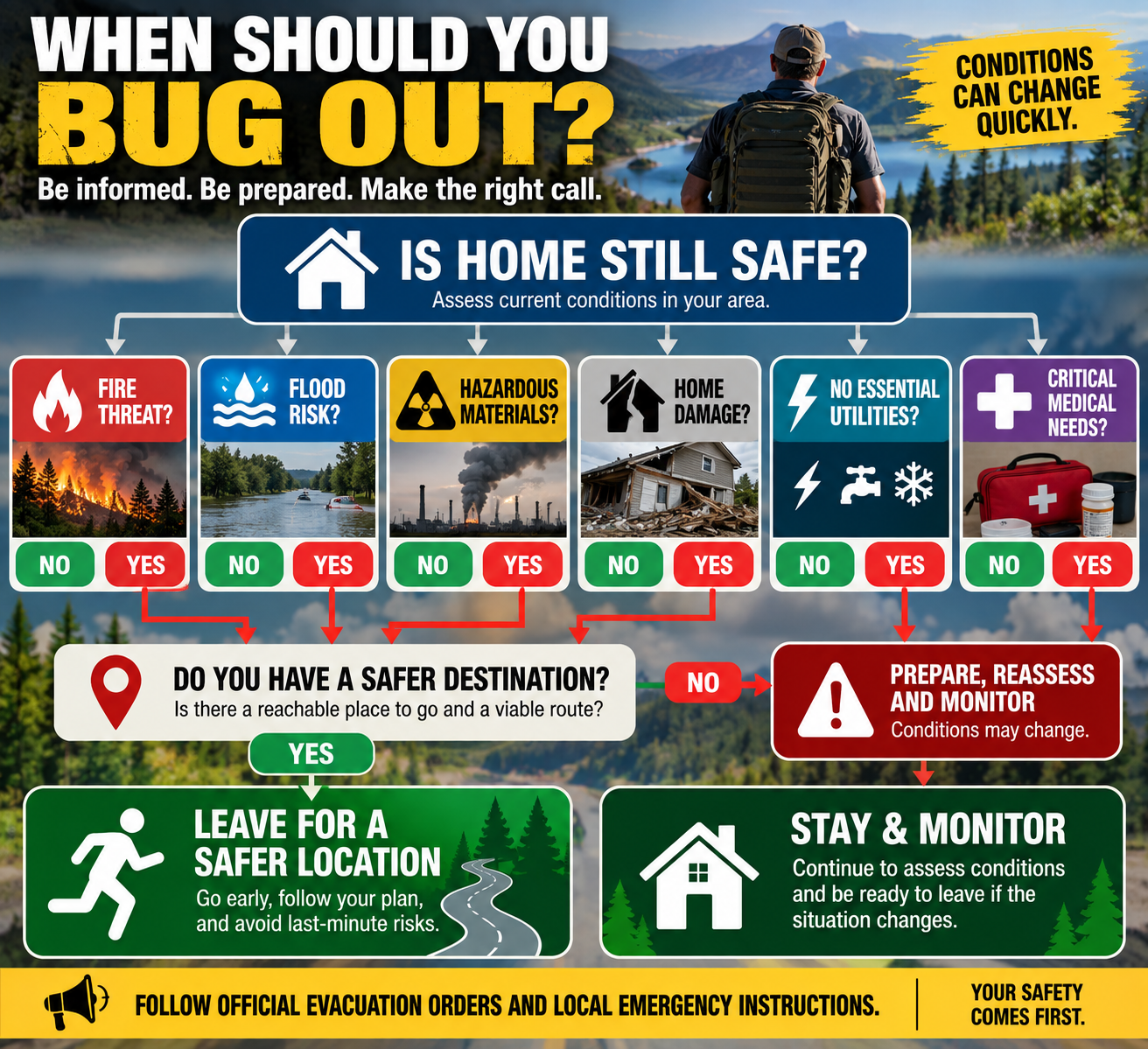
The first part of a bug-out plan should not be deciding what goes into your backpack. It should be deciding what circumstances would actually cause you to leave home.
Your home is usually where most of your preparedness resources are located. Food, water, clothing, tools, medical supplies, backup power, shelter and equipment are difficult or impossible to take with you. Leaving those resources behind should therefore have a clear reason. A wildfire approaching your community, rising floodwater, an evacuation order, structural damage, a hazardous-material release or dangerous loss of heating during severe winter weather could all change the balance between staying and leaving.
Think about the emergencies most likely to affect your own area and decide beforehand what conditions would make remaining at home unacceptable. These are your evacuation triggers. Establishing them while conditions are normal makes it much easier to recognize when the time has come to act.
Have Somewhere to Go
“Getting out of town” is not a destination. Neither is “heading into the mountains.” A usable bug-out plan identifies actual places where your household could go.
Your primary destination might be a family member’s home outside your immediate area, a trusted friend’s property, a second residence, campground, hotel or another established location. What matters is that the destination gives you a reasonable improvement in safety and provides somewhere you can actually stay.
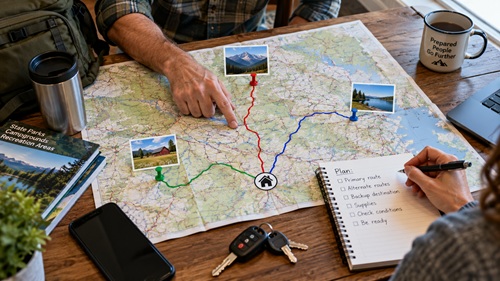
Have at least one alternative. A wildfire might block the road to your first destination. Flooding could isolate it. Your relatives might already have evacuated. A regional emergency might affect both locations. When possible, choose alternatives in different directions so one expanding emergency does not eliminate every option at once.
Record the addresses, telephone numbers, approximate distances and expected travel times. Determine whether pets can come with you and whether the destination could support your household for longer than originally expected. If you plan to stay with another person, discuss that arrangement before an emergency rather than assuming their home will automatically be available.
Build More Than One Route
Once you know where you are going, work out how you will get there. Your normal route is the obvious starting point, but it should not be your only option.
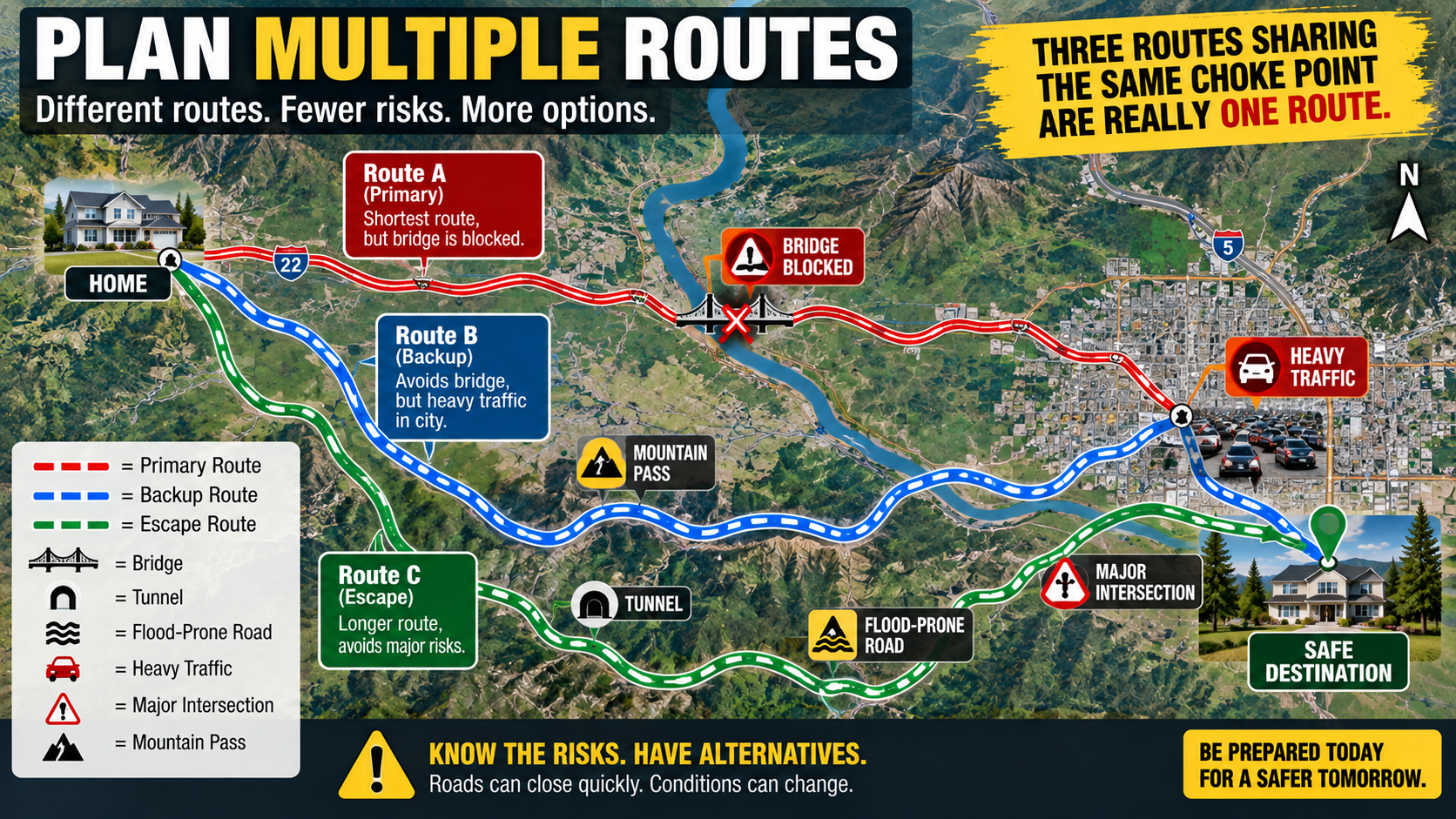
Look for alternative roads that avoid the same vulnerable points. Bridges, tunnels, mountain passes, ferries, major intersections and single-access highways can become serious bottlenecks during an evacuation. Three different roads that eventually cross the same bridge are not really three independent routes.
Keep paper maps and mark your destinations, primary route and alternatives. Look for places where flooding, wildfire, snow, traffic or road closures could cause problems. Mark fuel stations, hospitals, rest areas and possible stopping locations as well.
Then drive those routes under normal conditions. A road that looks useful on a map might contain a seasonal gate, poor winter maintenance, construction, difficult terrain or another problem you would rather discover now.
Do Not Depend Completely on GPS
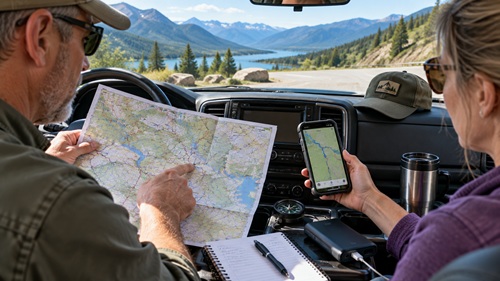
Phones and GPS navigation are extremely useful and should absolutely be part of an evacuation plan, but they should not be the only way you know where you are going. Batteries die, cellular networks become overloaded and road information can become outdated quickly during a major emergency.
Download offline maps and keep paper road maps in your vehicle. Mark your important locations directly on them. Make sure more than one person understands the route plan. If only one member of the household knows where everything is or how to navigate without a phone, the plan has an unnecessary weak point.
Prepare the Vehicle Before You Need It
For most households, the vehicle will carry far more of the evacuation load than any backpack. That makes basic vehicle reliability an important preparedness issue.
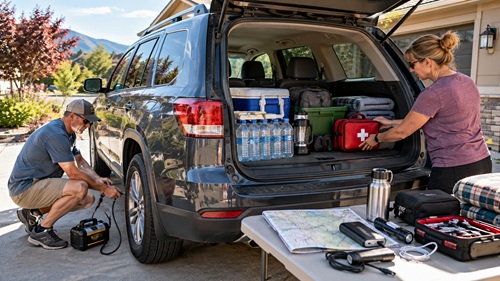
Keep up with ordinary maintenance. Tires, brakes, fluids, battery, lights and windshield wipers matter more during an evacuation than specialized survival accessories. If you would not trust the vehicle for a long trip today, do not assume it will suddenly become reliable during an emergency.
Fuel is equally important. Develop the habit of refueling before the tank becomes low. During periods of elevated wildfire, hurricane, winter-storm or other local risk, increase that margin. The worst time to discover you need fuel is when thousands of other people have reached the same conclusion.
Keep useful emergency equipment in the vehicle as well. Water, food, weather protection, first-aid supplies, flashlights, charging equipment, basic tools and tire-repair equipment can keep a minor roadside problem from becoming a much larger one.
Know What You Would Take
An evacuation is a bad time to walk around the house deciding what matters. Establish priorities beforehand.
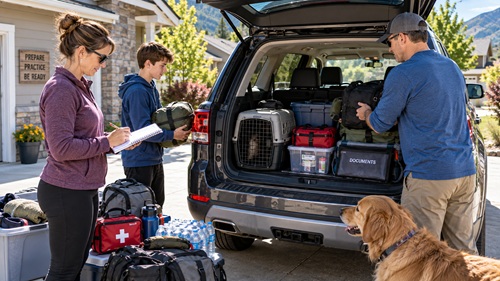
People and pets come first. Essential medications, identification, important documents, communication equipment, suitable clothing, water and critical supplies should follow. Additional food, tools and equipment can be loaded if circumstances, time and space permit.
Practice loading the vehicle once. You may discover that your planned equipment does not fit, the pet carriers consume far more space than expected, bags block visibility or a mobility device eliminates cargo space you thought would be available.
Finding these problems during a practice run gives you time to correct them.
Build the Bug-Out Bag Around the Trip
Once you understand the larger plan, the purpose of the bug-out bag becomes much clearer. The bag should keep you functional during movement and the first stage of displacement. It does not need to contain everything required for indefinite wilderness survival.
Water, portable food, weather-appropriate clothing, first aid, lighting, hygiene supplies, communication equipment, important documents and essential personal items deserve priority. The exact contents should reflect your climate, destination, transportation and household.
Keep the weight realistic. Put the finished bag on and walk with it. A pack that seems perfectly manageable while standing in the garage can feel very different after several kilometres. If you cannot comfortably carry it during normal conditions, remove unnecessary weight rather than assuming an emergency will somehow make carrying it easier.
Have a Plan for Vehicle Failure
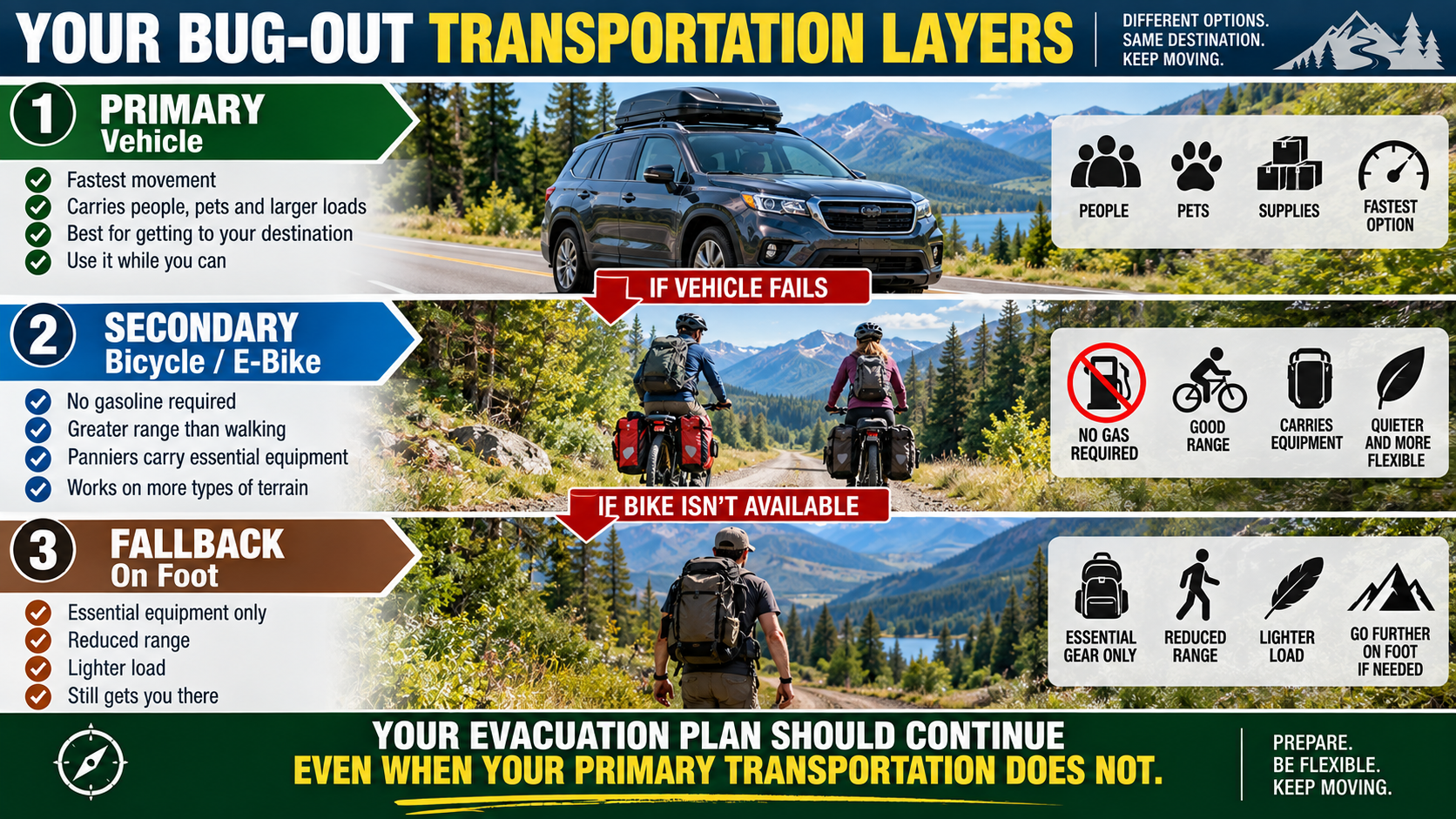
Now imagine that your vehicle stops working halfway to your destination. Continue planning from that point.
Could you walk to somewhere safe? Could another household member collect you? Could you switch to bicycles? Is there public transportation anywhere along the route? Could you remain safely with the vehicle temporarily? Most importantly, how much of the equipment packed into the vehicle could you actually carry?
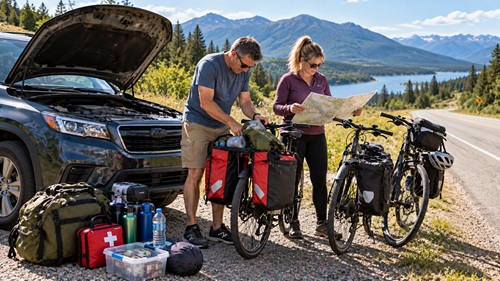
A bicycle can make a useful secondary transportation option because it requires no gasoline and allows most people to travel farther than they could reasonably walk. Racks, panniers and trailers can also carry supplies without putting all the weight on the rider. An e-bike can increase practical range while electrical charging remains available, although the plan should account for what happens when the battery is depleted.
You do not necessarily need a bicycle. You do need an answer to what happens if your primary transportation becomes unavailable.
Plan for Your Family Being Separated
Emergencies rarely begin when everyone is conveniently sitting together at home. Someone may be working, children may be at school and another family member may be shopping or traveling.
Establish meeting locations beforehand. One might be close to home for a localized emergency, while another should be outside the immediate area for a larger evacuation. Everyone capable of traveling independently should know these locations.
Decide who would collect children, assist older relatives or handle pets if the household is separated. Keep addresses, telephone numbers and instructions on paper as well as on phones.
These arrangements should be simple. A plan requiring everyone to remember twenty instructions during an emergency is unlikely to work well.
Give Everyone a Job
Several people trying to evacuate without assigned responsibilities can easily duplicate work while important tasks are forgotten. One person might gather medications and documents while another handles pets. Someone can check road conditions while another loads the vehicle.
Children can participate when their responsibilities are appropriate for their age. Their job might simply be putting on shoes and a jacket, getting their personal bag and staying with a designated adult.
The purpose is not to make evacuation rigid. It is to make familiar tasks happen automatically instead of everyone asking what they should be doing.
Put Medical Needs Near the Top
A forgotten survival gadget is inconvenient. Forgotten medication can become dangerous.
Keep an updated list of essential medications and make them one of the first things collected during an evacuation. Include prescription glasses, hearing aids and batteries, mobility equipment and other necessary medical devices.
If someone depends on electrically powered medical equipment, determine beforehand how that equipment could operate away from home. Test any battery, inverter, portable power station or adapter you intend to rely on. Finding out that the connector does not fit after the electricity has failed is too late.
Build a Communication Backup
Cell phones should remain part of the plan because they continue working during many emergencies. Keep charging cables and portable power available, but prepare for service to become unreliable.
Write important telephone numbers on paper. Establish meeting locations and decide who everyone should attempt to contact if the household becomes separated. An out-of-area family member or friend can sometimes serve as a common contact point.
If radios are part of your plan, practice with them. Everyone who may need one should understand the basic controls, channels, range limitations and charging requirements before an emergency occurs.
Keep Documents Ready to Grab
An evacuation that was supposed to last one night can easily become several days or longer. Identification, insurance information, vehicle documents, prescriptions, emergency contacts and important medical information should be accessible without searching through filing cabinets.
Keep appropriate copies together in a protected pouch or folder. Digital backups provide another useful layer, but do not make internet access the only way to retrieve important information.
Keep some emergency cash with these preparations as well. Electronic payment systems depend on electricity and communications. Small denominations can be useful when card terminals, ATMs or banking networks are unavailable.
Include Pets in the Plan
Pets can turn an otherwise workable evacuation into chaos if their needs have been ignored.
Keep carriers, leashes, food, water containers, medication and necessary records accessible. Know whether your planned destinations accept animals. Practice putting pets into carriers before an emergency.
Large animals and livestock require much more preparation and may require earlier evacuation because transportation takes longer and options disappear quickly.
Run a Ten-Minute Evacuation Test
One of the most useful things you can do is also one of the simplest.
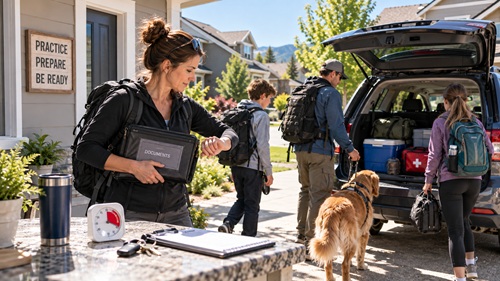
On an ordinary day, pretend you have ten minutes to leave. Do not arrange everything beforehand. Start from normal household conditions.
Gather the people, pets, bags, medications, documents and essential supplies. Load the vehicle. When the ten minutes are over, stop and look at what happened.
Notice what you forgot, what nobody could find, what took too long and what did not fit. Check whether passengers can sit safely, important supplies remain accessible and the driver still has clear visibility.
The objective is not to prove how quickly you can evacuate. The objective is to discover problems while those problems do not matter.
Fix them and try again later.
Test the Actual Route
Eventually, take the exercise farther and drive to your planned destination. Use the primary route and test an alternative on another occasion.
Pay attention to travel time, fuel consumption, difficult intersections, cellular dead zones, bathroom stops and places where you could safely pull over. If bicycles form part of your backup plan, ride them with realistic loads. If the plan assumes you can walk a certain distance, walk it with the equipment you would actually carry.
Testing turns assumptions into knowledge.
Keep the Plan Current
A bug-out plan is never permanently finished. Children grow, pets arrive, vehicles change, medications change, family members move and roads close. Wildfires, floods and new development can even change the physical environment around your routes.
Review the plan periodically and whenever something important changes. Check destinations, routes, contact information, medications, documents, clothing, batteries, vehicle supplies and bags.
Improving the plan does not necessarily mean buying more equipment. Often the most valuable improvement is discovering that something you already own is in the wrong place, too heavy, outdated or unfamiliar to the person who may need to use it.
Preparedness Action Plan
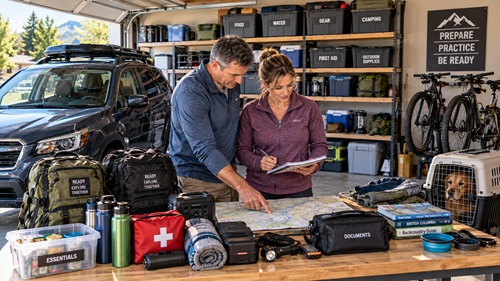
Create a simple one-page evacuation plan for your household. Write down the conditions that would cause you to leave and identify a primary and backup destination. Establish more than one route and identify any major choke points along them. Prepare your vehicle, gather important documents and medical information, establish family meeting locations and decide who handles the major evacuation responsibilities.
Once the basic plan exists, conduct a ten-minute evacuation test. Use what goes wrong during that test to improve the plan rather than simply adding more equipment.
Finally, imagine your primary vehicle is unavailable. Work through how your household would continue moving toward safety. If there is no practical answer, make alternative transportation or movement planning the next weakness you address.
Key Takeaways
A bug-out bag is only one part of evacuation preparedness. A workable plan also needs a clear reason to leave, a safer place to go, alternative destinations, tested routes, reliable transportation, communication, medical planning, documents, family responsibilities and backup options.
The most useful bug-out plan is not the one with the most equipment. It is the one your household has actually practiced and can still use when the first route is blocked, the phone has no signal, the vehicle will not start or the emergency develops differently than expected.
© Prepping Communities. This content is for informational purposes only and not professional advice. Use at your own risk.
Terms | Privacy | Guidelines