
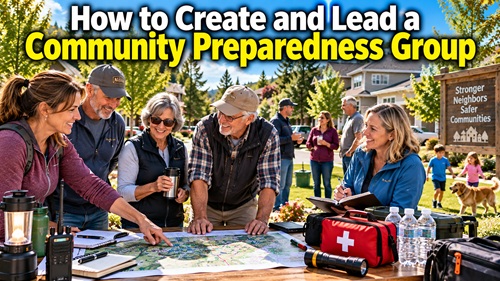
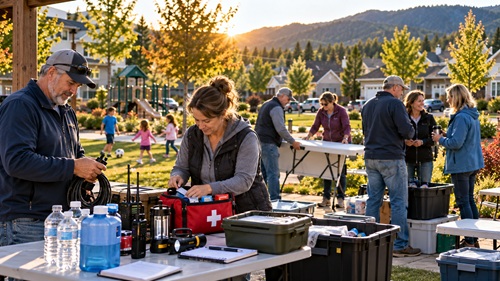
Preparedness becomes much stronger when it extends beyond a single household. One family may have stored food and water, another may have medical experience, someone nearby may understand radio communications, and another person may know how to repair vehicles, generators, plumbing, or electrical systems. A community preparedness group brings those individual abilities together so people are better able to help themselves and one another when normal services are disrupted.
A preparedness group does not have to become a formal survival organization. It could consist of a few households on the same street, families along a rural road, residents of an apartment building, members of a church, or people from a larger community who share an interest in preparedness. Community preparedness groups can serve several purposes, including sharing preparedness information, maintaining communication, and helping people who may require additional assistance during an emergency.
The strongest groups are usually built around relationships rather than fear. People need to understand why the group exists, what is expected of them, what information will remain private, and what everyone is trying to accomplish together. Supplies and equipment are valuable, but communication, trust, realistic expectations, practical skills, and consistent participation are what eventually turn a collection of individuals into a functioning preparedness community.
Start With a Clear Purpose
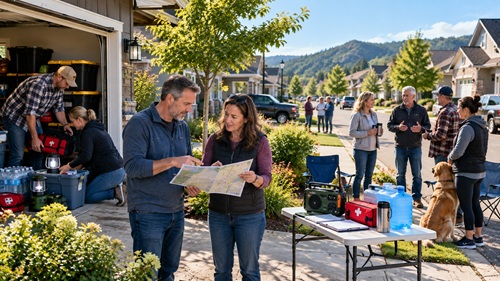
Before inviting people to join, decide what kind of preparedness group you are trying to build. A neighborhood group might concentrate on power outages, wildfire, evacuation, severe weather, first aid, communications, and checking on nearby residents. A rural group may place greater emphasis on generators, wells, livestock, fire protection, road access, equipment, and longer periods of self-reliance. A more advanced mutual-assistance group could eventually develop communication procedures, training requirements, equipment standards, and defined responsibilities.
There is no reason to create all of that immediately. A much better starting point is a purpose that everyone can understand, such as helping several neighboring households become better prepared for emergencies and establishing a reliable way to communicate and assist one another when necessary. A simple purpose gives the group direction without overwhelming people before relationships have had time to develop.
Step 1 – Decide Who the Group Is For
Begin by deciding what geographic or social area the group will serve. It might be one street, several blocks, an apartment complex, subdivision, rural road, church congregation, or small community. Defining this area helps determine who should be involved, what local resources may already exist, and which emergencies deserve the most attention.
Starting small often makes this easier. Ten households that actually know one another and train together can potentially accomplish more than a hundred people connected through an online group who have never met. The boundary does not need to become a rigid rule. It simply gives the group somewhere practical to begin.
Step 2 – Find Out What Already Exists
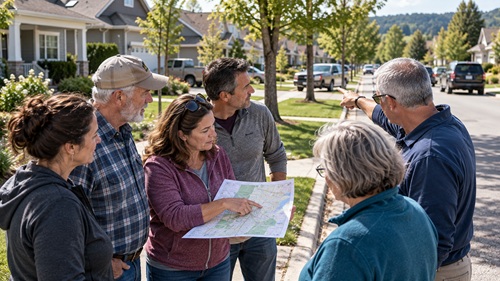
Before creating a new organization, find out what preparedness resources already exist locally. There may be neighborhood associations, volunteer fire departments, amateur-radio organizations, emergency-management programs, churches, search-and-rescue organizations, community emergency programs, or other volunteer networks already operating nearby.
These organizations may have emergency plans, training opportunities, experienced volunteers, communication systems, meeting facilities, or useful information that could help the new group. Checking first also prevents unnecessary duplication of something that may already be working well. The objective is not necessarily to join every organization available, but to understand the preparedness resources that already surround the community.
Step 3 – Invite a Few People First
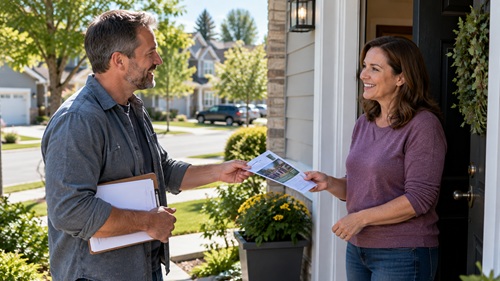
A preparedness group does not need dozens of members to become useful. Begin with several people who are interested, dependable, and willing to participate. For a neighborhood group, personal invitations can work particularly well because people are usually more comfortable when they know who is approaching them and why. The source material similarly recommends personal invitations for smaller groups while using broader outreach methods when organizing larger groups.
Keep the invitation straightforward. Explain that several local households are getting together to talk about emergency preparedness and how neighbors could help one another during situations such as an extended power outage, wildfire, severe storm, evacuation, or communications failure. There is usually no benefit in beginning with extreme scenarios. The first objective is simply to start a conversation.
Step 4 – Hold a Simple First Meeting
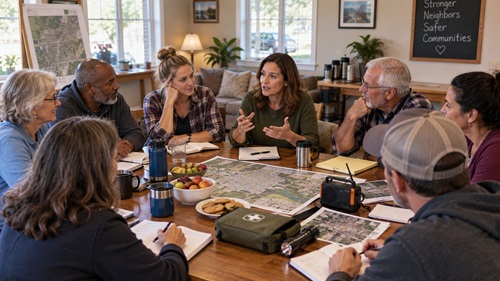
The first meeting should be comfortable and easy to attend. A home, community hall, church room, library meeting room, clubhouse, or similar location can work well. Choose somewhere that encourages conversation rather than making the gathering feel unnecessarily formal. Making the first meeting casual can help people feel comfortable talking openly and getting to know one another.
Avoid turning the first gathering into hours of presentations. Introduce everyone, explain why the group was started, and allow members to talk about the emergencies that concern them locally. Ask what they believe a preparedness group should accomplish. Listening at this stage is important because the priorities of the people who attend may be different from those originally imagined by the organizer.
Step 5 – Establish Expectations Early
One of the most important things a preparedness group can do is establish expectations while the group is still small. Groups do not always fail because people lack supplies or survival skills. Sometimes they fail because members have completely different ideas about what the group is supposed to be.
One person may think the group is primarily social while another expects intensive training. Someone may believe members should purchase specific equipment while someone else expects people to share supplies. Another person may assume that becoming the group leader gives them authority over everyone else. If those expectations remain unspoken, disagreements can grow until they damage the group.
Talk about these issues early. Members should understand whether participation is voluntary, how decisions will be made, how often the group expects to meet, what members are expected to contribute, and what the group will not require. Joining a preparedness group should not automatically create a claim on another household’s food, fuel, equipment, medications, property, or other personal resources. Cooperation works much better when boundaries are understood before an emergency occurs.
Step 6 – Learn What Everyone Can Contribute
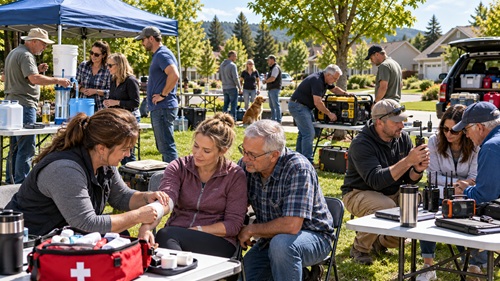
Preparedness capability involves much more than stored supplies. One member may know first aid while another repairs engines. Someone may garden and preserve food, while another understands radios, electrical systems, plumbing, construction, livestock, navigation, logistics, cooking, sanitation, cybersecurity, administration, or community organization. Members with useful skills can become valuable instructors, allowing knowledge to spread throughout the group rather than remaining concentrated with one person.
This should never become a competition over who is the most prepared. A retired nurse and an experienced mechanic bring different capabilities. So do gardeners, amateur-radio operators, carpenters, hunters, cooks, teachers, parents, and people who are simply very good at organizing things. Someone without a specialized skill today can also learn one tomorrow. The objective is to gradually increase the capability of the entire group.
Step 7 – Identify Local Risks Together
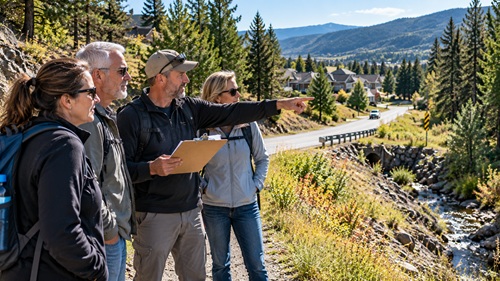
Once people become comfortable with one another, begin discussing the emergencies that are genuinely relevant to the community. Depending on location, these might include extended power outages, wildfire, flooding, winter storms, earthquakes, water interruptions, communications failures, evacuation, supply disruptions, or medical emergencies.
Do not try to prepare for everything simultaneously. Choose one realistic situation and work through it together. An excellent starting exercise might be an extended power and cellular outage lasting 48 hours. That single scenario immediately raises questions about communication, lighting, refrigeration, medical equipment, generators, cooking, water, elderly neighbors, security, and receiving outside information. Instead of discussing preparedness in the abstract, the group now has a specific problem to solve.
Step 8 – Identify People Who May Need Additional Help
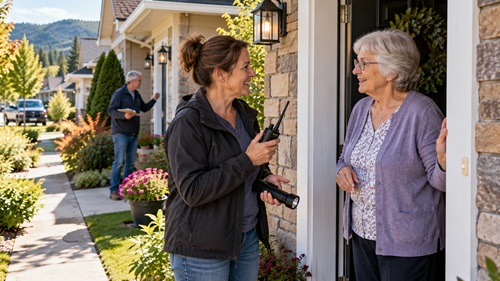
A community plan should recognize that not every household has the same capabilities. Older adults, people with disabilities, families with infants or young children, people dependent on medical equipment, and individuals with mobility limitations may experience very different difficulties during an outage or evacuation. Preparedness planning should account for those differences rather than assuming everyone can respond in the same way.
This does not mean creating a public database of everyone’s medical information. Privacy remains important. Instead, members can voluntarily establish simple arrangements, such as one household checking on a nearby neighbor during an extended outage. The goal is to strengthen individual preparedness while recognizing situations in which cooperation may be particularly valuable.
Step 9 – Build a Communication Plan
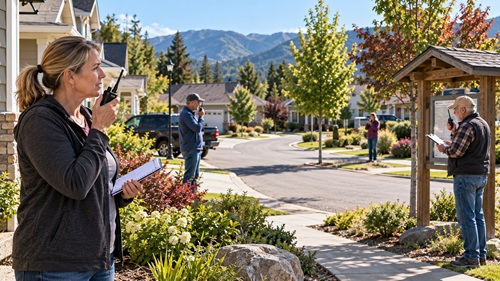
A preparedness group that cannot communicate during an emergency may quickly stop functioning as a group. Begin with ordinary contact information that members voluntarily agree to share, but also consider what happens if cellular service, internet access, or electricity is unavailable.
Depending on the group’s location, training, and legal radio options, backup communications might eventually include amateur radio, GMRS or other permitted radio services, designated meeting locations, predetermined check-in times, or simply having nearby members physically carry information between households. The technology matters less than having a procedure everyone understands.
For example, members might agree that during a prolonged communications outage they will check a designated radio channel at predetermined times. If radio communications are unavailable, they might meet at an agreed location. A simple procedure practiced beforehand is far more useful than expensive communications equipment nobody knows how to operate.
Step 10 – Create a Skills Inventory
Once trust develops, consider creating a voluntary inventory of capabilities rather than possessions. This distinction helps protect privacy while still giving the group useful information.
Instead of documenting that someone has hundreds of gallons of stored water, record that the person understands water filtration or plumbing. Instead of documenting who owns a generator, record who understands generator operation and small-engine maintenance. The purpose is to understand what the community knows how to do, not to create an inventory of everyone’s private supplies.
Over time, this also reveals capability gaps. Perhaps several members know first aid but nobody understands radio communications. That immediately identifies a useful future training subject.
Step 11 – Establish Simple Roles
As the group develops, responsibilities should gradually be distributed. One person should not become responsible for organizing meetings, maintaining communications, arranging training, contacting members, and handling every other task.
Different people can take responsibility for meeting coordination, communications, training, first-aid preparedness, documentation, neighborhood contact, or liaison with local emergency organizations. These responsibilities do not require impressive titles. They simply prevent every task from falling on the person who originally created the group.
Good leadership helps other people become capable. It should not create unnecessary authority or status.
Step 12 – Train Together
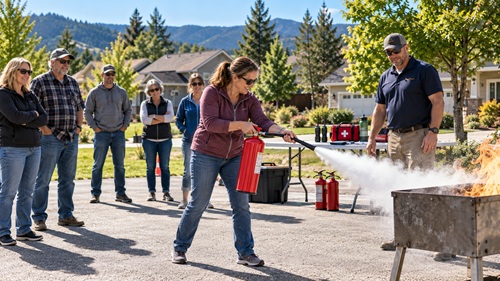
Preparedness meetings become far more useful when members actually practice skills. Instead of spending every gathering talking about disasters, devote some meetings to practical training. Members might learn how to operate radios, shut off household utilities, use fire extinguishers, filter water, provide basic first aid, cook without normal utilities, operate generators safely, read maps, preserve food, or manage emergency sanitation.
Whenever possible, allow knowledgeable members to teach. Teaching strengthens the instructor’s own understanding while spreading capability throughout the group. Over time, several people should become capable of performing important tasks. If only one member understands communications and that person is unavailable during an emergency, the communication plan has a serious weakness. Training creates redundancy.
Step 13 – Develop a Community Resource Map
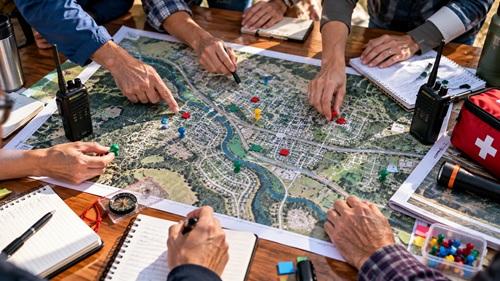
A simple resource map can help members understand their surroundings without documenting sensitive household information. The map might identify a community meeting location, evacuation routes, alternative road access, emergency facilities, public shelters, AED locations, potential emergency water sources, or other resources that would be useful during a disruption.
Be careful about what goes onto the map. Detailed information about private supplies, medications, firearms, valuables, or household vulnerabilities can create unnecessary security and privacy problems. The objective is to improve operational awareness, not create an inventory of private preparedness resources.
Step 14 – Create Simple Emergency Procedures
Preparedness groups do not need enormous emergency-management manuals. Begin with procedures short enough that people will actually understand and use them.
During an extended power outage, for example, members might first make sure their own households are safe, determine whether the outage is local or widespread, establish group communications, check on vulnerable neighbors according to previously agreed arrangements, identify urgent problems, monitor reliable emergency information where possible, and conserve limited resources such as fuel and battery power.
A short procedure that people understand and have practiced is more valuable than an elaborate document that sits unread on someone’s computer.
Step 15 — Practice With Scenarios
Scenarios expose weaknesses that ordinary conversations often miss. Imagine that a severe storm has eliminated electricity and cellular communications, several roads are blocked, and power restoration is expected to take three days. Have the group work through what happens next.
Members now have to consider how they will communicate, who checks vulnerable households, who has first-aid capability, what happens if someone requires emergency transportation, how generators will be operated safely, and how reliable information will reach the community.
Problems discovered during an exercise are useful. They reveal weaknesses while there is still time to correct them. The objective of training is not to prove that the plan is perfect. It is to discover where it is not.
Step 16 – Keep Meetings Useful
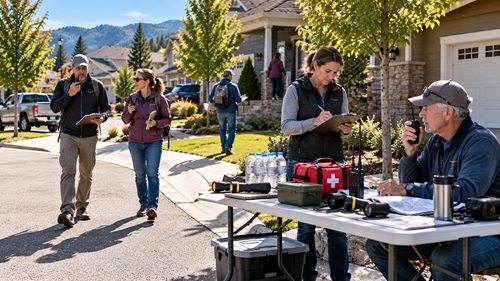
Preparedness groups can gradually become social gatherings where very little preparedness actually occurs. Social relationships are valuable and should be encouraged, but meetings should still accomplish something. Keeping a consistent schedule, maintaining focus, recording useful notes, encouraging participation, and respecting people’s time all help a group remain active.
A useful meeting might include a short update, one practical training topic, discussion of an upcoming activity, and some time for members to socialize. People are more likely to return when they leave believing that the meeting was worth attending.
Step 17 – Keep Personal Conflicts From Taking Over
Preparedness can bring together people with very different political, religious, social, and personal views. Unless the group was specifically created around one of those identities, keep the central mission focused on preparedness.
People do not need to agree about everything to clear a fallen tree, provide first aid, operate a radio, check on a neighbor, or help solve a water problem. A group becomes stronger when people learn to cooperate around shared practical objectives rather than allowing unrelated disagreements to dominate meetings.
Step 18 – Protect Member Privacy
Trust can disappear quickly when people believe private information is being shared unnecessarily. Avoid publicly distributing detailed inventories of members’ supplies. Do not collect sensitive information simply because it might someday be interesting, and do not publish photographs of someone’s preparedness supplies without permission.
Contact information, emergency arrangements, radio information, addresses, and other personal details should be handled carefully. Information should be collected only when it serves a legitimate preparedness purpose and members understand why it is needed.
Step 19 – Avoid Building the Group Around One Person
A resilient preparedness group should continue functioning even when its founder is unavailable. That means knowledge, responsibilities, and leadership need to spread throughout the membership.
More than one person should understand communications. Other members should know how meetings are organized. Important procedures should be documented rather than existing only in someone’s memory. Critical information should not exist only on one person’s phone or computer.
The strongest group is not one with an indispensable leader. It is one that can continue functioning when that leader is absent.
Step 20 – Always Decide What Happens Next
Every meeting should conclude with a clear idea of what comes afterward. The source similarly recommends deciding on next steps, scheduling the next gathering, and finding people willing to help with future activities.
The next meeting might focus on radio communications. The following month could cover first aid. Spring might include an evacuation exercise, summer an emergency-cooking demonstration, and autumn preparation for winter power outages. The exact subjects matter less than maintaining forward movement.
Small improvements accumulate. After a year, a group that began with several neighbors sitting around a kitchen table may have a communication plan, first-aid capability, emergency contacts, trained radio operators, evacuation procedures, practical skills, and people who genuinely know one another.
What Makes a Preparedness Group Last?
Equipment does not hold a group together. People do.
Members need to believe their time matters, their contributions are respected, and the group is accomplishing something useful. Leadership needs to listen as well as direct, and members should be encouraged to contribute their own ideas rather than simply being told what to do.
Attendance will probably fluctuate, particularly while the group is becoming established. The source material recommends beginning with realistic expectations and adjusting as the group develops. A small core of dependable participants is often more valuable than a large membership list containing people who rarely participate.
From a Preparedness Group to a Preparedness Community
There is an important difference between having a group and having a community. A group can exist because several names appear on a contact list. A community exists when those people know one another well enough to cooperate.
That takes time. People need to train together, solve problems together, share knowledge, occasionally help one another, and learn who can actually be depended upon. Trust cannot simply be declared at the first meeting.
As those relationships develop, preparedness gradually becomes less about organizing meetings and more about building shared capability. Members know who understands first aid, who can repair equipment, who can communicate by radio, who stays calm under pressure, and who will actually show up when something needs to be done.
That is when a preparedness group becomes genuinely resilient.
Preparedness Action Plan
Begin with a manageable group of people or geographic area where preparedness cooperation makes practical sense. Learn what emergency organizations and resources already exist, then invite several dependable people to an informal first meeting. Keep the initial objective simple and spend time understanding what members actually expect from the group.
As relationships develop, identify useful skills, discuss realistic local emergencies, establish basic communications, and begin practicing together. Gradually distribute responsibilities so the organization does not depend upon one person. Develop simple emergency procedures, test them through realistic scenarios, and improve them whenever weaknesses are discovered.
Protect privacy throughout the process. Focus on people’s capabilities rather than building detailed inventories of their possessions. Most importantly, continue developing relationships. A preparedness group becomes valuable when its members know one another well enough to communicate, cooperate, share knowledge, and solve problems together.
Key Takeaways
Community preparedness is ultimately about building local capability rather than creating a large organization. A handful of people who know one another, communicate well, possess complementary skills, and regularly practice together can become an extremely capable preparedness network.
Start small, establish expectations early, protect privacy, distribute responsibility, practice communications, teach practical skills, and use realistic scenarios to discover weaknesses. Keep meetings useful and allow the organization to develop naturally instead of trying to create an elaborate structure immediately.
When normal systems are operating, those relationships can make a neighborhood or community stronger. When normal systems are disrupted, the same relationships, skills, trust, and communication can become some of the most valuable preparedness resources available
© Prepping Communities. This content is for informational purposes only and not professional advice. Use at your own risk.
Terms | Privacy | Guidelines