
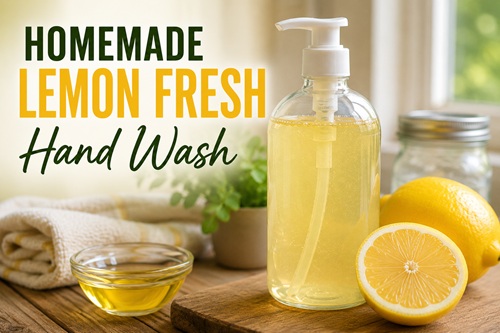
Keeping your hands clean is one of the simplest and most effective ways to help reduce the spread of dirt and germs, but that doesn’t mean you need to rely entirely on commercial products. Many people enjoy making their own liquid hand wash using a handful of familiar ingredients that are gentle on the skin while providing a fresh, clean feeling. This homemade lemon hand wash combines liquid castile soap with moisturizing ingredients and a bright citrus scent, creating an easy DIY alternative for everyday use.
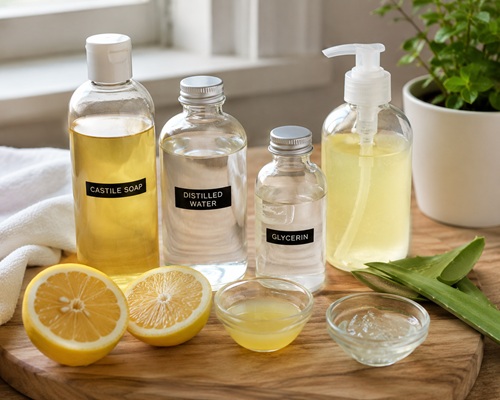
Liquid castile soap serves as the foundation of this recipe because it is a plant-based cleanser that produces a rich, gentle lather without many of the harsher detergents found in some commercial soaps. Distilled water helps achieve the desired consistency, while vegetable glycerin acts as a natural humectant, helping the skin retain moisture. Frequent handwashing can sometimes leave hands feeling dry, and glycerin helps reduce that effect. Aloe vera gel, while optional, provides additional skin-soothing properties that many people appreciate.
The refreshing lemon fragrance can come from either freshly squeezed lemon juice or lemon essential oil. Fresh lemon juice offers a natural citrus scent but has a much shorter shelf life because it contains organic material that can spoil over time. Lemon essential oil, on the other hand, provides a more concentrated aroma and generally offers better stability in homemade soap recipes. If using essential oils, only a few drops are required, and they should always be used according to the manufacturer’s recommendations.
Ingredients
- 1 cup liquid castile soap
- 1 cup distilled water
- 1 tablespoon vegetable glycerin
- Juice from ½ lemon or 10 drops lemon essential oil
- 1 teaspoon aloe vera gel (optional)
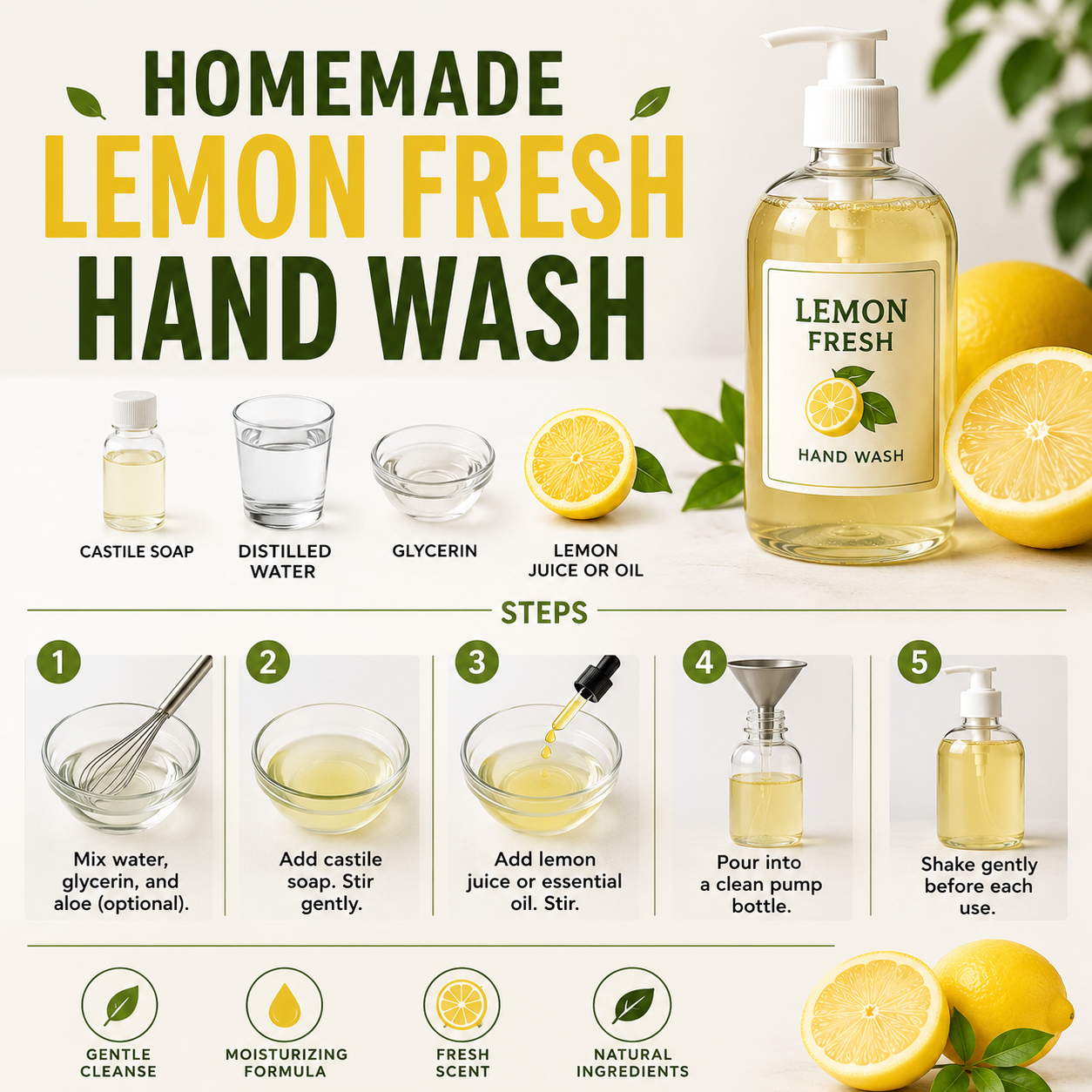
Preparing the hand wash requires only a few simple steps. Begin by combining the distilled water, glycerin, and aloe vera gel in a clean mixing container until thoroughly blended. Slowly stir in the liquid castile soap, mixing gently to minimize foaming. Finally, add either the lemon juice or the essential oil and stir just enough to evenly distribute the fragrance throughout the mixture.
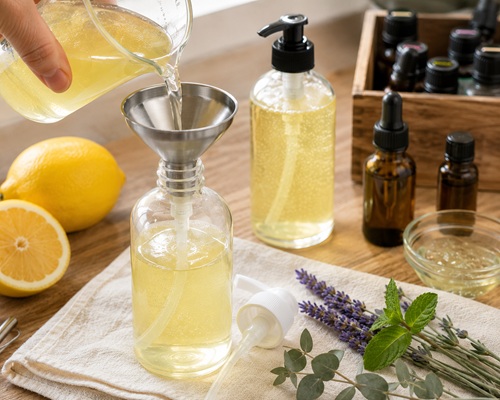
Once everything is mixed, pour the finished hand wash into a clean pump bottle using a funnel if necessary. Allow the mixture to settle for a few minutes before using it. Because homemade soaps contain fewer stabilizers than many commercial products, some separation may occur over time. If this happens, simply shake the bottle gently before each use.
One of the advantages of making your own hand wash is the flexibility to customize it. The amount of glycerin can be adjusted if you prefer a more moisturizing formula, or different essential oils such as lavender, peppermint, eucalyptus, or sweet orange can be substituted to create unique seasonal scents. Making small batches also helps ensure the product remains fresh while allowing you to experiment with different combinations.
As with any homemade product, cleanliness is important during preparation. Wash and sanitize all containers, utensils, and bottles before mixing the ingredients to reduce contamination. If using fresh lemon juice, consider refrigerating the finished soap and using it within a relatively short period. Recipes made with essential oils instead of fresh juice generally have a longer usable life, although they should still be monitored for changes in appearance or odor.
Homemade hand wash should never be considered a replacement for proper hygiene practices. Washing your hands thoroughly with soap and water for at least twenty seconds remains one of the most effective ways to remove dirt and many germs from the skin. Whether using a homemade or commercial soap, proper handwashing technique is what makes the greatest difference.
Preparedness Action Plan
Gather the ingredients needed to prepare a small batch of homemade lemon hand wash and keep them together as part of your household preparedness supplies.
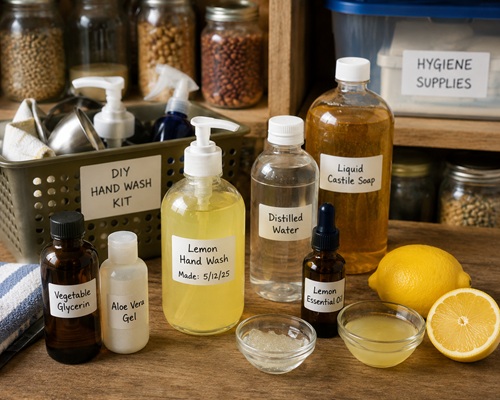
Practice making the recipe before you need it, label each finished bottle with the preparation date, and store extra ingredients in a cool, dry location. Having the knowledge and materials to produce everyday hygiene products can be valuable during supply shortages or when reducing trips to the store.
Why This Matters
Preparedness extends beyond storing supplies—it’s about developing practical skills that increase self-reliance. Learning how to make simple household products from common ingredients helps reduce dependence on commercially manufactured items while giving you greater confidence in caring for yourself and your family. Whether used every day or when store-bought products are unavailable, these skills become another layer of resilience that supports a more prepared lifestyle.
© Prepping Communities. This content is for informational purposes only and not professional advice. Use at your own risk.
Terms | Privacy | Guidelines