
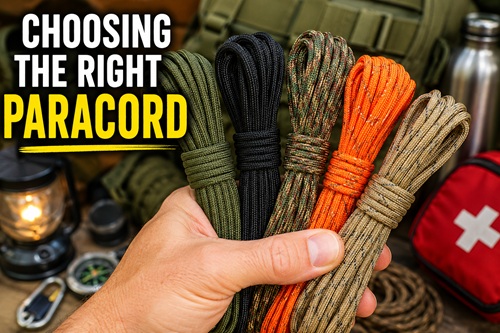
Choosing the Right Paracord: A Preparedness Guide
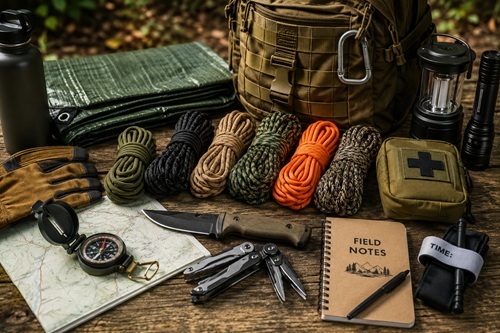
Every preparedness plan is built on a combination of knowledge, practical skills, and dependable equipment. While food, water, medical supplies, and shelter often receive the most attention, it is usually the smaller, less expensive items that quietly solve the greatest number of everyday problems. Paracord is one of those tools. It occupies very little space, weighs almost nothing, and costs very little compared to most outdoor equipment, yet it can perform an impressive variety of tasks both during routine activities and genuine emergencies. Its value does not come from being specialized. Instead, it comes from being adaptable.
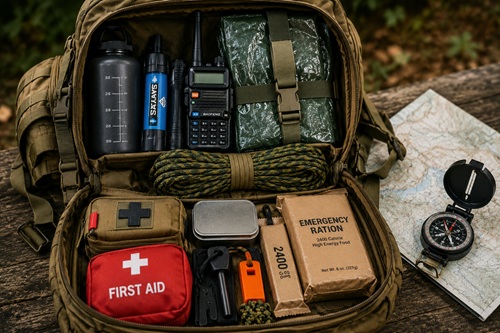
Many people purchase paracord because they have seen it recommended in survival guides or emergency kit checklists. A spool is tossed into a backpack or stored in a vehicle, where it often remains untouched for months or even years. While simply carrying paracord is certainly better than not having any cordage at all, preparedness goes beyond owning equipment. The real advantage comes from understanding why different types exist, knowing which one best fits your needs, recognizing its limitations, and gaining enough experience to use it confidently when unexpected situations arise.
One of the reasons paracord has remained popular for decades is that it bridges the gap between lightweight convenience and practical strength. It is capable of supporting countless everyday tasks without becoming bulky or difficult to carry. Whether you spend your weekends camping, maintain a rural property, enjoy hunting or fishing, or simply want to make your emergency supplies more complete, quality paracord deserves a place in your equipment. Like every preparedness tool, however, choosing wisely is just as important as carrying it.
Understanding What Makes Paracord Different
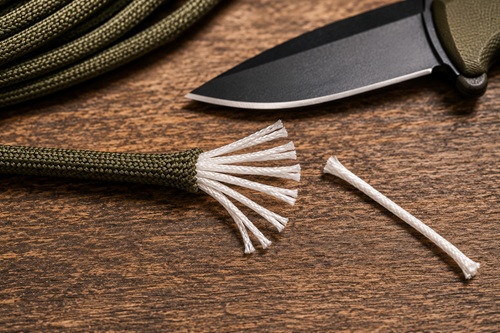
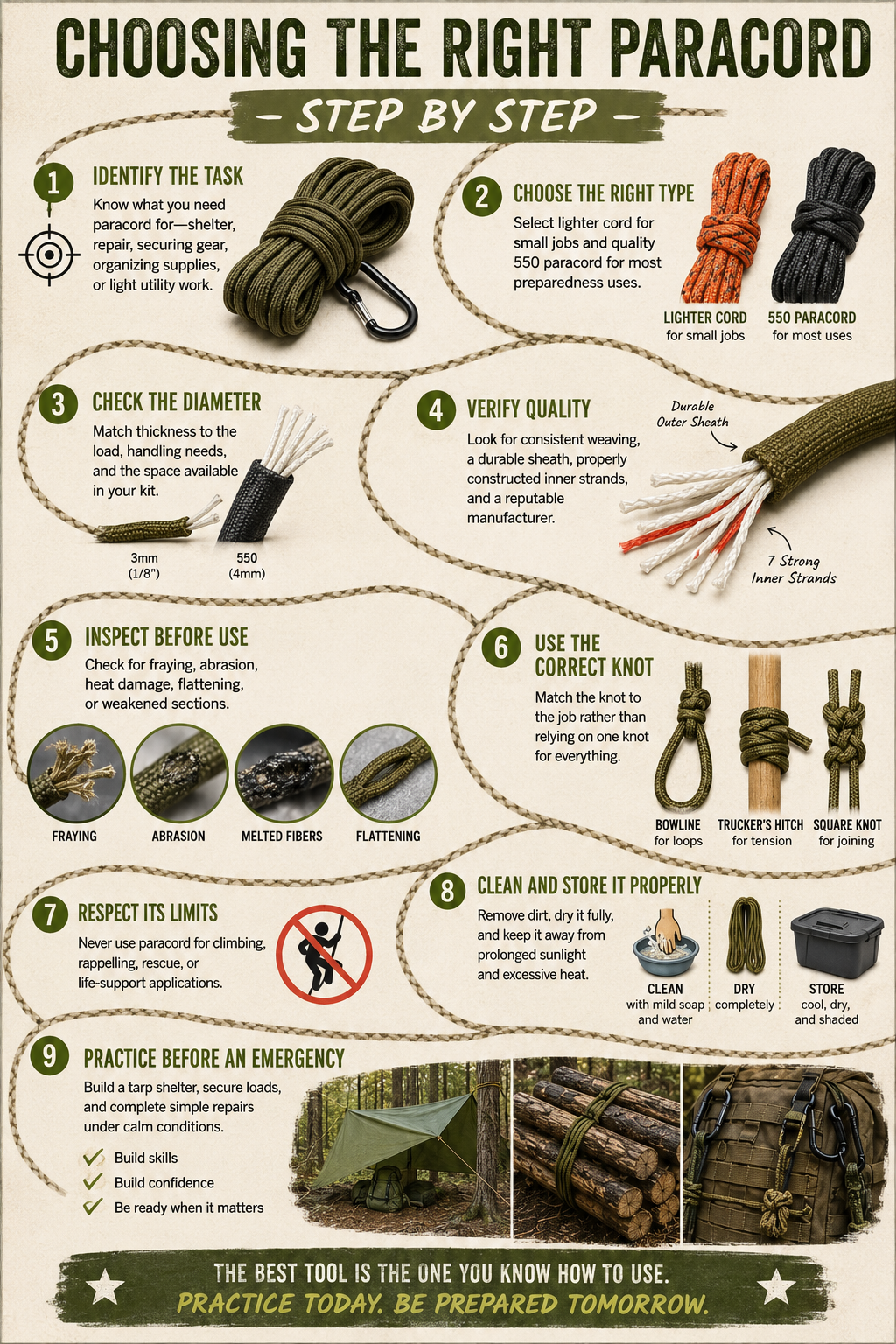
At first glance, paracord looks like little more than a thin nylon rope. That simple appearance hides a thoughtful design that has made it one of the most versatile pieces of outdoor equipment available. Most quality paracord consists of two primary components: a tightly woven outer sheath and several smaller strands protected inside that sheath. Together, these parts create a cord that combines flexibility, durability, and impressive strength while remaining easy to coil, store, and handle.
The outer sheath protects the cord from everyday wear while allowing it to bend easily around objects and hold knots securely. Inside, multiple smaller strands contribute much of the cord’s overall strength. These internal strands are one of the reasons paracord is so highly valued by experienced outdoorsmen. If finer cordage becomes necessary, they can often be removed individually and used for lighter-duty tasks.
This ability to transform one piece of cord into several smaller working strands dramatically expands its usefulness. Instead of carrying several different types of cordage, one length of paracord can provide heavy-duty rope for shelter building while also supplying finer strands for equipment repairs, tying fishing tackle, replacing broken drawstrings, repairing clothing, or completing countless small projects around camp.
Thinking of paracord simply as rope overlooks much of its value. It is better viewed as a compact cordage system capable of adapting to many different situations. That versatility explains why it continues to appear in emergency kits, bug-out bags, workshops, vehicles, and camping equipment throughout the world.
Understanding the Different Types
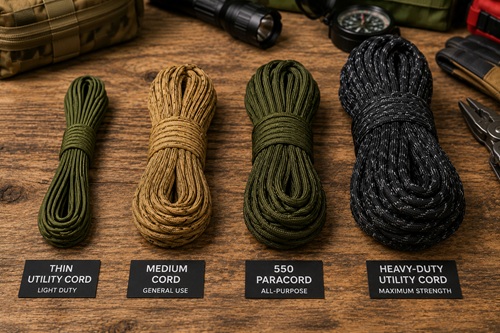
Not every length of paracord is manufactured for the same purpose. While many products look nearly identical on the shelf, important differences exist in strength, construction, and intended use. Understanding those differences allows you to purchase equipment that matches your actual needs instead of assuming that every spool offers identical performance.
Lighter versions of paracord are designed for simple utility tasks where compact size matters more than maximum strength. They work well for organizing gear, making lanyards, replacing zipper pulls, securing lightweight equipment, and completing everyday projects that place relatively little stress on the cord. Their smaller size makes them convenient to carry, especially when weight is a concern.
Medium-duty versions offer increased strength while maintaining excellent flexibility. These cords are suitable for many camping activities, securing equipment, building lightweight shelters, and performing general outdoor tasks where moderate loads are expected. For many casual outdoor enthusiasts, this level of cordage provides an excellent balance between portability and durability.
The version most commonly associated with preparedness is Type III, often referred to as 550 paracord. Its name comes from its approximate minimum breaking strength under laboratory testing conditions. Over the years it has become the standard recommendation because it combines dependable strength, manageable diameter, flexibility, and multiple inner strands without becoming unnecessarily heavy. For the overwhelming majority of preparedness situations, quality 550 paracord provides everything most people are likely to need.
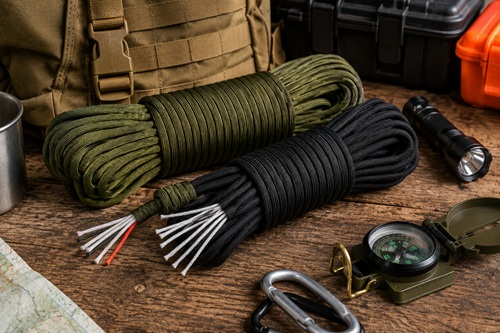
Heavier-duty versions are also available for applications requiring greater strength. These products generally contain additional internal strands and are designed for more demanding work. While they certainly have their place, they also occupy more storage space and add extra weight. Unless your activities regularly involve heavier loads, carrying larger cord simply because it has a higher strength rating often provides little practical advantage.
Preparedness is rarely about owning the biggest or strongest equipment available. It is about selecting tools that solve the widest variety of problems while remaining practical to carry and easy to use. Choosing paracord follows exactly the same principle.
Choosing the Right Diameter
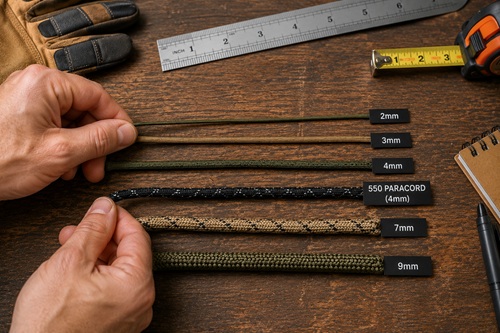
Strength ratings often receive most of the attention, but diameter deserves equal consideration. The thickness of a cord influences how comfortable it is to handle, how easily it ties secure knots, how much space it occupies in your pack, and how suitable it is for different types of work.
Very thin cord packs extremely well and weighs very little, making it attractive for lightweight travel or organizing small pieces of equipment. However, thinner cord can be more difficult to grip with cold hands or gloves, and it may become uncomfortable when placed under heavy tension because the narrow diameter concentrates pressure on a smaller area.
Medium-diameter cord, particularly standard 550 paracord, has earned its popularity because it performs well across an exceptionally broad range of situations. It remains flexible enough to tie reliable knots, stores compactly, handles comfortably, and provides more than enough strength for the vast majority of camping, preparedness, and outdoor applications.
Larger-diameter utility cord increases strength but also increases bulk and weight. In many cases, those tradeoffs are unnecessary. Carrying oversized cord for simple camp chores or emergency kits often provides little benefit while consuming valuable storage space that could be used for other equipment.
A useful way to approach this decision is to think about the tasks you expect your cord to perform most often. Will it primarily secure tarps, organize equipment, repair gear, and build shelters? Or will it regularly be subjected to unusually heavy loads? Matching the cord to its intended purpose generally leads to better decisions than simply choosing the product with the highest published strength rating.
Building Skill Before You Need It
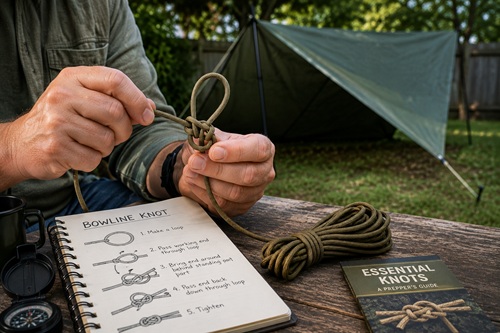
Owning quality equipment is only the beginning. Preparedness is measured by capability, not inventory. A person who has practiced using fifty feet of paracord will usually accomplish far more than someone carrying several hundred feet who has never tied a dependable knot or built a simple shelter.
Fortunately, developing these skills requires little more than time and curiosity. Practice tying a handful of reliable knots until they become second nature. Build a tarp shelter in your backyard and experiment with different ridgeline heights, guy-line angles, and anchor points. Secure equipment to a trailer, organize tools in your garage, or make simple household repairs using paracord instead of reaching immediately for another solution.
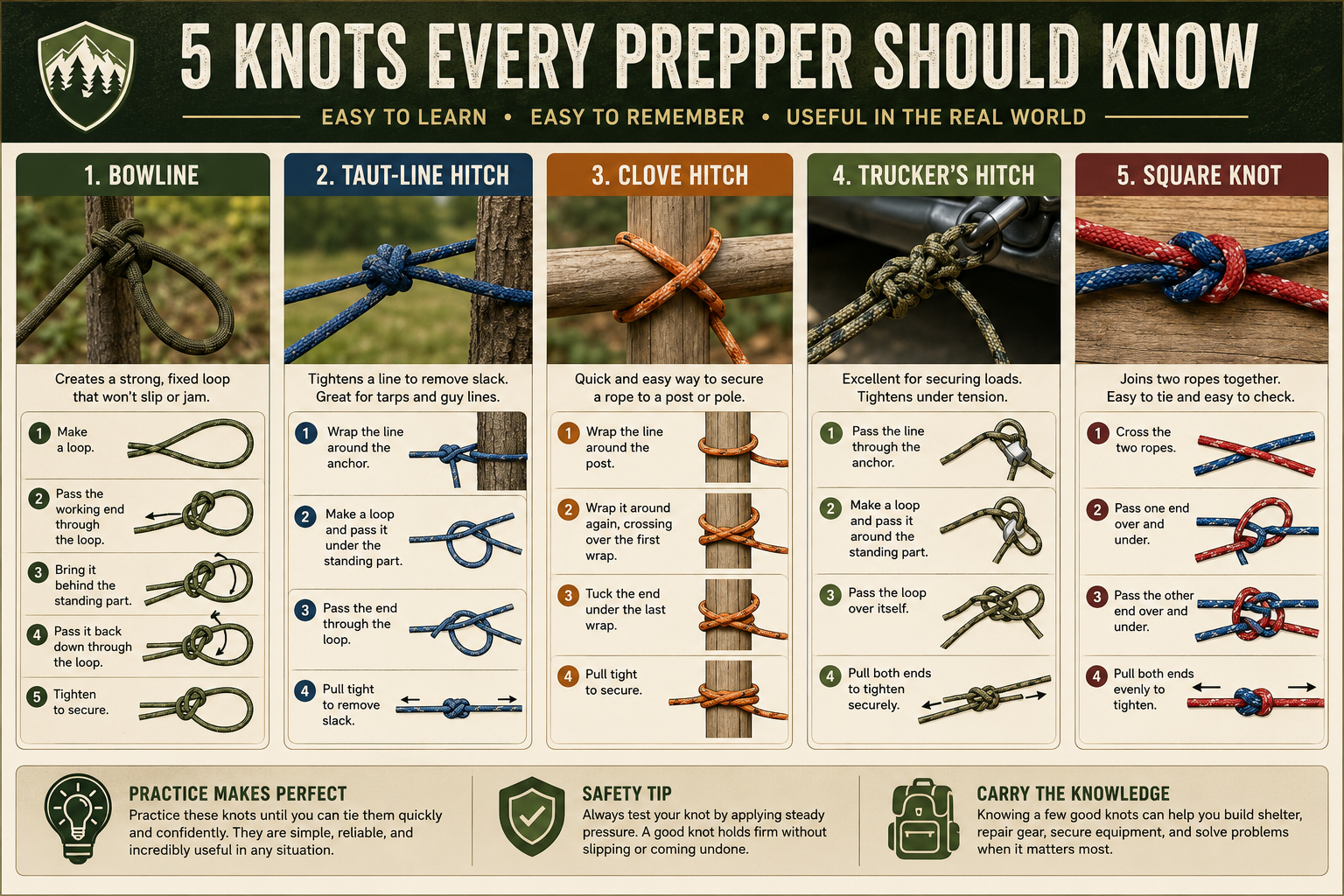
Each project teaches something useful. You begin to understand how tightly different knots should be cinched, how much tension a ridgeline can comfortably support, and how the cord behaves under changing weather conditions. Small mistakes made during practice become valuable lessons that build confidence without carrying serious consequences.
This gradual process of learning is one of the foundations of preparedness. Skills developed during calm, comfortable conditions are far easier to apply when circumstances become stressful. Like every preparedness tool, paracord becomes significantly more valuable once experience replaces uncertainty.
Putting Paracord to Work
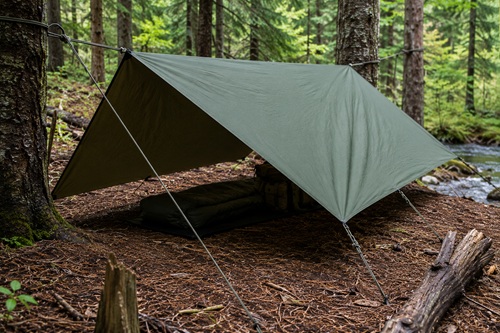
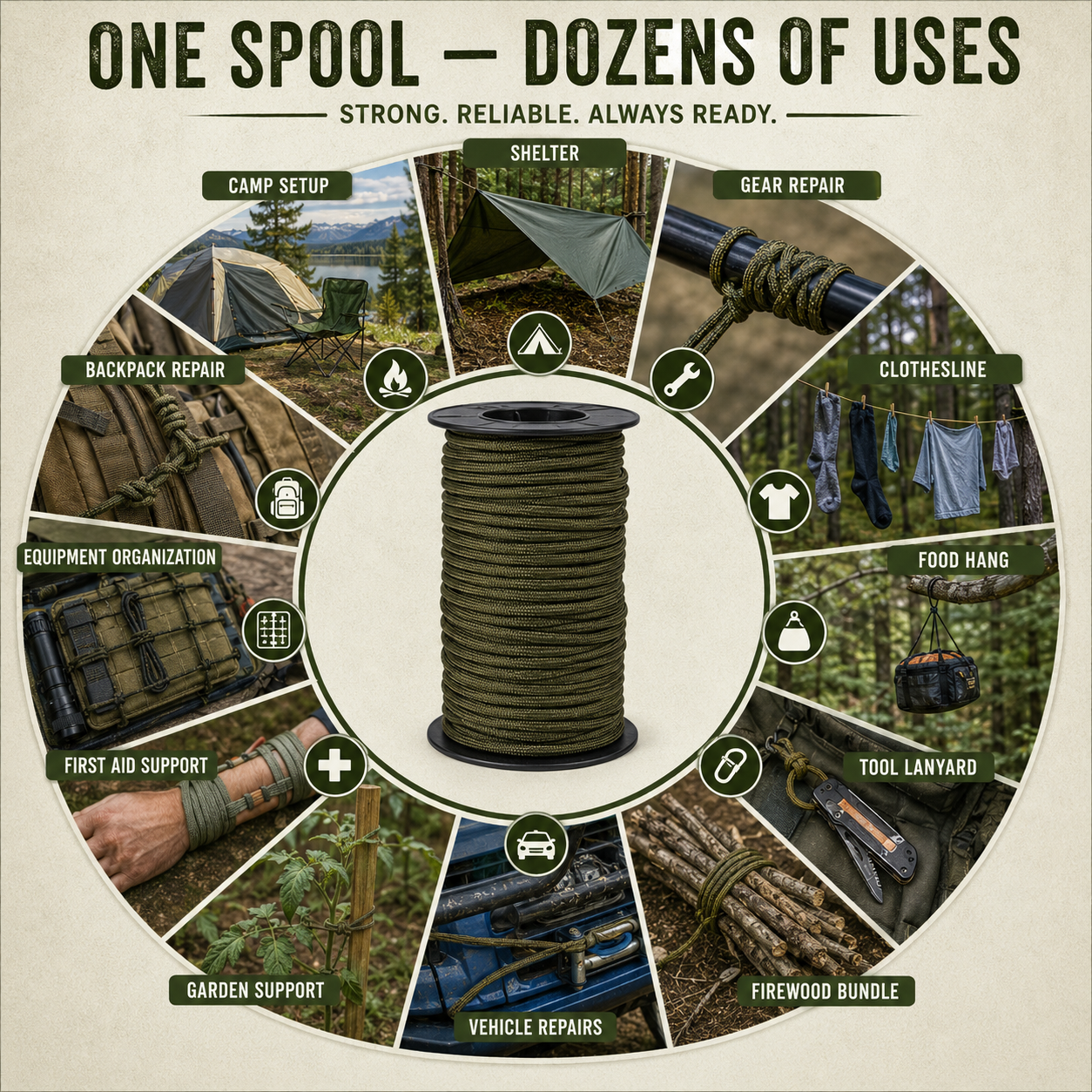
Once you begin carrying paracord regularly, you’ll probably discover that it becomes one of the most frequently used items in your kit. Not because every situation demands it, but because so many everyday problems can be solved with a strong, flexible length of cord. Its usefulness isn’t limited to wilderness survival. It proves equally valuable during camping trips, home maintenance, vehicle repairs, storm cleanup, and countless ordinary situations where something simply needs to be secured, repaired, or supported.
Shelter building is one of its most familiar uses. Whether you’re pitching a tarp over a campsite, creating shade during hot weather, or constructing an emergency shelter after a storm, dependable cordage provides the framework that holds everything together. A properly installed ridgeline supports the weight of the shelter, while guy lines keep it stable as wind conditions change. Learning how to position anchor points and distribute tension correctly often has a greater impact on the strength of a shelter than simply pulling every line as tight as possible.
Paracord is equally useful for organizing equipment. Around camp it can secure sleeping bags to backpacks, suspend lanterns above cooking areas, create clotheslines, or bundle firewood for transport. At home it can temporarily support garden plants, organize extension cords, secure tarps over stored equipment, or create quick storage solutions in a workshop or garage. None of these tasks are particularly dramatic, yet they demonstrate why experienced outdoorsmen rarely leave home without dependable cordage close at hand.
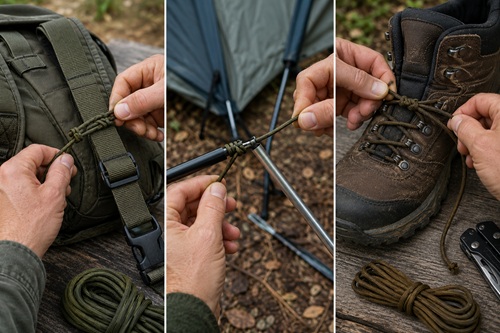
Equipment repairs are another area where paracord consistently earns its reputation. Backpack straps eventually wear out. Tent poles crack. Handles loosen. Boot laces break. While paracord is not always a permanent repair, it often provides a strong temporary solution that allows work or travel to continue safely until proper repairs can be completed. In many situations, preventing a small problem from becoming a larger one is exactly what preparedness is about.
A Tool That Adapts as Situations Change
One of the defining characteristics of preparedness is adaptability. Emergencies rarely unfold exactly as planned, and equipment that serves multiple purposes usually becomes far more valuable than equipment designed for only one specific task. Paracord is an excellent example of this principle because it changes roles as your needs change.
Imagine arriving at camp just before dark and discovering that one of your shelter poles has broken. A short time later, the strap on your backpack begins to separate under the weight of your gear. After dinner, you decide to hang your food away from wildlife, and before turning in for the night you need to suspend a lantern to provide light around camp. None of these situations are emergencies on their own, yet each one can often be solved quickly with a few feet of paracord.
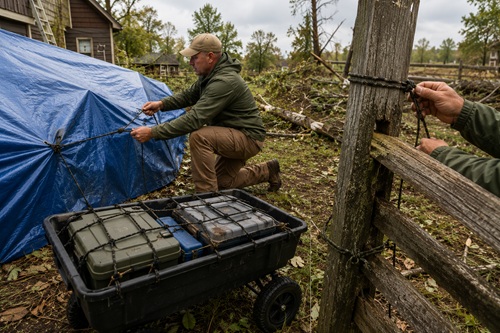
During larger emergencies, those same qualities become even more valuable. Following severe weather, paracord can help secure damaged structures, stabilize loose materials, organize supplies, or construct temporary shelters. Around the home it may help keep gates closed, support broken fencing, secure loose roofing materials until permanent repairs can be made, or organize emergency equipment during cleanup efforts.
The inner strands add another layer of versatility. If finer cordage is required, they can often be removed individually and used for lighter-duty repairs, fishing tackle, gear maintenance, or countless other small tasks. This ability to adapt to different situations explains why one simple spool of quality paracord can replace several separate types of cord in an emergency kit.
Understanding Its Limitations
Preparedness is not simply knowing what equipment can do. It is equally important to understand what it should never be expected to do. Good judgment prevents equipment from being placed into situations where failure becomes far more likely.
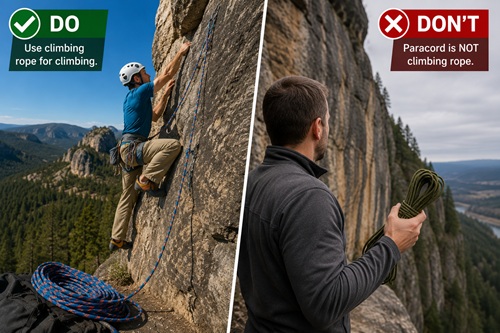
One of the most dangerous misconceptions surrounding paracord is the belief that it can safely replace climbing rope. Despite its impressive strength, it should never be used for climbing, rappelling, rescue operations, or any activity where a person’s safety depends on the rope performing without failure. Climbing ropes are engineered to absorb dynamic loads, resist repeated impacts, and meet rigorous safety standards that paracord was never designed to satisfy.
Heavy lifting also deserves caution. Although quality 550 cord has a high published breaking strength, those numbers are obtained under carefully controlled laboratory conditions using new cord. In real-world situations, knots reduce overall strength, abrasion weakens fibers, and years of exposure to sunlight, moisture, dirt, and repeated use gradually affect performance. Safe working loads should always remain well below the advertised breaking strength.
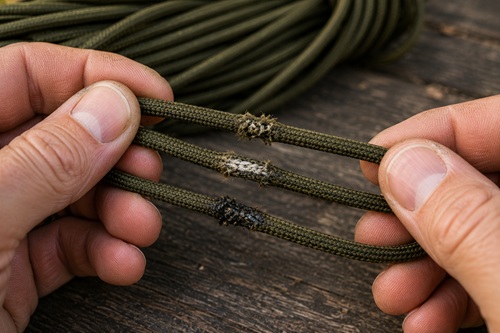
Abrasion is another factor that is frequently overlooked. Dragging paracord across rough stone, concrete, exposed metal, or even coarse tree bark slowly damages the protective sheath. Once the sheath begins to wear through, the inner strands become increasingly vulnerable to damage. The weakening process often occurs gradually, making regular inspection especially important.
Heat presents similar concerns. Nylon softens at relatively modest temperatures compared to many natural fibers. Contact with campfire embers, hot engine components, welding equipment, or prolonged friction can permanently damage the fibers even if no obvious signs are immediately visible. Whenever a cord has been exposed to excessive heat or significant wear, replacing it is usually the safest decision.
Understanding these limitations does not reduce the usefulness of paracord. Instead, it allows you to depend on it with confidence within the situations it was actually designed to handle.
Buying Quality Instead of Marketing
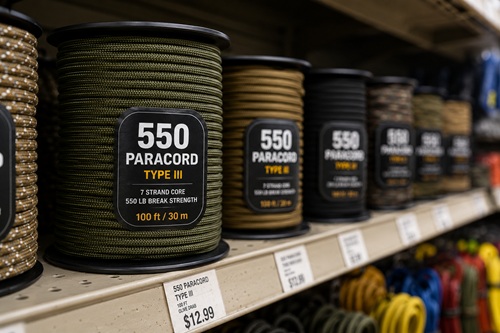
Walk through almost any outdoor retailer and you will find shelves filled with products labeled as “550 paracord.” At first glance, they may appear nearly identical. In reality, quality can vary considerably between manufacturers.
Well-made paracord generally has a tightly woven outer sheath, consistent diameter throughout its length, properly constructed inner strands, and clearly stated specifications from a reputable manufacturer. Lower-quality products sometimes contain fewer internal strands than advertised, thinner sheaths, or lower-grade synthetic materials that reduce durability over time. While these differences may not matter for decorative projects, they become much more important when the cord is expected to perform reliably outdoors.
Rather than purchasing the least expensive spool available, think of paracord the same way you would think about other essential preparedness equipment. A dependable flashlight, water filter, or first aid kit is worth purchasing from a trusted manufacturer because reliability matters. The same reasoning applies to cordage.
Many experienced outdoorsmen also organize their cord before storing it. Instead of carrying one long tangled bundle, they prepare several different lengths for specific purposes. A longer section may be reserved for shelter construction, while shorter lengths remain ready for equipment repairs, camp chores, or organizing gear. This approach saves time, reduces unnecessary cutting, and makes the right piece of cord immediately available when it is needed most.
Taking Care of Your Paracord
Paracord has earned a reputation for being tough, but even durable equipment benefits from proper care. Fortunately, maintaining it requires very little effort. A few simple habits will help ensure that the cord remains dependable for years instead of becoming another neglected item buried at the bottom of a backpack or storage bin.
After returning from a camping trip, hunting excursion, or outdoor project, take a few moments to inspect the cord before putting it away. Look for cuts, frayed areas, flattened sections, melted fibers, or places where the outer sheath has been damaged. Minor wear is normal, but deep abrasions or damaged inner strands are signs that the cord should no longer be trusted for demanding tasks.
Dirt is another factor that is often overlooked. Sand, grit, and fine soil can work their way into the woven sheath, where they slowly grind against the fibers every time the cord is bent or pulled tight. If the cord becomes dirty, wash it using warm water and a mild soap, rinse it thoroughly, and allow it to dry completely before storing it. Harsh chemicals or bleach should be avoided because they may weaken the synthetic fibers over time.
Storage is equally important. Prolonged exposure to direct sunlight slowly degrades nylon through ultraviolet radiation, while damp storage areas can encourage mildew and corrosion on nearby metal equipment. A cool, dry location is usually the best choice. Many preppers keep paracord neatly coiled or wrapped around small spools so it can be deployed quickly without becoming tangled. Others prepare several pre-cut lengths that are ready to use immediately for common tasks. Whatever system you choose, good organization makes the cord easier to access and encourages you to use it more often.
Building Confidence Through Everyday Use
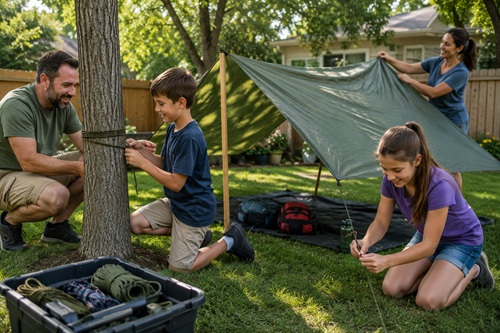
The best way to learn what paracord can do is to put it to work before you actually need it. Reading about knots, shelters, and field repairs provides a foundation, but practical experience builds confidence in ways that books never can.
Challenge yourself to use paracord during ordinary projects around your home or campsite. Build a tarp shelter in your backyard using only a handful of basic knots. Secure a load in your trailer without relying on ratchet straps. Replace worn zipper pulls on outdoor gear. Hang a lantern over your picnic table or organize tools in your workshop. Every small project teaches something about how the cord behaves, how knots tighten under tension, and how much force different applications require.
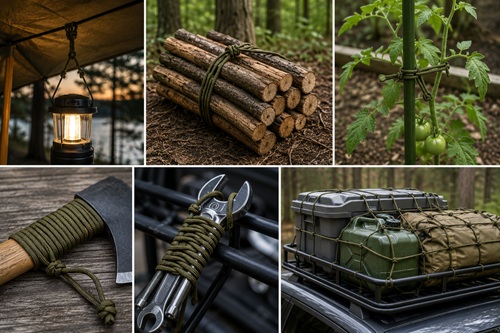
You will also discover what does not work. Certain knots may slip under load, while others become difficult to untie after supporting weight for several hours. Some repairs prove surprisingly durable, while others reveal the need for a different approach. These lessons are valuable because they are learned under comfortable conditions rather than during an emergency when mistakes carry greater consequences.
Preparedness grows through repetition. The more often you use your equipment, the less time you spend wondering what to do when an unexpected problem appears. Familiarity replaces hesitation, and confidence replaces uncertainty.
A Small Tool That Reflects a Bigger Philosophy
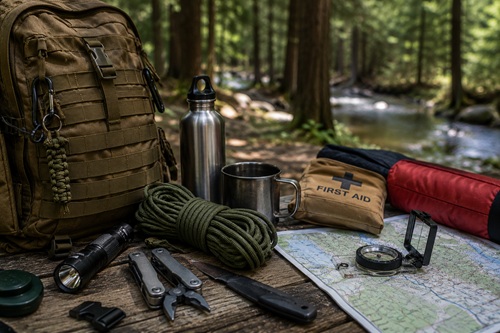
Paracord is often described as one of the most versatile tools a prepper can own, but its greatest lesson extends far beyond cordage itself. It demonstrates an important principle that applies to nearly every aspect of preparedness: simple tools become remarkably capable when paired with practical knowledge.
Give the same fifty feet of paracord to two different people and the results may be dramatically different. One person may see only a rope. Another may see a shelter waiting to be built, damaged equipment waiting to be repaired, supplies waiting to be organized, or dozens of problems that already have practical solutions. The equipment is identical. The difference lies entirely in experience and understanding.
This principle can be applied to nearly every preparedness skill. A water filter is only as useful as the person who understands safe water treatment. A first aid kit has little value without training. A map provides little guidance if you cannot navigate. Equipment expands your capabilities, but knowledge determines how effectively those capabilities are used.
Paracord serves as an excellent reminder that preparedness is not measured by the amount of gear sitting on a shelf. It is measured by your ability to adapt, solve problems, and use available resources wisely. Those abilities are developed through practice, curiosity, and a willingness to learn long before an emergency ever occurs.
Lessons From Experience
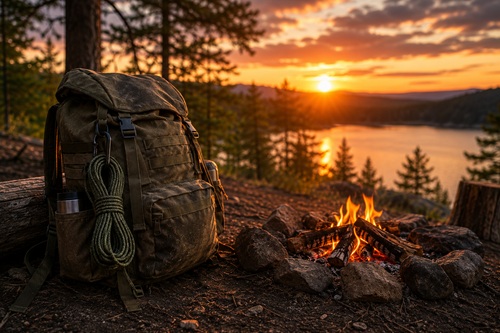
Experienced outdoorsmen rarely remember every piece of equipment they packed for a trip, but they often remember the small items that solved unexpected problems. Paracord has earned its place in countless backpacks, emergency kits, vehicles, and workshops because it consistently proves useful in ways that are difficult to predict beforehand.
Choosing quality cord, learning a handful of dependable knots, and using paracord regularly during everyday projects will do far more for your preparedness than simply storing hundreds of feet of unused cord in a closet. Like every preparedness skill, the real advantage comes from experience. The more often you put simple tools to work, the more capable and self-reliant you become when circumstances require you to depend on your own knowledge and resourcefulness.
© Prepping Communities. This content is for informational purposes only and not professional advice. Use at your own risk.
Terms | Privacy | Guidelines