
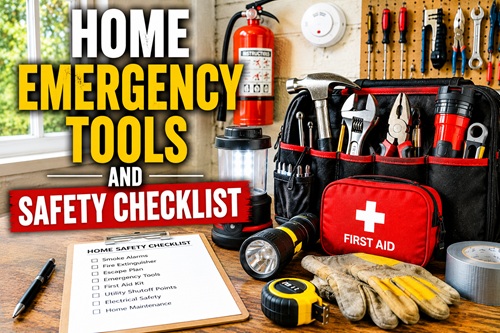
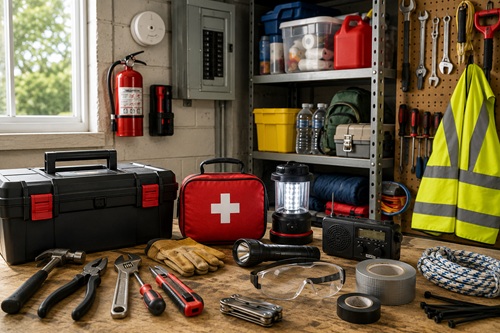
A safe home starts long before an emergency occurs. Regular maintenance, working safety equipment, and a small collection of practical tools can prevent many emergencies from becoming much larger problems.
Use this checklist to identify hazards, improve home safety, and ensure you have the basic tools needed to respond safely to common household emergencies.
Fire Safety
□ Test smoke alarms monthly.
□ Replace smoke alarm batteries as needed.
□ Check carbon monoxide detectors.
□ Keep a fire extinguisher on each level of the home.
□ Know how to use a fire extinguisher.
□ Keep escape routes clear.
Emergency Lighting
□ Store flashlights in easy-to-find locations.
□ Keep spare batteries available.
□ Test rechargeable lanterns.
□ Keep a headlamp with emergency supplies.
□ Place emergency lighting near exits.
Basic Hand Tools
□ Hammer
□ Screwdriver set
□ Adjustable wrench
□ Pliers
□ Utility knife
□ Multi-tool
□ Tape measure
□ Allen key set
Repair Supplies
□ Duct tape
□ Electrical tape
□ Zip ties
□ Rope or paracord
□ Work gloves
□ Safety glasses
□ Plastic sheeting
□ Waterproof tarp
Utility Safety
□ Locate the main water shutoff valve.
□ Locate the electrical breaker panel.
□ Know how to shut off power if necessary.
□ Identify natural gas or propane shutoff locations.
□ Label important utility controls.
□ Ensure everyone responsible knows their locations.
Home Safety
□ Secure heavy furniture to walls.
□ Anchor bookshelves and cabinets.
□ Store heavy items on lower shelves.
□ Remove tripping hazards from walkways.
□ Check handrails and stairways.
□ Keep exits free of storage.
Emergency Equipment
□ First aid kit
□ Battery-powered or hand-crank radio
□ Emergency whistle
□ Portable phone charger
□ Emergency blankets
□ Work boots
□ Dust masks
□ Heavy-duty garbage bags
Hazardous Materials
□ Store chemicals safely.
□ Secure fuels in approved containers.
□ Keep cleaning products away from children.
□ Label hazardous materials clearly.
□ Dispose of expired chemicals properly.
Outdoor Safety
□ Trim hazardous tree branches.
□ Secure outdoor furniture before storms.
□ Store ladders safely.
□ Keep gutters clean.
□ Inspect fences and gates.
□ Maintain exterior lighting.
Maintenance
Review your home safety equipment at least twice each year.
□ Test smoke and carbon monoxide alarms.
□ Inspect fire extinguishers.
□ Replace expired first aid supplies.
□ Test flashlights and lanterns.
□ Replace weak batteries.
□ Inspect emergency tools for damage.
Key Takeaways
After completing this checklist, you should have:
✓ Working smoke and carbon monoxide alarms throughout your home.
✓ Basic emergency tools organized and easy to access.
✓ Clearly identified utility shutoff locations.
✓ Safer walkways, exits, and storage areas.
✓ A home that is better prepared for power outages, storms, fires, and other emergencies.
✓ Greater confidence in handling small household emergencies safely.
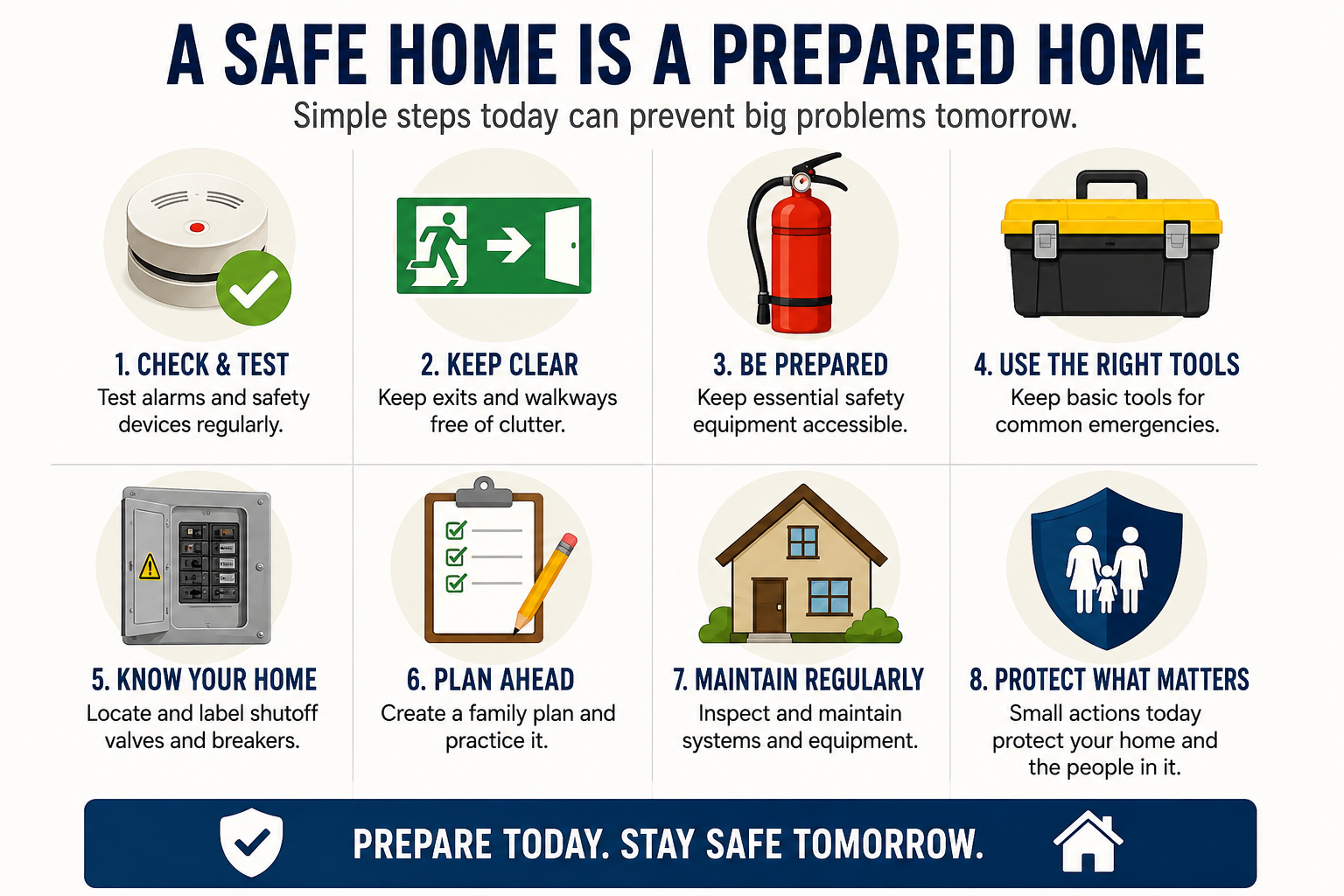
Remember: Most home emergencies are easier to manage when hazards have been identified and corrected before they become serious problems. Regular maintenance and a few well-chosen tools often provide more value than owning specialized equipment you have never used.
© Prepping Communities. This content is for informational purposes only and not professional advice. Use at your own risk.
Terms | Privacy | Guidelines