
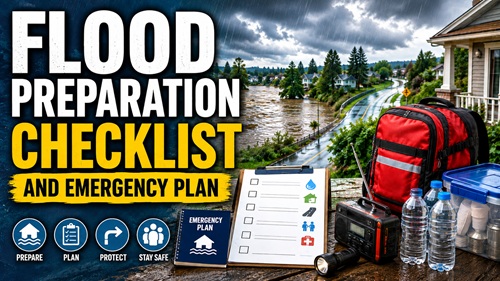
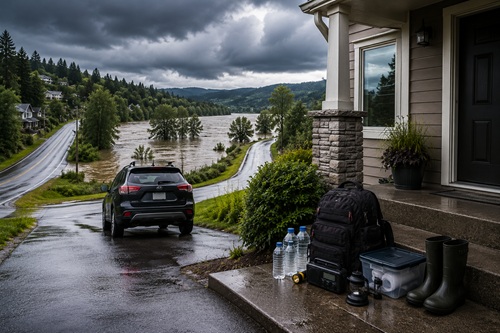
Flooding can happen with little warning or develop gradually over several hours or days. Heavy rainfall, overflowing rivers and streams, coastal conditions, drainage failures, rapid snowmelt, groundwater, and infrastructure problems can all produce flooding. The safest response begins before water starts rising.
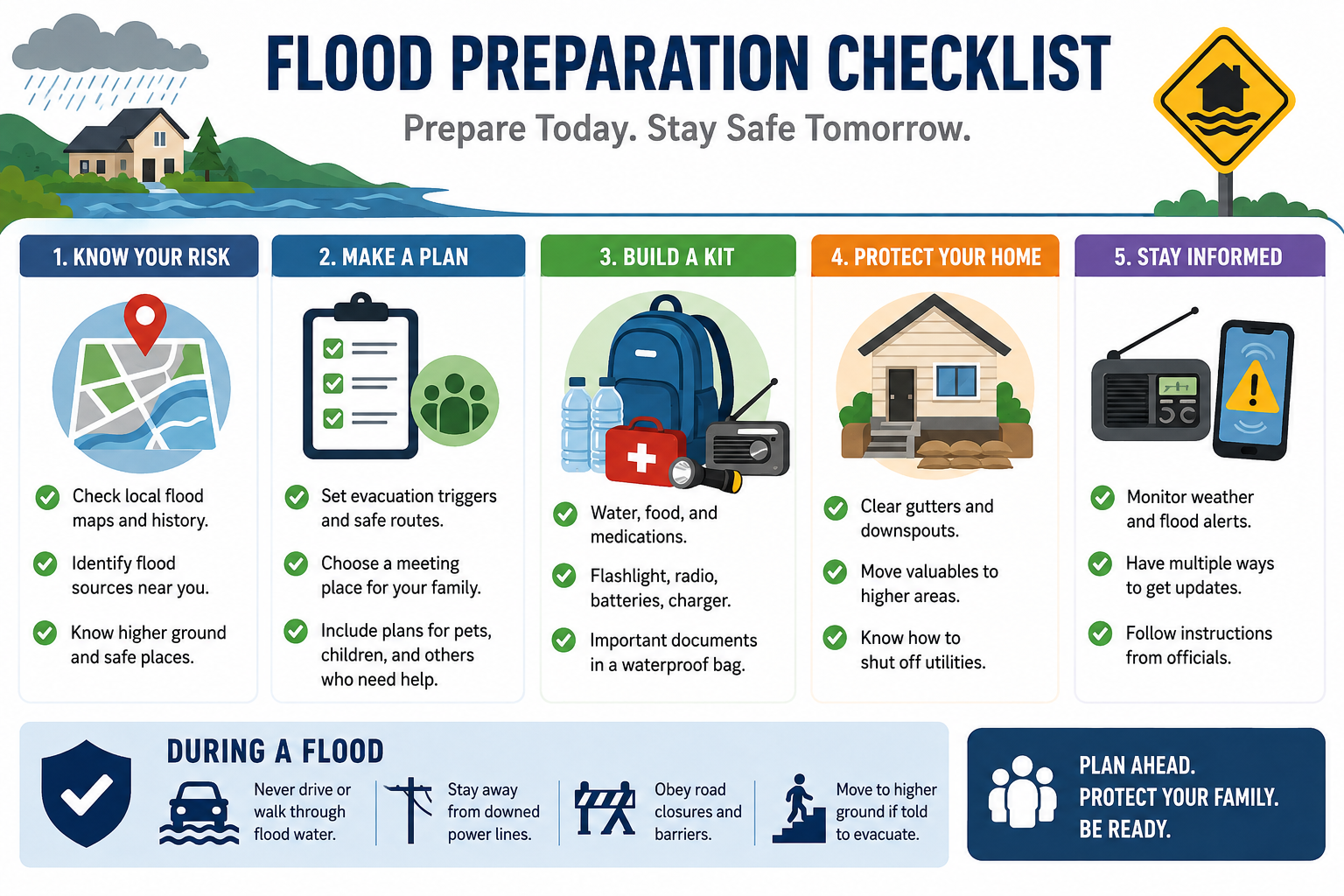
Use this checklist to understand your household’s flood risk, protect essential property where it can be done safely, establish evacuation triggers, prepare multiple routes, and make sure everyone knows what to do if flooding threatens your home or community.
Understand Your Flood Risk
□ Determine whether your home is located in or near a flood-prone area.
□ Review current local flood-hazard information and maps.
□ Identify nearby rivers, streams, drainage channels, low areas, and other possible flood sources.
□ Learn whether your area is vulnerable to river, surface-water, coastal, groundwater, or other forms of flooding.
□ Consider how heavy rainfall could affect roads around your home.
□ Identify low-lying roads, bridges, underpasses, and crossings that could become dangerous.
□ Learn about previous flooding in your community.
□ Ask long-term residents about locations that commonly experience flooding.
□ Consider how seasonal conditions such as snowmelt or frozen ground could change flood risk.
□ Review your flood risk at least once each year.
Flood Warnings and Emergency Information
□ Identify official local flood-warning and emergency-alert services.
□ Enable appropriate emergency alerts on household phones.
□ Keep a battery-powered or hand-crank radio available.
□ Know which local radio stations provide emergency information.
□ Keep important emergency telephone numbers written on paper.
□ Identify more than one reliable source of emergency information.
□ Learn the difference between advisory information, warnings, evacuation alerts, and evacuation orders used in your jurisdiction.
□ Check the location, time, and source of emergency messages before sharing them when circumstances allow.
□ Make sure every adult household member knows where to obtain reliable flood information.
□ Maintain backup communication options if internet or cellular service becomes unavailable.
Household Flood Plan
□ Create a written household flood plan.
□ Identify the conditions that would cause your household to evacuate.
□ Decide who is responsible for monitoring warnings.
□ Assign basic responsibilities to household members.
□ Identify who will assist children and dependents.
□ Include older adults and people requiring additional assistance.
□ Include pets and service animals.
□ Determine which essential belongings should be taken during an evacuation.
□ Keep the plan somewhere everyone can find it.
□ Give copies to appropriate household members.
□ Review the plan before flood season or periods of increased local risk.
Evacuation Routes
□ Identify your primary evacuation route.
□ Identify at least one alternate route.
□ Choose routes that lead toward safer or higher ground where appropriate.
□ Identify roads that may flood early.
□ Identify bridges, underpasses, river crossings, and low areas that could become unsafe.
□ Keep a current local road map available.
□ Mark evacuation destinations on your map.
□ Identify alternative destinations if your preferred location becomes inaccessible.
□ Consider how traffic congestion could affect evacuation.
□ Practice driving or walking appropriate evacuation routes under normal conditions.
□ Update routes when roads, bridges, or local conditions change.
Evacuation Destinations
□ Identify a safe place where your household could stay.
□ Choose an alternate destination.
□ Identify local emergency reception centers or shelters where applicable.
□ Confirm whether potential destinations accept pets.
□ Plan appropriate arrangements for service animals.
□ Consider staying with trusted family or friends outside the affected area.
□ Make sure household members know the destination.
□ Establish a meeting location if household members become separated.
□ Keep destination addresses and telephone numbers written down.
Transportation
□ Keep your vehicle maintained.
□ Maintain an appropriate amount of fuel for evacuation when possible.
□ Avoid allowing the fuel level to become critically low during periods of increased flood risk.
□ Identify a backup transportation option.
□ Arrange transportation for household members who do not drive.
□ Consider wheelchair and mobility-equipment transportation requirements.
□ Identify someone who could provide transportation if your vehicle becomes unavailable.
□ Keep important vehicle documents accessible.
□ Move vehicles away from flood-prone locations early when it is safe and appropriate.
□ Never depend entirely on one vehicle for your evacuation plan.
Flood Emergency Kit
□ Drinking water
□ Ready-to-eat food
□ Essential medications
□ First aid kit
□ Flashlights
□ Spare batteries
□ Battery-powered or hand-crank radio
□ Portable phone charger or power bank
□ Important contact information
□ Copies of identification
□ Insurance information
□ Emergency cash
□ Seasonal clothing
□ Rain protection
□ Sturdy footwear
□ Hygiene supplies
□ Necessary child-care supplies
□ Necessary accessibility supplies
□ Pet or service-animal supplies
□ Local map
□ Whistle
Important Documents
□ Keep identification documents protected.
□ Maintain copies of insurance policies.
□ Keep important financial information secured.
□ Maintain relevant property records.
□ Keep necessary medical information available.
□ Maintain an updated medication list.
□ Keep emergency contact information on paper.
□ Store important documents in water-resistant protection.
□ Keep critical documents above expected flood levels where practical.
□ Maintain secure backup copies of important records.
□ Photograph important household possessions for insurance documentation where appropriate.
□ Update records after major purchases or household changes.
Protect Your Home Before Flooding
□ Keep gutters and downspouts maintained.
□ Keep appropriate drainage paths around the property clear.
□ Check basement or lower-level drainage systems where applicable.
□ Test sump pumps if installed.
□ Maintain backup power for critical drainage equipment where practical.
□ Store valuable items above areas likely to flood.
□ Raise important equipment where appropriate.
□ Keep hazardous household chemicals securely stored.
□ Secure outdoor objects that could float away.
□ Move important belongings before flooding begins when it can be done safely.
□ Use appropriate flood-protection products where suitable for your property.
□ Never remain in a dangerous location simply to protect possessions.
Utilities
□ Locate the main electrical shutoff.
□ Locate the water shutoff.
□ Know where other applicable utility controls are located.
□ Learn safe shutoff procedures before an emergency.
□ Follow instructions from utility providers and qualified professionals.
□ Keep necessary instructions accessible offline.
□ Never enter standing water to reach electrical equipment or utility controls.
□ Treat submerged electrical equipment as hazardous.
□ Keep generators and combustion-powered equipment outside and safely away from occupied spaces.
□ Do not restore disconnected utilities until appropriate authorities or qualified professionals indicate it is safe.
Children and Dependents
□ Explain the flood plan in an age-appropriate way.
□ Teach children which adults they should contact during an emergency.
□ Keep emergency contact cards with children.
□ Establish a family reunification location.
□ Maintain necessary medications and medical supplies.
□ Prepare mobility equipment where required.
□ Keep comfort items available.
□ Identify backup caregivers.
□ Coordinate emergency plans with schools or caregivers where appropriate.
□ Make sure children understand they must never play in flood water.
□ Review the plan periodically with the household.
Pets and Service Animals
□ Include animals in your evacuation plan.
□ Keep carriers, crates, harnesses, or leashes accessible.
□ Maintain animal identification.
□ Keep veterinary information available.
□ Store appropriate food and water.
□ Maintain required medications.
□ Prepare portable food and water bowls.
□ Identify evacuation destinations that can accommodate animals.
□ Identify backup caregivers.
□ Keep service animals with the people who depend on them whenever circumstances allow.
□ Never intentionally allow pets to enter flood water.
When Flooding Is Forecast
□ Begin monitoring official warnings more frequently.
□ Charge phones and communication devices.
□ Charge backup batteries and power banks.
□ Check your emergency kit.
□ Confirm medications and important documents are ready.
□ Contact household members.
□ Confirm your evacuation destination.
□ Review evacuation routes.
□ Check road conditions.
□ Prepare pets and service animals.
□ Move vehicles to safer locations when appropriate.
□ Move important belongings higher if sufficient time remains.
□ Secure appropriate outdoor objects.
□ Fill appropriate drinking-water containers if local conditions warrant it.
□ Be prepared to leave before conditions deteriorate.
When Flooding Begins
□ Monitor official emergency information.
□ Follow lawful evacuation instructions.
□ Keep household members together when practical.
□ Take your emergency kit.
□ Take essential medications.
□ Take important documents.
□ Take necessary mobility and medical equipment.
□ Take pets and service animals according to your plan.
□ Use your planned evacuation route only while it remains safe and open.
□ Switch to an alternate route if conditions require it.
□ Leave early enough to avoid becoming trapped.
□ Tell a trusted contact where you are going when possible.
Avoid Flood Water
□ Never intentionally walk into moving flood water.
□ Never intentionally swim through flood water.
□ Never drive through a flooded roadway.
□ Obey road closures and barricades.
□ Do not attempt to determine water depth by entering it.
□ Keep children away from flood water.
□ Keep pets away from flood water.
□ Stay away from flooded drains and culverts.
□ Avoid damaged bridges and road surfaces.
□ Stay clear of fallen electrical lines.
□ Assume submerged electrical equipment may be dangerous.
□ Treat flood water as potentially contaminated.
□ Choose another route rather than taking unnecessary risks.
If You Cannot Evacuate
□ Contact emergency services if you are in immediate danger.
□ Tell responders your location as accurately as possible.
□ Move away from rising water when it is safe to do so.
□ Move to an appropriate higher level of the building if necessary.
□ Keep household members together.
□ Take phones, radios, medications, water, and essential supplies with you if accessible.
□ Maintain communication with emergency services when possible.
□ Make your location visible to rescuers when appropriate.
□ Avoid entering confined areas where rising water could trap you.
□ Do not attempt dangerous self-rescue through moving flood water.
Flood Water Contamination
□ Assume flood water may contain sewage.
□ Assume flood water may contain fuel or chemicals.
□ Avoid unnecessary skin contact.
□ Keep flood water away from food preparation areas.
□ Protect drinking-water supplies from contamination.
□ Do not consume food directly exposed to flood water unless authoritative safety guidance specifically establishes that it is safe.
□ Follow local drinking-water advisories.
□ Use safe water for drinking and food preparation.
□ Wash hands thoroughly after appropriate cleanup activities.
□ Keep children away from contaminated areas.
□ Keep pets away from contaminated water and debris.
Returning Home
□ Wait until appropriate authorities indicate that returning is permitted.
□ Confirm roads are open.
□ Approach damaged buildings cautiously.
□ Look for visible structural damage.
□ Stay away from fallen power lines.
□ Do not enter standing water where electrical hazards may exist.
□ Do not immediately reconnect utilities.
□ Follow utility-provider and qualified-professional instructions.
□ Photograph damage where it is safe to do so.
□ Contact your insurer when appropriate.
□ Wear suitable protective clothing during cleanup.
□ Keep children and animals away from damaged areas.
□ Treat affected food and water cautiously.
Flood Cleanup
□ Ventilate buildings when it is safe and appropriate.
□ Remove standing water using safe methods.
□ Use suitable protective equipment during cleanup.
□ Separate damaged items from salvageable belongings.
□ Dispose of contaminated materials appropriately.
□ Clean and disinfect affected surfaces using appropriate methods.
□ Watch for mold and moisture problems.
□ Dry affected areas as quickly as practical.
□ Have damaged electrical systems inspected where necessary.
□ Have structural damage assessed when appropriate.
□ Keep records and photographs of damage and repairs.
□ Follow local public-health guidance for significant contamination.
Communication and Reunification
□ Establish an out-of-area emergency contact.
□ Make sure household members know the contact information.
□ Establish primary and alternate meeting locations.
□ Keep written contact cards in wallets, bags, and emergency kits.
□ Establish household check-in procedures.
□ Tell trusted contacts when you evacuate.
□ Share your destination with appropriate people.
□ Keep messages brief when communication networks are overloaded.
□ Preserve phone battery power.
□ Use verified information rather than rumors or social media speculation.
Community Preparedness
□ Learn which neighbors may need evacuation assistance.
□ Identify trusted neighbors who could help your household.
□ Know local emergency procedures.
□ Identify nearby higher or safer locations where appropriate.
□ Learn where local emergency reception centers may operate.
□ Participate in appropriate community preparedness activities.
□ Share verified flood information responsibly.
□ Avoid unnecessary travel into affected areas.
□ Keep emergency access routes clear.
□ Report serious hazards through appropriate channels.
Common Mistakes to Avoid
□ Do not wait until water reaches your property before considering evacuation.
□ Do not enter flood water to retrieve possessions.
□ Do not drive around barricades.
□ Do not assume familiar roads remain safe.
□ Do not rely on a single evacuation route.
□ Do not rely entirely on one vehicle.
□ Do not rely entirely on one phone or communication method.
□ Do not leave pets or dependent household members out of the plan.
□ Do not enter flooded electrical areas.
□ Do not return home before restrictions are lifted.
□ Do not restore utilities without appropriate safety confirmation.
□ Do not assume flood-exposed food or water is safe.
□ Do not prioritize property over personal safety.
Maintenance
Review your flood preparedness plan at least twice each year and before periods of increased seasonal flood risk.
□ Review local flood information.
□ Update emergency contacts.
□ Update evacuation destinations.
□ Review primary and alternate evacuation routes.
□ Check emergency alerts.
□ Inspect your flood emergency kit.
□ Replace expired food and medications as appropriate.
□ Recharge backup batteries.
□ Test radios and communication equipment.
□ Test sump pumps and applicable drainage equipment.
□ Inspect water-resistant document storage.
□ Update insurance records.
□ Review transportation arrangements.
□ Review plans for children and dependents.
□ Review plans for pets and service animals.
□ Practice your household evacuation plan.
Key Takeaways
After completing this checklist, you should have:
✓ A clearer understanding of the flood hazards that could affect your home and community.
✓ Reliable ways to receive current flood warnings and emergency information.
✓ A written household flood and evacuation plan.
✓ Primary and alternate evacuation routes.
✓ Safe destinations and backup transportation arrangements.
✓ A flood emergency kit containing essential supplies.
✓ Important documents and records protected from water damage.
✓ Plans for children, dependents, pets, and service animals.
✓ A clear understanding that flooded roads, electrical equipment, contaminated water, and damaged structures can remain dangerous even after water levels begin falling.
✓ A plan for safely returning home and beginning recovery.
Flood preparedness is largely about making important decisions before conditions become dangerous. Knowing when to leave, where to go, how to get there, what to take, and how to keep everyone together can prevent a rapidly changing flood from becoming a much more serious emergency. Property can often be repaired or replaced; people should always come first.
© Prepping Communities. This content is for informational purposes only and not professional advice. Use at your own risk.
Terms | Privacy | Guidelines