
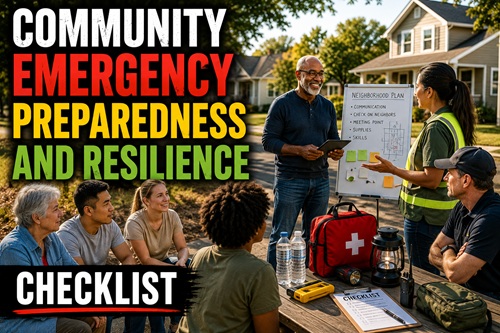
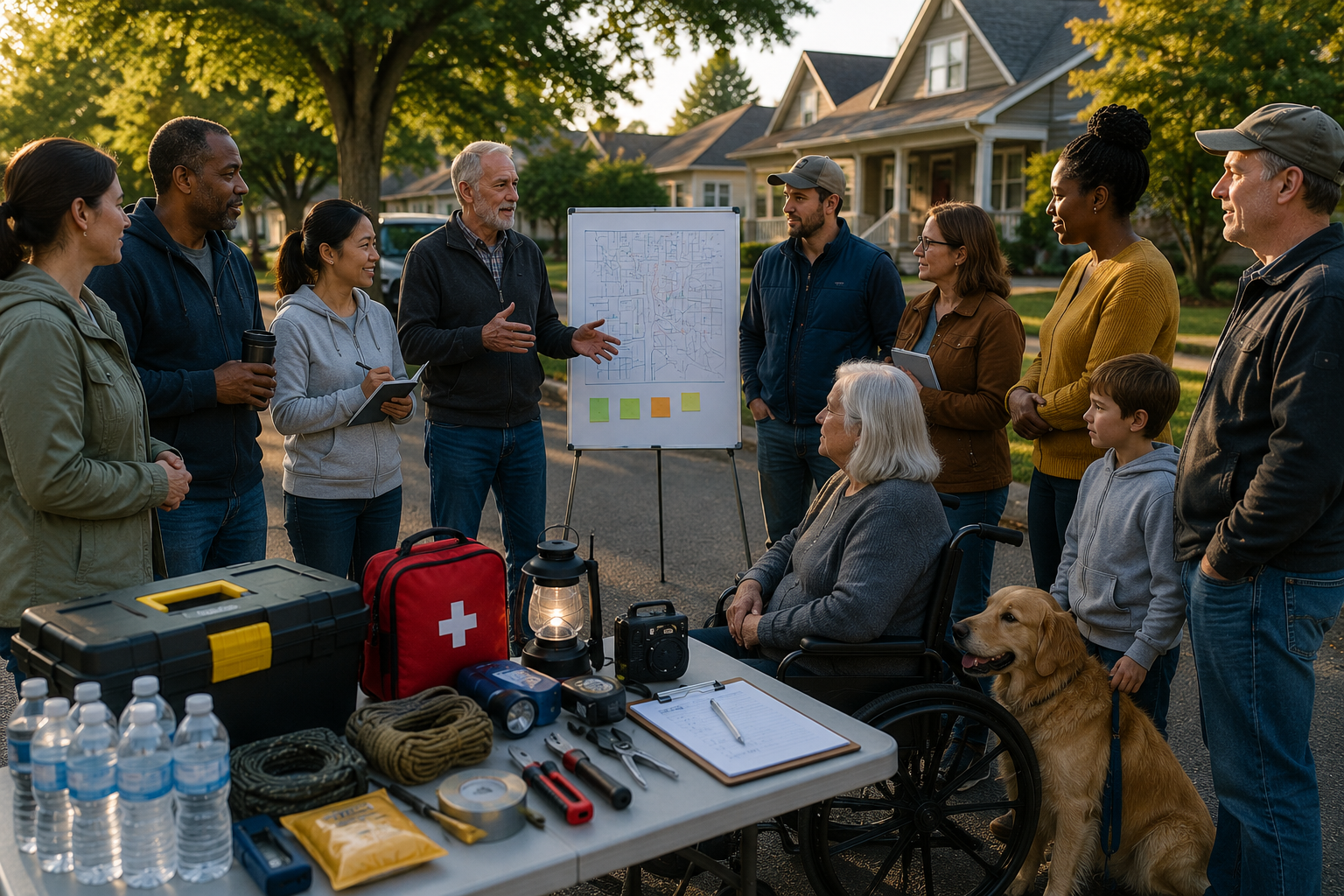
Strong communities recover more quickly from emergencies because neighbors know one another, communicate effectively, and work together. Community preparedness is not about replacing emergency responders – it is about helping one another safely until normal services are restored.
Use this checklist to strengthen local connections, improve communication, and build a more resilient neighborhood before an emergency occurs.
Know Your Neighbors
□ Introduce yourself to nearby households.
□ Exchange emergency contact information with trusted neighbors.
□ Identify neighbors who may need additional assistance.
□ Learn who has useful skills or equipment.
□ Respect everyone’s privacy and personal boundaries.
□ Review contact information periodically.
Community Communication
□ Create a neighborhood contact list.
□ Establish a phone or text message tree.
□ Identify a backup communication method.
□ Agree on a neighborhood meeting location.
□ Know where to obtain official emergency information.
□ Share verified information only.
Emergency Skills
□ Identify people trained in first aid.
□ Learn who has medical experience.
□ Identify people with mechanical or electrical skills.
□ Know who owns emergency communication equipment.
□ Encourage basic emergency training within the community.
Community Resources
□ Identify local shelters.
□ Locate nearby water sources.
□ Know the location of community centers.
□ Identify pharmacies and medical clinics.
□ Locate emergency supply stores.
□ Record important local emergency phone numbers.
Helping Others
□ Check on older adults during emergencies.
□ Assist neighbors with disabilities if requested.
□ Help families with young children when appropriate.
□ Share information with those who may not receive alerts.
□ Coordinate assistance without creating unnecessary risk.
Emergency Supplies
□ Community first aid kit
□ Flashlights and batteries
□ Portable radios
□ Drinking water
□ Emergency blankets
□ Fire extinguishers
□ Basic tools
□ Backup phone chargers
Neighborhood Safety
□ Report hazards to appropriate authorities.
□ Keep roads and walkways clear when safe.
□ Watch for downed power lines.
□ Stay away from damaged buildings.
□ Follow evacuation instructions when issued.
□ Never enter hazardous areas unnecessarily.
Community Planning
□ Hold occasional preparedness meetings.
□ Practice neighborhood communication plans.
□ Encourage household emergency plans.
□ Share preparedness resources.
□ Review plans after exercises or emergencies.
Maintenance
Review your community preparedness plan at least once each year.
□ Update emergency contacts.
□ Review available resources.
□ Verify meeting locations.
□ Replace expired community supplies.
□ Encourage new neighbors to participate.
□ Practice communication procedures.
Key Takeaways
After completing this checklist, you should have:
✓ Stronger relationships with trusted neighbors.
✓ Reliable methods for sharing emergency information.
✓ A better understanding of local skills and available resources.
✓ Plans to assist vulnerable community members safely.
✓ Greater confidence in working together during emergencies.
✓ A neighborhood that is better prepared to respond and recover from unexpected events.
Remember: Community resilience begins with simple relationships. Neighbors who know one another, communicate clearly, and work together safely are often better prepared to face emergencies than households acting alone.
© Prepping Communities. This content is for informational purposes only and not professional advice. Use at your own risk.
Terms | Privacy | Guidelines