
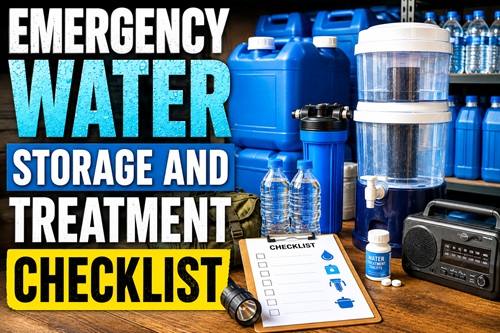
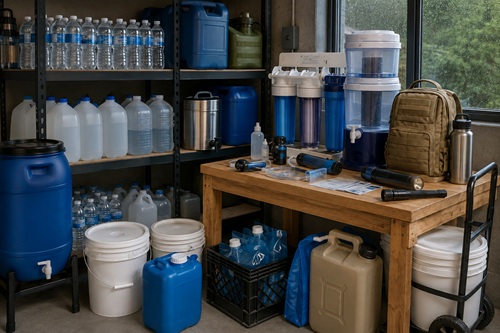
Reliable access to safe water is one of the most important parts of emergency preparedness. A good water plan involves more than storing bottled water. Households need enough water for essential needs, suitable containers, safe storage practices, backup sources, appropriate treatment options, and a way to transport water if normal service becomes unavailable.
Use this checklist to build a household water system that combines stored water, backup collection options, treatment capability, sanitation practices, and a clear understanding of what to do when local water authorities issue advisories.
Calculate Household Water Needs
□ Determine how many people are included in your household water plan.
□ Include drinking water requirements.
□ Include water needed for essential food preparation.
□ Consider basic hygiene requirements.
□ Include additional water for medical or healthcare needs.
□ Account for hot weather and increased physical activity.
□ Consider additional requirements during illness.
□ Include appropriate water requirements for pets and service animals.
□ Consider livestock requirements where applicable.
□ Account for household members who may require more water because of individual circumstances.
□ Use current local emergency-management guidance as your minimum planning baseline.
□ Build additional capacity when storage space and household circumstances permit.
Store Emergency Drinking Water
□ Maintain a dedicated emergency drinking-water supply.
□ Use unopened commercially bottled water or suitable food-grade water containers.
□ Choose containers specifically intended for potable water storage.
□ Inspect containers before filling them.
□ Make sure lids and seals close securely.
□ Keep stored drinking water separate from questionable or untreated water.
□ Label containers clearly.
□ Record storage or filling dates where appropriate.
□ Follow applicable manufacturer and local guidance for storage and replacement.
□ Rotate water supplies when necessary.
□ Replace damaged, leaking, or questionable containers.
Choose Safe Water Containers
□ Use containers designed for food or drinking-water storage.
□ Choose containers that can be cleaned and securely closed.
□ Select container sizes that household members can safely lift and pour.
□ Use smaller containers where mobility or lifting ability is limited.
□ Inspect caps, seals, handles, and dispensing valves.
□ Keep the inside of containers and caps clean.
□ Avoid touching surfaces that contact stored drinking water.
□ Never use containers that previously held fuel, pesticides, solvents, cleaners, or other hazardous substances.
□ Clearly distinguish potable-water containers from containers used for other purposes.
□ Keep appropriate portable containers available for water collection.
Water Storage Locations
□ Store water in a cool location when possible.
□ Protect stored water from direct sunlight.
□ Keep water away from fuels, pesticides, solvents, cleaners, and other chemicals.
□ Protect containers from freezing where necessary.
□ Protect containers from excessive heat.
□ Keep water away from areas vulnerable to flooding or contamination.
□ Store supplies where they can be reached during a power outage.
□ Avoid placing the entire household water supply in one location when practical.
□ Keep some emergency water readily accessible.
□ Consider how stored water would be accessed during an evacuation.
□ Make sure shelving can safely support the weight of stored water.
Commercial Bottled Water
□ Keep commercially bottled water as part of your emergency supply if practical.
□ Inspect packaging for leaks or damage.
□ Keep bottles away from direct sunlight and excessive heat.
□ Store bottles away from chemicals.
□ Keep packaging protected from pests and physical damage.
□ Follow manufacturer storage recommendations.
□ Rotate supplies according to appropriate guidance.
□ Replace damaged bottles.
□ Avoid opening emergency water until needed.
Backup Water Sources
□ Identify potential backup water sources before an emergency.
□ Determine whether your community provides emergency water distribution locations.
□ Identify nearby reliable water suppliers.
□ Learn how your municipal or private water system operates.
□ Understand whether your home depends on an electrically powered well pump.
□ Consider backup power requirements for private wells where appropriate.
□ Identify natural water sources only as potential emergency options requiring careful evaluation.
□ Maintain current local maps where useful.
□ Keep appropriate water-collection containers available.
□ Develop more than one backup option.
□ Never assume that clear-looking natural water is safe to drink.
Water Collection
□ Keep clean containers available specifically for water collection.
□ Maintain containers with secure lids.
□ Use container sizes that can be safely transported.
□ Keep funnels or other clean transfer equipment if useful.
□ Protect collection containers from contamination during transportation.
□ Keep clean equipment separate from equipment used for untreated water.
□ Avoid touching the inside of caps and container openings.
□ Wash or sanitize hands before handling drinking-water containers when possible.
□ Keep collected untreated water clearly identified.
□ Treat questionable water appropriately before drinking or food preparation.
Transporting Water
□ Determine how much water household members can realistically carry.
□ Keep smaller containers available for easier transportation.
□ Consider carts or other appropriate carrying aids where useful.
□ Plan assistance for household members who cannot transport water themselves.
□ Secure water containers during vehicle transportation.
□ Protect containers from contamination.
□ Avoid excessively heavy containers that increase the risk of injury.
□ Identify how water would be transported if vehicles were unavailable.
□ Include transportation requirements when selecting emergency water sources.
Water Treatment Equipment
□ Maintain at least one appropriate emergency water-treatment method.
□ Understand what your treatment equipment is designed to remove.
□ Keep manufacturer instructions with the equipment.
□ Maintain replacement filters where appropriate.
□ Track filter life or treatment capacity.
□ Inspect equipment periodically.
□ Keep treatment equipment clean and protected.
□ Practice using equipment before an emergency.
□ Understand that no single treatment method necessarily addresses every type of contamination.
□ Use treatment methods appropriate to the suspected or confirmed hazard.
Water Filtration
□ Understand the capabilities of your water filter.
□ Check the manufacturer’s specifications.
□ Determine what organisms or contaminants the filter is designed to reduce or remove.
□ Understand the filter’s limitations.
□ Maintain replacement cartridges or components where practical.
□ Protect clean outlet components from contamination.
□ Do not allow untreated water to contaminate clean-water equipment.
□ Follow manufacturer maintenance procedures.
□ Replace filters according to appropriate capacity or condition guidance.
□ Do not assume filtration alone makes every water source safe.
Boiling Water
□ Maintain a safe method for heating water during an outage.
□ Keep suitable cookware available.
□ Maintain necessary fuel or backup cooking capability where lawful and safe.
□ Follow current public-health instructions when boiling is recommended.
□ Allow treated water to cool safely before storage or use.
□ Keep boiled water in clean containers.
□ Protect treated water from recontamination.
□ Understand that boiling addresses many biological hazards but does not remove every possible contaminant.
□ Do not rely on boiling when authorities indicate the water contains hazards for which boiling is inappropriate.
Chemical Water Treatment
□ Keep only appropriate water-treatment products intended for emergency drinking-water treatment.
□ Store products according to manufacturer instructions.
□ Check expiration or replacement information where applicable.
□ Keep original labels and directions.
□ Follow current product and public-health instructions exactly.
□ Confirm product concentration before using any chemical treatment.
□ Never assume all products containing a similar chemical have the same strength.
□ Observe required treatment and contact times.
□ Protect treatment products from children and inappropriate use.
□ Do not use improvised quantities when reliable instructions are unavailable.
Water Advisories and Notices
□ Learn how your local water provider communicates emergencies.
□ Subscribe to available water-service alerts.
□ Keep your water provider’s contact information available.
□ Understand that different advisories may require different actions.
□ Read the complete notice rather than relying only on a headline or social media post.
□ Confirm the geographic area affected.
□ Check when the notice was issued.
□ Determine whether the notice applies to drinking, cooking, washing, bathing, or other uses.
□ Follow the specific instructions provided for the identified hazard.
□ Continue following restrictions until an official update indicates conditions have changed.
When a Boil-Water Advisory Is Issued
□ Read the entire advisory.
□ Confirm that your location is affected.
□ Follow current local public-health instructions.
□ Use appropriately treated or approved alternative water for drinking.
□ Use safe water for necessary food preparation.
□ Follow instructions regarding brushing teeth and other personal uses.
□ Follow specific instructions for infant feeding.
□ Follow healthcare instructions where medical equipment uses water.
□ Prevent treated water from becoming contaminated after treatment.
□ Continue precautions until the advisory is officially lifted.
When Water May Contain Chemicals or Fuel
□ Do not assume boiling will make chemically contaminated water safe.
□ Follow local public-health and water-provider instructions.
□ Use an approved alternative water supply when instructed.
□ Do not rely on ordinary household filters unless specifically rated and appropriate for the identified contaminant.
□ Keep potentially contaminated water separate from drinking-water supplies.
□ Prevent children and pets from accessing questionable water.
□ Follow official instructions regarding bathing, cleaning, cooking, and other uses.
□ Wait for appropriate clearance before returning to normal use.
Prevent Cross-Contamination
□ Keep untreated water separate from treated drinking water.
□ Clearly label containers.
□ Use dedicated clean-water utensils.
□ Keep hands away from the inside of container openings.
□ Keep caps and lids clean.
□ Avoid dipping dirty cups or utensils into stored water.
□ Pour water rather than reaching into storage containers.
□ Clean dispensing equipment appropriately.
□ Keep water-treatment areas separate from waste and sanitation areas.
□ Wash hands before handling clean drinking-water equipment when possible.
Sanitation and Hygiene
□ Reserve safe water for drinking and essential food preparation first.
□ Maintain soap and hand-cleaning supplies.
□ Develop backup sanitation procedures.
□ Store suitable waste bags and sanitation supplies.
□ Keep human waste separated from water-storage and food-preparation areas.
□ Prevent wastewater from contaminating drinking-water supplies.
□ Use lower-quality water for suitable non-drinking purposes when safe and appropriate.
□ Maintain menstrual hygiene supplies where required.
□ Include diapers and dependent-care supplies where necessary.
□ Plan hygiene practices that reduce unnecessary water consumption.
Cooking and Food Preparation
□ Use safe water for food preparation.
□ Consider water requirements when choosing emergency foods.
□ Keep foods requiring little water for preparation.
□ Avoid unnecessarily water-intensive meals during shortages.
□ Use clean utensils and preparation surfaces.
□ Protect stored food from contaminated water.
□ Follow current public-health instructions during water advisories.
□ Account for cooking water when calculating household requirements.
Medical and Special Water Needs
□ Identify household members with additional water requirements.
□ Include water needed for medications where appropriate.
□ Plan for medical equipment requiring water.
□ Maintain appropriate water for wound and healthcare needs according to professional guidance.
□ Consider pregnancy and breastfeeding requirements.
□ Plan additional water during illness.
□ Include appropriate supplies for infant feeding.
□ Keep relevant healthcare instructions available.
□ Discuss specialized water requirements with appropriate healthcare professionals before emergencies when necessary.
Children and Older Adults
□ Make sure children have regular access to safe drinking water.
□ Keep unsafe or untreated water clearly separated.
□ Use containers that appropriate household members can safely handle.
□ Plan assistance for people with limited mobility.
□ Consider difficulties opening heavy or tightly sealed containers.
□ Keep drinking water within accessible reach.
□ Make sure caregivers understand the household water plan.
□ Maintain backup caregivers when necessary.
Pets and Service Animals
□ Include animals when calculating water requirements.
□ Maintain dedicated drinking-water supplies where practical.
□ Keep portable bowls available.
□ Include animal water requirements in evacuation planning.
□ Protect animal water from contamination.
□ Do not assume questionable natural water is safe for animals.
□ Follow appropriate veterinary or public-health advice during contamination events.
□ Include additional water for cleaning animal equipment where necessary.
Water During Evacuation
□ Keep portable drinking water ready.
□ Include water in evacuation kits.
□ Select containers that can be carried safely.
□ Keep additional water in vehicles where appropriate and where storage conditions allow.
□ Know where safe water may be available along evacuation routes.
□ Bring necessary water-treatment equipment.
□ Include drinking containers for household members.
□ Include water for pets and service animals.
□ Avoid depending entirely on finding bottled water after evacuation begins.
Water Rationing and Priorities
□ Establish water-use priorities before shortages occur.
□ Protect drinking-water requirements first.
□ Reserve safe water for necessary medications and essential food preparation.
□ Monitor daily water consumption.
□ Record remaining stored water.
□ Identify unnecessary uses that can be reduced.
□ Use appropriate alternative water for suitable non-drinking purposes when safe.
□ Adjust household routines as supplies decline.
□ Seek resupply before water reaches critically low levels.
□ Avoid reducing drinking water to unsafe levels simply to extend storage duration.
Water Inventory
□ Record the amount of water currently stored.
□ Record container locations.
□ Record filling or purchase dates where useful.
□ Track water-treatment equipment.
□ Record replacement-filter quantities.
□ Track treatment supplies.
□ Record backup water sources.
□ Keep water-provider contact information with the inventory.
□ Update the inventory after supplies are used or replaced.
□ Review inventory before periods of increased emergency risk.
Common Mistakes to Avoid
□ Do not store drinking water in containers that previously held hazardous substances.
□ Do not assume clear water is safe.
□ Do not assume flowing water is automatically safe.
□ Do not assume every filter removes viruses, chemicals, salts, or other contaminants.
□ Do not assume boiling removes chemical contamination.
□ Do not use chemical-treatment quantities without reliable instructions for the specific product.
□ Do not touch clean container interiors unnecessarily.
□ Do not mix untreated and treated water.
□ Do not store water beside fuels, pesticides, cleaners, or other chemicals.
□ Do not make the entire household water plan dependent on one source.
□ Do not wait until stored water is nearly exhausted before looking for resupply.
□ Do not ignore official water advisories.
Maintenance
Review your emergency water system at least twice each year and after any significant household change.
□ Count stored water.
□ Inspect containers.
□ Check for leaks or damage.
□ Review storage locations.
□ Rotate supplies where appropriate.
□ Inspect water-treatment equipment.
□ Check replacement filters.
□ Review treatment-product dates and instructions.
□ Test applicable equipment.
□ Update household water calculations.
□ Update requirements for pets and service animals.
□ Review medical and accessibility requirements.
□ Confirm backup water sources.
□ Update water-provider contact information.
□ Practice collecting, transporting, filtering, or otherwise treating water using your backup system.
Key Takeaways
After completing this checklist, you should have:
✓ A realistic estimate of your household’s emergency water requirements.
✓ A properly stored supply of emergency drinking water.
✓ Safe containers that household members can reasonably handle.
✓ More than one possible source of water during an extended disruption.
✓ Appropriate equipment for collecting and transporting water.
✓ Water-treatment methods whose capabilities and limitations you understand.
✓ Procedures for preventing clean water from becoming contaminated again.
✓ A plan for responding to local boil-water, do-not-drink, or other water advisories.
✓ Additional water preparations for children, medical needs, pets, and service animals.
✓ A system for monitoring stored water and obtaining resupply before shortages become critical.
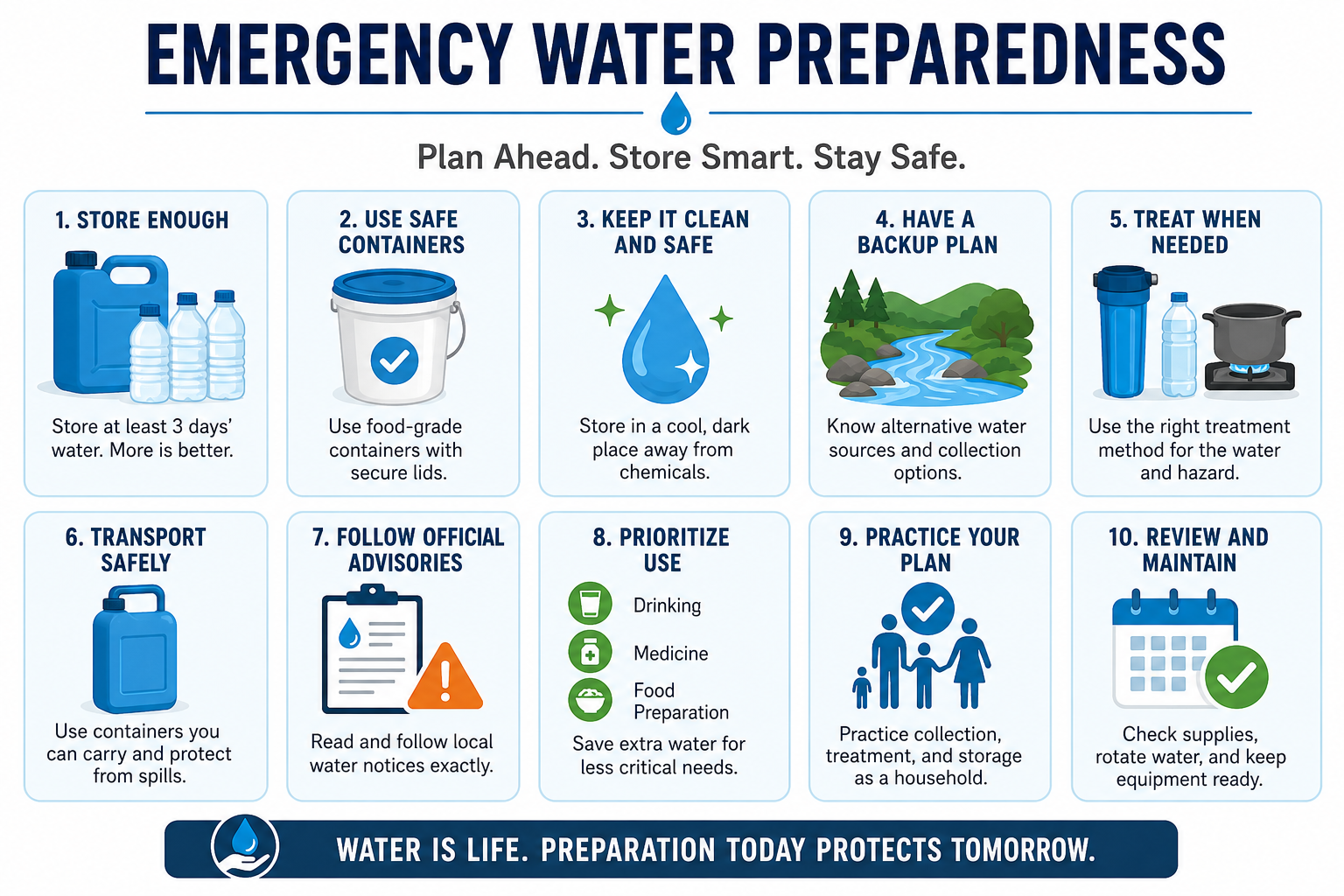
Emergency water preparedness is not simply about how many containers are stored in the house. A resilient water plan combines storage, safe handling, treatment knowledge, backup sources, sanitation, transportation, and reliable information. The goal is to maintain access to safe water even when the normal system cannot be trusted or is temporarily unavailable.
© Prepping Communities. This content is for informational purposes only and not professional advice. Use at your own risk.
Terms | Privacy | Guidelines