
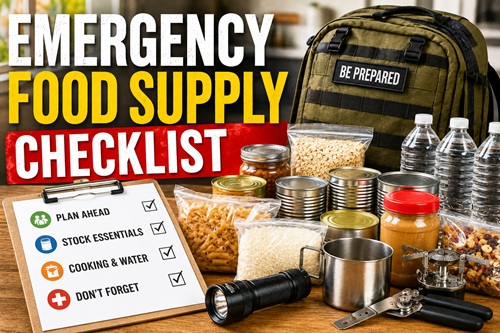
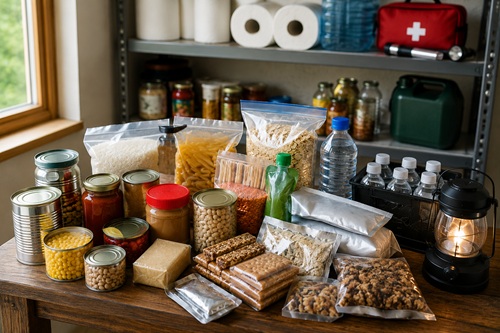
A reliable emergency food supply starts with foods your household already enjoys and knows how to prepare. The best emergency pantry contains shelf-stable foods that are nutritious, easy to store, simple to prepare, and regularly rotated so nothing goes to waste.
Use this checklist to build an emergency food supply that can support your household during power outages, severe weather, supply disruptions, and other emergencies.
Build Your Food Supply
□ Store foods your family regularly eats.
□ Choose shelf-stable products with long expiration dates.
□ Include a variety of proteins, carbohydrates, fruits, and vegetables.
□ Build your supply gradually over time.
□ Rotate older food into normal meals.
□ Replace used items promptly.
Ready-to-Eat Foods
□ Canned meats
□ Canned vegetables
□ Canned fruit
□ Peanut butter or other nut butters
□ Crackers
□ Granola bars
□ Trail mix
□ Ready-to-eat soups
Long-Term Staples
□ Rice
□ Pasta
□ Dried beans
□ Lentils
□ Oats
□ Flour
□ Sugar
□ Salt
High-Energy Foods
□ Nuts
□ Seeds
□ Energy bars
□ Dried fruit
□ Shelf-stable cheese
□ Jerky
□ Honey
□ Nut mixes
Cooking Supplies
□ Manual can opener
□ Portable stove (for outdoor use where appropriate)
□ Fuel supply
□ Pots and pans
□ Cooking utensils
□ Food thermometer
Special Dietary Needs
□ Infant formula if required.
□ Baby food.
□ Prescription nutrition products.
□ Foods for allergies or food sensitivities.
□ Medical dietary supplies.
□ Easy-to-chew foods for older adults.
Water for Food Preparation
□ Store drinking water.
□ Store extra water for cooking.
□ Keep water purification supplies available.
□ Know how much water your household requires.
□ Rotate stored water regularly.
Food Storage
□ Store food in a cool, dry location.
□ Protect food from moisture.
□ Keep food away from chemicals and fuels.
□ Store food in pest-resistant containers.
□ Clearly label storage dates.
Food Safety
□ Inspect cans for damage.
□ Discard swollen or leaking containers.
□ Monitor refrigerator temperatures during power outages.
□ Cook foods to safe temperatures.
□ Wash hands before preparing food.
□ Keep food preparation surfaces clean.
Maintenance
Review your emergency food supply at least twice each year.
□ Replace expired food.
□ Rotate older supplies.
□ Check storage containers.
□ Update supplies for changing family needs.
□ Restock after emergencies.
□ Review meal plans using stored foods.
Key Takeaways
After completing this checklist, you should have:
✓ A balanced supply of shelf-stable foods.
✓ Ready-to-eat meals for the first days of an emergency.
✓ Long-term food staples for extended disruptions.
✓ Food that meets your household’s dietary needs.
✓ Safe food storage and preparation practices.
✓ A food supply that is regularly rotated and ready when needed.
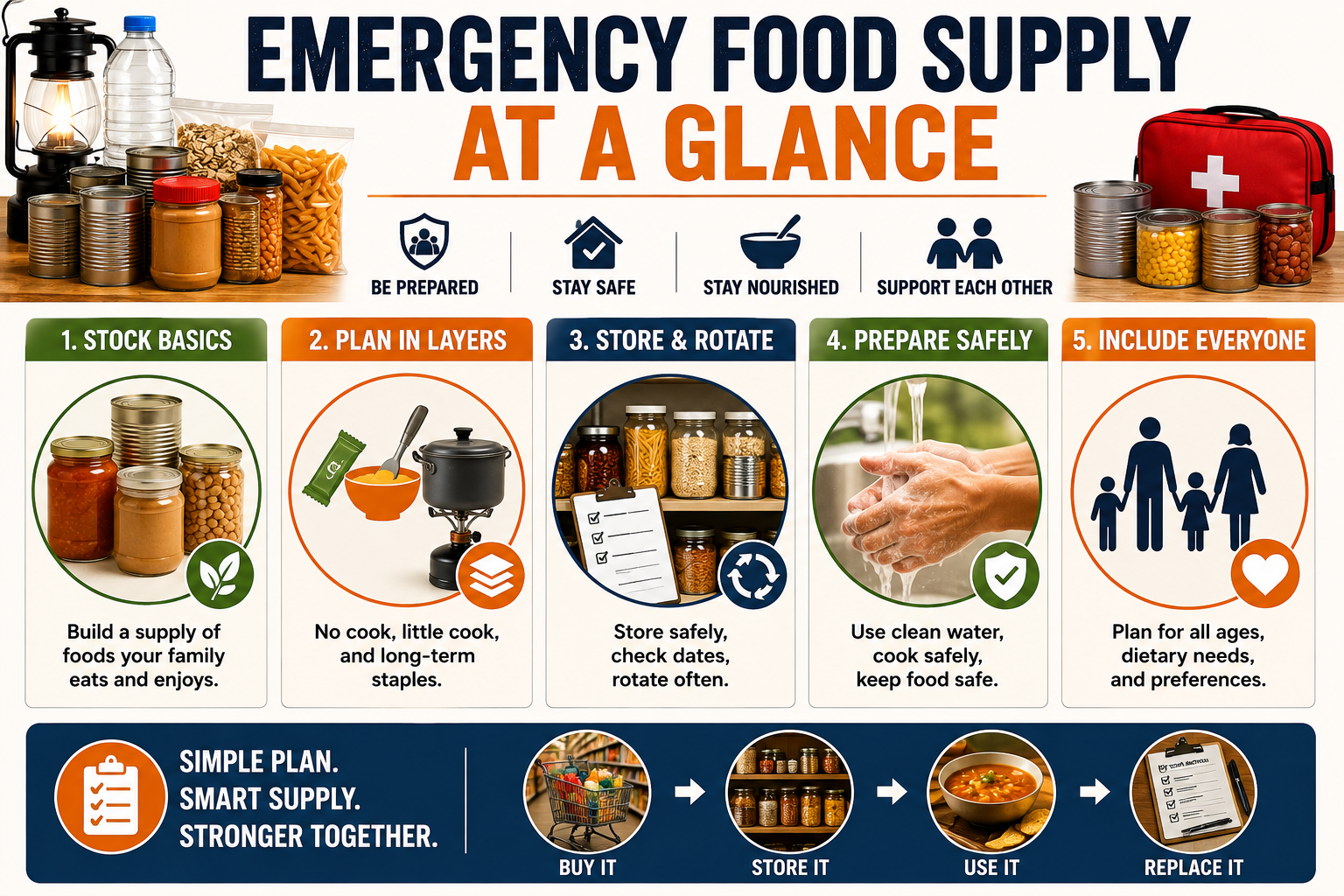
Remember: The best emergency food supply is one your household already enjoys, knows how to prepare, and regularly replaces through everyday use. Consistent rotation and thoughtful planning are far more valuable than simply storing large amounts of food.
© Prepping Communities. This content is for informational purposes only and not professional advice. Use at your own risk.
Terms | Privacy | Guidelines