
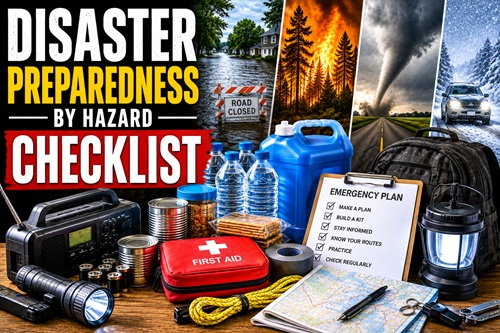
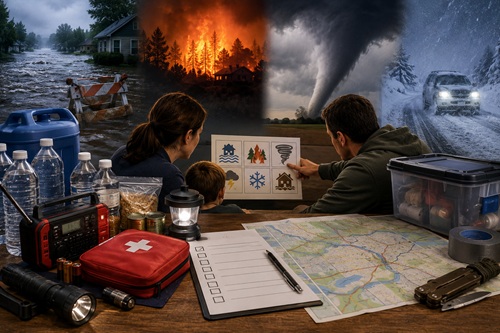
A strong emergency plan starts with preparations that work across many types of disasters, but not every emergency requires the same response. During one hazard, staying indoors may provide protection; during another, remaining inside could increase the danger. Evacuation routes, protective actions, communication needs, and safe locations can all change depending on what is happening.
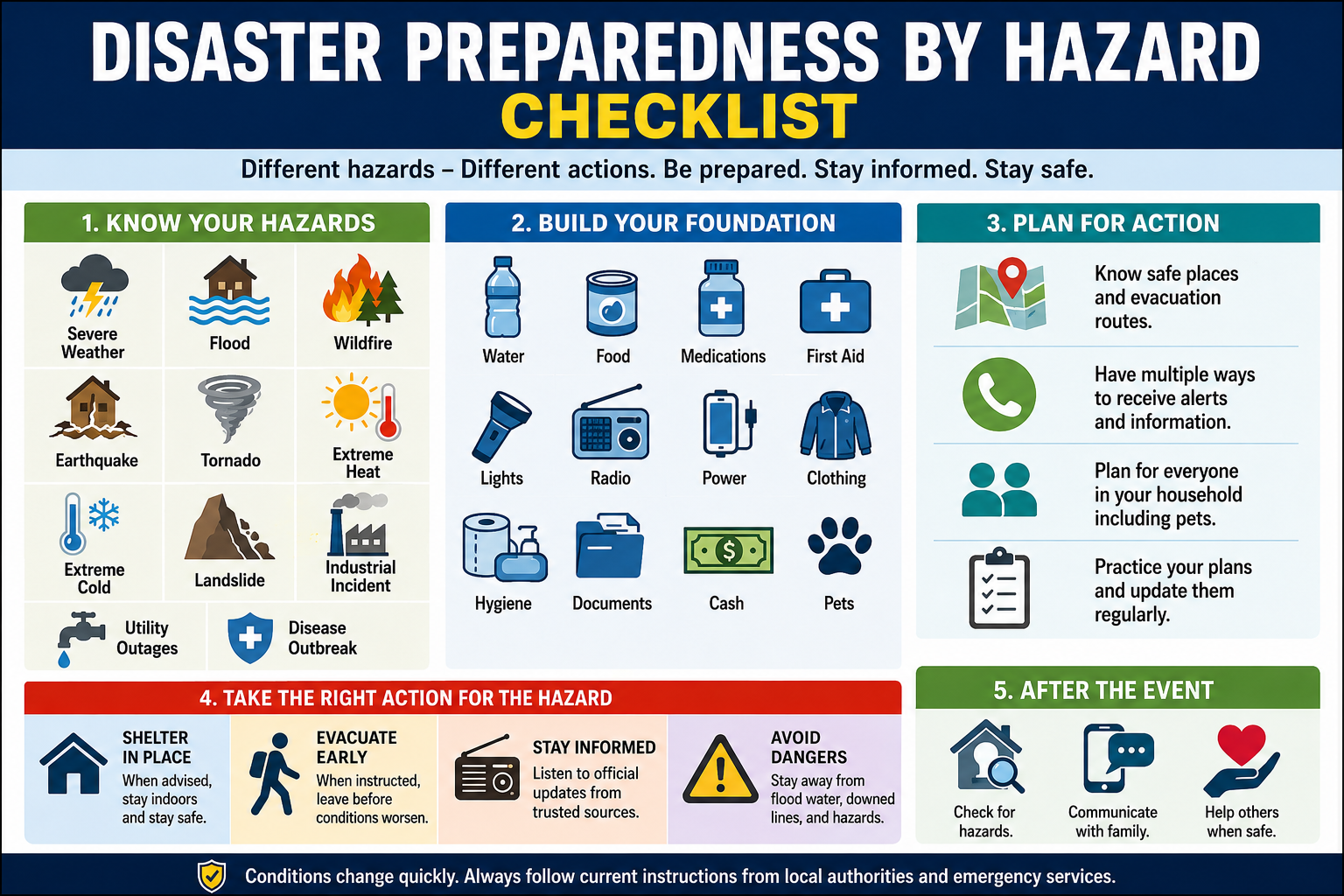
Use this checklist to build a common preparedness foundation and then develop separate plans for the hazards most likely to affect your household and community. During an actual emergency, use current information from responsible local authorities and emergency services because conditions can change quickly.
Identify Your Local Hazards
□ Identify the natural hazards that could affect your area.
□ Identify significant weather hazards.
□ Consider wildfire risk.
□ Consider flooding and drainage problems.
□ Consider earthquake risk where applicable.
□ Consider extreme heat and cold.
□ Consider severe storms and high winds.
□ Consider landslides or other terrain hazards where applicable.
□ Consider coastal hazards where applicable.
□ Consider industrial or transportation incidents.
□ Consider extended utility failures.
□ Consider disease outbreaks and public-health emergencies.
□ Review historical disasters in your region.
□ Review appropriate local hazard maps.
□ Rank hazards according to likelihood and potential impact.
Build an All-Hazards Foundation
□ Maintain an emergency water supply.
□ Maintain a rotating emergency food supply.
□ Keep essential medications available.
□ Maintain first aid supplies.
□ Keep flashlights and backup lighting.
□ Maintain backup charging capability.
□ Keep a battery-powered or hand-crank radio.
□ Maintain appropriate seasonal clothing.
□ Keep hygiene and sanitation supplies.
□ Protect important documents.
□ Maintain emergency contact information.
□ Keep appropriate emergency cash.
□ Maintain household evacuation supplies.
□ Include pets and service animals.
□ Review emergency supplies regularly.
Emergency Alerts and Information
□ Identify official emergency-alert systems in your area.
□ Enable appropriate emergency alerts on household phones.
□ Identify reliable local weather information.
□ Know which agencies provide wildfire information.
□ Know where flood warnings are published.
□ Identify local public-health information sources.
□ Know how utility providers communicate outages and hazards.
□ Keep a battery-powered radio available.
□ Maintain more than one method of receiving emergency information.
□ Keep important information available without internet access.
□ Verify the location and time of emergency messages when circumstances allow.
□ Review instructions as conditions change.
Create Hazard-Specific Plans
Create a separate plan for each significant hazard affecting your household.
□ Record the hazard.
□ Identify likely warning signs.
□ Identify official warning sources.
□ Determine the safest immediate protective action.
□ Determine whether evacuation may be necessary.
□ Identify appropriate safe locations.
□ Identify primary evacuation routes.
□ Identify alternate evacuation routes.
□ Identify routes or locations that may become dangerous.
□ Identify important equipment or supplies needed for that hazard.
□ Consider secondary hazards.
□ Record important emergency contacts.
□ Keep each hazard plan short enough to use quickly.
Flood Preparedness
□ Determine whether your home is in or near a flood-prone area.
□ Identify higher or safer locations where appropriate.
□ Know which roads commonly flood.
□ Identify routes that avoid low areas, underpasses, and vulnerable crossings.
□ Maintain a flood evacuation plan.
□ Protect important documents from water.
□ Move important items above likely flood levels where practical.
□ Monitor current flood and weather information.
□ Be prepared to evacuate before routes become unsafe.
□ Never intentionally enter moving flood water.
□ Never drive around flood barriers or road closures.
□ Treat flood water as potentially contaminated.
Wildfire Preparedness
□ Determine your local wildfire risk.
□ Identify more than one evacuation route.
□ Know how emergency wildfire alerts are communicated.
□ Keep vehicles prepared during periods of elevated wildfire risk.
□ Maintain portable evacuation supplies.
□ Keep important documents ready.
□ Include pets and service animals in evacuation planning.
□ Reduce appropriate combustible materials around buildings where practical and permitted.
□ Consider how smoke could affect household members.
□ Maintain appropriate indoor air-filtration capability where practical.
□ Be prepared to leave early when conditions warrant or authorities direct evacuation.
□ Never enter closed wildfire areas to observe conditions.
Smoke and Poor Air Quality
□ Monitor reliable air-quality information.
□ Identify household members particularly vulnerable to smoke.
□ Keep windows and doors closed when appropriate.
□ Improve indoor air filtration where practical.
□ Maintain appropriate replacement filters.
□ Identify a cleaner-air location if your home cannot provide adequate protection.
□ Reduce strenuous outdoor activity when air quality is hazardous.
□ Keep necessary medications accessible.
□ Follow healthcare advice for household members with relevant medical needs.
□ Be prepared to relocate if indoor conditions become unsafe.
Severe Storms and High Winds
□ Monitor current weather warnings.
□ Secure appropriate outdoor objects before severe weather arrives.
□ Identify a safer location inside your home.
□ Stay away from windows during dangerous winds.
□ Charge phones and backup batteries.
□ Keep flashlights accessible.
□ Prepare for electrical outages.
□ Avoid unnecessary travel during dangerous conditions.
□ Watch for falling trees, damaged structures, and downed power lines.
□ Inspect property cautiously after the storm.
□ Report dangerous utility damage through appropriate channels.
Tornado Preparedness
□ Determine whether tornadoes are a significant local hazard.
□ Identify the safest available shelter location.
□ Prefer a suitable interior location away from windows when appropriate to local guidance.
□ Keep emergency supplies near the shelter location.
□ Maintain appropriate protective footwear nearby.
□ Keep phones and emergency alerts available.
□ Practice moving quickly to the shelter area.
□ Include pets and dependent household members in the plan.
□ Follow current local tornado warnings.
□ Remain sheltered until conditions indicate it is safe to leave.
Hurricane and Tropical Storm Preparedness
□ Understand your local hurricane or tropical-storm risk.
□ Know whether your home is in an evacuation zone.
□ Identify inland evacuation destinations.
□ Maintain primary and alternate evacuation routes.
□ Monitor official storm forecasts and evacuation information.
□ Prepare vehicles before conditions deteriorate.
□ Protect windows and property using appropriate methods.
□ Secure outdoor objects.
□ Prepare for extended power and water outages.
□ Leave evacuation areas when directed.
□ Do not return until appropriate restrictions are lifted.
Earthquake Preparedness
□ Secure heavy furniture where appropriate.
□ Secure objects that could fall.
□ Store heavy items on lower shelves.
□ Identify safer locations within frequently occupied rooms.
□ Keep appropriate footwear accessible.
□ Maintain emergency supplies.
□ Know how to shut off utilities when necessary and safe.
□ Practice the locally recommended immediate protective action.
□ Expect possible aftershocks.
□ Check for injuries and immediate hazards after shaking stops.
□ Avoid damaged structures.
□ Follow local emergency instructions regarding evacuation and secondary hazards.
Tsunami Preparedness
□ Determine whether you live, work, or travel in a tsunami-risk area.
□ Learn local tsunami evacuation zones.
□ Identify appropriate higher ground or designated safe locations.
□ Know evacuation routes.
□ Practice reaching safer areas.
□ Recognize locally identified natural warning signs.
□ Keep evacuation supplies portable.
□ Do not travel toward the shoreline to observe unusual conditions.
□ Follow local tsunami warnings and evacuation instructions.
□ Remain away from hazardous coastal areas until authorities indicate it is safe.
Landslide and Mudslide Preparedness
□ Determine whether your property is near steep or unstable terrain.
□ Learn about previous landslides in the area.
□ Monitor weather conditions that may increase landslide risk.
□ Watch for unusual ground movement or changes where appropriate.
□ Know alternate routes around vulnerable terrain.
□ Avoid known slide areas during dangerous conditions.
□ Be prepared to evacuate if conditions deteriorate.
□ Stay away from active landslides and debris flows.
□ Report significant hazards to appropriate authorities.
Extreme Heat Preparedness
□ Identify household members vulnerable to extreme heat.
□ Maintain adequate safe drinking water.
□ Identify reliable cooling methods.
□ Know where community cooling locations may be available.
□ Maintain backup plans for power outages.
□ Reduce unnecessary strenuous activity during extreme heat.
□ Use shade and appropriate clothing.
□ Check on vulnerable household members and trusted neighbors.
□ Protect pets and service animals from excessive heat.
□ Never leave people or animals unattended in dangerously hot vehicles.
□ Monitor local heat warnings.
Extreme Cold Preparedness
□ Maintain appropriate winter clothing.
□ Keep adequate blankets and bedding.
□ Identify safe backup heating options.
□ Maintain appropriate emergency fuel where lawful and safe.
□ Protect household plumbing where practical.
□ Prepare for extended power outages.
□ Identify alternative heated locations.
□ Monitor vulnerable household members.
□ Include pets and service animals.
□ Never use outdoor combustion appliances inside occupied buildings.
□ Monitor current weather and travel information.
Winter Storm Preparedness
□ Monitor snowfall, freezing-rain, and wind warnings.
□ Maintain winter emergency supplies.
□ Keep snow-removal equipment ready.
□ Maintain appropriate vehicle winter supplies.
□ Avoid unnecessary travel during dangerous conditions.
□ Prepare for electrical outages.
□ Maintain backup lighting.
□ Maintain safe heating options.
□ Keep phones and communication devices charged.
□ Watch for ice accumulation and falling branches.
□ Check local road conditions before travel.
Power Outage Preparedness
□ Keep flashlights available.
□ Maintain spare batteries.
□ Keep portable power banks charged.
□ Identify equipment that requires electricity.
□ Prioritize backup power for essential equipment.
□ Maintain safe backup power systems where practical.
□ Protect refrigerated food by minimizing unnecessary door opening.
□ Maintain non-electric cooking alternatives where appropriate.
□ Plan for electrically powered medical equipment.
□ Consider how an outage affects water pumps, heating, cooling, and communication.
□ Never operate generators or combustion equipment inside occupied spaces.
□ Monitor utility information for restoration updates and safety notices.
Water Supply Disruption
□ Maintain stored drinking water.
□ Identify backup water sources.
□ Keep appropriate water-treatment equipment.
□ Maintain clean collection containers.
□ Understand local water advisories.
□ Follow the exact instructions issued for the specific water problem.
□ Protect stored water from contamination.
□ Prioritize safe water for drinking, medications, and essential food preparation.
□ Include additional needs for children, healthcare, pets, and service animals.
□ Seek resupply before stored water reaches critically low levels.
Industrial or Chemical Incident
□ Identify significant industrial facilities or transportation corridors near your area.
□ Know how local emergency alerts are communicated.
□ Understand that different substances may require different protective actions.
□ Follow incident-specific instructions.
□ Be prepared either to evacuate or shelter as directed.
□ Keep windows and doors closed when instructed.
□ Turn off appropriate ventilation systems if authorities specifically direct it.
□ Avoid approaching an incident area.
□ Do not touch unknown substances or debris.
□ Do not improvise chemical protective equipment.
□ Follow public-health guidance regarding contaminated water, food, clothing, or surfaces.
Disease Outbreak Preparedness
□ Maintain appropriate hygiene supplies.
□ Keep routine household medications available.
□ Maintain basic cleaning supplies.
□ Keep reliable public-health information sources available.
□ Develop plans for temporary isolation or reduced contact when medically appropriate.
□ Plan how essential supplies could be obtained during movement restrictions or illness.
□ Maintain communication with family and caregivers.
□ Consider how school and work interruptions would affect the household.
□ Follow current healthcare and public-health recommendations.
□ Avoid spreading unverified medical information.
Communication Failure
□ Keep important telephone numbers on paper.
□ Maintain a battery-powered radio.
□ Keep backup charging equipment.
□ Establish an out-of-area contact.
□ Establish household meeting locations.
□ Create procedures for checking in if phones are unavailable.
□ Maintain appropriate offline maps.
□ Keep important instructions available offline.
□ Consider suitable alternative communication methods.
□ Practice communication procedures before an emergency.
Evacuation
□ Maintain a household evacuation plan.
□ Identify primary and alternate routes.
□ Maintain more than one possible destination.
□ Keep evacuation supplies ready.
□ Keep important documents accessible.
□ Include medications and medical equipment.
□ Include pets and service animals.
□ Maintain appropriate transportation arrangements.
□ Plan assistance for people who cannot evacuate independently.
□ Monitor route conditions.
□ Leave before conditions become dangerous when appropriate.
□ Follow lawful evacuation orders.
Shelter-in-Place Planning
□ Identify situations where authorities may recommend remaining indoors.
□ Select an appropriate interior location where applicable.
□ Maintain emergency supplies inside the home.
□ Keep communication equipment available.
□ Maintain drinking water and essential food.
□ Keep medications accessible.
□ Consider ventilation requirements.
□ Understand that shelter procedures vary depending on the hazard.
□ Follow incident-specific instructions rather than applying one shelter procedure to every emergency.
□ Be prepared to evacuate if instructions or conditions change.
Children and Dependents
□ Explain emergency plans in an age-appropriate way.
□ Teach appropriate immediate actions for locally significant hazards.
□ Keep emergency contact information available.
□ Establish reunification procedures.
□ Coordinate plans with schools and caregivers.
□ Maintain necessary medications.
□ Prepare mobility and accessibility equipment.
□ Include familiar comfort items.
□ Identify backup caregivers.
□ Practice emergency procedures without creating unnecessary fear.
Pets and Service Animals
□ Include animals in every relevant hazard plan.
□ Maintain food and water.
□ Keep carriers, harnesses, or leashes accessible.
□ Maintain necessary medications.
□ Keep identification information current.
□ Identify animal-friendly evacuation destinations.
□ Plan appropriate transportation.
□ Include service animals in shelter and evacuation arrangements.
□ Identify backup caregivers.
□ Consider how each hazard changes animal safety requirements.
Accessibility and Additional Assistance
□ Identify household members who may need evacuation assistance.
□ Make emergency information available in appropriate formats.
□ Ensure routes accommodate mobility equipment where possible.
□ Maintain backup power for essential assistive devices where practical.
□ Keep medical and accessibility information available.
□ Identify more than one person who can provide assistance.
□ Consider how elevator outages could affect evacuation.
□ Identify accessible emergency destinations.
□ Include caregivers in planning.
□ Review plans whenever household needs change.
Practice One Hazard at a Time
□ Select one locally significant hazard.
□ Review the warning system.
□ Practice the immediate protective action.
□ Review evacuation routes.
□ Test household communication.
□ Check emergency supplies.
□ Discuss what worked.
□ Identify problems.
□ Update the plan.
□ Practice another hazard during a future session.
□ Avoid mixing conflicting hazard instructions during drills.
Protect Clear Thinking During an Emergency
□ Identify what is actually known.
□ Separate confirmed information from rumors.
□ Determine the immediate hazard.
□ Identify the next safe action.
□ Give household members clear responsibilities.
□ Keep instructions simple.
□ Avoid repeatedly checking unreliable information.
□ Establish a reasonable time for the next information update.
□ Reassess conditions when new information becomes available.
□ Change the plan when conditions require it.
Common Mistakes to Avoid
□ Do not assume every disaster requires evacuation.
□ Do not assume every disaster requires sheltering indoors.
□ Do not apply flood procedures to wildfire or chemical incidents.
□ Do not combine conflicting instructions from different hazards.
□ Do not depend on one evacuation route.
□ Do not depend entirely on one communication method.
□ Do not enter restricted areas to observe or photograph an emergency.
□ Do not bypass road closures or emergency barriers.
□ Do not rely on social media rumors for critical safety decisions.
□ Do not assume instructions from another region or country automatically apply locally.
□ Do not ignore secondary hazards.
□ Do not continue following an old plan when conditions have clearly changed.
Maintenance
Review your hazard-specific preparedness plans at least twice each year and whenever local risks, household circumstances, or official guidance change.
□ Review your local hazard assessment.
□ Update emergency contacts.
□ Check emergency alerts.
□ Review evacuation routes.
□ Update evacuation destinations.
□ Inspect emergency supplies.
□ Replace expired supplies.
□ Test radios and communication equipment.
□ Charge backup batteries.
□ Review medical requirements.
□ Update accessibility plans.
□ Review plans for children and dependents.
□ Review plans for pets and service animals.
□ Check seasonal hazards.
□ Practice at least one hazard-specific procedure.
□ Update plans after drills or real emergencies.
Key Takeaways
After completing this checklist, you should have:
✓ A clear understanding of the major hazards that could affect your household.
✓ A basic emergency preparedness system that supports many different types of disasters.
✓ Separate plans for the most significant hazards in your area.
✓ Reliable ways to receive emergency warnings when conditions change.
✓ Hazard-specific evacuation, shelter, and protective-action plans.
✓ Preparations for children, dependents, pets, service animals, and people requiring additional assistance.
✓ Multiple communication, transportation, and evacuation options.
✓ A better understanding of why the safest response can change dramatically from one emergency to another.
✓ A routine for practicing and updating individual hazard plans.
All-hazards preparedness provides the foundation, but hazard-specific knowledge determines how that foundation should be used. The most important question during an emergency is not simply whether you are prepared – it is whether the action you are taking is appropriate for the hazard occurring right now. Build the common capabilities first, learn the correct response for the hazards around you, and keep those plans current as conditions and local guidance change.
© Prepping Communities. This content is for informational purposes only and not professional advice. Use at your own risk.
Terms | Privacy | Guidelines