
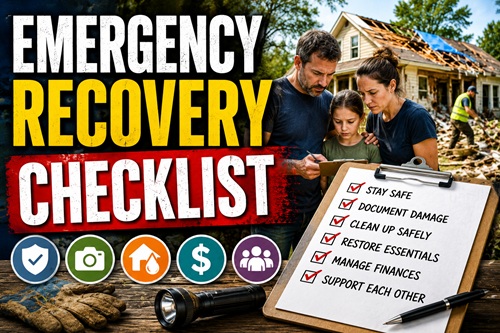
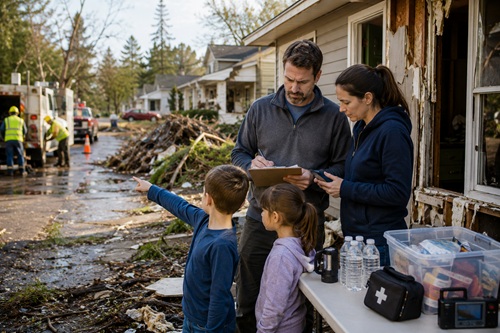
Recovery begins as soon as the immediate danger has passed. Returning to normal takes time, and the safest recoveries happen when households restore essential services, document damage carefully, and make thoughtful decisions instead of rushing.
Use this checklist to safely return home, protect your health and finances, restore daily routines, and recover more effectively after an emergency.
Returning Home Safely
□ Wait until authorities declare the area safe to enter.
□ Check your home for visible structural damage before entering.
□ Watch for downed power lines, gas odors, and unstable trees.
□ Use flashlights instead of open flames if utilities may be damaged.
□ Keep children and pets away from hazardous areas.
□ Leave immediately if you discover unsafe conditions.
Home Safety Inspection
□ Check walls, ceilings, and foundations for damage.
□ Look for water leaks and plumbing problems.
□ Inspect electrical systems before restoring power.
□ Verify natural gas systems are safe before use.
□ Test smoke and carbon monoxide detectors.
□ Remove immediate hazards before beginning cleanup.
Document the Damage
□ Photograph every damaged room before moving anything.
□ Record damaged belongings with photos or video.
□ Keep receipts for emergency purchases and repairs.
□ Save all insurance claim numbers and paperwork.
□ Maintain a written record of important conversations.
□ Back up digital copies of important documents.
Health and Cleanup
□ Wear gloves, sturdy footwear, and eye protection.
□ Use respiratory protection if mold or dust is present.
□ Remove standing water as quickly as possible.
□ Dry wet materials to reduce mold growth.
□ Discard contaminated food and medicines.
□ Wash hands thoroughly after cleanup activities.
Restore Essential Services
□ Confirm drinking water is safe.
□ Restore electricity only when safe.
□ Check heating and cooling equipment.
□ Recharge communication devices.
□ Replace essential medications.
□ Restock emergency supplies that were used.
Financial Recovery
□ Contact your insurance company promptly.
□ Obtain estimates before major repairs.
□ Verify contractors before hiring.
□ Keep copies of all invoices and receipts.
□ Monitor financial accounts for fraudulent activity.
□ Update important financial records if necessary.
Family Well-Being
□ Re-establish normal meal schedules.
□ Restore regular sleep routines.
□ Talk openly about the experience.
□ Check on older relatives and neighbors.
□ Allow children to ask questions.
□ Seek professional help if emotional stress continues.
Community Recovery
□ Share verified information with neighbors.
□ Assist others only when it is safe to do so.
□ Report damaged infrastructure to authorities.
□ Participate in community cleanup efforts when appropriate.
□ Support local businesses as they reopen.
□ Help rebuild neighborhood communication networks.
Emergency Supplies to Replace
□ Drinking water
□ Non-perishable food
□ First aid supplies
□ Prescription medications
□ Batteries
□ Flashlights
□ Hygiene supplies
□ Fuel and backup power supplies
Common Recovery Mistakes
□ Returning home before it is safe.
□ Failing to document damage before cleanup.
□ Ignoring hidden structural hazards.
□ Using unsafe generators indoors.
□ Throwing away damaged property too soon.
□ Hiring unlicensed contractors.
□ Forgetting to replenish emergency supplies.
□ Ignoring emotional recovery.
Maintenance
Review your recovery plans at least once each year.
□ Update insurance information.
□ Refresh emergency contact lists.
□ Replace expired emergency supplies.
□ Update home photographs for insurance records.
□ Review household emergency plans.
□ Practice evacuation and recovery procedures.
Key Takeaways
After completing this checklist, you should have:
✓ A safer process for returning home after an emergency.
✓ Better documentation for insurance and financial recovery.
✓ A structured plan for restoring essential household services.
✓ Reduced health and safety risks during cleanup.
✓ Greater confidence in making recovery decisions.
✓ A household that can recover more quickly from future emergencies.
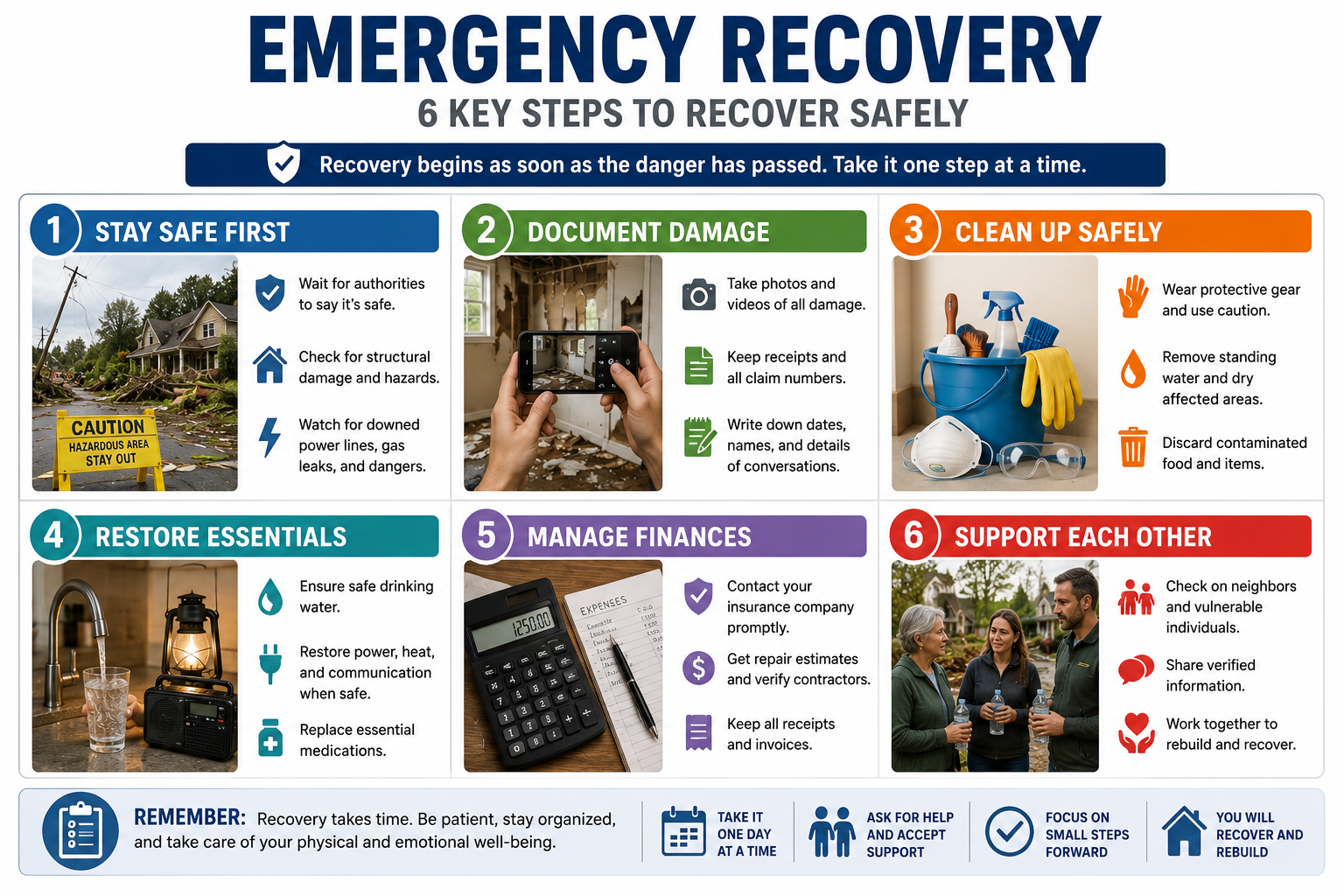
Remember: Recovery is a marathon, not a sprint. Prioritize safety, document everything, restore the essentials first, and rebuild one step at a time. A calm, organized approach helps protect your family, reduce costly mistakes, and speed the path back to normal.
© Prepping Communities. This content is for informational purposes only and not professional advice. Use at your own risk.
Terms | Privacy | Guidelines