
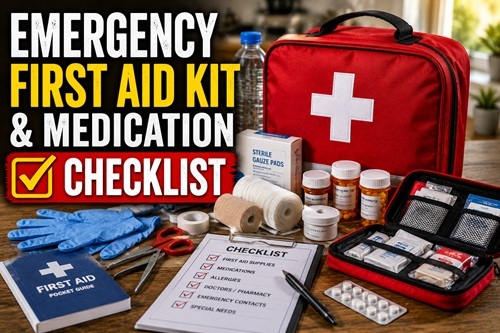
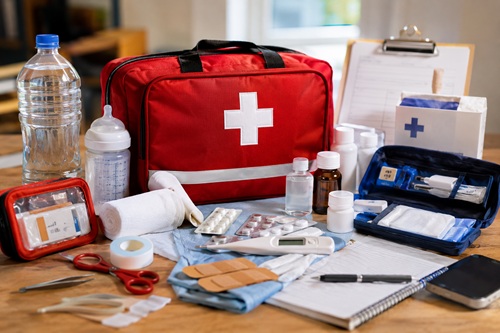
Emergencies can cause injuries at the same time that clinics, pharmacies, transportation, electricity, and normal healthcare services are disrupted. A well-prepared household should be able to provide appropriate basic first aid while also maintaining essential medications, medical information, assistive equipment, and ongoing care needs until normal services are available.
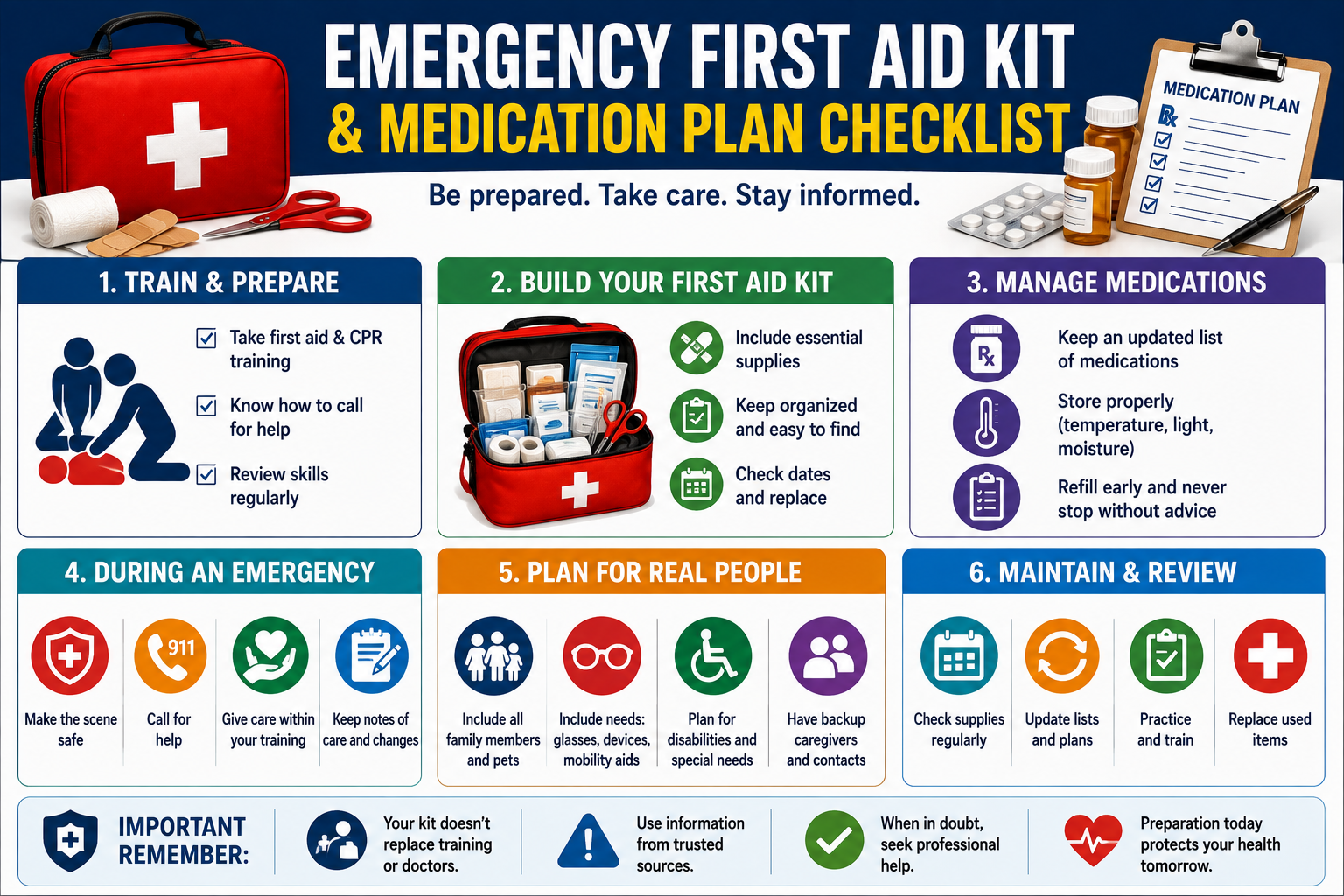
Use this checklist to organize first aid supplies, strengthen household first aid skills, protect medications, document important health information, and create backup plans for medical needs that cannot simply stop during an emergency.
First Aid Training
□ Take a recognized first aid course appropriate to your location.
□ Learn CPR through an appropriate recognized training provider.
□ Keep first aid certification current where applicable.
□ Refresh practical skills periodically.
□ Make sure more than one household member has training when possible.
□ Learn how to contact emergency medical services in your area.
□ Understand the limits of your training.
□ Practice locating and opening your first aid kit quickly.
□ Keep appropriate first aid reference material available offline.
□ Never assume that owning medical supplies replaces proper training.
First Aid Kit Location
□ Keep the main first aid kit in an accessible location.
□ Make sure household members know where it is stored.
□ Clearly identify the kit.
□ Protect supplies from moisture and contamination.
□ Protect supplies from excessive heat and freezing.
□ Keep medications appropriately secured.
□ Keep the kit out of inappropriate reach of young children.
□ Consider maintaining a smaller portable kit.
□ Keep an appropriate first aid kit in frequently used vehicles.
□ Include first aid supplies in evacuation preparations.
□ Make sure kits can be quickly taken during an evacuation.
Basic First Aid Supplies
□ Disposable medical gloves
□ Adhesive bandages in several sizes
□ Sterile gauze pads
□ Appropriate wound dressings
□ Medical tape
□ Elastic bandages
□ Roller bandages
□ Appropriate cleaning supplies
□ Cold packs
□ First aid scissors
□ Tweezers
□ Digital thermometer
□ CPR barrier device if included in your training
□ Emergency blanket
□ Appropriate eye protection
□ Appropriate first aid reference information
□ Waste bags for used materials
Organize the First Aid Kit
□ Group similar supplies together.
□ Keep frequently needed items easy to reach.
□ Clearly label compartments or containers.
□ Separate medications from general supplies where appropriate.
□ Protect sterile supplies from damage.
□ Keep liquids securely contained.
□ Maintain an inventory of important supplies.
□ Record expiration dates where appropriate.
□ Replace used items promptly.
□ Remove damaged or contaminated supplies.
□ Avoid filling the kit with equipment household members are not trained to use.
Personal Medications
□ Create a current list of prescribed medications.
□ Record medication names.
□ Record the prescribed strength where applicable.
□ Record the prescribed schedule.
□ Keep prescribing instructions available.
□ Record the reason for each medication when useful for emergency care.
□ Maintain pharmacy information.
□ Maintain prescriber contact information.
□ Keep medications in properly labelled containers.
□ Follow appropriate storage requirements.
□ Review medication information whenever prescriptions change.
□ Discuss emergency medication continuity with the appropriate healthcare professional.
Medication Supply Planning
□ Determine which medications are essential to ongoing health.
□ Learn how frequently prescriptions can normally be refilled.
□ Ask your pharmacist or healthcare provider about appropriate emergency refill options.
□ Maintain an appropriate lawful reserve when permitted and medically appropriate.
□ Refill essential medications before supplies become critically low.
□ Monitor expiration dates.
□ Rotate medication supplies appropriately.
□ Keep prescriptions and medication information accessible.
□ Identify an alternate pharmacy where practical.
□ Know how to contact the appropriate healthcare provider if normal services are disrupted.
□ Never change prescribed doses simply to make medication last longer without qualified medical guidance.
Medication Storage
□ Read storage instructions for each medication.
□ Identify medications sensitive to excessive heat.
□ Identify medications that must be protected from freezing.
□ Identify medications requiring refrigeration.
□ Protect medications from moisture.
□ Keep medications in appropriately labelled containers.
□ Store medications securely.
□ Protect medications from children and unauthorized access.
□ Keep medications separate from household chemicals.
□ Consider how medications would be protected during evacuation.
□ Ask a pharmacist or appropriate healthcare professional about specialized storage requirements.
Refrigerated Medications
□ Identify all medications requiring refrigeration.
□ Determine their required storage conditions from reliable professional or manufacturer guidance.
□ Develop a backup plan for electrical outages.
□ Maintain appropriate backup power where practical.
□ Consider suitable insulated transportation options.
□ Keep appropriate temperature-monitoring equipment where recommended.
□ Know how you would transport refrigerated medication during evacuation.
□ Identify alternative locations with reliable refrigeration.
□ Keep pharmacy and healthcare-provider contact information available.
□ Seek professional advice if required storage conditions cannot be maintained.
Medication and Allergy List
Create a concise medical information sheet for each household member where appropriate.
□ Full name
□ Relevant emergency contact
□ Current medications
□ Medication strengths and schedules
□ Known medication allergies
□ Other significant allergies
□ Important health information relevant to emergency care
□ Relevant medical devices
□ Pharmacy information
□ Healthcare-provider information
□ Emergency contact information
□ Date the information was last updated
Protect Medical Information
□ Keep a paper copy of essential medical information.
□ Store a copy in your emergency kit.
□ Keep information protected from water damage.
□ Maintain an appropriate secure digital backup.
□ Make sure necessary caregivers know where information is located.
□ Balance accessibility with personal privacy.
□ Update records whenever important information changes.
□ Take essential information during evacuation.
□ Avoid depending entirely on internet access for important medical records.
Medical Identification
□ Consider appropriate medical identification when recommended.
□ Make important allergy information accessible to appropriate caregivers.
□ Record essential medication dependencies.
□ Identify important implanted or assistive medical devices where relevant.
□ Make sure caregivers understand critical health information.
□ Keep emergency contact information available.
□ Update medical identification information when circumstances change.
Medical Equipment
□ Identify equipment required for daily health needs.
□ Keep manufacturer instructions available.
□ Maintain appropriate cleaning supplies.
□ Keep necessary replacement parts or consumables where practical.
□ Maintain required batteries.
□ Keep charging equipment accessible.
□ Identify equipment dependent on household electricity.
□ Develop backup power plans where appropriate.
□ Consider transportation requirements during evacuation.
□ Keep equipment protected from water and physical damage.
□ Arrange professional servicing as recommended.
Backup Power for Medical Needs
□ Identify essential electrically powered medical equipment.
□ Determine normal power requirements.
□ Maintain appropriate backup power where practical.
□ Keep backup batteries charged.
□ Test backup systems periodically.
□ Follow equipment-manufacturer instructions.
□ Identify an alternative location with dependable electricity.
□ Consider how extended outages would affect the equipment.
□ Include charging cables and adapters in evacuation preparations.
□ Never use unsafe indoor power-generation methods.
Glasses, Hearing Devices, and Mobility Aids
□ Keep current prescription glasses accessible.
□ Maintain spare glasses where practical.
□ Keep hearing devices protected.
□ Maintain appropriate replacement batteries or charging capability.
□ Keep mobility aids accessible.
□ Maintain necessary wheelchair or mobility-device equipment.
□ Keep important replacement parts where practical.
□ Include assistive devices in evacuation planning.
□ Identify backup assistance if equipment fails.
□ Include communication aids and sensory-support items where needed.
First Aid During an Emergency
□ Check that the immediate area is safe before approaching an injured person.
□ Contact emergency medical services when professional help is required.
□ Follow instructions provided by emergency personnel.
□ Provide care within the limits of your training.
□ Use appropriate protective equipment.
□ Keep unnecessary people away from the treatment area.
□ Protect the injured person from environmental hazards where appropriate.
□ Monitor for changes while awaiting professional assistance.
□ Record important information when practical.
□ Transfer care to qualified responders when they arrive.
When Professional Help Is Needed
Know how to quickly contact emergency medical services for serious or potentially life-threatening conditions.
□ Keep emergency numbers readily available.
□ Know your location or address.
□ Be prepared to describe what happened.
□ Follow dispatcher instructions.
□ Send someone to guide responders when appropriate.
□ Keep access routes clear.
□ Gather medication and medical information if available.
□ Do not delay emergency assistance while searching for nonessential supplies.
□ Seek qualified medical guidance whenever a condition exceeds your training or ability to manage safely.
Medical Care Log
During an extended emergency, keep a simple written record when ongoing care is being provided.
□ Record the person’s name.
□ Record relevant times.
□ Record medications taken according to their prescribed plan.
□ Record important symptoms or changes.
□ Record relevant fluids or meals when medically useful.
□ Record contact with healthcare professionals.
□ Record instructions received from qualified professionals.
□ Record transfers to another caregiver or medical facility.
□ Keep records legible.
□ Protect private medical information.
Children and Infants
□ Maintain appropriate child-specific healthcare supplies.
□ Keep medication information current.
□ Maintain pediatric healthcare contact information.
□ Include appropriate thermometers and first aid supplies.
□ Keep necessary infant-feeding supplies.
□ Maintain diapers and hygiene supplies where needed.
□ Include familiar comfort items.
□ Keep emergency contact information with caregivers.
□ Make sure backup caregivers understand important medical requirements.
□ Seek professional guidance for specialized infant or child medical needs.
Older Adults
□ Maintain a current medication list.
□ Keep appropriate mobility equipment accessible.
□ Include hearing and vision needs in the plan.
□ Identify medications requiring strict timing or special storage.
□ Maintain caregiver contact information.
□ Plan transportation assistance.
□ Consider backup power for medical devices.
□ Keep necessary continence and personal-care supplies.
□ Maintain appropriate hydration and nutrition preparations.
□ Identify backup caregivers.
Pregnancy and Specialized Health Needs
□ Discuss emergency continuity planning with the appropriate healthcare professional.
□ Keep relevant healthcare contact information available.
□ Maintain prescribed medications and supplements according to professional guidance.
□ Identify appropriate medical facilities.
□ Develop transportation alternatives.
□ Keep important medical records accessible.
□ Include appropriate hygiene and personal-care supplies.
□ Plan for disruptions to scheduled appointments.
□ Know whom to contact if circumstances change.
Personal Care and Dignity
□ Maintain appropriate hygiene supplies.
□ Include continence supplies where needed.
□ Maintain menstrual hygiene products.
□ Keep appropriate cleaning supplies.
□ Provide privacy whenever circumstances allow.
□ Maintain suitable clothing and bedding.
□ Include personal-care needs in evacuation planning.
□ Consider caregiver assistance requirements.
□ Protect personal medical information.
□ Treat people receiving assistance with dignity and respect.
Evacuation Medical Kit
□ Essential prescribed medications
□ Medication list
□ Allergy information
□ Copies of important prescriptions where appropriate
□ Basic first aid supplies
□ Necessary medical devices
□ Device batteries
□ Charging equipment
□ Glasses or vision aids
□ Hearing devices and supplies
□ Mobility aids
□ Relevant healthcare information
□ Emergency contact information
□ Necessary personal-care supplies
□ Appropriate refrigerated-medication transport equipment where required
Transportation to Medical Care
□ Identify the nearest appropriate medical facilities.
□ Identify an alternate facility.
□ Know primary transportation routes.
□ Identify alternate routes.
□ Maintain suitable transportation arrangements.
□ Plan assistance for people with mobility limitations.
□ Keep vehicles reasonably prepared.
□ Identify backup transportation.
□ Consider how road closures could affect access.
□ Know how emergency medical transportation is requested locally.
□ Keep facility addresses and telephone numbers available offline.
Caregiver Backup Plan
□ Identify the primary caregiver for household members requiring assistance.
□ Identify at least one backup caregiver where possible.
□ Share essential care information appropriately.
□ Keep medication schedules available.
□ Explain important medical equipment.
□ Keep emergency contact information accessible.
□ Identify responsibilities that cannot be interrupted.
□ Plan caregiver handovers.
□ Protect appropriate rest for caregivers during extended emergencies.
□ Update arrangements when circumstances change.
Infection Prevention
□ Keep soap available.
□ Maintain appropriate hand-cleaning supplies.
□ Keep disposable gloves available.
□ Store clean dressings appropriately.
□ Separate clean supplies from used materials.
□ Dispose of contaminated materials appropriately.
□ Clean reusable equipment according to appropriate instructions.
□ Protect first aid supplies from flood water and other contamination.
□ Keep treatment areas as clean as circumstances reasonably permit.
□ Follow current public-health guidance during disease outbreaks.
First Aid Kit Inventory
□ Create a written inventory.
□ Record important quantities.
□ Check expiration dates where applicable.
□ Inspect packaging.
□ Replace opened or damaged sterile supplies.
□ Replace used items.
□ Check batteries in applicable equipment.
□ Review medication supplies separately.
□ Keep the inventory with the kit.
□ Update the inventory after the kit is used.
Common Mistakes to Avoid
□ Do not assume equipment replaces first aid training.
□ Do not use unfamiliar medical equipment simply because it is in the kit.
□ Do not use medication prescribed for another person.
□ Do not change prescribed medication schedules without appropriate professional guidance.
□ Do not rely on unverified online medical advice during an emergency.
□ Do not store important medications without considering temperature requirements.
□ Do not allow first aid supplies to expire unnoticed.
□ Do not depend entirely on digital medical records.
□ Do not forget medical equipment when planning evacuation.
□ Do not overlook backup power requirements.
□ Do not delay professional emergency care when it is needed.
□ Do not exceed your training when qualified medical assistance is available or required.
Maintenance
Review your first aid and medication plan at least twice each year and whenever important household medical needs change.
□ Inspect the first aid kit.
□ Replace used supplies.
□ Check expiration dates.
□ Review medication inventories.
□ Update medication lists.
□ Update allergy information.
□ Review healthcare-provider contacts.
□ Check pharmacy information.
□ Test appropriate medical equipment.
□ Test backup power systems.
□ Recharge batteries.
□ Review refrigerated-medication plans.
□ Update caregiver arrangements.
□ Review transportation options.
□ Check evacuation medical kits.
□ Refresh appropriate first aid training.
Key Takeaways
After completing this checklist, you should have:
✓ An organized first aid kit containing supplies appropriate to your household and training.
✓ At least one household member with recognized first aid knowledge, with additional trained people where practical.
✓ Current records of essential medications, allergies, healthcare providers, and important medical needs.
✓ A plan for maintaining essential prescriptions during temporary disruptions.
✓ Safe storage and backup arrangements for temperature-sensitive medications.
✓ Backup power planning for essential medical and assistive equipment.
✓ Medical information that remains available even when internet access is unavailable.
✓ Evacuation preparations that include medications, medical devices, mobility equipment, and personal-care needs.
✓ Backup transportation and caregiver arrangements where they are needed.
✓ A routine for inspecting supplies, updating information, and refreshing practical skills.
Emergency medical preparedness is not about attempting to replace doctors, paramedics, pharmacists, or hospitals. It is about being ready to provide appropriate basic first aid, preserve essential treatment routines, communicate accurate medical information, and bridge temporary gaps in professional healthcare. A simple, organized system that household members understand is usually more useful than a complicated collection of medical equipment nobody knows how to use.
© Prepping Communities. This content is for informational purposes only and not professional advice. Use at your own risk.
Terms | Privacy | Guidelines