
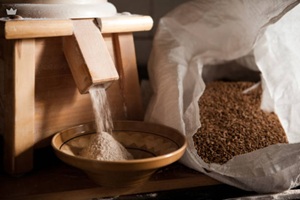
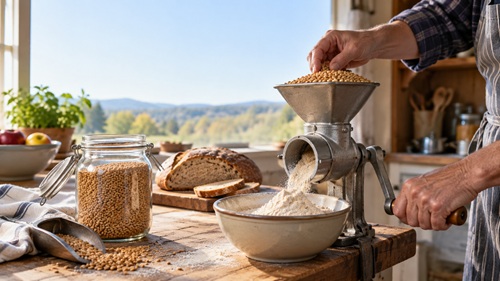
Storing wheat is one thing. Being able to turn that wheat into something your family can actually eat is another. That distinction matters in preparedness. A bucket containing 30 pounds of wheat berries represents a substantial amount of potential food, but it isn’t the same thing as having 30 pounds of flour ready to use. Before that wheat becomes bread, biscuits, pancakes, tortillas or other foods, somebody needs to know how to process it.
That is why a grain mill can be more than another kitchen appliance. Paired with properly stored grain and the knowledge to use it, a mill gives you the ability to turn a durable food reserve into usable ingredients. Preparedness adds another consideration, though. If your mill depends on electricity, can you still turn that grain into food when the power is off?
Why Store Grain Instead of Just Flour?
Flour is convenient. Open the bag, measure it and start cooking. For everyday use and short-term food storage, keeping flour makes perfect sense. For longer-term preparedness, storing some intact grain has advantages because the wheat kernel remains whole until you are ready to use it. Once wheat is milled, much more of it is exposed to air and its storage characteristics change.
Properly stored whole wheat can remain usable for a long time when protected from moisture, insects, rodents and excessive heat. Instead of storing only flour, a household can keep part of its reserve as whole grain and mill smaller quantities when they are needed.
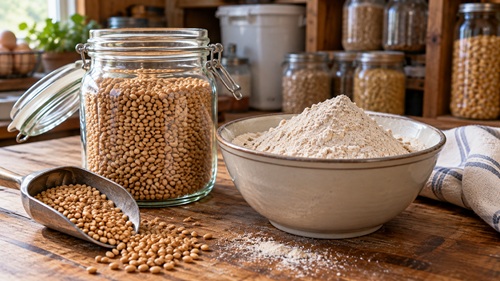
There is an important preparedness principle hiding in that simple process: stored food isn’t necessarily usable food. If you have 100 pounds of wheat but no way to grind it, you have a problem. If you have a grain mill but it only works with electricity, an extended outage introduces another dependency. Preparedness isn’t simply about possessing resources. It is about maintaining the ability to use them.
A wheat kernel contains the bran, germ and endosperm. When whole wheat berries are milled and nothing is removed, all three remain in the resulting flour. This is different from refined white flour, where much of the bran and germ has been removed during processing.
Freshly ground whole-grain flour also behaves differently from the all-purpose white flour many people are accustomed to using. It has a different texture, absorbs water differently and can change the way dough behaves. Buying a grain mill therefore doesn’t automatically make someone prepared to live from stored wheat. Milling is only one part of the process. You also need to know how to cook with what comes out of the mill, and the best time to learn that is while the grocery store is open and the electricity is working.
Store Grain Based on What You Actually Eat
One of the easiest mistakes when building a grain reserve is simply buying “wheat” without considering what you intend to make from it. Different wheat varieties perform differently in the kitchen, so what you store should have some connection to the foods your household actually eats.
Hard red and hard white wheat are generally good choices for yeast breads because their protein characteristics help produce dough capable of trapping gases during fermentation. Hard red wheat gives the stronger whole-wheat flavor many people recognize, while hard white wheat generally produces a lighter color and milder flavor.
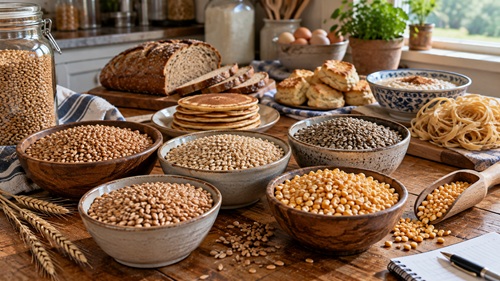
Soft wheat serves a different purpose. Its lower protein characteristics make it useful for foods such as biscuits, pancakes, muffins, crackers, cookies and some pastries. Durum wheat is commonly associated with pasta. Depending on the mill, grains such as rye, spelt, einkorn, barley, oats, buckwheat, millet and corn may also be processed into useful flours or meals.
This is why grain storage should begin with meals rather than buckets. Think about what your household actually eats and what you know how to prepare. A family that regularly makes bread may want a different grain reserve from one that expects to make pancakes, biscuits, flatbreads, porridge or pasta. Storing foods you already know how to use makes the transition from normal life to an emergency much easier.
Turning Stored Grain Into Food
The actual grinding process is fairly simple. Start with clean, dry, food-grade grain intended for human consumption. Agricultural seed grain should not automatically be treated as food because some seed products may have been chemically treated.
Before putting grain through a mill, inspect it. Spreading it across a tray or baking sheet makes it easier to spot stones, damaged kernels, insects or other debris. A small stone is easy to remove by hand but could potentially damage the grinding mechanism.
It also makes sense to measure the grain before grinding it. Using weight rather than cups makes this easier. If a recipe requires a particular weight of whole-grain flour, you can grind approximately that amount instead of producing a large batch and then having to store the excess flour.
Once the grain has been inspected, place a clean container beneath the mill and choose the appropriate setting. Fine grinding produces flour suitable for most baking, while coarser settings can produce cracked grain or meal. Cracked grain is useful too and can be cooked as a hot cereal or incorporated into other foods.
Know what your particular mill is designed to process. Grain mills are not universal grinders. Some should not be used for oily seeds, nuts, coffee or other high-oil foods because those materials can coat or clog the grinding surfaces. Even something as ordinary as popcorn may be acceptable in one mill and unsuitable for another. The manufacturer’s instructions should determine what goes through the machine rather than assuming anything dry can be ground.
For everyday baking, an electric grain mill is difficult to beat. Grain goes into the hopper, the machine does the work and flour begins appearing in the bowl. A good electric mill can process substantial quantities quickly and produce very fine flour. From a preparedness perspective, however, speed isn’t the only consideration because an electric mill introduces another dependency: electricity.
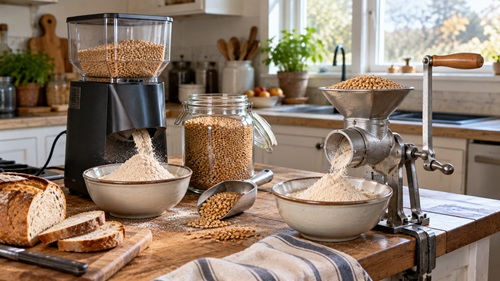
During a short outage, that may not matter. A generator, battery power station, inverter or solar system might easily operate the mill. During a longer disruption, that dependency becomes much more important. A manual grain mill provides another path. Hand milling is slower and requires physical effort, but it doesn’t depend on the electrical grid.
For many households, the strongest arrangement may not be choosing electric or manual. An electric mill can handle normal everyday use while a capable manual mill provides redundancy. The important part is actually testing the backup rather than putting it on a shelf and assuming the problem has been solved.
Try grinding enough wheat by hand to make a loaf of bread or another meal. You may discover that the mill needs to be mounted differently, the handle becomes uncomfortable after extended use, the flour isn’t as fine as expected or producing enough flour takes considerably longer than you imagined. Those are useful things to learn now rather than during an extended outage.
Flour Doesn’t Have to Mean Bread
A common food-storage idea is straightforward: store wheat, grind wheat and bake bread. That certainly works, but bread is only one possibility. Freshly ground grain can become pancakes, biscuits, crackers, flatbreads, muffins, dumplings, tortillas, porridge, pasta and many other foods depending on the grain and the ingredients available.
That flexibility can become important during an emergency. A loaf of yeast bread may require yeast or a sourdough starter, water, kneading, fermentation time and an oven or another suitable baking method. A simple flatbread may require considerably less equipment, fuel and preparation. Knowing several ways to use flour is therefore more valuable than knowing one perfect bread recipe. The preparedness skill isn’t simply bread making; it is being able to turn stored grain into meals under changing conditions.
Someone accustomed to supermarket white flour may also be surprised the first time they bake with freshly milled whole wheat. Whole-grain flour absorbs water differently, while bran influences dough structure. Different wheat varieties can behave differently as well, so freshly milled flour may require adjustments to hydration, mixing, kneading or resting time.
Rather than relying entirely on exact measurements, it helps to learn what properly hydrated dough looks and feels like. One useful technique with whole-grain bread is allowing the flour and water to rest together before completing the dough. This gives the flour time to absorb moisture and can help with dough development.
Freshly milled flour can also be sifted. A fine sieve removes some of the larger bran particles and can produce a somewhat lighter flour. The sifted material doesn’t automatically have to become waste; it can often be incorporated into other foods. The goal isn’t to become an expert baker. It is to understand your stored food well enough that you can adapt it to different circumstances.
For a preparedness pantry, there is usually little reason to grind a large quantity of wheat long before you need it. Keeping the grain intact and milling smaller amounts as required preserves the advantages of storing whole grain while providing fresh flour when it is needed.
Bulk grain needs protection from moisture, insects, rodents and contamination. Food-grade containers are important. Depending on the intended storage period and method, grain may be kept in suitable food-grade buckets combined with appropriate oxygen-barrier packaging. Properly dried grain can also be packaged with oxygen absorbers when using a suitable storage system.
Temperature matters too. Grain sitting for years in a hot garage experiences very different conditions from grain kept in a cool, dry storage area. Label what you store and include the grain variety and packaging date. That makes rotation easier and prevents the mystery-bucket problem years later.
Don’t Store Food You’ve Never Used
A household can buy hundreds of pounds of wheat and still be poorly prepared to live on it. Imagine opening those buckets during an extended emergency and discovering that nobody knows how to operate the mill. Your family doesn’t like the bread. Your normal recipe requires ingredients you no longer have. The manual mill takes much longer than expected, and nobody knows what else to make from the wheat.
Technically, you have food. Practically, you have a problem.
Preparedness works better when food storage overlaps with everyday life. Use some of your stored wheat now. Grind it and make bread occasionally. Try pancakes, biscuits or a simple flatbread. Cook cracked wheat as a hot cereal. Find out which grains your household likes and which recipes work reliably. Doing this naturally rotates some of your stored food while developing the skills required to use the rest of it.
This also reveals something much larger than grain milling. A resilient food system depends on more than the food itself. It depends on the tools, energy, water, knowledge and practical skills required to turn that food into a meal.
You can have grain but no mill. You can have a mill but no electricity. You can have flour but no practical way to cook it. You can have all of those things and still lack the experience to turn them into meals.
The same thinking can be applied throughout a preparedness pantry. Stored dried beans still require water, cooking equipment, fuel and time. Whole corn may require processing. Frozen meat depends on refrigeration until it can be eaten, cooked or preserved another way. Rice may be easy to store, but it still requires water and heat.
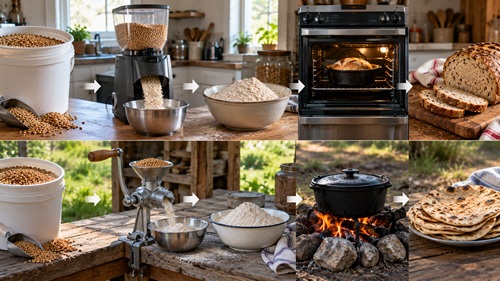
Follow your stored food all the way to the plate.
For wheat, the normal path might be stored grain to an electric mill, then flour to the kitchen oven and finally a meal. During a prolonged power outage, that path might need to become stored grain to a manual mill, then flour to an alternative cooking method and finally a meal. If that second path doesn’t exist, you have discovered a dependency worth addressing.
Test Your System While Everything Still Works
There is a simple exercise that can reveal weaknesses in a grain-storage plan very quickly. Take enough wheat to prepare one meal and pretend the electrical grid isn’t available. Use your manual mill, process the grain and prepare something using only the equipment and ingredients you expect to have during an outage.
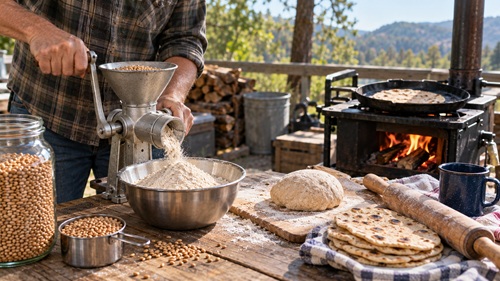
Pay attention to what happens rather than simply whether you succeed. Notice how long grinding takes and how much physical effort is required. See whether the flour is fine enough for what you planned to make. Pay attention to how much water you use and how much cooking fuel the meal requires.
Then consider the most practical question of all: would your family actually eat it?
One afternoon doing this can teach you more about your grain preparedness than another untouched bucket of wheat sitting in storage. It changes the question from “Do I have wheat?” to “Can I feed people with the wheat I have?” Those are very different measures of preparedness.
Preparedness Action Plan
Look at the grain already in your food storage and identify exactly what you have. Determine what those grains are suited for and whether they match foods your household actually eats. If you don’t currently store whole grain, start with a manageable amount and learn to use it before purchasing a large reserve.
Learn several ways to prepare freshly ground grain, including at least one meal that doesn’t require yeast or a conventional oven. If your primary mill is electric, determine how you would power it during an outage or consider adding a manual backup. Then actually use that backup and see how well it performs.
Check where your grain is stored. Protect it from moisture, insects, rodents and excessive heat, and make sure containers are properly packaged, dated and labeled. Most importantly, begin using some of your stored grain as part of normal life. The goal isn’t simply to own wheat. The goal is to maintain the ability to turn that wheat into food.
Key Takeaways
Whole grain can be an excellent preparedness staple, but the grain itself is only one part of the system. Milling equipment, cooking equipment, water, energy, recipes and practical experience determine whether stored wheat can actually become a meal.
Different grains serve different purposes, so your storage should reflect foods your household knows how to prepare and will actually eat. Electric mills offer speed and convenience, while manual mills can provide valuable redundancy when electricity isn’t available.
The larger lesson extends far beyond wheat. Follow your stored food all the way to the plate. Identify the tools, resources and skills required along the way and consider what happens when one of those dependencies disappears. Then practice while conditions are normal.
A bucket of wheat is stored food. Knowing how to turn it into tomorrow’s meal is preparedness.
© Prepping Communities. This content is for informational purposes only and not professional advice. Use at your own risk.
Terms | Privacy | Guidelines