
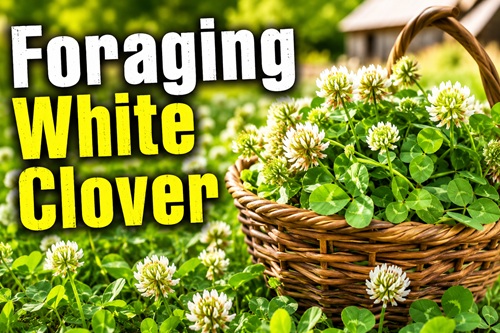
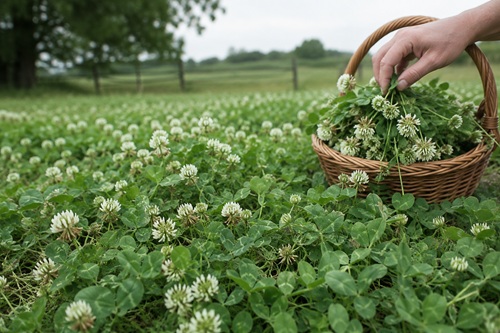
White clover (Trifolium repens) is one of those plants most people have walked over thousands of times without realizing it can be useful. It grows in lawns, fields, pastures, gardens, and other open grassy areas, often forming thick patches close to the ground. Many people simply consider it a lawn weed, but for someone interested in foraging, homesteading, or preparedness, white clover is worth learning.
White clover isn’t going to replace the food stored in your pantry, nor should it be viewed as a major source of survival calories. Its value comes from being a widespread edible plant that can supplement other foods. Once you know how to identify it, you may discover that you already have a renewable wild food growing around your home or property.
Why White Clover Is Worth Knowing
One of the biggest advantages of white clover is how common it is. You don’t necessarily have to travel into the wilderness looking for it. In many areas of North America, it grows right alongside people. The leaves, flowers, stems, and seeds are edible, although the younger leaves and flowers are generally the most practical parts to gather and use.
White clover works particularly well as a supplemental green. The young leaves can be mixed with other greens, cooked into soups and stews, or added to meals made from stored staples. The flowers can also be eaten or dried for later use. The tiny seeds are edible as well and can be ground, although collecting enough seeds to make that worthwhile requires considerably more effort.
From a preparedness perspective, this is where white clover becomes interesting. Imagine making a pot of beans, rice, lentils, potatoes, or soup from stored food. A handful of properly identified edible greens can add variety and additional nutrients without using more of your stored vegetables. The clover isn’t replacing the meal. It is helping stretch and improve what you already have.
White Clover Around the Homestead
White clover is useful for more than human food. It is a member of the legume family and can fix nitrogen through its relationship with soil bacteria. This allows it to grow in relatively poor soils while contributing nitrogen back into the surrounding soil. It is one reason clover is commonly included in pasture and cover-crop mixtures.
It can also provide forage for livestock and is an important food source for bees and other pollinators. A healthy patch of clover can therefore serve several purposes at once. It can protect soil, provide pollinator forage, contribute to livestock pasture, improve soil fertility, and provide an occasional edible plant for people.
That is a surprising amount of usefulness from something many homeowners spend money trying to eliminate.
How to Recognize White Clover
White clover is a low-growing perennial plant that usually spreads horizontally rather than growing tall. Its creeping stems travel along the ground and can form roots at the nodes, allowing a single patch to gradually spread across a lawn, pasture, or field.
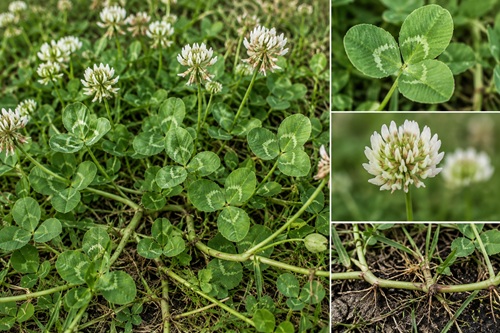
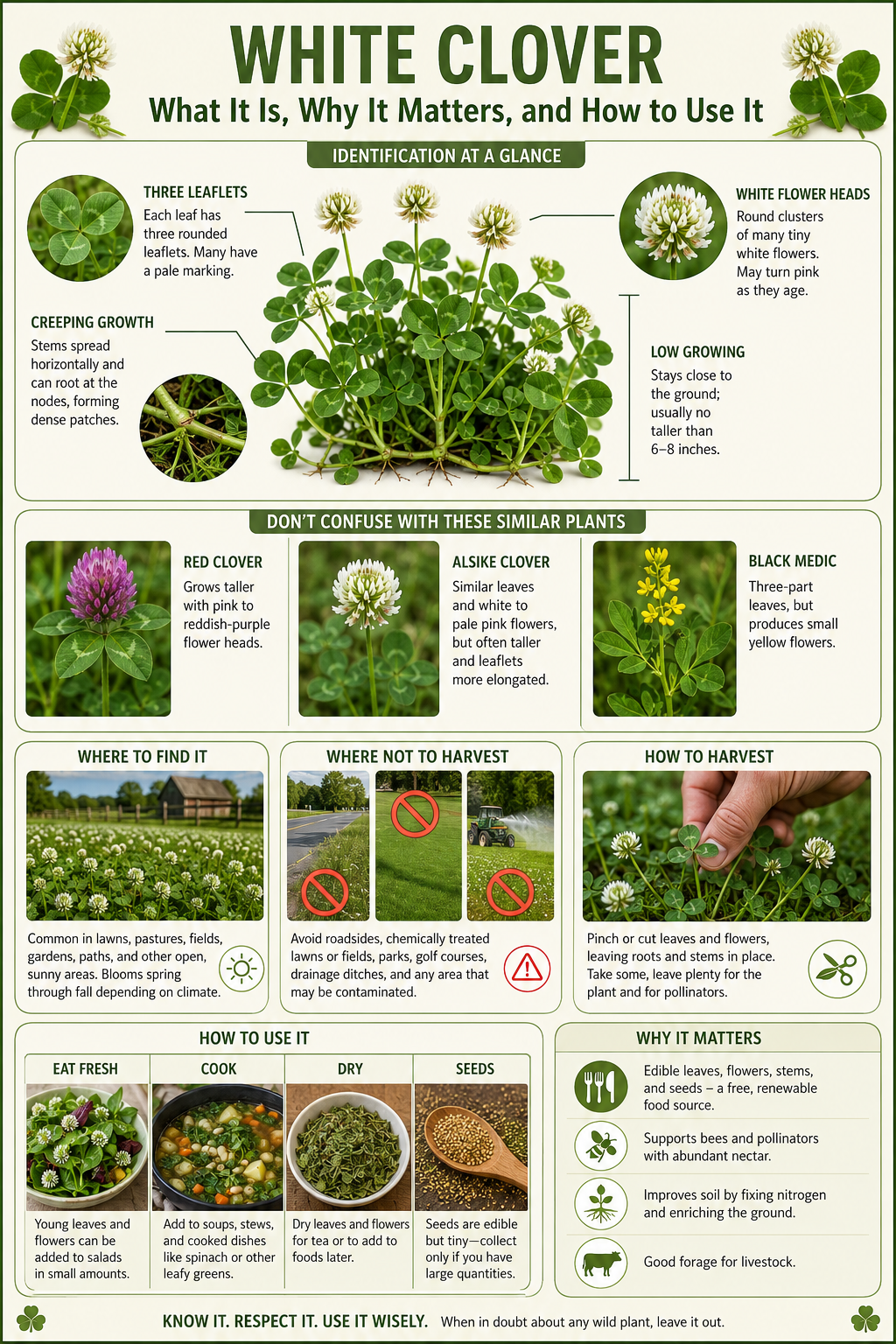
The familiar leaves are one of the easiest identification features. Each leaf normally consists of three rounded green leaflets. Many white clover plants have a pale whitish or light-green crescent or V-shaped marking across the leaflets, although that marking isn’t always present. The leaves and stems are generally smooth rather than noticeably hairy.
Identification becomes much easier when the plant is flowering. White clover produces rounded white flower heads held above the leaves on individual stalks. The flowers may develop a light pinkish tint as they age before eventually drying and turning brown. What appears to be a single round flower is actually a cluster containing many tiny individual flowers.
Don’t identify an edible plant using only one feature. Look at the entire plant. The combination of its low creeping growth, three rounded leaflets, smooth stems, rounded white flower heads, and tendency to grow in spreading patches provides a much stronger identification than simply looking for a three-leaf plant.
Watch for Similar Plants
White clover isn’t the only plant with three-part leaves. Red clover, alsike clover, black medic, and other plants can look similar at first glance.
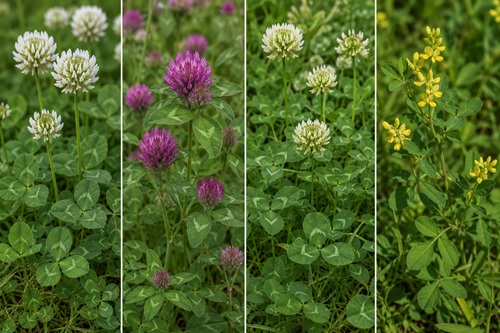
Red clover generally grows taller and produces the familiar pink to reddish-purple flowers. Black medic also has three-part leaves but produces small yellow flowers. Alsike clover can produce pale flowers that make identification somewhat more confusing.
This is one reason learning plants while they are flowering can be helpful. Once you have confidently identified white clover throughout an entire growing season, recognizing the leaves alone becomes much easier.
When there is any doubt about the identity of a wild plant, leave it alone.
Where to Find White Clover
White clover prefers open areas where it receives plenty of sunlight. Lawns, pastures, fields, gardens, paths, orchards, and other grassy areas are common places to find it. New growth usually appears during spring, followed by flowers from late spring through summer. Depending on the local climate, flowering may continue well into the fall.
Finding white clover usually isn’t difficult. Finding a clean patch suitable for eating requires more thought.
A perfect-looking patch beside a busy road isn’t necessarily a good food source. Plants growing there may be exposed to exhaust residue, road treatments, contaminated runoff, or other pollutants. Clover growing on commercial lawns, golf courses, public parks, agricultural fields, and landscaped properties may also have been treated with herbicides or pesticides.
Dog-walking areas, drainage ditches, sewage-contaminated locations, and places with questionable soil should also be avoided. Just because a plant is edible doesn’t mean every place where it grows is suitable for harvesting.
One of the best places to establish a reliable source is your own untreated property. When you control what goes onto the land, you have much more confidence about what you’re harvesting.
How to Forage White Clover
Once you have positively identified a clean patch, harvesting white clover is straightforward. Look for healthy green leaves and fresh flowers rather than damaged, diseased, browned, or heavily insect-eaten material.
Pinch or cut the leaves and flowers while leaving the creeping stems and roots in place. There is usually no reason to pull up the entire plant. Leaving the main plant behind allows it to continue growing and producing additional leaves and flowers.
Harvest lightly rather than stripping an entire patch. This gives the clover time to recover and leaves flowers available for bees and other pollinators. A good foraging habit is to take what you can reasonably use and leave the majority of the patch undisturbed.
Bring the harvested clover home and carefully sort through it. Remove grass, insects, damaged material, and anything you don’t recognize. Wash everything thoroughly with clean water before eating or processing it.
Eating White Clover
Young white clover leaves can be eaten fresh in modest quantities and mixed with familiar salad greens. The flowers are edible as well and can be added to salads or other foods. If you have never eaten white clover before, start with a small amount rather than consuming a large serving.
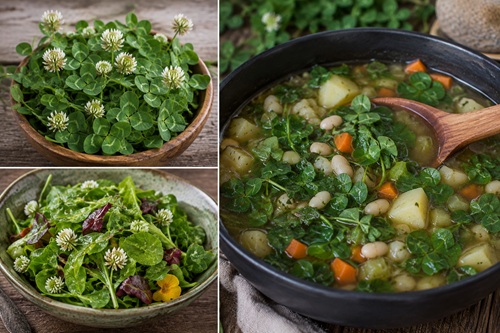
Cooking is probably the more useful option from a preparedness standpoint. Clover leaves can be incorporated into soups, stews, and mixed vegetable dishes. Rather than trying to make an entire meal from clover, think of it the same way you might use spinach or another leafy green.
For example, a basic soup made from potatoes, beans, rice, or lentils can be supplemented with young edible greens gathered from a known clean area. This is a much more realistic approach to survival foraging than expecting wild greens to provide all the calories a person needs.
Preserving White Clover
White clover can also be dried when it is abundant. This gives you a way to experiment with preserving a seasonal resource rather than only using it when fresh.
Gather clean leaves and flowers and spread them in a thin layer somewhere dry and well ventilated. Keep them protected from dirt, insects, excessive moisture, and direct weather exposure. Turn the plant material occasionally so moisture doesn’t remain trapped underneath.
The clover should be completely dry before storage. Plant material that still contains moisture can mold during storage, destroying the harvest and potentially making it unsafe.
Once thoroughly dried, store it in a clean, dry, clearly labeled container away from heat, moisture, and direct sunlight. Dried leaves and flowers can later be steeped for tea or incorporated in small amounts into appropriate foods.
What About Clover Seeds?
White clover seeds are also edible, but they are tiny. Collecting a useful quantity takes considerably more time than harvesting leaves and flowers.
If you have a large patch, mature flower heads can be allowed to dry and the seeds collected. The seeds can then be ground and combined with other ingredients. In a true food-shortage situation, knowing that another portion of the plant is usable could be valuable, but under normal circumstances the leaves and flowers provide a much easier return for the effort.
A Note About Medicinal Uses
White clover has a history of traditional herbal use, but that should be kept separate from its usefulness as an identifiable edible plant. Traditional use doesn’t automatically mean a plant can safely replace modern medications or professional medical treatment.
White clover may also interact with certain medications or be inappropriate for some people. The source material notes potential blood-thinning and mild estrogenic effects and recommends additional caution for people taking certain medications, those preparing for surgery, and during pregnancy or breastfeeding.
For practical preparedness purposes, there is no need to make exaggerated medicinal claims about the plant. Its value is already substantial simply because it is widespread, edible, renewable, useful to pollinators and livestock, and easy to cultivate around a homestead.
Learn It Before You Need It
The worst time to begin learning edible plants is when you’re already hungry.
White clover is a perfect plant to practice with while conditions are normal. Find a patch on clean land. Learn what the leaves look like. Look at the creeping stems. Examine the flowers. Compare it with similar plants. Harvest a small amount and try preparing it.
Then come back a few weeks later and look at the same patch again.
Seeing a plant repeatedly through different stages of growth teaches far more than simply looking at a photograph. Eventually, you begin recognizing the plant almost automatically.
That’s the real preparedness value of learning white clover. It isn’t about believing a lawn full of clover will somehow replace your food storage. It’s about adding another useful plant to the collection of things you can confidently recognize and use.
A plant you’ve walked past your entire life suddenly becomes a resource because you know what it is, where it grows, when to harvest it, and what you can do with it.
Learn it now, try it now, and know how to use it before you ever have to depend on it.
© Prepping Communities. This content is for informational purposes only and not professional advice. Use at your own risk.
Terms | Privacy | Guidelines