
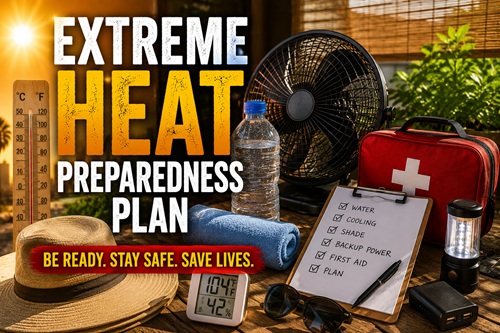
Keeping Cool During Extreme Heat
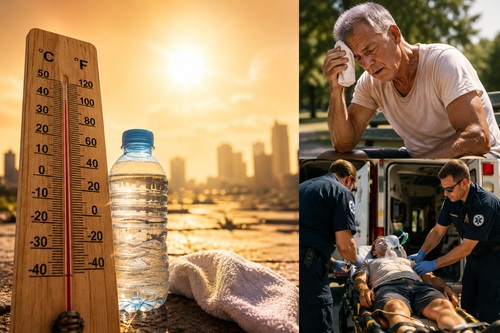
Extreme heat is one of the most dangerous yet underestimated natural hazards. Unlike hurricanes, floods, or tornadoes, heat often develops gradually, giving people a false sense of security. However, prolonged exposure to high temperatures can quickly overwhelm the body’s ability to cool itself, leading to dehydration, heat exhaustion, heat stroke, and even death. Every year, thousands of people require medical treatment because of extreme heat, making preparation just as important as preparing for winter storms or other disasters.
Modern society depends heavily on electricity to stay cool. Air conditioners, fans, refrigeration, water treatment facilities, and even medical equipment all rely on a functioning electrical grid. During a prolonged summer power outage, indoor temperatures can rise rapidly, creating dangerous conditions – especially for infants, older adults, individuals with chronic illnesses, outdoor workers, and pets. A heat emergency can become even more serious if it occurs during a drought, wildfire, or widespread disaster when emergency services are already overwhelmed.
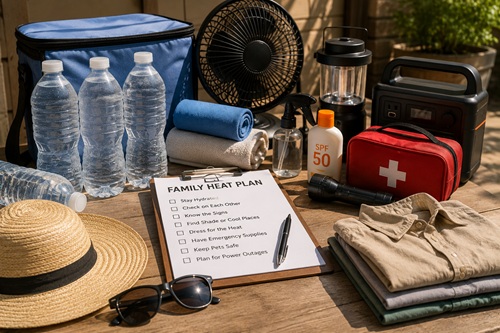
Preparing for extreme heat isn’t just about comfort—it is about protecting health and preserving life. Fortunately, most heat-related emergencies can be prevented with planning. Having adequate water, multiple cooling methods, shade, proper clothing, emergency supplies, and a written family plan greatly reduces your risk during prolonged periods of dangerous temperatures.
This action plan is designed to help you evaluate your current level of preparedness and identify practical steps you can take before summer arrives. Completing this worksheet will help ensure you have the equipment, supplies, knowledge, and backup plans needed to safely manage both short-term heat waves and extended power outages.
Preparedness Perspective
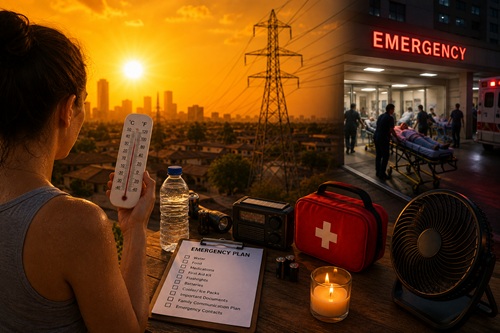
Heat emergencies rarely make headlines until hospitals become overwhelmed or power grids begin to fail. Unlike sudden disasters, heat slowly wears the body down over hours or days, making it easy to underestimate the danger. The best time to prepare is long before temperatures begin to climb. A little planning today can prevent a life-threatening emergency tomorrow.
Heat Wave & Extreme Heat Action Plan
| Category | Action Item | Complete |
|---|---|---|
| Know Your Risk | Learn how often heat waves occur in your area. | ☐ |
| Monitor seasonal weather forecasts. | ☐ | |
| Identify vulnerable family members. | ☐ | |
| Locate nearby cooling centers. | ☐ | |
| Know emergency evacuation locations. | ☐ | |
| Home Cooling | Service your air conditioner before summer. | ☐ |
| Install blackout curtains. | ☐ | |
| Seal windows and doors. | ☐ | |
| Create shaded outdoor areas. | ☐ | |
| Install window awnings if possible. | ☐ | |
| Identify the coolest room in your home. | ☐ | |
| Backup Cooling | Store battery-powered fans. | ☐ |
| Purchase rechargeable fans. | ☐ | |
| Maintain backup power stations. | ☐ | |
| Test generator operation safely outdoors. | ☐ | |
| Keep spare batteries fully charged. | ☐ | |
| Water Preparedness | Store emergency drinking water. | ☐ |
| Freeze bottles of water before heat waves. | ☐ | |
| Keep electrolyte replacement drinks. | ☐ | |
| Store additional water for pets. | ☐ | |
| Have multiple insulated water containers. | ☐ | |
| Cooling Supplies | Cooling towels | ☐ |
| Spray bottles | ☐ | |
| Ice packs | ☐ | |
| Wide-brim hats | ☐ | |
| Lightweight clothing | ☐ | |
| Portable shade canopy | ☐ | |
| Reflective emergency blankets | ☐ | |
| Misting fan | ☐ | |
| Food Planning | Plan meals requiring little cooking. | ☐ |
| Stock shelf-stable foods. | ☐ | |
| Freeze meals ahead of time. | ☐ | |
| Medical Preparedness | Learn heat illness symptoms. | ☐ |
| Review medications that increase heat sensitivity. | ☐ | |
| Stock oral rehydration salts. | ☐ | |
| Keep thermometers available. | ☐ | |
| Power Outage Plan | Know how long backup power will operate. | ☐ |
| Plan alternative sleeping locations. | ☐ | |
| Identify friends or family with air conditioning. | ☐ | |
| Locate community cooling centers. | ☐ | |
| Vehicle Preparedness | Keep water in every vehicle. | ☐ |
| Carry emergency cooling kit. | ☐ | |
| Store reflective windshield shades. | ☐ | |
| Never leave children or pets inside vehicles. | ☐ | |
| Pets & Livestock | Ensure constant access to shade. | ☐ |
| Maintain fresh water supplies. | ☐ | |
| Prepare cooling methods for livestock. | ☐ | |
| Community Preparedness | Check on elderly neighbors. | ☐ |
| Develop a neighborhood communication plan. | ☐ | |
| Share cooling resources if possible. | ☐ | |
| Practice | Conduct a family summer power outage drill. | ☐ |
| Review this plan annually before summer. | ☐ |
Quick Ways to Stay Cool
✓ Drink water regularly—even before you feel thirsty.
✓ Wear loose-fitting, light-colored clothing.
✓ Stay indoors during the hottest afternoon hours whenever possible.
✓ Close curtains, blinds, and windows during the day.
✓ Open windows after sunset if temperatures are cooler outside.
✓ Use cool showers or damp towels to lower body temperature.
✓ Limit strenuous activity during peak heat.
✓ Spend time in air-conditioned public buildings if your home becomes unsafe.
Family Heat Emergency Plan
| Item | Your Plan |
| Coolest room in the home | __________________________ |
| Backup cooling location | __________________________ |
| Local cooling center | __________________________ |
| Emergency contact | __________________________ |
| Water supply lasts _____ days | __________________________ |
| Generator fuel location | __________________________ |
| Pet cooling plan | __________________________ |
| Family meeting location | __________________________ |
Recognizing Heat Illness
Heat Exhaustion
Common symptoms
- Heavy sweating
- Weakness
- Fatigue
- Muscle cramps
- Headache
- Nausea
- Dizziness
- Pale, cool, clammy skin
Immediate Actions
- Move to a cool or shaded area.
- Drink cool water slowly.
- Remove excess clothing.
- Apply cool, wet towels.
- Rest until symptoms improve.
Heat Stroke (Medical Emergency)
Warning Signs
- Body temperature above 104°F (40°C)
- Hot, dry skin or profuse sweating
- Confusion
- Slurred speech
- Loss of consciousness
- Seizures
Immediate Actions
- Call emergency services immediately.
- Begin rapid cooling using cool water, ice packs, or wet towels.
- Move the person into shade.
- Do not give fluids if unconscious.
Key Takeaways
- Extreme heat can become deadly much faster than many people realize.
- Planning ahead is far easier than trying to find supplies during a heat emergency.
- Water, shade, ventilation, and multiple cooling methods work best together.
- Learn to recognize the early signs of heat illness before they become life-threatening.
- Review and practice your family’s heat emergency plan before every summer season.
Notes
Annual Review
Last Updated: __________________________
Next Review: __________________________
Family Members Participating: __________________________________________
© Prepping Communities. This content is for informational purposes only and not professional advice. Use at your own risk.
Terms | Privacy | Guidelines