
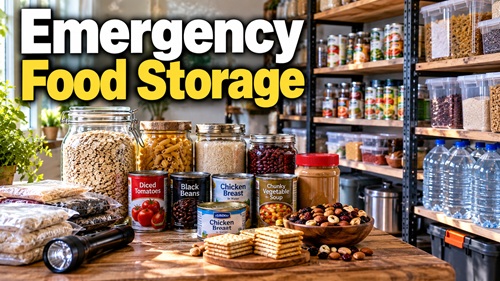
How Much Food Does Your Household Really Need?
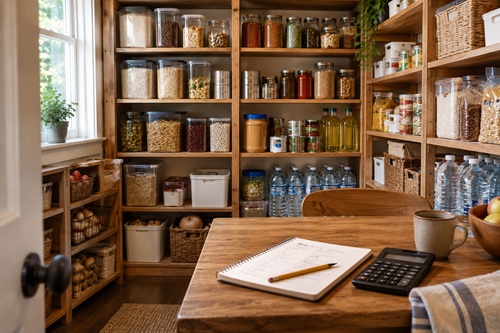
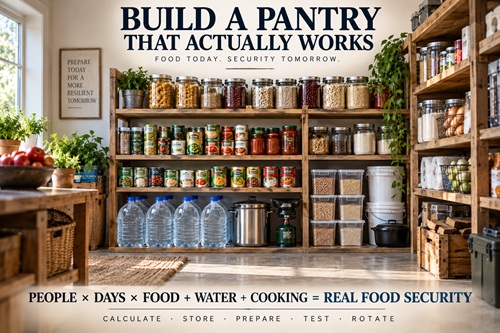
Having a pantry full of food does not necessarily mean you have enough food for an emergency. Shelves can look well stocked while containing only a few days of actual meals once everything is divided among the people in the household. Emergency food storage becomes much more useful when it is planned around three simple things: how many people you need to feed, approximately how much food they need each day, and how long you want to be able to go without shopping.
The easiest place to start is with calories. Calorie requirements vary considerably by age, body size, activity and individual circumstances, so there is no single number that works for everyone. For basic preparedness planning, however, an approximate daily figure can be assigned to each household member and then adjusted where necessary. An adult might be planned at roughly 2,000–2,500 calories per day, while teenagers, active adults and people performing strenuous physical work may require considerably more. Children generally require less, depending on their age and activity.
The important part isn’t getting the calculation perfect. It is actually doing the calculation.
Suppose a household consists of two adults, one teenager and an eight-year-old child. For planning purposes, they estimate their needs at 2,500 calories for Adult 1, 2,200 calories for Adult 2, 2,800 calories for the teenager and 1,700 calories for the child. Their estimated household requirement is:
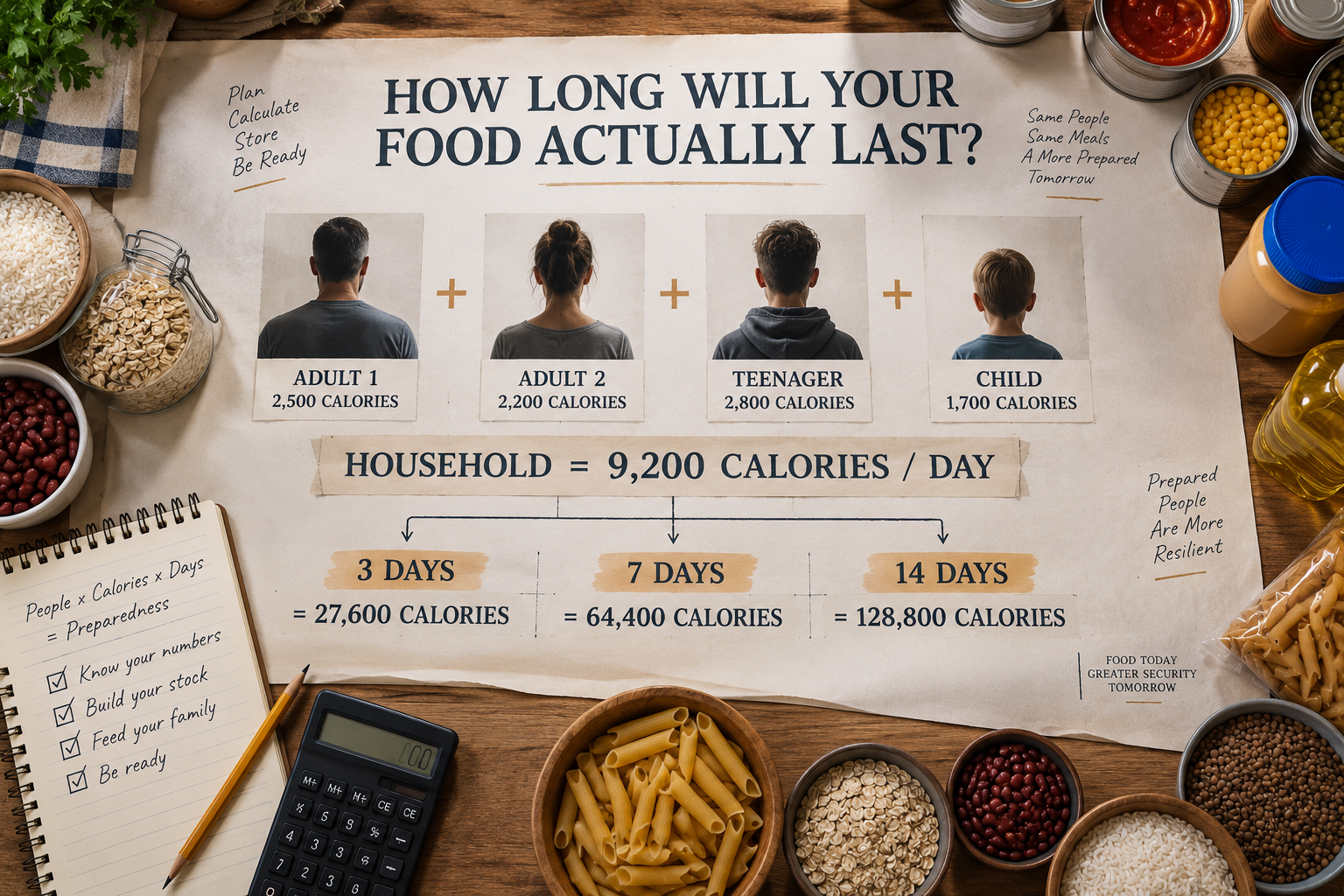
2,500 + 2,200 + 2,800 + 1,700 = 9,200 calories per day
That immediately gives the household something useful to work with. A three-day emergency food supply would require approximately:
9,200 × 3 = 27,600 calories
A seven-day supply would require:
9,200 × 7 = 64,400 calories
A two-week supply would require:
9,200 × 14 = 128,800 calories
Looking at emergency food this way can be eye-opening. A pantry may contain fifty cans and still fall well short of the household’s actual requirements. At the same time, calorie counting shouldn’t become an obsession. These numbers are planning estimates, not strict daily meal prescriptions. The purpose is to determine whether you have roughly enough food to support everyone for the period you are preparing for.
Calories also aren’t the whole story. A large supply of rice, pasta or flour might technically provide enough energy, but it doesn’t automatically provide a good emergency diet. A practical food reserve should contain a mixture of carbohydrates, protein and fats, along with fruits, vegetables and other foods that provide additional nutrients and variety. Rice, oats, pasta and other grains provide inexpensive energy. Beans, canned meat, fish, peanut butter and similar foods provide protein. Cooking oils, nuts, seeds and nut butters provide concentrated calories and fats. Canned and dried fruits and vegetables help round out meals and prevent the pantry from becoming nothing more than stored starch.
It also helps to understand how quickly individual foods contribute to the total. If a pound of dry rice provides roughly 1,600–1,700 calories, ten pounds represents around 16,000–17,000 calories. That sounds substantial until it is compared with the example household requiring approximately 9,200 calories every day. Ten pounds of rice alone would not even provide two full days of calories for four people, and nobody should be planning to live exclusively on rice anyway. The calculation demonstrates why emergency storage works best when several foods are combined into complete meals.
Another useful calculation is to work backward from meals. If four people normally eat three times each day, a seven-day emergency means providing:
4 people × 3 meals × 7 days = 84 individual meal portions
For two weeks:
4 people × 3 meals × 14 days = 168 individual meal portions
You don’t necessarily need 168 different packaged meals. A pot of chili might provide four portions, a pasta meal might provide four more, and oatmeal prepared for the household could cover another four. Thinking in portions simply makes it easier to look at a pantry and determine whether there is actually enough food to turn those calories into meals.
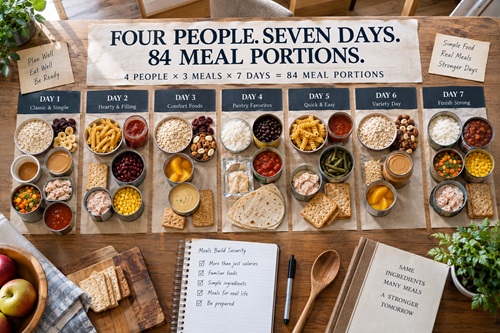
What you store should also reflect what your household normally eats. Emergency food is not particularly useful if everyone dislikes it or nobody knows how to prepare it. If your household regularly eats oatmeal, rice, pasta, canned tomatoes, beans, tuna, canned chicken, peanut butter, soup, crackers and canned fruit, those foods can become the foundation of the emergency pantry. Buying a little more than normally needed and continually replacing what is used creates a reserve without requiring a completely separate “survival food” diet.
Preparation requirements are just as important as the amount of food. Twenty pounds of dried beans contain a considerable amount of nutrition, but they also require water, cooking equipment, fuel and time. The same problem exists with rice, pasta, oatmeal and dehydrated foods. During an extended outage, the question isn’t simply “Do we have food?” It becomes “Can we actually prepare the food we have?”
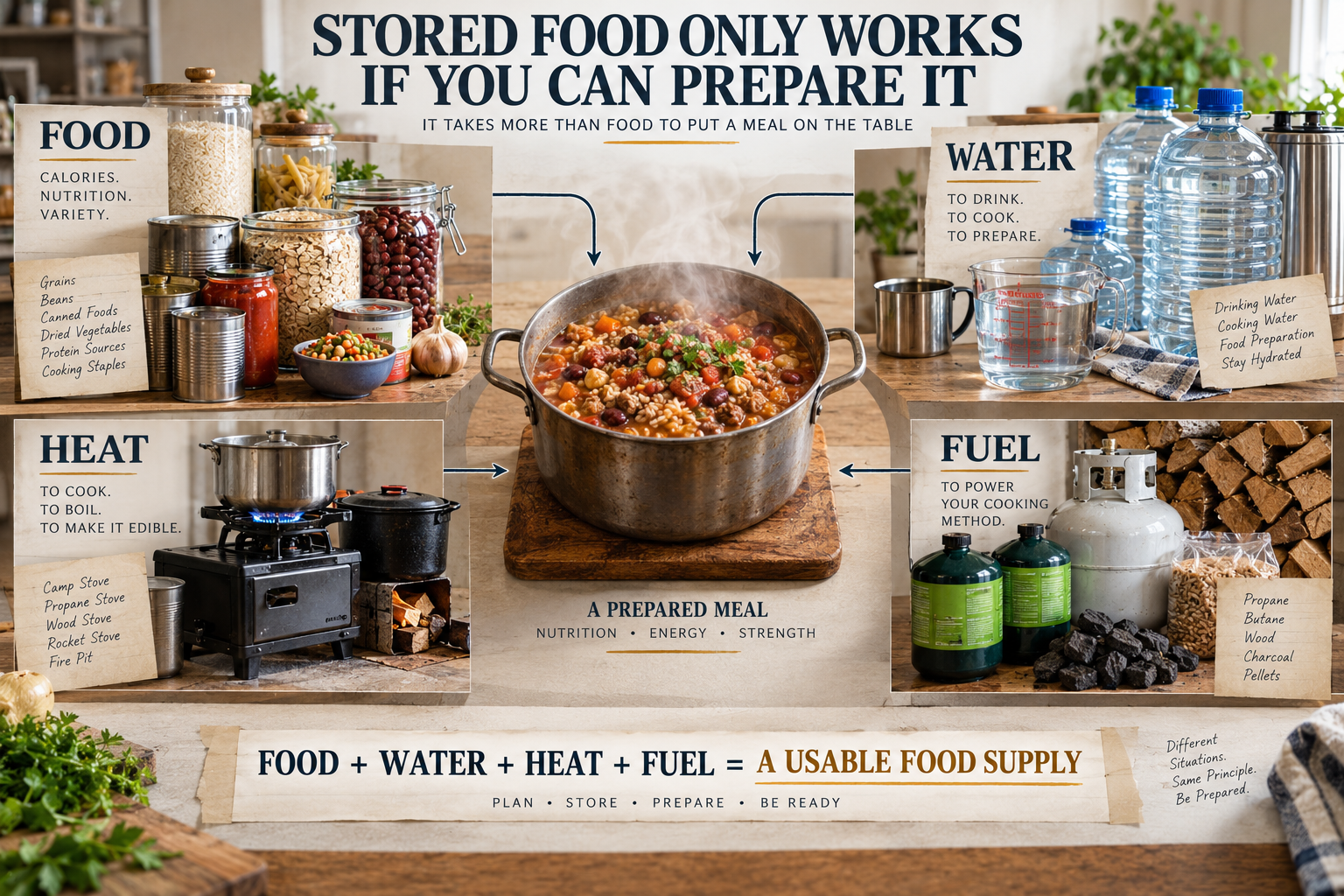
For that reason, an emergency pantry should contain a mixture of foods requiring different levels of preparation. Some food should be ready to eat immediately, such as peanut butter, canned meat, crackers, nuts, dried fruit and other shelf-stable foods. Other foods might require only brief heating. Longer-cooking foods can form an important part of a larger reserve when the household has a reliable alternative cooking method and sufficient fuel.
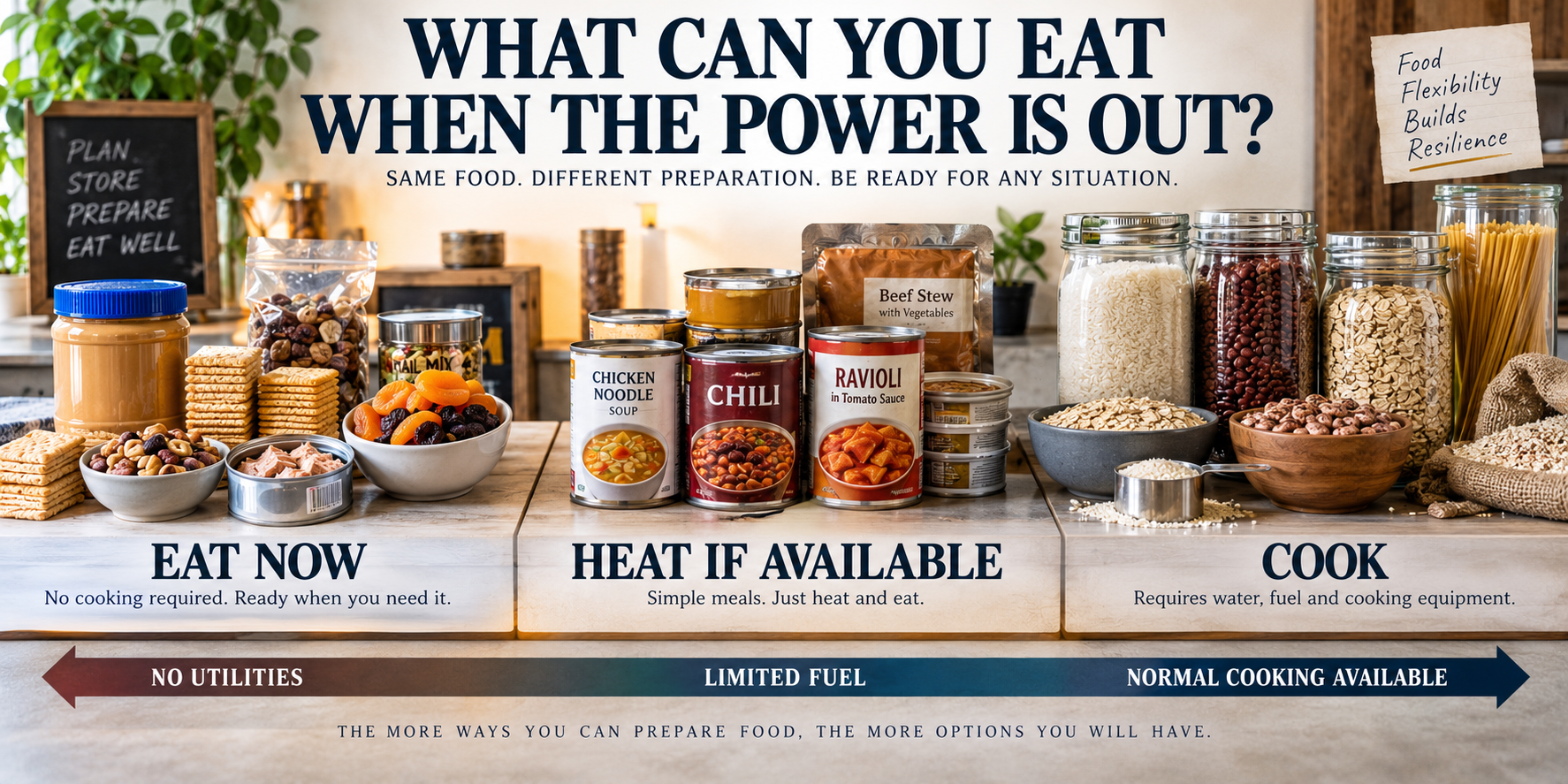
This is especially important during the first day of an emergency. If the power goes out unexpectedly, you shouldn’t have to immediately set up an outdoor stove and boil dried beans just to feed everyone. Ready-to-eat food buys time while you determine what happened, how long the outage might last and what other problems need attention.
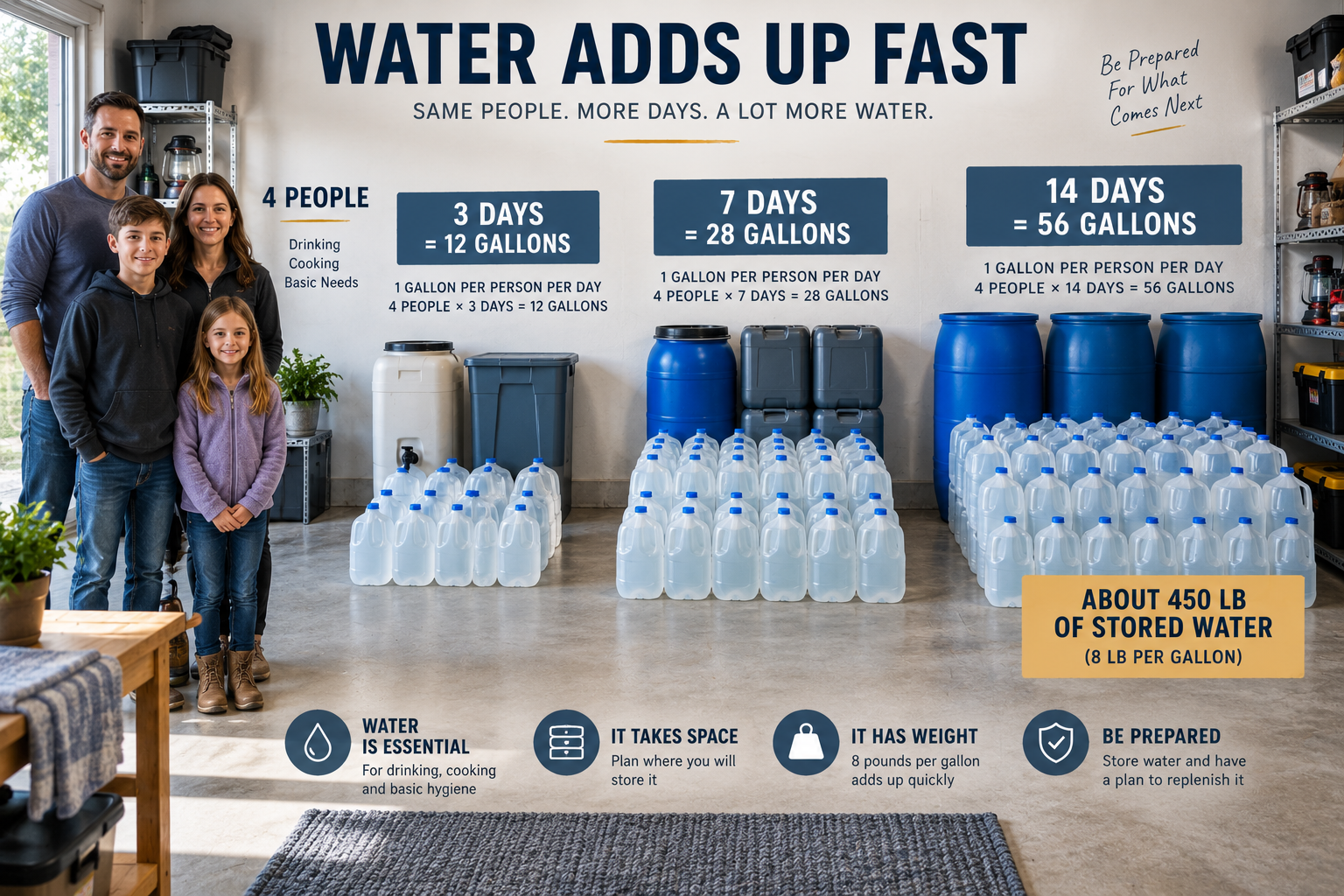
Water must also be included in the calculation because food and water storage are closely connected. A commonly used preparedness baseline is approximately one gallon of water per person per day for drinking and basic needs, although actual requirements vary with climate, activity and individual circumstances. For a four-person household, that means:
4 people × 1 gallon × 3 days = 12 gallons
For one week:
4 × 1 × 7 = 28 gallons
For two weeks:
4 × 1 × 14 = 56 gallons
That calculation becomes much more significant when you realize that stored water also takes up space and weighs roughly eight pounds per gallon. Fifty-six gallons can weigh around 450 pounds. It is one reason longer-term water preparedness often needs to include both stored water and a reliable method of obtaining and treating additional water.
Cooking requirements also need to be considered separately. If your stored meals require several gallons of water to prepare, that water shouldn’t accidentally come out of the amount you expected everyone to drink. Freeze-dried and dehydrated foods are particularly important to consider because their reduced weight comes partly from removing water. That water has to be put back when the food is prepared.
The same principle applies to fuel. If you plan to cook twice a day for fourteen days, that represents approximately:
2 cooking periods × 14 days = 28 cooking periods
Do you actually have enough propane, butane, wood or another appropriate fuel source to do that? Testing your emergency cooking method before an emergency is one of the easiest ways to answer that question.
Storage conditions matter as well. Food kept somewhere cool, dry and protected from sunlight will generally maintain its quality much better than food exposed to excessive heat, moisture or major temperature swings. Garages, sheds and attics can become extremely hot during summer and may not be suitable for foods intended for extended storage. Cans should be periodically checked for swelling, leaking, severe rust or damage, while dry foods should be protected from moisture and pests.
Rotation is what turns stored food from a forgotten stockpile into a useful household system. The simplest principle is store what you eat, eat what you store, and replace what you use. Put newer purchases behind older ones when practical and use the older food first. Instead of discovering years later that an entire shelf needs to be thrown away, the emergency pantry gradually moves through the household’s normal meals.
A simple inventory can make this much easier. You don’t need complicated software. Record the food, approximate quantity and important dates. Once or twice a year, physically inspect the pantry and compare what is there with the number of people and days you originally planned for. A growing teenager, another person joining the household or a change in dietary needs can significantly alter the original calculations.
One of the best tests is to spend a day eating entirely from the emergency pantry while pretending normal utilities aren’t available. Don’t run to the grocery store for something you forgot. Use the cooking equipment that would actually be available during an outage. This quickly exposes weaknesses. You might discover plenty of rice but very little to put on it, canned food without an accessible manual can opener, meals requiring far more water than expected, or an alternative stove that consumes fuel much faster than assumed.
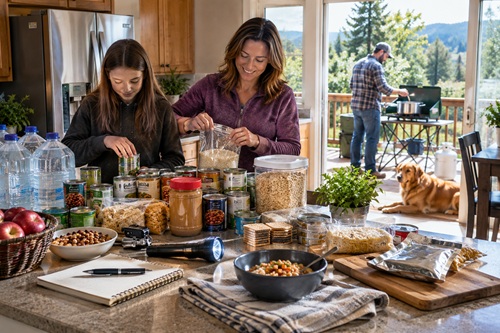
Emergency food storage doesn’t need to begin with months of supplies. Build it gradually. Establish a genuine three-day reserve first, expand it to seven days, and then work toward two weeks if appropriate. Once that foundation exists, you can decide whether the risks in your area and your household circumstances justify storing more.
Preparedness Action Plan
Start by writing down every person your emergency food reserve needs to support and assign each person a reasonable estimated daily calorie requirement. Add those numbers together and multiply the result by 3, 7 and 14 days. Those totals become useful benchmarks for evaluating what you actually have.
Next, look beyond the calorie number. Make sure your stored food provides a reasonable combination of carbohydrates, protein, fats, fruits and vegetables and that much of it consists of foods your household already eats. Determine which foods can be eaten immediately, which require heating and which require significant amounts of water and fuel.
Calculate water separately using the number of people multiplied by the number of days you are preparing for, then consider additional water required for cooking. Finally, test your emergency meals and cooking methods, rotate the food into everyday use and periodically recalculate as your household changes.
The goal isn’t to create a perfect stockpile. It is to reach the point where, if shopping suddenly became impossible, you already know how many people you can feed, approximately how long your food will last, how you will prepare it and whether you have enough water and fuel to make the plan work.
Key Takeaways
A full pantry isn’t automatically an emergency food supply. The amount stored needs to be compared with the number of people relying on it and the length of time it is expected to last.
Use simple calculations to establish realistic calorie, meal and water targets. Then make sure those numbers represent food that can actually be prepared under emergency conditions.
Store foods your household already uses, maintain a mixture of ready-to-eat and cookable foods, account for water and fuel, and rotate the supply instead of forgetting about it.
Emergency food preparedness becomes much easier once you stop asking “Do we have enough food?” and start being able to say “This is approximately how long the food we have will support us.”
© Prepping Communities. This content is for informational purposes only and not professional advice. Use at your own risk.
Terms | Privacy | Guidelines