
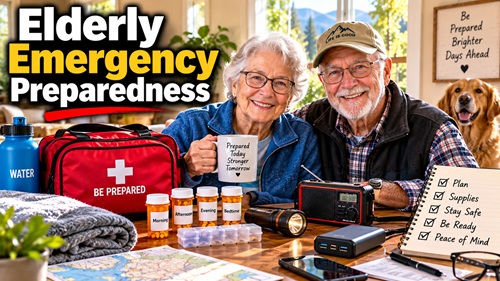
Special Considerations for Seniors
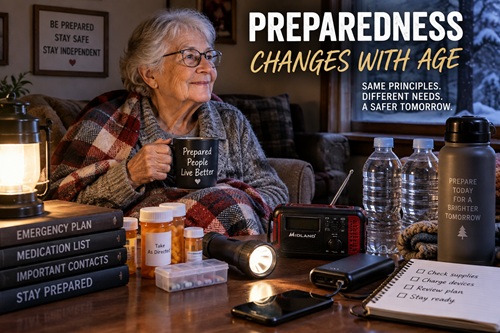
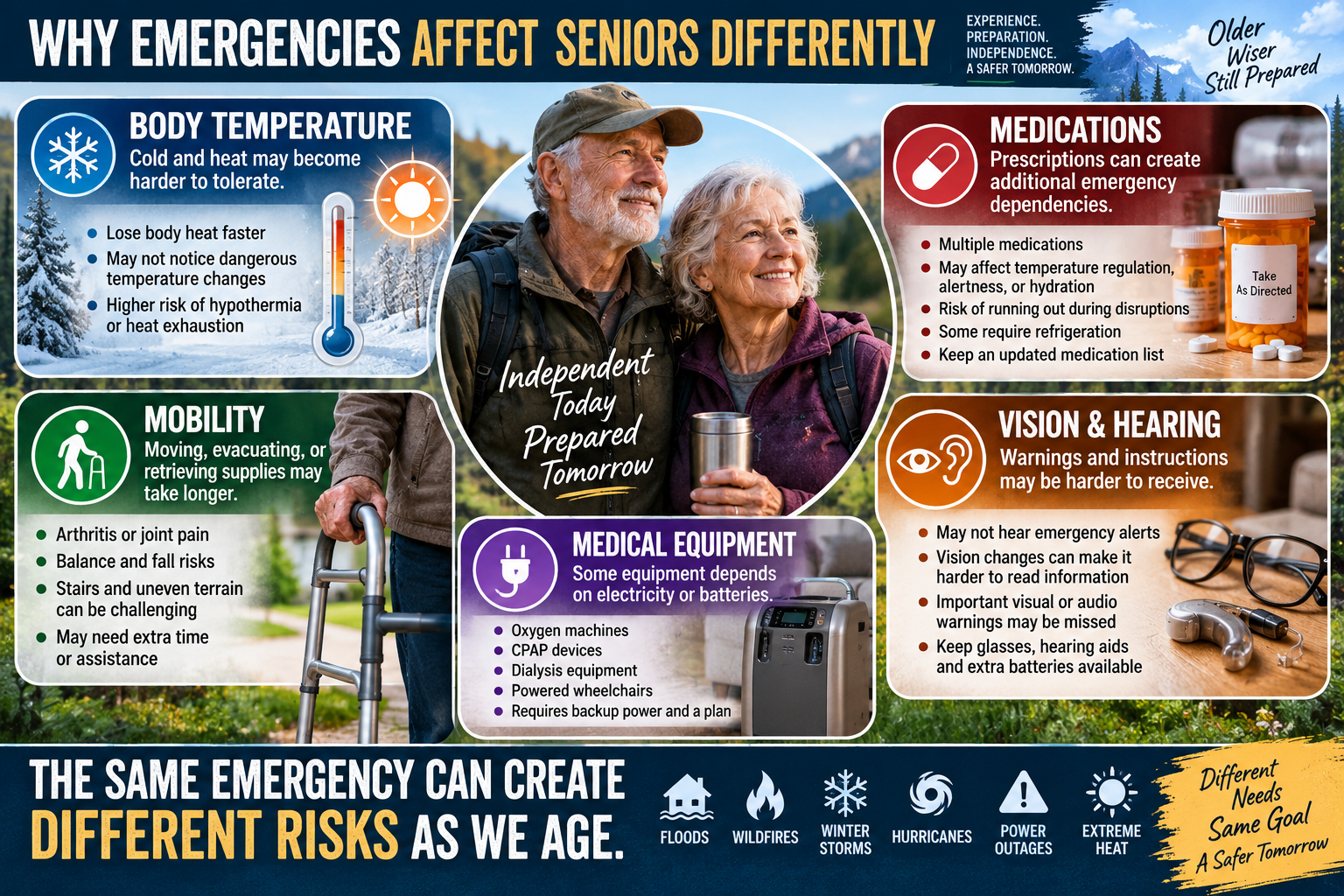
Emergency preparedness changes as people get older. A winter power outage, heat wave, evacuation, wildfire, flood, or extended disruption that might be manageable for a younger adult can become much more serious for a senior. Reduced mobility, medications, chronic health conditions, difficulty regulating body temperature, hearing or vision limitations, and dependence on medical equipment can all affect how safely an older person gets through an emergency. A good preparedness plan should therefore be built around the person’s actual abilities and daily needs rather than relying on a standard emergency checklist.
Understand the Risks of Cold
Cold weather deserves particular attention. Older adults may lose body heat more quickly and may not recognize that they are becoming dangerously cold as early as younger adults. A house does not have to reach freezing temperatures before this becomes a concern. A prolonged power or heating failure can gradually cool a home enough that an older person who is inactive, poorly dressed for the conditions, or already vulnerable begins developing hypothermia.
This can be especially dangerous because hypothermia does not always begin with dramatic symptoms. Increasing fatigue, unusual confusion, poor coordination, slurred speech, excessive sleepiness, or changes in behaviour can be warning signs. Shivering may occur, but relying on shivering alone is a mistake, particularly with an older person. Family members and caregivers should pay attention to changes in the person’s condition rather than simply asking whether they feel cold.
Preparing for this starts with maintaining warmth before the home becomes dangerously cold. Keep warm clothing, blankets, hats, socks, gloves, sleeping bags, and other cold-weather supplies somewhere the senior can reach without climbing stairs or moving heavy containers. During an outage, close unused rooms, reduce drafts, close curtains at night, and concentrate activity in a smaller part of the home that is easier to keep warm.
Backup heating should be planned before it is needed. Any fuel-burning heater must be approved for indoor use and operated according to its instructions, with working carbon monoxide and smoke alarms in the home. Never improvise indoor heating with outdoor grills, camp stoves, generators, or other equipment that can produce dangerous carbon monoxide. Sometimes the safest backup heating plan is not another heater at all, but a predetermined location where the senior can relocate if the home can no longer maintain a safe temperature.
Plan Around Medications and Medical Needs
Medication is another important part of senior preparedness. Many older adults depend on several prescriptions, and an emergency can interrupt pharmacies, transportation, refrigeration, communications, or access to healthcare providers. An emergency kit should therefore include an up-to-date medication list showing medication names, doses, schedules, allergies, important medical conditions, pharmacy information, and healthcare contacts.
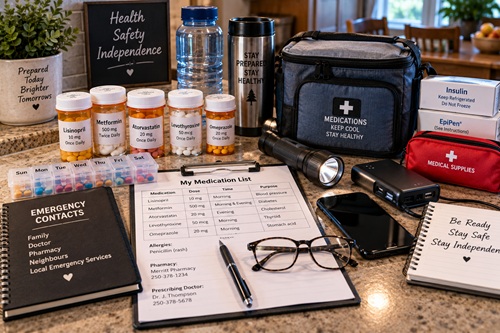
Medication should not be changed, skipped, doubled, or stopped simply because an emergency occurs unless appropriate medical guidance has been provided. Some medications can also influence alertness, circulation, hydration, or the body’s response to temperature extremes. Seniors and caregivers should understand any special storage requirements and discuss emergency medication planning with a pharmacist or healthcare professional before a disaster occurs.
Refrigerated medications require their own backup plan. Knowing that something “needs refrigeration” is not enough. Determine in advance what temperature range is required, how long the medication can safely remain outside that range, how it could be transported during an evacuation, and what alternative arrangements are available during an extended outage. That information should come from the pharmacist, manufacturer, or healthcare provider rather than guesswork during an emergency.
Make Supplies Accessible
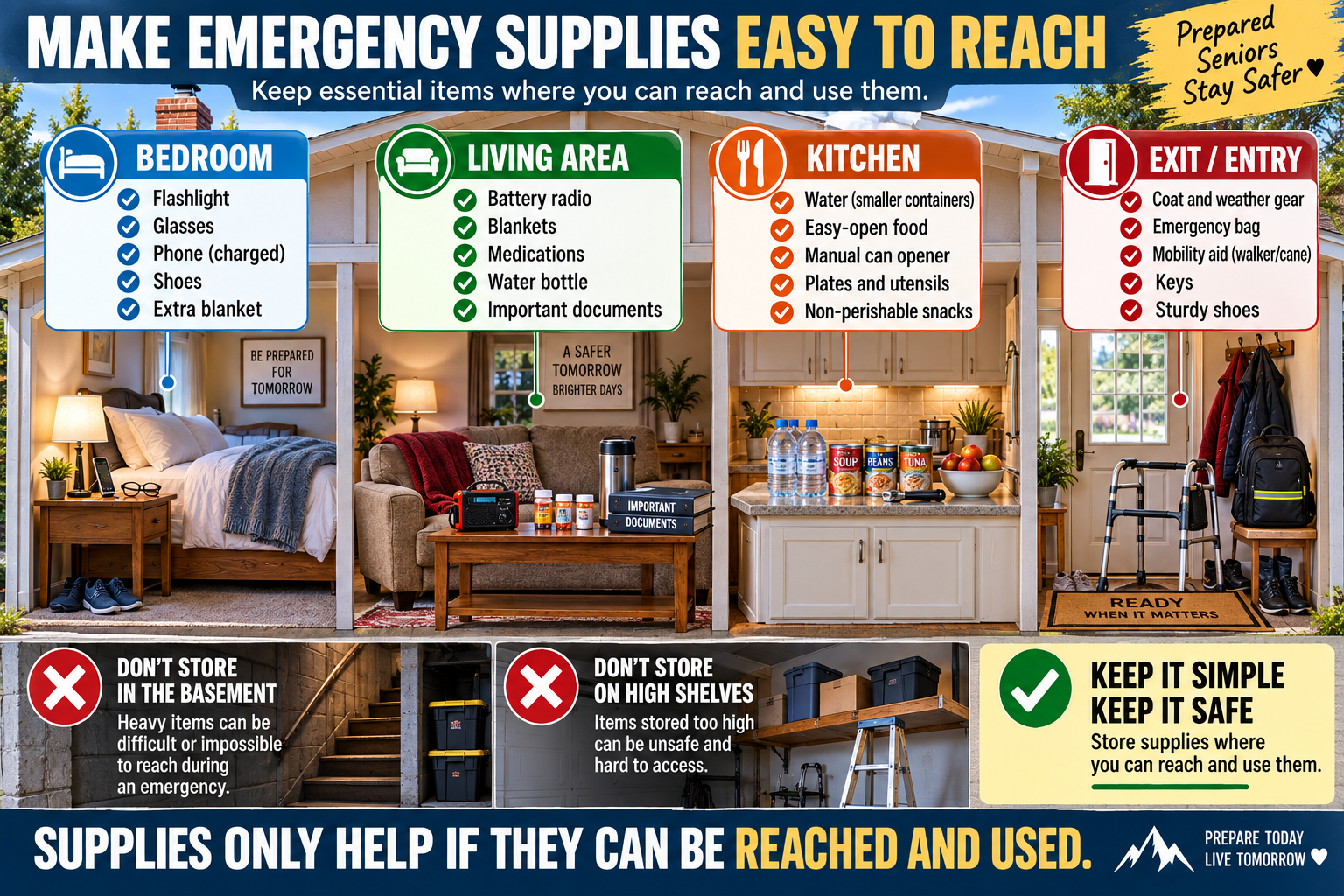
An emergency supply is useful only when the person who needs it can actually reach and use it. Heavy water containers stored in a basement, flashlights placed on high shelves, complicated generators, or emergency food requiring extensive preparation may provide little benefit to a senior with mobility or strength limitations.
Frequently needed supplies should be stored close to the person’s normal living area. Flashlights should be easy to find from a bed or favorite chair. Drinking water should be divided into manageable containers. Food should be easy to open and prepare. Spare batteries, glasses, hearing-aid batteries, mobility aids, hygiene supplies, medications, chargers, and important documents should all have known locations.
The same principle applies to emergency equipment. If a senior cannot safely operate a generator, portable heater, battery power station, radio, or other device alone, the emergency plan should not depend on that person doing so. Either choose simpler equipment or arrange for someone else to handle it.
Prepare for Mobility Problems
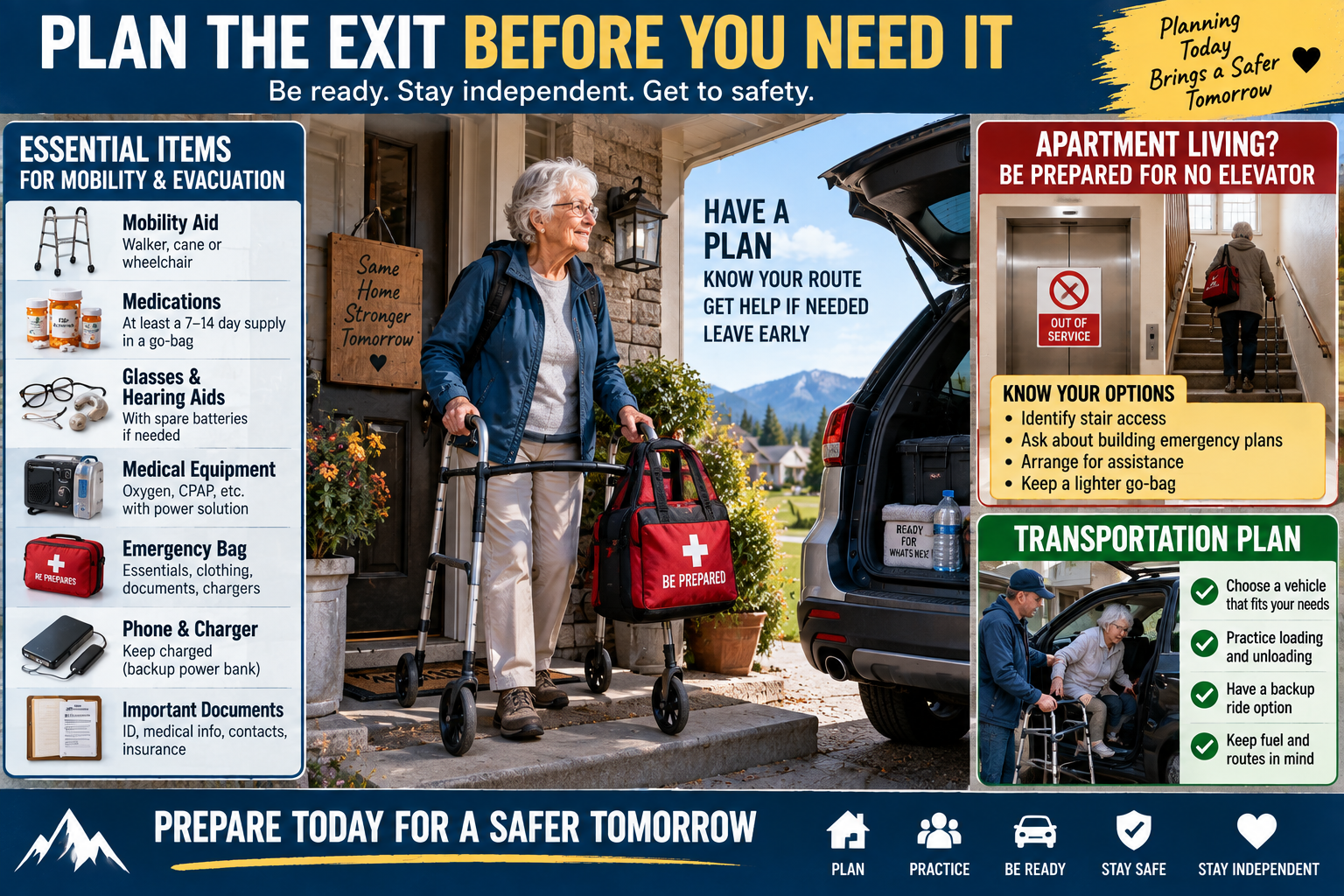
Mobility can change dramatically during an emergency. Elevators may stop working, sidewalks may become icy, roads may be blocked, and normal transportation services may disappear. A person who normally manages independently with a walker or cane may suddenly need considerable assistance.
Keep essential mobility devices nearby and consider backups for items that are difficult to replace. Wheelchairs, walkers, canes, braces, portable oxygen equipment, charging systems, and other important devices should be incorporated into evacuation planning. If the senior lives in an apartment or multistory building, determine beforehand how evacuation would work when elevators are unavailable.
Do not assume that emergency responders will immediately be available to solve transportation problems. Major disasters can create hundreds or thousands of simultaneous calls for assistance. Families should know who can physically help the senior leave the home, what vehicle will be used, where necessary equipment will go, and where the person can safely stay.
Protect Against Falls
Power outages create another easily overlooked danger: falls. A dark hallway or unfamiliar emergency setup can become hazardous for someone with reduced balance or vision. Keep battery-powered lights or flashlights beside beds, in bathrooms, along important walking routes, and near exits.
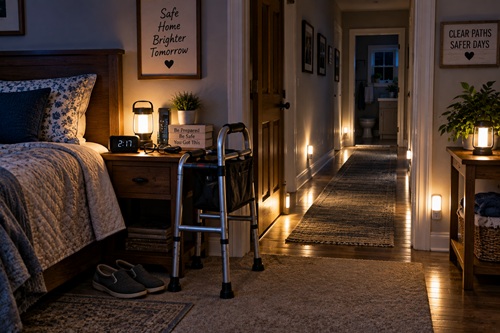
Avoid running extension cords across walking paths or placing emergency supplies where they create obstacles. Shoes with good traction should be readily available, particularly during winter weather. Clearing snow and ice around entrances may also need to be assigned to another person rather than expecting the senior to handle it.
Build a Communication Backup
Modern communication is useful but fragile. A senior who depends entirely on a smartphone may become isolated if the battery dies, cellular service fails, or the device becomes difficult to use during a stressful situation.
Write important telephone numbers on paper and keep copies in several locations. Include family, neighbors, caregivers, doctors, pharmacy contacts, utilities, and emergency services. A battery-powered radio can provide information when internet and cellular services are unavailable. Portable battery banks can extend phone operation, but they need to remain charged and should be simple enough for the senior to use without assistance.
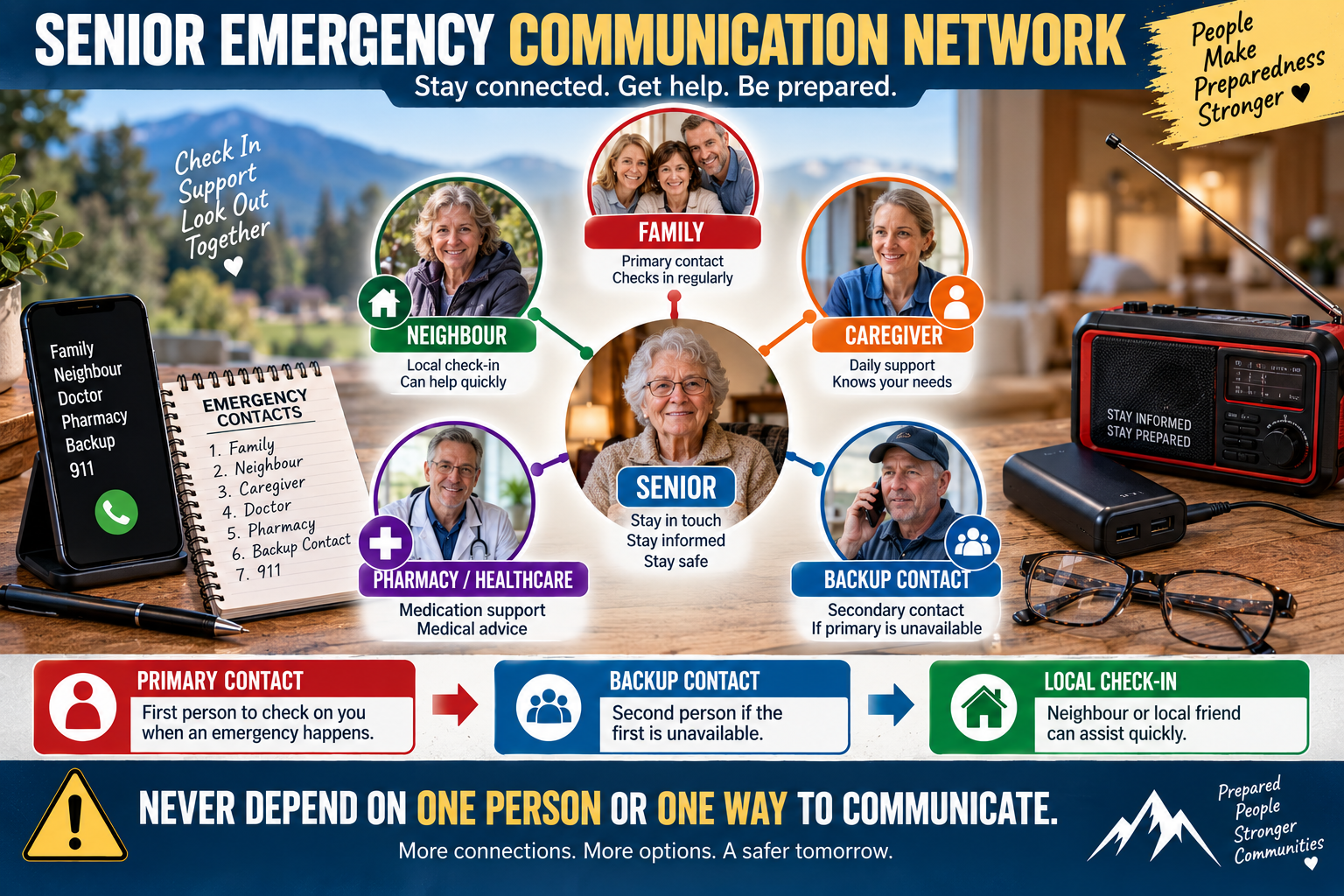
Families should also establish a communication routine. Decide who will check on the senior first, who will go to the home if contact cannot be established, and who serves as the backup if the primary person is unavailable. During widespread emergencies, knowing exactly who is responsible prevents everyone from assuming somebody else has already checked.
Create a Personal Support Network
One of the strongest forms of preparedness for an older adult is having dependable people nearby. Family members may live hours away, while a trusted neighbor may be able to reach the home in minutes.
Identify several people who understand the senior’s situation and are willing to help during an emergency. They should know about significant mobility limitations, essential medical equipment, communication difficulties, pets, and other practical needs relevant to emergency assistance. They should also know where emergency supplies are kept and how to enter the home if the senior is unable to answer the door, provided appropriate arrangements have been made.
Avoid depending entirely on one caregiver or family member. That person could be sick, stranded, travelling, or dealing with the same disaster. A small network provides redundancy.
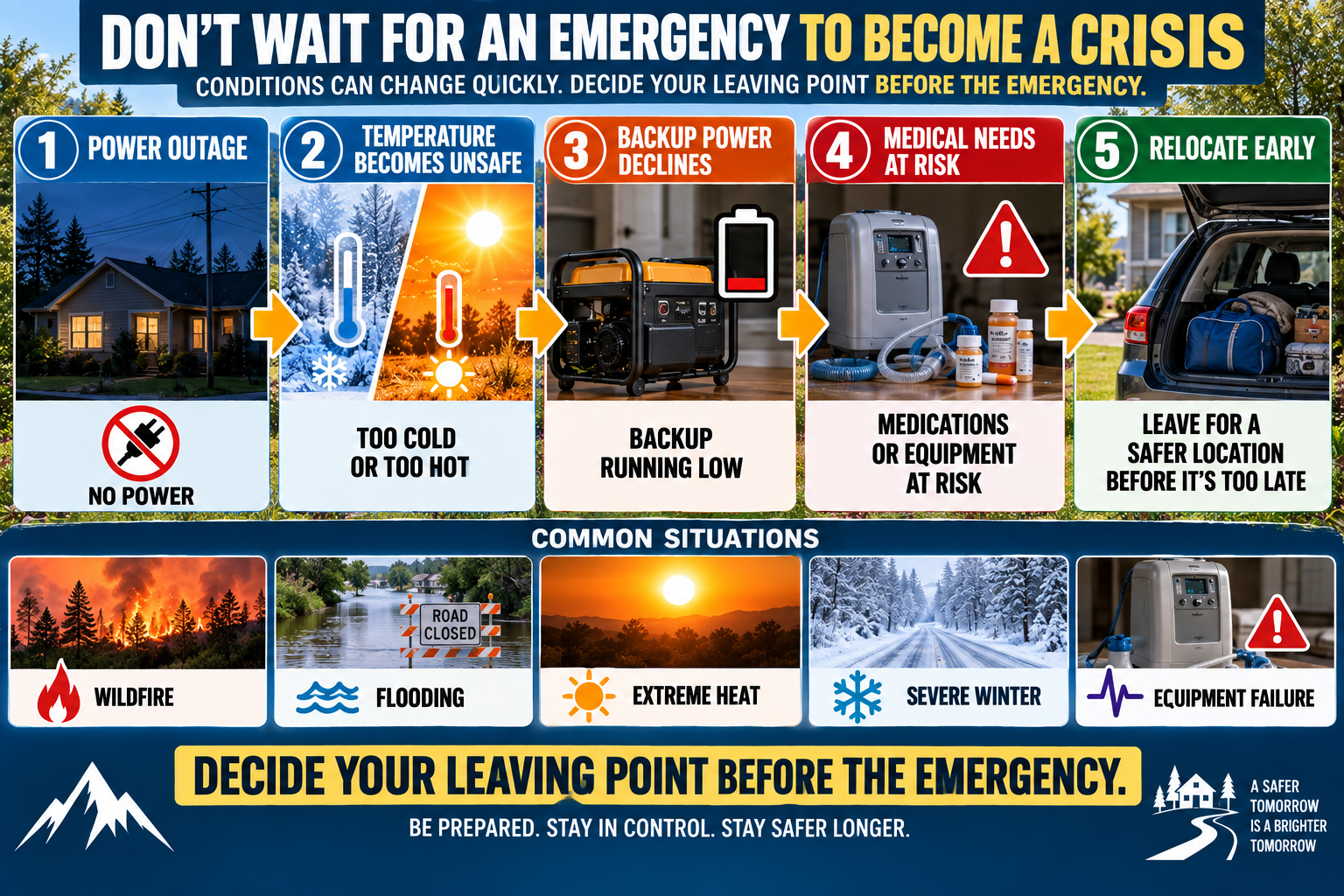
Know When Staying Home Is No Longer Safe
Sheltering at home is often preferable, but there should be a point at which the plan changes from staying to leaving. Waiting until conditions become critical makes evacuation much harder.
For example, loss of heat during extreme winter weather may require relocation before the house becomes dangerously cold. Someone dependent on electrically powered medical equipment may need to leave long before backup batteries are exhausted. Wildfire, flooding, prolonged extreme heat, medication problems, or the loss of safe drinking water may create similar situations.
Establish these decision points beforehand. Know where the senior can go, who will provide transportation, what needs to be taken, and what conditions should trigger departure. Leaving early is often far easier than attempting an evacuation after roads deteriorate, temperatures become extreme, or the person’s health begins declining.
Practice the Plan
Emergency plans should be tested under normal conditions. Have the senior locate the flashlight in darkness. Confirm that emergency food containers can actually be opened. Test battery banks and radios. Make sure medications and documents can be gathered quickly. Walk through the evacuation route and determine whether the person can manage it safely.
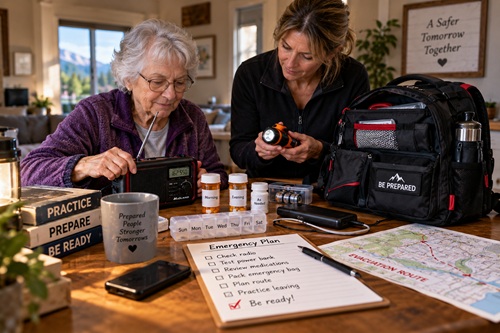
These small exercises reveal problems that a written checklist cannot. A flashlight may be difficult to operate, a water container may be too heavy, emergency supplies may be stored too far away, or the planned evacuation vehicle may not easily accommodate a wheelchair or walker. Discovering these problems during an ordinary afternoon gives the family time to correct them.
Preparedness Action Plan
Review the senior’s emergency plan around the realities of everyday life. Identify medications, medical equipment, mobility limitations, heating and cooling needs, communication requirements, transportation options, and the people who can provide assistance. Move essential supplies into accessible locations and establish backup arrangements for power, heat, medications, and transportation.
Create at least two ways to contact or physically check on the senior during an emergency. Decide beforehand what conditions would make remaining at home unsafe. Finally, practice the plan with the senior rather than simply creating it for them. The goal is to preserve as much independence as possible while making sure help is available when circumstances exceed what the person can safely manage alone.
Key Takeaways
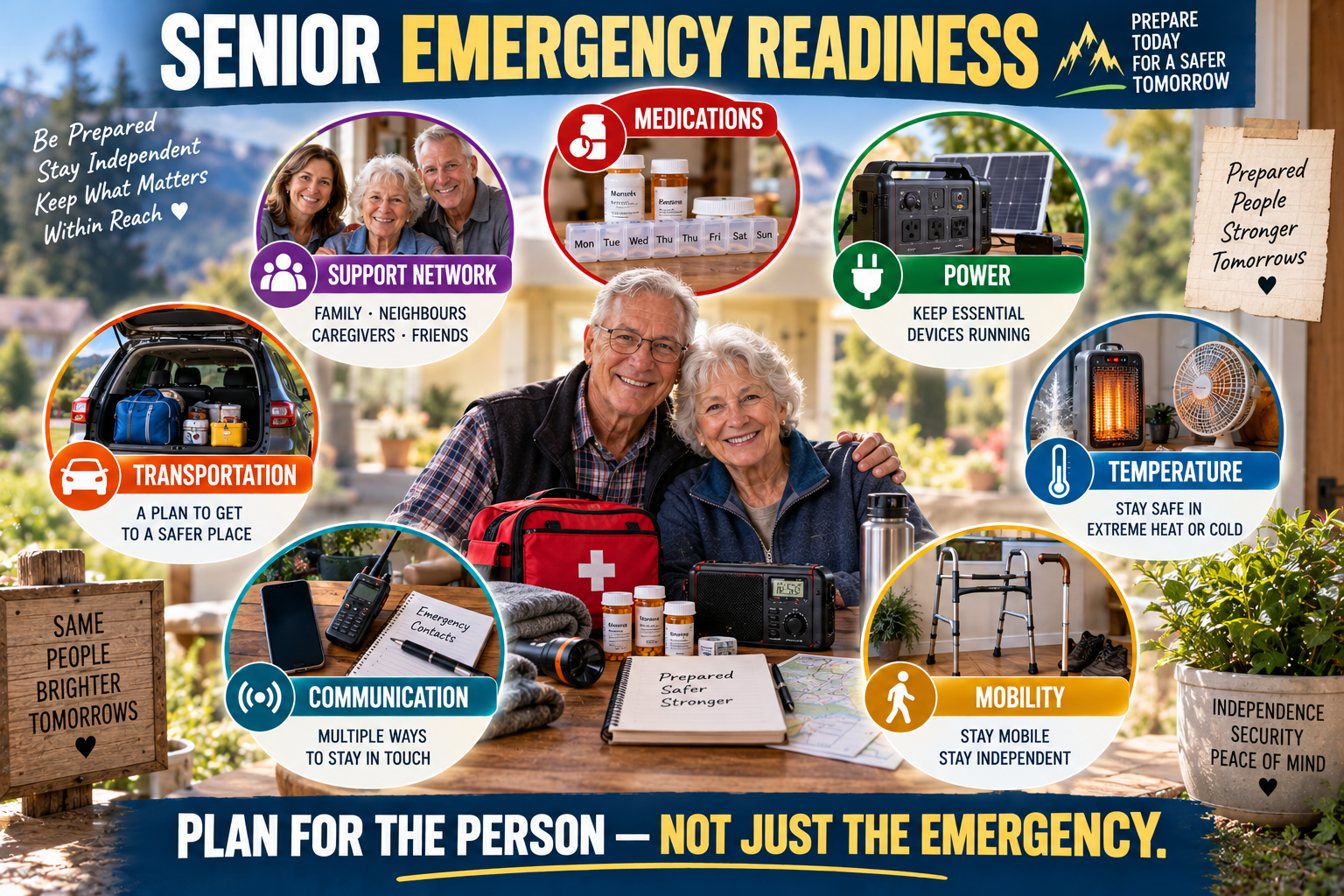
Senior emergency preparedness is less about buying a different emergency kit and more about understanding how age can change vulnerability. Temperature regulation, medications, mobility, medical equipment, communication, and access to assistance can turn an otherwise manageable disruption into a serious emergency.
The strongest plan combines accessible supplies, safe backup systems, early evacuation decisions, and dependable human support. Preparing these arrangements before a storm, outage, evacuation, or other disaster gives an older adult more options and reduces the need to solve difficult problems after normal services have already failed.
© Prepping Communities. This content is for informational purposes only and not professional advice. Use at your own risk.
Terms | Privacy | Guidelines