
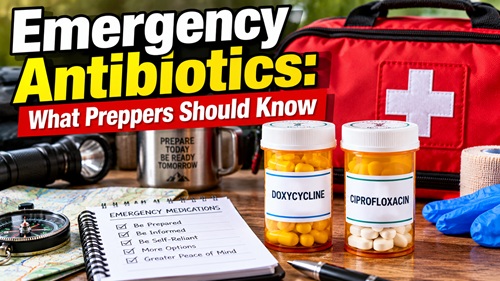
Having basic medications available can be just as important as storing food, water, first-aid supplies, and other emergency equipment. During a prolonged power outage, natural disaster, evacuation, severe weather event, or supply-chain disruption, getting to a pharmacy or seeing a doctor may become difficult.
However, prescription medications—especially antibiotics—need to be approached differently from ordinary preparedness supplies. Having medication available is useful. Knowing when it is appropriate to use it is even more important.
Antibiotics Can Be Valuable – But They Don’t Treat Everything
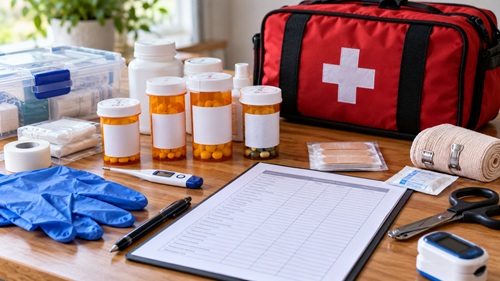
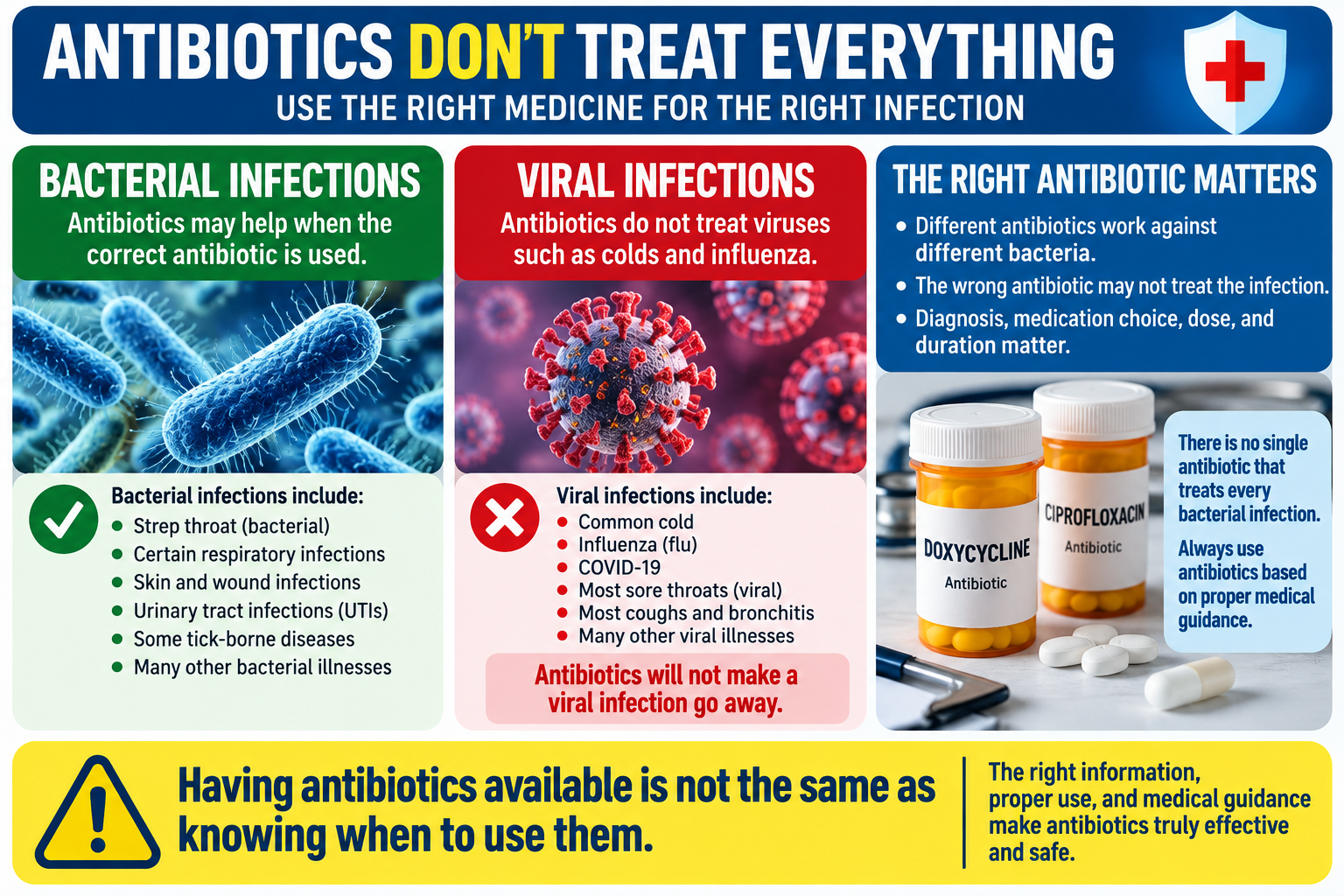
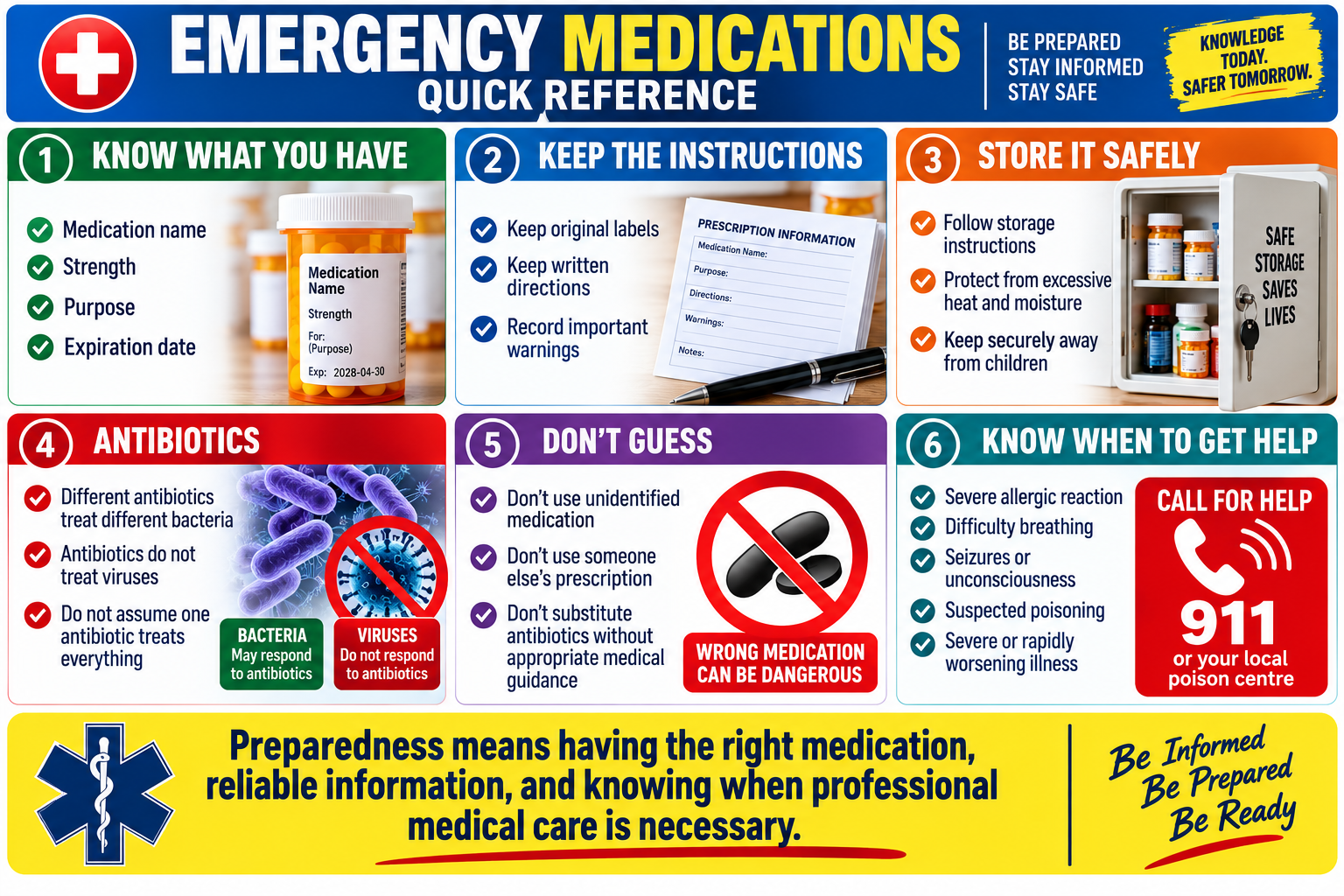
Antibiotics treat certain bacterial infections. They do not treat viruses such as ordinary colds or most cases of influenza, and different antibiotics work against different bacteria.
This is why there isn’t one “best antibiotic” that should automatically be taken whenever someone develops an infection.
Using the wrong antibiotic can expose someone to side effects without treating the illness. It can also delay proper treatment and contribute to antibiotic resistance.
For preparedness purposes, the goal shouldn’t simply be accumulating antibiotics. The goal should be having appropriate medications together with enough reliable information to use them safely if normal medical services become difficult to access.
Doxycycline
Doxycycline is frequently discussed in emergency-preparedness medicine because it has a relatively broad range of uses.
Doctors may prescribe doxycycline for certain bacterial respiratory infections, skin infections, tick-borne diseases and several other bacterial illnesses. It has important applications against some diseases transmitted through ticks and other vectors.
That makes doxycycline potentially useful in certain preparedness situations, particularly where people may spend more time outdoors and experience greater exposure to ticks and other disease vectors.
But doxycycline does not treat every bacterial infection.
It can also cause side effects, including stomach upset and significant irritation of the esophagus. It can increase sensitivity to sunlight and interacts with some medications and supplements. There are also situations where a healthcare professional may recommend a different antibiotic based on age, pregnancy status, medical history, allergies, or the suspected infection.
Ciprofloxacin
Ciprofloxacin—often called Cipro—is another antibiotic sometimes discussed in preparedness medicine.
It belongs to the fluoroquinolone family of antibiotics and can treat certain serious bacterial infections when the bacteria involved are susceptible to it.
However, ciprofloxacin should not be thought of as a universal emergency antibiotic.
Fluoroquinolone antibiotics have important safety warnings and can cause serious adverse effects in some people, including problems involving tendons, muscles, joints, nerves, and the nervous system. For that reason, medical professionals often reserve them for situations where their benefits outweigh their risks or where other treatments are not appropriate.
Ciprofloxacin can be an important medication when correctly prescribed, but it is a good example of why having an antibiotic and knowing when to use that antibiotic are two very different things.
Should You Save Leftover Antibiotics?
It can be tempting to save a few remaining antibiotic tablets “just in case.”
That isn’t a reliable preparedness strategy.
The antibiotic prescribed for one infection may be completely inappropriate for another. Even when the medication itself might be appropriate, the remaining quantity may not provide the correct treatment course.
A better preparedness strategy is to talk with a physician or other qualified healthcare professional about emergency medication planning.
Some people – particularly those who travel, live remotely, spend significant time in wilderness areas, or are preparing for situations where healthcare access could be interrupted—may have legitimate reasons to discuss emergency medications with their healthcare provider.
The important difference is that the medications are obtained specifically for that purpose with instructions for their appropriate use.
Don’t Forget the Instructions
Medication without reliable information can become dangerous during an emergency.
If prescription medications are part of an emergency medical kit, keep the original pharmacy label and packaging whenever possible.
The medication information should identify what the drug is, its strength, what it was prescribed for, dosage instructions, important contraindications or warnings, allergies, storage requirements, and expiration date.
In a serious emergency, memory isn’t a good substitute for written instructions.
Special Warning: Tessalon Perles (Benzonatate)
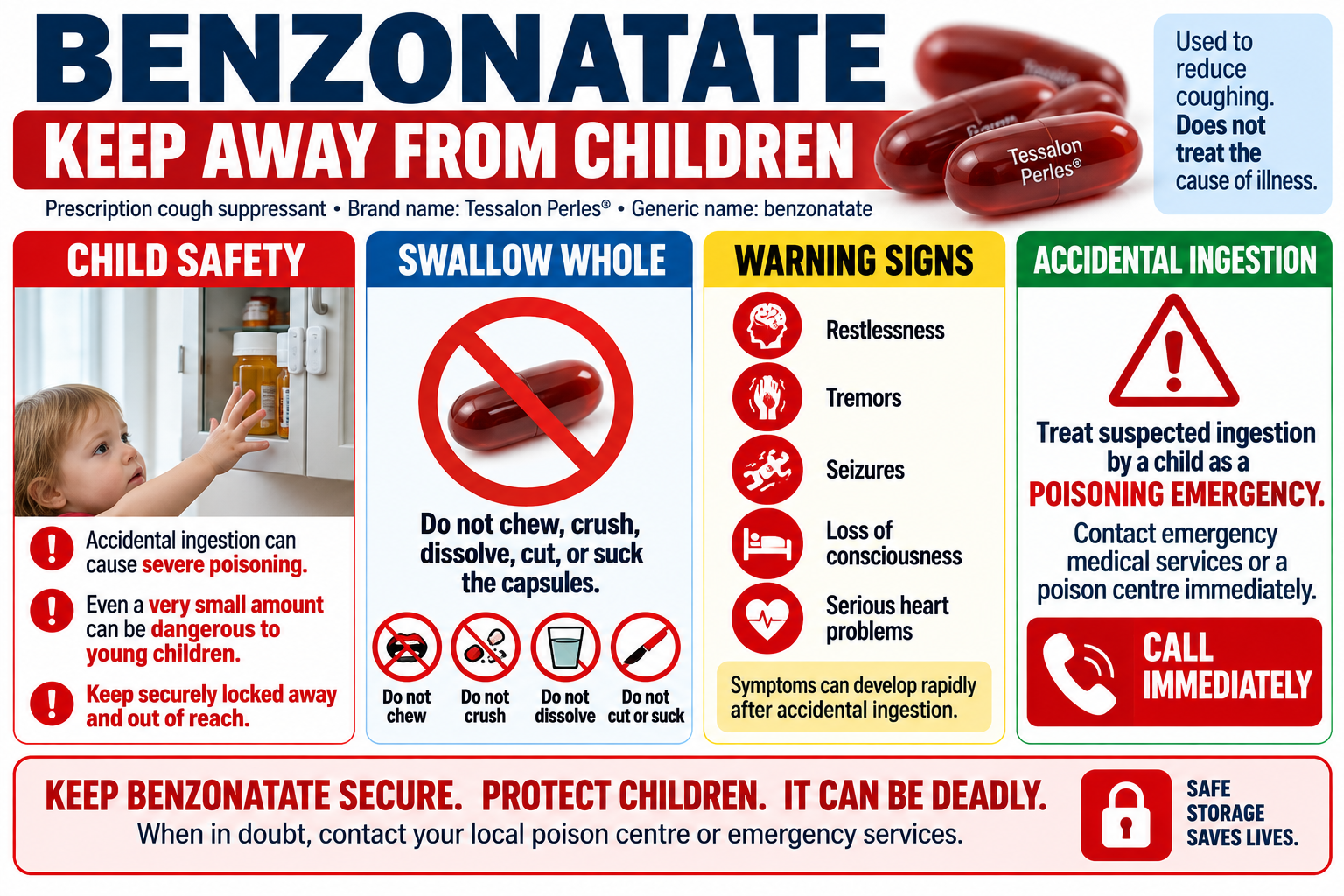
One medication deserving particular attention is Tessalon Perles, the brand name commonly associated with benzonatate.
Benzonatate is a prescription cough suppressant. It is generally used to reduce coughing rather than treat the underlying cause of the illness.
It can be particularly dangerous if accidentally swallowed by children.
The FDA has warned that accidental ingestion of benzonatate by children younger than 10 can result in death and that overdose has been reported after accidental ingestion of as few as one or two capsules in children under two years of age.
Symptoms of overdose can develop rapidly and may include restlessness, tremors, seizures, coma, and cardiac arrest.
For that reason, benzonatate should be treated as a high-risk medication around children and kept securely locked away and out of sight and reach.
The capsules should also be swallowed whole. They should not be chewed, crushed, dissolved, cut, or sucked because releasing the medication inside the mouth can cause numbness of the mouth and throat and create additional risks.
If a child accidentally swallows benzonatate, treat it as a potential poisoning emergency and immediately contact emergency medical services or a poison centre.
Store Emergency Medications Properly
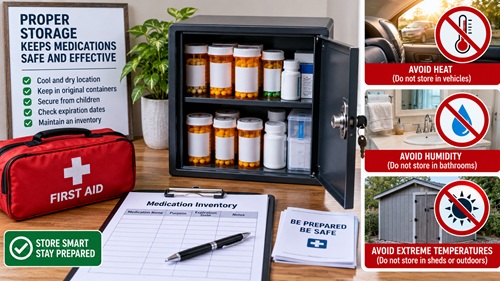
A medication stockpile isn’t useful if heat, moisture, contamination, damaged packaging, or poor organization makes the medication unreliable.
Keep prescription medications in their original labeled containers whenever possible and follow the storage instructions provided with each medication. Avoid automatically storing medications in bathrooms, vehicles, sheds, garages, or other locations that may experience excessive heat, cold, or humidity.
Periodically review the medications in your emergency supplies.
Know what you have.
Know why you have it.
Know how it should be stored.
And most importantly, know enough to recognize when you should not use it.
Build a Medication Reference Sheet
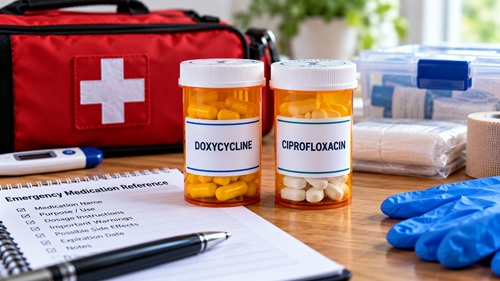
Consider keeping a simple printed medication reference with your emergency medical supplies.
Record the medication name, strength, purpose, prescribed directions, major warnings, allergies, expiration date, and the person for whom it was prescribed.
Also keep current contact information for your doctor, pharmacy, local poison centre, and emergency services.
This becomes particularly valuable during an emergency when internet access may not be available.
Emergency Medication Reference
| Medication | Strength | Used For / Purpose | Prescribed Directions | Major Warnings / Allergies | Expiration Date | Prescribed For |
|---|---|---|---|---|---|---|
Important Medical Contacts
| Contact | Name / Organization | Phone Number | Notes |
|---|---|---|---|
| Doctor / Healthcare Provider | |||
| Pharmacy | |||
| Poison Centre | |||
| Emergency Services | |||
| Emergency Contact |
Keep this sheet with your emergency medical supplies and update it whenever medications, prescriptions, allergies, or contact information change.
Preparedness Action Plan
Review the prescription medications currently kept in your home and emergency supplies. Make sure they are clearly identified, properly stored, and inaccessible to children.
Do not build an emergency antibiotic supply from unidentified pills or miscellaneous leftovers.
If maintaining emergency prescription medications is important to your preparedness plan, discuss that goal directly with a healthcare professional. Ask what medications would make sense for your circumstances and what instructions should accompany them.
Finally, keep reliable printed medical references with your emergency supplies. Having medication available is only one part of preparedness. Understanding its purpose, limitations, warnings, and when professional care is necessary is what makes that medication genuinely useful.
Key Takeaways
Antibiotics can be extremely valuable when they are used against the correct bacterial infection, but no antibiotic treats everything.
Doxycycline has important uses, including treatment of certain tick-borne and other bacterial diseases. Ciprofloxacin can treat certain susceptible bacterial infections but carries significant safety warnings and isn’t appropriate for every infection.
Saving random leftover antibiotics isn’t the same thing as maintaining a properly planned emergency medication supply.
Benzonatate (Tessalon Perles) deserves special attention because accidental ingestion can be extremely dangerous for young children. Store it securely and always swallow the capsules whole as directed.
The best emergency medicine kit combines appropriate medications, safe storage, reliable information, and the judgment to know when professional medical care is necessary.
Medical Disclaimer
This posting is provided solely for general education and emergency-preparedness information. It is not medical advice and is not intended to diagnose, treat, cure, or prevent any disease or medical condition.
Prescription medications, including antibiotics such as doxycycline and ciprofloxacin and cough medications such as benzonatate, can cause serious side effects, allergic reactions, drug interactions, and other complications. The appropriate medication, dose, treatment duration, and suitability for an individual depend on factors including the suspected illness, age, weight, pregnancy status, allergies, medical conditions, kidney and liver function, other medications, and local patterns of antibiotic resistance.
Do not use antibiotics simply because symptoms appear to indicate an infection. Do not use another person’s prescription medication, change a prescribed dosage, substitute one antibiotic for another, or use leftover prescription medication for a new illness without appropriate medical guidance.
Always follow the medication label and instructions provided by a physician, pharmacist, or other qualified healthcare professional.
Suspected poisoning, severe allergic reactions, difficulty breathing, seizures, loss of consciousness, severe or rapidly worsening illness, or accidental ingestion of potentially dangerous medication by a child should be treated as a medical emergency. Contact emergency services or your local poison centre immediately.
Emergency preparedness should improve access to appropriate medical care and reliable information – not replace professional medical judgment when that care is available.
© Prepping Communities. This content is for informational purposes only and not professional advice. Use at your own risk.
Terms | Privacy | Guidelines