

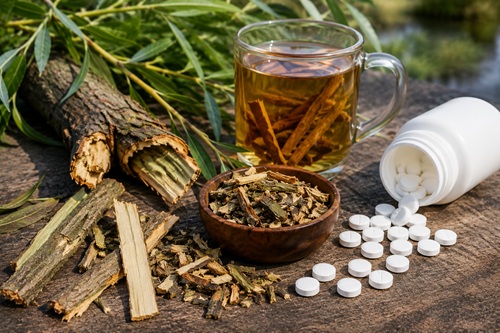
Willow bark is one of the better-known examples of traditional plant medicine eventually influencing modern pharmaceuticals. Various willow species contain naturally occurring compounds called salicylates, including salicin. These compounds are related to the chemistry that eventually led to the development of aspirin, but willow bark tea and aspirin are not the same thing.
That distinction is worth understanding before making it. A commercial aspirin tablet contains a precisely manufactured amount of acetylsalicylic acid. Willow bark is a natural material whose chemical concentration varies between species, individual trees, growing conditions, seasons, and even different parts of the same plant. Making willow bark tea therefore produces a traditional herbal preparation, not a homemade aspirin tablet with a predictable dose.
The actual preparation is quite simple. The more important skills are identifying willow correctly, harvesting it responsibly, drying it properly, and understanding when salicylate-containing plants shouldn’t be used.
Finding Willow
Willows belong to the Salix genus and are strongly associated with water. They are commonly found along streams, rivers, ponds, wetlands, irrigation areas, and other locations where the soil remains relatively moist.
There are many species of willow, and they shouldn’t be identified from one characteristic alone. Leaf shape, bark, buds, branches, growth pattern, habitat, and regional distribution can all help establish an identification.
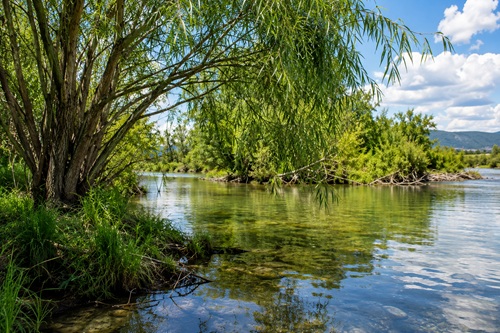
Use a reliable regional tree-identification resource and confirm several characteristics before harvesting anything that will eventually be consumed.
If you aren’t certain that you’ve identified the tree correctly, don’t use it.
Where the willow grows also matters. A healthy-looking tree beside a polluted drainage ditch isn’t a good source of medicinal plant material. Avoid harvesting near areas that may have been exposed to industrial contamination, herbicides, pesticides, contaminated runoff, or other questionable substances.
Harvesting the Bark
Don’t walk up to a healthy willow and peel a large strip from its trunk. Removing too much bark can seriously damage a living tree.
For a small personal supply, a better method is to collect material from suitable branches that are already being pruned or to carefully remove a small branch from a tree you own or have permission to harvest.
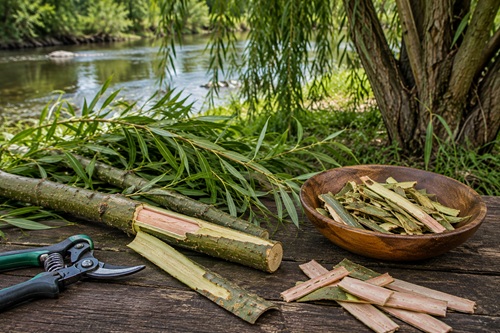
Use clean pruning shears and select healthy material.
The medicinally interesting portion is associated with the bark rather than the woody center of the branch. After cutting the branch, carefully separate the bark from the underlying wood and reduce it into manageable strips or pieces.
Only collect what you’re actually going to use or dry. Sustainable harvesting is particularly important when collecting from wild plants because the objective should be obtaining useful material without unnecessarily damaging the resource that produced it.
Drying Willow Bark
Freshly harvested bark contains moisture, so material intended for storage needs to be dried thoroughly.
Cut the bark into relatively small strips and spread them loosely across a clean drying rack or screen. Don’t pile everything together because trapped moisture slows drying and encourages deterioration.
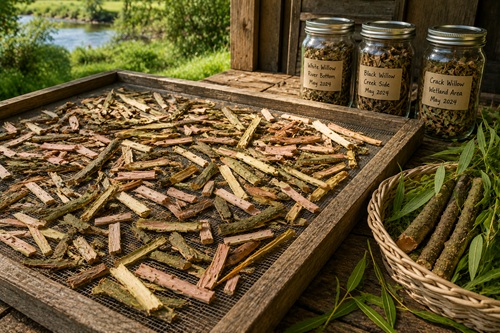
Place the bark somewhere dry with good airflow. Protect it from rain, condensation, excessive humidity, and contamination while it dries.
Turn the pieces periodically.
The finished material should feel thoroughly dry before it goes into storage. Don’t seal bark that is still noticeably damp or pliable inside an airtight container and expect it to keep well.
Once dried, place the bark in a clean, dry container and store it away from excessive heat, moisture, and direct sunlight.
Label the container with the species, harvest location, and date collected.
That might seem unnecessary when you only have one jar, but labeling becomes important very quickly when you begin storing multiple wild plants.
Making Willow Bark Tea
Willow bark is woody material, so preparing it is slightly different from making ordinary tea from delicate leaves.
Rather than simply pouring boiling water over the bark for a few minutes, make a decoction. A decoction uses gentle simmering to extract water-soluble compounds from tougher plant material.
Cut or break the dried bark into small pieces.
Place a small amount into a saucepan and add several cups of clean water. Bring the water to a gentle boil, then immediately lower the temperature until it is only simmering.
Let the bark simmer gently for approximately 10 to 15 minutes.
Remove the saucepan from the heat, cover it, and allow the bark to remain in the hot water for another 20 to 30 minutes.
Strain the liquid carefully.
What remains is willow bark tea.
The flavor can be noticeably bitter and astringent. A little honey can be added after preparation if desired.
One thing you shouldn’t do is judge the strength by color. A darker cup doesn’t tell you exactly how much salicin it contains.
Why There Isn’t a Homemade Aspirin Dosage
This is where DIY instructions for willow bark can become misleading.
It would be convenient to say that a particular number of teaspoons of bark equals one aspirin tablet, but home-harvested bark doesn’t work that way.
One willow species can contain a different concentration of salicylates than another. Two trees of the same species can also differ. Harvesting conditions, storage, age of the material, and preparation can introduce additional variation.
Without laboratory analysis, you don’t know precisely how much active salicylate is present in a particular batch.
That means don’t try to manufacture an aspirin-equivalent dose by measuring homemade willow bark tea.
This is traditional herbal medicine with naturally variable plant material, not pharmaceutical manufacturing.
Storing Your Supply
If the objective is keeping willow available for future use, store the dried bark rather than large quantities of prepared tea.
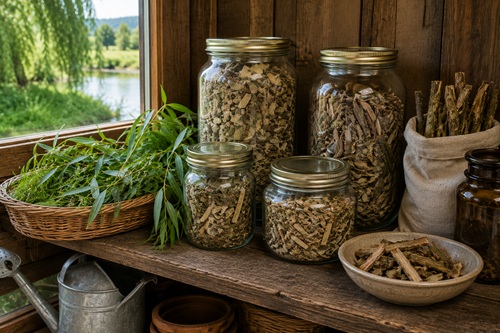
Water-based herbal preparations don’t have the storage characteristics of thoroughly dried plant material. Once water is introduced, microbial growth and spoilage become concerns.
Prepare relatively small batches of tea when needed.
Keep your dried bark protected from moisture and inspect it periodically. If you find mold, unexpected dampness, insect contamination, or an abnormal odor, discard the affected material.
Someone with suitable property could also consider growing willow rather than depending entirely on wild harvesting. Many willows grow vigorously when given appropriate moisture, making the plant potentially renewable when managed correctly.
Important Safety Considerations
Plant-derived doesn’t automatically mean harmless.
Because willow bark contains salicylates, anyone with an allergy or serious sensitivity to aspirin or salicylates should avoid it.
There can also be concerns for people with bleeding disorders, stomach ulcers, kidney problems, or certain other medical conditions. Willow bark can interact with aspirin, anticoagulants, antiplatelet medications, NSAIDs, and other medications.
It should not be treated casually during pregnancy or breastfeeding.
Children and teenagers should not be given willow bark as a substitute for aspirin, particularly during viral illnesses, because salicylates are associated with the risk of Reye syndrome.
Another important limitation is that reducing pain doesn’t tell you why the pain occurred.
Severe headache, significant injury, chest pain, neurological symptoms, difficulty breathing, persistent high fever, severe abdominal pain, uncontrolled bleeding, or rapidly worsening symptoms aren’t situations where drinking herbal tea should delay appropriate medical evaluation.
A Useful Skill With Important Limitations
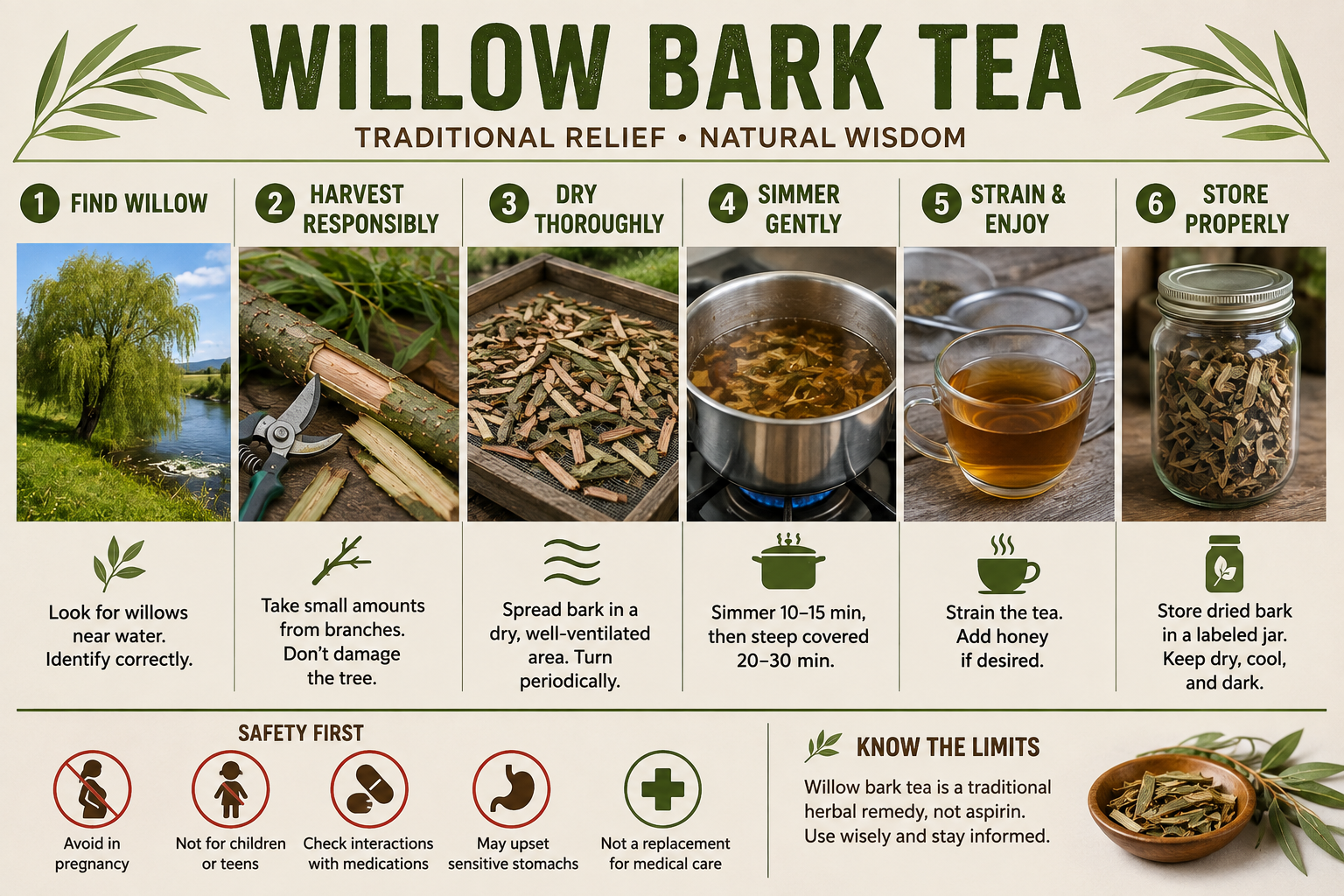
Making willow bark tea isn’t difficult. The practical process is simply to correctly identify willow, responsibly collect suitable bark, dry it thoroughly, break it into smaller pieces, gently simmer it in clean water, allow it to steep, and strain the finished liquid.
The knowledge surrounding the process is more important than the recipe itself.
You need to recognize the correct tree, understand which part you’re collecting, avoid contaminated harvesting locations, protect the tree from unnecessary damage, properly dry your supply, and understand the limitations of what you’ve made.
Willow bark has a legitimate place in the history of plant medicine and contains compounds related to the development of modern aspirin. But calling the finished preparation “homemade aspirin” gives it a level of precision it doesn’t have.
You’re making willow bark tea, not manufacturing aspirin.
Knowing that difference allows this traditional skill to be preserved without giving the finished remedy capabilities or dosing precision it doesn’t actually possess.
© Prepping Communities. This content is for informational purposes only and not professional advice. Use at your own risk.
Terms | Privacy | Guidelines