
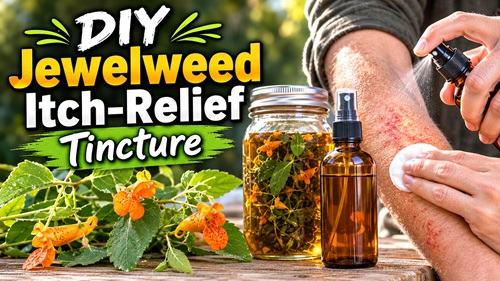
A Simple Homemade Skin Preparation Using Fresh Jewelweed and Witch Hazel
Jewelweed is one of those plants worth recognizing if you spend a lot of time gardening, hiking, working around a homestead, or moving through wooded areas. Traditionally, the fresh plant has been applied topically to irritated skin, particularly following encounters with poison ivy and similar plants.
One convenient way to keep jewelweed available beyond the growing season is to make a simple preparation with witch hazel. Fresh jewelweed is chopped, covered with witch hazel, gently warmed, strained, and stored for later topical use.
Although preparations like this are commonly called jewelweed “tinctures,” this particular version isn’t a traditional alcohol tincture made with drinking alcohol. It is more accurately a jewelweed-infused witch hazel preparation.
It’s also important to keep expectations reasonable. Jewelweed has a long history of traditional topical use, but it shouldn’t be considered a guaranteed treatment for poison ivy, poison oak, poison sumac, or other skin conditions. Individual reactions vary, and severe reactions require appropriate medical care.
What Is Jewelweed?
Jewelweed belongs to the Impatiens genus. One common North American species is orange jewelweed (Impatiens capensis), sometimes called spotted touch-me-not.
The plant prefers moist environments and is commonly found around damp woodland edges, stream banks, wet ditches, shaded low areas, and similar locations. Mature plants can become fairly tall and develop distinctive orange flowers marked with darker spots.
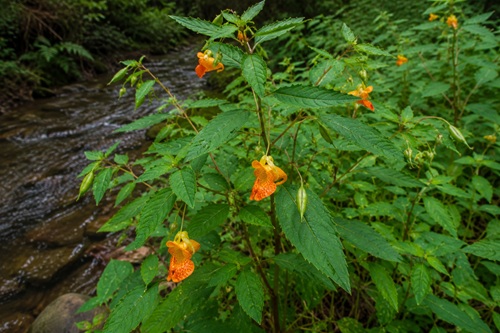
The “touch-me-not” name comes from the mature seedpods. When disturbed, ripe pods can suddenly burst open and scatter their seeds.
Correct identification matters. Don’t harvest a wild plant for a skin preparation unless you’re confident about what you’ve identified. Avoid collecting plants from roadsides, chemically treated properties, polluted waterways, or other locations where the vegetation may have been exposed to contaminants.
What You’ll Need
You’ll need enough fresh, correctly identified jewelweed to loosely fill a clean 1-quart glass jar. The leaves, tender stems, and flowers can all be used.
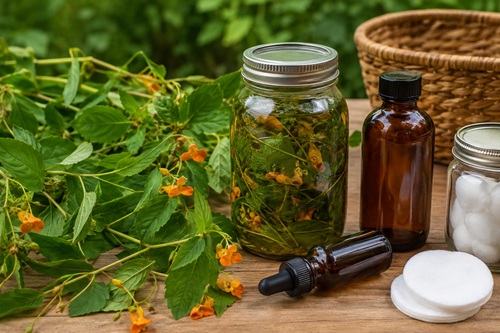
You’ll also need enough plain witch hazel to completely cover the jewelweed, a knife or kitchen scissors, cutting board, clean quart jar and lid, slow cooker, water for creating a warm-water bath, a fine strainer or clean filtering cloth, and a clean bottle or jar for storing the finished preparation.
A dark amber bottle or jar is useful for storage because it reduces exposure to light. A small spray bottle can also be filled from the main batch for convenient use.
Keep the jar, strainer, storage container, and anything else contacting the finished preparation clean and dry.
Quick Recipe
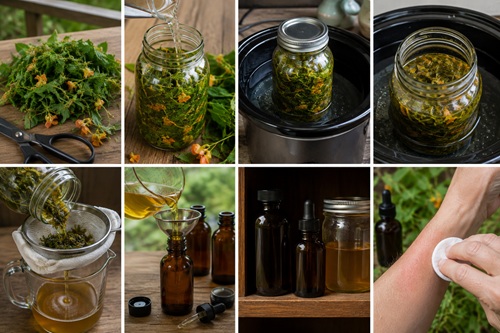
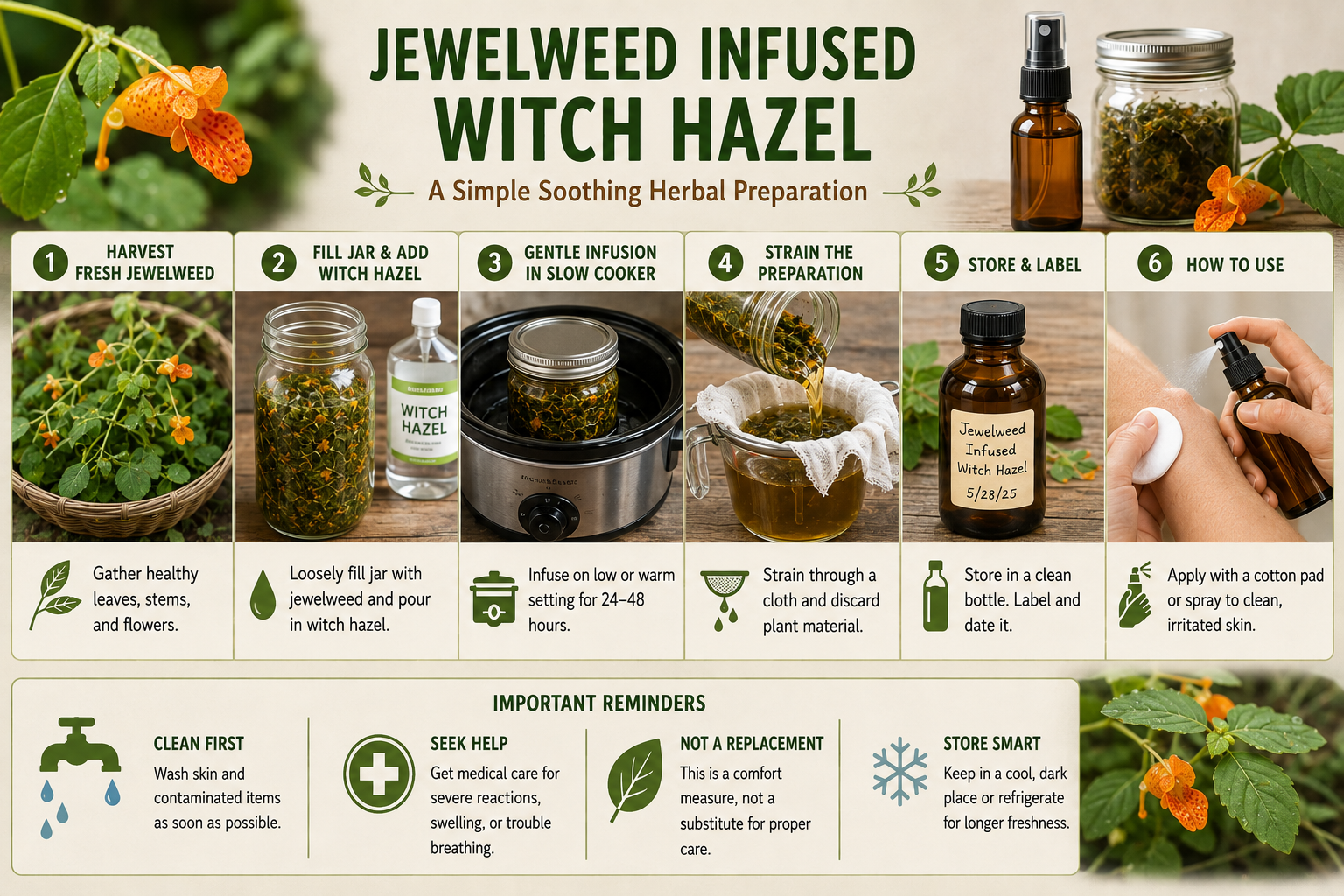
For one batch, loosely fill a clean 1-quart glass jar with freshly chopped jewelweed, using the leaves, tender stems, and flowers. Pour in enough plain witch hazel to completely cover the plant material, gently working out any trapped air pockets.
Close the jar and place it upright in a slow cooker containing enough water to come well up the sides of the jar without covering the lid. Set the slow cooker to warm or its lowest setting and allow the jewelweed to infuse gently for approximately 24 to 48 hours, checking occasionally to make sure the water bath hasn’t evaporated away.
When finished, allow the jar to cool enough to handle safely. Strain out the plant material and transfer the liquid into a clean bottle or jar. Label and store it in a cool, dark location or refrigerator.
To use, apply a small amount to intact irritated skin with a clean cotton pad or lightly spray it onto the affected area. Test a small area first and discontinue use if irritation occurs.
Harvest Fresh Jewelweed
Fresh jewelweed is a practical choice for this preparation because the succulent stems and leaves contain considerable moisture and are easy to chop.
Harvest healthy-looking portions of the plant. Leaves, tender stems, and flowers can all go into the preparation.
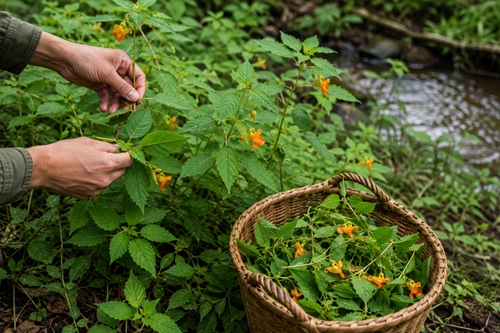
Inspect what you’ve collected before bringing it into the kitchen or workspace. Remove insects, damaged material, dead leaves, soil, and pieces of unrelated plants.
If the plants need washing, rinse them with clean water and allow excess surface water to drain thoroughly before chopping. You don’t want unnecessary water diluting the finished preparation.
Be particularly careful about poison ivy or other irritating plants growing around the jewelweed. Because jewelweed frequently grows in moist, brushy areas, look carefully at everything surrounding the plant before reaching into the vegetation.
Chop and Fill the Jar
Cut the jewelweed into relatively small pieces. Chopping exposes more of the plant’s surface to the witch hazel than leaving long stems and whole leaves intact.
Place the chopped jewelweed into your clean glass jar.
Fill the jar generously with plant material, but don’t compress everything into such a solid mass that the witch hazel can’t circulate around it. You want plenty of jewelweed while still leaving enough room for liquid to move throughout the jar.
Slowly pour witch hazel over the chopped jewelweed.
Use enough to completely cover the plant material. Gently press or stir the jewelweed if necessary to release trapped air pockets and help the liquid reach everything inside the jar.
Check the jar again before closing it. If plant material is sticking above the liquid, add additional witch hazel until everything is adequately covered.
Set Up a Gentle Water Bath
Place the closed jar upright inside a slow cooker.
Add water to the slow cooker around the outside of the jar. Bring the water reasonably high around the sides without submerging the lid or allowing water to enter the jar.
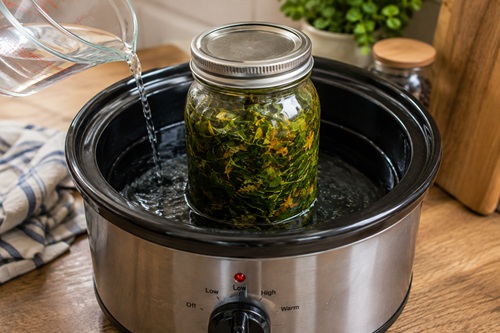
The water bath provides gentler and more even heating than placing the jar directly against a strong heat source.
Set the slow cooker to its lowest or warm setting. The objective is gentle warmth, not boiling or aggressively cooking the plant material.
Slow cookers can vary considerably in temperature. Check the water periodically and don’t allow the water bath to boil vigorously or evaporate away.
If additional water is needed, add warm water rather than suddenly pouring cold water around a hot glass jar. Rapid temperature changes can crack glass.
Let the Jewelweed Infuse
Allow the jar to remain in the gently warmed water bath for approximately 24 to 48 hours.
During that time, the witch hazel will gradually change in appearance and smell as it infuses with the chopped plant material.
Check the slow cooker periodically. Make sure there is still adequate water around the jar and that the system remains gently warm rather than excessively hot.
If necessary, add additional warm water to maintain the water bath.
Once the infusion period is complete, turn off the slow cooker and allow the jar to cool enough to handle safely.
Strain the Finished Preparation
Place a fine strainer, clean cloth, or suitable filtering material over a clean container.
Pour the contents of the jar through the filter, separating the liquid from the chopped jewelweed.
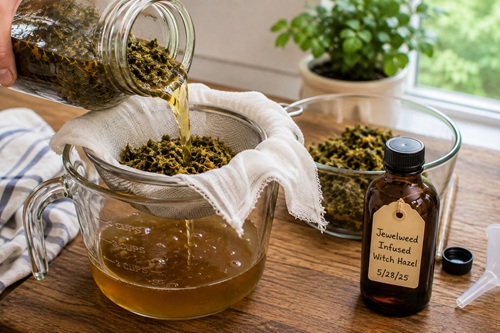
Allow the liquid to drain thoroughly. You can gently press the plant material to recover additional liquid, but avoid introducing dirty hands or contaminated utensils into the finished preparation.
Discard or compost the spent plant material where appropriate.
Transfer the strained jewelweed-infused witch hazel into a clean storage bottle or jar and close it securely.
Label the container with Jewelweed Infused Witch Hazel and the date it was made. Dating homemade preparations makes it much easier to keep track of how long they’ve been stored.
Store It Properly
Keep the finished preparation in a cool, dark location, or refrigerate it for more conservative storage and the additional soothing effect of applying it cool.
An amber glass container can help protect the contents from prolonged exposure to light.
Because this preparation is homemade, contains fresh plant material during processing, and isn’t produced under sterile laboratory conditions, don’t assume it has an unlimited shelf life. Commercial witch hazel products also vary in their formulation and alcohol content.
Check the preparation before using it, especially if it has been stored for a while. Changes in smell, unexpected cloudiness, gas formation, mold, or anything else suggesting deterioration are reasons to discard the batch.
Making smaller batches periodically can make more sense than producing a very large quantity intended to last for years.
How to Use It
This preparation is intended for external use on intact skin.
Apply a small amount to the irritated area using a clean cotton pad or cloth. You can also transfer some into a clean spray bottle and lightly mist the affected skin.
Allow the liquid to dry naturally.
Before using it extensively, test a small amount on a limited patch of unaffected skin and watch for irritation. Jewelweed itself, witch hazel, or additional ingredients in a particular commercial witch hazel product may bother sensitive skin.
Don’t apply the preparation to the eyes, mouth, significant open wounds, or severely damaged skin.
Poison Ivy Exposure Still Requires Washing
A jewelweed preparation shouldn’t replace the most important early response to poison ivy, poison oak, or poison sumac exposure: removing urushiol oil from the skin and contaminated belongings as soon as practical.
Wash exposed skin thoroughly with soap or another suitable cleanser and plenty of water. Pay particular attention to areas such as underneath the fingernails where plant oil can remain and later be transferred to other parts of the body.
Clothing, gloves, footwear, garden tools, backpacks, equipment, and even pet fur that contacted the plant can retain urushiol. Touching those contaminated surfaces later can expose the skin again even after the original exposure has been washed away.
Wash contaminated clothing separately and clean tools and equipment appropriately before handling them normally again.
The jewelweed preparation can then be treated as an optional topical comfort measure rather than relying on it to somehow remove plant oil that remains on the skin or equipment.
Know When an Itchy Rash Needs More Than DIY Care
Minor itching and small areas of irritation are very different from a severe allergic reaction.
Seek appropriate medical attention for severe or widespread reactions, significant swelling, signs of infection, breathing difficulty, or involvement of sensitive areas such as the eyes, face, mouth, or genitals. Breathing difficulty or serious facial or throat swelling can be an emergency.

Also don’t assume every unexplained rash is poison ivy. Insect bites, allergic reactions, infections, and numerous skin conditions can produce itching, redness, swelling, or blistering.
If a rash is getting substantially worse rather than improving, the cause is uncertain, or you’re concerned about the severity of the reaction, homemade skin preparations shouldn’t delay appropriate medical evaluation.
Make It Before You Need It
The biggest drawback to making jewelweed-infused witch hazel is that it isn’t something you prepare five minutes after discovering an itchy rash. The infusion takes time.
That makes it a useful seasonal DIY project.
If jewelweed grows abundantly on your property or in an area where you can legally and responsibly harvest it, make a small batch while healthy plants are available. Label it, store it properly, and you’ll already have it available when gardening, clearing brush, hiking, or working around the property puts you in contact with irritating plants.
It’s inexpensive, requires very little equipment, and turns a commonly encountered wild plant into a practical homemade topical preparation.
Just remember what it is: a traditional itch-relief preparation that may provide topical comfort, not a replacement for removing poison-plant oils or obtaining medical care when a reaction becomes serious.
© Prepping Communities. This content is for informational purposes only and not professional advice. Use at your own risk.
Terms | Privacy | Guidelines