
How to Find Them Before a Crisis
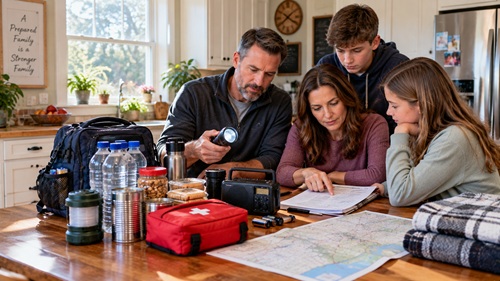
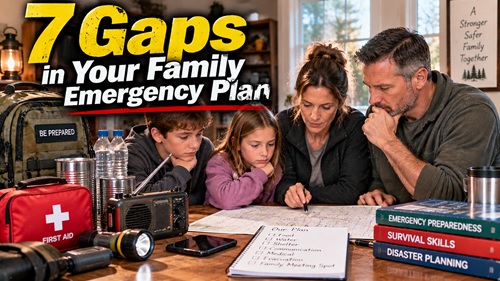
Most families who prepare for emergencies naturally start with supplies. They store food and water, buy flashlights, put together first-aid kits and maybe invest in a generator or some kind of backup power. All of that matters, but having emergency supplies and having an emergency plan that actually works are two different things. Some of the biggest weaknesses in household preparedness have nothing to do with how much equipment you own. Problems show up when only one person knows how everything works, nobody is quite sure what they’re responsible for, family members can’t communicate, important equipment can’t be found, or the emergency happens under completely different circumstances than everyone imagined.
Every once in a while it’s worth testing the plan instead of assuming it works. Look for the awkward moments, the questions nobody can answer and the equipment everyone knows you own but nobody can find. Finding those problems on an ordinary day is a whole lot easier than discovering them during an evacuation, wildfire, winter storm or extended power outage. These seven areas are a good place to start.
Gap 1 – Only One Person Knows How Everything Works
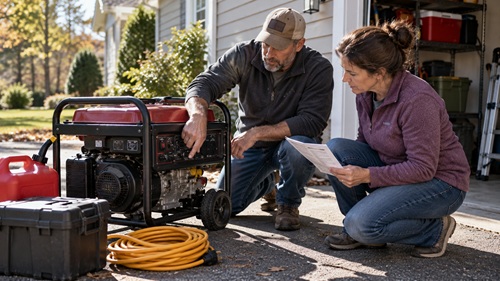
In a lot of prepared households, one person gradually becomes the emergency person. They’re the one buying supplies, organizing the food, maintaining the generator, figuring out the radios, knowing where the water shutoff is and remembering where all the important documents ended up. It can work really well right up until that person isn’t there.
Now remove that person from the emergency.
Maybe the power goes out while they’re at work several hours away. Can everyone else find the backup lighting? Can another adult safely operate the generator? Does anyone else know where the fuel is stored or how to shut off the household water? If you suddenly had to evacuate, would somebody else know what needs to leave with the family? Walk around the house and think about the things you would depend on during an emergency: backup power, water, emergency heat, radios, first aid, food preparation and evacuation supplies. If you keep finding yourself saying, “I’m the only one who knows how to do that,” you’ve probably found a problem.
Everyone doesn’t need to become an expert, but another capable person should at least know the basics of anything really important. Written instructions can help too. A waterproof card kept with the generator could explain its basic startup and shutdown procedure. Emergency numbers can be printed instead of existing only in somebody’s phone, and important household shutoffs can be clearly identified. If you’re the person who handles most of the preparedness in your house, this is probably one of the easiest gaps to accidentally create.
Gap 2 – Everyone Knows the Plan, but Nobody Knows Their Job
Families often talk generally about what they’d do during an emergency. We’d evacuate, grab the emergency bags, get the kids and take the pets. That sounds good until everyone assumes somebody else grabbed the dog. One easy way to find out whether the plan really works is to give your household a pretend five-minute evacuation and ask everyone what they would do without explaining the plan first. You might discover that one person assumes they’re getting the children while their spouse thinks they’re getting the bags, nobody knows who’s grabbing medications, or two people both go after the pets while something much more important gets forgotten.
Fixing that doesn’t require giving everyone a complicated emergency checklist. Keep the jobs simple. One adult might handle the children while another gathers medications and emergency bags. Somebody can take responsibility for the pets, while an older child or teenager might have one easy job such as grabbing a particular bag or making sure younger siblings have shoes and coats. Have backups for anything particularly important too, because the person normally responsible for the pets or medications may not be home when the evacuation happens. The idea is simply to avoid five people standing in the driveway asking, “Didn’t you grab it?”

Gap 3 – You Have Food and Water, but You’ve Never Tested How Long It Will Last
A pantry can look pretty impressive until you try turning everything in it into actual meals. Try feeding your household on paper for seven days using only what you currently have. Plan breakfast, lunch and dinner for everybody, including children, pets and anyone with dietary restrictions. Then look at what it actually takes to prepare those meals. Maybe there’s plenty of pasta but not enough stored water to cook it. Maybe half the household food supply is in the freezer even though an extended outage could eventually put all of it at risk. Maybe a surprising number of meals depend on an electric stove or microwave.
Water can be even more deceptive. Most people naturally think about drinking water first, but water is also used for cooking, basic hygiene and some medical needs. Dried beans, rice, powdered foods and freeze-dried meals can use a surprising amount too. Take that seven-day menu and remove electricity, natural gas and normal water service. Can you still make the meals? Where does the cooking water come from? What are you cooking on? How much fuel will that take?

If the numbers don’t work, that’s useful information. You found the problem while the grocery store is open and water still comes out of the tap. You can fix it gradually by storing more of the foods your household already eats, including some things that require little or no cooking and making sure there’s a safe backup way to prepare the foods that do need heat. Do the same with water. Stored water gives you an immediate supply, while an appropriate treatment or filtration option may give you another way to keep going if the disruption lasts longer than expected.
Gap 4 – Someone Depends on Something That Stops Working Without Electricity
Power outages expose things we normally don’t think much about. Refrigerated medications, powered medical devices, mobility equipment, rechargeable hearing devices and other essential equipment may all depend on electricity. Some dependencies aren’t electrical at all. Someone who can’t function well without prescription glasses has a problem if those glasses get broken during an evacuation, while someone taking prescription medication has another problem if the local pharmacy is inaccessible for several days.
Go through the household one person at a time and think about what each person relies on every day for health, mobility or basic functioning. Then ask what happens if electricity, refrigeration, batteries, prescription refills or specialized supplies aren’t available for a few days. Medical needs vary from person to person, so some of these plans need to involve a doctor, pharmacist or equipment manufacturer rather than guesswork. If somebody depends on powered medical equipment, keeping that equipment operating may be a much higher priority than keeping the television or ordinary kitchen appliances running.
If a generator is part of the answer, more than one person should know how to safely operate it. Fuel-burning generators create carbon monoxide and should never be operated inside a home, garage or other enclosed area. Having backup power isn’t much help if the only person who knows how to use it is two hours away.
Gap 5 – Your Communication Plan Is “We’ll Call Each Other”
Cellphones work so well most of the time that it’s easy to forget how much has to keep working behind them. Towers need power and network connections, systems can become overloaded, phones can break and batteries eventually die. Imagine one parent is at work, the children are at school and somebody else in the family is somewhere completely different when communications stop working. What happens next?
Ask everyone where they would go if they couldn’t reach anybody else. If one person says home, another says Grandma’s house and somebody else shrugs, you’ve found something worth fixing. Choose meeting locations ahead of time. One might be somewhere close to home if the house itself is the problem, while another could be outside the neighbourhood if nobody can safely return home. An out-of-area contact can also be useful, particularly if local communications are having problems.
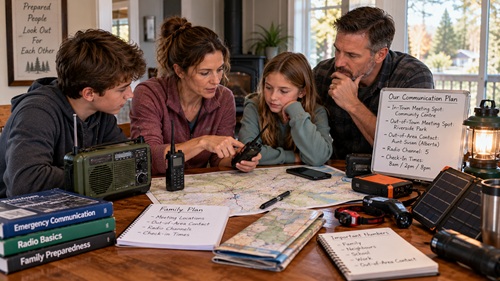
Put important telephone numbers on paper too. We’ve become so used to tapping somebody’s name on a screen that a lot of us probably couldn’t tell you their phone number anymore. Radios or other communication methods may give some households another option, depending on what people know how to use. You don’t necessarily need an elaborate communications setup. You just need another way to communicate or a plan everyone understands when the thing everybody normally reaches for isn’t working.
Gap 6 – You Own the Equipment, but Nobody Can Find It
Try this sometime without warning anybody. Ask someone in the house to bring you the main first-aid kit, then ask for a flashlight, the emergency radio, evacuation bag, water filter, spare batteries and important documents. See what happens. Emergency supplies have a funny way of wandering around the house. Somebody borrows a flashlight, batteries get put in a drawer, the first-aid kit gets moved after somebody cuts themselves, emergency food gets mixed into the regular pantry and the evacuation bags slowly disappear behind boxes in a closet. A few months later everyone remembers owning the stuff, but nobody knows exactly where it is.
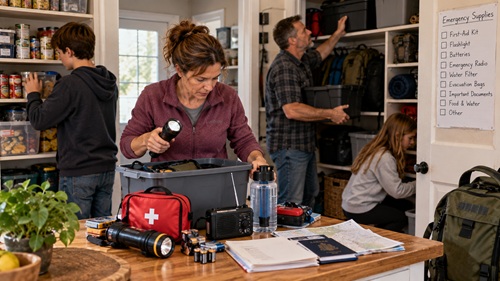
Once everything has been found, test some of it. Turn the flashlight on, check the batteries, look through the first-aid kit, inspect stored food and make sure the water filter still has all the pieces required to use it. You may find that you don’t actually need to buy anything. You just need to organize what you already have.
Give important emergency equipment a permanent home and make sure everybody knows where that is. Things you may need during an evacuation should also be reasonably accessible rather than buried behind Christmas decorations and boxes nobody has opened since the last move. You don’t want to discover during a blackout that your family owns six flashlights and nobody can find one.
Gap 7 – Your Emergency Plan Only Works on a Good Day
This is where a pretty good emergency plan can fall apart. When we imagine an emergency, we tend to picture everyone home, awake and healthy. The car starts, the weather isn’t terrible, phones are charged, the normal road is open and, conveniently, the person who put the emergency plan together is standing right there. Real emergencies don’t cooperate like that. The power could fail at 2 a.m. during a winter storm. A wildfire evacuation might start while one parent is at work and the kids are at school. Somebody may already be sick. The vehicle might not start. The normal route out of the neighbourhood could be blocked.
Take the plan you already have and make the situation inconvenient. What happens if one adult isn’t home? What if the car won’t start? What if the internet and cellular network are unavailable? What if your usual evacuation route is blocked? What if the emergency you expected to last one day lasts a week? Every time the answer becomes “we’ll figure it out,” you’ve probably found something worth thinking about.
There isn’t much point trying to create a backup plan for every bizarre thing that could possibly happen. Concentrate on the failures that could leave the household unsafe or without an obvious next move. Another evacuation route, another communication method, another person who knows the equipment, another way to cook and another way to obtain safe water can cover a lot of situations without making the family plan unnecessarily complicated.
Put the Whole Plan to the Test
Once you’ve worked through the seven gaps, try a simple household drill. Don’t make it complicated. An evening power outage with cellular service unavailable is enough to find quite a few problems. Tell everyone what’s happened and see what they do. Can people find lighting without wandering through a dark house? Does everyone know where the emergency supplies are? Can somebody besides the main preparedness person operate important equipment? Does everyone know where they’d meet if they became separated? Can you prepare food? Is safe drinking water available? Can essential medical needs still be supported?
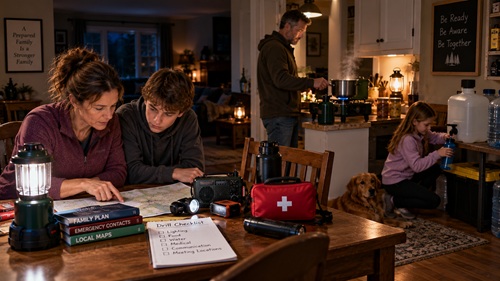
The moments when somebody stops and says, “Wait, what do we do now?” are probably the most useful part of the exercise. Maybe nobody can find the flashlight. Maybe everyone forgot the meeting location. Maybe you pull out the backup stove and discover there’s no fuel for it. Fix those problems as you find them. Discovering them during a practice evening is a whole lot better than discovering the same thing when the lights really are out.
Keep a Family Emergency Weak-Point List
After you’ve tested the plan, write down what didn’t work while it’s still fresh in everyone’s mind. This doesn’t need to become a complicated spreadsheet or another giant preparedness binder. A simple list is enough. Record the weakness you found, why it matters, what you’re going to do about it and who’s going to take care of it. Having somebody responsible for each problem is important because otherwise it’s very easy for everyone to agree that something needs fixing and then assume somebody else will eventually do it.
A family weak-point list could look something like this:
| Weak Point Found | Why It Matters | What Needs to Change | Who Will Handle It |
|---|---|---|---|
| Only one person knows how to use the generator | Backup power may be unavailable if that person isn’t home | Teach another adult how to safely start, operate and shut it down | ______ |
| Stored water won’t last seven days | The household could run short during a longer outage | Increase stored water and review backup treatment options | ______ |
| Nobody remembers the meeting location | Family members could become separated when phones don’t work | Choose and practice primary and backup meeting locations | ______ |
| Emergency bags are buried in the closet | Evacuation supplies may take too long to retrieve | Move the bags somewhere accessible | ______ |
| Backup stove has no fuel | Stored food may be difficult or impossible to cook | Obtain and safely store the correct fuel | ______ |
| Important phone numbers are only in cellphones | Contacts may be unavailable if phones are lost, damaged or dead | Print an emergency contact sheet and keep copies in useful locations | ______ |
Don’t worry about making the list perfect or fixing everything in one weekend. Start with the weaknesses that would cause the biggest problems. An inadequate water supply deserves attention before missing entertainment. Nobody else knowing how to operate essential backup power matters more than reorganizing a box of equipment you probably won’t need. Pick the two or three problems with the greatest consequences, fix those first and then come back to the list.
Keep the list instead of throwing it away once everything has been checked off. Your household won’t stay the same. Kids get older, jobs and schools change, pets arrive, medications change, vehicles are replaced and emergency equipment gets used, moved or eventually needs replacing. Something that wasn’t a weakness six months ago may become one without anyone noticing.
Go through the plan a couple of times a year and whenever something significant changes in the household. Run another small drill occasionally and add whatever doesn’t work to the list. Over time, that weak-point list becomes a simple record of where your family preparedness actually needs attention rather than another list of things somebody on the internet says you should buy.
Fixing one meaningful weakness every month may not feel like much at the time, but twelve real problems corrected over a year can make a household considerably better prepared than it was when you started.
Preparedness Action Plan
Get the household together and work through the seven gaps. This doesn’t need to turn into a formal emergency-planning meeting. You’re simply looking for the things everybody currently assumes will work. Find the important knowledge that only one person has, make sure people understand their basic responsibilities, figure out how long your food and water would realistically last, look at medical and electrical dependencies, and see what happens to the communication plan when cellphones disappear. Make sure people can actually find the equipment you’ve spent money on, then take your normal emergency plan and make the circumstances less convenient.
Write down whatever doesn’t work and pick the three problems that would cause the biggest trouble for your household. Start there. Once you’ve fixed them, test things again. Before buying something else, ask a different question: What happens if the things we’re counting on don’t work? That question will probably uncover more useful preparedness work than another trip to the store.
Key Takeaways
Sometimes the problem isn’t that you’re missing supplies at all. It’s that everyone assumed something would work and nobody ever tested it. One person knows the generator, everybody assumes somebody else has the pets, the pantry looks full but nobody has calculated the cooking water, the communication plan depends entirely on cellphones, or the family owns emergency equipment that nobody can find. Those aren’t necessarily expensive problems to fix. A lot of them can be corrected with a conversation, some practice and a little better organization.
Your plan also needs to survive a bad day. Everyone may not be home, the car may not start, the usual road may be blocked, communications may be down and the person who normally handles everything may be somewhere else. You don’t have to predict exactly what the emergency will look like. Having enough supplies, a few backup options and more than one person who knows what they’re doing gives the household somewhere to go when the first plan doesn’t work.
Find those weak spots now, while they’re still easy to fix.
© Prepping Communities. This content is for informational purposes only and not professional advice. Use at your own risk.
Terms | Privacy | Guidelines