

How to Build a Pantry That Can Nourish Your Family for Decades
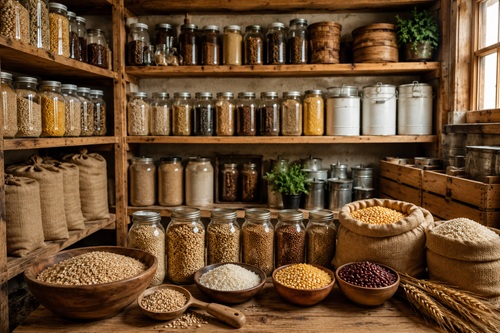
Walk into almost any kitchen and you’ll find foods made from grain. Bread, pasta, breakfast cereals, flour, rice, oatmeal, crackers, tortillas, and hundreds of other everyday staples all begin with a handful of remarkable plants that have sustained human civilization for thousands of years. Despite enormous advances in agriculture, food processing, and global distribution, whole grains remain among the most practical, economical, and dependable foods available for long-term storage. Rich in calories, protein, dietary fiber, vitamins, and minerals, they can be transformed into an incredible variety of meals while offering an advantage few other foods can match—the ability to remain usable for decades when stored under the right conditions.
That exceptional shelf life has made whole grains the foundation of food security for generations. Whether your goal is to lower grocery bills by buying in bulk, become more self-sufficient, prepare for temporary supply disruptions, or simply reduce food waste, learning how to store whole grains properly is a practical skill that continues to provide value year after year.
Long-term grain storage is often surrounded by misconceptions. Some people assume preserving grain for decades requires expensive equipment and specialized knowledge, while others believe pouring grain into a plastic bucket is enough to guarantee a thirty-year shelf life. The truth lies somewhere between those two extremes. Once you understand what causes grain to deteriorate, the rest becomes surprisingly straightforward. Successful food storage is built on understanding how grain naturally protects itself and how a few well-established storage principles can dramatically slow the processes that eventually reduce food quality.
Fortunately, those principles are neither mysterious nor difficult to understand. Farmers have stored seed for future planting for centuries, millers have protected harvested grain awaiting processing, and families have preserved harvests through harsh winters, droughts, and poor growing seasons for generations. Although modern storage materials are more sophisticated than those used in the past, the fundamentals remain unchanged. Protect grain from moisture, reduce its exposure to oxygen, keep storage temperatures cool and stable, prevent insects and rodents from reaching it, and shield it from unnecessary light and physical damage. When these conditions are maintained, whole grains become one of the longest-lasting foods a household can keep on hand.
To appreciate why this works so well, it helps to look back at the extraordinary role grains have played throughout human history.
Why Grain Changed the Course of Human History
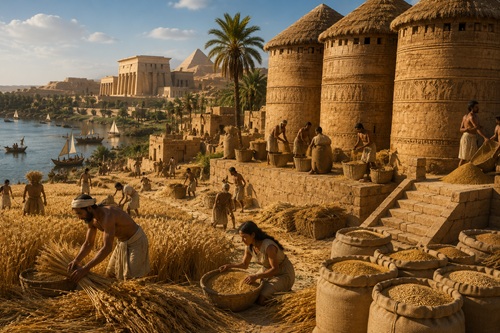
Long before refrigeration, supermarkets, and international shipping networks existed, communities depended almost entirely on the success of each year’s harvest. Fresh fruits and vegetables spoiled quickly, milk lasted only a short time, and meat required immediate consumption or preservation through drying, smoking, or salting. Whole grains were different. Once harvested and properly dried, they could remain edible for months—and under favorable conditions, even years. That simple characteristic transformed agriculture and ultimately changed the course of civilization.
Archaeologists believe the domestication of cereal grains more than 10,000 years ago marked one of humanity’s greatest turning points. Instead of constantly moving in search of food, early farming communities could harvest grain, preserve it, and rely on those reserves throughout the year. Stable food supplies encouraged permanent settlements to develop. Villages gradually expanded into towns, towns grew into cities, and civilizations flourished around reliable agricultural production. Grain became far more than food. It served as a form of wealth, a valuable trade commodity, and the foundation upon which many early economies were built.
Ancient Egypt maintained enormous granaries filled with wheat harvested from the fertile Nile Valley. These reserves helped stabilize food supplies when annual floods were less productive than expected. Similar grain storage systems appeared throughout Mesopotamia, China, Greece, Rome, and countless other civilizations. Throughout history, abundant harvests often brought prosperity, while crop failures frequently resulted in famine, economic hardship, and social unrest. Preserving grain became one of humanity’s earliest and most effective forms of insurance against uncertainty.
Although modern food distribution systems have transformed the way food reaches our tables, the importance of grain has never diminished. Many nations continue to maintain strategic grain reserves to help stabilize food supplies during natural disasters, economic disruptions, poor harvests, or interruptions to international trade. While today’s storage facilities are far more sophisticated than those of the past, the underlying principle remains exactly the same: protect today’s harvest so it can provide tomorrow’s meals.
More Than Just Emergency Supplies
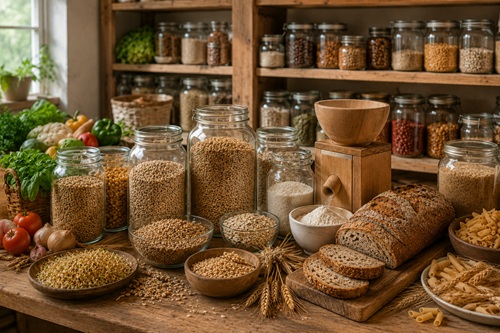
When people hear the phrase long-term food storage, they often picture shelves filled with emergency rations reserved for disasters. Whole grains deserve a much broader perspective because their value extends far beyond emergency preparedness.
Buying grains in bulk can significantly reduce grocery expenses while helping households become less dependent on frequent shopping trips. Proper storage minimizes food waste by protecting food from spoilage and pests. Freshly milled flour often produces bread with richer flavor, improved texture, and better baking performance than commercially milled flour that has spent months sitting on store shelves. Whole grains also support home baking, homemade pasta, soups, breakfast cereals, salads, sprouted foods, and countless traditional recipes enjoyed around the world.
For gardeners and homesteaders, some properly stored grains may even serve as seed for future planting under suitable conditions. This versatility is one of the reasons grains have remained household staples for thousands of years. Few foods combine affordability, nutrition, versatility, and long shelf life as effectively as whole grains.
Learning how to store grain is not simply about preparing for unexpected events. It is about building a pantry that supports everyday life while providing additional security during periods of uncertainty. Whether the challenge is rising food prices, severe weather, temporary shortages, or simply reducing unnecessary trips to the grocery store, a well-stocked pantry provides flexibility that benefits households every day of the year.
Understanding why whole grains last so much longer than most other foods requires looking beyond the pantry and inside the grain itself. Although a wheat berry or rice kernel appears simple, it is actually an extraordinary biological package that has evolved over millions of years to protect the next generation of the plant. Those same natural defenses also explain why whole grains have become one of the longest-lasting foods we can store.
Inside the Grain: Nature’s Perfect Storage Container
At first glance, a grain kernel appears surprisingly simple. Whether it is a wheat berry, a kernel of corn, a grain of rice, or an oat groat, most people see little more than a small piece of dried food. In reality, every whole grain is an extraordinary biological package that has evolved over millions of years to survive harsh environmental conditions while protecting the next generation of the plant. That natural design explains why whole grains can remain usable for decades when stored under suitable conditions.
Modern food preservation does not improve the grain itself. Instead, it preserves the remarkable defenses that nature has already built into every kernel. Understanding how a grain is constructed helps explain why whole grains store so much better than processed foods such as flour, rolled oats, or cracked grains. It also illustrates why successful long-term storage begins long before the grain is ever placed inside a bucket or sealed inside a Mylar bag.
Every Grain Is a Living Seed
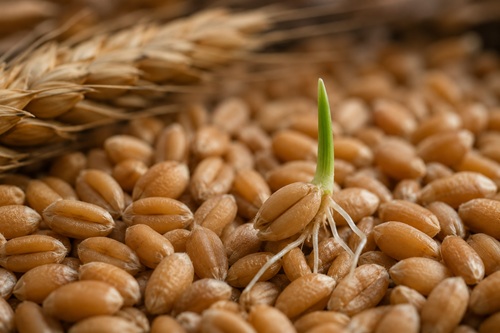
Perhaps the most fascinating characteristic of whole grains is that they are alive. Although they appear dry, dormant, and inactive, every intact grain contains a living embryo capable of producing an entirely new plant. Given enough moisture, warmth, oxygen, and sunlight, that tiny embryo can develop roots, push a green shoot through the soil, and eventually mature into another grain-producing plant.
Nature designed seeds to wait patiently for the right opportunity. Rather than germinating immediately after harvest, they enter a dormant state that allows them to survive until growing conditions improve. Some seeds remain dormant for months, while others can survive much longer if protected from the environmental conditions that trigger growth.
This natural dormancy is one of the reasons whole grains are so well suited for long-term storage. The goal is not to preserve a dead food but to keep a living seed asleep. As long as the grain remains dry, cool, and protected from excessive moisture and heat, its biological activity slows dramatically. The seed conserves its stored nutrients while waiting for conditions that never arrive. In many respects, successful grain storage is simply the art of maintaining that dormant state for as long as possible.
A Tiny Package Designed for Survival
Every grain is made up of three primary components, each contributing to the seed’s ability to survive and eventually produce a new plant.
The outer layer, known as the bran, serves as the grain’s protective armor. Rich in dietary fiber, minerals, antioxidants, and other valuable nutrients, it shields the delicate interior from physical damage while helping regulate the movement of moisture and oxygen. Without this protective coating, the grain would be far more vulnerable to environmental stress.
Beneath the bran lies the endosperm, which makes up the largest portion of most grains. This tissue acts as the seed’s energy reserve, storing starches and proteins that provide nourishment during the earliest stages of growth. For people, the endosperm supplies much of the carbohydrate and protein that has made grains one of humanity’s most dependable food sources throughout history.
Nestled within the endosperm is the germ, the living heart of the grain. Although it occupies only a small portion of the kernel, it contains the embryo that will eventually become roots, stems, and leaves. It is also exceptionally rich in healthy fats, vitamin E, B vitamins, antioxidants, and other beneficial plant compounds. Ironically, those same nutritious oils create one of the greatest challenges in long-term food storage because they slowly deteriorate when exposed to oxygen over extended periods.
Why Whole Grains Outlast Flour
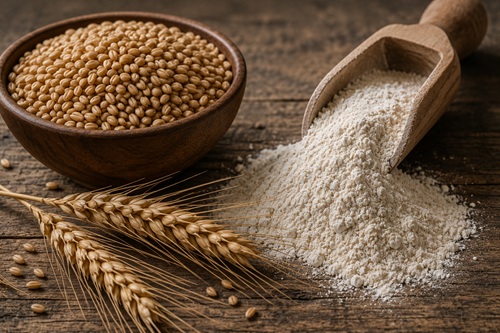
Many people assume that if whole wheat can remain usable for decades, flour should last just as long because it comes from the same grain. Unfortunately, milling fundamentally changes the grain’s natural defenses.
Once the protective bran has been broken apart, the germ becomes exposed to oxygen, moisture, and light. Natural oils immediately begin reacting with the surrounding air, while delicate nutrients that were once protected inside the grain gradually begin to break down. The process is slow, but it is continuous.
This does not mean flour suddenly becomes unsafe after milling. Instead, it gradually loses freshness, aroma, nutritional quality, and baking performance as oxidation continues. Anyone who has baked bread using freshly milled flour often notices richer flavor, better texture, and a more robust aroma than bread made with flour that has spent months sitting on a store shelf.
For this reason, many experienced bakers and food preservation enthusiasts prefer storing whole wheat berries rather than pre-ground flour. By milling only what they need for immediate use, they preserve the grain’s natural protection until the very last moment.
Why Some Grains Store Longer Than Others
Although all grains are seeds, they are not equally suited for long-term storage. One of the biggest factors influencing shelf life is natural oil content.
Healthy oils contribute valuable nutrition, but they are also chemically unstable over long periods. As they slowly react with oxygen, they eventually become rancid, producing unpleasant odors and stale flavors while reducing overall food quality. This process explains why grains with lower oil content generally remain stable much longer than those containing larger amounts of natural fat.
Brown rice offers a perfect example. Because it retains both the bran and germ, it contains more fiber, vitamins, minerals, and healthy oils than white rice. Those additional nutrients make brown rice highly nutritious, but they also shorten its storage life because the oils gradually oxidize.
White rice follows a different path. During milling, the bran and germ are removed, taking most of the oils with them. Although this also reduces some nutritional value, it greatly extends storage life. The same principle explains why oat groats generally outlast rolled oats and why whole wheat berries remain stable far longer than whole wheat flour.
Understanding this relationship between oil content and shelf life helps explain why selecting the right grain is just as important as selecting the right storage method.
Working With Nature Instead of Against It
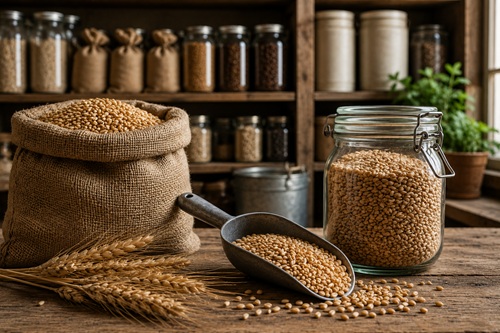
One of the most interesting aspects of long-term grain storage is that humans are not trying to improve upon nature’s design. Nature has already done most of the work.
Every grain kernel is a tiny survival capsule engineered to protect the next generation of the plant. Its outer layers safeguard valuable nutrients while the dormant embryo patiently waits for favorable growing conditions. Modern food storage methods simply preserve those natural defenses by limiting moisture, reducing oxygen, maintaining stable temperatures, and protecting grain from insects, rodents, and physical damage.
Viewed this way, the grain itself is remarkably resilient. The greater challenge lies in controlling the environment around it. Moisture, oxygen, heat, light, insects, and time continually work together to reduce food quality. Learning how these environmental factors interact with stored grain is one of the most valuable lessons anyone can learn about long-term food preservation.
With a basic understanding of how the grain protects itself, the next step is examining the invisible environmental forces that slowly influence every stored food. Once those forces are understood, the recommendations that follow – whether involving Mylar bags, oxygen absorbers, or cool storage temperatures -become much easier to understand and apply.
The Invisible Forces That Determine Shelf Life
Once you understand how a grain is naturally designed to protect itself, another question naturally follows: if whole grains are built to survive, what eventually causes them to deteriorate?
The answer is not simply the passage of time. Food does not suddenly become old because a certain number of years have passed. Instead, it changes because it is constantly interacting with the environment around it. Moisture, oxygen, heat, light, insects, and microscopic organisms are always at work. Their effects are usually so gradual that they go unnoticed from one day to the next, but over months and years they slowly influence flavor, texture, nutritional value, and, eventually, the overall quality of stored food.
This is one of the reasons whole grains perform so well in long-term storage. Unlike many other foods, the environmental factors that affect grain can be controlled remarkably well. The goal is not to stop time – that simply isn’t possible – but to slow the natural processes that gradually reduce food quality. Once those processes are understood, recommendations involving Mylar bags, oxygen absorbers, cool storage temperatures, and proper containers become much easier to understand because each one addresses a specific cause of deterioration.
Moisture: The Greatest Threat
If there is a single factor that deserves to be called the greatest enemy of long-term grain storage, it is moisture.
Water is essential for life, and unfortunately that includes the organisms responsible for food spoilage. Mold, bacteria, yeasts, insects, and even the grain itself all become more active as moisture levels increase. Under the right conditions, mold spores begin to grow, bacteria multiply more rapidly, insects reproduce, and the grain may even begin the earliest stages of germination.
Many people assume grain must become visibly wet before moisture becomes a concern. In reality, problems often develop much more gradually. Small increases in humidity over months or years can slowly influence stored food without obvious warning signs. Tiny amounts of moisture entering a container over long periods may eventually create conditions that encourage spoilage.
This is why experienced food preservers pay just as much attention to the storage environment as they do to the container itself. A cool, dry room with relatively stable humidity provides one of the best environments for preserving grain. Interior closets, finished basements, dedicated pantry rooms, and climate-controlled storage areas generally perform far better than garages or outdoor sheds where humidity and temperature fluctuate throughout the seasons.
Oxygen: The Slow Enemy You Never See
Unlike moisture, oxygen rarely produces immediate or dramatic changes. Instead, it works quietly in the background, slowly reacting with the food over time.
Every day that oxygen remains inside a storage container, it contributes to oxidation. Natural oils gradually lose quality, vitamins slowly break down, flavors become less vibrant, and insects are able to survive if other conditions allow. None of these changes happen quickly, but together they steadily reduce the quality of stored food.
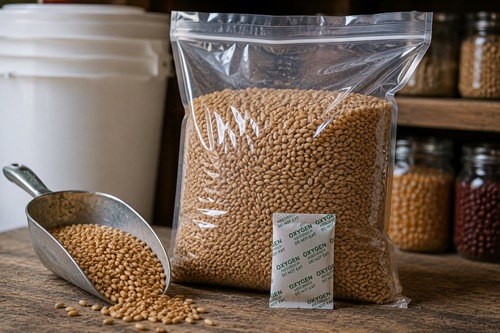
Fortunately, controlling oxygen is one of the easiest aspects of modern food preservation. Oxygen absorbers remove most of the oxygen trapped inside a sealed container, creating an environment where oxidation slows dramatically and many common storage insects can no longer survive or reproduce.
There are many misconceptions surrounding oxygen absorbers. Some people believe they contain preservatives or chemicals that somehow preserve the food itself. In reality, they never touch the grain. The small packets simply contain iron powder that naturally reacts with oxygen, removing it from the surrounding air inside the sealed container. By changing the atmosphere around the food rather than the food itself, oxygen absorbers allow the grain’s own natural defenses to remain effective for much longer.
It is equally important to recognize their limitations. Oxygen absorbers cannot remove moisture, cool a hot storage room, repair damaged packaging, or improve poor-quality grain. They are one part of a complete storage system, not a substitute for good storage practices.
Why Temperature Matters
Temperature influences nearly every biological and chemical process affecting stored food. As temperatures increase, chemical reactions occur more rapidly, insects complete their life cycles more quickly, and nutrients begin breaking down at an accelerated rate. Food stored in a hot garage during summer will almost always age faster than identical food stored in a cool basement or pantry.
Food scientists often describe heat as an accelerator rather than a direct cause of spoilage. It speeds up processes that are already taking place. Oxidation becomes more rapid, vitamins degrade faster, insects become more active, and natural aging occurs at a greater pace.
Equally important is temperature stability. Storage areas that experience repeated warming and cooling can create condensation as humid air cools, introducing unwanted moisture into the storage environment. While these changes may appear minor, they become increasingly significant over many years.
For this reason, choosing a consistently cool location is often more beneficial than choosing one that is simply cold for part of the year. Stable conditions are generally more important than extreme temperatures.
Light, Insects, and Other Hidden Challenges
Although moisture, oxygen, and temperature receive most of the attention, several other factors also influence long-term food storage.
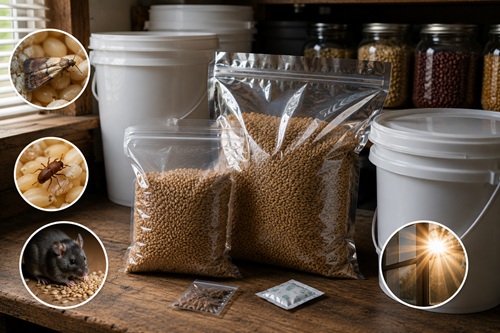
Light, particularly direct sunlight, slowly breaks down certain vitamins while accelerating oxidation in exposed foods. Fortunately, this problem is easy to solve. Opaque containers, Mylar bags, closed buckets, and dark storage areas provide excellent protection with very little effort.
Insects have challenged grain storage since humans first began harvesting cereal crops. Many species lay microscopic eggs directly on grain before it is ever harvested or packaged. Those eggs may remain dormant for extended periods before hatching if conditions become favorable. This often surprises people who assume insects somehow entered a sealed container after it was stored.
Modern storage techniques significantly reduce this risk. Properly dried grain sealed with oxygen absorbers creates an environment where most common storage insects cannot survive or reproduce. Rodents present a different challenge, relying on physical access rather than biology. Strong containers, careful storage practices, and regular inspections remain the most effective forms of protection.
Time Is Not the Enemy
Perhaps the biggest misconception about long-term food storage is the belief that time alone ruins food.
Time is simply the stage upon which all of these other factors continue to work. A well-protected grain kernel changes very little because moisture, oxygen, heat, insects, and light have all been carefully controlled. By reducing those influences, the natural aging process slows dramatically.
This is why successful grain storage has never depended on expensive equipment or complicated techniques. It depends on creating the right environment and maintaining it consistently over time.
Once those principles are understood, selecting the right grains and choosing appropriate storage methods becomes much more logical. Every recommendation that follows is simply another way of protecting the grain from the invisible forces that quietly determine how long it will remain fresh.
Building a Storage System That Works
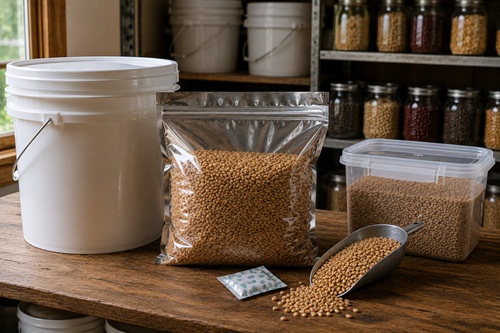
After selecting the right grains, the next challenge is protecting them for the long term. This is where many newcomers become overwhelmed. A quick search online reveals countless opinions about buckets, Mylar bags, oxygen absorbers, vacuum sealers, glass jars, and food-grade containers. It can seem as though every experienced food preserver has a different method.
In reality, successful grain storage is based on a handful of well-understood principles rather than a specific brand or product. The goal is always the same: create an environment that protects the grain from the factors that gradually reduce its quality. Once those principles are understood, choosing the right storage materials becomes much less confusing.
A useful way to think about long-term food storage is to imagine protecting something valuable, such as an important family photograph or a treasured document. You would probably place it inside a protective sleeve, store that inside a sturdy container, and then keep everything in a safe, dry location. Each layer provides a different type of protection. Long-term grain storage works in much the same way.
The grain itself provides the first layer of defense through its natural outer shell. A sealed Mylar bag helps protect it from oxygen, moisture, and light. A food-grade bucket shields the Mylar bag from punctures, rodents, insects, and physical damage. Finally, the room where everything is stored provides protection from excessive heat, humidity, and changing environmental conditions.
Each layer contributes something different. None of them works perfectly on its own, but together they create a storage system capable of protecting food for many years.
Why Food-Grade Buckets Became So Popular
Food-grade plastic buckets have become one of the most widely used containers for long-term grain storage, and their popularity is well deserved. They are durable, relatively inexpensive, easy to stack, and capable of holding large quantities of food while protecting it from physical damage.
Their greatest strength, however, is often misunderstood.
Many people assume the bucket itself preserves the grain. In reality, the bucket serves primarily as protective armor. It shields the contents from rodents, insects, punctures, crushing, and the wear that naturally occurs as containers are moved or stacked over time. Although food-grade plastic provides some resistance to moisture and air, it is not completely impermeable over very long periods.
This is why experienced food preservers rarely rely on buckets alone. Instead, they combine the strength of the bucket with other materials specifically designed to limit oxygen and moisture movement.
Why Mylar Has Become the Gold Standard
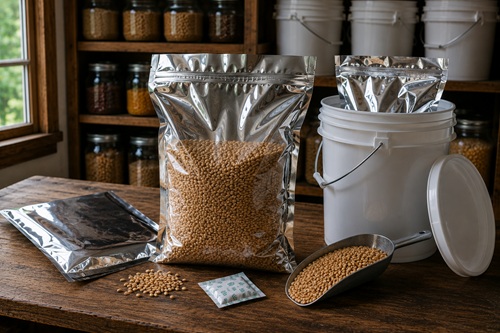
If the bucket provides strength, the Mylar bag provides environmental protection.
Mylar is a durable polyester film that creates an excellent barrier against oxygen, moisture, and light. Unlike ordinary plastic bags, which slowly allow gases to pass through, properly sealed Mylar dramatically slows this movement, helping create a far more stable environment for long-term food storage.
Although Mylar bags appear simple, they represent one of the biggest advances in home food preservation over the past several decades. They allow ordinary households to preserve foods in ways that once required commercial packaging equipment.
Once grain has been placed inside the Mylar bag and oxygen absorbers have been added, the bag is heat sealed to create an airtight enclosure. At that point, the Mylar becomes the grain’s primary environmental barrier, while the bucket surrounding it provides physical protection. Together, they form a storage system that has proven remarkably effective for preserving whole grains over extended periods.
Understanding Oxygen Absorbers
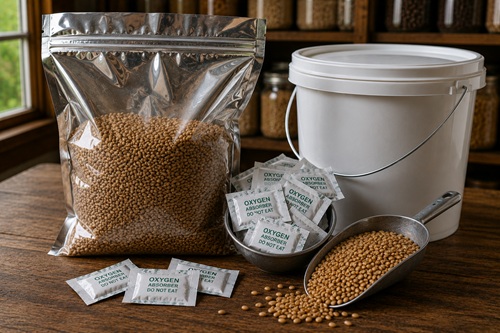
Few components of modern food storage generate as much confusion as oxygen absorbers.
Because they are small and inexpensive, they are often overlooked. Yet they perform one of the most important jobs in the entire storage system.
An oxygen absorber does exactly what its name suggests—it removes oxygen from the sealed container.
Inside each packet is a fine iron powder that naturally reacts with oxygen in the surrounding air. As this reaction takes place, oxygen levels inside the sealed Mylar bag drop dramatically. This slows oxidation, helps preserve nutritional quality, and creates conditions where most common storage insects cannot survive or reproduce.
Contrary to some misconceptions, oxygen absorbers do not contain preservatives, chemicals, or substances that come into direct contact with the food. They simply change the atmosphere surrounding the grain. By removing oxygen rather than adding anything to the food itself, they allow the grain’s own natural defenses to remain effective for much longer.
Like every component of a successful storage system, oxygen absorbers also have limitations. They cannot remove moisture, improve poor-quality grain, repair damaged packaging, or compensate for storage in excessively hot environments. They are highly effective tools, but they work best when combined with sound storage practices.
Choosing the Right Storage Location
Even the best packaging cannot overcome poor storage conditions.
Where food is stored has a tremendous influence on how well it ages. A cool, dry, and relatively dark location with stable temperatures provides one of the best environments for long-term grain storage. Finished basements, interior closets, dedicated pantry rooms, and climate-controlled storage spaces generally perform much better than garages, attics, or outdoor sheds that experience wide swings in temperature and humidity.
Another simple practice recommended by experienced food preservers is keeping containers off concrete floors. Although concrete appears dry, it can slowly transfer moisture over time, particularly in basements. Placing buckets on shelving, wooden pallets, or simple risers improves air circulation while reducing the possibility of unwanted moisture affecting stored food.
These may seem like small details, but together they contribute significantly to the long-term success of the entire storage system.
Organization Is Part of Food Preservation
A successful pantry is not simply a collection of buckets stored on shelves. It is an organized system that allows food to be located easily, rotated regularly, and inspected periodically.
Every container should be clearly labeled with its contents and the date it was packaged. This simple habit eliminates uncertainty years later and makes inventory management far easier. It also encourages a first-in, first-out rotation system so older food is used before newer supplies.
Periodic inspections are equally valuable. Properly stored grain requires very little maintenance, but checking the pantry once or twice each year for damaged containers, signs of moisture, pest activity, or other unexpected issues provides valuable peace of mind. Small problems are much easier to correct when discovered early.
Ultimately, building a successful storage system is less about purchasing expensive equipment than it is about understanding how each component works together. Every layer contributes to protecting the grain, and every good storage decision helps preserve the food for years to come.
Even the best storage system, however, can be undermined by simple mistakes. Fortunately, most storage failures are entirely preventable. Understanding the common errors people make—and how to avoid them—is often the difference between a pantry that lasts for decades and one that falls short of its potential.
Common Mistakes That Shorten Shelf Life
One of the encouraging aspects of long-term grain storage is that most problems are entirely preventable. Food storage failures rarely occur because someone bought the wrong bucket or selected the wrong brand of oxygen absorber. More often, they result from a series of small oversights that seem insignificant at the time but gradually reduce food quality over the course of months or years.
The good news is that nearly all of these mistakes are easy to avoid once you understand why they matter. Paying attention to a few basic details during preparation can dramatically improve both the quality and longevity of your stored food while providing greater confidence that your pantry will perform exactly as intended.
Starting With Poor-Quality Grain
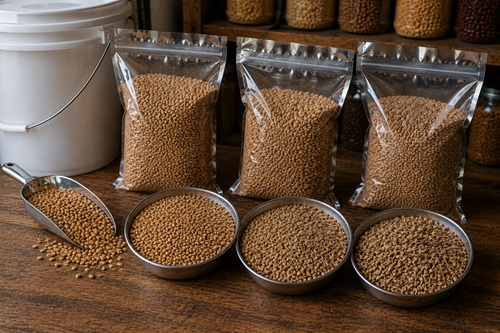
Long-term storage can preserve good food exceptionally well, but it cannot improve grain that was already in poor condition before it was packaged.
Whenever possible, begin with clean, dry grain that is free from mold, unusual odors, insect damage, or excessive broken kernels. Purchasing from reputable suppliers with high inventory turnover often increases the likelihood that the grain has been handled and stored properly before it reaches your pantry.
Taking a few moments to inspect grain before packaging is a simple habit that can prevent far larger problems years later.
Assuming Every Grain Stores the Same
Although all grains share many similarities, they do not all have the same storage potential.
Whole wheat berries, white rice, barley, rye, corn, sorghum, and oat groats generally remain stable much longer than foods such as brown rice, rolled oats, granola, or whole-grain flour. The primary difference is usually the amount of natural oil remaining in the food and how much processing it has already undergone.
Understanding these differences allows you to choose grains that match your storage goals rather than assuming every product will perform the same over long periods.
Grinding Everything Into Flour
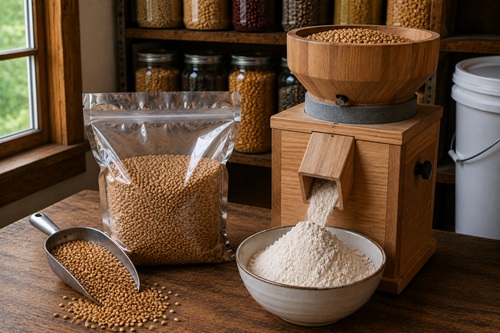
Freshly milled flour is one of the greatest advantages of storing whole grains, but timing matters.
Some people mill large quantities of flour immediately after purchasing wheat because it appears more convenient. Unfortunately, grinding removes many of the grain’s natural defenses. Once the protective outer layers have been broken apart, natural oils begin reacting with oxygen, gradually reducing freshness, flavor, aroma, and nutritional quality.
Whenever possible, store grains whole and mill only the amount you expect to use in the near future. This simple practice preserves the grain’s natural protection until the last possible moment while allowing you to enjoy flour at its freshest.
Overlooking the Storage Environment
Even the best storage containers cannot fully compensate for poor storage conditions.
Buckets kept in hot garages, damp sheds, or areas with large temperature swings will generally age more quickly than identical containers stored inside a cool, dry pantry. Heat accelerates chemical reactions, humidity encourages spoilage, and fluctuating temperatures can create condensation that introduces unwanted moisture into the storage system.
Choosing the right location is just as important as choosing the right packaging. A stable environment often contributes more to long-term success than expensive storage equipment.
Forgetting to Label Containers
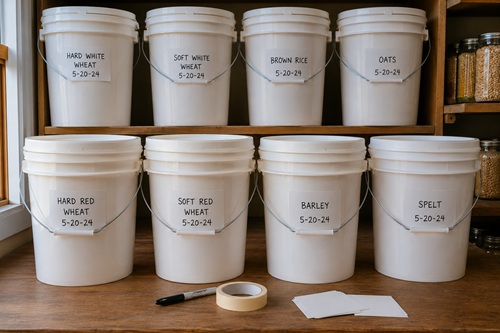
It is surprisingly easy to believe you’ll remember what every bucket contains.
Several years later, most people discover that memory is far less reliable than they expected.
Clearly labeling each container with its contents and the packaging date makes inventory management much easier while encouraging proper rotation. Some people also record the grain variety, purchase date, or supplier, particularly when storing multiple types of wheat or rice.
A few minutes spent labeling containers today can eliminate a great deal of uncertainty in the future.
Packing Food Away and Never Using It
One of the most common misconceptions about long-term food storage is that food should simply be sealed, stacked, and forgotten.
In reality, the most successful pantries are active pantries.
Cooking regularly with stored grains builds confidence, develops practical kitchen skills, and helps families discover recipes they genuinely enjoy. It also encourages natural rotation, ensuring older food is used before newer supplies are added.
Food storage works best when it supports everyday life rather than existing only for hypothetical emergencies.
Neglecting Routine Inspections
Properly stored grain requires very little maintenance, but that does not mean it should never be checked.
Inspecting your pantry once or twice each year takes only a few minutes and provides valuable peace of mind. During these inspections, look for damaged containers, signs of moisture, unusual odors, pest activity, or accidental punctures that may have occurred during storage.
Finding a small problem early is always easier than discovering it years later after it has affected multiple containers.
Relying on a Single Grain
Wheat has earned its reputation as one of the finest long-term storage foods ever cultivated, but it should not carry the entire responsibility for a household pantry.
Different grains provide different flavors, textures, nutrients, and cooking possibilities. Rice, oats, barley, rye, millet, corn, sorghum, and other grains each contribute something unique to the kitchen. Building a pantry around several staple grains creates greater flexibility while helping prevent meal fatigue during extended periods.
Variety also supports better overall nutrition and makes everyday cooking far more enjoyable.
Forgetting About Water
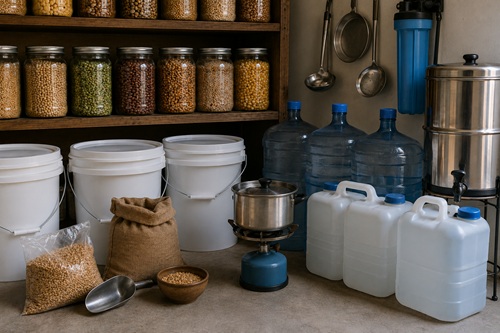
Every grain eventually requires water.
Whether the goal is baking bread, cooking rice, preparing oatmeal, making soup, or sprouting seeds, water plays an essential role in transforming stored grain into usable food.
When planning long-term food storage, it is important to think beyond the grain itself. Adequate water storage, reliable cooking methods, and the equipment needed to prepare meals are all part of the same system. A pantry stocked with grain becomes much more valuable when everything needed to prepare it is readily available.
Waiting Until You Need the Skills
Perhaps the greatest mistake of all is assuming that food storage alone provides preparedness.
Knowing how to bake bread, mill flour, cook whole grains, prepare hearty soups, or incorporate unfamiliar grains into everyday meals is every bit as important as owning the grain itself.
These skills are best learned gradually, while there is plenty of time to experiment, make mistakes, and discover family favorites. By practicing long before those skills are ever needed, stored food becomes something familiar rather than something intimidating.
In the end, successful food storage is built on knowledge just as much as supplies. Buckets, Mylar bags, and oxygen absorbers all play important roles, but the confidence to use them effectively comes from understanding the food they protect and the practical skills that bring it to the table.
Avoiding these common mistakes is only part of the journey. The real value of a well-stocked pantry becomes apparent when those carefully stored grains begin finding their way into everyday meals. Learning how to incorporate whole grains into regular cooking not only improves rotation but also transforms long-term storage from a preparedness project into a lasting part of everyday life.
From Pantry to Plate: Bringing Stored Grains Into Everyday Life
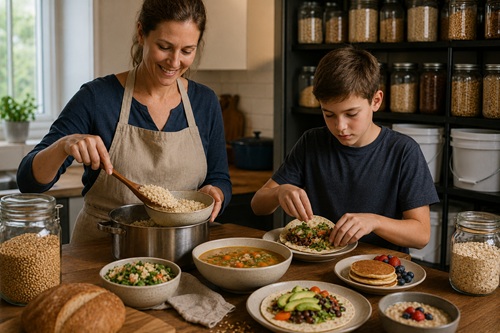
One of the biggest misconceptions about long-term food storage is that it is meant only for emergencies. Images of unopened buckets tucked away in basements or storage rooms have become closely associated with preparedness, leading many people to believe those supplies should remain untouched until a crisis occurs.
In reality, the strongest pantries are the ones that are used.
Whole grains are not simply emergency foods. They are everyday ingredients that have nourished families around the world for thousands of years. When they become part of regular meal planning, food storage naturally becomes easier to manage. Supplies are rotated without much effort, recipes become familiar, and the pantry remains fresh because older foods are continually replaced with new ones.
This approach offers another important advantage. If circumstances ever interrupt normal food supplies, there is no learning curve. The grains, recipes, and equipment are already part of everyday life. Confidence comes from experience, not from simply owning supplies.
Freshly Milled Flour Changes the Experience
Many people purchase a grain mill because they believe it belongs in a preparedness pantry. What often surprises them is how quickly it becomes one of the most frequently used tools in the kitchen.
Freshly milled flour has characteristics that are difficult to duplicate with commercially packaged flour. Because it is ground immediately before use, much of the grain’s natural flavor, aroma, and nutritional value remain intact. Many home bakers notice richer flavors, heartier textures, and better baking performance compared with flour that has spent months sitting on store shelves.
Fresh milling also offers tremendous flexibility. Flour can be ground coarse for rustic breads and hot cereals or milled finely for pastries and lighter baked goods. Different varieties of wheat can be blended to create unique flavors and baking characteristics that simply are not available in most grocery stores.
For many households, the grain mill eventually becomes less of an emergency tool and more of an everyday kitchen appliance.
Looking Beyond Bread
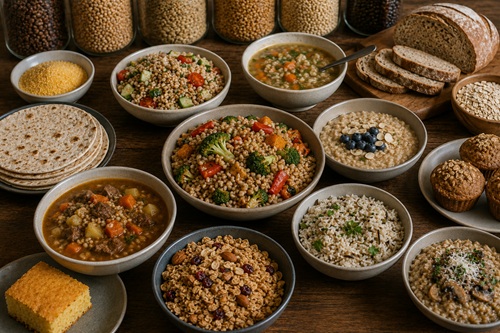
Bread may be the first food that comes to mind when people think about wheat, but it represents only a small part of what whole grains can offer.
Whole wheat berries can be cooked much like rice and served alongside roasted vegetables, grilled meats, or hearty stews. They add texture to soups, salads, and grain bowls while providing a satisfying, slightly chewy bite.
Rice remains one of the world’s most versatile ingredients, pairing naturally with countless cuisines and cooking styles. Barley has enriched soups and stews for centuries, while oats appear in everything from breakfast cereals to muffins, cookies, granola, and homemade snack bars. Corn can become cornbread, tortillas, polenta, hominy, or fresh cornmeal. Rye continues to play an important role in traditional breads throughout many parts of Europe and North America.
As people begin experimenting with whole grains, they often discover far more variety than they expected. A pantry built around several different grains opens the door to hundreds of satisfying meals while reducing reliance on heavily processed convenience foods.
Rediscovering Traditional Cooking Skills
For most of human history, preparing food from whole grains was simply part of daily life.
Families baked bread at home, cooked porridge over the fire, milled fresh flour, and passed recipes from one generation to the next. These were not considered special skills. They were ordinary parts of managing a household.
Although modern conveniences have changed many aspects of cooking, there has been renewed interest in traditional food preparation in recent years. Home baking, sourdough bread, homemade pasta, fermentation, and scratch cooking have all experienced a remarkable resurgence as more people seek greater control over the food they eat.
Whole grains fit naturally into this movement. Learning to bake bread, prepare fresh pasta, cook hearty soups, or experiment with traditional recipes builds practical kitchen skills while creating a deeper appreciation for ingredients that have sustained people for thousands of years.
These are not simply preparedness skills.
They are lifelong skills that continue to provide value regardless of whether an emergency ever occurs.
More Than Food: Living Seeds
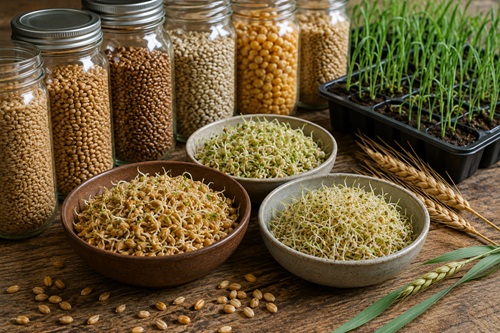
One of the most fascinating characteristics of whole grains is that many remain alive throughout storage.
Given moisture, warmth, and oxygen, properly stored grains can often begin growing again. Sprouting activates enzymes within the seed and begins transforming stored nutrients into forms that support new plant growth. Many people enjoy sprouted grains in salads, sandwiches, baked goods, and other recipes because they offer unique textures and flavors.
For gardeners and homesteaders, sprouting also serves as a reminder that every grain represents more than stored food.
Each healthy kernel contains the potential to become another plant.
That simple fact connects today’s pantry with tomorrow’s harvest and illustrates why grain has remained such an important part of agriculture throughout human history.
A Pantry That Grows With Your Family
No two households eat exactly alike, and no pantry should look exactly the same.
Some families bake bread every week and naturally store larger quantities of wheat. Others prepare rice several times each week or enjoy barley soups throughout the winter. Children develop favorite meals, new recipes become family traditions, and cooking habits gradually evolve over time.
The most successful pantries evolve alongside those changes.
Instead of following someone else’s checklist, families gradually build food reserves around the meals they already enjoy. This not only makes food rotation easier but also reduces waste because stored foods continue to play an active role in everyday cooking.
Over time, the pantry becomes less of a preparedness project and more of a natural extension of the kitchen itself.
Building Resilience Through Everyday Habits

Perhaps the greatest lesson learned by experienced food preservers is that long-term food storage is not really about preparing for disaster.
It is about creating greater flexibility in everyday life.
A thoughtfully stocked pantry helps households take advantage of bulk purchases, reduce food waste, manage temporary shortages, and maintain nutritious meals during periods of rising food prices or unexpected financial challenges. It encourages better organization, stronger cooking skills, and greater appreciation for foods that have nourished generations.
Those benefits exist regardless of whether a major emergency ever occurs.
Viewed from that perspective, whole grains become much more than emergency supplies stored in buckets.
They become part of a practical, resilient lifestyle built around good nutrition, thoughtful planning, and the confidence that comes from knowing your family can prepare wholesome meals using simple ingredients already waiting in the pantry.
The journey does not end with storing grain. It continues every time those grains become fresh bread, hearty soup, homemade pasta, or a shared family meal around the dinner table. That is where long-term food storage truly delivers its greatest value—not on a shelf, but in everyday life.
Building a Pantry That Can Serve Generations
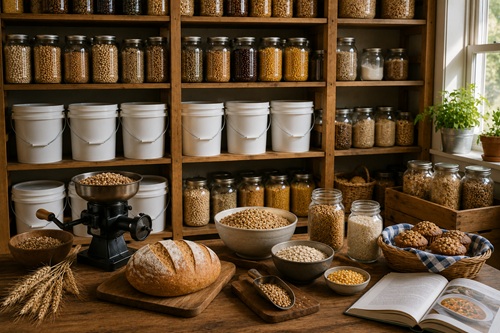
Throughout history, grain has quietly supported civilizations through periods of prosperity, hardship, drought, economic uncertainty, war, and natural disasters. Empires have risen and fallen, trade routes have shifted, and technologies have transformed agriculture, yet grains have remained one of humanity’s most dependable food sources. Their enduring value comes from a unique combination of nutrition, versatility, affordability, and the ability to be stored for extraordinarily long periods without sacrificing their usefulness.
That same value continues today.
Building a pantry around whole grains is not about expecting the worst or living in fear of uncertain times. It is about making thoughtful decisions that strengthen a household in practical ways. A well-planned pantry provides flexibility during periods of rising food prices, temporary shortages, severe weather, transportation disruptions, or unexpected financial challenges. It allows families to buy food when prices are favorable, reduce unnecessary waste, and maintain a dependable supply of nutritious staples that support both everyday meals and unforeseen circumstances.
Over time, something else begins to happen.
As people become more familiar with whole grains, they often rediscover skills that previous generations considered ordinary. Fresh bread comes out of the oven more often. Soups become heartier. Homemade pasta, hot cereals, and traditional recipes gradually replace some highly processed convenience foods. Grain mills are no longer tucked away on a shelf but become useful kitchen tools. Food storage slowly evolves into food appreciation.
This transformation is one of the most rewarding aspects of building a long-term pantry. What begins as an effort to preserve food often becomes an opportunity to reconnect with the process of preparing it. Families gain confidence by learning where their food comes from, how it is stored, and how simple ingredients can become nourishing meals. Children watch bread rise, flour being milled, and recipes passed from one generation to the next. These experiences build knowledge that extends far beyond the pantry itself.
The pantry also becomes something more than shelves filled with food.
It becomes a reflection of thoughtful planning.
Each bucket of wheat, container of rice, or jar of oats represents a small investment in future stability. Taken individually, those purchases may seem modest. Added together over months and years, they become a dependable reserve capable of supporting a household through both ordinary interruptions and unexpected challenges.
Fortunately, building that pantry does not require dramatic changes or large investments all at once.
Some of the strongest food storage programs have been built gradually—one bag of grain, one bucket, one shelf at a time. Small, consistent steps are often easier to sustain than ambitious plans that quickly become overwhelming. As knowledge grows, the pantry naturally expands to reflect the family’s changing needs, favorite recipes, and available storage space.
It is equally important to remember that food storage is only one part of household resilience. Clean water, safe food preparation, reliable cooking methods, sanitation, nutrition, and practical cooking skills all work together. Grain alone cannot provide food security. It becomes truly valuable when combined with the knowledge and resources needed to transform it into healthy, enjoyable meals.
The science behind long-term grain storage is refreshingly simple. Protect grain from moisture, excessive oxygen, heat, insects, rodents, and unnecessary light, and it can remain usable for decades. These principles have been refined over centuries and continue to be supported by modern food science. Success depends less on expensive equipment than on understanding how grain naturally protects itself and creating an environment that preserves those built-in defenses.
Perhaps the most valuable lesson of all is that preparedness begins long before an emergency.
It begins in ordinary moments.
It begins when families choose to cook at home, learn new skills, organize their pantry, preserve today’s harvest, and make thoughtful decisions about tomorrow’s meals. Those everyday habits build confidence long before they are ever needed.
Whether your goal is to save money, reduce waste, become more self-sufficient, improve your household food supply, or simply enjoy fresher ingredients, whole grains remain one of the smartest long-term investments you can make. They have nourished civilizations for thousands of years because they combine practicality with remarkable staying power.
There is an old saying that the best time to plant a tree was twenty years ago, and the second-best time is today.
The same idea applies to building a pantry.
You do not need to fill every shelf overnight. You simply need to begin.
One bag of grain.
One new skill.
One homemade loaf of bread.
One thoughtful decision at a time.
Over the years, those small efforts become something far more meaningful than a collection of stored food. They become confidence, resilience, practical knowledge, and the quiet reassurance that your household is better prepared—not only for unexpected challenges, but also for the opportunities that come from living a little more intentionally every day.
Frequently Asked Questions About Long-Term Grain Storage
By this point, you have a solid understanding of how whole grains can be stored, why they last so long, and the principles that make long-term food preservation successful. As people begin building their own pantry, however, a number of practical questions naturally arise. The following answers address some of the most common concerns while reinforcing the concepts discussed throughout this guide.
Can Whole Grains Really Last for 30 Years?
Yes—many whole grains can remain usable for 30 years or even longer when stored under ideal conditions. Achieving that kind of longevity requires several factors working together. The grain should be clean and dry before packaging, protected inside sealed Mylar bags with appropriately sized oxygen absorbers, placed inside durable food-grade containers, and stored in a cool, dry location where temperatures remain relatively stable.
It is important to remember that thirty years is not a guarantee. Shelf life depends on the quality of the grain when it is packaged and the environment in which it is stored. Grain kept in a climate-controlled basement will generally outlast identical grain stored in a hot garage or damp shed.
Even after many years, properly preserved grain often retains much of its nutritional value and remains suitable for cooking, baking, and other everyday uses.
How Can You Tell If Stored Grain Has Gone Bad?
Whole grains are naturally resilient, but they should always be inspected before use.
Healthy grain should have a clean appearance, a mild natural aroma, and show no evidence of moisture, mold, insect activity, or unusual discoloration. If the grain has developed a sour, musty, or rancid smell, its quality has likely deteriorated.
Rancidity occurs gradually as natural oils oxidize over time, particularly if storage conditions have been less than ideal. A stale odor or a smell resembling old cooking oil often signals that deterioration has occurred.
Whenever there is uncertainty about the safety or condition of stored food, it is always better to err on the side of caution and discard it.
Should Grain Be Frozen Before Storage?
Some people choose to freeze newly purchased grain for several days before packaging it. The goal is to destroy any insect eggs that may already be present.
While freezing can be helpful, it is not considered essential by many experienced food preservers.
Properly dried grain sealed inside Mylar bags with oxygen absorbers creates an environment where most common storage insects cannot survive or reproduce. For many households, this approach provides excellent protection without the additional freezing step.
If grain is frozen before packaging, it should always be allowed to return to room temperature before being sealed. This helps prevent condensation from forming, which could introduce unwanted moisture into the storage container.
Can Grain Still Germinate After Years in Storage?
In many cases, yes.
Because whole grains are living seeds, some remain capable of germinating even after years in storage when kept under favorable conditions. Germination rates naturally decline as grain ages, but many kernels remain viable far longer than people expect.
Those planning to save grain specifically for future planting should purchase untreated seed intended for agricultural use, since food-grade grain is not always produced or handled with planting in mind.
Even if older grain no longer germinates successfully, it may still be perfectly suitable for cooking or baking provided it has been stored correctly.
How Much Grain Should a Household Store?
There is no universal answer because every household has different eating habits, available storage space, budgets, and long-term goals.
Some families simply maintain several months’ worth of staple foods to reduce grocery costs and prepare for temporary disruptions. Others gradually build larger reserves that support home baking, bulk purchasing, or greater self-sufficiency.
Rather than focusing on a specific number of pounds, begin by looking at the foods your family already enjoys. Building a pantry around familiar meals makes rotation easier, reduces waste, and ensures stored foods continue serving a practical purpose throughout the year.
Can Grain Be Stored in Glass Jars?
Absolutely.
Glass jars work exceptionally well for smaller quantities of grain that will be used regularly in the kitchen. They protect food from insects and moisture while allowing the contents to remain visible for easy identification.
Their primary disadvantages are weight and fragility. Large quantities of grain stored in glass can become heavy and are more susceptible to breakage if dropped.
For this reason, many households reserve glass jars for their working pantry while storing bulk grain inside Mylar bags and food-grade buckets.
Are Plastic Bottles a Good Alternative?
Food-grade plastic bottles, particularly clean PET beverage bottles, have become another practical storage option for dry foods.
When they are thoroughly cleaned, completely dry, and used with appropriately sized oxygen absorbers, they can provide excellent protection while making it easy to divide large quantities of grain into smaller portions.
This approach is especially useful for households with limited storage space or those who prefer opening smaller containers rather than exposing an entire bucket at once.
Do All Grains Need Oxygen Absorbers?
For grains intended for long-term storage, oxygen absorbers are generally recommended because they help slow oxidation and reduce insect activity.
However, they are not appropriate for every type of food.
Foods containing significant amounts of moisture should never be packaged with oxygen absorbers because removing oxygen from moist foods can encourage the growth of harmful anaerobic bacteria.
Fortunately, properly dried whole grains are well suited to oxygen-free storage, making oxygen absorbers one of the most effective tools available for preserving their quality.
Do I Need an Expensive Grain Mill?
Not at all.
Manual grain mills remain popular because they require no electricity and can be used almost anywhere. Electric mills offer greater speed and convenience, making them an excellent choice for households that bake frequently.
The best grain mill is the one that matches your cooking habits, budget, and intended use. Learning to use it confidently is far more important than purchasing the most expensive model available.
Is Long-Term Grain Storage Worth the Effort?
For many households, the answer is unquestionably yes.
Whole grains remain among the most economical foods available, and buying them in bulk often reduces grocery costs while creating a dependable supply of nutritious staples. Proper storage minimizes waste, encourages home cooking, and provides greater flexibility during periods of rising food prices, temporary shortages, or unexpected disruptions.
Perhaps more importantly, long-term grain storage reconnects people with practical skills that previous generations considered part of everyday life. Baking bread, milling flour, organizing a pantry, preserving food, and preparing meals from simple ingredients all contribute to greater confidence and self-reliance.
For thousands of years, civilizations have depended on grain because it is dependable, nourishing, versatile, and remarkably durable. Those same qualities continue to make whole grains one of the smartest long-term investments a household can make today.
© Prepping Communities. This content is for informational purposes only and not professional advice. Use at your own risk.
Terms | Privacy | Guidelines