
Introduction
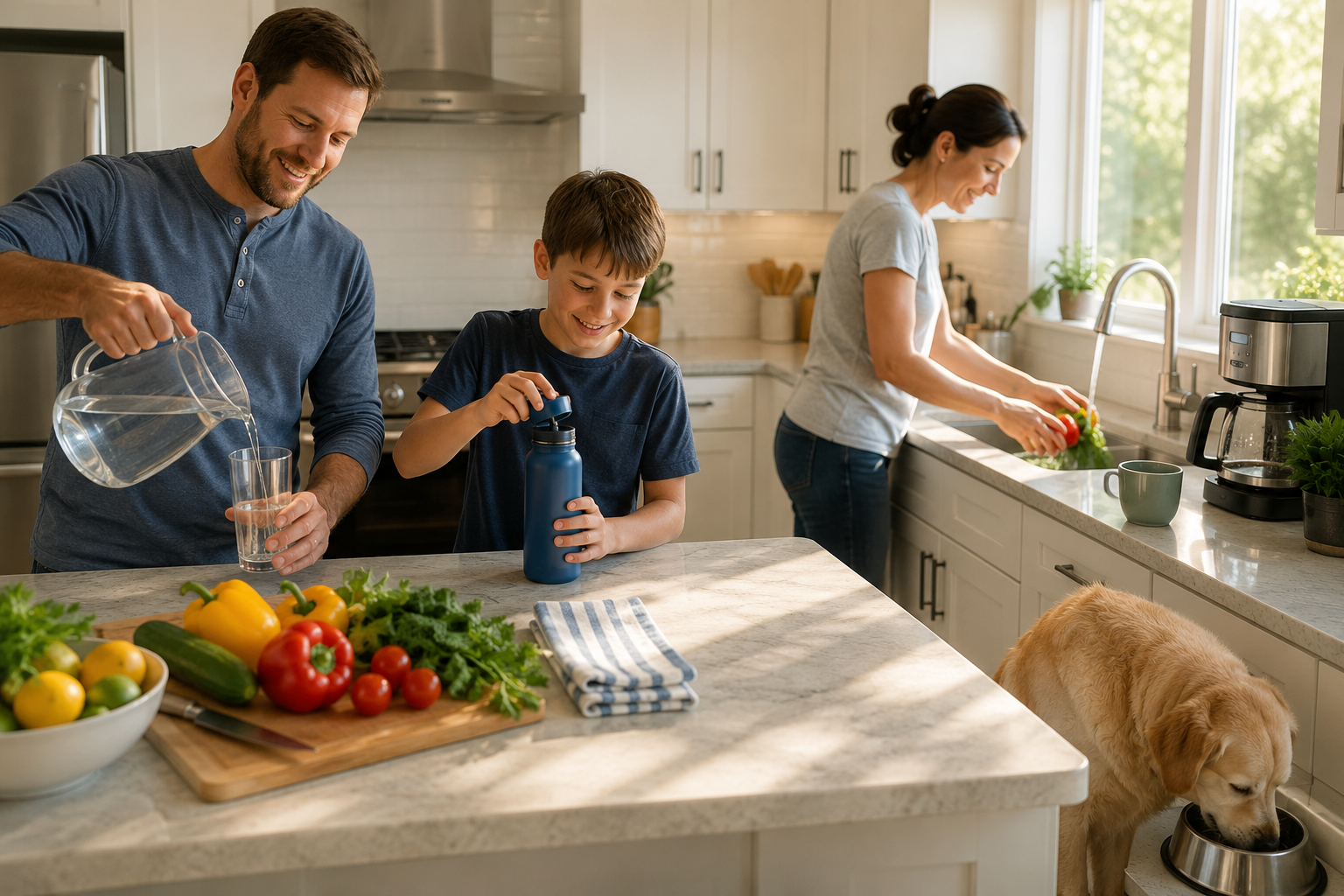
Safe drinking water is one of the few resources every household depends upon every single day. It is used from the moment people wake up until they go to bed. Water is used to prepare meals, make coffee and tea, brush teeth, take medications, wash fruits and vegetables, prepare infant formula, care for pets, clean kitchen surfaces, and maintain personal hygiene. Because clean water is normally available simply by turning on a faucet, most people rarely consider how much their daily routine depends upon a safe and reliable municipal water system.
A boil water advisory changes that routine immediately. Instead of assuming every faucet provides safe drinking water, every use of water must be considered carefully. Simple tasks that normally require only a few seconds now require planning. Before pouring a glass of water, making breakfast, or brushing your teeth, you must first determine whether the water is safe to use. For households that have prepared in advance, these adjustments are usually straightforward. For those who have not, the first few hours can be confusing and stressful.
Fortunately, a boil water advisory is one of the easiest emergencies to prepare for because the solutions are practical, affordable, and based on simple household skills. You do not need specialized equipment or extensive emergency training. Learning how to safely store water, purify additional supplies, organize your household, and develop a simple response plan will allow your family to continue functioning safely during both short-term advisories and longer disruptions.
The skills taught in this lesson extend far beyond boil water advisories. Floods, hurricanes, severe winter storms, earthquakes, extended power outages, infrastructure failures, and many other emergencies can interrupt access to clean drinking water. By learning how to prepare for one event, you are strengthening your ability to respond to many others.
This lesson has been designed as a practical training guide rather than a general information article. Throughout the lesson you will learn what to do, why each step is important, how to complete it safely, common mistakes to avoid, and ways to practice each skill before an emergency occurs. By the end of the lesson, you should be able to confidently protect your household whenever access to safe drinking water becomes uncertain.
Why This Matters
Many people underestimate the importance of a boil water advisory because they assume the solution is as simple as boiling a pot of water. While boiling water is certainly an important part of the response, it addresses only one piece of a much larger problem. A household depends upon clean drinking water dozens of times each day, often without anyone consciously thinking about it.
Take a moment to mentally walk through your normal morning routine. Before leaving for work or school, you may drink a glass of water, brush your teeth, shower, prepare breakfast, make coffee, wash fruit, fill reusable water bottles, take medications, and feed your pets. Every one of these activities depends upon safe water. If your municipal water supply suddenly becomes unsafe, each of these routines must be adjusted.
Now imagine that your community announces a boil water advisory late in the evening. Grocery stores remain open for another hour before closing. Hundreds of other families receive the same notification at exactly the same time. Many people immediately drive to the nearest store to purchase bottled water, only to discover empty shelves and long checkout lines. Others begin searching online for instructions while trying to determine whether the water already sitting in their refrigerator is still safe to drink.
Compare that situation with a household that prepared beforehand. They already have emergency drinking water stored in a cool location. Their portable stove and fuel are ready if additional water must be boiled. Every family member knows where treated water is kept and understands the household procedures. Instead of reacting with uncertainty, they begin following a plan that has already been discussed and practiced.
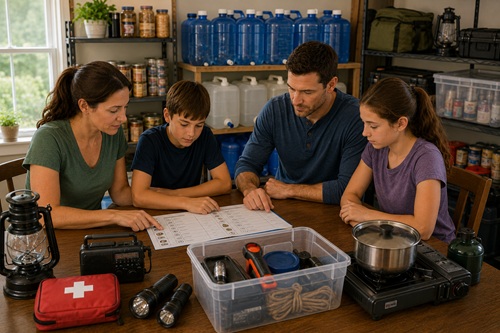
Preparation provides something even more valuable than supplies – it provides confidence. When people know exactly what to do, they are less likely to panic, make rushed decisions, or overlook important details. Good preparedness replaces uncertainty with organized action.
It is also important to understand that the consequences of contaminated drinking water extend beyond temporary inconvenience. Waterborne illnesses can cause severe stomach cramps, vomiting, diarrhea, dehydration, and other medical complications. While healthy adults often recover with proper care, infants, young children, older adults, pregnant women, and individuals with weakened immune systems may face much greater health risks. Following proper procedures helps protect everyone in the household, especially those who are most vulnerable.
Throughout this lesson, focus on applying the information to your own home. Imagine where your emergency water is currently stored. Consider how you would prepare additional drinking water if the advisory lasted several days. Think about the routines your family follows every morning and every evening. By evaluating your own household as you read, you will develop a preparedness plan that is practical, realistic, and immediately useful.
Learning Objectives
After completing this training lesson, you should be able to:
- Explain what a boil water advisory is and why it is issued.
- Recognize the situations that commonly lead to water contamination.
- Evaluate your household’s daily drinking water requirements.
- Build and maintain an emergency water supply.
- Safely boil, cool, and store drinking water.
- Organize your household to prevent accidental use of contaminated water.
- Use safe drinking water correctly throughout your home.
- Conserve treated water during extended emergencies.
- Protect children, older adults, pets, and individuals with medical needs.
- Restore your household after a boil water advisory has ended.
- Strengthen your long-term water preparedness using the lessons learned during the emergency.
Equipment You’ll Need
One of the biggest misconceptions about emergency preparedness is that it requires purchasing large amounts of expensive equipment. Preparing for a boil water advisory is much simpler. Most of the items you need are inexpensive, already available in many homes, or can be added gradually over time. The goal is not to own every piece of emergency equipment on the market but to assemble practical tools that allow your household to safely produce, store, and use drinking water whenever normal service is interrupted.
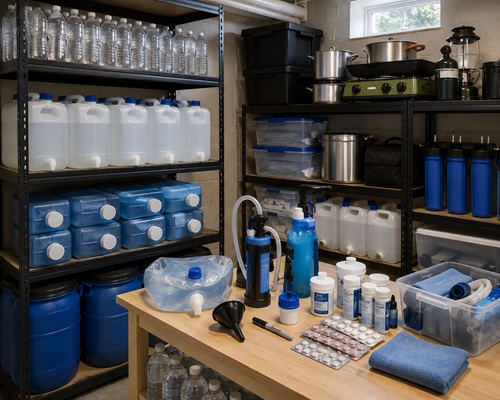
Begin with emergency water storage. Every household should maintain a supply of clean drinking water before an emergency occurs. Commercially bottled water provides the simplest solution because it is already treated, sealed, and ready for immediate use. Larger food-grade storage containers allow you to maintain a more substantial reserve while reducing storage space. Whichever option you choose, inspect containers regularly for leaks, damage, or contamination.
You will also need a dependable method of heating water. During many boil water advisories electrical service remains available, allowing you to use your kitchen stove. However, severe weather or infrastructure failures may interrupt electrical power at the same time. A portable propane stove, camp stove, rocket stove, wood stove, or other emergency cooking method provides valuable flexibility when your primary cooking equipment cannot be used.
A large cooking pot is another essential item. Select one that is clean, easy to handle, and large enough to produce several liters or gallons of treated water at one time. Larger batches generally conserve fuel while reducing the amount of time spent preparing water each day.
Clean storage containers are needed after the water has been boiled. These containers should be food-grade, equipped with tight-fitting lids, and reserved for drinking water whenever practical. Having several smaller containers in addition to larger ones makes daily use much easier while reducing the risk of contaminating your entire supply each time water is removed.
A clean funnel is a simple tool that many people overlook. It allows boiled water to be transferred into storage containers with fewer spills and less opportunity for contamination. Although inexpensive, it greatly simplifies the process of storing treated water safely.
Finally, keep a permanent marker and waterproof labels with your emergency supplies. Every container of treated water should be labeled with the date it was prepared. Clear labeling prevents confusion when multiple batches have been produced and makes rotating stored water much easier over time.
You do not need to purchase everything immediately. Build your preparedness gradually. Each additional container, each new piece of equipment, and each skill you practice adds another layer of resilience to your household. Preparedness is built through steady improvement, not through one large shopping trip.
Step 1 – Understand the Boil Water Advisory
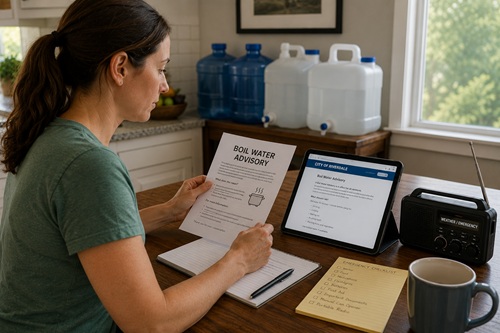
Before you begin boiling water, filling containers, or changing your household routine, take a few minutes to understand exactly what has happened. The actions you take during the first few minutes often determine how organized and effective your response will be throughout the rest of the emergency.
Your first task is to confirm that a boil water advisory has actually been issued for your area. Do not rely solely on information shared through social media, neighborhood groups, or conversations with friends. Rumors often spread much faster than verified information during emergencies. Instead, obtain your information directly from your municipal water provider, local public health authority, emergency management agency, or other official source.
Once you have located the official advisory, read it completely before taking action. Many people see the words “boil water advisory” and immediately begin boiling water without reading the remainder of the notice. While this may seem harmless, not every water emergency involves biological contamination. Some incidents involve chemical contamination, industrial spills, or hazardous materials where boiling the water is not recommended. Always understand exactly what officials are asking residents to do before responding.
As you read the advisory, identify four important pieces of information.
First, determine why the advisory was issued. Was it caused by a broken water main, flooding, equipment failure, loss of water pressure, severe weather, or another event? Understanding the cause helps you better understand how long the disruption may last and what additional problems may develop.
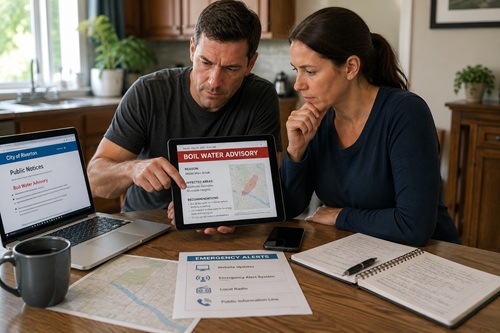
Second, determine which areas are affected. Some advisories apply only to specific neighborhoods or pressure zones within a community, while others affect an entire municipality. Knowing the boundaries of the advisory helps you make informed decisions if travel becomes necessary.
Third, determine what actions officials are recommending. Some advisories require all tap water to be boiled before use. Others provide additional instructions regarding food preparation, bathing, dishwashing, restaurants, schools, or medical equipment. Read every recommendation carefully rather than assuming you already know what to do.
Finally, determine how updates will be communicated. Most municipalities provide regular updates through official websites, emergency alert systems, local radio stations, or public information announcements. Knowing where future information will be published prevents unnecessary confusion later.
Once you understand the advisory, begin assessing your own household. Walk into your kitchen and look at your available drinking water. Ask yourself several simple questions.
How much bottled water do you currently have?
How many people live in your home?
Do you have infants, older adults, or anyone with medical needs?
How many pets require clean drinking water?
If the advisory lasts several days, do you have a way to produce additional safe water?
Do not worry if you cannot immediately answer every question. The purpose of this assessment is simply to understand your starting point before making decisions.
Next, consider your available equipment. Verify that you have a clean cooking pot, a reliable heat source, clean storage containers, and enough fuel if electricity becomes unavailable. Locating these items now prevents unnecessary searching later when you begin preparing treated drinking water.
Finally, remain calm.
One of the greatest advantages of preparedness is that it replaces panic with a process. There is rarely a need to rush through every task during the first few minutes. Instead, work methodically. Confirm the advisory. Read the instructions. Assess your household. Gather your equipment. Then begin following your response plan one step at a time.
Good preparedness is not about reacting quickly.
It is about reacting correctly.
Why This Works
Beginning with accurate information prevents unnecessary work and reduces mistakes. Households that understand the situation before taking action are far more likely to make good decisions than households that react to incomplete or inaccurate information.
Common Mistakes
One of the most common mistakes is assuming every water emergency is the same. Some people immediately begin boiling water without reading the advisory, while others rely on social media instead of official sources. Another common mistake is failing to determine whether everyone in the household—including pets—has been considered before making a plan.
Preparedness Tip
Save the website and emergency telephone number for your municipal water provider in your phone today. During an emergency you won’t have to spend valuable time searching for official information.
Did You Know?
Many boil water advisories are issued before laboratory testing confirms contamination. Public health officials issue the advisory as a precaution because preventing illness is far easier than responding after people have already become sick.
Step 2 – Secure Your Household Drinking Water
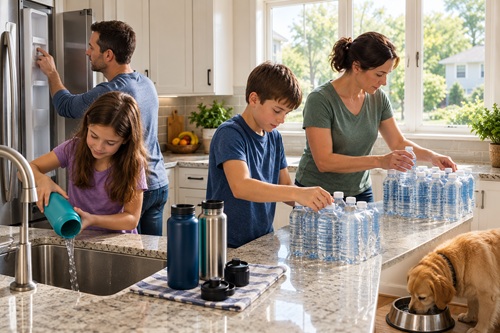
The moment you confirm that a boil water advisory is in effect, your next priority is protecting the drinking water already inside your home. Before you begin producing additional treated water, prevent anyone from accidentally using untreated tap water. This is one of the simplest steps you can take, yet it prevents many of the mistakes that occur during the first few hours of an advisory.
Begin in your kitchen. This is where most households use drinking water, making it the logical place to start. Walk to every sink, refrigerator, countertop appliance, and cabinet where drinking water is normally stored. Look for pitchers, reusable water bottles, glasses, water dispensers, and any other containers that may contain untreated tap water.
Empty any containers filled with tap water after the advisory began. Do not leave them on the counter with the intention of remembering which ones are safe and which ones are not. During an emergency, people become distracted, visitors may not know the procedures, and family members often act out of habit. Removing untreated water immediately eliminates unnecessary confusion.
If your household keeps reusable water bottles ready for work or school, wash them thoroughly and refill them using bottled water or water that has already been properly treated. Place them together in a designated location so everyone knows where safe drinking water is available.
Next, turn your attention to your refrigerator. If it has an automatic ice maker, turn it off immediately. Any ice produced after the advisory began should be discarded because freezing does not destroy the bacteria, viruses, or parasites that may be present in contaminated water. Empty the ice storage bin completely and leave the ice maker turned off until the advisory has officially ended and the refrigerator’s water system has been properly flushed.
If your refrigerator includes a built-in water dispenser, place a temporary note or piece of tape over the dispenser reminding everyone not to use it. This simple reminder helps prevent someone from filling a glass out of habit without thinking about the advisory.
Continue by inspecting every appliance that uses water. Coffee makers, espresso machines, electric kettles, countertop ice makers, water coolers, humidifiers, CPAP humidifiers, steam ovens, and similar appliances should all be checked. If they contain untreated tap water, empty the reservoirs according to the manufacturer’s instructions and plan to refill them later using safe drinking water.
Now move into each bathroom. Fill a clean container with treated or bottled water and place it beside every sink. This water should be reserved for brushing teeth, taking medications, rinsing toothbrushes, and other activities that require safe drinking water. Keeping treated water immediately available greatly reduces the temptation to use untreated tap water simply because it is convenient.
If your household includes young children, this is also the time to explain what has changed. Children often drink from the bathroom faucet without asking permission because they have done so every day of their lives. Show them exactly where the safe water is located and explain that they should ask an adult before drinking any water until the advisory has ended.
Next, check every pet water bowl in your home. Empty the bowls, wash them thoroughly, and refill them using bottled or treated water. Pets can become ill from contaminated water just as people can, so include them in your household response plan from the very beginning.
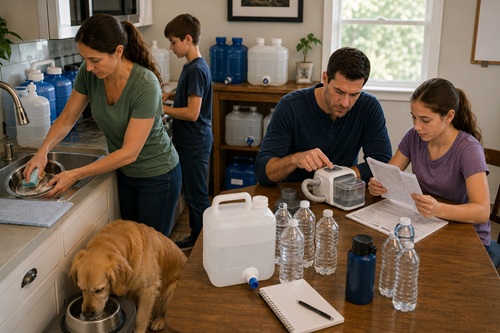
If anyone in your home relies on medical equipment that uses water, inspect those devices now. Review the manufacturer’s recommendations to determine what type of water should be used during a boil water advisory. Some equipment requires distilled water, while other devices may safely use boiled water. Never assume that one solution applies to every medical device.
Once you have secured every location where drinking water is used, gather the entire household together. Explain what has happened, what changes have been made, and where everyone can find safe drinking water. Keep the explanation simple and practical. Every person should understand which water is safe, where it is stored, and what they should do if they need more.
Finally, establish one location where all treated drinking water will be stored throughout the advisory. Whether you choose a section of your kitchen counter, a pantry shelf, or another convenient location, keeping all safe drinking water together prevents confusion and makes it much easier to monitor how much water remains available.
By the time you finish this step, your household should no longer have easy access to untreated drinking water. Instead, everyone should know exactly where safe water is located and understand the simple procedures that will be followed until the advisory has ended.
Why This Works
Most accidental exposure to contaminated water occurs because people continue following their normal routines without thinking. Removing untreated water from everyday use forces everyone to consciously choose safe drinking water instead of relying on habit.
Common Mistakes
Many households forget to turn off automatic ice makers or overlook refrigerator water dispensers. Others remember the kitchen but forget bathroom sinks, pet water bowls, coffee makers, or reusable water bottles. Walking through your home one room at a time helps ensure every water source has been addressed before anyone accidentally uses it.
Preparedness Tip
Keep several one-liter bottles of emergency drinking water permanently stored in each bathroom. During a boil water advisory, these bottles provide immediate access to safe water for brushing teeth, taking medications, and personal hygiene without requiring repeated trips to the kitchen.
Did You Know?
Studies of emergency response consistently show that people naturally return to familiar routines during stressful situations. Preparing your home so the safest choice is also the easiest choice significantly reduces the likelihood of accidental mistakes during an emergency.
Step 3 – Produce Safe Drinking Water
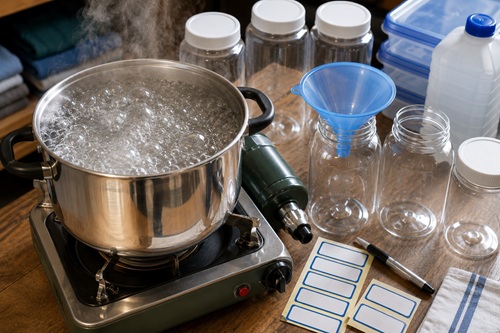
Once your household has been organized and everyone knows where safe water will be stored, your next priority is producing enough treated drinking water to meet your family’s daily needs. Rather than waiting until bottled water begins running low, start preparing additional water as soon as practical. Building a reserve early provides flexibility if the advisory lasts longer than expected and reduces the pressure to produce water at the last minute.
Begin by gathering everything you will need before turning on the stove. Collect a clean cooking pot, a dependable heat source, clean storage containers with lids, a funnel if you have one, and a permanent marker for labeling treated water. Having everything ready before you begin makes the process smoother and reduces the chance of contaminating water while searching for equipment.
Next, examine the water you intend to treat. Fill the cooking pot with tap water and look closely at it. If the water appears cloudy or contains visible dirt, rust, leaves, or other particles, remove as much of the sediment as possible before boiling. You can do this by slowly pouring the water through a clean cloth, coffee filter, paper towel, or another suitable filtering material. Filtering does not make the water safe to drink, but it removes larger particles that can interfere with the boiling process and improve the appearance of the finished water.
Once the water has been filtered if necessary, place the pot on your heat source and begin heating it. Watch the water carefully as it warms. Small bubbles forming on the bottom of the pot do not indicate that the water is ready. Continue heating until the entire surface reaches a vigorous rolling boil. A rolling boil produces large, continuous bubbles across the entire surface of the water that continue even when the water is stirred.
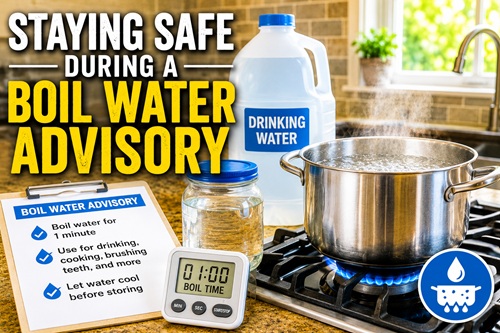
Maintain the rolling boil for the amount of time recommended by your local public health authority. In most situations, maintaining the boil for at least one minute is sufficient, while higher elevations may require additional time because water boils at lower temperatures. Always follow the official recommendations issued with the advisory rather than relying on memory or information from unrelated sources.
After boiling has been completed, remove the pot from the heat and allow the water to cool naturally. Do not add ice, mix it with untreated water, or place the container in contaminated water to speed the cooling process. Any shortcut that introduces untreated water can immediately recontaminate the entire batch and require you to begin again.
While the water cools, prepare your storage containers. Inspect each container to make sure it is clean, free of cracks, and equipped with a secure lid. If the containers have not been used recently, wash them with dish soap and clean water, rinse them thoroughly, and allow them to air dry before filling them with treated water. The cleanliness of the container is just as important as the boiling process itself.
Once the water has cooled enough to handle safely, carefully transfer it into the prepared containers. A clean funnel makes this process much easier while reducing spills. Fill containers as close to the top as practical before sealing them with tight-fitting lids. Limiting the amount of air inside the container helps protect the water during storage.
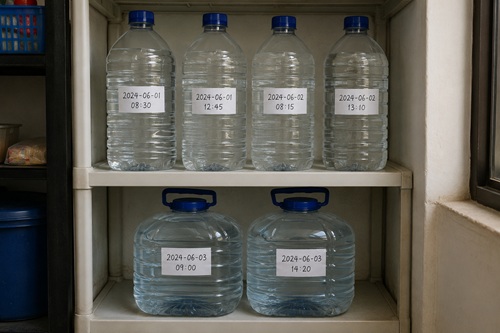
Immediately label each container with the date and time it was prepared. This simple habit allows you to identify older batches first if several containers are prepared over multiple days. Good labeling also prevents confusion if both treated and untreated water are present in your home.
Now decide where the treated water will be stored. Choose a location that is cool, clean, and away from direct sunlight whenever possible. Avoid placing drinking water beside fuels, paints, pesticides, cleaning products, or other chemicals that could damage the containers or create unpleasant odors. Store treated water separately from untreated water so every member of the household can immediately recognize which containers are safe to use.
As you begin producing water regularly, develop a schedule rather than waiting until supplies become low. Many households find it easier to prepare one large batch of treated water each morning or evening instead of several smaller batches throughout the day. Establishing a routine ensures that clean drinking water is always available while reducing the number of times equipment must be cleaned and fuel consumed.
Pay attention to how much fuel you are using. If your backup cooking equipment relies on propane, butane, firewood, charcoal, or another limited fuel source, monitor consumption each day. If fuel begins running low, consider increasing the size of each batch rather than boiling multiple smaller pots. Larger batches are generally more fuel-efficient and reduce the amount of time spent preparing water.
If electrical service has been interrupted, think carefully about where you will operate your emergency cooking equipment. Portable camp stoves, propane burners, and similar appliances are extremely useful but must be used according to the manufacturer’s safety instructions. Equipment designed for outdoor use should never be operated inside enclosed buildings because of the danger of carbon monoxide poisoning. Select a safe, well-ventilated location before lighting any fuel-burning appliance.
As your confidence grows, involve other responsible members of the household in the process. Everyone should understand how to inspect the water, bring it to a rolling boil, cool it safely, transfer it into clean containers, and label it correctly. Sharing these responsibilities reduces the workload placed on one person while ensuring your household can continue producing safe drinking water if someone becomes unavailable.
Finally, remember that boiling water requires time. If your household waits until the last bottle of drinking water has been emptied before beginning the process, unnecessary pressure and poor decisions often follow. Producing water before it is urgently needed provides flexibility, conserves fuel through better planning, and ensures that your household always maintains a reserve of safe drinking water.
Why This Works
Boiling destroys the microorganisms responsible for most waterborne diseases. When combined with clean containers, proper handling, and organized storage, it provides one of the most dependable methods of producing safe drinking water during a biological contamination event.
Common Mistakes
Many people stop heating the water too soon because they mistake small bubbles for a rolling boil. Others contaminate treated water by pouring it into dirty containers or by adding ice to cool it more quickly. Waiting until bottled water has already run out before producing additional treated water is another common mistake that creates unnecessary stress during an emergency.
Preparedness Tip
Purchase two identical cooking pots and dedicate one exclusively to emergency water purification. Keeping one pot reserved for drinking water helps prevent contamination from cooking oils, food residue, or other substances that may remain after normal meal preparation.
Did You Know?
A family of four may need to prepare several gallons of safe drinking water every day during a prolonged boil water advisory. Producing water on a regular schedule rather than only when supplies become low helps ensure the household never runs out while also making fuel use more predictable.
Step 4 – Use Safe Drinking Water Throughout Your Home
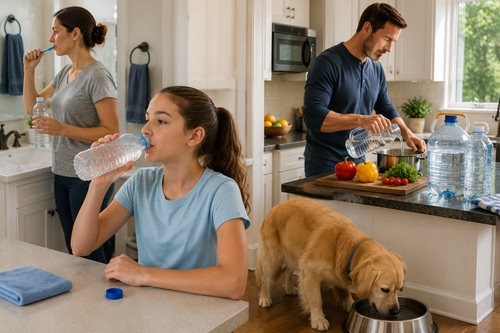
Producing safe drinking water is only part of your response. The next step is making sure it is used correctly throughout your home. During a boil water advisory, many people remember to drink bottled or boiled water but accidentally use untreated tap water during other daily activities. Developing consistent household procedures helps eliminate these mistakes while allowing normal routines to continue with only minor adjustments.
Begin by returning to your kitchen. Before preparing any food, ask yourself one simple question: “Will this food come into contact with water?” If the answer is yes, use only treated or bottled water throughout the preparation process.
Fill a clean pitcher or container with treated water and place it where it can be easily reached while cooking. Having safe water readily available prevents the temptation to use tap water simply because it is more convenient. As you prepare meals, use this water for cooking rice, pasta, soups, vegetables, sauces, oatmeal, dehydrated meals, powdered drink mixes, coffee, tea, and any other recipe that requires water.
Fresh fruits and vegetables require additional attention. Before washing produce, fill a clean bowl with treated water or use bottled water directly. Wash the produce thoroughly, then place it on a clean towel or drying rack. If your household consumes fresh produce regularly, consider washing several days’ worth at one time. This reduces repeated handling while making better use of your treated water supply.
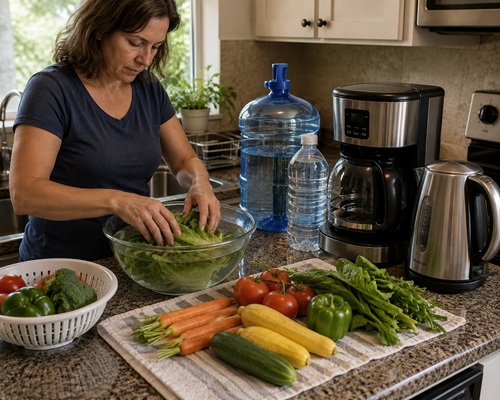
As you work in the kitchen, avoid tasting food with utensils that have been rinsed using untreated tap water. If you need to rinse a spoon during cooking, use treated water or wash it completely before using it again. Small habits like this help eliminate opportunities for accidental contamination.
Next, inspect every appliance that normally uses drinking water. Before making coffee, verify that your coffee maker has been filled with treated water rather than tap water. If you use an electric kettle, fill it from your emergency water supply instead of the faucet. Steam ovens, espresso machines, and similar appliances should all receive the same careful attention.
Now move into the bathrooms. Replace the normal cup beside each sink with one reserved exclusively for treated drinking water. Every family member should use this water for brushing their teeth, rinsing toothbrushes, cleaning retainers or dentures, and taking medications. Once the cup becomes empty, refill it immediately so safe water is always available.
Children often need additional reminders during the first day or two of a boil water advisory. Walk through the bathroom with them and demonstrate exactly how to brush their teeth using treated water. Encourage them to ask an adult before using any faucet if they are uncertain. Repeating the routine together once or twice helps build new habits quickly.
Bathing generally requires fewer changes than many people expect. Healthy adults can usually shower safely during a biological boil water advisory as long as they avoid swallowing water. Encourage everyone to keep their mouths closed while showering and supervise young children closely because they are much more likely to drink bath water while playing.
If you are caring for infants or individuals with weakened immune systems, consider using sponge baths whenever practical until the advisory has ended. This allows you to control exactly which water is used while reducing unnecessary exposure.
Continue into any room where medical equipment is used. Humidifiers, CPAP machines, respiratory equipment, and similar devices may require distilled water or water prepared according to the manufacturer’s instructions. Never assume that boiled tap water is appropriate for every device. Review the owner’s manual before filling any medical equipment.
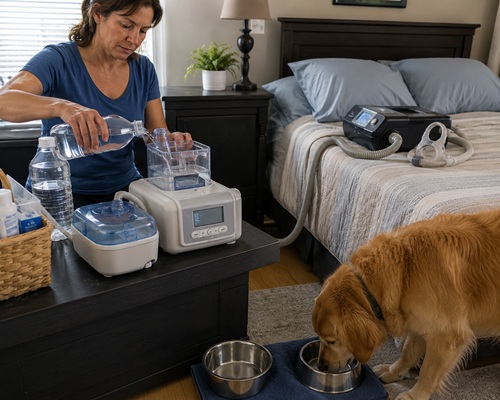
Do not forget about your pets. Empty every water bowl, wash it thoroughly, and refill it using treated or bottled water. Continue doing this each day throughout the advisory. If you own multiple animals, prepare enough treated water each morning so their daily needs are already covered before beginning other household activities.
As the day progresses, continue watching for habits that developed long before the emergency. Someone may instinctively reach for the refrigerator water dispenser, fill a glass from the kitchen sink, or rinse a toothbrush under the faucet without thinking. Correct these habits calmly as they occur. Most mistakes happen automatically rather than intentionally.
If visitors enter your home during the advisory, inform them immediately that untreated tap water should not be used. Offer them bottled or treated water rather than assuming they are already aware of the advisory. A simple conversation can prevent unnecessary exposure.
Throughout the advisory, make it a habit to check your treated water supply each morning and again each evening. If supplies begin running lower than expected, prepare another batch before the reserve becomes critically low. Maintaining a comfortable supply allows your household to continue functioning normally without worrying about running out of safe drinking water.
The objective is not to change every aspect of daily life. Instead, it is to replace unsafe routines with safe ones while allowing your household to remain healthy, comfortable, and organized until the advisory has ended.
Why This Works
Most waterborne illnesses occur because contaminated water is used during ordinary daily activities rather than because someone intentionally drinks unsafe water. Developing simple household routines ensures that safe water becomes the default choice throughout the home.
Common Mistakes
Many households remember to use safe water for drinking but forget to use it when washing produce, making coffee, preparing infant formula, rinsing toothbrushes, taking medications, filling pet bowls, or using medical equipment. Another common mistake is allowing treated and untreated water containers to sit beside each other without clear labeling, increasing the chance of accidental confusion.
Preparedness Tip
Designate one countertop or shelf in your kitchen as the Safe Water Station. Store all treated drinking water, clean cups, funnels, measuring pitchers, and water preparation supplies in this single location. Keeping everything together reduces confusion and allows every family member to quickly find the supplies they need.
Did You Know?
Behavior studies consistently show that people naturally return to familiar habits during stressful situations. By making treated water the easiest water to access, you greatly reduce the likelihood of someone accidentally using untreated tap water simply out of routine.
Step 5 – Conserve Your Water Supply
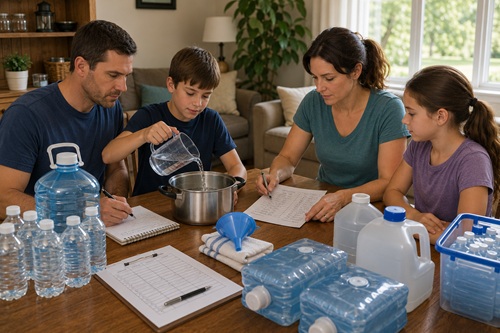
If a boil water advisory lasts more than a day or two, producing safe drinking water becomes only part of the challenge. The other part is making sure the water you have lasts as long as necessary. Many households focus on boiling additional water but pay very little attention to how quickly they are using it. Good water management begins on the first day of the advisory – not after supplies begin running low.
Begin by determining exactly how much safe drinking water you have available. Gather every bottle, storage container, and container of boiled water into one location. Count how many gallons or liters are ready for use and write the total down. Knowing your available supply allows you to make informed decisions instead of relying on estimates.
Next, estimate how many days your water may need to last. If local officials believe repairs will be completed within twenty-four hours, your conservation strategy will differ from a situation where flooding or infrastructure damage may keep the advisory in place for a week or longer. Since restoration estimates can change quickly, it is usually wise to plan for the advisory to last longer than expected.
Now divide your water use into two categories: essential and non-essential.
Essential uses are those directly related to health and safety. Drinking water should always receive the highest priority, followed by water used for medications, infant formula, food preparation, washing fruits and vegetables, brushing teeth, and caring for pets. These activities should continue without compromise because they directly affect the health of your household.
Non-essential uses are activities where water consumption can often be reduced without creating health concerns. Examples include repeated rinsing while washing dishes, unnecessary food preparation steps, or using more water than needed for simple cleaning tasks. Identifying these opportunities allows you to conserve water without sacrificing safety.
As you prepare meals, begin looking for opportunities to reduce water use. One of the simplest methods is planning meals that require fewer pots, fewer cooking steps, and less cleanup. Soups, stews, casseroles, one-pot pasta dishes, rice meals, and dehydrated emergency foods often require less overall water than preparing several separate dishes. Planning meals before you begin cooking also prevents unnecessary food waste.
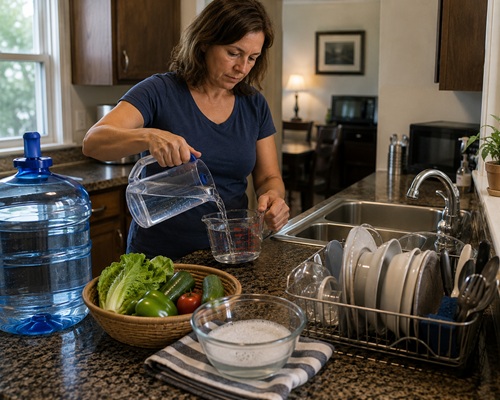
Measure the water you use whenever practical. Instead of pouring directly from a large container, use a measuring cup or pitcher. This habit helps prevent accidentally using more water than a recipe actually requires. Over several days, these small savings can preserve a surprising amount of your emergency water supply.
Dishwashing deserves careful planning as well. Rather than washing dishes throughout the day, collect them until after the evening meal whenever practical. Washing everything together reduces repeated water use and allows you to organize the task more efficiently. If your emergency water supply becomes limited, consider temporarily using disposable plates and utensils to reduce both water consumption and cleanup.
Continue practicing good personal hygiene, but avoid unnecessary water use. Turn off the water while brushing your teeth, shaving, or washing your hands whenever continuous running water is not needed. If sponge baths are being used, prepare only the amount of treated water necessary rather than filling large containers that may never be completely used.
As you move through your home, continue looking for opportunities to use water wisely without compromising safety. For example, if treated water has been used to wash fresh vegetables, it may still be suitable for watering houseplants if the advisory involves only biological contamination. Likewise, rainwater or other non-potable water sources may be appropriate for flushing toilets or cleaning outdoor equipment, provided they are never confused with drinking water.
Develop a simple routine for monitoring your remaining supply. Each evening, check how much treated water remains and compare it with the previous day. If you notice your household is using more water than expected, discuss possible adjustments before supplies become critically low. Small changes made early are much easier than major restrictions implemented later.
If you must continue boiling water every day, establish a regular production schedule. Many households find it easier to boil one or two large batches each morning rather than several small batches throughout the day. Larger batches generally use less fuel, require less cleanup, and ensure that safe drinking water is always available before supplies begin running low.
Fuel conservation should also become part of your planning. Every gallon of water you boil requires energy. If your backup stove uses propane, butane, charcoal, wood, or another limited fuel source, monitor your remaining fuel just as carefully as you monitor your water supply. Producing larger batches, cooking multiple foods at the same time, and planning meals carefully all help extend both water and fuel reserves.
Throughout the advisory, continue asking yourself one simple question before using treated water:
“Is this the best use of this water?”
If the answer is yes, use it confidently. If another method can safely accomplish the same task, consider conserving your treated drinking water for more essential needs.
Water conservation is not about making your family uncomfortable or depriving them of basic needs. It is about using your available resources wisely so your household remains healthy, organized, and prepared regardless of how long the advisory continues. Good resource management provides flexibility, reduces stress, and helps ensure your family never faces unnecessary shortages.
Why This Works
Managing water from the beginning of the emergency allows you to make thoughtful decisions instead of reacting to shortages. Households that understand their daily water consumption can adjust gradually while maintaining normal routines much longer than those who wait until supplies become critically low.
Common Mistakes
One of the most common mistakes is assuming the advisory will end tomorrow and using water without thinking about long-term needs. Another frequent mistake is preparing several elaborate meals that require excessive amounts of water and fuel during the first few days of the emergency. Many households also fail to monitor how much water remains, making it difficult to recognize developing shortages until they become serious.
Preparedness Tip
Keep a small notebook beside your emergency water supply and record how many gallons or liters your household uses each day. After only a few days, you will have a much clearer understanding of your family’s actual water requirements, making future emergency planning far more accurate.
Did You Know?
Most households can significantly extend their emergency water supply without reducing drinking water simply by planning meals carefully, measuring water during cooking, washing dishes efficiently, and eliminating unnecessary waste. Small changes in daily habits often save far more water than people expect.
Step 6 – Recover After the Boil Water Advisory Has Ended
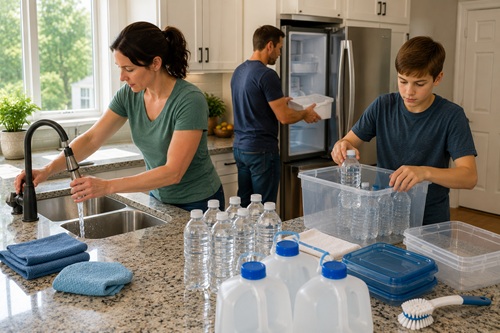
When the boil water advisory is finally lifted, it may be tempting to return immediately to your normal routine. However, your work is not quite finished. Before using tap water as you normally would, take time to safely restore your home’s water system, inspect your emergency supplies, and evaluate how well your preparedness plan worked. The actions you take during recovery help ensure your household is fully prepared for the next emergency.
Begin by confirming that the advisory has officially ended. Do not rely on rumors, neighborhood conversations, or social media posts claiming the water is safe again. Continue using treated or bottled water until your municipal water provider or public health authority announces that the advisory has been lifted. Official announcements are usually distributed through municipal websites, emergency notification systems, local radio stations, television broadcasts, or other trusted communication channels.
Once the advisory has officially ended, read the recovery instructions provided by your water utility. Many municipalities recommend flushing household plumbing before returning to normal use. These instructions may vary depending on the reason for the advisory, so follow the recommendations provided for your community rather than assuming every situation is the same.
Start with your cold-water taps. Beginning at the faucet closest to where the water service enters your home, allow cold water to run for the recommended amount of time. Continue moving through your home until every faucet has been flushed. This process removes water that remained inside your plumbing system during the advisory and replaces it with freshly treated water from the municipal distribution system.
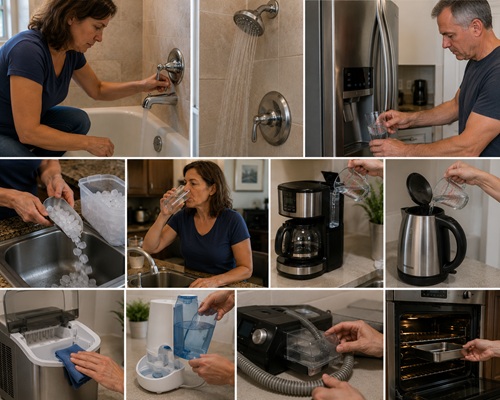
After flushing the cold-water system, repeat the process with the hot-water system if recommended by your water provider. Remember that hot-water tanks may still contain water that entered the system before or during the advisory. Flushing the system helps ensure fresh water reaches every fixture in your home.
Now return to your refrigerator. Turn the automatic ice maker back on only after the water line has been flushed. Discard the first batch of ice produced because it may contain water that remained inside the system during the advisory. If your refrigerator has a water dispenser, run several glasses of water through the dispenser before using it for drinking.
Continue checking other household appliances. Coffee makers, espresso machines, electric kettles, countertop ice makers, humidifiers, CPAP humidifiers, steam ovens, and any other appliance that stores water should be emptied, cleaned if necessary, and refilled with fresh tap water. Follow the manufacturer’s recommendations whenever cleaning or flushing procedures are required.
Next, inspect the containers you used to store treated drinking water. Empty any remaining water that you do not intend to keep, wash each container thoroughly with dish soap and clean water, sanitize them if appropriate, and allow them to dry completely before returning them to storage. Clean containers help prevent mold, bacteria, and unpleasant odors from developing while they are stored between emergencies.
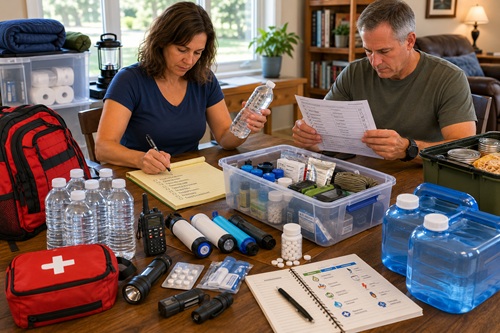
Once your equipment has been cleaned, inspect your emergency supplies. Count the bottled water, fuel, purification tablets, water filters, storage containers, and other supplies that were used during the advisory. Create a written list of anything that needs to be replaced. Restock these supplies as soon as practical rather than waiting until the next emergency occurs. One of the most common preparedness mistakes is putting equipment away with the intention of replacing supplies later, only to discover months afterward that nothing was replenished.
After your supplies have been restored, evaluate how well your response plan worked. Sit down with your household and discuss the experience while everyone still remembers the details. Ask practical questions rather than assigning blame.
Did everyone know where the emergency water was stored?
Did you have enough water available?
Was producing additional drinking water easier or more difficult than expected?
Did anyone accidentally use untreated tap water?
Were there any supplies you wished you had available?
Was your emergency cooking equipment adequate?
Did your communication plan work?
These questions help identify opportunities for improvement before the next emergency occurs.
Write your observations down while they are still fresh in your mind. Small improvements identified today can prevent much larger problems during the next emergency. Perhaps your household needs additional water storage, another cooking pot, more fuel, better labels, or a more organized storage area. Every lesson learned increases your preparedness.
If neighbors assisted one another during the advisory, consider following up with them after normal service has returned. Thank those who provided assistance, discuss what everyone learned, and encourage continued preparedness within the neighborhood. Communities become more resilient when households learn together rather than facing every emergency independently.
Finally, update your written preparedness plan. Add new procedures that worked well, revise inventory lists, record improvements you would like to make, and remove anything that proved unnecessary. Preparedness is a continuous process of learning, practicing, and improving. Every emergency provides valuable experience that makes your household stronger and more confident for the future.
Recovery is not simply about returning to normal life. It is about using real-world experience to improve your preparedness before the next emergency occurs. Households that consistently evaluate and improve their plans become more capable with every event they experience.
Why This Works
Recovery is when preparedness improves the most. By evaluating your performance immediately after the emergency, you can identify weaknesses while the experience is still fresh. Small corrections made now often prevent much larger problems during future emergencies.
Common Mistakes
Many households immediately return to normal routines without flushing appliances, replacing emergency supplies, or reviewing what they learned. Another common mistake is assuming the same emergency will never happen again. Every emergency provides valuable information that should be used to improve future preparedness.
Preparedness Tip
Create a simple “Recovery Checklist” and store it with your emergency plan. After every emergency, use the checklist to guide your recovery, inspect equipment, replenish supplies, and update your preparedness plan. Following the same checklist each time helps ensure nothing is overlooked.
Did You Know?
Emergency management organizations routinely conduct after-action reviews following incidents of every size—from local emergencies to major disasters. They know that the lessons learned immediately after an event often become the most valuable improvements made before the next one.
Step 7 – Build Long-Term Water Independence
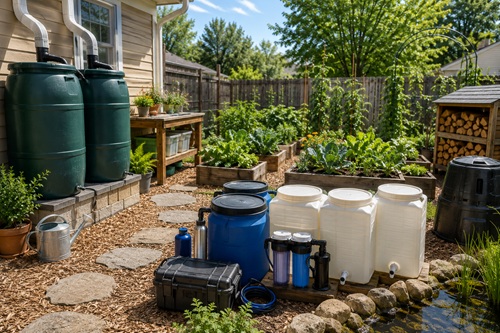
A boil water advisory reminds us of an important reality: most households depend almost entirely on someone else to provide safe drinking water. Under normal conditions, this system works remarkably well. Water is collected, treated, tested, and delivered to your home with very little thought on your part. However, every emergency demonstrates that even reliable infrastructure can be disrupted by severe weather, equipment failures, natural disasters, power outages, or aging infrastructure.
The goal of preparedness is not to replace the municipal water system. Instead, it is to reduce your dependence on a single source by building multiple layers of capability. Every additional method you develop for storing, collecting, purifying, or conserving water increases your household’s resilience during future emergencies.
Begin by evaluating your current level of water independence. Ask yourself a few practical questions.
If the municipal water supply stopped today, how many days could your household continue using stored drinking water?
Once those supplies were exhausted, where would additional water come from?
How would you transport it home?
How would you purify it?
If one method failed, what would your backup plan be?
These questions are not intended to create concern. They help identify areas where your preparedness can be improved gradually over time.
Your first objective should always be expanding your emergency water storage. Rather than attempting to purchase a large quantity of containers all at once, make water storage an ongoing project. Each time you shop, consider adding another container, another case of bottled water, or another piece of water storage equipment. Small improvements made consistently often produce impressive results within a year.
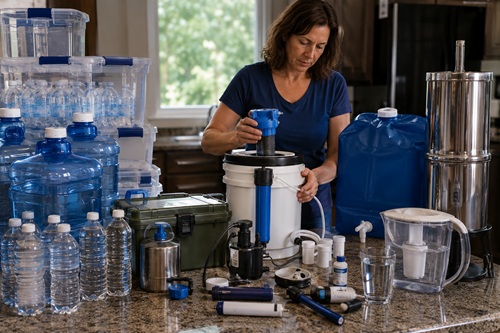
Next, develop more than one purification method. Throughout this lesson you learned how to make water safe by boiling it, but boiling requires both fuel and time. Ask yourself what you would do if fuel became limited or unavailable.
Portable water filters provide one alternative. Gravity-fed filtration systems allow larger quantities of water to be treated with very little effort. Chemical disinfectants may provide another backup method when used correctly. Ultraviolet purification devices can also be effective under the right conditions. No single method is perfect, which is why experienced preppers build several overlapping capabilities rather than depending entirely on one solution.
Once purification has been addressed, think about water collection. If your stored supply became depleted, where would you obtain additional water?
Nearby lakes, rivers, streams, ponds, rainwater collection systems, wells, and even water stored inside your home’s plumbing system may all become valuable resources during an extended emergency. Identifying these sources before they are needed gives you time to learn about accessibility, seasonal changes, transportation requirements, and purification methods.
If your property includes a private well, include it in your preparedness planning. Many modern wells depend upon electric pumps that stop functioning during power outages. Investigate whether backup power, manual pumping options, or generator connections are available for your particular system. A well provides tremendous value only if you can still access the water during an emergency.
Rainwater collection is another capability worth considering. Even a modest rain collection system can provide significant quantities of water for non-potable uses such as gardening, cleaning equipment, flushing toilets, or washing outdoor tools. Depending on local regulations and the intended use, properly collected rainwater may also become an important emergency drinking water source after appropriate treatment.
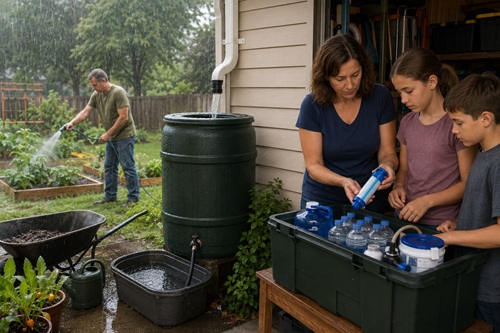
Water conservation should become part of your daily lifestyle rather than something practiced only during emergencies. Repair leaking faucets promptly, install efficient plumbing fixtures where appropriate, collect rainwater for outdoor use, and become conscious of unnecessary water waste. Households that routinely conserve water generally adapt much more easily during emergencies because many good habits have already been established.
Continue improving your family’s knowledge as well. Every responsible member of the household should understand where emergency water is stored, how purification equipment operates, and what procedures will be followed during a boil water advisory or other water emergency. Preparedness should never depend entirely upon one individual.
Practice your skills regularly. Set aside one afternoon each year to conduct a household water exercise. Pretend the municipal water supply has become unavailable. Use only stored water, prepare additional drinking water using your backup equipment, and follow your emergency procedures throughout the day. These practice exercises often reveal small problems that would otherwise remain hidden until a real emergency occurs.
As your preparedness grows, consider helping others improve theirs. Share what you have learned with family members, neighbors, and friends. Encourage them to store emergency water, develop purification skills, and create household response plans. Communities become more resilient when preparedness spreads from one household to another.
Finally, remember that complete self-sufficiency is not the objective. Very few households can produce all of their own water under every circumstance. The objective is resilience. Every additional gallon stored, every purification method learned, every backup system installed, and every skill practiced reduces your dependence on a single system while increasing your ability to adapt when circumstances change.
Preparedness is not measured by the amount of equipment you own.
It is measured by your ability to continue solving problems when normal systems no longer function.
Why This Works
Layered preparedness reduces the chance that one failure will leave your household without options. If one source of water becomes unavailable, another method is already available. Building multiple layers creates flexibility, and flexibility is one of the greatest strengths any prepared household can possess.
Common Mistakes
Many people focus entirely on storing bottled water while never developing the ability to obtain or purify additional water. Others purchase expensive equipment but never practice using it before an emergency occurs. Another common mistake is assuming municipal water service will always return quickly instead of preparing for longer disruptions.
Preparedness Tip
Each year, choose one improvement that increases your household’s water independence. It might be another storage container, a portable water filter, rainwater collection, additional fuel for boiling water, or simply practicing your emergency water plan. Small improvements made consistently over time build a highly resilient preparedness system.
Did You Know?
Prepared households rarely rely on a single source of drinking water. They combine stored water, purification equipment, multiple collection methods, conservation practices, and practical skills to create several independent layers of protection. If one layer fails, another is already available. This layered approach is one of the fundamental principles of emergency preparedness.
Practice Exercise
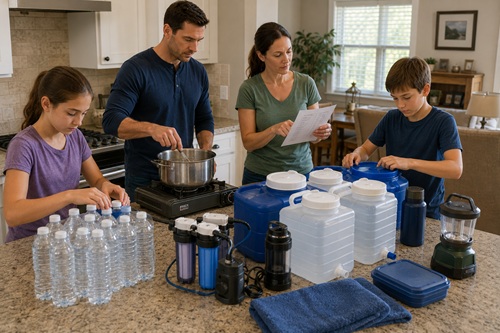
Reading about emergency preparedness provides valuable knowledge, but practical experience is what builds confidence. One of the most effective ways to prepare for a boil water advisory is to practice your household’s response before an actual emergency occurs. Conducting a preparedness exercise allows you to identify weaknesses in your emergency plan while conditions are calm, equipment is readily available, and mistakes can be corrected without consequences. Even a simple practice session can reveal opportunities for improvement that would otherwise remain unnoticed until a real emergency.
Choose a day when everyone in your household can participate for several hours. Explain that the purpose of the exercise is not to test anyone, but to practice working together and following your emergency procedures. Encourage every family member to participate because everyone has a role during an actual emergency, regardless of age or experience.
Imagine that your municipality has just announced an immediate boil water advisory. Treat the situation as though it were real. Begin by confirming the advisory through an official source, then gather everyone together and explain what has happened. Secure your household by emptying reusable water bottles that contain untreated tap water, turning off the automatic ice maker, preparing safe drinking water for each bathroom, and replacing the water in pet bowls with bottled or previously treated water. As you complete each task, pay attention to how smoothly the process unfolds and whether everyone understands their responsibilities.
Once your home has been secured, inspect your emergency water supply. Count the amount of safe drinking water you currently have available and compare it with your household’s estimated daily needs. Consider how long your supply would realistically last if the advisory continued for several days. If your stored water appears insufficient, discuss how you would begin producing additional drinking water and whether your current equipment would allow you to meet your family’s needs.
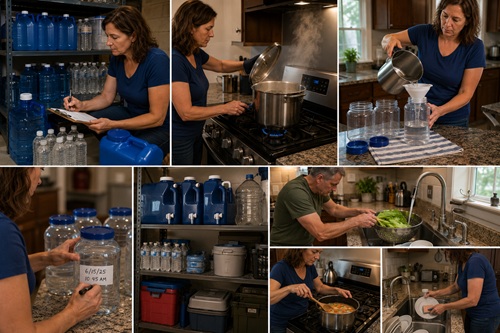
Continue the exercise by practicing the complete water purification process. Assemble your cooking equipment, bring water to a rolling boil, allow it to cool naturally, transfer it into clean storage containers, and label each container with the date and time it was prepared. Observe how long the entire process takes, how much fuel is consumed, and whether your current equipment allows you to produce enough water efficiently.
Complete the exercise by preparing a meal using only treated or bottled water. Wash fresh produce, prepare beverages, cook the meal, and clean the kitchen using the same procedures you would follow during an actual boil water advisory. As you work, look for activities that require more water than expected or equipment that could make the process more efficient. These small observations often become some of the most valuable lessons learned during the exercise.
Before ending the practice session, gather everyone together and discuss the experience. Encourage each person to identify what worked well, what created confusion, and what improvements should be made before the next exercise. Record these observations while they are still fresh in everyone’s mind, then create a plan for addressing any weaknesses that were discovered. Preparedness exercises should never be viewed as tests that can be passed or failed. Their purpose is to transform written plans into practical skills while building confidence through experience. Every exercise completed today makes your household better prepared for tomorrow.
Why This Works
Practical experience builds confidence that reading alone cannot provide. By practicing your response before an emergency occurs, every member of the household becomes familiar with the procedures, equipment, and responsibilities required during a boil water advisory. Familiarity reduces stress, improves decision-making, and helps the entire household respond calmly when a real emergency occurs.
Training Scenario
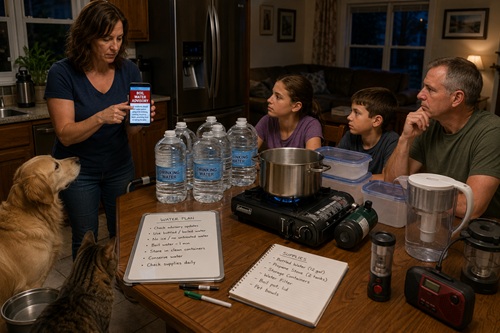
Imagine it is 7:15 on a Wednesday evening when a notification appears on your phone announcing that your municipality has issued an immediate boil water advisory following a major water main break. Officials have confirmed that all residents should boil water before using it for drinking, cooking, brushing their teeth, preparing food, or caring for pets. Repair crews have already begun working, but they cannot estimate when normal service will be restored.
Your household consists of four people, one dog, and one cat. You have approximately twelve gallons of bottled water in storage, a portable propane stove with two full cylinders, several clean food-grade storage containers, and a portable water filter. Although your emergency supplies are reasonably well organized, this is the first time your family has experienced a boil water advisory.
Rather than rushing to the grocery store, begin by confirming the advisory through your municipal water provider or local public health authority. Read the announcement completely so you understand exactly what actions are required. Once you have verified the information, gather everyone in the household and explain the situation. Let each person know where safe drinking water will be stored, what changes need to be made immediately, and how the household will operate until the advisory has been lifted.
Work through your home one room at a time. Empty reusable water bottles that contain untreated tap water, turn off the automatic ice maker, prepare safe drinking water for each bathroom, refill pet water bowls using bottled water, and inspect appliances such as coffee makers, refrigerator water dispensers, and humidifiers that normally rely on tap water. Taking these steps early prevents accidental exposure while allowing your household to transition smoothly into its emergency routine.
After your home has been secured, inspect your emergency water supply and estimate how long it will support your family. Rather than waiting until supplies begin running low, begin producing your first batch of boiled drinking water while conditions remain calm. Building a reserve early reduces pressure later and provides additional flexibility if the advisory lasts longer than expected.
When you finish the exercise, take a few moments to evaluate your response. Consider whether everyone knew where emergency supplies were located, whether household responsibilities were clearly understood, whether the response could have been completed more efficiently, and whether additional equipment would have made the process easier. Every observation provides another opportunity to strengthen your preparedness before facing an actual emergency.
Common Mistakes Review
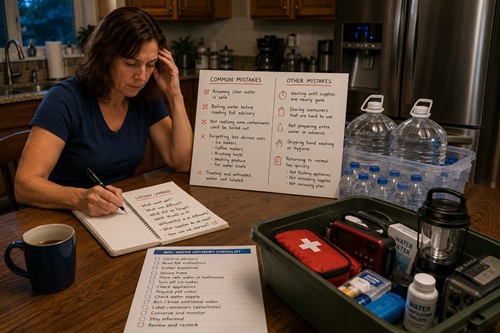
Most difficulties experienced during a boil water advisory are not caused by a lack of information but by simple oversights and everyday habits. People naturally return to familiar routines during stressful situations, making it surprisingly easy to forget that the water flowing from the tap should no longer be used without treatment.
One of the most common mistakes is assuming that clear water is automatically safe to drink. Many people also begin boiling water before reading the complete advisory, unaware that some emergencies involve contaminants that boiling cannot remove. Others remember to avoid drinking tap water but overlook less obvious uses such as refrigerator water dispensers, automatic ice makers, coffee makers, brushing teeth, washing fresh produce, or filling pet water bowls.
Confusion can also occur when treated and untreated water are stored in similar containers without proper labels. During a busy household routine, it becomes easy to grab the wrong container without realizing the mistake. Waiting until emergency water supplies are nearly exhausted before preparing additional drinking water is another common error that creates unnecessary stress and increases the likelihood of poor decisions.
Recovery presents its own challenges. Once the advisory has ended, many households immediately return to normal routines without flushing appliances, replenishing emergency supplies, or reviewing what they learned from the experience. Taking time to evaluate your response, replace used supplies, and improve your emergency plan ensures that each boil water advisory leaves your household better prepared than before.
Recognizing these common mistakes before an emergency occurs greatly reduces the likelihood that your household will experience them during an actual boil water advisory. Good preparedness is often less about doing extraordinary things and more about consistently avoiding simple mistakes.
Preparedness Action Plan
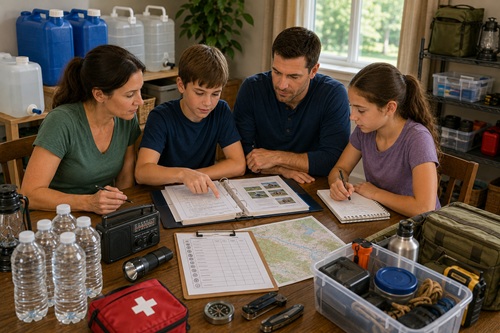
Completing this training lesson is only the first step toward improving your household’s water preparedness. Real preparedness is developed by applying what you have learned through regular practice and gradual improvements over time. Rather than attempting to accomplish everything at once, focus on making one meaningful improvement at a time. Small, consistent actions are far more effective than ambitious plans that are never completed.
Begin by evaluating your current emergency water supply. Determine how much safe drinking water you already have stored and compare it with your household’s daily requirements. If your supply would support your family for only a short period, establish a realistic goal for expanding it over the coming weeks or months. Building your emergency water reserve gradually makes the process more affordable while steadily increasing your preparedness.
Next, inspect the equipment you would rely upon during a boil water advisory. Locate your cooking pots, emergency stove, fuel supply, storage containers, funnels, water filters, purification tablets, and any other equipment you intend to use. Verify that everything is clean, in good working condition, and stored where it can be quickly located. If any essential equipment is missing or damaged, make a plan to replace it before an emergency occurs.
Take time to practice producing safe drinking water. Fill a pot with water, bring it to a rolling boil, allow it to cool, and transfer it into clean storage containers just as you would during an actual advisory. This simple exercise helps you become familiar with your equipment while identifying problems before they occur during a real emergency. It also allows you to estimate how much fuel is required and how long the process takes.
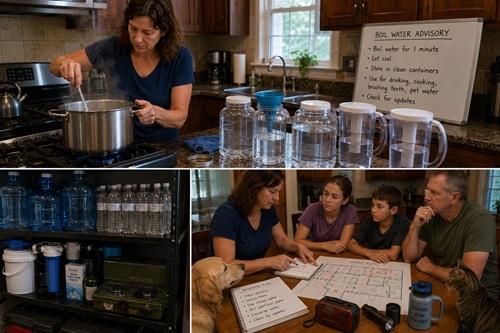
Review your household response plan with every member of the family. Everyone should know where emergency water is stored, how additional water will be prepared, and what changes will be made throughout the home if a boil water advisory is issued. Children should understand which water is safe to drink and when they should ask an adult for assistance. The more familiar everyone becomes with the plan, the more smoothly your household will respond during an actual emergency.
As your preparedness improves, begin expanding your long-term water resilience. Consider increasing your emergency water storage, learning additional purification methods, improving your backup cooking capability, or exploring practical water collection options appropriate for your area. Every additional layer of preparedness reduces dependence on a single system while increasing your household’s ability to adapt to changing conditions.
Preparedness should also become an ongoing habit rather than a one-time project. Schedule a time each year to inspect your stored water, rotate supplies, test emergency equipment, and practice your household response plan. Regular maintenance keeps your equipment ready while ensuring that important skills remain familiar.
Finally, choose one practical improvement you can complete within the next week. That improvement may be purchasing another water storage container, organizing emergency supplies, practicing with your portable stove, updating your emergency contact information, or conducting the household exercise described earlier in this lesson. Completing even one small task moves your household closer to greater resilience and self-reliance.
Every emergency provides an opportunity to learn, improve, and become better prepared for the future. The objective is not to eliminate every possible risk but to build the knowledge, skills, and confidence needed to respond effectively whenever safe drinking water becomes uncertain.
Skills Learned
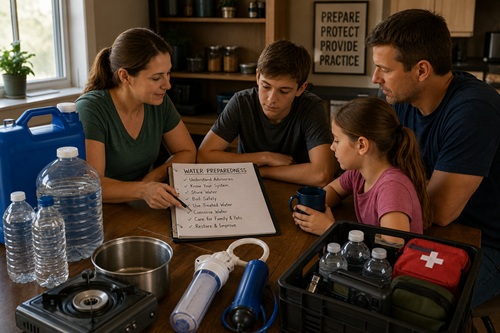
After completing this training lesson, you should have developed a thorough understanding of how boil water advisories occur, why they are issued, and how they affect the many ways your household depends upon safe drinking water every day.
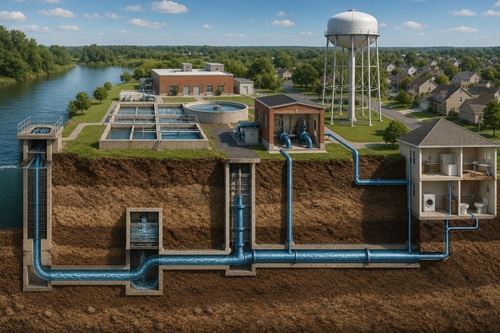
You have learned how municipal drinking water systems operate, how contamination can occur, and why public health officials sometimes issue precautionary advisories before laboratory testing has been completed. Understanding these principles provides the foundation for making informed decisions whenever a boil water advisory is announced.
You should now understand how to evaluate your household’s daily water requirements, build and maintain an emergency water supply, organize water storage, safely boil and store drinking water, and use treated water correctly throughout your home. These practical skills allow your household to continue functioning safely during both short-term advisories and extended disruptions.
You have also learned how to conserve drinking water during prolonged emergencies, care for children, older adults, pets, and individuals with medical needs, restore your household after an advisory has ended, and use every emergency as an opportunity to strengthen your long-term preparedness. These lessons extend far beyond boil water advisories and apply to many other emergencies that interrupt access to safe drinking water.
Perhaps most importantly, you should now recognize that water preparedness is built before an emergency occurs. Safe drinking water is not simply something to store—it is a capability that combines planning, organization, equipment, practical skills, and regular practice. Every improvement you make strengthens your household’s ability to remain healthy, organized, and self-reliant when normal infrastructure is disrupted.
Preparedness is not measured by how much equipment you own or how many supplies you store. It is measured by your ability to solve problems calmly, make informed decisions, and adapt when circumstances change. Every emergency water container you fill, every purification method you practice, every family discussion you hold, and every lesson you complete builds another layer of resilience.
By applying the knowledge and skills presented throughout this lesson, you are taking meaningful steps toward protecting your household not only during a boil water advisory but during many other emergencies where access to safe drinking water may become uncertain. Like every preparedness skill, water resilience is developed gradually. Continue learning, continue practicing, and continue improving. The confidence you build today may become one of your household’s greatest strengths during tomorrow’s emergency.
© Prepping Communities. This content is for informational purposes only and not professional advice. Use at your own risk.
Terms | Privacy | Guidelines