
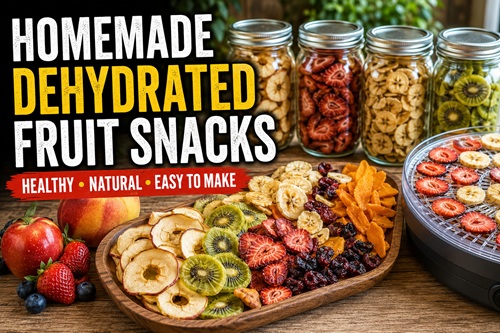
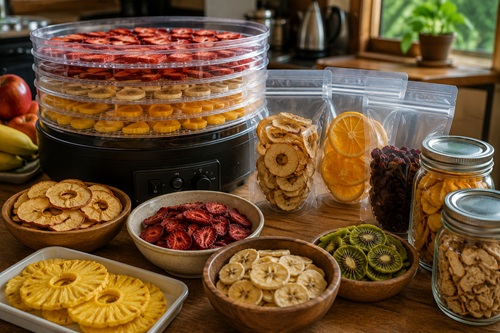
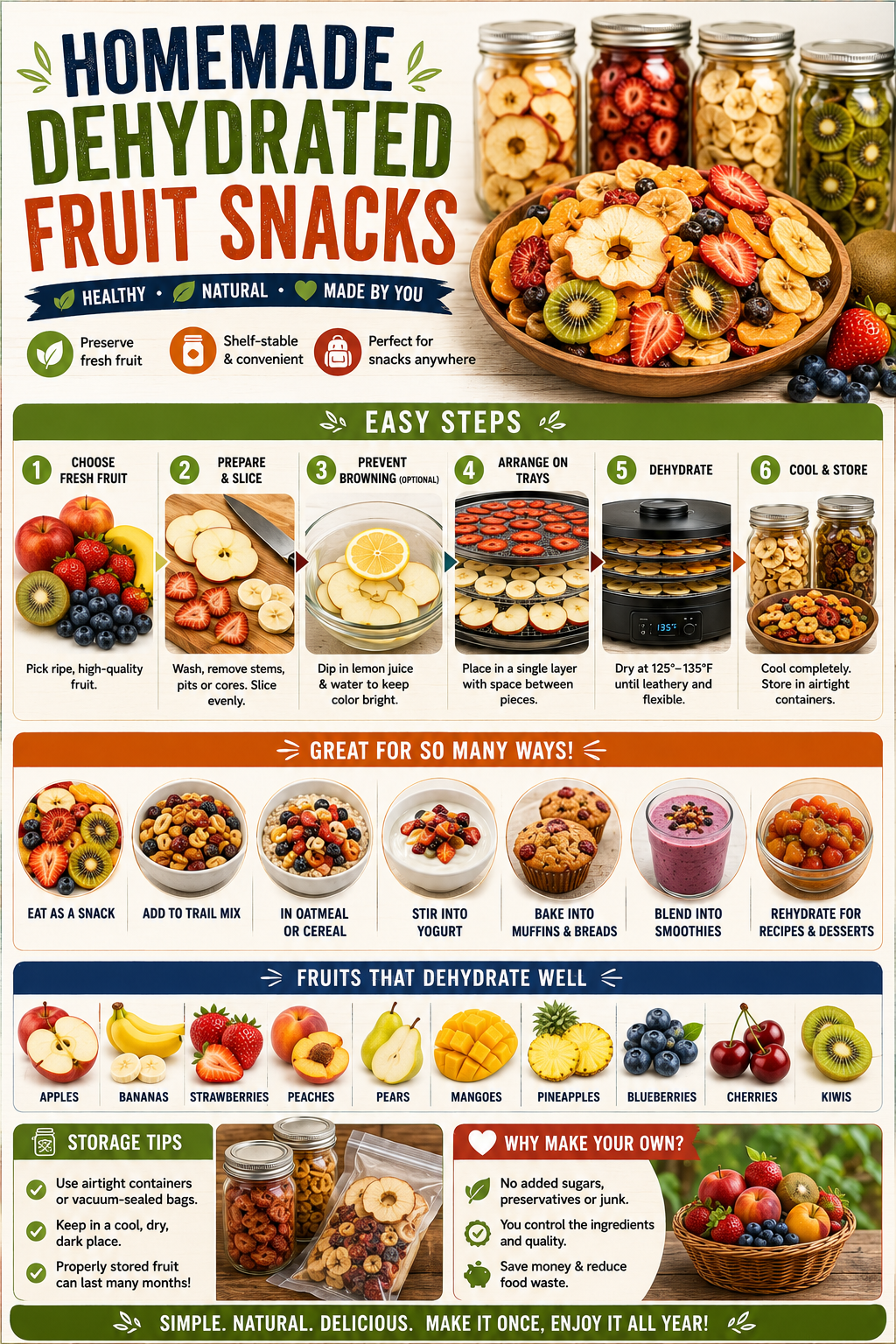
Homemade dehydrated fruit snacks are one of the simplest ways to preserve fresh fruit while creating a healthy, shelf-stable snack. Drying removes most of the moisture that causes spoilage, allowing fruit to be stored for extended periods while concentrating its natural sweetness. Whether you’re preserving a bumper crop from your garden, taking advantage of seasonal sales, or reducing food waste, dehydrating fruit is an easy skill that pays dividends throughout the year.
One of the greatest advantages of making your own fruit snacks is knowing exactly what goes into them. Unlike many commercially produced dried fruits, homemade versions can be prepared without added sugars, artificial colors, preservatives, or other unnecessary ingredients. The result is a naturally sweet snack that is convenient for lunches, hiking, camping, road trips, emergency kits, or everyday eating.
Many fruits dehydrate exceptionally well. Apples, bananas, strawberries, peaches, pears, mangoes, pineapples, blueberries, cherries, and kiwis all develop rich flavors during the drying process. Choosing ripe, high-quality fruit will produce the best finished product. Wash the fruit thoroughly, remove stems, pits, or cores as needed, and slice it into evenly sized pieces so everything dries at a similar rate.
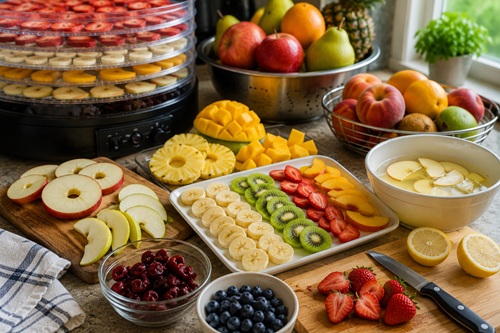
Some fruits, particularly apples, pears, bananas, and peaches, may darken after being cut. To help preserve their appearance, briefly dip the slices in a mixture of lemon juice and water before placing them in the dehydrator. Although this step is optional, it helps maintain a brighter color during drying and storage.
Arrange the fruit in a single layer on dehydrator trays, leaving small spaces between the pieces to allow air to circulate freely. Most fruits dry best between 125°F and 135°F (52°C–57°C), although drying times vary depending on the fruit, slice thickness, humidity, and the dehydrator being used. Begin checking for doneness near the lower end of the recommended drying time. Properly dried fruit should feel leathery and flexible without being sticky or containing visible moisture.
Once the fruit has cooled completely, store it in airtight containers or vacuum-sealed bags. Glass jars with tight-fitting lids also work well. Keep the containers in a cool, dry, and dark location to maximize shelf life. Properly dried and stored fruit can remain in excellent condition for many months, making it a valuable addition to both your everyday pantry and your long-term food storage.
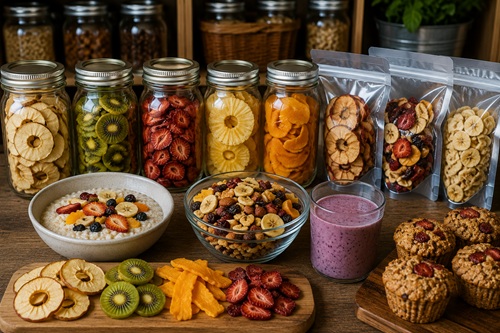
Dehydrated fruit is remarkably versatile. It can be eaten as a quick snack, added to homemade trail mixes, mixed into oatmeal or cereal, stirred into yogurt, baked into muffins and breads, blended into smoothies, or rehydrated for use in desserts, sauces, and baked recipes. Because the fruit becomes lighter and more compact after drying, it is also ideal for backpacking and emergency food supplies where weight and storage space matter.
Fruits That Dehydrate Well
- Apples
- Bananas
- Strawberries
- Blueberries
- Peaches
- Pears
- Cherries
- Mangoes
- Pineapple
- Kiwi
- Apricots
- Plums
- Nectarines
- Grapes (raisins)
- Cranberries
Tips for Success
- Select ripe, high-quality fruit.
- Slice fruit into uniform thickness for even drying.
- Avoid overlapping pieces on dehydrator trays.
- Check periodically near the end of the drying time.
- Cool completely before storing.
- Store in airtight containers in a cool, dark place.
Preparedness Tip
Learning to dehydrate fruit is an excellent preparedness skill because it extends the life of seasonal produce while reducing waste. During years of abundant harvests or when fruit is available at low prices, dehydrating allows you to preserve nutritious food that requires very little storage space. Combined with canning, freezing, and other preservation methods, dehydration helps create a diverse and resilient pantry that can support your household throughout the year.
In Summary
Homemade dehydrated fruit snacks are easy to prepare, economical, and highly versatile. With fresh fruit, a dehydrator, and proper storage techniques, you can create nutritious snacks that are ready whenever you need them. As with many preparedness skills, each batch you make builds experience while helping you make better use of the food available to your family.
© Prepping Communities. This content is for informational purposes only and not professional advice. Use at your own risk.
Terms | Privacy | Guidelines