
A Traditional Pantry Syrup for Cold and Flu Season
Most preparedness discussions focus on food storage, water filtration, backup power, and emergency supplies. Those things are important, but there is another side of preparedness that often gets overlooked—having simple, familiar remedies on hand when someone in the household starts feeling under the weather.
For generations, people made use of ingredients already available in the kitchen or garden. Long before pharmacies were open around the clock, households relied on honey, herbs, roots, and seasonal produce to create teas, syrups, and tonics that provided comfort during cold weather and seasonal illnesses.
This Sage, Lemon, Red Onion, Ginger, and Honey Elixir follows that same tradition.
It isn’t a miracle cure, and it shouldn’t replace professional medical care when needed. What it does provide is a flavorful syrup made from ingredients that have been valued for generations and are commonly found in preparedness pantries, homestead kitchens, and herb gardens.
Why These Ingredients?
One of the reasons this recipe has remained popular is that each ingredient contributes something different.
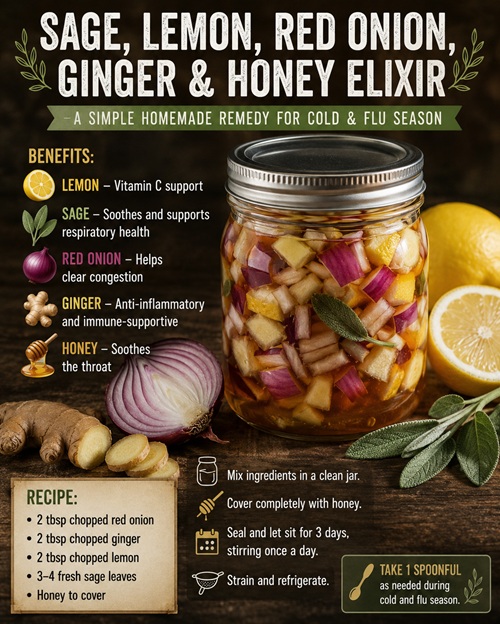
Honey provides sweetness and acts as the base of the syrup. Ginger adds warmth and spice. Lemon contributes brightness and acidity. Sage brings a distinctive herbal flavor, while red onion adds depth and releases its juices into the mixture as it rests.
After a few days, these ingredients combine into a syrup that tastes very different from any one ingredient alone.
The first thing most people notice is how much thinner the honey becomes. That’s completely normal. The moisture released from the onion, lemon, and ginger gradually mixes with the honey, creating a pourable syrup that is easy to use.
Ingredients
- 2 tablespoons finely chopped red onion
- 2 tablespoons finely chopped fresh ginger
- 2 tablespoons chopped lemon
- 3 to 4 fresh sage leaves
- Raw honey, enough to fully cover the ingredients
Equipment
- Small glass jar with lid
- Cutting board
- Sharp knife
- Fine mesh strainer
Instructions
Step 1: Prepare the Ingredients
Wash the lemon and sage thoroughly.
Finely chop the onion, ginger, and lemon. The smaller pieces allow the honey to draw out more flavor and moisture during the infusion process.
Lightly bruise the sage leaves by pressing them between your fingers before adding them to the jar.
Step 2: Fill the Jar
Place all ingredients into a clean glass jar.
You don’t need to pack everything tightly. Simply distribute the ingredients evenly throughout the container.
Step 3: Add the Honey
Pour raw honey over the mixture until all ingredients are completely covered.
Use a spoon to gently stir and remove any trapped air pockets.
Step 4: Let Time Do the Work
Seal the jar and place it in a cool location away from direct sunlight.
Over the next three days, the honey will slowly draw moisture and flavor from the ingredients. You may notice small bubbles, thinning honey, or slight separation within the jar. These are normal changes.
Give the jar a gentle turn or stir once each day.
Step 5: Strain and Store
After approximately three days, strain the mixture through a fine mesh strainer.
Transfer the finished syrup to a clean container and store it in the refrigerator.
What Does It Taste Like?
Many people expect the onion to overpower the mixture, but that rarely happens.
Instead, the finished syrup develops a balance of sweet, herbal, citrus, and mildly spicy flavors. The ginger and sage are usually the most noticeable, while the onion contributes more depth than intensity.
If you’ve never tried a honey-based infusion before, the flavor may surprise you.
How to Use It
Many people simply take a spoonful when they want a soothing syrup during cold weather.
Others stir it into warm water, herbal tea, or hot lemon drinks.
Because the flavor is fairly concentrated, a small amount is usually enough.
Preparedness Benefits
Recipes like this are not just about wellness. They are also about self-reliance.
Many preparedness-minded families look for ways to make practical use of ingredients already in their pantry, garden, or food stores. Learning simple food preservation and infusion techniques helps develop skills that can be applied to many other projects.
This recipe also demonstrates how a handful of common ingredients can be transformed into something with a long history of household use.
In a world where convenience often replaces knowledge, there is value in understanding how previous generations made use of what they had available.
A Few Practical Notes
- Raw honey generally produces the best flavor.
- Fresh ginger works better than dried ginger powder.
- Organic lemons are preferred if using the peel.
- If the honey crystallizes, allow it to warm naturally at room temperature.
- Always use a clean spoon when serving.
Final Thoughts
Not every preparedness skill involves building a shelter, storing hundreds of gallons of water, or maintaining emergency equipment.
Sometimes preparedness means knowing how to use simple ingredients effectively.
This Sage, Lemon, Red Onion, Ginger, and Honey Elixir is easy to make, requires no specialized equipment, and draws on traditions that have been passed down through generations. Whether you keep it on hand during cold weather, add it to your homestead recipe collection, or simply enjoy learning traditional kitchen skills, it’s a practical reminder that some of the most useful preparations start with the basics.
A well-stocked pantry is valuable. Knowing how to use what’s in it is even better.
© Prepping Communities. This content is for informational purposes only and not professional advice. Use at your own risk.
Terms | Privacy | Guidelines