
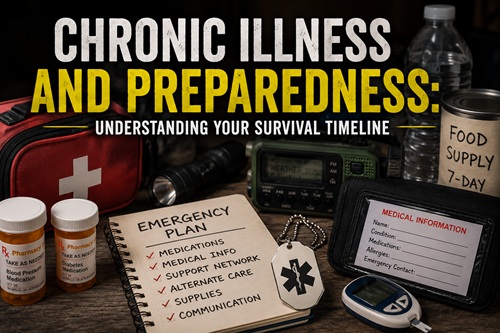
Most preparedness advice assumes that everyone starts from the same place.
The typical survival article talks about bug-out bags, wilderness shelters, water filters, hunting, and living off the land for months or even years. While that may work as a thought exercise, it ignores a reality that affects millions of people.
Many individuals live every day with conditions that require medication, medical equipment, regular treatments, specialized diets, or ongoing monitoring.
For them, preparedness looks very different.
If you have diabetes, kidney disease, heart disease, severe asthma, COPD, epilepsy, cancer, autoimmune disorders, or another chronic condition, your preparedness plan cannot be based on someone else’s assumptions.
It has to be based on your timeline.
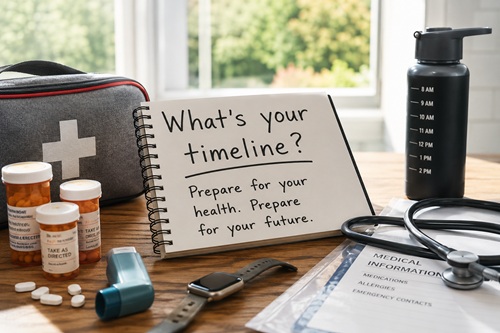 The Most Important Question
When preppers discuss emergency planning, they often ask:
“How long could I survive?”
For someone living with a chronic illness, the better question is:
“How long can I safely function if access to healthcare suddenly disappears?”
The answer may be measured in months.
It may be measured in weeks.
In some cases, it may be measured in days.
Understanding that reality is not pessimistic. It is the foundation of practical preparedness.
A person who requires daily medication has different needs than someone who can go without it.
A person who relies on oxygen equipment faces different challenges than someone managing high blood pressure.
A person receiving dialysis operates under entirely different constraints than someone managing mild asthma.
Preparedness begins by understanding those differences.
Why Generic Survival Advice Often Fails
Many preparedness articles are written from the perspective of healthy individuals.
The advice often assumes you can walk long distances, carry heavy loads, sleep outdoors, perform physically demanding tasks, and go for extended periods without medical care.
For many people, these assumptions simply aren’t realistic.
A person recovering from chemotherapy may not have the physical reserves required for a wilderness evacuation.
A person with severe rheumatoid arthritis may struggle with mobility.
Someone with advanced COPD may find smoke, dust, or poor air quality far more dangerous than food shortages.
Preparedness planning becomes much more effective when it starts with your actual circumstances instead of an idealized scenario.
The goal is not to prepare for someone else’s emergency.
The goal is to prepare for yours.
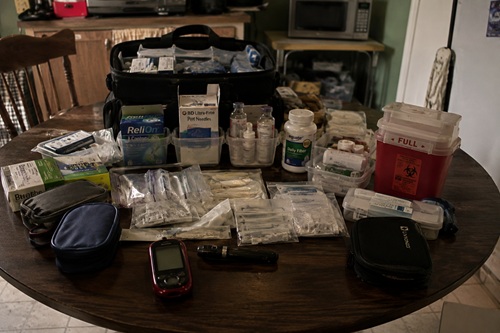
The Reality of Diabetes During a Disaster
Consider two people with diabetes.
One manages Type 2 diabetes primarily through diet and oral medications.
The other relies on insulin multiple times per day.
Both have diabetes, but their timelines are dramatically different.
The first individual may be able to adapt temporarily if medications become difficult to obtain.
The second may face serious complications much sooner if insulin supplies are interrupted.
This doesn’t mean preparedness is impossible.
It means preparedness should focus on extending available options.
Extra supplies.
Backup storage methods.
Alternative pharmacies.
Emergency transportation plans.
Copies of prescriptions.
Every layer of redundancy buys time.
And time is often the most valuable resource during a crisis.
For many people with chronic illness, preparedness isn’t measured by how much gear they own.
It’s measured by how many days, weeks, or months they can safely extend their timeline.
When Medical Equipment Becomes the Weak Point
Many preparedness discussions focus on food and water.
For some individuals, electricity may be the bigger concern.
Medical devices can include:
- Oxygen concentrators
- CPAP machines
- Nebulizers
- Mobility equipment
- Refrigerated medications
- Home monitoring systems
A prolonged power outage can quickly become a medical emergency.
Imagine having a pantry full of food, plenty of water, and a secure home, only to discover that the equipment supporting your health no longer functions.
This is why backup power planning is often just as important as food storage.
Portable power stations.
Generators.
Battery backups.
Solar charging systems.
Even modest backup systems can dramatically increase resilience during emergencies.
Dialysis: One of the Hardest Preparedness Challenges
Among chronic illnesses, dialysis dependency presents one of the most difficult preparedness scenarios.
A person receiving hemodialysis often depends on:
- Specialized facilities
- Clean water
- Electricity
- Transportation
- Trained medical personnel
If any one of those systems fails, treatment may be interrupted.
This is why dialysis patients often focus heavily on evacuation planning rather than shelter-in-place planning.
Knowing where alternative treatment centers are located can be just as important as storing supplies.
Many disaster survivors report that transportation disruptions created more problems than the disaster itself.
A mapped route is a preparedness resource.
An alternate treatment facility is a preparedness resource.
A trusted driver is a preparedness resource.
Preparedness is not always something you store on a shelf.
Sometimes preparedness is a relationship.
Sometimes it’s a phone number.
Sometimes it’s a backup plan.
The Caregiver Factor
One aspect of preparedness that is frequently overlooked is the caregiver.
Many people with chronic illnesses rely on spouses, children, relatives, friends, or professional caregivers.
If that caregiver becomes unavailable, the situation can quickly become complicated.
Ask yourself:
Who understands my medications?
Who knows my treatment schedule?
Who can communicate with medical professionals if I cannot?
Who knows where my records are located?
Who can help me evacuate?
Who can step in if my primary caregiver is unavailable?
The best preparedness plans are never dependent on a single individual.
Redundancy matters for people just as much as it matters for equipment.
Building a Medical Information Package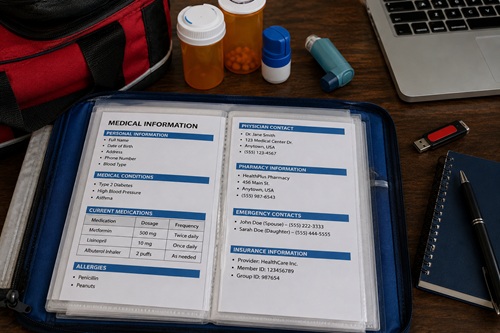
One of the simplest preparedness steps is also one of the most valuable.
Create a medical information package.
Include:
- Medical conditions
- Current medications
- Dosages
- Allergies
- Physician contact information
- Pharmacy information
- Emergency contacts
- Insurance details
Keep copies in multiple locations.
Store one at home.
Carry one in your emergency kit.
Provide one to a trusted family member.
Store a digital copy on a secure device or encrypted storage solution.
In an emergency, information often becomes as important as supplies.
A complete medical file can save valuable time when every minute matters.
Community May Be Your Greatest Resource
Many preparedness discussions focus heavily on self-sufficiency.
The reality is that medically vulnerable individuals often survive disasters because of community.
Neighbors check on them.
Family members provide transportation.
Friends pick up medications.
Volunteers assist with evacuations.
Medical staff work extended hours to keep services running.
Disasters repeatedly demonstrate that people survive through cooperation far more often than isolation.
This can be difficult for some preppers to accept because preparedness culture often emphasizes independence.
But independence and community are not opposites.
The strongest preparedness plans usually include both.
For someone living with a chronic illness, community is not a luxury.
It is part of the preparedness plan.
 Preparedness Is About Options
If you live with a chronic illness, preparedness is not about surviving forever without help.
It is about creating options before you need them.
Options when the pharmacy is closed.
Options when roads are blocked.
Options when power outages last longer than expected.
Options when supply chains are disrupted.
Options when medical appointments are cancelled.
Options when healthcare systems become overwhelmed.
Every additional week of medication creates another option.
Every backup power source creates another option.
Every alternative treatment location creates another option.
Every copy of your medical records creates another option.
Every trusted friend, family member, neighbor, or preparedness group that understands your situation creates another option.
The reality is that no amount of preparation can eliminate every risk associated with chronic illness.
But preparation can reduce vulnerabilities, increase flexibility, and buy valuable time during a crisis.
Many people view preparedness as stockpiling supplies.
In reality, preparedness is often about understanding dependencies and planning for their failure.
The individual who understands their condition, knows their limitations, maintains backup plans, and builds strong community connections is often far better prepared than someone with a garage full of gear but no realistic plan.
Preparedness isn’t about fear.
It’s about recognizing reality, planning ahead, and giving yourself the greatest number of choices when circumstances become difficult.
For those living with chronic illness, every option matters.
And every option you build today may become critical tomorrow.
© Prepping Communities. This content is for informational purposes only and not professional advice. Use at your own risk.
Terms | Privacy | Guidelines