
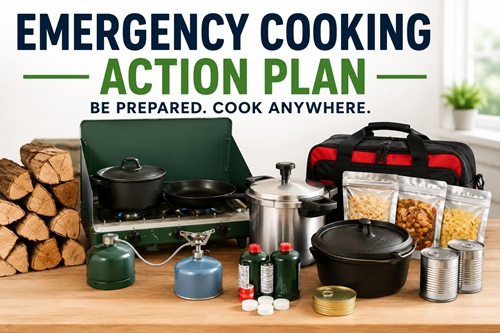
Preparedness Action Plan: Emergency Cooking
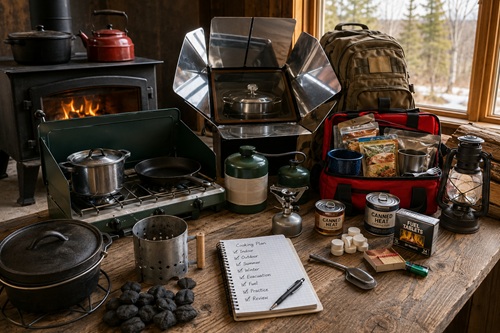
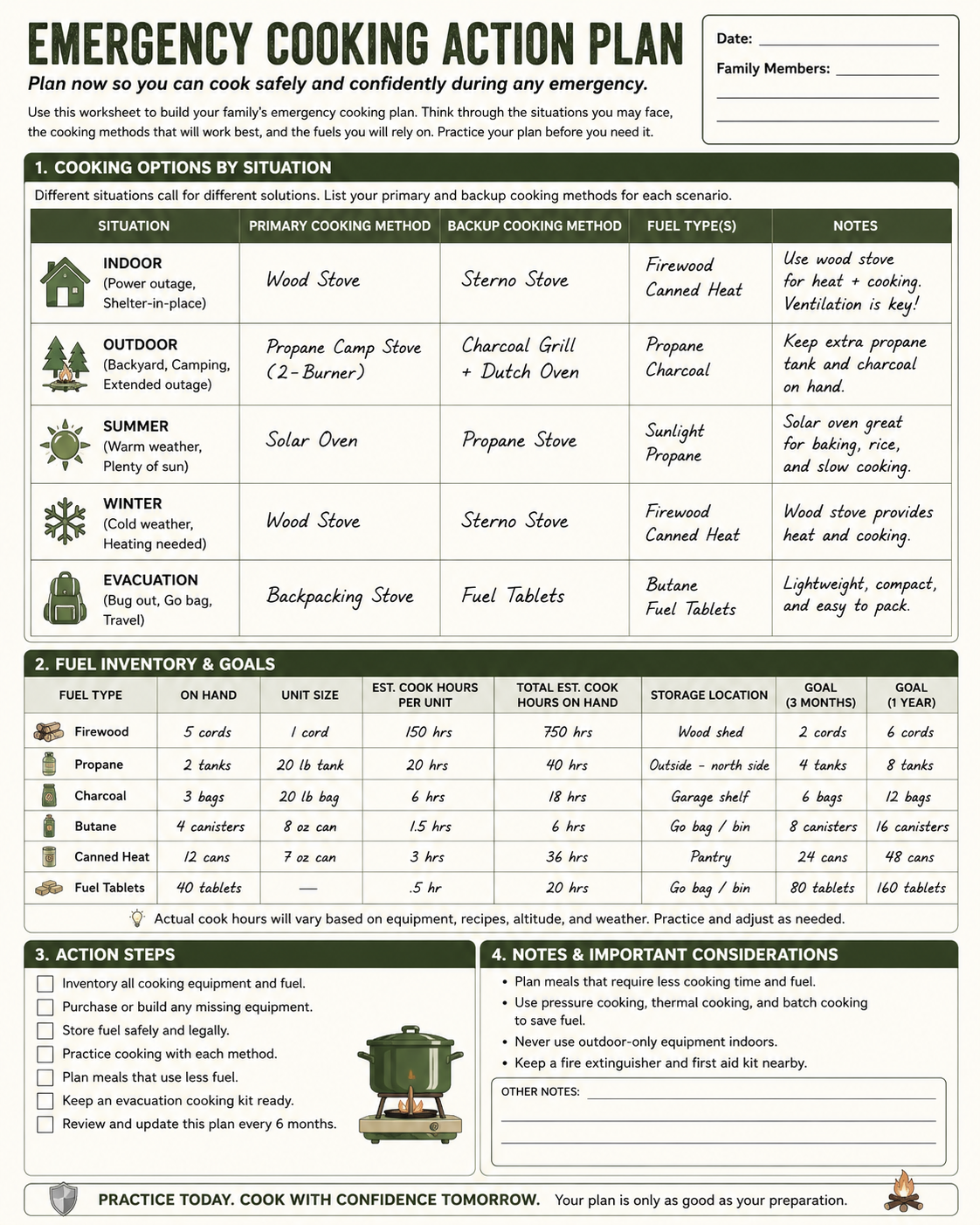
Every family should develop an emergency cooking plan before an emergency ever occurs. Start by thinking through the situations that are most likely to affect your household. A brief power outage during the summer may only require a small propane stove on the patio, while a prolonged winter outage could require a completely different approach that provides both heat and a way to prepare meals. If evacuation becomes necessary, you may have to leave larger equipment behind and rely on a compact backpacking stove or fuel tablets. Walking through each of these scenarios ahead of time helps identify gaps in your preparedness while there is still time to correct them.
As an example, a family living in a cold northern climate might decide that their primary indoor cooking method during winter will be a wood-burning stove because it provides both heat and a cooking surface. During warmer months, they may prefer to cook outside using a two-burner propane camp stove, reserving charcoal and Dutch ovens for meals that require baking or slow cooking. When sunshine is abundant, a solar oven becomes another valuable option because it requires no stored fuel at all. If they ever need to evacuate, they keep a lightweight backpacking stove, fuel canisters, a small cooking pot, utensils, and dehydrated meals packed together in a grab-and-go emergency kit.
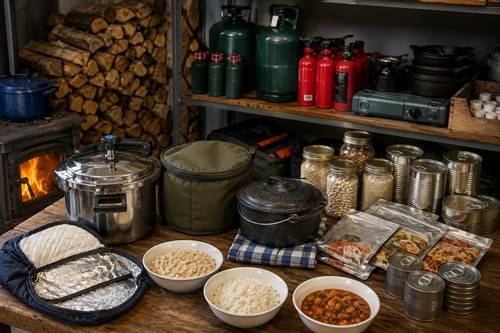
Fuel planning is equally important. Rather than depending on a single fuel source, this family stores several different types. Firewood provides long-term cooking and heating throughout the winter, propane supports routine outdoor cooking, charcoal is reserved for grilling and Dutch oven meals, while butane canisters and fuel tablets remain packed with portable emergency equipment. By spreading their cooking capability across multiple fuels, they reduce the risk of losing all cooking capability if one fuel becomes unavailable.
Fuel Planning Guide
| Fuel Type | Typical Uses | Advantages | Things to Remember |
|---|---|---|---|
| Firewood | Heating & cooking | Renewable, provides heat | Requires dry storage |
| Propane | Everyday emergency cooking | Clean, reliable | Store cylinders safely |
| Butane | Portable stoves | Lightweight | Less effective in very cold temperatures |
| Charcoal | Dutch ovens & grilling | Excellent for baking | Takes time to ignite |
| Fuel Tablets | Bug-out kits | Compact & lightweight | Best for small meals |
| Solar | Sunny days | No stored fuel required | Weather dependent |
Meal planning should also become part of your action plan. Foods that require long cooking times consume considerably more fuel than canned foods, dehydrated meals, instant rice, oatmeal, or freeze-dried foods. Pressure cookers, thermal cooking, insulated cooking bags, and one-pot meals all help reduce fuel consumption while making meal preparation easier. As you build your food storage, think not only about what your family enjoys eating but also about how much fuel will be required to prepare those meals during an emergency.
No emergency cooking plan is complete without regular practice. Choose one evening each month to prepare an entire family meal without using your household kitchen appliances. Experiment with different stoves, fuels, and recipes until everyone becomes comfortable with the equipment. Keep track of how much fuel you actually consume, how long different meals take to prepare, and what improvements could make the process easier. These practice sessions provide valuable experience while revealing problems long before they become emergencies.
Quick Reference: Emergency Cooking Plan
| Emergency Scenario | Primary Cooking Method | Backup Method | Fuel Source | Best Meal Types |
|---|---|---|---|---|
| Short Power Outage | Propane Camp Stove | Butane Stove | Propane / Butane | Soups, pasta, canned meals |
| Winter Outage | Wood Stove | Dutch Oven | Firewood | Stews, bread, hot drinks |
| Outdoor Cooking | Camp Stove | Charcoal Grill | Propane / Charcoal | Full family meals |
| Sunny Weather | Solar Oven | Propane Stove | Sunlight | Rice, casseroles, bread |
| Evacuation | Backpack Stove | Fuel Tablets | Butane / Fuel Tablets | Freeze-dried meals, oatmeal |
Finally, review your emergency cooking plan at least once each year. As your family grows, your equipment changes, or your food storage expands, your cooking strategy should evolve as well. The goal is not simply to own emergency cooking equipment but to develop a reliable system that allows you to prepare safe, nutritious meals regardless of whether you are sheltering at home, cooking outdoors, or evacuating. Every improvement you make today increases your confidence and strengthens your family’s ability to remain comfortable and self-reliant during difficult circumstances.
Emergency Cooking Checklist
☐ Indoor cooking method available
☐ Outdoor cooking method available
☐ Backup cooking method available
☐ Fuel stored safely
☐ Seven-day fuel supply
☐ One-month fuel supply
☐ Evacuation cooking kit ready
☐ Family has practiced using all cooking equipment
☐ Fire extinguisher nearby
☐ Cooking equipment inspected regularly
© Prepping Communities. This content is for informational purposes only and not professional advice. Use at your own risk.
Terms | Privacy | Guidelines