
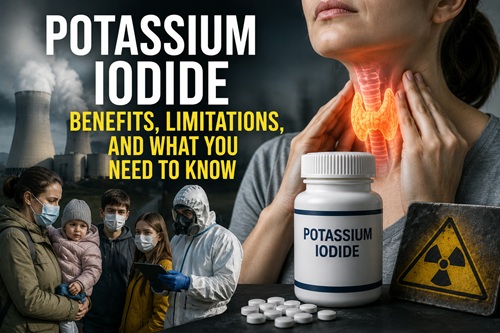
Potassium iodide (KI) is one of the most widely discussed medications associated with nuclear accidents and radiation emergencies. Public interest in the medication often increases following reports of reactor incidents, nuclear accidents, or concerns about radioactive contamination.
Despite its visibility during such events, potassium iodide remains widely misunderstood. Many people mistakenly believe it provides broad protection against radiation exposure or can prevent radiation sickness. In reality, its protective capabilities are highly specific and limited to a particular type of radioactive exposure.
Understanding what potassium iodide is, how it works, and when it may be beneficial is important for anyone seeking accurate information about radiation protection.
 What Is Potassium Iodide?
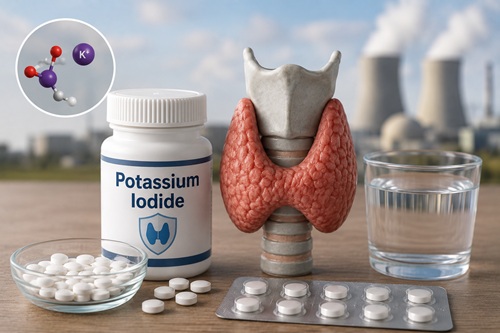
Potassium iodide is a stable, non-radioactive form of iodine.
Iodine is an essential nutrient used by the thyroid gland to produce hormones that regulate metabolism, growth, and numerous other bodily functions. Under normal circumstances, the thyroid absorbs iodine from the bloodstream as needed.
Potassium iodide has been used for decades as a protective measure during certain radiation emergencies involving the release of radioactive iodine.
When taken appropriately, it can help reduce the thyroid’s absorption of radioactive iodine and lower the risk of long-term thyroid damage.
Understanding Radioactive Iodine
Certain nuclear accidents and radiation incidents can release radioactive forms of iodine into the environment.
Radioactive iodine may enter the body through:
- Inhalation of contaminated air
- Consumption of contaminated food
- Consumption of contaminated water
- Exposure to contaminated environmental materials
Once inside the body, radioactive iodine enters the bloodstream and may be absorbed by the thyroid gland.
Because the thyroid actively collects iodine, it can accumulate radioactive iodine in concentrated amounts. This exposure may increase the risk of thyroid abnormalities and thyroid cancer, particularly among children and young adults.
How Potassium Iodide Works
Potassium iodide works by saturating the thyroid gland with stable iodine.
When sufficient stable iodine is present, the thyroid has a greatly reduced ability to absorb additional iodine, including radioactive iodine.
As a result, less radioactive iodine is retained within the gland, reducing potential radiation exposure to thyroid tissue.
This protective mechanism is often referred to as thyroid blocking.
It is important to note that potassium iodide does not remove radioactive materials from the body. Instead, it helps prevent radioactive iodine from being absorbed into the thyroid in the first place.
 Historical Examples
Public awareness of potassium iodide increased significantly following several major nuclear incidents.
Three Mile Island
In 1979, an accident at the Three Mile Island nuclear power plant in Pennsylvania raised public concerns about radiation exposure and emergency preparedness. Although radioactive iodine exposure to the public was limited, the event highlighted the need for emergency response planning around nuclear facilities.
Chernobyl
The 1986 Chernobyl disaster resulted in significant releases of radioactive materials, including radioactive iodine. In areas where protective measures were delayed or unavailable, increased rates of thyroid cancer were later observed, particularly among children exposed during the incident.
Fukushima Daiichi
Following the Fukushima Daiichi nuclear disaster in 2011, demand for potassium iodide increased worldwide. In many regions, pharmacies and suppliers quickly sold out as people sought protective measures despite being far from any meaningful risk of exposure.
These events demonstrated both the importance of public education and the challenges of communicating risk during emergencies.
Common Misconceptions About Potassium Iodide
Misconception: Potassium iodide protects against all radiation
Potassium iodide only helps protect the thyroid gland from radioactive iodine.
It does not protect other organs and does not shield the body from external radiation exposure.
Misconception: Potassium iodide prevents radiation sickness
Radiation sickness can result from exposure to significant levels of radiation affecting multiple organs and body systems.
Potassium iodide does not prevent radiation sickness.
Misconception: Potassium iodide works against all radioactive materials
Many radioactive substances may be present during a nuclear incident.
Potassium iodide is specifically intended to reduce thyroid exposure to radioactive iodine and does not protect against other radioactive isotopes.
Misconception: More potassium iodide provides greater protection
Taking more than the recommended dose does not improve protection and may increase the risk of adverse effects.
Timing Is Critical
The effectiveness of potassium iodide depends heavily on timing.
It is most effective when taken shortly before exposure to radioactive iodine or soon afterward.
Its protective value decreases as time passes because radioactive iodine may already have been absorbed by the thyroid.
For this reason, public health authorities generally provide guidance regarding when potassium iodide should be taken during an emergency.
Potassium iodide should not be viewed as a treatment for radiation exposure. Rather, it is a preventive measure intended to reduce thyroid uptake of radioactive iodine.
 Who May Benefit Most?
The risk of thyroid cancer associated with radioactive iodine exposure is not evenly distributed across all age groups.
The groups generally considered most vulnerable include:
- Infants
- Young children
- Teenagers
- Pregnant women
- Breastfeeding women
- Young adults
Because these populations are at greater risk of thyroid-related health effects, they are often prioritized when potassium iodide distribution is recommended during a radiation emergency.
Safety Considerations
Potassium iodide is generally well tolerated when used appropriately, but it is still a medication and can cause side effects.
Possible adverse reactions may include:
- Nausea
- Stomach discomfort
- Skin irritation
- Allergic reactions
- Swelling of salivary glands
- Changes in thyroid function
Individuals with certain thyroid disorders or iodine sensitivities may face additional risks.
Medical guidance should always be considered when evaluating the use of potassium iodide.
 Important Limitations
While potassium iodide can play an important role during specific radiation emergencies, its limitations are often overlooked.
Potassium iodide:
- Protects only the thyroid gland
- Works only against radioactive iodine
- Does not reverse existing radiation damage
- Does not eliminate radioactive contamination
- Does not protect against other radioactive materials
- Does not replace evacuation or sheltering measures
As a result, potassium iodide should be viewed as one component of a broader public health response rather than a comprehensive protective measure.
Conclusion
Potassium iodide is a specialized medication designed to help protect the thyroid gland from radioactive iodine exposure during certain nuclear and radiation emergencies.
Its effectiveness is well established when used appropriately and within the proper timeframe. However, its benefits are often overstated or misunderstood.
Potassium iodide does not provide general protection against radiation, prevent radiation sickness, or shield the entire body from radioactive contamination. Its role is focused, specific, and dependent on proper use.
Understanding both the capabilities and limitations of potassium iodide helps provide a more accurate perspective on its place within emergency response and public health planning. Accurate information remains one of the most valuable tools available during any emergency, particularly those involving radiation risks.
© Prepping Communities. This content is for informational purposes only and not professional advice. Use at your own risk.
Terms | Privacy | Guidelines