
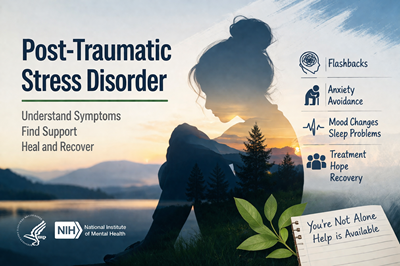
This PDF is a National Institute of Mental Health (NIMH) informational guide titled “Post-Traumatic Stress Disorder (PTSD)”, designed to explain what PTSD is, how it develops, and the ways it can be treated and managed. The document is written in a clear, public-health style format intended for patients, families, and caregivers rather than clinicians, making complex mental health information accessible to a general audience.
The guide begins by explaining that PTSD can develop after exposure to traumatic events such as accidents, violence, disasters, or combat, and emphasizes that while fear and stress are natural responses, PTSD occurs when these reactions persist and interfere with daily life. It outlines how symptoms typically emerge within months of trauma and may include flashbacks, avoidance behaviors, heightened arousal, and negative changes in mood and cognition. The document also explains diagnostic criteria in a structured way, breaking symptoms into clear categories to help readers recognize patterns.
A significant portion of the PDF focuses on how PTSD affects different populations, including children and adolescents, and highlights risk and resilience factors that influence whether someone develops the condition. It also discusses co-occurring conditions such as depression and substance use disorders, showing how PTSD often exists alongside other mental health challenges.
The latter sections provide an overview of treatment options, including psychotherapy (such as cognitive behavioral therapy and exposure therapy) and medications like SSRIs. It also offers practical guidance on coping strategies, self-help techniques, and how to support loved ones experiencing PTSD. Additionally, the document provides links to national resources, crisis support services, and clinical trial information, reinforcing its role as both an educational and support-oriented publication.
National Institute of Mental Health (NIMH) informational guide
© Prepping Communities. This content is for informational purposes only and not professional advice. Use at your own risk.
Terms | Privacy | Guidelines