
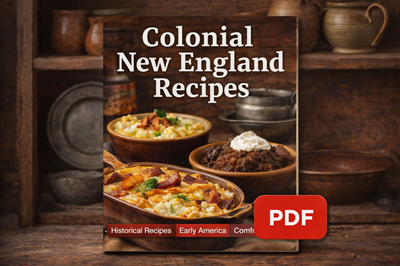
This PDF, titled “Colonial New England Recipes,” is a curated historical cookbook that explores traditional foods and cooking methods from early New England life during the 18th and early 19th centuries. It highlights how colonial communities relied heavily on local ingredients such as corn, potatoes, seafood, maple sugar, and preserved meats, while also incorporating spices and influences brought through expanding trade routes. The document frames food not only as sustenance but as a central part of community gatherings, celebrations, and cultural identity during the colonial period.
A major focus of the PDF is the adaptation of English culinary traditions to early American ingredients and conditions. Dishes such as shepherd’s pie, boiled dinners, chowders, and puddings are presented as early examples of fusion cooking, where European methods were modified using New World crops like maize, squash, and maple sugar. The text emphasizes how colonial cooks had to be resourceful, often relying on slow cooking methods, preserved foods, and seasonal availability to prepare meals for large families and community events.
The cookbook includes a wide variety of step-by-step recipes that reflect both everyday meals and special occasion dishes, including corn chowder, Indian pudding, clam chowder, baked cod, johnnycakes, molasses-based breads, and traditional meat-based stews. Many recipes emphasize practical techniques such as boiling, stewing, baking in slow ovens, and using salt pork or preserved ingredients for flavor and preservation. These recipes demonstrate how early American households maximized limited ingredients to create hearty, calorie-dense meals.
Another key theme is the connection between food, survival, and community resilience, showing how shared meals like boiled dinners and succotash were central to social gatherings and seasonal celebrations. The document also modernizes some recipes for contemporary cooks while preserving historical authenticity, making it both an educational resource and a practical culinary guide. Overall, it serves as a window into early American food culture, blending history, survival cooking, and traditional regional cuisine.
© Prepping Communities. This content is for informational purposes only and not professional advice. Use at your own risk.
Terms | Privacy | Guidelines