
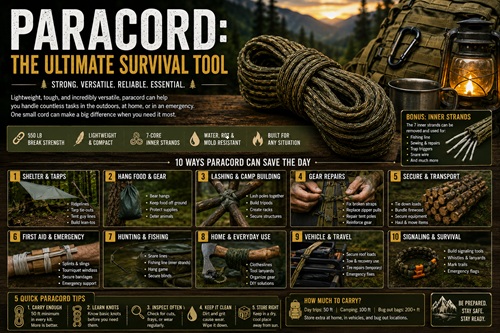
If there is one item that consistently earns its place in a bug out bag, camping pack, vehicle kit, or homestead toolbox, it’s paracord.
Most people look at a bundle of paracord and see nothing more than a piece of rope. Those who spend time outdoors know better. A few lengths of paracord can solve problems that would otherwise leave you wet, cold, frustrated, or stuck.
I’ve seen people use paracord to keep shelters standing during storms, repair broken gear miles from home, secure loads in truck beds, hang food away from wildlife, and even improvise medical equipment during emergencies.
The truth is that you rarely appreciate paracord when everything is going according to plan. You appreciate it when something goes wrong.
What Makes Paracord So Useful?
Paracord was originally designed for military parachutes, which means it was built to be lightweight, compact, and strong.
A standard 550 paracord can support hundreds of pounds while taking up very little space in a pack. Better yet, many types contain several smaller strands inside the outer sheath, giving you multiple pieces of usable cordage in one package.
For something so simple, it offers an incredible amount of flexibility.
Building Shelter
One of the first uses many people discover is shelter building.
A tarp by itself isn’t much help. Add some paracord and suddenly you can create a ridgeline, secure corners, tension a rainfly, or build an emergency lean-to.
When weather turns bad, having the ability to get a shelter up quickly can make a miserable night much more comfortable.
Many experienced campers carry extra paracord specifically for shelter construction because they know storms rarely arrive when it’s convenient.
Hanging Food and Supplies
Anyone who spends time in bear country understands the importance of keeping food away from animals.
Paracord makes it possible to hang food bags between trees and keep supplies off the ground. Even outside bear country, keeping food elevated helps protect it from raccoons, mice, squirrels, and other curious visitors.
It’s a simple skill that can save a lot of headaches.
Camp Construction and Lashing
One of the reasons paracord has remained popular for decades is its ability to secure almost anything.
Need a cooking tripod? Lash a few poles together.
Need a drying rack for wet clothing? Use paracord.
Need to stabilize part of a shelter frame? Paracord can usually handle the job.
Once you learn a few basic knots and lashing techniques, you’ll find yourself using paracord for projects you never considered before.
Emergency Gear Repairs
Things break.
Backpack straps fail. Tent poles crack. Equipment comes loose. Buckles disappear.
Most outdoor enthusiasts eventually experience a gear failure at the worst possible moment.
Paracord won’t permanently fix every problem, but it can often get you through the trip and back home safely. A temporary repair in the field is often far better than having no repair at all.
Moving and Securing Loads
Whether you’re hauling firewood, strapping equipment to an ATV, securing gear in a truck, or organizing supplies around camp, paracord provides an easy solution.
A small bundle of cord weighs almost nothing but can help manage surprisingly heavy loads when used properly.
Many homesteaders keep rolls of paracord in workshops, barns, vehicles, and storage sheds because it gets used so often.
Emergency First Aid Uses
Paracord isn’t medical equipment, but it can be useful in certain situations.
It may help secure an improvised splint, support a temporary sling, or stabilize materials used during an emergency.
Like many preparedness tools, its value comes from versatility rather than specialization.
The Hidden Value of the Inner Strands
One feature many people overlook is the material inside the cord.
The smaller strands can be removed and used for detailed tasks such as sewing repairs, creating fishing lines, securing small items, repairing equipment, or crafting improvised tools.
In a true emergency, that extra flexibility can be extremely valuable.
How Much Should You Carry?
Ask ten experienced preppers and you’ll probably get ten different answers.
Personally, I like having at least 50 feet in a day pack and significantly more in larger kits. It’s inexpensive, lightweight, and useful enough that carrying extra rarely feels like a mistake.
I’ve never heard anyone complain that they brought too much paracord. I’ve heard plenty of people wish they had packed more.
Final Thoughts
Preparedness is often about solving unexpected problems with the resources you have available.
Paracord may not be the most exciting piece of gear in your kit, but it might be one of the most useful.
When equipment breaks, weather changes, loads need securing, shelters need building, or a hundred other small problems appear, paracord often becomes the tool that keeps everything moving forward.
For something so inexpensive and simple, few items offer more value.
That’s why paracord continues to earn a permanent place in bug out bags, camping packs, vehicles, workshops, and preparedness kits around the world.
© Prepping Communities. This content is for informational purposes only and not professional advice. Use at your own risk.
Terms | Privacy | Guidelines