
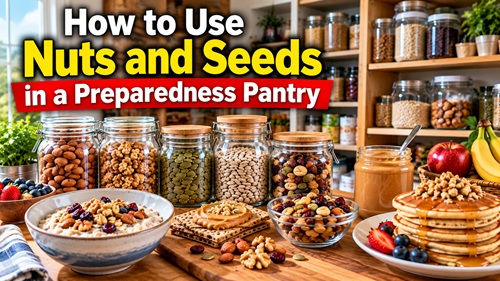
Nuts and seeds are easy to overlook when building emergency food storage. Rice, beans, flour, pasta and canned foods usually get most of the attention, but nuts and seeds can fill an important gap. They provide concentrated calories, fats, protein, fibre and a variety of vitamins and minerals in a food that requires no water, fuel or cooking before it can be eaten.
But there is an important catch. Nuts and seeds should not be treated like rice or dry beans. Their natural oils make them more vulnerable to becoming rancid, particularly when exposed to heat, oxygen and light. That means the goal shouldn’t be to buy a huge quantity and forget about it for years. A better approach is to keep a practical supply, protect it from poor storage conditions and continually rotate it through the foods your household already eats.
Why Nuts and Seeds Matter During an Emergency
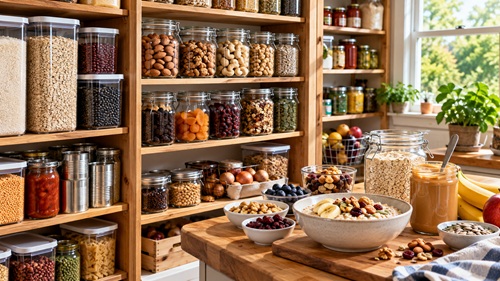
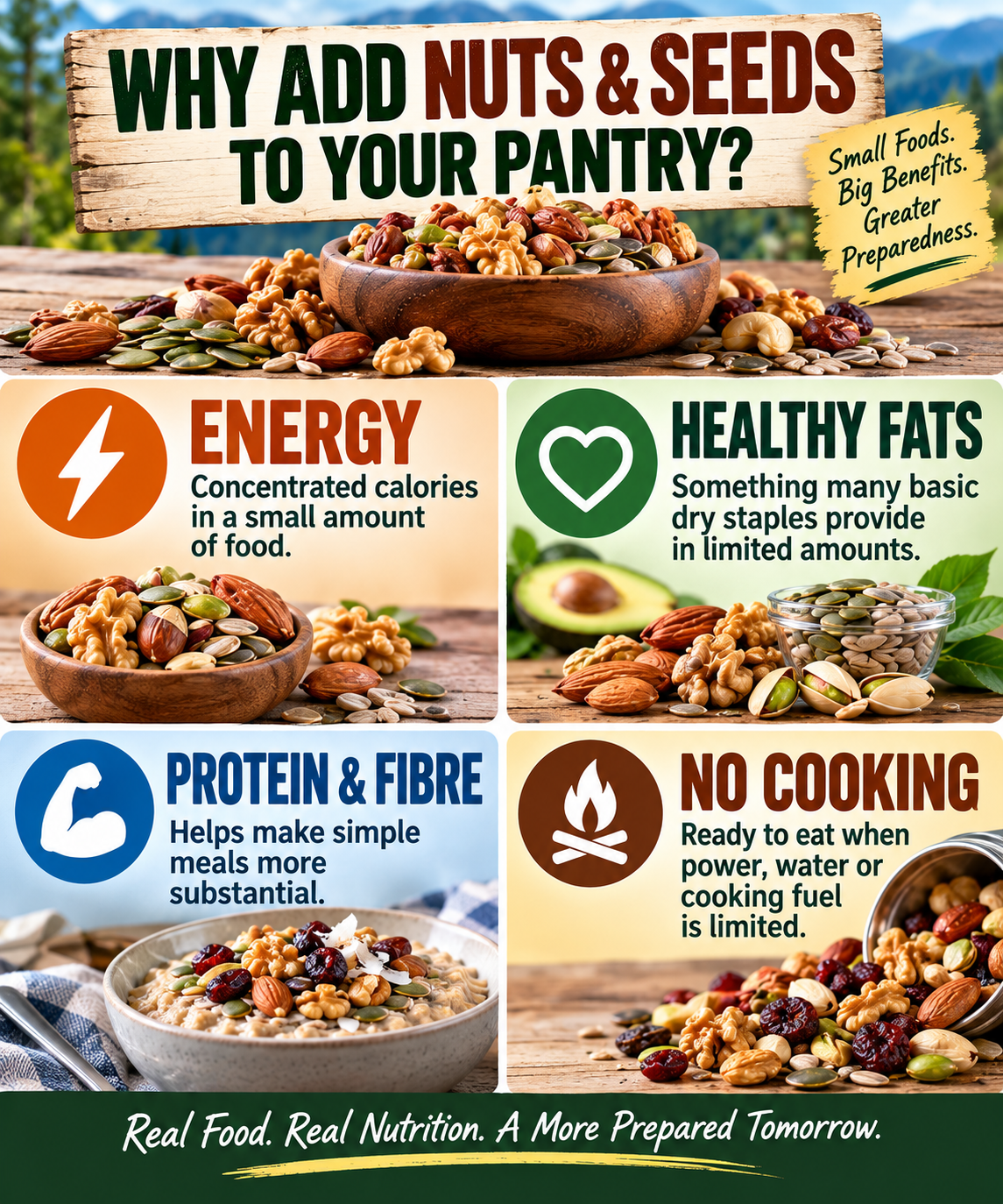
Calories become especially important when normal meals are disrupted. A relatively small amount of nuts can provide considerable energy without taking up much room in a pantry, emergency bag or vehicle kit. They also require no preparation. If the power is out and cooking fuel is being conserved, a handful of nuts can be eaten immediately.
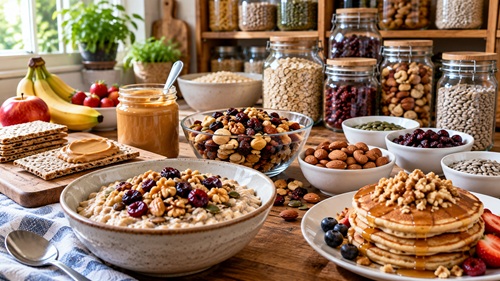
They can also make basic emergency foods much more useful. Oatmeal with nuts or seeds is more substantial than oatmeal alone. Peanut or other nut butter can turn crackers or bread into a quick meal. Chopped nuts can be added to cereals, pancakes, baked goods and stored fruit. Seeds can be mixed into oatmeal, homemade trail mixes and other foods.
This is where preparedness planning should start: don’t just ask how long a food lasts. Ask how you would actually use it when normal cooking and shopping aren’t available.
Not All Nuts and Seeds Provide the Same Thing
There is no need to store twelve different varieties simply because each has a slightly different nutritional benefit. A better strategy is to choose several that complement one another and that your household already eats.
Almonds provide vitamin E and magnesium. Walnuts are notable for their omega-3 fatty acids. Brazil nuts are particularly rich in selenium. Cashews provide copper and magnesium, while pistachios combine protein, fibre and antioxidants. Pecans and macadamia nuts provide substantial amounts of fat, while sunflower seeds can provide vitamin E and other nutrients. The original source highlights these different nutritional strengths.
From a preparedness perspective, however, nutritional variety is only part of the decision. Price, availability, allergies, packaging, storage conditions and whether your family will actually eat them matter just as much.
The Biggest Weakness: Their Oils
The same fats that make nuts valuable nutritionally also create their biggest storage problem. Oils gradually oxidize, eventually producing unpleasant flavours and odours associated with rancidity.
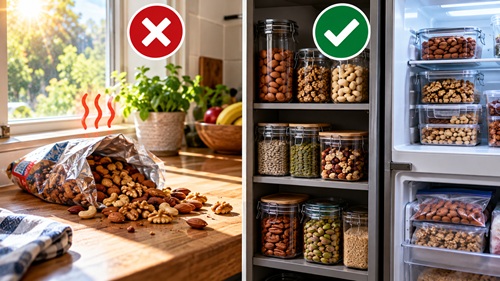
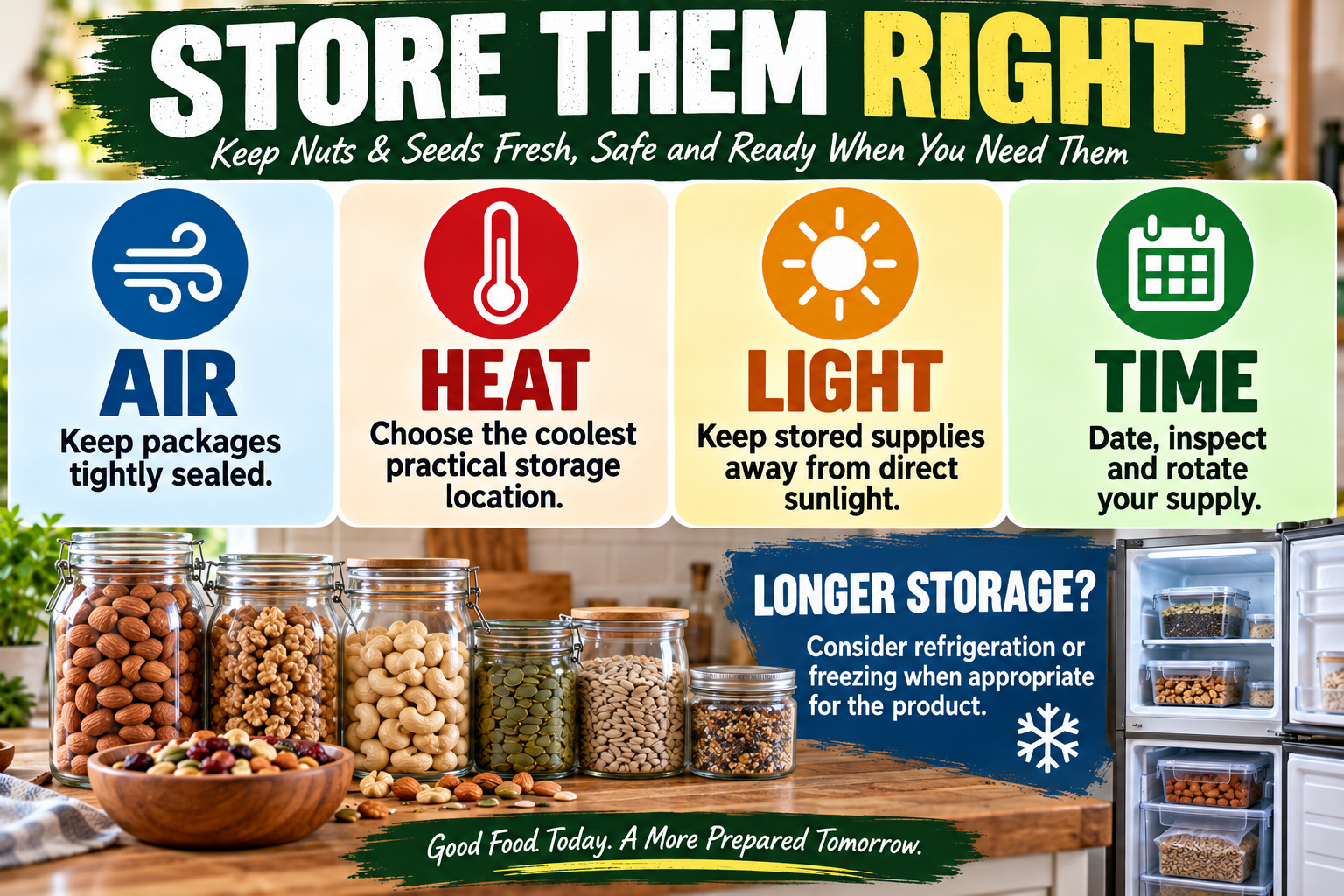
Heat accelerates deterioration, as do exposure to oxygen and light. A bag sitting for months in a hot garage, vehicle or outdoor shed therefore presents a very different storage situation from the same food kept sealed in a cool pantry.
This is why nuts should generally be considered rotation foods rather than “store it and forget it” foods. Buy what your household can realistically consume, store it properly, and replace it as you work through the supply.
Build a Working Supply, Not a Collection
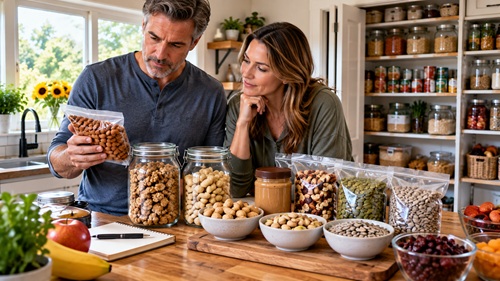
A preparedness pantry works better when stored food is part of normal household eating. If your family regularly eats almonds, peanut butter and sunflower seeds, those are probably better choices than buying expensive varieties nobody normally touches.
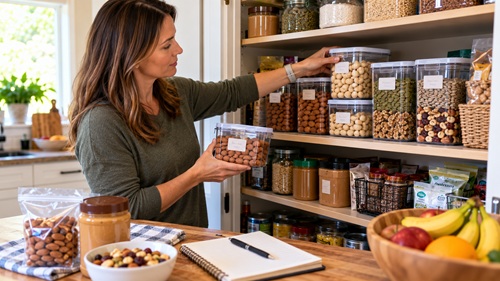
Instead of putting emergency nuts on a shelf and waiting for a disaster, open the oldest package for everyday use and replace it with a newer one. New purchases go behind older ones. This simple rotation system means the emergency supply is constantly refreshed.
It also answers an important preparedness question before an emergency happens: Will everyone actually eat this food?
Finding out during a prolonged power outage that nobody likes the emergency food you stored isn’t much of a plan.
Whole Nuts, Seeds or Nut Butter?
Each has a place.
Whole nuts are portable, require no utensils and can easily be divided into small servings. Seeds can be inexpensive and work well in cereals, baking and trail mixes. Nut butters are extremely easy to use and pair well with bread, crackers, oatmeal and fruit.
Keeping more than one form also provides flexibility. A household might keep everyday peanut butter, several packages of almonds or mixed nuts, and sunflower or pumpkin seeds rather than relying entirely on one product.
Individual or smaller packages can also have an advantage. Opening one large container repeatedly exposes the entire supply to air, while several smaller packages allow most of the food to remain sealed until needed.
Storage Conditions Matter
Keep nuts and seeds in a cool, dry and dark location and follow the manufacturer’s storage instructions. Once opened, close packages tightly or transfer the food to suitable airtight food-storage containers.
For supplies that won’t be consumed quickly, refrigeration or freezing can be useful when appropriate for the particular product and packaging. Date packages when they enter storage so you aren’t guessing later about how old they are.
Don’t assume repackaging automatically creates extremely long shelf life. Storage recommendations vary considerably by product, processing method, packaging and temperature. Manufacturer dates and guidance should remain part of your rotation decision.
Learn to Recognize a Bad Supply
Food inspection is another preparedness skill.
When opening stored nuts or seeds, pay attention to smell, flavour, appearance and the condition of the package. Products that smell or taste distinctly stale, bitter, paint-like or otherwise abnormal should not simply be assumed safe because they were stored as emergency food.
Also watch for moisture, mould, insects, damaged packaging or other obvious signs of deterioration.
A preparedness pantry isn’t valuable because it contains a lot of food. It is valuable because the food is still usable when you need it.
Think Beyond the Pantry
Small packages of nuts and seeds can also be useful in evacuation kits, work bags and vehicles because they’re compact and don’t require cooking. But vehicles present a problem: temperature.
A package stored in a vehicle through summer heat may deteriorate much faster than the same product kept inside a climate-controlled home. Vehicle food therefore needs more frequent inspection and rotation.
Rather than treating vehicle food as permanent emergency supplies, rotate it back into household use and replace it periodically.
Use Them to Improve Basic Stored Foods
One of the best roles for nuts and seeds is improving foods that are inexpensive and easy to store but relatively plain.
Imagine breakfast during a multiday outage. Oatmeal provides the foundation. Add powdered milk, dried fruit and nuts or seeds and the same bowl becomes considerably more substantial. Peanut butter can add calories and flavour to crackers. Chopped nuts can improve pancakes made from stored ingredients. Trail mix can combine nuts, seeds and dried fruit into something that can be eaten while travelling.
Preparedness food planning becomes much easier when ingredients work together instead of existing as isolated supplies.
How Much Should You Store?
There isn’t one correct number.
Start with what your household already consumes. If you normally use two jars of peanut butter and a package of almonds each month, increasing that supply modestly creates preparedness depth without introducing unfamiliar foods or excessive waste.
Build from there.
The objective is not to own the largest stockpile possible. It is to maintain enough food that an interruption in shopping doesn’t immediately become a problem.
That same principle can eventually be applied across the pantry: one extra package becomes two, two become several weeks of normal use, and rotation keeps the supply moving.
A Better Way to Think About Emergency Food
Nuts and seeds demonstrate an important preparedness principle: the “best” survival food isn’t necessarily the food with the longest theoretical shelf life.
A food that provides useful nutrition, requires no cooking, fits into normal meals and is regularly rotated can be extremely valuable even if it isn’t intended to sit untouched for decades.
Your emergency pantry should contain different layers. Some foods provide long-term staples. Others provide convenience, calories, fats, protein, flavour or nutrition. Nuts and seeds fit especially well into that second group.
Preparedness Action Plan
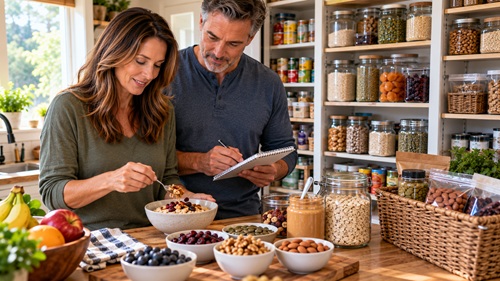
Look at the nuts, seeds and nut butters your household already eats. Choose two or three that would still be useful without electricity or normal cooking. Check their dates and storage instructions, move them to a cool and dark location if necessary, and establish a simple oldest-first rotation system.
Next, identify three meals from your existing emergency food supply that could be improved with nuts, seeds or nut butter. Actually prepare those meals now. If they work, you have added something much more valuable than another package on a shelf—you have added a tested food option your household already knows how to use.
Key Takeaways
Nuts and seeds can provide concentrated energy, fats, protein, fibre and important micronutrients while requiring no cooking. Their weakness is that their natural oils make proper storage and rotation particularly important. Instead of treating them as indefinite survival foods, use them as an active part of a working pantry.
The strongest preparedness system combines food you store with food you already know how to use. Buy varieties your household eats, protect them from heat, light and air, rotate them regularly, and incorporate them into simple emergency meals before you ever need those meals in an emergency.
© Prepping Communities. This content is for informational purposes only and not professional advice. Use at your own risk.
Terms | Privacy | Guidelines