
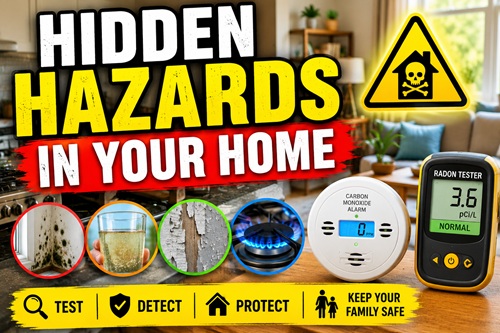
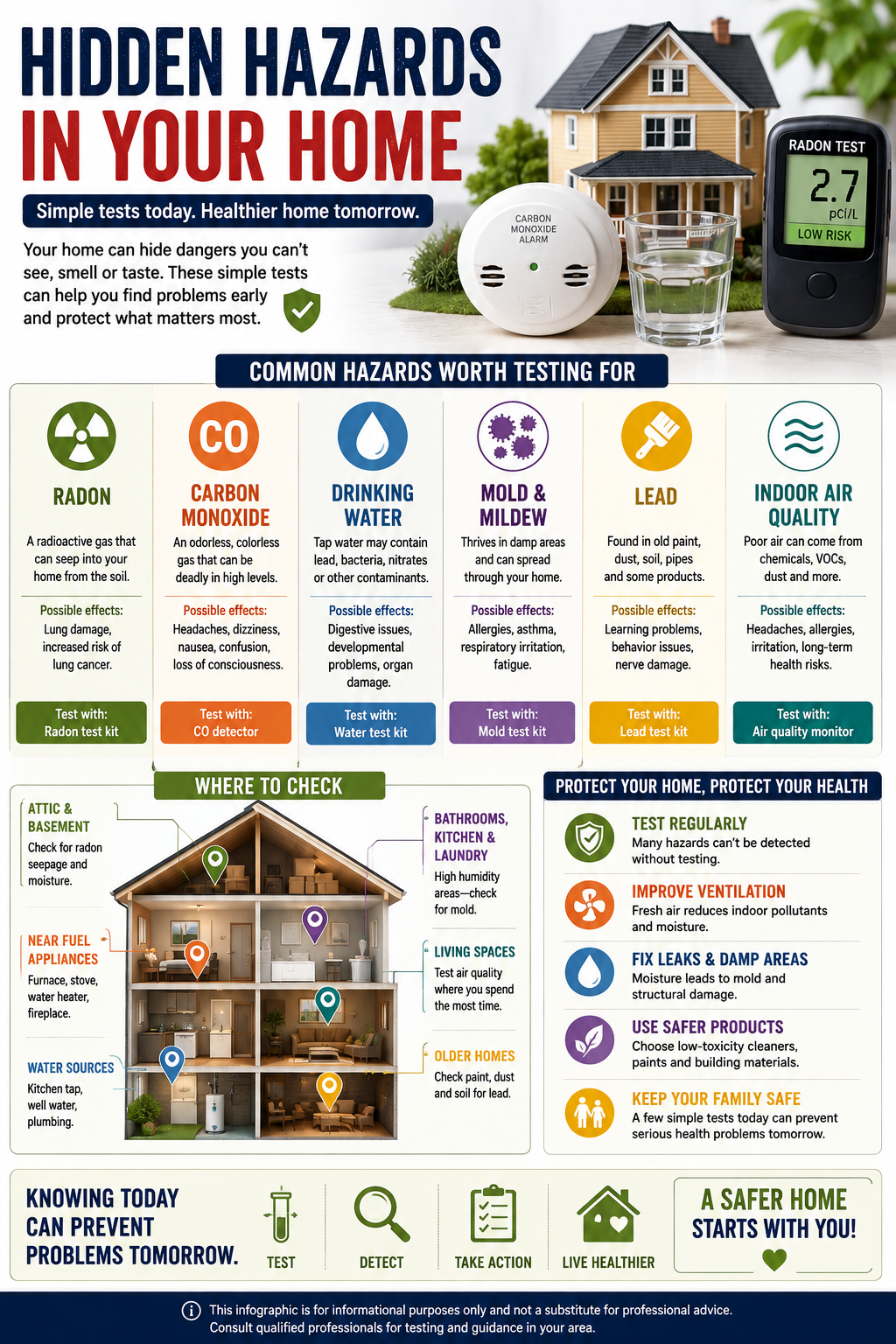
Most of us think of our homes as safe places, but some hazards are difficult to see, smell or notice until they become a problem. Radon, carbon monoxide, mold, lead, contaminated drinking water and poor indoor air quality are a few examples. Depending on the age of the home, where you live and how the building is maintained, some of these risks may be worth testing for rather than simply assuming everything is fine.
Simple precautions can make a big difference. Carbon monoxide and smoke alarms provide early warning of immediate dangers, while radon testing can identify a radioactive gas that may otherwise go completely unnoticed. Water testing can uncover certain contaminants, and keeping an eye on moisture, leaks and ventilation can help identify conditions that encourage mold growth. Older homes may also require additional caution around lead-based materials, asbestos and other substances that were commonly used in the past.
The biggest benefit of checking your home is knowing what you’re actually dealing with. Instead of worrying about every chemical or possible hazard, testing allows you to identify real problems and decide what needs attention. A few inexpensive tests, working detectors and regular inspections can help improve indoor safety, catch problems earlier and create a healthier home for everyone living there.
© Prepping Communities. This content is for informational purposes only and not professional advice. Use at your own risk.
Terms | Privacy | Guidelines