
Food Preservation Handbook
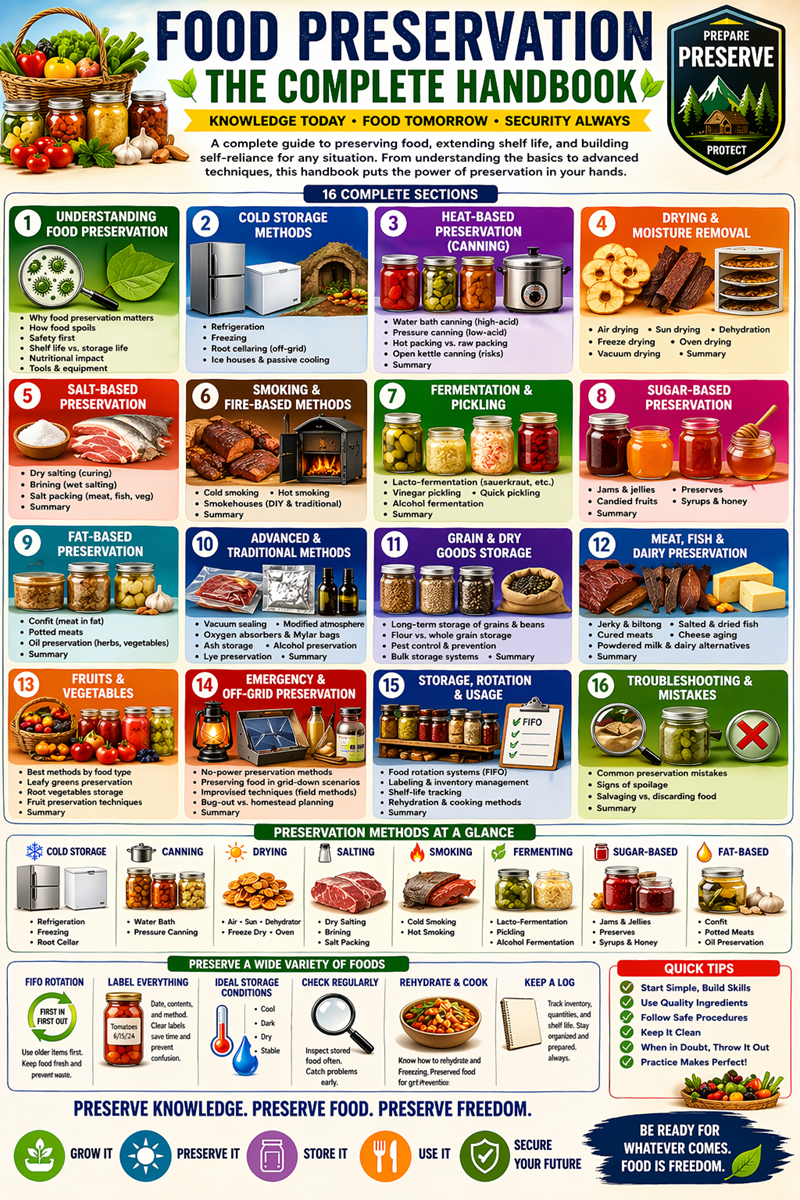
1 Understanding Food Preservation
1.1 Introduction to Food Preservation
 Food preservation is one of humanity’s oldest and most essential survival skills. Long before refrigeration or modern packaging existed, people relied on methods like drying, salting, smoking, and fermenting to keep food edible for extended periods. These techniques allowed communities to survive winters, droughts, and long journeys where fresh food was unavailable. Today, while technology has changed how we store food, the underlying principles remain the same.
At its core, food preservation is about controlling the conditions that cause food to deteriorate. Fresh food contains moisture, nutrients, and natural enzymes—all of which create an ideal environment for bacteria and chemical reactions. Left untreated, these factors lead to spoilage. Preservation methods interrupt this process by removing moisture, lowering temperature, limiting oxygen exposure, or introducing beneficial microbes that outcompete harmful ones.
Modern preservation methods build on these principles with greater precision and efficiency. Freezing slows down biological activity, canning uses heat to destroy pathogens and seal out contaminants, and freeze-drying removes moisture while maintaining structure and nutrients. Despite these advancements, the goal has not changed: extend the usable life of food while maintaining safety and quality.
Understanding food preservation is about more than just technique—it’s about control. When you preserve food, you are no longer fully dependent on external systems like grocery stores or supply chains. You gain the ability to manage your own food resources, reduce waste, and prepare for uncertainty. Whether you are preserving a garden harvest, storing bulk purchases, or building a long-term emergency supply, these skills form the foundation of food security.
Preservation also connects directly to sustainability. Instead of discarding surplus food, preservation allows you to extend its usefulness. Seasonal abundance can be captured and stored for later use, reducing both waste and cost. In this way, food preservation is not only practical but responsible.
In a preparedness context, food preservation becomes even more critical. Access to fresh food can be disrupted quickly by events beyond your control. Having preserved food on hand ensures continuity, stability, and peace of mind. It allows you to focus on other priorities rather than reacting to shortages.
Ultimately, food preservation is about resilience. It is the ability to take what you have now and ensure it remains available when you need it most. Mastering these skills is one of the most valuable steps you can take toward self-reliance.
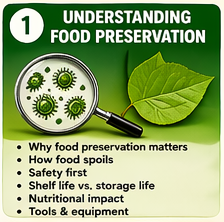
1.2 Why Food Preservation Matters (Preparedness & Self-Reliance)
Food preservation plays a central role in preparedness because it addresses one of the most basic human needs: reliable access to food. Modern society often masks how fragile food systems can be. Grocery stores are stocked through complex logistics networks that depend on transportation, energy, labor, and coordination. When any part of that system is disrupted, shortages can appear quickly.
Preserving food reduces your reliance on these systems. Instead of depending entirely on external supply chains, you create your own buffer. This buffer allows you to absorb disruptions without immediate impact. Whether the issue is a temporary power outage, a natural disaster, or a longer-term crisis, preserved food provides stability.
Self-reliance is not about isolation—it’s about capability. The more you can provide for yourself, the less vulnerable you are to external changes. Food preservation is one of the most practical ways to build that capability. It transforms food from a short-term resource into a long-term asset.
Another key benefit is flexibility. Preserved food gives you options. You are not forced to shop under pressure or accept whatever is available. Instead, you can plan, rotate, and use your supplies strategically. This flexibility is especially important during emergencies when decision-making becomes more complex.
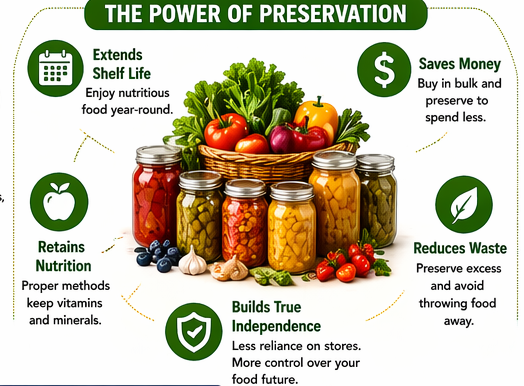 There are also economic advantages. Buying food in bulk or during seasonal abundance can significantly reduce costs. Preservation allows you to capture those savings and extend them over time. For example, produce that is inexpensive during harvest season can be preserved and used months later when prices are higher.
Beyond finances, preservation supports sustainability. Food waste is a major issue in modern society. By preserving excess food, you reduce waste and make better use of available resources. This is particularly important for those growing their own food, where harvests often exceed immediate needs.
Food preservation also builds confidence. Knowing that you have a reliable supply of food reduces stress and uncertainty. It allows you to focus on other aspects of preparedness, such as water, shelter, and security. Confidence in your food supply is a cornerstone of overall resilience.
In the end, food preservation is about independence. It gives you the ability to operate on your own terms, regardless of external conditions. It is not just a skill—it is a strategy for long-term stability and self-reliance.
1.3 How Food Spoils (Bacteria, Enzymes, Oxidation)
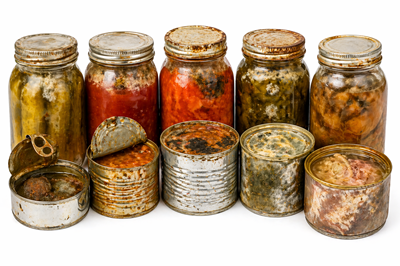 To preserve food effectively, it is essential to understand why food spoils in the first place. Spoilage is not random—it is the result of predictable biological and chemical processes. The three primary drivers are bacteria, enzymes, and oxidation.
Bacteria are microorganisms that exist everywhere—in the air, on surfaces, and on the food itself. Many bacteria are harmless, but some can cause spoilage or illness. When conditions are favorable—particularly in warm, moist environments—bacteria multiply rapidly. As they grow, they break down food and produce waste products that lead to off smells, discoloration, and unsafe conditions.
Temperature plays a critical role in bacterial growth. Most harmful bacteria thrive within a temperature range commonly referred to as the “danger zone,” between 4°C and 60°C (40°F–140°F). Preservation methods often aim to move food out of this range, either by cooling it (freezing, refrigeration) or heating it (canning, cooking) to eliminate bacteria.
Enzymes are naturally occurring proteins within food that drive chemical reactions. In fresh produce, enzymes are responsible for ripening and development. However, after harvest, these same processes lead to deterioration. Fruits become overripe, vegetables lose texture, and flavors change. While enzymes are not harmful, they contribute significantly to quality loss.
Preservation methods often target enzymes by slowing or stopping their activity. Freezing reduces enzyme function, while blanching (a brief heat treatment) is commonly used before freezing vegetables to deactivate enzymes.
Oxidation is a chemical reaction that occurs when food is exposed to oxygen. It is responsible for browning in fruits, rancidity in fats, and the breakdown of certain nutrients. Oxidation not only affects appearance but also flavor and nutritional value.
Controlling oxygen exposure is a key aspect of many preservation methods. Vacuum sealing, oxygen absorbers, and airtight containers all work to limit oxidation and extend shelf life.
These three factors—bacteria, enzymes, and oxidation—often work together. For example, a piece of fruit exposed to air may brown due to oxidation while also softening due to enzyme activity. Effective preservation requires addressing all relevant factors simultaneously.
By understanding the causes of spoilage, you can choose the most appropriate preservation method for each type of food. This knowledge transforms preservation from a set of techniques into a strategic process, allowing you to maximize both safety and longevity.
1.4 Safety First: Preventing Foodborne Illness
Food preservation is only valuable if the food remains safe to eat. Improper preservation can create conditions where harmful bacteria survive or even thrive. For this reason, safety must always be the top priority.
One of the most important aspects of food safety is temperature control. Each preservation method relies on specific temperature ranges to either slow down or eliminate harmful microorganisms. For example, freezing halts bacterial growth, while pressure canning uses high heat to destroy bacteria that cannot be eliminated through boiling alone.
Cleanliness is another critical factor. Contamination can occur at any stage—from handling raw ingredients to storing finished products. Using clean equipment, washing hands thoroughly, and maintaining a sanitary workspace reduces the risk of introducing harmful bacteria.
Proper processing methods are essential, especially for canning. Low-acid foods such as meats and vegetables require pressure canning to reach temperatures high enough to ensure safety. Using incorrect methods can result in dangerous outcomes, even if the food appears normal.
Storage conditions also matter. Even properly preserved food can become unsafe if stored incorrectly. Temperature fluctuations, exposure to light, or damaged packaging can compromise safety over time.
Recognizing signs of spoilage is an important skill. Indicators such as unusual odors, mold growth, gas buildup (bulging containers), or unexpected texture changes should never be ignored. When in doubt, it is always safer to discard questionable food.
Food safety is not about fear—it is about awareness and discipline. By following established practices and paying attention to detail, you can preserve food confidently and safely. The goal is not just to extend shelf life, but to ensure that the food remains a reliable and safe resource when you need it.
1.5 Shelf Life vs. Storage Life
Understanding the difference between shelf life and storage life is key to managing a long-term food supply effectively. While the terms are often used interchangeably, they represent different concepts.
Shelf life refers to the period during which food is expected to remain at its best quality. This is typically indicated by “best before” or “use by” dates provided by manufacturers. These dates are based on controlled conditions and focus primarily on quality rather than safety.
Storage life, on the other hand, reflects how long food remains usable under real-world conditions. Properly stored food often lasts significantly longer than its labeled shelf life. For example, dry goods like rice or beans can remain edible for years when stored correctly.
Several factors influence storage life. Temperature is one of the most important—cooler conditions generally extend longevity. Humidity, light exposure, and oxygen levels also play a role. Packaging is equally important; airtight containers and moisture barriers help protect food from environmental factors.
For preparedness, storage life is the more relevant measure. The goal is to maximize the usable lifespan of your food supply while maintaining safety and acceptable quality. This requires proper storage practices and regular monitoring.
Rotation is a key strategy. Using a “first in, first out” (FIFO) system ensures that older items are used before newer ones, reducing waste and maintaining freshness. Regular inspection of stored food helps identify any issues before they become significant problems.
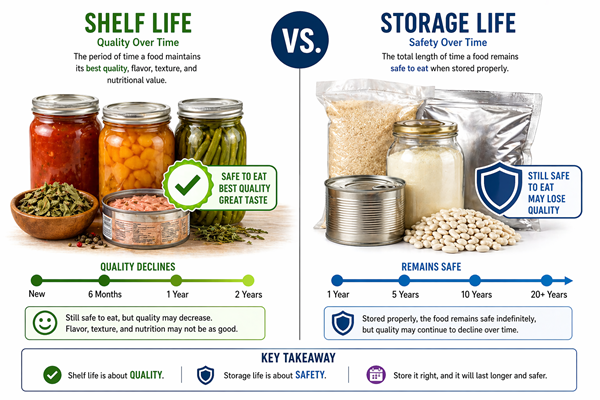
Understanding shelf life versus storage life allows you to make informed decisions about what to store, how to store it, and when to use it. This knowledge is essential for building a reliable and efficient food storage system.
1.6 Nutritional Impact of Preservation Methods
Food preservation extends shelf life, but it can also affect nutritional content. Different methods impact nutrients in different ways, and understanding these effects helps you maintain a balanced and healthy food supply.
Heat-based methods, such as canning, can reduce certain vitamins, particularly those that are sensitive to heat, like vitamin C and some B vitamins. However, these methods preserve calories, proteins, and minerals effectively. In many cases, the trade-off is acceptable because the food remains a reliable source of energy and essential nutrients.
Drying and freeze-drying remove moisture while concentrating nutrients. Freeze-drying, in particular, retains a high percentage of original nutrients because it uses low temperatures. However, long-term storage still requires protection from oxygen and light to prevent gradual nutrient loss.
Freezing is one of the best methods for preserving nutritional value. It slows down both bacterial growth and enzyme activity, maintaining most vitamins and minerals. The main limitation is the need for consistent power and temperature control.
Fermentation offers unique benefits. It not only preserves food but can also enhance its nutritional profile by introducing beneficial bacteria and increasing the availability of certain nutrients. Fermented foods can support digestion and overall health.
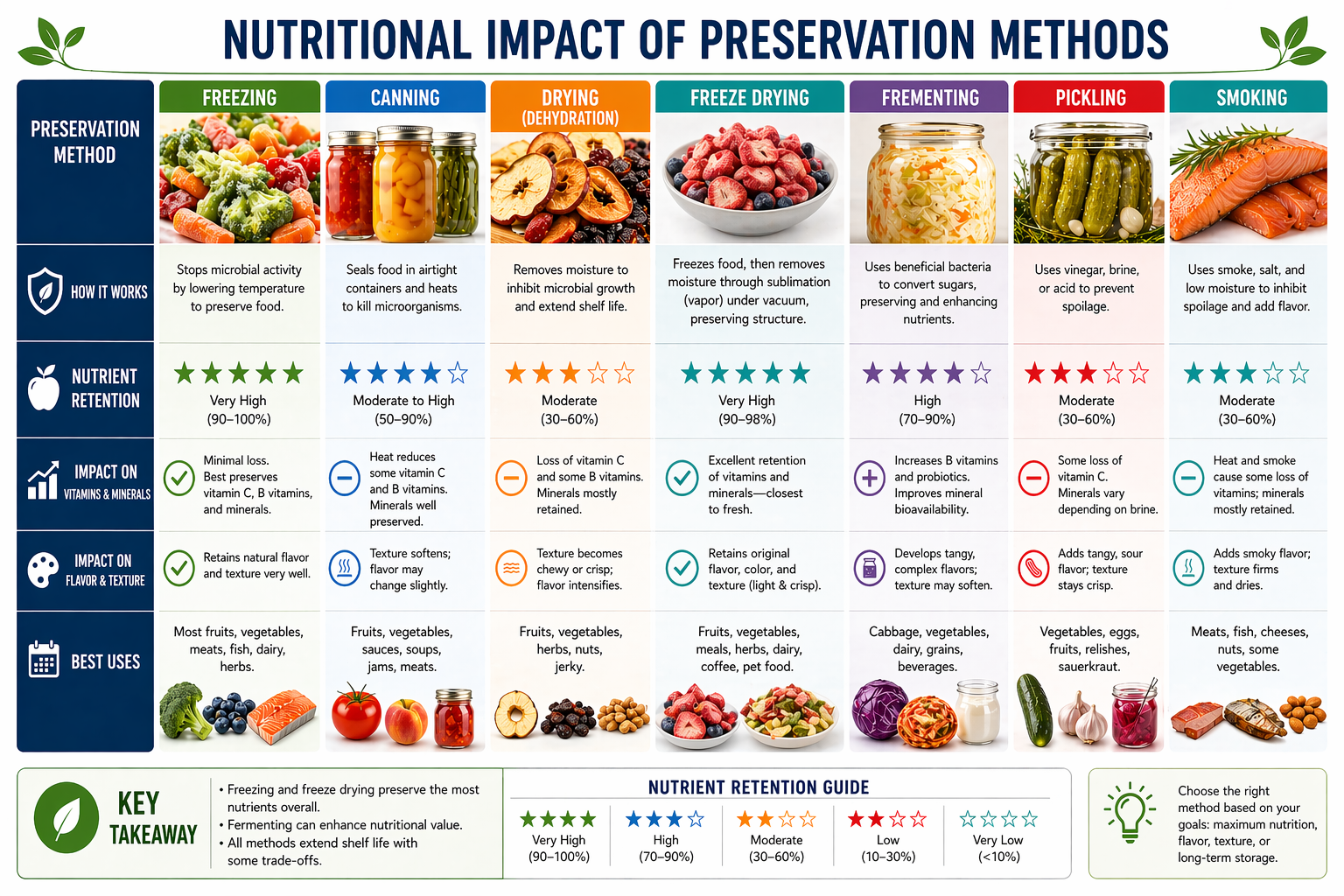
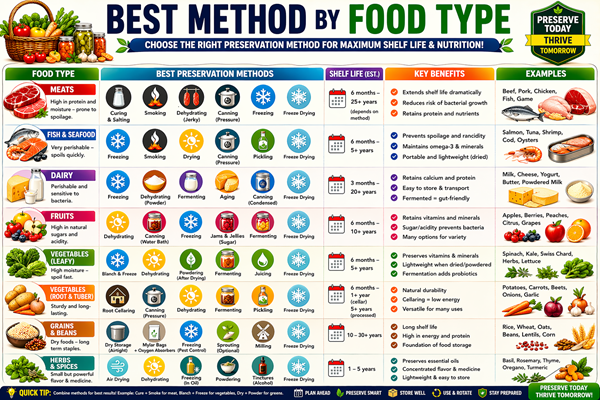
No single method is perfect. Each has strengths and limitations, and the best approach is to use a combination of methods. This ensures a diverse food supply that balances shelf life, nutritional value, and practicality.
Maintaining nutrition in preserved food is about more than just storage—it is about planning. By understanding how different methods affect nutrients, you can build a food supply that supports both survival and long-term health.
1.7 Essential Tools & Equipment
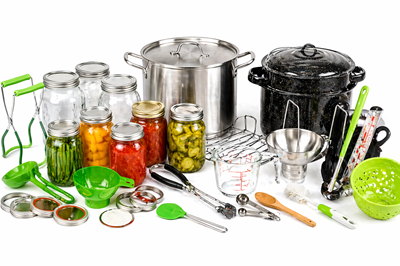 Effective food preservation depends not only on knowledge but also on having the right tools. While some methods require minimal equipment, others benefit from specialized tools that improve efficiency, consistency, and safety.
Basic tools form the foundation of any preservation setup. These include knives, cutting boards, containers, and measuring equipment. High-quality tools make preparation easier and reduce the risk of contamination.
For drying, a dehydrator provides controlled temperature and airflow, ensuring consistent results. While air drying and oven drying are alternatives, a dedicated dehydrator offers greater reliability.
Canning requires specific equipment, including water bath canners for high-acid foods and pressure canners for low-acid foods. Proper jars, lids, and seals are essential to ensure long-term safety. Investing in quality canning equipment is critical for consistent results.
Vacuum sealers and Mylar bags with oxygen absorbers are commonly used for dry goods. These tools reduce oxygen exposure, extending shelf life and protecting against pests and moisture.
Freeze dryers represent a more advanced option, offering exceptional shelf life and quality retention. While they require a higher investment, they provide unmatched long-term storage capabilities.
In a preparedness context, redundancy is important. Having backup tools or manual alternatives ensures that you can continue preserving food even if power or equipment fails. Simple tools like manual grinders, hand-operated sealers, and alternative heat sources can make a significant difference.
Ultimately, the goal is not to have every tool available, but to have the right tools for your chosen methods. A well-equipped setup increases efficiency, improves results, and supports long-term success in food preservation.
2 Cold Storage Methods
2.1 Refrigeration (Short-Term Preservation)
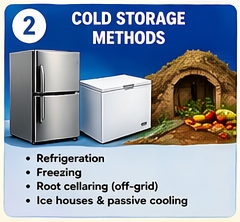 Refrigeration is one of the most widely used methods of food preservation in the modern world. By lowering the temperature of food to just above freezing, refrigeration slows the growth of bacteria and reduces the activity of enzymes that contribute to spoilage. While it does not stop these processes entirely, it significantly extends the usable life of many perishable foods.
The typical refrigeration range of 1°C to 4°C (34°F–39°F) is designed to keep food out of the bacterial “danger zone” while maintaining texture and quality. At these temperatures, most bacteria grow very slowly, allowing foods like meat, dairy, fruits, and vegetables to remain fresh for days or weeks rather than hours.
However, refrigeration is inherently a short-term solution. Over time, bacteria and enzymes continue to act, and food will eventually spoil. This makes refrigeration ideal for daily use and temporary storage, but not for long-term preparedness without additional preservation methods.
Proper organization within a refrigerator is also important. Different foods have different storage requirements. For example, raw meats should be kept separate from ready-to-eat foods to prevent cross-contamination. Humidity-controlled drawers help maintain the freshness of produce, while airtight containers reduce moisture loss and odor transfer.
Energy dependency is one of the key limitations of refrigeration. In a grid-down scenario, refrigeration quickly becomes unreliable unless supported by backup power systems such as generators or solar setups. Even short power outages can compromise stored food if temperatures rise above safe levels.
For preparedness planning, refrigeration should be viewed as a first layer of preservation. It is highly effective for short-term storage and daily use but should be paired with longer-term methods such as freezing, canning, or drying to ensure resilience.
2.2 Freezing (Long-Term Storage)
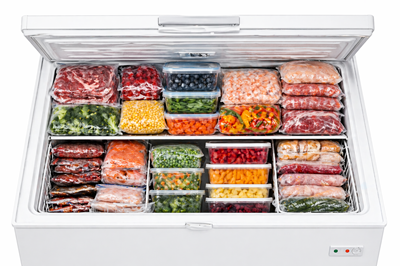 Freezing is one of the most effective methods for preserving food over extended periods. By lowering temperatures to -18°C (0°F) or below, freezing essentially halts bacterial growth and significantly slows enzymatic activity. This allows food to be stored for months or even years while maintaining much of its original quality.
Unlike refrigeration, freezing is considered a long-term preservation method. Foods such as meats, vegetables, fruits, and prepared meals can be frozen and stored safely for extended periods. However, while freezing preserves safety, quality can gradually decline over time due to factors like freezer burn and moisture loss.
Freezer burn occurs when food is exposed to air within the freezer, causing dehydration and oxidation. This results in dry, discolored patches that affect texture and flavor. Proper packaging—such as vacuum sealing or tightly wrapping food—can minimize this issue and extend storage life.
Blanching is an important step for many vegetables before freezing. This brief exposure to boiling water deactivates enzymes that would otherwise continue to degrade the food even at low temperatures. Without blanching, vegetables may lose flavor, color, and texture more quickly.
One of the main advantages of freezing is its ability to preserve nutritional value. Most vitamins and minerals remain intact, making frozen foods a reliable source of nutrition. This is particularly important for maintaining a balanced diet in long-term storage scenarios.
However, freezing also has limitations. It requires consistent power and temperature control. In the event of a power outage, frozen food can begin to thaw, creating potential safety concerns. For this reason, freezing should be part of a layered preservation strategy rather than the sole method.
When used effectively, freezing provides a powerful way to extend the life of perishable foods while maintaining quality and nutrition. It is a cornerstone of modern food preservation but must be managed carefully to ensure reliability.
2.3 Root Cellaring (Off-Grid Cold Storage)
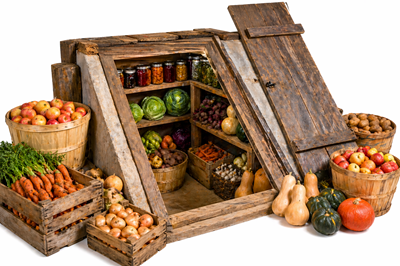 Root cellaring is a traditional method of food preservation that relies on natural environmental conditions rather than mechanical refrigeration. By utilizing cool, stable temperatures and controlled humidity, root cellars can store certain foods for months without electricity.
Typically built underground or partially buried, root cellars take advantage of the earth’s insulating properties. Temperatures remain relatively constant, usually between 0°C and 10°C (32°F–50°F), depending on depth and location. This environment slows spoilage while preventing freezing.
Root cellaring is particularly effective for storing hardy vegetables such as potatoes, carrots, onions, and squash. These foods are naturally suited to long-term storage and can remain usable for extended periods when kept in the right conditions. Apples and other fruits can also be stored, though they require careful separation to prevent ethylene gas from accelerating spoilage.
Humidity control is a key factor in root cellaring. High humidity helps prevent dehydration and shrinkage, while proper ventilation prevents mold and rot. Balancing these factors is essential for maintaining food quality.
One of the greatest advantages of root cellaring is its independence from modern infrastructure. It requires no electricity, making it highly reliable in off-grid or emergency situations. It is also cost-effective, as it relies on natural conditions rather than expensive equipment.
However, root cellaring has limitations. It is not suitable for all types of food, particularly meats and dairy. It also requires careful monitoring to ensure conditions remain within optimal ranges.
In a preparedness context, root cellaring is an invaluable method. It provides a sustainable, low-tech solution for long-term storage and complements other preservation techniques. For those seeking self-reliance, it represents a return to proven, time-tested practices.
2.4 Ice Houses & Passive Cooling Techniques
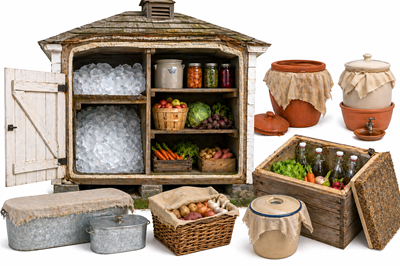 Before modern refrigeration, ice houses and passive cooling systems were essential for preserving food. These methods rely on natural processes—such as insulation, evaporation, and thermal mass—to maintain lower temperatures without electricity.
Ice houses were traditionally used to store large blocks of ice harvested during winter. These structures were heavily insulated with materials like straw or sawdust, allowing the ice to last for months. Food stored within the ice house benefited from the cooler environment, extending its shelf life.
While large-scale ice harvesting is less common today, the principles behind ice houses can still be applied in smaller, practical ways. Coolers with ice packs, insulated storage boxes, and underground storage spaces can all provide temporary cooling solutions.
Evaporative cooling is another effective passive method. By allowing water to evaporate from a surface, heat is removed, lowering the temperature of the surrounding area. Simple systems, such as clay pot coolers or damp cloth coverings, can significantly reduce temperatures in dry climates.
Thermal mass is also used in passive cooling. Materials like stone, earth, or water absorb and release heat slowly, helping to stabilize temperatures. This principle is often incorporated into root cellars and underground storage systems.
These techniques are especially valuable in off-grid or emergency scenarios where power is unavailable. While they may not achieve the same level of cooling as modern refrigeration, they can extend the life of perishable foods and provide a critical buffer.
The key advantage of passive cooling is resilience. These methods require minimal resources and can be adapted to a wide range of environments. They represent practical, low-tech solutions that remain relevant even in a highly technological world.
For preparedness planning, incorporating passive cooling techniques adds an additional layer of security. When combined with other preservation methods, they help ensure that food remains usable even when modern systems fail.
Cold storage methods form a critical part of any food preservation strategy:
- Refrigeration → Short-term, daily use
- Freezing → Long-term, high-quality storage (power dependent)
- Root Cellaring → Off-grid, sustainable long-term storage
- Passive Cooling → Backup and emergency solutions
3 Heat-Based Preservation (Canning)
3.1 Water Bath (Cold) Canning (High-Acid Foods)
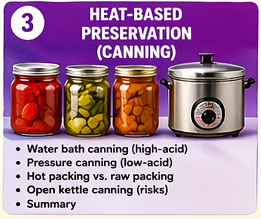 Water bath canning—often called boiling water canning—is one of the most accessible and widely used methods of food preservation. It is specifically designed for high-acid foods, including fruits, jams, jellies, pickles, and certain tomato products. The acidity of these foods creates an environment where harmful bacteria cannot easily survive, allowing for safe preservation using boiling temperatures.
In this method, food is placed into jars, sealed with lids, and then submerged in boiling water for a specified period. The heat serves two purposes: it destroys microorganisms that could cause spoilage and forces air out of the jar. As the jars cool, a vacuum seal forms, preventing new contaminants from entering.
Acidity is the key factor that makes this method safe. Foods with a pH of 4.6 or lower are considered high-acid and can be processed at the temperature of boiling water (100°C / 212°F). This level of heat is sufficient to eliminate most spoilage organisms and create a stable product.
Preparation is critical for success. Fruits are often prepared with sugar or syrup, while pickled foods rely on vinegar to ensure proper acidity. For tomatoes, which can vary in acidity, additional acid (such as lemon juice or citric acid) is often added to ensure safety.
Processing times vary depending on the type of food, jar size, and altitude. Higher altitudes require longer processing times due to lower boiling temperatures. Following tested guidelines is essential to ensure both safety and quality.
Water bath canning offers several advantages. It is relatively simple, requires minimal specialized equipment, and produces shelf-stable foods that can last for a year or more. It also preserves flavors effectively, making it ideal for fruits and sweet preserves.
However, it has limitations. It is not suitable for low-acid foods such as meats, vegetables, or dairy products. Attempting to can these foods using a water bath method can result in unsafe conditions, even if the food appears normal.
For beginners and experienced preservers alike, water bath canning is an excellent starting point. It provides a reliable way to preserve seasonal produce and build a long-term food supply while maintaining safety and quality.
3.2 Pressure Canning (Low-Acid Foods)
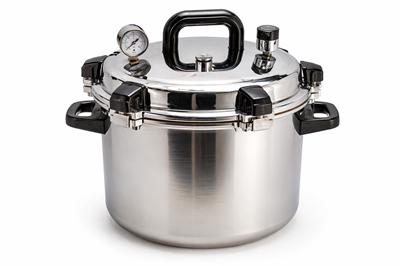 Pressure canning is a critical method for safely preserving low-acid foods, including meats, vegetables, soups, and legumes. Unlike water bath canning, which relies on acidity to inhibit bacterial growth, pressure canning uses high temperatures to destroy harmful microorganisms that can survive in low-acid environments.
The most important reason for pressure canning is to eliminate bacteria that cannot be destroyed at boiling temperatures. These bacteria can survive in sealed, low-acid environments and produce toxins that make food unsafe. Pressure canning solves this problem by reaching temperatures above boiling—typically around 116°C to 121°C (240°F–250°F).
This is achieved using a pressure canner, a specialized piece of equipment that traps steam and increases internal pressure. As pressure rises, so does the temperature, allowing for thorough sterilization of the food inside the jars.
The process involves preparing the food, placing it into jars, sealing them, and then processing them under pressure for a specified time. Processing times vary depending on the type of food, jar size, and altitude. Accuracy is essential—both under-processing and over-processing can lead to problems.
One of the main advantages of pressure canning is its versatility. It allows for the preservation of a wide range of foods that cannot be safely stored using other methods. This makes it a cornerstone of long-term food storage, especially for protein-rich foods.
However, pressure canning requires careful attention to detail. Equipment must be maintained properly, including checking seals, gauges, and vents. Following tested procedures is essential to ensure safety.
While it may seem more complex than water bath canning, pressure canning becomes straightforward with practice. It provides a powerful and reliable way to preserve a complete range of foods, making it an essential skill for anyone focused on preparedness and self-reliance.
3.3 Hot Packing vs. Raw Packing
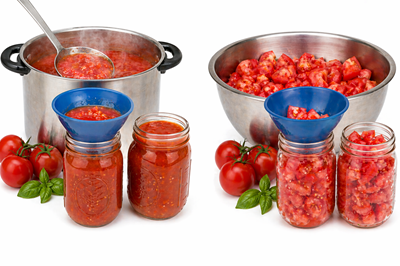 When canning food, one of the key decisions is whether to use hot packing or raw packing. These two methods differ in how food is prepared before being placed into jars, and each has its own advantages and considerations.
Hot packing involves heating food before placing it into jars. This may include cooking, simmering, or blanching. The heated food is then packed into jars along with hot liquid, leaving the appropriate headspace. This method helps remove air from the food, reduces shrinkage, and improves overall quality.
One of the main benefits of hot packing is efficiency. Because air is already removed and the food is partially cooked, jars can be filled more densely. This results in better use of space and more consistent results. Hot packing also helps maintain color, flavor, and texture over time.
Raw packing, on the other hand, involves placing uncooked food directly into jars and then adding liquid before processing. This method is faster and requires less preparation, making it appealing for certain foods and situations.
However, raw packing has some drawbacks. Because the food is not preheated, it contains more air, which can lead to floating, uneven textures, and reduced quality. Over time, raw-packed foods may experience more noticeable changes compared to hot-packed foods.
The choice between hot and raw packing often depends on the type of food and personal preference. For many fruits and some vegetables, both methods are acceptable. For meats and certain low-acid foods, hot packing is generally recommended for best results.
Understanding these two approaches allows you to choose the method that best fits your needs. While both can produce safe results when done correctly, hot packing is often preferred for its consistency and long-term quality.
3.4 Open Kettle Canning (Risks & History)
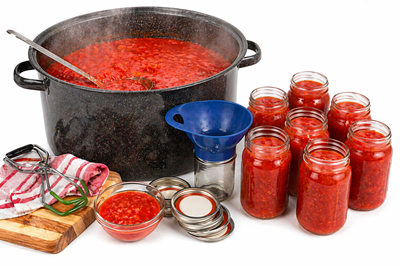 Open kettle canning is an older method of food preservation that involves cooking food in a pot and then transferring it directly into jars without further processing. While it was commonly used in the past, it is no longer recommended as a safe preservation method.
Historically, open kettle canning was popular because it was simple and required minimal equipment. Food was heated to a high temperature, poured into jars, and sealed as it cooled. This process created a vacuum seal, giving the appearance of preservation.
However, the method does not reliably eliminate all harmful microorganisms. Without a controlled processing step—such as boiling water or pressure canning—there is no guarantee that the food has reached a temperature sufficient to ensure safety. This creates a risk, even if the jars appear properly sealed.
One of the challenges with open kettle canning is that contamination can occur during the transfer process. As food is moved from pot to jar, it can be exposed to air and surfaces that introduce bacteria. Without further processing, these bacteria can survive and multiply.
Modern food safety standards have replaced open kettle canning with more reliable methods. Water bath and pressure canning provide controlled, repeatable processes that ensure both safety and quality.
While open kettle canning may still be encountered in historical references or traditional practices, it is important to understand its limitations. For anyone serious about food preservation, using tested and proven methods is essential.
Understanding the history of open kettle canning provides valuable context, but it also reinforces the importance of using modern, safe techniques. Preservation is not just about extending shelf life—it is about doing so in a way that ensures food remains safe to consume.
3.5 Summary
Canning is one of the most powerful preservation methods available:
- Water Bath Canning → High-acid foods (simple, accessible)
- Pressure Canning → Low-acid foods (essential for meats & full meals)
- Hot Packing vs. Raw Packing → Impacts quality and efficiency
- Open Kettle Canning → Historical method, not recommended today
4 Drying & Moisture Removal
4.1 Air Drying (Traditional Methods)
 Air drying is one of the oldest and simplest methods of food preservation. It relies on natural airflow to remove moisture from food, creating an environment where bacteria, mold, and enzymes cannot easily thrive. Without sufficient moisture, the processes that lead to spoilage slow dramatically, allowing food to be stored for extended periods.
This method has been used for centuries across many cultures, particularly in regions with dry climates. Foods such as herbs, grains, meats, and fruits have traditionally been air dried using racks, lines, or simple hanging systems. The key requirement is consistent airflow combined with low humidity.
Proper preparation is essential for effective air drying. Foods should be cleaned, cut into uniform pieces, and arranged to allow air to circulate freely. Overcrowding reduces efficiency and increases the risk of uneven drying or spoilage. In some cases, foods may be pre-treated with salt, vinegar, or blanching to improve results.
Air drying is best suited for foods that can tolerate longer drying times. Herbs and certain fruits are ideal candidates, while meats require additional precautions due to the risk of bacterial growth. In traditional methods, meat is often salted before drying to improve safety.
One of the main advantages of air drying is its simplicity. It requires minimal equipment and no electricity, making it highly valuable in off-grid or emergency situations. It is also cost-effective and accessible to nearly anyone.
However, air drying has limitations. It is highly dependent on environmental conditions, including temperature and humidity. In humid climates, drying may be slow or ineffective, increasing the risk of spoilage. Insects and dust can also pose challenges if food is not properly protected.
Despite these challenges, air drying remains a valuable method, particularly as a backup or supplemental technique. It represents a low-tech, reliable approach that aligns well with self-reliance and preparedness principles.
4.2 Sun Drying
Sun drying builds on the principles of air drying by using direct sunlight as a heat source. The combination of warmth and airflow accelerates moisture removal, making it more efficient than air drying alone. This method has been widely used in warm, dry regions for preserving fruits, vegetables, and grains.
In sun drying, food is typically placed on trays, racks, or clean surfaces and exposed to direct sunlight. The heat from the sun raises the temperature of the food, speeding up the evaporation of moisture. At the same time, airflow carries moisture away, preventing it from accumulating.
Fruits such as grapes, figs, and apricots are commonly sun dried, often developing concentrated flavors and natural sweetness. Vegetables can also be dried using this method, though they may require blanching beforehand to maintain quality.
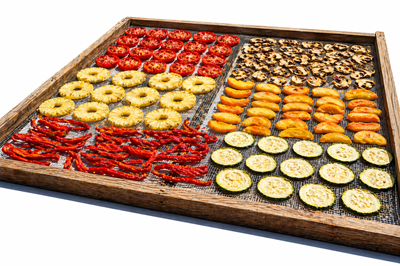 One of the key factors in successful sun drying is environmental conditions. Ideal conditions include high temperatures, low humidity, and consistent sunlight. Without these, drying may be incomplete or inconsistent, increasing the risk of spoilage.
Protection is also important. Food must be shielded from insects, dust, and animals. This is often achieved using mesh screens or enclosed drying racks that allow airflow while providing a barrier.
Sun drying offers several advantages. It is energy-free, cost-effective, and capable of producing high-quality results when conditions are right. It also enhances flavor in many foods by concentrating sugars and natural compounds.
However, like air drying, it is weather-dependent. Cloudy conditions, high humidity, or fluctuating temperatures can reduce effectiveness. For this reason, sun drying is often used in combination with other methods or in regions where conditions are consistently favorable.
In a preparedness context, sun drying provides a valuable off-grid option. It allows for large quantities of food to be preserved without reliance on electricity, making it an important component of a diversified preservation strategy.
4.3 Dehydration (Modern Dehydrators)
Dehydration using modern equipment is a controlled and reliable method of removing moisture from food. Unlike traditional air or sun drying, dehydrators provide consistent temperature and airflow, allowing for predictable and efficient results.
A dehydrator works by circulating warm air over food placed on trays. This steady airflow removes moisture evenly, reducing the risk of spoilage and improving overall quality. Temperatures are typically kept low enough to preserve flavor and nutrients while still effectively drying the food.
This method is suitable for a wide range of foods, including fruits, vegetables, meats, and prepared meals. It is particularly popular for making items like dried fruit, vegetable chips, and jerky. The ability to control temperature and time allows for customization based on the specific food being preserved.
Preparation plays an important role in dehydration. Foods should be sliced uniformly to ensure even drying. Some items, such as vegetables, benefit from blanching before dehydration to preserve color and texture. Meats used for jerky are often marinated or seasoned to enhance flavor and safety.
One of the main advantages of dehydration is its efficiency. Compared to traditional methods, it significantly reduces drying time while maintaining quality. It also allows for year-round use, regardless of weather conditions.
Dehydrated foods are lightweight, compact, and easy to store, making them ideal for emergency kits, bug-out bags, and long-term storage. When properly stored in airtight containers, they can last for months or years.
However, dehydration does not eliminate all bacteria, so proper storage is essential. Exposure to moisture or oxygen can lead to spoilage over time. Using vacuum sealing or oxygen absorbers can extend shelf life significantly.
Dehydration strikes a balance between simplicity and control. It provides a practical, scalable solution for preserving a wide variety of foods, making it a key method in any preservation system.
4.4 Freeze Drying (Long-Term Storage Gold Standard)
Freeze drying is widely considered the gold standard for long-term food preservation. It removes nearly all moisture from food while preserving its structure, flavor, and nutritional content. This results in a product that is lightweight, shelf-stable, and capable of lasting for decades when stored properly.
The process involves freezing the food and then placing it under a vacuum. In this environment, ice transitions directly from solid to vapor—a process known as sublimation. This removes moisture without the heat that can damage food during other drying methods.
One of the most significant advantages of freeze drying is its ability to retain quality. Foods maintain their original shape, color, and flavor, and rehydrate quickly when water is added. Nutritional retention is also high, making freeze-dried foods an excellent option for long-term storage.
Freeze drying is suitable for a wide range of foods, including fruits, vegetables, meats, and complete meals. This versatility makes it possible to preserve entire dishes, creating ready-to-eat options that require minimal preparation.
The primary limitation of freeze drying is cost. Equipment is significantly more expensive than other preservation tools, and the process requires time and energy. However, for those focused on long-term preparedness, the benefits often outweigh the investment.
Proper storage is essential to maximize shelf life. Freeze-dried foods must be kept in airtight containers, often with oxygen absorbers, to prevent moisture and oxygen from re-entering. When stored correctly, shelf life can exceed 20–30 years.
In a preparedness strategy, freeze drying provides unmatched longevity and quality. It is particularly valuable for creating a stable, long-term food supply that requires minimal maintenance once stored.
4.5 Oven Drying
Oven drying is a practical alternative to dedicated dehydrators, using a standard kitchen oven to remove moisture from food. While not as precise as a dehydrator, it can still produce effective results with proper attention and technique.
In this method, food is placed on trays and exposed to low heat, typically between 50°C and 90°C (120°F–200°F). The oven door is often left slightly open to allow moisture to escape, and airflow may be enhanced with a fan if available.
Oven drying is suitable for fruits, vegetables, and herbs, though it requires careful monitoring. Temperatures that are too high can cook the food rather than dry it, leading to changes in texture and flavor.
Preparation is similar to other drying methods. Foods should be sliced evenly and arranged in a single layer to ensure consistent drying. Rotating trays periodically helps achieve uniform results.
One of the main advantages of oven drying is accessibility. Most households already have an oven, making this method available without additional equipment. It can serve as a backup or entry point for those new to drying.
However, oven drying is less energy-efficient than dedicated dehydrators and may require more attention. It also lacks the precise control needed for some foods, particularly meats.
Despite these limitations, oven drying remains a useful option. It provides flexibility and allows for food preservation even when specialized equipment is unavailable.
4.6 Vacuum Drying (Advanced Techniques)
Vacuum drying is an advanced preservation method that removes moisture under reduced pressure. By lowering the pressure, water evaporates at lower temperatures, allowing for gentle drying that preserves quality and nutrients.
This method is commonly used in industrial and specialized applications but can also be adapted for smaller-scale use. It is particularly useful for delicate foods that may be damaged by heat.
One of the main benefits of vacuum drying is its ability to preserve flavor, color, and nutritional content more effectively than traditional drying methods. Because it operates at lower temperatures, it minimizes the degradation of heat-sensitive compounds.
Vacuum drying also reduces oxidation by limiting exposure to oxygen during the process. This helps maintain quality and extend shelf life.
However, the method requires specialized equipment and is more complex than other drying techniques. For most users, it serves as an advanced option rather than a primary method.
In a preparedness context, vacuum drying may not be the first choice due to its complexity, but it represents an important development in preservation technology. Understanding its principles can inform better use of other methods, particularly those that involve oxygen control.
4.7 Summary
Drying and moisture removal methods are essential for long-term food preservation:
- Air Drying → Simple, low-tech, weather-dependent
- Sun Drying → Faster, energy-free, climate-dependent
- Dehydration → Controlled, efficient, versatile
- Freeze Drying → Best long-term solution, highest quality
- Oven Drying → Accessible alternative
- Vacuum Drying → Advanced, high-quality method
5 Salt-Based Preservation
5.1 Dry Salting (Curing)
 Dry salting, also known as curing, is one of the oldest and most effective methods of food preservation. It works by drawing moisture out of food through osmosis, creating an environment where bacteria cannot survive or reproduce. Without sufficient moisture, spoilage slows dramatically, allowing food to be stored for extended periods.
In this method, salt is applied directly to the surface of the food—most commonly meat or fish. The salt penetrates the tissue, pulling water out while simultaneously inhibiting microbial growth. Over time, the food becomes firmer, more concentrated in flavor, and more resistant to spoilage.
Dry curing is widely used for preserving meats such as ham, bacon, and jerky. The process may involve simply coating the meat in salt or using a mixture of salt, sugar, and spices to enhance flavor and texture. In some cases, curing salts are used to maintain color and provide additional preservation benefits.
One of the key advantages of dry salting is its simplicity. It requires minimal equipment and can be performed in a variety of environments. It is particularly valuable in off-grid scenarios where refrigeration is unavailable.
However, proper technique is essential. The amount of salt, the thickness of the food, and the curing time all influence the final result. Insufficient salting can lead to spoilage, while excessive salting may make the food overly salty and difficult to use.
Temperature also plays a role. While salt inhibits bacterial growth, curing is most effective when performed in cool conditions. This reduces the risk of unwanted microbial activity during the process.
Dry salting not only preserves food but also transforms it. The texture becomes denser, and flavors intensify over time. This makes cured foods both practical and desirable, offering a combination of longevity and taste.
For preparedness, dry salting is a powerful tool. It allows for long-term preservation without reliance on modern systems, making it a key method for self-reliant food storage.
5.2 Brining (Wet Salting)
Brining is a variation of salt-based preservation that uses a saltwater solution rather than dry salt. In this method, food is submerged in a brine, allowing salt to penetrate evenly while maintaining moisture within the food.
The process works through diffusion and osmosis. Salt moves into the food while water moves out, creating a balanced environment that inhibits bacterial growth. Unlike dry curing, which removes a significant amount of moisture, brining helps retain a softer texture.
Brining is commonly used for meats, fish, and certain vegetables. It is particularly effective for preserving foods that benefit from added moisture, such as poultry or fish. The brine may also include sugar, herbs, and spices to enhance flavor.
One of the main advantages of brining is uniformity. Because the food is fully submerged, the salt distribution is consistent throughout. This results in even preservation and predictable outcomes.
Brining can be used as both a short-term and long-term preservation method. Short brining enhances flavor and texture, while longer brining periods can extend shelf life. In some cases, brined foods are further processed through smoking or drying to increase longevity.
Temperature control is important during brining. The process should be carried out in a cool environment to prevent unwanted bacterial growth. In warmer conditions, refrigeration or alternative cooling methods may be necessary.
Proper brine concentration is also critical. Too little salt may fail to inhibit bacteria, while too much can negatively affect taste and texture. Standard ratios provide a reliable starting point, but adjustments may be made based on the specific food and desired outcome.
Brining offers a balance between preservation and quality. It maintains moisture while extending shelf life, making it a versatile option for a wide range of foods.
In a preparedness context, brining provides flexibility. It can be used as a standalone method or combined with other techniques, making it an important part of a layered preservation strategy.
5.3 Salt Packing (Fish, Meat, Vegetables)
Salt packing is a traditional preservation method that involves surrounding food with layers of salt. Unlike dry salting, where salt is applied directly to the surface, salt packing completely encases the food, creating a highly controlled environment.
In this method, food is placed in a container and covered with salt, ensuring that all surfaces are in contact with the preservative. The salt draws out moisture while forming a barrier that protects the food from external contaminants.
Salt packing has been widely used for preserving fish, meat, and certain vegetables. In coastal regions, fish were often packed in salt for transport and storage, allowing them to remain edible for extended periods without refrigeration.
One of the key advantages of salt packing is its effectiveness. By fully surrounding the food, it ensures consistent preservation and reduces the risk of uneven curing. It also provides protection against environmental factors such as air and humidity.
However, this method requires a significant amount of salt. The food must be completely covered, which can be resource-intensive. After preservation, excess salt must often be removed through soaking or rinsing before consumption.
Texture and flavor are also affected. Salt-packed foods tend to become firm and intensely flavored. While this can be desirable in some cases, it may require additional preparation to make the food suitable for cooking.
Storage conditions remain important. While salt provides strong protection, the container should be kept in a cool, dry place to maintain effectiveness. Moisture intrusion can compromise the process and lead to spoilage.
Salt packing is particularly valuable for long-term storage. It creates a stable product that can withstand extended periods without refrigeration, making it ideal for emergency preparedness and off-grid living.
As with other salt-based methods, the key to success lies in proper technique and attention to detail. When done correctly, salt packing provides a reliable and time-tested way to preserve a wide variety of foods.
5.4 Summary
Salt-based preservation is one of the most reliable and time-tested methods available:
- Dry Salting (Curing) → Removes moisture, intensifies flavor, long-term preservation
- Brining (Wet Salting) → Maintains moisture, even salt distribution, versatile
- Salt Packing → Full coverage, maximum preservation, long storage
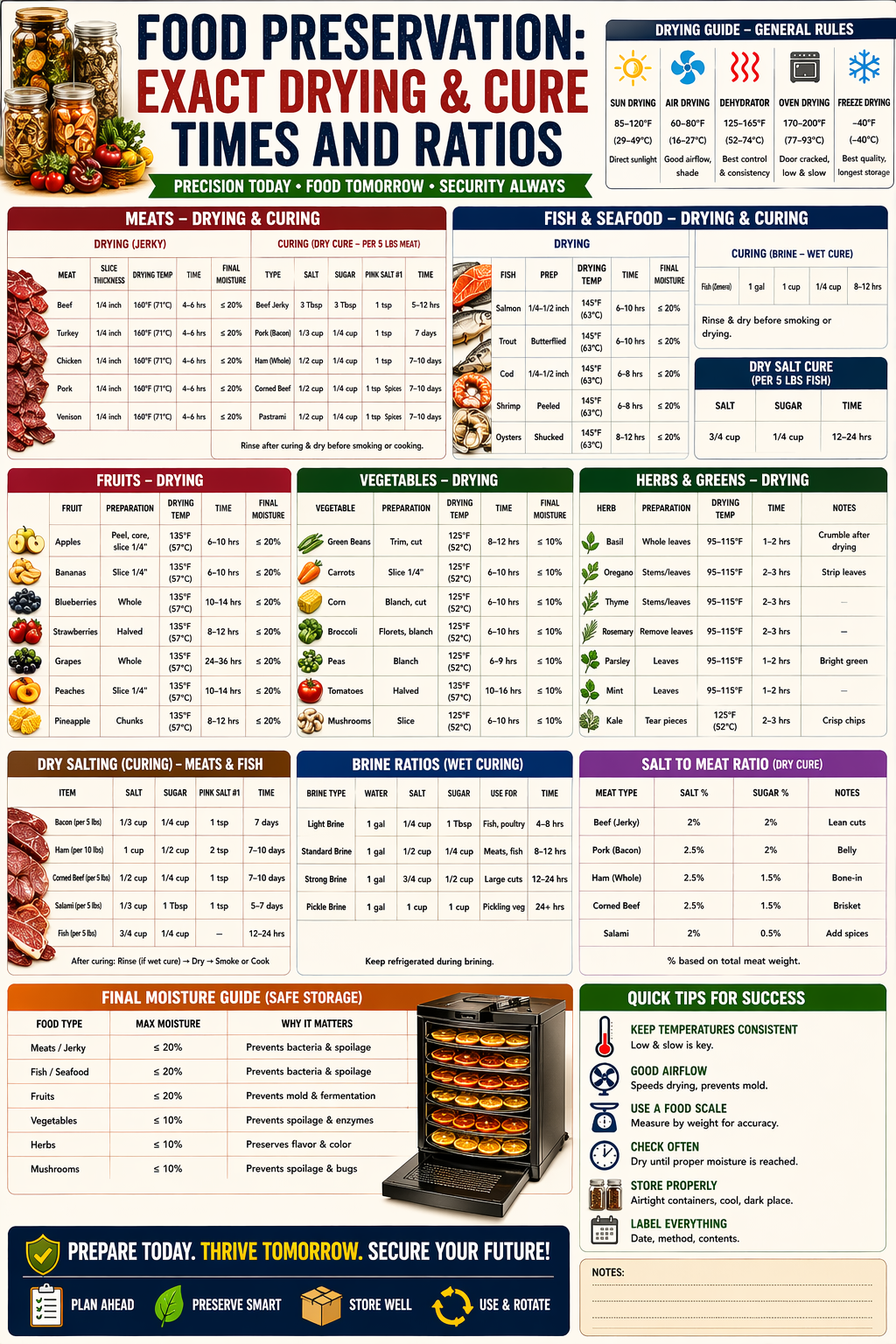
6 Smoking & Fire-Based Methods
6.1 Cold Smoking
 Cold smoking is a preservation method that exposes food to smoke at low temperatures, typically below 30°C (86°F). Unlike cooking methods, cold smoking does not cook the food. Instead, it infuses flavor while creating conditions that slow bacterial growth and extend shelf life.
The preservation effect of cold smoking comes from a combination of factors. Smoke contains natural compounds that have antimicrobial and antioxidant properties. These compounds help inhibit spoilage while also protecting fats from oxidation. At the same time, the drying effect of airflow during smoking reduces surface moisture, further limiting bacterial activity.
Cold smoking is most commonly used for foods like fish, cured meats, cheese, and certain vegetables. Because the temperatures are low, the food must often be pre-treated—typically through salting or curing—before smoking. This ensures that the food is safe and properly prepared for the process.
The smoking process can take hours or even days, depending on the type of food and desired results. Consistent temperature control is essential. If temperatures rise too high, the food may begin to cook, altering texture and potentially affecting safety.
One of the key advantages of cold smoking is its ability to preserve food while enhancing flavor. The slow infusion of smoke creates complex, rich profiles that cannot be achieved through other methods. This makes cold smoking both a preservation technique and a culinary process.
However, cold smoking requires careful management. Because it does not rely on high heat, it does not eliminate all harmful bacteria on its own. Proper curing, clean handling, and controlled conditions are essential to ensure safety.
In a preparedness context, cold smoking provides a valuable method for extending the life of protein-rich foods. When combined with salting or drying, it becomes part of a powerful multi-step preservation strategy.
6.2 Hot Smoking
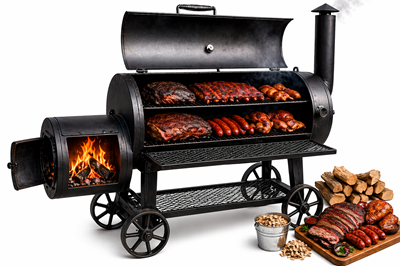 Hot smoking combines the preservation effects of smoke with the cooking process. In this method, food is exposed to smoke at higher temperatures, typically between 65°C and 120°C (150°F–250°F). This not only infuses flavor but also cooks the food, making it ready to eat.
The higher temperatures used in hot smoking help reduce bacterial levels, improving safety compared to cold smoking alone. At the same time, smoke compounds continue to provide antimicrobial and antioxidant benefits, contributing to preservation.
Hot smoking is commonly used for meats, poultry, and fish. The process can range from a few hours to an entire day, depending on the size and type of food. The result is a product that is both flavorful and partially preserved.
One of the main advantages of hot smoking is its accessibility. It can be performed using a variety of setups, from dedicated smokers to improvised systems such as covered grills or fire pits. This flexibility makes it suitable for both modern and off-grid environments.
While hot smoking extends shelf life, it does not preserve food as long as methods like drying or curing alone. The food still contains moisture, which can support bacterial growth over time. For longer storage, hot-smoked foods are often refrigerated, frozen, or further processed.
Flavor development is a major benefit of hot smoking. Different types of wood produce distinct flavors, allowing for customization based on preference. The combination of heat and smoke creates a depth of flavor that enhances the overall quality of the food.
Temperature control is important for achieving consistent results. Too much heat can dry out the food or cause uneven cooking, while too little heat may not fully cook the product. Monitoring and adjusting the heat source is key to success.
In a preparedness scenario, hot smoking serves as both a cooking and preservation method. It allows for immediate consumption while extending the usability of food, making it a practical and versatile option.
6.3 Smokehouses (DIY & Traditional Builds)
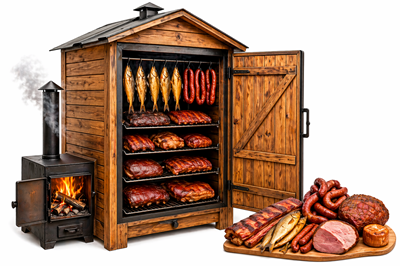 A smokehouse is a dedicated structure designed for smoking and preserving food. It provides a controlled environment where temperature, airflow, and smoke levels can be managed effectively. Smokehouses have been used for centuries and remain one of the most reliable ways to process large quantities of food.
Traditional smokehouses are often simple structures made from wood, stone, or other available materials. They typically consist of a firebox, where smoke is generated, and a separate chamber where food is hung or placed. This separation allows for better control of temperature, particularly for cold smoking.
Modern smokehouses may incorporate additional features such as adjustable vents, thermometers, and improved insulation. These enhancements provide greater precision and consistency, but the basic principles remain the same.
One of the key advantages of a smokehouse is scalability. It allows for the processing of large amounts of food at once, making it ideal for preserving harvests or processing livestock. This efficiency is particularly valuable in homesteading and preparedness settings.
Airflow is a critical component of smokehouse design. Proper ventilation ensures that smoke circulates evenly while preventing the buildup of excessive heat or moisture. Adjustable vents allow for fine-tuning of conditions based on the type of smoking being performed.
Fuel selection also plays an important role. Hardwoods such as oak, hickory, and fruitwoods are commonly used because they produce clean, flavorful smoke. Softwoods are generally avoided due to the potential for unwanted flavors and residues.
Building a smokehouse can range from simple to complex. A basic structure can be constructed using locally available materials, while more advanced designs may include permanent installations with precise controls. Even temporary setups can be effective when properly designed.
In a preparedness context, a smokehouse represents a long-term investment in food security. It provides a reliable, off-grid method for preserving food, particularly protein sources. Combined with other methods such as salting and drying, it becomes part of a comprehensive preservation system.
6.4 Summary
Smoking and fire-based methods provide both preservation and flavor:
- Cold Smoking → Low temperature, requires pre-curing, long-term enhancement
- Hot Smoking → Cooks and preserves, shorter-term storage
- Smokehouses → Controlled environment, scalable, off-grid capable
7 Fermentation & Pickling
7.1 Lacto-Fermentation (Sauerkraut, Kimchi, etc.)
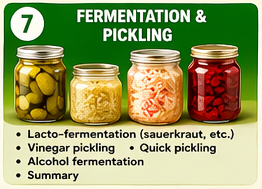 Lacto-fermentation is one of the oldest and most reliable methods of food preservation. It uses naturally occurring beneficial bacteria—primarily lactic acid bacteria—to convert sugars in food into lactic acid. This acid lowers the pH of the food, creating an environment where harmful bacteria cannot survive.
Unlike many preservation methods that focus on removing moisture or applying heat, lacto-fermentation works by encouraging the growth of “good” bacteria. These beneficial microbes outcompete harmful organisms, stabilizing the food and extending its shelf life.
Common examples of lacto-fermented foods include sauerkraut, kimchi, pickles (fermented rather than vinegar-based), and certain fermented vegetables. The process typically involves combining food with salt, which helps draw out moisture and creates a brine. The food is then submerged in this brine and left to ferment over time.
Salt plays a critical role in lacto-fermentation. It suppresses undesirable bacteria while allowing lactic acid bacteria to thrive. The concentration of salt must be balanced—too little may allow spoilage, while too much can inhibit fermentation.
Temperature also affects the process. Warmer temperatures speed up fermentation, while cooler temperatures slow it down. This allows for some control over flavor development and texture.
One of the major advantages of lacto-fermentation is its ability to enhance nutritional value. The process can increase the availability of certain nutrients and introduce beneficial probiotics that support digestion and overall health.
Flavor is another benefit. Fermentation produces complex, tangy profiles that develop over time. These flavors can vary widely depending on ingredients, salt levels, and fermentation duration.
In a preparedness context, lacto-fermentation offers a low-tech, reliable method of preservation that requires minimal equipment. It is particularly valuable for preserving fresh produce without electricity, making it an important addition to any self-reliant food system.
7.2 Vinegar Pickling
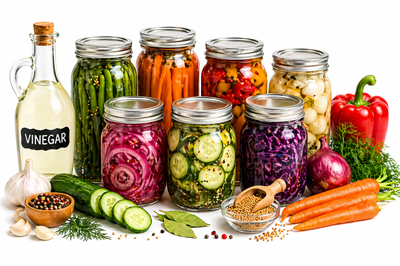 Vinegar pickling is a preservation method that uses acidity to inhibit bacterial growth. Unlike fermentation, which generates acid naturally, vinegar pickling introduces acid directly into the food. This creates an environment where harmful microorganisms cannot survive.
In this method, food is submerged in a solution of vinegar, water, salt, and often sugar or spices. The vinegar lowers the pH of the food quickly, making it safe for storage. This immediate acidification distinguishes it from slower fermentation processes.
Vinegar pickling is commonly used for vegetables such as cucumbers, carrots, onions, and peppers. It can also be applied to fruits and certain proteins. The process is relatively simple and produces consistent results.
One of the main advantages of vinegar pickling is speed. Because the acidity is introduced directly, the food becomes stable almost immediately after processing. This makes it a practical option for quick preservation.
Flavor customization is another benefit. The addition of herbs, spices, and sweeteners allows for a wide range of flavor profiles, from sharp and tangy to sweet and mild. This versatility makes pickled foods both functional and enjoyable.
Proper acidity levels are essential for safety. The vinegar used must be strong enough to maintain a low pH, and dilution should be carefully controlled. Using tested ratios ensures that the final product remains safe for consumption.
Vinegar pickling can be used in combination with other preservation methods, such as water bath canning, to create shelf-stable products. This extends shelf life while maintaining the benefits of pickling.
In a preparedness context, vinegar pickling provides a fast, reliable way to preserve food. It requires minimal equipment and offers flexibility in both ingredients and flavor, making it a valuable addition to any preservation strategy.
7.3 Quick Pickling (Short-Term Preservation)
Quick pickling, also known as refrigerator pickling, is a simplified version of vinegar pickling designed for short-term use. In this method, food is placed in a vinegar-based solution and stored in a refrigerator without undergoing further processing.
The primary goal of quick pickling is to enhance flavor and extend freshness rather than achieve long-term preservation. The acidic environment slows bacterial growth, allowing food to remain usable for longer than it would otherwise.
This method is commonly used for vegetables such as cucumbers, radishes, onions, and carrots. The process is straightforward: prepare the pickling solution, pour it over the food, and allow it to sit for a period of time to absorb flavors.
One of the main advantages of quick pickling is convenience. It requires minimal preparation and no specialized equipment, making it accessible for everyday use. It also allows for rapid flavor development, often within hours or days.
However, quick pickled foods are not shelf-stable. They must be kept refrigerated and consumed within a relatively short period. This limits their usefulness for long-term storage but makes them ideal for immediate use.
Flavor flexibility is a key feature. By adjusting the ratio of vinegar, salt, sugar, and spices, a wide range of tastes can be achieved. This makes quick pickling a versatile technique for enhancing meals.
In a preparedness context, quick pickling serves as a complementary method rather than a primary preservation strategy. It is useful for extending the life of fresh foods when refrigeration is available, but it should be combined with other methods for long-term storage.
7.4 Alcohol Fermentation (Beer, Wine, Mead)
Alcohol fermentation is a preservation method that converts sugars into alcohol through the action of yeast. The resulting alcohol creates an environment that inhibits the growth of many harmful microorganisms, allowing the product to remain stable over time.
This process is used to produce beverages such as beer, wine, and mead. Each of these products begins with a sugar source—grains, fruits, or honey—which is then fermented by yeast. As fermentation progresses, alcohol levels increase while sugar levels decrease.
In addition to preservation, alcohol fermentation transforms the original ingredients into entirely new products with distinct flavors and characteristics. This makes it both a functional and cultural practice with a long history.
One of the key advantages of alcohol fermentation is its ability to create shelf-stable products without refrigeration. Properly fermented beverages can last for extended periods, particularly when stored in sealed containers.
Control is an important aspect of the process. Factors such as temperature, yeast strain, and fermentation time all influence the final product. Managing these variables allows for consistent results and desired flavor profiles.
While alcohol fermentation is often associated with beverages, it also plays a role in broader food preservation systems. Fermented liquids can be used in cooking, flavoring, and even as part of other preservation methods.
In a preparedness context, alcohol fermentation provides both practical and psychological benefits. It creates a stable product that can be stored long-term while also offering variety and morale support in challenging conditions.
7.5 Summary
Fermentation and pickling offer unique preservation benefits:
- Lacto-Fermentation → Natural bacteria, long-term preservation, probiotic benefits
- Vinegar Pickling → Immediate acidification, fast and reliable
- Quick Pickling → Short-term, convenient, flavor-focused
- Alcohol Fermentation → Long-term storage, transforms food into stable products
8 Sugar-Based Preservation
8.1 Jams & Jellies
 Jams and jellies are among the most familiar and widely used forms of sugar-based preservation. They rely on high concentrations of sugar combined with natural or added pectin to create a gel-like consistency that traps moisture and inhibits microbial growth.
The preservation effect comes primarily from sugar’s ability to bind water. By reducing the availability of free water, sugar creates an environment where bacteria and mold cannot easily grow. This process, combined with proper sealing, allows jams and jellies to remain shelf-stable for extended periods.
Jams are typically made by cooking crushed or chopped fruit with sugar, allowing the natural fibers and pulp to remain in the final product. Jellies, on the other hand, are made from strained fruit juice, resulting in a clear, smooth consistency. Both rely on a balance of sugar, acid, and pectin to achieve proper gel formation.
Pectin plays a key role in structure. It is a natural substance found in many fruits, particularly apples and citrus. When combined with sugar and acid, it forms a network that thickens the mixture. In some cases, additional pectin is added to ensure consistent results.
The cooking process not only activates pectin but also helps reduce moisture, further enhancing preservation. Once prepared, the hot mixture is poured into sterilized jars and sealed. This creates a vacuum as the jars cool, protecting the contents from contamination.
Flavor is a major advantage of jams and jellies. The cooking process concentrates the natural sweetness and aroma of the fruit, creating a product that is both preserved and highly enjoyable. A wide range of fruits can be used, allowing for variety and customization.
However, sugar content must be carefully managed. Too little sugar can lead to spoilage or poor gel formation, while too much may affect taste and texture. Following balanced recipes ensures both safety and quality.
In a preparedness context, jams and jellies provide a way to preserve seasonal fruit while creating a versatile, long-lasting food source. They offer both nutritional value and variety, making them a valuable addition to long-term storage.
8.2 Preserves & Marmalades
Preserves and marmalades are closely related to jams and jellies but differ in texture and preparation. These methods focus on maintaining larger pieces of fruit or incorporating additional elements such as citrus peel.
Preserves are made by cooking whole or large chunks of fruit in sugar syrup. The goal is to retain the structure and appearance of the fruit while surrounding it with a thick, sweet liquid. This creates a product that highlights both texture and flavor.
Marmalades are a specific type of preserve made primarily from citrus fruits. They include both the juice and the peel, resulting in a distinctive combination of sweetness and slight bitterness. The peel adds texture and complexity, making marmalade unique among preserved products.
As with jams and jellies, sugar plays a central role in preservation. It reduces water activity and helps stabilize the product. The cooking process further enhances shelf life by reducing moisture and creating a sealed environment when jarred.
One of the main advantages of preserves and marmalades is their versatility. They can be used as spreads, ingredients in cooking, or flavor enhancers in a variety of dishes. Their rich texture and concentrated flavors make them highly adaptable.
Preparation requires careful attention to timing and temperature. Overcooking can break down the fruit too much, while undercooking may result in a thin or unstable product. Achieving the right balance ensures both preservation and quality.
In a preparedness setting, preserves and marmalades offer a way to store fruit in a form that retains more of its original character. They provide variety and can help make stored food more enjoyable over time.
8.3 Candied Fruits
Candied fruits are created by slowly infusing fruit with sugar until much of the natural moisture is replaced. This process results in a dense, sweet product that can be stored for long periods without refrigeration.
The method involves cooking fruit in increasingly concentrated sugar solutions over time. As the sugar concentration rises, it draws water out of the fruit while gradually replacing it. This creates a stable environment where spoilage organisms cannot thrive.
Candied fruits can be made from a variety of ingredients, including citrus peels, berries, and even certain vegetables. The process may take several days, as the fruit is repeatedly soaked and heated in syrup to achieve the desired level of preservation.
One of the key advantages of candying is durability. Properly prepared candied fruits can last for months or longer when stored in airtight conditions. Their low moisture content and high sugar concentration make them highly resistant to spoilage.
Flavor and texture are also transformed. The fruit becomes firm and intensely sweet, with a concentrated flavor profile. This makes candied fruits suitable for use in baking, snacks, or as a supplemental energy source.
However, the process requires time and attention. Achieving the correct sugar concentration and ensuring even absorption are essential for consistent results. Improper technique can lead to uneven texture or reduced shelf life.
In a preparedness context, candied fruits provide a compact, energy-dense food option. They are easy to store, require no refrigeration, and offer a long shelf life, making them a practical addition to a preserved food supply.
8.4 Syrups & Honey Preservation
Syrups and honey have long been used as preservation mediums due to their natural ability to inhibit microbial growth. High sugar concentration creates an environment with low water activity, preventing bacteria and mold from developing.
Syrups are typically made by dissolving sugar in water and may include fruit juices, herbs, or spices. Foods can be preserved by storing them in these syrups, which act as both a protective barrier and a flavoring agent.
Honey is particularly notable for its natural preservation properties. It contains very little free water and has natural antimicrobial characteristics. Foods submerged in honey can remain stable for extended periods, and honey itself can last indefinitely when stored properly.
One of the advantages of using syrups and honey is versatility. They can be used to preserve fruits, nuts, and even certain cooked foods. They also add flavor and sweetness, enhancing the overall appeal of preserved items.
The process of preserving with syrups involves careful preparation. The concentration of sugar must be high enough to ensure stability, and the food must be fully submerged to prevent exposure to air.
Storage conditions are also important. Syrup-based preserves should be kept in airtight containers and stored in a cool, dark place to maintain quality. Over time, some crystallization or separation may occur, but this does not necessarily indicate spoilage.
In a preparedness context, syrups and honey provide both preservation and nutrition. They offer a long-lasting source of energy and can be used in a variety of ways, from direct consumption to cooking and flavoring.
Honey, in particular, stands out as a multi-purpose resource. Beyond preservation, it can be used for medicinal purposes, making it a valuable addition to any long-term storage plan.
8.5 Summary
Sugar-based preservation methods are highly effective for fruits and sweet foods:
- Jams & Jellies → Gelled, long-lasting, versatile
- Preserves & Marmalades → Chunky, flavorful, retains fruit structure
- Candied Fruits → Dense, energy-rich, long shelf life
- Syrups & Honey → Liquid preservation, multi-purpose
9 Fat-Based Preservation
9.1 Confit (Meat Preserved in Fat)
 Confit is a traditional preservation method that involves cooking meat slowly in its own fat and then storing it fully submerged in that fat. This process both cooks and preserves the meat, creating a product that can be stored for extended periods under the right conditions.
The preservation effect of confit comes from two key factors: moisture reduction and oxygen exclusion. During the cooking process, much of the water content in the meat is driven off. Once cooked, the meat is completely covered in fat, which forms a barrier that prevents air—and therefore oxygen—from reaching the food. Without oxygen, many spoilage organisms cannot survive.
Historically, confit was widely used in regions where refrigeration was unavailable. Meats such as duck, goose, and pork were commonly preserved this way, allowing them to be stored for weeks or even months in cool environments.
The process begins with salting the meat, which helps draw out moisture and enhances flavor. The meat is then slowly cooked at low temperatures in fat until tender. After cooking, it is placed in a container and covered completely with the same fat, ensuring no part of the meat is exposed.
One of the major advantages of confit is its ability to produce a ready-to-eat product. The meat is fully cooked during the process and can be reheated or used directly in meals. The flavor is rich and concentrated, making it both practical and desirable.
However, storage conditions are critical. Confit must be kept in a cool environment to remain stable. If temperatures rise too high, the fat can soften or separate, increasing the risk of spoilage. In modern settings, refrigeration is often used to extend shelf life.
In a preparedness context, confit offers a reliable method for preserving protein without relying entirely on freezing or canning. It combines preservation with culinary value, making it a useful addition to a diversified food storage strategy.
9.2 Potted Meats
Potted meats are a variation of fat-based preservation that involves cooking meat, finely shredding or grinding it, and then sealing it under a layer of fat. This method creates a compact, spreadable product that is both preserved and easy to use.
The process begins by cooking the meat thoroughly, often with seasoning or spices. Once cooked, the meat is broken down into small pieces and packed into containers. Melted fat is then poured over the top, forming a seal as it cools and solidifies.
Like confit, the preservation effect relies on excluding oxygen. The fat layer acts as a barrier, preventing air from reaching the meat. This helps slow spoilage and extend shelf life.
Potted meats have been used historically as a way to preserve leftovers or smaller cuts of meat. They are particularly useful for creating ready-to-eat food that requires minimal preparation.
One of the main advantages of potted meats is convenience. The product can be used directly as a spread, filling, or ingredient in other dishes. Its compact form also makes it easy to store and transport.
Flavor is another benefit. The combination of cooked meat and fat creates a rich, savory product that can be enhanced with herbs and spices. This makes potted meats both practical and enjoyable.
However, like other fat-based methods, proper storage is essential. The seal must remain intact, and the product should be kept in a cool environment to prevent spoilage. If the fat layer is broken or the container is exposed to air, the preservation effect is reduced.
In a preparedness context, potted meats provide a flexible way to store protein in a ready-to-use form. They are particularly useful for short- to medium-term storage and can complement other preservation methods.
9.3 Oil Preservation (Herbs, Vegetables)
Oil preservation involves storing food submerged in oil, creating a barrier that limits exposure to air. This method is commonly used for herbs, vegetables, and certain prepared foods.
The primary function of oil in preservation is to exclude oxygen. By covering the food completely, oil prevents air from reaching the surface, reducing oxidation and slowing the growth of some microorganisms.
This method is often used for items such as garlic, herbs, sun-dried tomatoes, and roasted vegetables. The oil not only preserves the food but also absorbs and carries its flavors, creating a dual-purpose product.
One of the advantages of oil preservation is its simplicity. It requires minimal equipment and can be performed quickly. It also enhances flavor, making preserved items more versatile in cooking.
However, oil preservation has important limitations. Unlike methods that remove moisture or apply heat, oil alone does not eliminate bacteria. If food contains moisture or is not properly prepared, spoilage can still occur beneath the oil layer.
For this reason, oil preservation is often combined with other methods. Foods may be dried, cooked, or acidified before being stored in oil. This reduces the risk of spoilage and improves safety.
Storage conditions are also critical. Oil-preserved foods should be kept in cool, dark environments and used within a reasonable timeframe. In some cases, refrigeration may be necessary to maintain quality.
In a preparedness context, oil preservation is best used as a supplemental method. It adds variety and flavor while providing short- to medium-term storage options. When combined with proper preparation and storage, it can be a valuable addition to a preservation system.
9.4 Summary
Fat-based preservation methods focus on excluding oxygen and reducing moisture:
- Confit → Long-term meat preservation, rich flavor, requires cool storage
- Potted Meats → Ready-to-eat, compact, convenient
- Oil Preservation → Flavorful, versatile, best for short- to medium-term use
10 Advanced & Traditional Methods
10.1 Vacuum Sealing
 Vacuum sealing is a modern preservation technique that removes air from packaging before sealing it. By eliminating oxygen, this method significantly slows oxidation and reduces the growth of aerobic bacteria, extending the shelf life of many foods.
The process involves placing food in a specially designed bag and using a vacuum sealer to extract air before sealing the package. This creates a tight, oxygen-reduced environment that protects the food from external contaminants.
One of the main advantages of vacuum sealing is its versatility. It can be used for fresh foods, cooked meals, dry goods, and even non-food items. It is particularly effective when combined with other preservation methods such as freezing or dehydration.
For example, vacuum sealing frozen foods helps prevent freezer burn by eliminating air pockets. When used with dehydrated foods, it reduces exposure to oxygen and moisture, extending shelf life even further.
However, vacuum sealing does not eliminate all bacteria. Some microorganisms can survive in low-oxygen environments, so proper preparation and storage are still essential. Perishable foods should still be refrigerated or frozen unless combined with additional preservation methods.
Another consideration is packaging durability. Bags must be strong enough to maintain the seal over time, and sharp or irregularly shaped foods may require additional protection to prevent punctures.
In a preparedness context, vacuum sealing is a powerful tool for extending the life of stored food and improving organization. It allows for compact storage and helps maintain quality, making it a valuable addition to any preservation system.
10.2 Modified Atmosphere Storage
Modified atmosphere storage involves altering the composition of gases surrounding food to slow spoilage. Instead of simply removing air, this method replaces it with a controlled mix of gases—typically reducing oxygen and increasing carbon dioxide or nitrogen.
This technique is widely used in commercial food storage, particularly for fruits, vegetables, and packaged goods. By adjusting the atmosphere, it slows respiration in produce and inhibits the growth of certain microorganisms.
In smaller-scale applications, modified atmosphere storage can be achieved using specialized packaging or by combining vacuum sealing with inert gases. While not as common in home settings, the principles behind it are important for understanding advanced preservation.
One of the key benefits is extended freshness. By slowing natural processes such as ripening and oxidation, food can remain usable for longer periods without significant quality loss.
However, this method requires precise control and monitoring. Incorrect gas levels can lead to undesirable outcomes, including spoilage or changes in flavor and texture. For this reason, it is more commonly used in controlled environments.
In a preparedness context, modified atmosphere storage is less practical as a primary method but provides insight into how controlling oxygen and other gases can extend shelf life. Many simpler methods, such as vacuum sealing and oxygen absorbers, apply similar principles in more accessible ways.
10.3 Oxygen Absorbers & Mylar Bags
Oxygen absorbers and Mylar bags are among the most effective tools for long-term storage of dry goods. Together, they create a low-oxygen, moisture-resistant environment that significantly extends shelf life.
Mylar bags are made from layered materials that provide strong barriers against oxygen, light, and moisture. When food is placed inside and sealed, the bag protects it from environmental factors that contribute to spoilage.
Oxygen absorbers are small packets containing iron powder that reacts with oxygen inside the sealed bag. As the oxygen is removed, the environment becomes unsuitable for many spoilage organisms and prevents oxidation.
This combination is particularly effective for storing items such as grains, beans, rice, pasta, and dehydrated foods. When used correctly, it can extend shelf life to 10, 20, or even 30 years.
Proper preparation is essential. Foods should be dry and free from excess moisture before sealing. The correct size and number of oxygen absorbers must be used to ensure all oxygen is removed.
Sealing the Mylar bag is typically done with heat, creating an airtight closure. The bag is often placed inside a secondary container, such as a bucket, to provide additional protection against physical damage and pests.
One of the main advantages of this method is its simplicity and effectiveness. It requires relatively low-cost materials and provides long-term results without the need for electricity.
In a preparedness context, Mylar bags and oxygen absorbers are a cornerstone of long-term food storage. They provide a reliable way to protect staple foods and ensure a stable supply over extended periods.
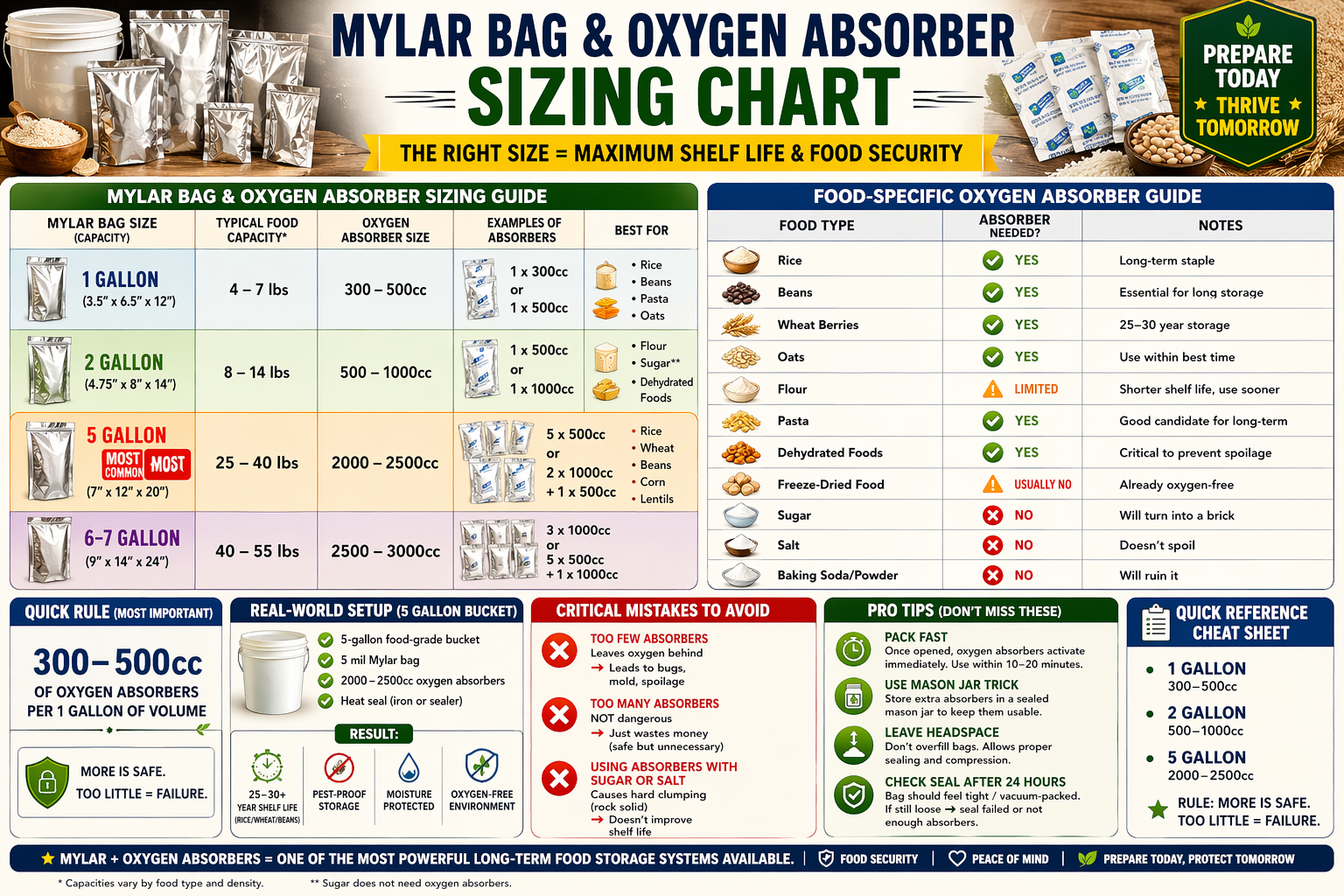
10.4 Ash Storage (Traditional Root Preservation)
Ash storage is a traditional preservation method that uses wood ash to protect and preserve certain foods, particularly root vegetables. This technique has been used for centuries in regions where other preservation methods were limited.
The process involves placing food in a container and covering it with clean, dry wood ash. The ash acts as a barrier, protecting the food from air, moisture, and pests. It also creates an alkaline environment that can inhibit microbial growth.
Root vegetables such as carrots, beets, and turnips are commonly preserved using this method. When properly stored, they can remain usable for months without refrigeration.
One of the key advantages of ash storage is its simplicity. It requires no specialized equipment and can be performed using readily available materials. This makes it particularly valuable in off-grid or emergency situations.
However, cleanliness is critical. The ash must be free from contaminants, and the food should be in good condition before storage. Damaged or spoiled items can affect the entire batch.
Moisture control is also important. The ash must remain dry to be effective. If it becomes damp, it can lose its protective properties and allow spoilage to occur.
In a preparedness context, ash storage provides a low-tech, reliable option for preserving certain types of food. It complements other methods such as root cellaring and offers an additional layer of resilience.
10.5 Alcohol Preservation (Tinctures & Extracts)
Alcohol preservation involves using high-proof alcohol to extract and preserve compounds from plants, herbs, and other materials. This method is commonly used to create tinctures and extracts that can be stored for long periods.
The preservation effect comes from alcohol’s ability to inhibit microbial growth. At sufficient concentrations, alcohol creates an environment where bacteria and mold cannot survive.
Tinctures are made by soaking plant material in alcohol, allowing the active compounds to be extracted over time. The resulting liquid is then strained and stored in sealed containers.
This method is particularly useful for preserving medicinal herbs, flavorings, and other plant-based materials. It allows for the long-term storage of compounds that might otherwise degrade.
One of the main advantages of alcohol preservation is longevity. Properly prepared tinctures can last for years without refrigeration, making them highly practical for long-term storage.
However, the method is limited to specific types of materials and applications. It is not a general-purpose food preservation technique but rather a specialized method for certain uses.
In a preparedness context, alcohol preservation provides a way to store valuable plant-based resources in a stable form. It adds versatility to a preservation system and supports both nutritional and medicinal needs.
10.6 Lye Preservation (Olives, Traditional Methods)
Lye preservation is a traditional method used primarily for processing and preserving certain foods, most notably olives. Lye (a strong alkaline solution) is used to remove bitterness and prepare the food for further preservation.
In this method, food is soaked in a lye solution for a specific period. This process breaks down compounds that cause bitterness and alters the structure of the food. After treatment, the food is thoroughly rinsed and often transferred to a brine or other preservation medium.
While lye itself is not a preservative, it plays an important role in preparing food for preservation. By altering the chemical composition, it enables other methods, such as brining or fermentation, to be more effective.
One of the main advantages of lye treatment is its ability to transform otherwise inedible or unpalatable foods into usable products. This expands the range of foods that can be preserved and consumed.
However, lye must be handled with care. It is a caustic substance that requires proper safety precautions during use. Thorough rinsing is essential to ensure that no residue remains in the final product.
In a preparedness context, lye preservation represents a specialized but valuable technique. It highlights the importance of understanding traditional methods and how they can be combined with modern practices.
10.7 Summary
Advanced and traditional methods expand preservation capabilities:
- Vacuum Sealing → Removes oxygen, extends shelf life, versatile
- Modified Atmosphere → Controls gases, slows spoilage (advanced)
- Mylar + Oxygen Absorbers → Long-term storage (10–30+ years)
- Ash Storage → Low-tech root preservation
- Alcohol Preservation → Long-term extracts and tinctures
- Lye Preservation → Pre-treatment for specific foods
11 Grain & Dry Goods Storage
11.1 Long-Term Storage of Grains & Beans
 Grains and beans form the backbone of long-term food storage. They are calorie-dense, nutritionally balanced, relatively inexpensive, and capable of lasting for decades when stored properly. For preppers and anyone focused on self-reliance, these staples provide a reliable foundation for sustaining life over extended periods.
Grains such as rice, wheat, oats, and corn are rich in carbohydrates, providing essential energy. Beans and legumes, including lentils and chickpeas, add protein, fiber, and important nutrients. Together, they create a balanced and versatile food base that can be adapted into a wide range of meals.
The longevity of these foods depends on controlling key environmental factors—primarily moisture, oxygen, temperature, and pests. When kept dry, sealed from air, stored in cool conditions, and protected from insects or rodents, grains and beans can remain usable for 10 to 30 years or more.
Moisture is the most critical factor. Even small amounts of moisture can lead to mold growth and spoilage. For this reason, grains and beans should be stored in low-humidity environments and packaged in moisture-resistant containers.
Oxygen also plays a significant role. Exposure to air can lead to oxidation and supports the survival of insects and microorganisms. Using oxygen absorbers or vacuum sealing helps create a stable, low-oxygen environment that extends shelf life.
Temperature affects longevity as well. Cooler storage conditions significantly slow chemical reactions and biological activity. As a general rule, lower temperatures result in longer storage life.
Grains and beans are also highly adaptable. They can be stored in bulk, processed into flour, sprouted, or cooked in a variety of ways. This versatility makes them essential for long-term planning.
In a preparedness context, these foods are unmatched in their combination of shelf life, nutritional value, and cost-effectiveness. Building a solid supply of grains and beans is one of the most important steps in creating a resilient food system.
11.2 Flour vs. Whole Grain Storage
When storing grains, an important consideration is whether to store them in their whole form or as processed flour. While both options have advantages, they differ significantly in shelf life and stability.
Whole grains retain their natural protective outer layer, which helps shield the interior from oxygen and moisture. This makes them far more stable for long-term storage. When properly stored, whole grains can last for decades while maintaining their nutritional value.
Flour, on the other hand, has been processed and exposed to air. This increases its surface area and makes it more susceptible to oxidation and spoilage. Oils within the grain, particularly in whole wheat flour, can become rancid over time, significantly reducing shelf life.
As a result, flour is generally better suited for short- to medium-term storage, while whole grains are preferred for long-term preparedness. By storing whole grains and processing them as needed, you retain flexibility and maximize longevity.
Grinding grain into flour requires additional equipment, such as a manual or electric grain mill. While this adds complexity, it also provides independence. A manual grinder, in particular, ensures that flour can be produced even without power.
Nutritional retention is another consideration. Whole grains preserve their full nutrient profile, including fiber, vitamins, and minerals. Freshly ground flour retains more of these nutrients compared to pre-processed options.
In a preparedness strategy, a balanced approach is often best. Storing a combination of whole grains for long-term use and some flour for immediate needs provides both convenience and resilience.
Understanding the differences between these forms allows for better planning and ensures that your food supply remains both usable and nutritious over time.
11.3 Pest Control & Prevention
Protecting stored food from pests is a critical aspect of long-term storage. Insects, rodents, and other pests can quickly compromise even the best-prepared food supplies if not properly managed.
Insects are one of the most common threats to stored grains and dry goods. Eggs may already be present in food at the time of purchase, and under the right conditions, they can hatch and multiply. This makes prevention an essential step in storage preparation.
One effective method of pest control is eliminating oxygen. Using oxygen absorbers in sealed containers creates an environment where insects cannot survive. Freezing food for a period before storage can also help eliminate existing eggs or larvae.
Rodents pose a different type of threat. They can chew through packaging and contaminate food supplies. Using durable containers such as food-grade buckets or metal bins provides a strong physical barrier.
Cleanliness is also important. Keeping storage areas free of debris and regularly inspecting containers helps prevent infestations. Early detection allows for quick action before problems spread.
Environmental control plays a role as well. Cooler temperatures and low humidity reduce the likelihood of pest activity. Proper storage conditions not only extend shelf life but also deter pests.
In a preparedness context, pest control is not optional—it is essential. A single infestation can compromise large quantities of food, making prevention and monitoring critical components of any storage system.
11.4 Bulk Storage Systems (Buckets, Barrels, Silos)
Bulk storage systems provide a practical and efficient way to store large quantities of food. For preppers and homesteaders, these systems allow for the consolidation of supplies while maintaining protection against environmental factors.
Food-grade buckets are one of the most common storage options. They are durable, stackable, and relatively inexpensive. When combined with Mylar bags and oxygen absorbers, they provide excellent protection against moisture, air, and pests.
Barrels and larger containers offer increased capacity for those storing significant amounts of food. These systems are often used for grains, beans, and other staples. Proper sealing and placement are important to maintain effectiveness.
Silos represent a larger-scale solution, typically used in agricultural settings. While not common in most preparedness plans, the principles behind silo storage—controlled environment, bulk capacity, and protection—can be applied to smaller systems.
Organization is a key factor in bulk storage. Clearly labeling containers, tracking contents, and maintaining an inventory system ensures that food can be accessed and rotated efficiently.
Location also matters. Storage areas should be cool, dry, and protected from light. Basements, storage rooms, and dedicated pantry spaces are often ideal.
One of the main advantages of bulk storage is efficiency. It reduces packaging waste and allows for large quantities of food to be stored in a compact space. This is particularly valuable for long-term planning.
However, bulk storage requires careful management. Once a container is opened, the contents are exposed to air and moisture, reducing shelf life. Dividing food into smaller portions can help mitigate this issue.
In a preparedness context, bulk storage systems provide the foundation for a large-scale, long-term food supply. When combined with proper packaging and environmental control, they offer a reliable and scalable solution.
11.5 Summary
Grain and dry goods storage is the backbone of long-term preparedness:
- Grains & Beans → Long shelf life, high nutrition, foundational foods
- Whole vs. Flour → Whole grains last decades; flour is short-term
- Pest Control → Critical to protect long-term supplies
- Bulk Storage Systems → Efficient, scalable, and durable
12 Meat, Fish, and Dairy Preservation
12.1 Jerky & Biltong
 Jerky and biltong are two of the most effective methods for preserving meat through drying. By removing moisture, these methods create an environment where bacteria cannot easily grow, significantly extending shelf life.
Jerky is typically made by slicing meat into thin strips, seasoning it, and drying it using controlled heat and airflow. This can be done with a dehydrator, oven, or even traditional air-drying methods. The goal is to reduce moisture content while maintaining enough structure to prevent spoilage.
Biltong, a method originating from Southern Africa, differs slightly in technique. It often involves curing meat with salt and vinegar before air drying it at lower temperatures. This combination of curing and drying creates a product with a different texture and flavor profile compared to jerky.
Both methods produce lightweight, shelf-stable foods that are easy to store and transport. This makes them ideal for emergency kits, travel, and long-term storage. They are also rich in protein, providing a concentrated source of nutrition.
Proper preparation is essential for safety. Lean cuts of meat are preferred, as fat can become rancid over time. Uniform slicing ensures even drying, and proper seasoning or curing helps inhibit bacterial growth.
Storage conditions also matter. Jerky and biltong should be kept in airtight containers and stored in cool, dry environments. For extended shelf life, vacuum sealing or refrigeration may be used.
In a preparedness context, these methods provide a practical way to preserve meat without refrigeration. They combine portability, nutrition, and durability, making them a key component of any long-term food strategy.
12.2 Salted & Dried Fish
Salted and dried fish is one of the oldest preservation methods used worldwide, particularly in coastal regions. By combining salting and drying, this method removes moisture while creating an environment that inhibits bacterial growth.
The process typically begins with cleaning and preparing the fish, followed by heavy salting. The salt draws out moisture and penetrates the flesh, providing both preservation and flavor. After salting, the fish is dried using air or sun exposure until it reaches a stable state.
This combination of methods creates a product that can be stored for extended periods without refrigeration. Properly prepared dried fish can last for months or longer, depending on storage conditions.
One of the key advantages of this method is its effectiveness in preserving a highly perishable food. Fish spoils quickly under normal conditions, but salting and drying transform it into a durable, shelf-stable product.
Flavor and texture are significantly altered. The fish becomes firm and concentrated in taste, often requiring soaking or cooking before consumption. This preparation helps rehydrate the fish and reduce salt content.
Environmental conditions play an important role. Drying must occur in conditions that prevent spoilage, such as low humidity and good airflow. Protection from insects and contaminants is also essential.
In a preparedness context, salted and dried fish provides a reliable protein source that does not depend on refrigeration. It is particularly valuable in regions where fish is readily available and can be processed in large quantities.
12.3 Cured Meats (Bacon, Ham)
Curing is a preservation method that uses salt, and sometimes additional agents, to extend the life of meat. It is commonly used to produce foods such as bacon, ham, and other preserved meats.
The curing process involves applying salt to the meat, either directly or through a brine. This draws out moisture and inhibits bacterial growth. In some cases, additional curing agents are used to enhance preservation and maintain color.
Cured meats are often further processed through smoking or drying, creating a multi-step preservation method. This combination enhances both shelf life and flavor, producing products that are both durable and desirable.
One of the advantages of curing is its versatility. It can be adapted to different types of meat and combined with other preservation techniques. This allows for a wide range of products with varying textures and flavors.
Proper technique is essential for safety. The amount of salt, curing time, and environmental conditions must be carefully controlled. Inconsistent curing can lead to uneven preservation or spoilage.
Storage conditions also affect longevity. While cured meats are more stable than fresh meat, they still benefit from cool, dry storage. Some products may require refrigeration for extended shelf life.
In a preparedness context, cured meats provide a way to preserve large quantities of protein while creating a variety of usable products. They are a cornerstone of traditional preservation systems and remain highly relevant today.
12.4 Cheese Aging & Preservation
Cheese preservation is a unique process that combines fermentation, aging, and controlled storage conditions. Unlike many preservation methods, cheese is not simply stored—it is transformed over time.
The process begins with milk, which is fermented using specific cultures to create curds and whey. The curds are then processed, shaped, and aged under controlled conditions. During aging, moisture is reduced, and flavors develop through microbial activity.
Different types of cheese have varying shelf lives. Hard cheeses, such as cheddar or parmesan, have low moisture content and can be stored for extended periods. Soft cheeses, on the other hand, contain more moisture and have shorter shelf lives.
One of the key factors in cheese preservation is environment. Temperature and humidity must be carefully controlled to prevent spoilage while allowing proper aging. Traditional methods often use caves or cellars to achieve these conditions.
Waxing or coating cheese can provide additional protection by limiting exposure to air and moisture. This helps extend shelf life and maintain quality.
Cheese offers both nutritional and practical benefits. It is a concentrated source of protein and fat, making it a valuable addition to long-term storage. It also provides variety, which can be important for maintaining morale and dietary balance.
In a preparedness context, cheese preservation requires more management than some other methods but offers significant rewards. It represents a way to transform perishable milk into a stable, long-lasting food.
12.5 Powdered Milk & Dairy Alternatives
Powdered milk is one of the most practical ways to preserve dairy for long-term storage. By removing moisture, it becomes a shelf-stable product that can be stored for years when properly packaged.
The drying process reduces water content to a level where bacteria cannot grow. This allows powdered milk to remain stable without refrigeration, making it an essential component of emergency food supplies.
Powdered milk can be reconstituted by adding water, restoring it to a usable form. While it may not fully replicate the taste and texture of fresh milk, it provides essential nutrients and can be used in cooking, baking, and direct consumption.
There are different types of powdered milk, including non-fat and whole milk powder. Non-fat versions generally have a longer shelf life due to the absence of fat, which can become rancid over time.
Proper storage is critical. Powdered milk should be kept in airtight containers, protected from moisture, light, and oxygen. Using Mylar bags with oxygen absorbers can significantly extend shelf life.
In addition to traditional powdered milk, there are alternative options such as powdered plant-based milks. These provide additional flexibility for those with dietary preferences or restrictions.
In a preparedness context, powdered dairy products offer a reliable way to maintain access to nutrients that are otherwise difficult to store long-term. They are lightweight, versatile, and easy to integrate into a variety of meals.
12.6 Summary
Preserving animal-based foods is critical for long-term nutrition:
- Jerky & Biltong → Lightweight, high-protein, long-lasting
- Salted & Dried Fish → Durable, traditional protein source
- Cured Meats → Versatile, multi-method preservation
- Cheese Preservation → Transforms milk into long-term food
- Powdered Dairy → Shelf-stable, easy to store and use
13 Fruits & Vegetables
13.1 Best Methods by Food Type
 Not all fruits and vegetables preserve the same way. Each type has unique characteristics—such as moisture content, acidity, and structure—that determine which preservation methods will be most effective. Understanding these differences allows you to choose the best approach for both shelf life and quality.
High-acid fruits, such as berries, apples, and citrus, are well-suited for methods like canning, drying, and sugar preservation. Their natural acidity helps inhibit bacterial growth, making them easier to preserve safely. These fruits can be turned into jams, dried snacks, or canned products with relatively simple processes.
Low-acid vegetables, such as green beans, carrots, and corn, require more careful handling. Methods like pressure canning, dehydration, and fermentation are often used to ensure safety and longevity. These vegetables benefit from techniques that either remove moisture or create controlled environments.
Watery vegetables, such as cucumbers and tomatoes, respond well to pickling and fermentation. These methods not only preserve the food but also enhance flavor. Tomatoes can also be canned or dried, providing multiple preservation options.
Hard vegetables, including potatoes, squash, and onions, are ideal for root cellaring or cool storage. Their natural durability allows them to be stored for extended periods without extensive processing.
Matching the method to the food is essential. Using the wrong technique can lead to reduced shelf life, loss of quality, or safety risks. A diversified approach—using multiple preservation methods—ensures that a wide range of foods can be stored effectively.
In a preparedness context, understanding food-specific preservation methods allows for efficient use of resources and maximizes the value of your harvest or supply.
13.2 Leafy Greens Preservation
Leafy greens are among the most challenging foods to preserve due to their high moisture content and delicate structure. They spoil quickly under normal conditions, making preservation more complex compared to other vegetables.
One of the most effective methods for preserving leafy greens is dehydration. By removing moisture, greens such as spinach, kale, and herbs can be transformed into lightweight, shelf-stable products. Once dried, they can be stored in airtight containers and rehydrated when needed.
Freezing is another option. Greens are typically blanched briefly before freezing to deactivate enzymes that cause deterioration. This helps maintain color, flavor, and nutritional value. Frozen greens can be stored for several months with minimal loss of quality.
Fermentation can also be used for certain leafy greens, particularly when combined with other vegetables. This method not only preserves the greens but also enhances their nutritional profile through the development of beneficial bacteria.
Powdering is an advanced option. Dehydrated greens can be ground into a fine powder, creating a concentrated source of nutrients that can be added to soups, smoothies, or other dishes. This is particularly useful for maximizing storage efficiency.
One of the main challenges with leafy greens is maintaining quality. They tend to lose texture and flavor more quickly than other foods. For this reason, preservation methods should focus on extending usability rather than perfectly replicating fresh conditions.
In a preparedness context, preserving leafy greens ensures access to essential vitamins and minerals that may be difficult to obtain from other stored foods. Even in dried or powdered form, they provide valuable nutritional support.
13.3 Root Vegetables Storage
Root vegetables are among the easiest foods to store long-term due to their natural durability. Their dense structure and lower moisture content make them well-suited for methods such as root cellaring and cool storage.
Common root vegetables include potatoes, carrots, beets, turnips, and parsnips. When stored in the right conditions—cool temperatures, high humidity, and minimal light—they can remain usable for months without significant processing.
Root cellaring is one of the most effective methods for these foods. By maintaining stable temperatures and humidity levels, it slows spoilage while preserving texture and flavor. Proper ventilation is important to prevent mold and rot.
Some root vegetables can also be preserved through dehydration, canning, or fermentation. For example, carrots can be dried or pickled, while beets can be canned or fermented. These methods provide additional options for long-term storage.
Preparation is important. Root vegetables should be cleaned but not overly washed before storage, as excess moisture can lead to spoilage. Damaged or bruised items should be used first, as they are more likely to deteriorate.
Storage separation is also a consideration. Certain vegetables release gases that can affect others, so keeping them organized helps maintain quality.
In a preparedness context, root vegetables provide a reliable and low-maintenance food source. Their ability to be stored in natural conditions makes them an essential component of any long-term food system.
13.4 Fruit Preservation Techniques
Fruits offer a wide range of preservation options due to their natural sugar content and acidity. These characteristics make them highly adaptable to methods such as drying, canning, freezing, and sugar-based preservation.
Drying is one of the most effective methods for fruits. By removing moisture, fruits such as apples, berries, and bananas can be stored for extended periods while retaining flavor and nutrients. Dried fruits are lightweight and easy to store, making them ideal for long-term use.
Canning is another popular method. Fruits can be preserved in water, juice, or syrup, creating shelf-stable products that maintain much of their original flavor. Water bath canning is commonly used due to the natural acidity of most fruits.
Freezing preserves fruits with minimal loss of quality. It is particularly useful for maintaining texture and nutritional value, though it requires consistent power and storage conditions.
Sugar-based methods, such as jams, jellies, and preserves, transform fruits into long-lasting products while enhancing flavor. These methods combine preservation with versatility, allowing fruits to be used in a variety of ways.
Fermentation and pickling provide additional options, though they are less commonly used for fruits. These methods can create unique flavors and extend shelf life under the right conditions.
In a preparedness context, fruit preservation provides both nutrition and variety. Fruits offer essential vitamins and natural sugars, making them an important complement to other stored foods.
By using a combination of methods, fruits can be preserved in multiple forms, ensuring flexibility and long-term usability.
13.5 Summary
Fruits and vegetables require tailored preservation approaches:
- Best Method by Type → Match method to moisture, acidity, and structure
- Leafy Greens → Best dried, frozen, or powdered
- Root Vegetables → Ideal for root cellaring and long-term storage
- Fruits → Highly versatile (drying, canning, freezing, sugar methods)
14 Emergency & Off-Grid Preservation
14.1 No-Power Preservation Methods
 In situations where electricity is unavailable, food preservation must rely on methods that do not depend on modern infrastructure. No-power preservation techniques are essential for maintaining food supplies during outages, disasters, or long-term off-grid living.
The most reliable no-power methods focus on controlling moisture, temperature, and microbial activity. Drying is one of the most effective approaches. By removing moisture, it creates conditions where bacteria cannot survive. Air drying, sun drying, and low-tech dehydrators can all be used without electricity.
Salting is another key method. By drawing moisture out of food, salt inhibits bacterial growth and extends shelf life. This technique is particularly useful for preserving meat and fish.
Fermentation provides an additional option. By encouraging beneficial bacteria to dominate, it creates an acidic environment that prevents spoilage. This method requires minimal equipment and can be adapted to a wide range of foods.
Smoking combines drying with antimicrobial compounds from smoke, making it a powerful preservation tool for meats. When paired with salting or curing, it becomes even more effective.
Root cellaring and cool storage take advantage of natural temperature stability to extend the life of certain foods. These methods are particularly useful for vegetables and fruits that can be stored without processing.
The key to no-power preservation is simplicity and reliability. Methods should be easy to perform, require minimal resources, and be adaptable to changing conditions.
In a preparedness context, mastering these techniques ensures that food can be preserved even when modern systems fail. They provide a foundation for self-reliance and long-term resilience.
14.2 Preserving Food in Grid-Down Scenarios
A grid-down scenario presents unique challenges for food preservation. Without electricity, refrigeration and freezing become unreliable, and food must be preserved quickly to prevent spoilage.
The first priority is triage—identifying which foods are most at risk and require immediate attention. Perishable items such as meat, dairy, and fresh produce should be addressed first, as they spoil rapidly without cooling.
Cooking and consuming perishable food quickly is one option, but preservation methods should also be applied where possible. Meat can be processed into jerky, salted, or smoked. Vegetables can be fermented, pickled, or dried. Fruits can be dried or preserved with sugar.
Time is a critical factor. The sooner preservation begins, the greater the chance of success. Delays increase the risk of spoilage and reduce available options.
Resource management becomes important as well. Fuel for cooking, salt for curing, and clean water for processing must be used efficiently. Planning ahead and maintaining supplies of these resources can make a significant difference.
Adaptability is key. Conditions may not be ideal, and methods may need to be adjusted based on available materials and environmental factors. Improvisation becomes an essential skill.
In a preparedness context, understanding how to respond in a grid-down scenario allows for rapid action. It transforms a potential loss of food into an opportunity to preserve and extend available resources.
14.3 Improvised Techniques (Field Methods)
Improvised preservation techniques are essential when standard tools and equipment are unavailable. These methods rely on creativity and the ability to use available materials to achieve similar results to more controlled processes.
Drying can be improvised using simple racks, lines, or even flat surfaces exposed to air and sunlight. Covering food with cloth or mesh helps protect it from insects while allowing airflow.
Smoking can be achieved using basic fire setups. By controlling airflow and distance from the heat source, it is possible to create conditions suitable for preserving meat and fish.
Salt preservation can be performed with minimal equipment, using containers or even natural materials to hold food and salt. Ensuring proper coverage and drainage is key to success.
Cooling can be improvised using natural environments. Underground storage, shaded areas, and evaporative cooling techniques can all help reduce temperature and extend food life.
Containers can be adapted from available materials, such as jars, pots, or even natural vessels. The goal is to protect food from contamination while maintaining the necessary conditions for preservation.
The effectiveness of improvised methods depends on understanding the principles behind preservation. By focusing on moisture reduction, temperature control, and protection from contaminants, these methods can be applied in a wide range of situations.
In a preparedness context, improvisation is a critical skill. It ensures that food can be preserved even in the most challenging conditions, where standard tools are not available.
14.4 Building a Preservation Plan for Bug-Out vs. Homestead
Food preservation strategies vary depending on whether you are operating from a fixed location or a mobile environment. Understanding these differences is essential for effective planning.
In a homestead or fixed location, preservation methods can be more complex and resource-intensive. Equipment such as dehydrators, canners, and smokehouses can be used effectively. Storage space is typically larger, allowing for bulk storage and long-term planning.
A bug-out scenario requires a different approach. Mobility and weight become critical factors, and preservation methods must be lightweight and portable. Foods should be compact, durable, and easy to transport.
Dehydrated and freeze-dried foods are ideal for mobile situations due to their low weight and long shelf life. Jerky, dried fruits, and compact grains provide high energy in a small volume.
Packaging is also important. Food must be protected from moisture, damage, and contamination while remaining easy to access. Durable, resealable containers are often preferred.
Planning should consider both scenarios. A comprehensive preparedness strategy includes a stable, long-term supply at a fixed location and a portable supply for emergencies that require movement.
Rotation and resupply are also factors. Bug-out supplies may need to be refreshed more frequently, while homestead storage can be managed over longer periods.
In a preparedness context, building a flexible preservation plan ensures that you are prepared for a range of situations. It allows you to maintain access to food whether you are staying in place or moving to a new location.
14.5 Summary
Emergency and off-grid preservation focuses on resilience and adaptability:
- No-Power Methods → Drying, salting, fermentation, smoking
- Grid-Down Scenarios → Rapid response, triage, resource management
- Improvised Techniques → Adaptation using available materials
- Bug-Out vs. Homestead → Mobility vs. stability planning
15 Storage, Rotation & Usage
15.1 Food Rotation Systems (FIFO)
 A food storage system is only as effective as its rotation. Without proper rotation, even the best-preserved food can go to waste. The most widely used and reliable method is FIFO—First In, First Out. This system ensures that older food is used before newer supplies, maintaining freshness and minimizing loss.
In practice, FIFO means organizing your storage so that the oldest items are always at the front and used first. New items are placed behind or beneath existing stock. This simple principle prevents food from being forgotten or expiring unnoticed.
Rotation is not just about preventing waste—it also ensures familiarity. Regularly using stored food allows you to become comfortable with preparation methods, taste, and cooking techniques. This reduces uncertainty in emergency situations and ensures that your stored food is practical, not just theoretical.
Labeling plays a key role in FIFO systems. Each item should be clearly marked with the date it was stored or processed. This makes it easy to identify which items should be used first and helps maintain order within the system.
Storage design can support rotation. Shelving systems, bins, and containers should be arranged to allow easy access and visibility. Deep storage without organization often leads to forgotten items and inefficiency.
Rotation also applies to different types of food differently. Some items, such as canned goods, may last for years, while others, like dehydrated foods, may require more frequent checks. Understanding these differences helps prioritize rotation efforts.
In a preparedness context, FIFO is essential for maintaining a reliable food supply. It ensures that stored food remains usable and that your investment in preservation continues to provide value over time.
15.2 Labeling & Inventory Management
Effective labeling and inventory management are critical for maintaining an organized and functional food storage system. Without clear labeling, it becomes difficult to track what you have, when it was stored, and how it should be used.
Each stored item should include key information such as the contents, date of storage or preservation, and any relevant preparation notes. For example, a jar of preserved food might include the method used, processing date, and recommended usage timeframe.
Consistency is important. Using a standardized labeling system ensures that all items can be easily understood at a glance. This reduces confusion and improves efficiency, especially when managing large quantities of food.
Inventory management goes beyond labeling. It involves maintaining a record of what is stored, where it is located, and how much is available. This can be done using simple written logs or more advanced digital systems.
Regular updates are essential. As food is used or added, the inventory should be adjusted to reflect current conditions. This helps prevent shortages and ensures that supplies are balanced.
One of the main benefits of inventory management is visibility. Knowing exactly what you have allows for better planning and reduces unnecessary purchases. It also helps identify gaps in your storage, allowing you to address them proactively.
In a preparedness context, inventory management supports decision-making. It provides the information needed to manage resources effectively and ensures that your food supply remains organized and accessible.
15.3 Shelf-Life Tracking
Shelf-life tracking is the process of monitoring how long stored food remains usable. While many foods can last for extended periods, their quality and safety can change over time. Tracking shelf life helps ensure that food is used while it is still in good condition.
Different preservation methods result in different shelf lives. For example, freeze-dried foods may last for decades, while dehydrated foods may have shorter timelines. Understanding these differences is essential for effective tracking.
Dates are the foundation of shelf-life tracking. Each item should be marked with the date it was stored or processed. This provides a reference point for determining how long it has been in storage.
Environmental conditions also influence shelf life. Temperature, humidity, and light exposure can all affect how quickly food degrades. Monitoring these conditions helps maintain optimal storage environments.
Regular inspection is an important part of tracking. Stored food should be checked periodically for signs of spoilage, such as changes in color, texture, or odor. Early detection allows for timely action.
Tracking does not necessarily mean discarding food at a specific date. Many foods remain usable beyond their expected shelf life if stored properly. However, tracking provides a guideline for prioritizing use and maintaining quality.
In a preparedness context, shelf-life tracking ensures that food remains a reliable resource. It helps prevent waste and supports a consistent, long-term supply.
15.4 Rehydration & Cooking Methods
Preserved food often requires preparation before it can be consumed. Rehydration and cooking methods play a key role in restoring usability and making stored food practical for everyday use.
Rehydration involves adding water to dried or freeze-dried foods to restore moisture. This process can be as simple as soaking food in water or as involved as cooking it in liquid. The time required depends on the type of food and the level of dehydration.
Proper rehydration is important for both texture and nutrition. Insufficient rehydration can result in tough or uneven food, while proper methods help restore flavor and usability.
Cooking methods also vary depending on the type of preserved food. Some items, such as canned goods, are ready to eat, while others require heating or additional preparation. Understanding these requirements ensures efficient use of stored food.
Fuel considerations are important in a preparedness context. Cooking methods should be efficient and adaptable to available resources. Techniques such as one-pot meals, soaking, and low-heat cooking can help conserve fuel.
Water availability is another factor. Rehydration requires clean water, making water storage and purification an essential part of the overall system.
Meal planning can improve efficiency. Combining preserved foods into balanced meals ensures that nutritional needs are met while making the best use of available resources.
In a preparedness context, the ability to prepare stored food effectively is just as important as preserving it. Rehydration and cooking transform stored supplies into usable meals, completing the preservation cycle.
15.5 Summary
Storage, rotation, and usage bring everything together into a working system:
- FIFO Rotation → Prevents waste, keeps food fresh
- Labeling & Inventory → Organization and visibility
- Shelf-Life Tracking → Ensures reliability and quality
- Rehydration & Cooking → Makes stored food usable
16 Troubleshooting & Mistakes
16.1 Common Preservation Mistakes
 Even with the best intentions, mistakes in food preservation can happen. Understanding the most common errors helps prevent problems and ensures that preserved food remains safe and usable.
One of the most frequent mistakes is improper preparation. This can include failing to clean food thoroughly, cutting pieces unevenly, or skipping important steps such as blanching or curing. These oversights can lead to uneven preservation and reduced shelf life.
Another common issue is incorrect use of preservation methods. Using the wrong technique for a specific type of food—such as applying a method suited for high-acid foods to low-acid items—can result in unsafe conditions. Matching the method to the food is essential.
Temperature control is another critical factor. Inadequate heat during processing or improper storage temperatures can allow bacteria to survive and grow. Consistency is key, particularly for methods that rely on precise temperature ranges.
Moisture management is often overlooked. Excess moisture can lead to mold growth and spoilage, while insufficient drying can leave food vulnerable to bacterial activity. Achieving the correct moisture level is essential for stability.
Packaging mistakes also contribute to problems. Inadequate sealing, damaged containers, or improper storage materials can allow air and moisture to enter, reducing shelf life and increasing the risk of contamination.
Finally, lack of monitoring can turn small issues into major problems. Failing to inspect stored food regularly means that spoilage may go unnoticed until it is too late.
In a preparedness context, avoiding these mistakes is critical. Food preservation is not just about extending shelf life—it is about doing so safely and reliably. Attention to detail and adherence to proven methods are the foundation of success.
16.2 Signs of Spoilage
Recognizing the signs of spoilage is essential for maintaining a safe food supply. While preservation methods are designed to extend shelf life, no system is perfect, and food can still deteriorate under certain conditions.
Visual changes are often the first indicator. Mold growth, discoloration, or unusual textures can signal that food is no longer safe. For example, fuzzy growth on dried foods or unexpected cloudiness in preserved liquids may indicate contamination.
Odor is another important clue. Off smells, sourness, or rancid odors suggest that chemical or microbial changes have occurred. Trusting your sense of smell can help identify problems early.
Texture changes can also indicate spoilage. Foods that become excessively soft, slimy, or dry may have undergone degradation. These changes often occur alongside other signs and should not be ignored.
Container integrity is a critical factor, particularly for canned or sealed foods. Bulging lids, leaking containers, or broken seals indicate that internal conditions have changed, potentially due to microbial activity.
Taste can sometimes reveal spoilage, but it should never be the first test. If there is any doubt based on appearance or smell, the food should not be consumed.
It is important to understand that not all spoilage is visible. Some harmful microorganisms do not produce obvious signs, making proper preservation techniques essential for safety.
In a preparedness context, recognizing spoilage quickly prevents illness and protects the overall food supply. When in doubt, it is always safer to discard questionable food rather than risk consuming it.
16.3 Salvaging vs. Discarding Food
Deciding whether to salvage or discard food is a critical judgment in food preservation. While it is natural to want to avoid waste, safety must always take priority.
In some cases, minor issues can be addressed. For example, small amounts of surface moisture on dried foods may be corrected by further drying. Similarly, certain types of mold on hard foods may be removed if the affected area is clearly limited and the rest of the food remains intact.
However, many situations require discarding the food entirely. If there are signs of widespread mold, unusual odors, or compromised packaging, the safest option is to discard the item. Attempting to salvage heavily affected food can pose significant health risks.
Canned foods require particular caution. Any signs of bulging, leaking, or broken seals should result in immediate disposal. These conditions indicate potential internal contamination that cannot be safely corrected.
Understanding the limits of salvage is important. While some foods can be reprocessed or adjusted, others cannot be safely recovered once compromised. Knowing the difference helps prevent risky decisions.
Cost and scarcity can influence decisions, especially in emergency situations. However, consuming unsafe food can lead to illness, which may create greater challenges than the loss of the food itself.
In a preparedness context, the principle is clear: safety comes first. Preserving food is about ensuring a reliable resource, and that reliability depends on making sound decisions about what to keep and what to discard.
16.4 Summary
Troubleshooting and awareness are essential for long-term success:
- Common Mistakes → Preparation, method, temperature, moisture, packaging
- Signs of Spoilage → Visual, smell, texture, container integrity
- Salvage vs. Discard → Know when to save and when to throw away
17 Glossary of Terms
A | B | C | D | E | F | G | H | I | J | K | L | M | N | O | P | Q | R | S | T | U | V | W | X | Y | Z
A
Acidification – Process of increasing acidity to inhibit bacteria
Acidity (pH) – Measure of how acidic or alkaline a food is
Aerobic Bacteria – Bacteria that require oxygen to grow
Aging – Controlled storage to develop flavor and preservation
Air Drying – Removing moisture using natural airflow
Airtight Container – Sealed container preventing air exchange
Alkaline – Opposite of acidic; higher pH environment
Anaerobic Bacteria – Bacteria that grow without oxygen
Antioxidants – Compounds that slow oxidation
Ash Storage – Using wood ash to preserve root vegetables
B
Bacteria – Microorganisms that can spoil food
Batch Processing – Preserving food in groups
Blanching – Brief boiling to stop enzymes before preservation
Botulism – Severe illness caused by bacterial toxins
Brine – Saltwater solution used for preservation
Brining – Soaking food in saltwater
Bulk Storage – Storing large quantities of food
Biltong – Air-dried cured meat
Boiling Water Bath – Canning method for high-acid foods
Barrier Packaging – Packaging that blocks oxygen/moisture
C
Canning – Sealing food in jars using heat
Candied Fruit – Fruit preserved in sugar
Cellaring – Storing food in cool underground spaces
Cold Smoking – Smoking food without cooking it
Contamination – Introduction of harmful substances
Confit – Meat preserved in fat
Curing – Preserving food with salt
Cross-Contamination – Transfer of bacteria between foods
Crystallization – Sugar forming crystals in preserved foods
Controlled Environment – Regulated storage conditions
D
Dehydration – Removing moisture from food
Dry Goods – Low-moisture foods like grains
Dry Salting – Applying salt directly to food
Drying Rack – Surface used to dry food
Decay – Breakdown of food over time
Density – Thickness affecting preservation time
Desiccant – Moisture-absorbing material
Diffusion – Movement of substances within food
Dried Food – Food with reduced moisture
Danger Zone – Temperature range where bacteria grow rapidly
E
Enzymes – Proteins that cause food breakdown
Evaporation – Liquid turning into vapor
Evaporative Cooling – Cooling via moisture evaporation
Ethylene Gas – Gas that speeds fruit ripening
Extraction – Removing compounds (e.g., tinctures)
Extended Shelf Life – Increased storage duration
Environment Control – Managing storage conditions
Exposure – Contact with air, light, or moisture
Emulsion – Mixture of oil and water
Edible Stability – Safe consumption over time
F
Fat Preservation – Using fat to preserve food
Fermentation – Using microbes to preserve food
Freeze Drying – Removing moisture via sublimation
Freezing – Lowering temperature to stop spoilage
FIFO – First In, First Out rotation system
Food Safety – Practices preventing illness
Food Storage – Keeping food for later use
Fungi – Organisms like mold
Freshness – Quality of food condition
Fuel Efficiency – Minimizing cooking fuel use
G
Grain Storage – Long-term storage of grains
Germination – Sprouting seeds
Glass Jar – Common canning container
Gas Exchange – Movement of gases in storage
Gel Formation – Thickening in jams/jellies
Ground Storage – Underground preservation
Glucose – Simple sugar
Growth Rate – Speed of bacterial growth
Green Storage – Storing fresh produce
Granulation – Sugar crystal formation
H
Humidity – Moisture in the air
Hot Packing – Preheating food before canning
Hot Smoking – Smoking that cooks food
Heat Processing – Using heat to preserve food
Hydration – Adding moisture back to food
High-Acid Foods – Foods safe for water bath canning
Hermetic Seal – Airtight seal
Hard Cheese – Low-moisture cheese
Heat Transfer – Movement of heat through food
Harvest Preservation – Storing crops
I
Inhibition – Slowing bacterial growth
Infusion – Adding flavor through soaking
Inert Gas – Non-reactive gas (e.g., nitrogen)
Inspection – Checking stored food
Infection Risk – Potential contamination
Isolation Storage – Separating foods
Ingredient Stability – Resistance to spoilage
Internal Temperature – Temperature inside food
J
Jar Sealing – Process of creating an airtight seal on containers
Jerky – Dried meat preserved by removing moisture
Jelly – Fruit preserve made from juice and sugar
Juice Extraction – Removing liquid from fruits for preservation
Jar Lid – Component used to seal jars during canning
Jarring Process – Filling and sealing jars for storage
Jellification – Formation of gel structure in preserves
Junction Storage – Combining multiple preservation methods
Jute Storage Bags – Breathable bags used for dry goods
Juice Concentrate – Reduced liquid used for preservation
K
Kiln Drying – Controlled drying using heated chambers
Kimchi – Fermented vegetable dish
Kettle Processing – Heating food in open vessels
Kinetic Energy Transfer – Heat movement during processing
Knife Preparation – Cutting food for uniform preservation
Kombucha – Fermented tea beverage
Kraut – Fermented cabbage (sauerkraut)
Kernel Storage – Preserving whole grains
Kelp Drying – Preserving sea vegetables
Kettle Sterilization – Cleaning equipment with heat
L
Lacto-Fermentation – Preservation using lactic acid bacteria
Lard Preservation – Using rendered fat for storage
Layering – Stacking food and preservatives
Light Exposure – Factor affecting shelf life
Low-Acid Foods – Foods requiring pressure canning
Long-Term Storage – Preservation for extended periods
Liquid Medium – Fluid used in preservation (brine, syrup)
Lid Seal Failure – Loss of airtight seal
Lye Treatment – Using alkaline solution for preparation
Leaf Drying – Preserving herbs and greens
M
Moisture Content – Amount of water in food
Mylar Bags – Barrier bags for long-term storage
Mold Growth – Fungal contamination
Modified Atmosphere – Controlled gas storage
Meat Curing – Preserving meat with salt
Microorganisms – Small organisms affecting food
Marination – Soaking food in flavored liquid
Manual Preservation – Non-electric methods
Milling – Grinding grains into flour
Metal Containers – Durable storage vessels
N
Natural Preservation – Using traditional methods
Nutrient Retention – Maintaining vitamins and minerals
Nitrogen Flushing – Replacing oxygen with nitrogen
Non-Perishable Foods – Long-lasting foods
Nitrate Curing – Chemical curing process
Nutritional Density – Concentration of nutrients
No-Power Storage – Off-grid preservation
Neutral pH – Balanced acidity level
Nutrient Degradation – Loss of nutritional value
Natural Drying – Air/sun drying methods
O
Oxidation – Reaction with oxygen causing spoilage
Oxygen Absorbers – Packets that remove oxygen
Oil Preservation – Submerging food in oil
Oven Drying – Using oven heat to remove moisture
Off-Grid Storage – Independent food storage
Open Kettle Method – Outdated canning method
Organoleptic Quality – Taste, smell, texture
Oxygen Barrier – Packaging that blocks air
Overprocessing – Excessive preservation treatment
Outdoor Drying – Preserving food outside
P
Preservation – Extending food shelf life
Pickling – Preserving in vinegar or brine
Pressure Canning – High-heat preservation for low-acid foods
Pectin – Natural gelling agent
Pest Control – Preventing infestation
Packaging – Protecting food from environment
Perishable Foods – Foods that spoil quickly
Pasteurization – Heat treatment to kill bacteria
Protein Preservation – Storing meat/fish/dairy
Powdered Food – Dehydrated and ground food
Q
Quality Control – Ensuring preservation standards
Quick Pickling – Short-term vinegar preservation
Quarantine Storage – Isolating suspect food
Quality Degradation – Loss of food quality
Quantitative Storage – Measuring stored amounts
Quick Drying – Accelerated moisture removal
Quasi-Stable Food – Moderately preserved items
Quality Retention – Maintaining food condition
Quick Freeze – Rapid freezing method
Quenching – Rapid cooling after heating
R
Rehydration – Adding water to dried food
Root Cellar – Underground storage
Rancidity – Spoilage of fats
Rotation System – Managing food use
Raw Packing – Placing uncooked food in jars
Refrigeration – Cooling to slow spoilage
Resealing – Restoring airtight conditions
Residual Moisture – Remaining water after drying
Ripening Control – Managing fruit maturity
Rust Prevention – Protecting containers
S
Salting – Using salt to preserve food
Smoking – Preserving with smoke
Shelf Life – Duration food remains usable
Spoilage – Breakdown of food
Sterilization – Eliminating microorganisms
Storage Conditions – Environmental factors
Sugar Preservation – Using sugar to inhibit bacteria
Sealing – Creating airtight environment
Sun Drying – Using sunlight to dry food
Sanitation – Maintaining cleanliness
T
Temperature Control – Managing heat levels
Tincture – Alcohol-based extract
Thermal Processing – Using heat for preservation
Time Control – Managing processing duration
Texture Change – Alteration in food structure
Transport Storage – Moving preserved food
Traditional Methods – Historical preservation techniques
Tight Seal – Secure container closure
Toxin Formation – Dangerous byproducts
Temperature Stability – Consistent storage temperature
U
Ultraviolet Exposure – Light affecting food
Uniform Cutting – Even slicing for preservation
Underground Storage – Below-ground preservation
Unsealed Container – Open storage risk
Utilization – Using preserved food
Uptake – Absorption of salt/sugar
Uncontrolled Environment – Poor storage conditions
Usage Rate – Consumption speed
Unstable Food – Prone to spoilage
User Rotation – Manual food rotation
V
Vacuum Sealing – Removing air from packaging
Ventilation – Airflow in storage
Vinegar – Acid used for pickling
Vegetable Preservation – Storing produce
Volume Storage – Bulk food storage
Vacuum Drying – Low-pressure drying
Vapor Loss – Moisture escaping
Visual Inspection – Checking for spoilage
Vitamin Retention – Preserving nutrients
Vacuum Packaging – Airtight food sealing
W
Water Activity – Available moisture for bacteria
Water Bath Canning – Boiling water preservation
Water Content – Moisture level in food
Wax Coating – Protective layer on food
Wet Curing – Brining method
Wood Smoking – Using wood for smoke
Wicking – Moisture movement
Weight Loss (Drying) – Reduction during dehydration
Water Storage – Storing potable water
Weather Dependency – Environmental reliance
X
Xerophilic Organisms – Microbes thriving in dry conditions
Xeric Storage – Dry storage conditions
Xylan Breakdown – Fiber decomposition
Xenobiotic Contamination – Foreign substances
Xylem Moisture Movement – Plant water transport
X-factor Preservation – Unknown influencing variables
Xeric Drying – Extreme low-moisture drying
Xenon Storage Atmosphere – Controlled gas storage
Xerothermic Conditions – Dry heat environment
Xylose Conversion – Sugar transformation
Y
Yeast – Microorganism used in fermentation
Yield Storage – Preserving harvest output
Yogurt Fermentation – Dairy preservation method
Yeast Growth Control – Managing fermentation
Yield Efficiency – Maximizing preserved food
Yolk Preservation – Preserving egg yolks
Yard Drying – Outdoor drying method
Yeast Culture – Starter for fermentation
Yield Rotation – Managing food use
Yogurt Starter – Culture used for fermentation
Z
Zero Oxygen Storage – Oxygen-free environment
Zinc Containers – Metal storage vessels
Zoning Storage Areas – Organized storage layout
Zymology – Study of fermentation
Zest Preservation – Citrus peel storage
Zero Moisture Food – Fully dried food
Zonal Rotation – Managing storage sections
Zymase – Enzyme in fermentation
Zucchini Drying – Preserving squash
Zone Temperature Control – Managing storage areas
18 Best Preservation Methods by Food Type
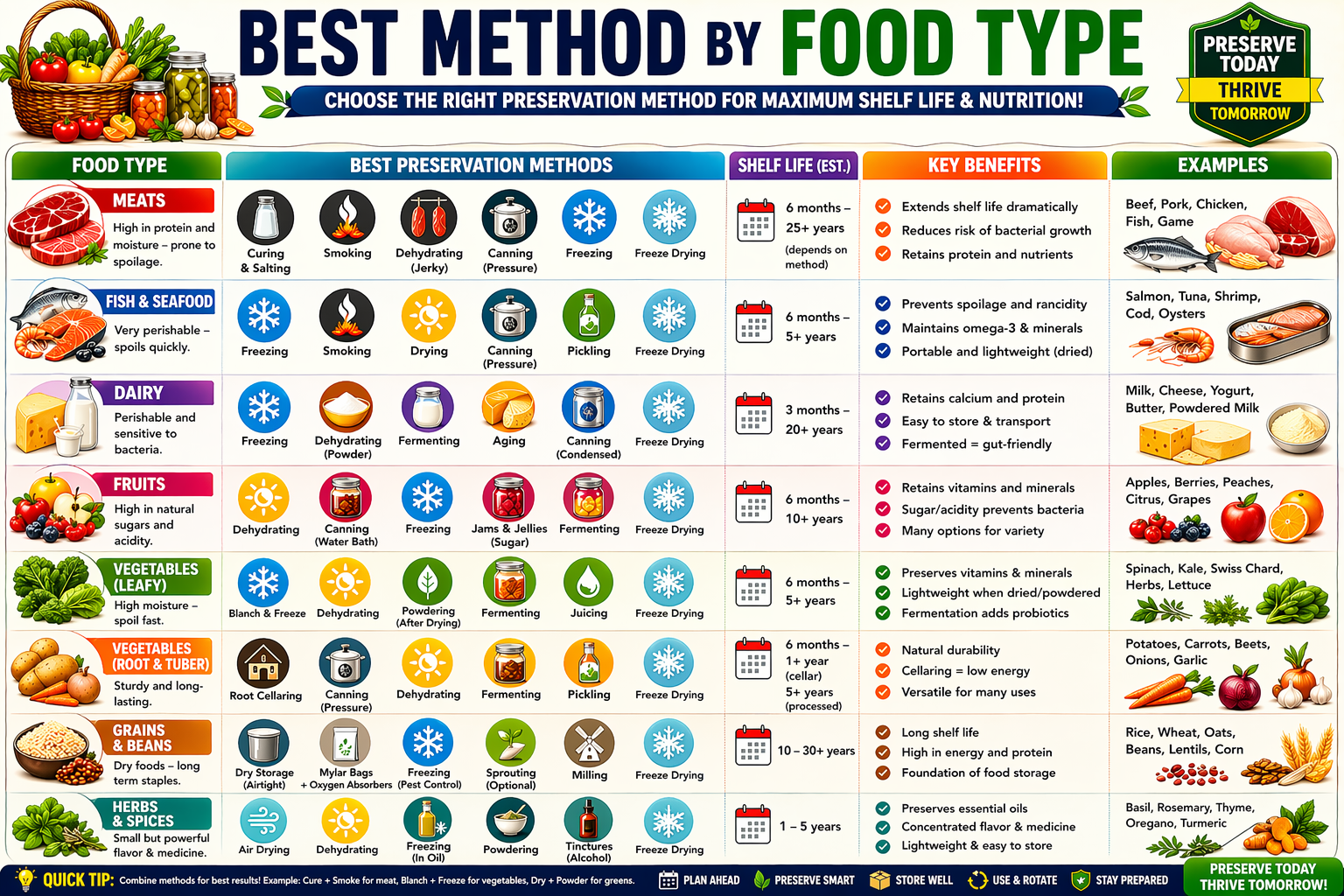
© Prepping Communities. This content is for informational purposes only and not professional advice. Use at your own risk.
Terms | Privacy | Guidelines