
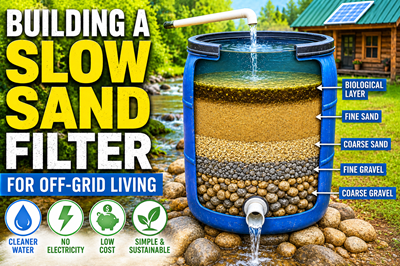
A Practical Guide to Producing Cleaner Water Without Electricity
by Natural Born Prepper
1. Introduction
Access to clean water is one of the most important requirements for long-term preparedness and off-grid living.
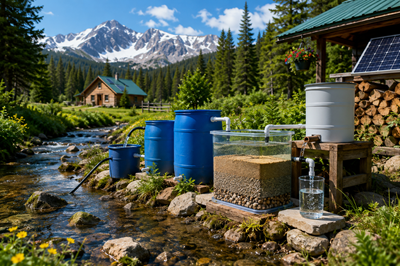 Many people focus on food storage, solar power systems, fuel supplies, and security measures. While these are important, none of them matter for very long without a reliable source of water.
The average person can survive weeks without food but only a few days without water.
Unfortunately, many off-grid properties rely on water sources that are not always safe to drink. Creeks, ponds, rivers, rainwater collection systems, and even some shallow wells can contain sediment, bacteria, parasites, organic material, and other contaminants.
One of the most effective low-technology water treatment systems ever developed is the slow sand filter.
Unlike many modern filtration systems, a slow sand filter requires:
- No electricity
- No pumps
- No replacement cartridges
- No proprietary parts
- Minimal maintenance
When properly constructed and operated, a slow sand filter can dramatically improve water quality and reduce many biological contaminants.
This guide explains how slow sand filters work, how to build one, how to maintain it, and where it fits into an overall off-grid water strategy.
2. What Is a Slow Sand Filter?
A slow sand filter is one of the oldest and most proven methods of water treatment still in use today. Unlike many modern filtration systems that rely on electricity, pumps, pressure vessels, or replaceable cartridges, a slow sand filter uses gravity and naturally occurring biological processes to improve water quality. Its simplicity is one of its greatest strengths, making it especially attractive for off-grid living, homesteading, emergency preparedness, and remote locations where access to replacement parts may be limited.
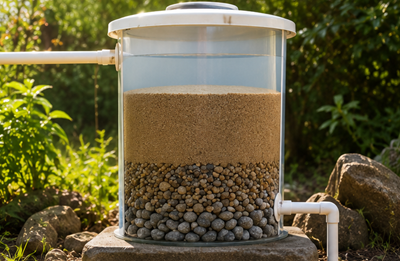 The concept is surprisingly straightforward. Water is introduced at the top of the filter and slowly moves downward through carefully prepared layers of fine sand and gravel. As the water travels through these layers, contaminants are removed through a combination of physical filtration, biological activity, and natural chemical processes. The result is cleaner water that contains significantly fewer suspended particles and biological contaminants than the source water.
What makes a slow sand filter different from many other filtration systems is that the sand itself is only part of the treatment process. Over time, a thin living layer develops on the surface of the sand. This layer is composed of beneficial microorganisms that naturally colonize the filter as it operates. Rather than being a problem, these microorganisms become one of the most important components of the entire system.
As water passes through the filter, several important processes occur simultaneously:
- Sediment and suspended particles become trapped within the sand.
- Organic matter is broken down by biological activity.
- Many bacteria and pathogens are consumed or neutralized by beneficial microorganisms.
- Water clarity improves as fine particles are removed.
- Unpleasant tastes and odors may be reduced.
The slow rate at which water moves through the filter is critical to its effectiveness. Unlike pressure filters that force water rapidly through filter media, a slow sand filter allows enough contact time for biological processes to occur. This extended treatment time is one reason why slow sand filtration has remained effective for more than two centuries.
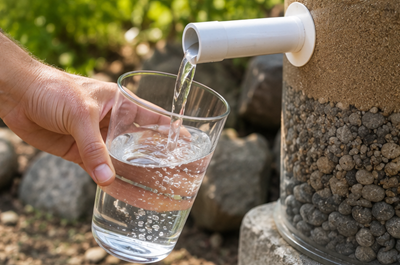 Historically, slow sand filters have been used by municipalities, communities, and rural households around the world. Many cities relied on slow sand filtration long before modern water treatment plants existed, and some municipal systems still use the technology today. Its long history of successful operation demonstrates that effective water treatment does not always require complex technology.
For off-grid homeowners and preparedness-minded families, a slow sand filter offers an appealing combination of reliability, sustainability, and simplicity. With proper construction and maintenance, a single filter can continue operating for many years while requiring little more than occasional cleaning and a consistent source of raw water.
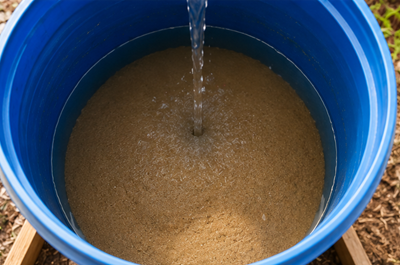 At its core, a slow sand filter is a living ecosystem that works with nature rather than against it. By combining gravity, sand, gravel, and beneficial microorganisms, it provides a practical and time-tested method for improving water quality without depending on modern infrastructure.
3. How Slow Sand Filters Work
At first glance, a slow sand filter appears deceptively simple. Water enters at the top, moves slowly through layers of sand and gravel, and exits cleaner at the bottom. While the sand does play an important role in trapping particles and suspended material, the true effectiveness of a slow sand filter comes from a remarkable biological process that develops naturally over time.
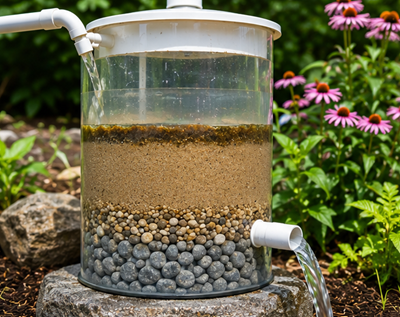 When a newly constructed filter is first placed into operation, it behaves much like a basic mechanical filter. It removes some sediment and larger particles, but it has not yet reached its full treatment potential. As water continues to flow through the system, naturally occurring microorganisms begin to colonize the uppermost layer of sand. This biological community gradually develops into a thin, living layer that becomes the heart of the filtration process.
This living layer is commonly known by several names:
- Schmutzdecke (a German term meaning “dirty skin”)
- Biological layer
- Biofilm
- Biologically active layer
Although the name “dirty skin” may sound undesirable, this layer is actually what makes a slow sand filter so effective. It acts as a miniature ecosystem composed of countless microorganisms working together to improve water quality.
As the filter matures, the biological layer becomes populated with a variety of beneficial organisms, including:
- Beneficial bacteria
- Protozoa
- Microscopic algae
- Rotifers
- Other naturally occurring microorganisms
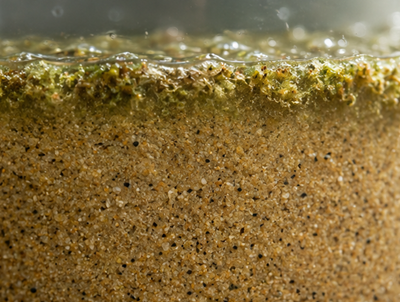 These organisms feed on organic matter, bacteria, and other contaminants present in the incoming water. In essence, the filter develops its own natural treatment plant directly within the sand bed. As water slowly passes through this biologically active zone, many harmful organisms are captured, consumed, or broken down before they can pass deeper into the filter.
Below the biological layer, the fine sand continues the treatment process. Tiny spaces between sand grains physically trap suspended particles that remain in the water. At the same time, additional biological and chemical reactions occur as water moves deeper through the filter bed. The combined effect is a gradual but highly effective purification process that can significantly improve water clarity and reduce many biological contaminants.
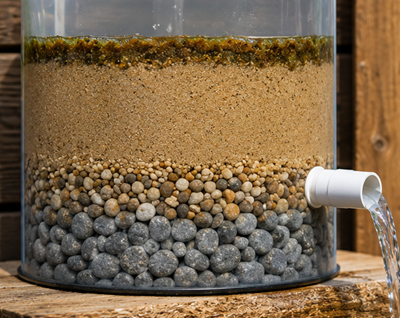 One of the reasons slow sand filters are so effective is the extremely slow rate at which water moves through the system. This slow movement provides sufficient contact time for biological activity to occur. Unlike pressure filtration systems that prioritize speed, slow sand filters prioritize treatment quality. The longer contaminants remain in contact with the biological layer and sand media, the greater the opportunity for removal.
Over time, a properly functioning slow sand filter often becomes more effective rather than less effective. As the biological layer matures and stabilizes, its ability to remove contaminants improves. This is why newly built filters typically require a maturation period before they reach peak performance. Depending on water quality and operating conditions, this process may take several weeks.
The effectiveness of a mature slow sand filter comes from the combination of multiple treatment mechanisms working together:
- Physical filtration of suspended particles
- Biological consumption of pathogens and organic matter
- Natural adsorption of some contaminants onto sand surfaces
- Extended contact time that allows treatment processes to occur
- Continuous activity of the biological layer
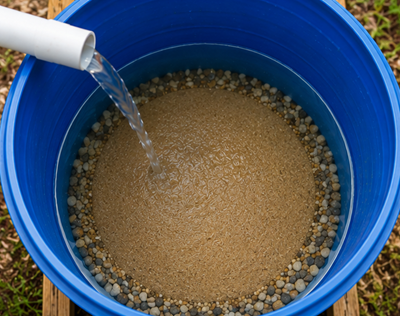 Rather than relying on chemicals, electricity, or sophisticated equipment, a slow sand filter harnesses natural biological processes that have been occurring in aquatic environments for thousands of years. This ability to work with nature rather than against it is one of the reasons slow sand filtration remains one of the most respected and reliable water treatment methods ever developed.
4. Advantages for Off-Grid Living
For people pursuing self-sufficiency, homesteading, preparedness, or remote living, water treatment systems must be reliable, affordable, and sustainable over the long term. Many modern filtration systems perform exceptionally well under normal conditions, but they often depend on electricity, specialized replacement parts, proprietary filter cartridges, or supply chains that may not always be available.
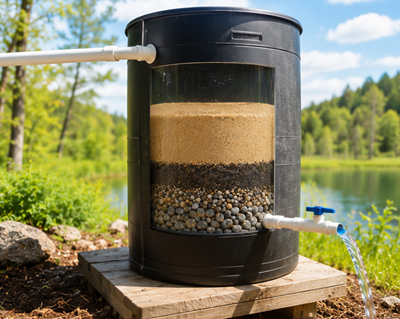 Slow sand filters take a different approach. Instead of relying on technology, they rely on gravity, natural biological processes, and simple materials that have been used successfully for centuries. This makes them particularly well suited for off-grid environments where resilience and independence are often more important than convenience.
One of the greatest strengths of a slow sand filter is that it continues to function even when many modern systems fail. During power outages, fuel shortages, supply chain disruptions, or emergencies, a properly maintained slow sand filter can continue providing treated water without requiring outside support.
No Electricity Required
Many water treatment systems depend on electrical pumps, ultraviolet sterilizers, pressure tanks, or electronic controls. While these systems can be highly effective, they become vulnerable when power is unavailable.
A slow sand filter operates entirely through gravity. Water enters the top of the system and slowly moves downward through the filter media without the need for mechanical assistance.
This offers several advantages:
- No dependence on the electrical grid.
- No solar power system required.
- No batteries to maintain or replace.
- No generators consuming fuel.
- No electronic components that can fail.
For off-grid properties, this simplicity can be a major advantage. Even if a solar system experiences problems or fuel supplies become limited, the filter can continue operating as long as water is available.
Extremely Low Operating Costs
Many commercial filtration systems require ongoing expenses. Replacement cartridges, membranes, ultraviolet bulbs, pumps, and chemical treatments can add significant costs over time.
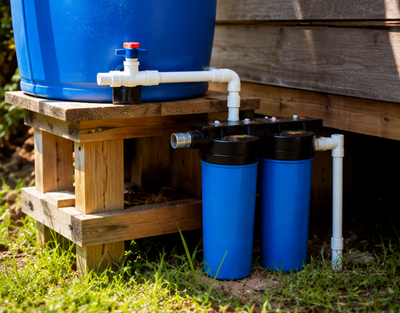 Once a slow sand filter has been constructed, operating expenses are minimal. The primary filtration media—sand and gravel—can often last for many years before requiring replacement. Maintenance typically involves only periodic cleaning of the upper sand layer when flow rates begin to decrease.
Over the life of the system, costs are generally limited to:
- Occasional maintenance.
- Minor plumbing repairs.
- Replacement media after many years of use.
- Periodic water testing.
For families seeking long-term self-reliance, the ability to treat water without recurring expenses can be extremely valuable.
Long Service Life
One of the reasons slow sand filtration remains respected today is its proven durability. Municipal water systems around the world have successfully operated slow sand filters for decades, and some installations have remained in service for over a century with proper maintenance.
Unlike disposable filter cartridges that must be replaced regularly, the filter media in a slow sand filter is designed for long-term use. The biological treatment process actually improves as the system matures.
A properly built slow sand filter can provide:
- Years of continuous operation.
- Consistent performance.
- Reduced dependence on replacement parts.
- Long-term reliability during emergencies.
For off-grid homeowners, this means less time worrying about equipment failures and more confidence in their water treatment system.
Simple Construction
Another major advantage is the simplicity of construction. Most slow sand filters can be built using materials that are readily available in many areas.
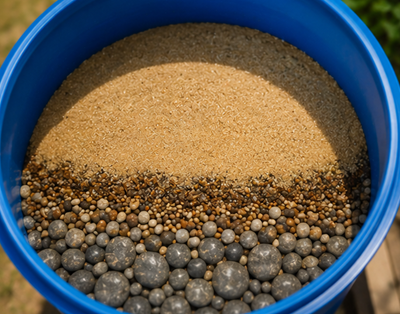 Common construction materials include:
- Food-grade plastic barrels.
- Water storage tanks.
- PVC pipe and fittings.
- Washed sand.
- Washed gravel.
- Screens or mesh material.
Because the design is relatively straightforward, many people can build a functional slow sand filter using basic tools and commonly available materials. This accessibility makes the technology practical for homesteaders, rural property owners, and preparedness-minded individuals who prefer systems they can understand and repair themselves.
Sustainable Long-Term Operation
Perhaps the greatest advantage of slow sand filtration is sustainability. Many modern water treatment systems eventually become dependent on external supply chains. When replacement cartridges, membranes, chemicals, or specialized components are unavailable, the system may cease functioning.
A slow sand filter relies on natural processes and materials that can often be sourced locally. Sand, gravel, and simple plumbing components are generally easier to obtain than specialized filtration products.
This allows the system to remain operational even during extended disruptions.
A sustainable water treatment system should ideally be:
- Repairable by the owner.
- Independent of specialized parts.
- Capable of operating without electricity.
- Based on locally available materials.
- Reliable over many years of use.
Slow sand filters meet all of these criteria remarkably well.
Quiet and Passive Operation
Unlike pumps, pressure systems, or mechanical filtration units, a slow sand filter operates silently. There are no motors, moving parts, or complex controls. Water simply moves through the filter under the force of gravity.
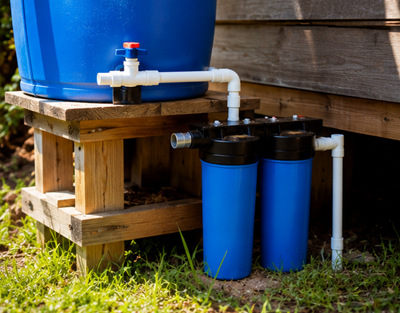 This passive operation reduces wear and tear while eliminating many common points of failure found in more complex systems.
Benefits include:
- No mechanical noise.
- Fewer breakdowns.
- Reduced maintenance requirements.
- Lower overall system complexity.
Well Suited for Preparedness
Preparedness planning often focuses on reducing dependency on systems that may become unavailable during emergencies. Water treatment is one of the most critical areas where self-reliance can make a significant difference.
A slow sand filter aligns well with preparedness principles because it is:
- Low-tech.
- Durable.
- Easy to understand.
- Inexpensive to operate.
- Independent of outside infrastructure.
Whether supporting an off-grid cabin, a homestead, a bug-out location, or a long-term emergency water plan, slow sand filtration provides a practical method for improving water quality using simple and proven technology.
For many off-grid families, the greatest advantage is peace of mind. Knowing that clean water can continue to be produced without electricity, fuel, proprietary equipment, or complex maintenance helps create a level of resilience that few modern systems can match.
5. Understanding the Limitations
While slow sand filters are remarkably effective and have been successfully used around the world for more than two centuries, it is important to understand that no water treatment system is capable of solving every water quality problem. One of the most common mistakes people make is assuming that filtered water is automatically safe under all circumstances. In reality, the effectiveness of any filtration system depends heavily on the quality of the source water and the types of contaminants present.
 Slow sand filters excel at removing suspended particles, reducing turbidity, improving water clarity, and significantly lowering biological contamination levels. They are particularly effective against many bacteria, protozoa, organic materials, and other naturally occurring contaminants commonly found in surface water sources. However, their effectiveness is not universal, and understanding their limitations is essential for developing a safe and reliable off-grid water system.
The primary strength of a slow sand filter is biological treatment rather than chemical treatment. The living biological layer that develops within the filter can consume and break down many organic contaminants, but it cannot remove every substance dissolved in the water. Certain contaminants are simply too small or too chemically stable to be removed through sand filtration alone.
Slow sand filters generally do not effectively remove:
- Salt and dissolved minerals
- Heavy metals such as lead, mercury, and arsenic
- Industrial chemicals
- Agricultural chemicals and pesticides
- Petroleum products and fuels
- Many pharmaceutical compounds
- Chemical solvents
- Radioactive contaminants
This distinction is important because water can sometimes appear crystal clear while still containing dissolved contaminants that are invisible to the naked eye. Clear water is not necessarily safe water. A slow sand filter may successfully remove sediment and improve taste and odor while leaving dissolved chemical pollutants largely unchanged.
Source Water Matters
The quality of the source water plays a major role in determining whether a slow sand filter is an appropriate treatment option. Water collected from relatively clean natural sources such as protected springs, rainwater harvesting systems, remote streams, and uncontaminated surface water generally responds well to slow sand filtration.
However, water collected near areas of human activity presents additional risks. Potential contamination sources may include:
- Agricultural runoff
- Livestock operations
- Mining activity
- Industrial facilities
- Landfills
- Fuel storage areas
- Urban stormwater runoff
- Sewage discharges
In these situations, additional treatment methods may be required to address contaminants that cannot be removed through biological filtration alone.
Biological Contaminants Versus Chemical Contaminants
One way to understand the limitations of a slow sand filter is to separate contaminants into two broad categories.
 The first category consists of biological contaminants, which include bacteria, protozoa, algae, and organic matter. These are areas where slow sand filters perform exceptionally well. The biological layer within the filter is specifically designed to target many of these contaminants through natural processes.
The second category consists of dissolved chemical contaminants. These substances are often mixed directly into the water at a molecular level. Because they are dissolved rather than suspended, they can pass through the sand bed without being significantly affected.
Examples include:
- Dissolved salts
- Fertilizer residues
- Herbicides
- Industrial chemicals
- Heavy metals
Removing these contaminants often requires more specialized treatment technologies such as activated carbon, reverse osmosis, ion exchange, or distillation.
Additional Treatment May Be Necessary
Depending on the source water, a slow sand filter should often be viewed as one component of a larger water treatment strategy rather than a complete stand-alone solution.
Additional treatment options may include:
- Activated carbon filtration for chemical reduction
- Reverse osmosis systems for dissolved contaminants
- Distillation for high-purity water production
- Ultraviolet disinfection
- Chlorination
- Boiling
The appropriate combination of treatments will depend on local conditions and water quality concerns.
Final Disinfection Provides an Extra Margin of Safety
Even though slow sand filters can significantly reduce many harmful microorganisms, many preparedness experts recommend a final disinfection step before water is consumed. This is particularly important when source water quality is uncertain or when the consequences of waterborne illness could be severe.
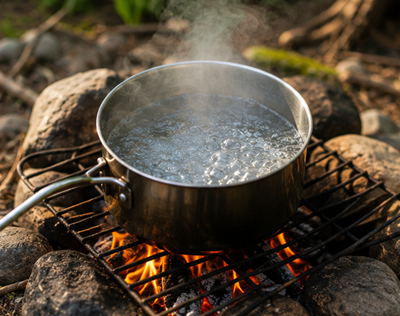 Common disinfection methods include:
- Boiling water
- Chlorine treatment
- Ultraviolet purification
- Water purification tablets
Using a final disinfection step creates multiple layers of protection and helps compensate for unexpected contamination events or operational problems within the filtration system.
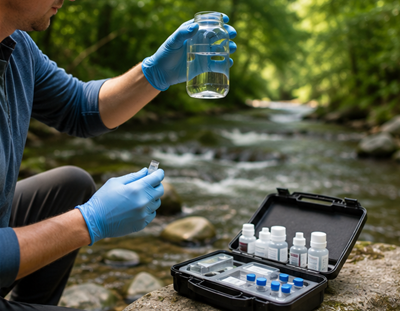
Water Testing Is Always Recommended
One of the most important lessons for anyone building an off-grid water system is that assumptions can be dangerous. Water that looks clean may contain harmful contaminants, while water that appears slightly cloudy may simply contain harmless suspended particles.
Whenever possible, water should be tested before and after treatment to better understand the effectiveness of the filtration system and identify potential risks that cannot be detected visually.
Regular water testing can help identify:
- Bacterial contamination
- Heavy metals
- Chemical pollutants
- Excessive mineral content
- Changes in water quality over time
A Valuable Tool—Not a Magic Solution
Despite these limitations, slow sand filters remain one of the most effective low-tech water treatment methods available. Their ability to improve water quality using nothing more than sand, gravel, gravity, and biological activity is remarkable. However, they should not be viewed as a universal solution to every water contamination problem.
The most successful off-grid water systems recognize both the strengths and limitations of slow sand filtration. By combining a slow sand filter with appropriate source selection, routine maintenance, water testing, and, when necessary, additional treatment methods, it is possible to create a highly resilient and dependable water supply system capable of supporting long-term off-grid living.
6. Selecting a Water Source
One of the most important factors affecting the performance of a slow sand filter has nothing to do with the filter itself. It begins with the quality of the water entering the system. Even the best-designed filter can only do so much if the source water is heavily contaminated. For this reason, selecting the cleanest available water source should always be one of the first priorities when planning an off-grid water system.
A useful principle to remember is that filtration should improve water quality, not rescue severely contaminated water whenever possible. Starting with cleaner source water reduces the workload on the filter, extends maintenance intervals, improves overall performance, and increases the likelihood of producing safe, high-quality water.
Many off-grid properties have access to one or more potential water sources. Each source comes with its own advantages, risks, and treatment requirements. Understanding these differences can help you make better decisions about water collection, storage, and treatment.
Common water sources for slow sand filtration include:
- Rainwater collection systems
- Natural springs
- Creeks and streams
- Rivers
- Lakes
- Ponds
- Wells
- Snowmelt collection
- Surface runoff collection systems
While all of these sources can potentially be filtered, some are naturally better suited for slow sand filtration than others.
Rainwater Collection
Rainwater is often considered one of the best sources for off-grid water systems. When properly collected from clean roofing materials and stored in covered tanks, rainwater typically contains fewer contaminants than many surface water sources.
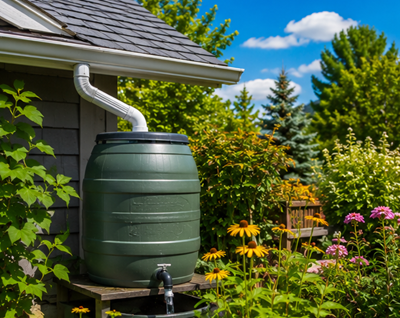 Benefits of rainwater include:
- Usually low in dissolved minerals
- Often free of agricultural runoff
- Readily available in many regions
- Easy to collect and store
However, rainwater can still become contaminated by:
- Bird droppings
- Dust and debris
- Roofing materials
- Insects and animal activity
A slow sand filter can help improve water quality, but proper collection and storage practices remain essential.
Springs
Natural springs are often considered one of the most desirable off-grid water sources because groundwater has already undergone natural filtration as it moves through soil and rock.
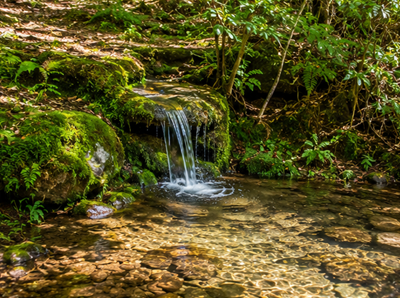 Advantages of spring water may include:
- Naturally filtered water
- Consistent temperatures
- Reduced sediment levels
- Reliable year-round flow in some locations
Not all springs are equal, however. Surface contamination can still enter poorly protected springs, particularly during heavy rainfall or snowmelt events.
Creeks and Streams
Many off-grid properties rely on nearby creeks or streams for water. Moving water is generally preferable to stagnant water because continuous flow can help reduce certain contamination risks.
Potential advantages include:
- Continuous supply
- Easier collection
- Freshly replenished water
Potential concerns include:
- Wildlife activity upstream
- Human recreation
- Agricultural runoff
- Seasonal flooding
- Increased sediment during storms
Creek water often works well with slow sand filtration but may require pre-settlement tanks during periods of high turbidity.
Rivers
Rivers can provide large and dependable water supplies, but they often collect runoff from extensive areas. Contaminants introduced many miles upstream may eventually find their way into the water source.
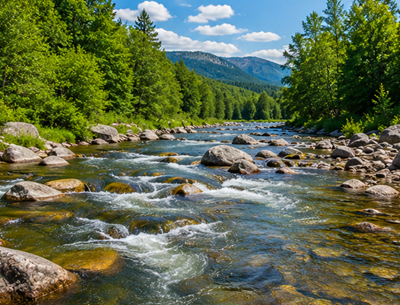 Potential risks include:
- Urban runoff
- Industrial discharge
- Agricultural pollution
- Sewage contamination
- Heavy sediment loads
Because river water can vary significantly throughout the year, regular monitoring is especially important.
Lakes and Ponds
Lakes and ponds can provide abundant water storage but often present unique challenges. Unlike flowing water sources, standing water tends to accumulate organic matter and support greater biological activity.
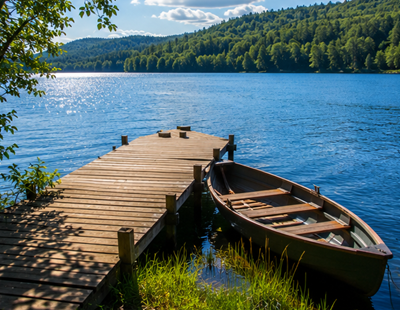 Common concerns include:
- Algae growth
- Decaying vegetation
- Increased bacterial activity
- Seasonal water quality changes
- Wildlife contamination
Water drawn from deeper areas is often preferable to water collected near shorelines where organic activity is greatest.
Wells
Groundwater wells are among the most common water sources for off-grid properties. Deep wells often provide relatively clean water because the surrounding soil and rock have already filtered much of the contamination.
Benefits of well water may include:
- Reduced biological contamination
- Consistent availability
- Protection from surface pollutants
- Lower turbidity
However, well water can still contain:
- Excessive minerals
- Iron
- Manganese
- Arsenic
- Sulfur compounds
These contaminants generally require treatment methods beyond slow sand filtration.
Evaluate the Surrounding Environment
Selecting a water source involves more than simply identifying the nearest body of water. The surrounding environment often reveals potential contamination risks that may not be immediately obvious.
Whenever possible, look for water sources that are:
- Upstream from human activity
- Away from livestock operations
- Protected from agricultural runoff
- Isolated from industrial facilities
- Free from fuel storage areas
- Distant from septic systems
- Naturally protected from contamination
The farther water travels through developed areas, the greater the potential for contamination.
Seasonal Changes Matter
A water source that appears clean during one season may behave very differently during another.
Seasonal changes can affect:
- Water clarity
- Flow rates
- Biological activity
- Sediment levels
- Contamination risks
For example:
- Spring snowmelt may increase sediment loads.
- Summer heat may encourage algae growth.
- Autumn leaves can increase organic material.
- Heavy storms may introduce runoff and contaminants.
Evaluating a source throughout the year provides a more realistic understanding of long-term water quality.
Consider Source Reliability
Water quality is important, but so is water availability. A crystal-clear spring that dries up every summer may be less useful than a creek that flows year-round.
When evaluating potential water sources, consider:
- Seasonal flow variations
- Drought susceptibility
- Winter accessibility
- Collection ease
- Long-term sustainability
A reliable water source that can consistently meet household needs is often more valuable than a source that is only available part of the year.
Start With the Best Water You Can Find
One of the simplest ways to improve any water treatment system is to begin with the cleanest source available. Every contaminant that is avoided at the source is one less contaminant the filter must remove.
A good rule of thumb is:
The cleaner the source water, the cleaner the final water will be.
By carefully selecting and protecting your water source, you can dramatically improve the performance of your slow sand filter, reduce maintenance requirements, and create a more reliable off-grid water system. In many cases, source selection is just as important as the filter itself and may ultimately have a greater impact on the quality of the water your family depends upon every day.
7. Basic Design Principles
At its core, a slow sand filter is a simple gravity-powered water treatment system. While the design may appear uncomplicated, each layer within the filter serves a specific purpose and contributes to the overall effectiveness of the system. Understanding how these layers work together is essential for building a filter that performs reliably and efficiently over the long term.
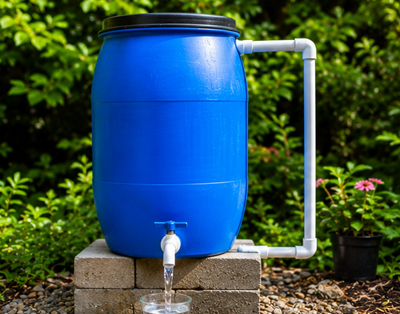 A properly constructed slow sand filter is designed to mimic many of the natural filtration processes that occur in healthy soils, riverbanks, and underground aquifers. In nature, water slowly percolates through layers of soil, sand, and rock where contaminants are removed through physical, biological, and chemical processes. A slow sand filter recreates these same principles within a controlled environment.
Unlike pressure filtration systems that force water rapidly through filter media, slow sand filters rely entirely on gravity. Water enters at the top of the filter and gradually moves downward through multiple filtration layers. This slow movement provides sufficient contact time for biological treatment to occur while also allowing suspended particles to become trapped within the filter bed.
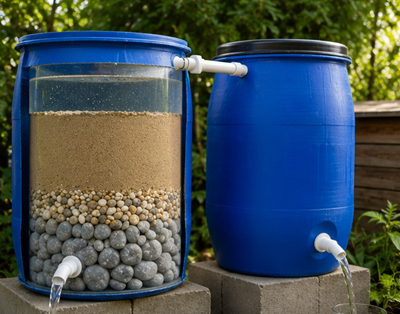
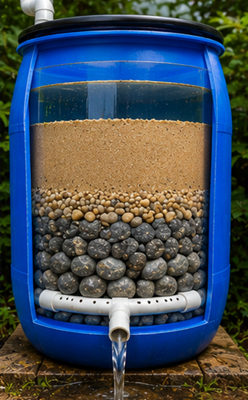
A typical slow sand filter consists of the following layers arranged from top to bottom:
- Water reservoir
- Biological layer
- Fine sand layer
- Coarse sand layer
- Small gravel layer
- Large gravel layer
- Drainage and collection system
Each layer has a specific function and contributes to the overall treatment process.
The Water Reservoir
At the top of the filter is the water reservoir, sometimes referred to as the supernatant water layer. This area holds untreated water above the sand bed and creates the hydraulic pressure needed to move water through the filter.
The reservoir serves several important purposes:
- Maintains a consistent flow rate.
- Protects the biological layer from drying out.
- Allows some larger particles to settle before reaching the sand.
- Provides a reserve of water during operation.
Most slow sand filters maintain several inches of standing water above the sand surface at all times. This water layer helps keep the filter functioning properly and supports the biological processes occurring below.
The Biological Layer
Directly beneath the water reservoir lies the most important component of the entire system—the biological layer.
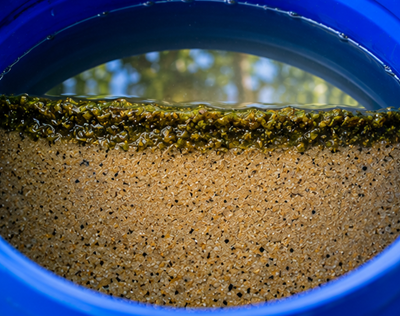 This thin living layer develops naturally as microorganisms colonize the upper surface of the sand. Over time, beneficial bacteria, protozoa, algae, and other microscopic organisms form a complex ecosystem that actively treats the incoming water.
The biological layer performs several functions:
- Consumes organic matter.
- Reduces pathogen levels.
- Traps fine suspended particles.
- Improves overall water quality.
Many experts consider this layer to be responsible for much of the filter’s effectiveness. Without it, the system functions more like a simple mechanical filter rather than a biological treatment system.
The Fine Sand Layer
Below the biological layer is the fine sand bed, which forms the primary filtration zone.
This layer typically makes up the largest portion of the filter and may be several feet deep depending on the design. The sand particles are carefully selected to provide an ideal balance between filtration performance and water flow.
The fine sand layer:
- Traps suspended particles.
- Supports biological activity.
- Provides additional pathogen reduction.
- Improves water clarity.
- Helps remove turbidity.
As water slowly moves through this layer, contaminants become trapped within the tiny spaces between sand grains while biological processes continue to improve water quality.
The Coarse Sand Layer
Beneath the fine sand is a layer of coarser sand. This transitional layer serves as a bridge between the fine filtration media above and the gravel layers below.
Its primary functions include:
- Supporting the fine sand bed.
- Preventing fine sand from migrating downward.
- Promoting even water distribution.
- Improving structural stability.
Without this transition zone, fine sand could gradually move into the gravel layers and reduce the effectiveness of the filter.
The Gravel Support Layers
Below the sand are one or more layers of progressively larger gravel. These support layers provide structural stability while ensuring that filtered water can move freely toward the drainage system.
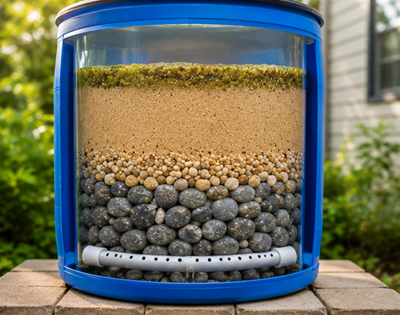 Typical gravel layers include:
- Fine gravel
- Medium gravel
- Coarse gravel
These layers help:
- Support the weight of the sand above.
- Prevent clogging of the drainage system.
- Promote even water collection.
- Reduce channeling and uneven flow.
The gradual increase in gravel size creates a stable transition from the filtration media to the collection system.
The Drainage System
At the bottom of the filter is the drainage or underdrain system. This component collects the treated water and directs it out of the filter for storage or use.
Common drainage systems may include:
- Perforated PVC pipe
- Slotted collection pipes
- Manifold systems
- Gravel-filled collection chambers
The drainage system must be designed to collect water evenly across the entire filter bottom. Uneven collection can create preferential flow paths that reduce treatment efficiency.
Gravity Does the Work
One of the most appealing aspects of a slow sand filter is its simplicity. There are no pumps, motors, moving parts, or electronic controls. Gravity alone provides the force needed to move water through the system.
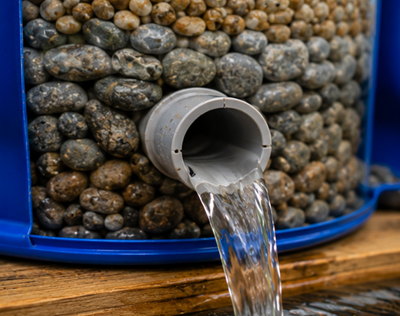 The filtration process follows a straightforward path:
- Untreated water enters the reservoir.
- Water passes through the biological layer.
- Water moves slowly through the fine sand bed.
- Additional filtration occurs in the lower media layers.
- Treated water enters the drainage system.
- Cleaned water exits the filter for storage or use.
This simple flow pattern has been successfully used for centuries and remains one of the most dependable methods of low-tech water treatment available today.
The Importance of Flow Rate
A critical design principle often overlooked by beginners is that slower is usually better. The effectiveness of a slow sand filter depends heavily on maintaining a slow and consistent flow rate.
If water moves too quickly:
- Biological treatment decreases.
- Filtration efficiency drops.
- Pathogen removal may be reduced.
- Water quality can suffer.
Proper filter design ensures that water spends enough time within the biological layer and sand bed to allow treatment processes to occur effectively.
Working Together as a System
While each layer performs a unique function, the true strength of a slow sand filter comes from the way all components work together. The reservoir, biological layer, sand bed, gravel support layers, and drainage system form an integrated treatment process that relies on natural principles rather than complex technology.
When properly designed and maintained, these simple layers transform untreated water into significantly cleaner water using nothing more than gravity, carefully selected materials, and the remarkable capabilities of naturally occurring microorganisms. This elegant simplicity is one of the reasons slow sand filtration remains a trusted solution for off-grid living, homesteading, and emergency preparedness around the world.
8. Determining Filter Size
One of the most important decisions when building a slow sand filter is determining the appropriate size for your intended water needs. While it may be tempting to build the smallest filter possible to save space, larger filters generally provide better performance, greater reliability, and lower maintenance requirements. In most cases, a slightly oversized filter will outperform a smaller one and provide a larger margin of safety when water demand increases.
 The size of a slow sand filter directly affects how much water it can produce each day. A filter that is too small may struggle to keep up with household needs, especially during periods of increased water use. On the other hand, a properly sized filter can provide a steady supply of treated water while maintaining the slow flow rates necessary for effective biological treatment.
Unlike many modern filtration systems where higher flow rates are desirable, slow sand filters depend on allowing water to move slowly through the filtration media. Increasing water production is typically achieved by increasing the surface area of the filter rather than forcing water through the system more quickly.
For most off-grid households, the goal is to balance water production, maintenance requirements, construction costs, and available space.
Understanding Household Water Needs
Before determining filter size, it is helpful to estimate how much treated water your household will require each day.
Typical water uses may include:
- Drinking
- Cooking
- Food preparation
- Dish washing
- Personal hygiene
- Pet water
- Gardening seedlings
- Emergency reserves
 Water requirements vary widely depending on lifestyle and conservation practices. An off-grid family that actively conserves water may use far less than a typical urban household connected to municipal services.
As a general guideline:
| Household Size | Daily Treated Water Need |
|---|---|
| 1 Person | 5–15 gallons |
| 2 People | 10–30 gallons |
| 4 People | 20–60 gallons |
| 6 People | 30–90 gallons |
Actual requirements will vary based on individual circumstances.
Recommended Size for a Family of Four
For many off-grid households, a practical starting point is a filter designed to support a family of four.
A common size range is:
- Diameter: 18–36 inches (45–90 cm)
- Height: 3–5 feet (90–150 cm)
These dimensions provide sufficient filtration media to support stable biological activity while producing useful amounts of treated water each day.
Larger filters within this range generally offer greater performance and flexibility.
Why Larger Filters Perform Better
The effectiveness of a slow sand filter is closely tied to its surface area and media volume. Larger filters provide more space for biological activity and allow water to move through the system more evenly.
Benefits of larger filters include:
- Greater water production capacity
- Longer maintenance intervals
- More stable biological activity
- Better resistance to temporary water quality changes
- Improved treatment consistency
- Increased resilience during periods of heavy use
A larger filter also provides a greater buffer against operational problems. If sediment levels temporarily increase or source water quality declines, a larger filter can often handle these fluctuations more effectively than a smaller system.
Biological Stability Improves with Size
One often overlooked advantage of larger filters is biological stability.
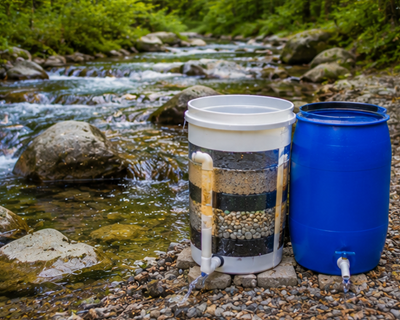 The biological layer responsible for much of the treatment process functions like a living ecosystem. Larger filtration surfaces support larger and more stable microbial populations. These biological communities tend to be more resilient to:
- Temperature fluctuations
- Variations in water quality
- Temporary interruptions in operation
- Seasonal changes
In many ways, a larger filter behaves like a larger ecosystem in nature. The increased biological diversity and stability often lead to more consistent performance.
Maintenance Requirements
Many people assume that larger filters require more maintenance because they contain more material. In reality, the opposite is often true.
Because larger filters distribute water flow across a greater surface area, contaminants accumulate more slowly. This means the biological layer and upper sand surface typically require cleaning less frequently.
Advantages include:
- Reduced cleaning frequency
- Longer operating periods between maintenance
- More consistent flow rates
- Less disruption to biological activity
For off-grid households where time and labor are valuable, this can be a significant benefit.
Small Filters Can Still Be Effective
Not every situation requires a large filtration system. Smaller slow sand filters can work very well when water demands are modest.
Small filters may be appropriate for:
- Individual users
- Seasonal cabins
- Emergency preparedness systems
- Backup water treatment systems
- Small hunting camps
- Temporary installations
However, smaller filters generally produce less water and may require more frequent maintenance due to their limited filtration surface area.
Potential limitations of smaller filters include:
- Lower daily output
- Faster clogging
- Greater sensitivity to source water quality changes
- Reduced biological stability
Despite these limitations, a properly constructed small filter can still provide valuable water treatment capabilities.
Consider Future Expansion
When designing a slow sand filter, it is often wise to think beyond your current needs.
Future water demands may increase due to:
- Additional family members
- Livestock
- Gardening projects
- Food production activities
- Extended emergency situations
Building a slightly larger filter initially may save considerable time and effort later.
Many experienced homesteaders follow a simple rule:
Build the largest filter that your available space, materials, and budget reasonably allow.
The additional capacity often proves valuable over time.
Storage and Production Balance
A slow sand filter is not designed to produce large volumes of water instantly. Instead, it works continuously at a relatively slow rate. For this reason, many successful systems combine filtration with treated water storage.
A common approach is:
- Filter water continuously.
- Store treated water in a clean reservoir.
- Draw water from storage as needed.
This arrangement allows the filter to operate at its optimal slow pace while ensuring adequate water is available when household demand increases.
Bigger Is Often Better
When it comes to slow sand filtration, larger filters generally offer meaningful advantages. Increased filtration area improves biological stability, extends maintenance intervals, and increases water production without sacrificing treatment quality.
While small filters certainly have their place, many off-grid homeowners find that investing in a slightly larger system provides greater reliability and flexibility over the long term. A well-sized filter not only meets today’s needs but also helps ensure a dependable source of cleaner water for years to come.
9. Choosing a Container
The container forms the structural foundation of the entire slow sand filter. While much of the attention is often focused on the sand, gravel, and biological layer, the container itself plays a critical role in the long-term performance, durability, and safety of the system. Choosing the right container can make construction easier, improve maintenance access, and significantly extend the lifespan of the filter.
One of the advantages of slow sand filtration is its flexibility. Unlike many commercial water treatment systems that require specialized housings, slow sand filters can be built using a wide variety of containers. This allows builders to adapt the design to locally available materials, budget constraints, and water production requirements.
The ideal container should be durable, watertight, non-toxic, and capable of supporting the substantial weight of wet filtration media. Once filled with sand, gravel, and water, even a relatively small filter can weigh several hundred pounds. Larger systems may weigh well over a thousand pounds, making structural strength an important consideration.
Common container options include:
- Food-grade plastic barrels
- Concrete tanks
- Polyethylene water tanks
- Fiberglass tanks
- Large PVC pipe sections
- Stainless steel tanks
- Masonry structures
- Custom-built wooden tanks with waterproof liners
Each option offers unique advantages and disadvantages depending on the intended application.
Food-Grade Plastic Barrels
For many homesteaders and preparedness-minded individuals, the food-grade plastic barrel is one of the most popular choices.
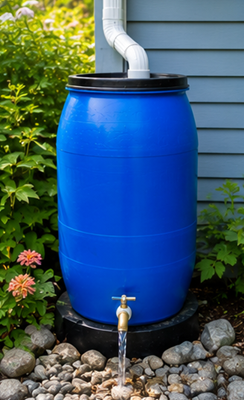 A standard 55-gallon food-grade drum offers several benefits:
- Inexpensive and widely available
- Easy to transport
- Easy to modify with basic tools
- Resistant to corrosion
- Suitable for small to medium-sized systems
Food-grade barrels are often used because they provide a practical balance between cost, durability, and ease of construction. They are especially well suited for first-time builders or small off-grid households.
When selecting a barrel, ensure it was previously used for food products and not industrial chemicals. Even thorough cleaning may not fully remove chemical residues from certain containers.
Polyethylene Water Tanks
Larger polyethylene tanks are commonly used when greater water production is required. These tanks are available in a wide range of sizes and are specifically designed for water storage applications.
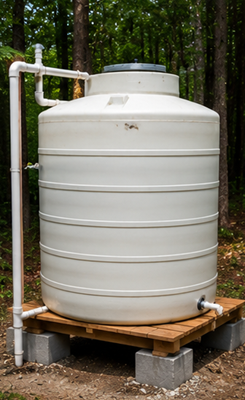 Advantages include:
- Food-safe construction
- Excellent durability
- UV-resistant options available
- Larger treatment capacity
- Long service life
For families with higher water demands, a larger poly tank can provide increased filtration area and longer maintenance intervals.
Concrete Tanks
Concrete tanks have been used in municipal and community-scale slow sand filtration systems for many decades. They provide exceptional strength and can support very large filter beds.
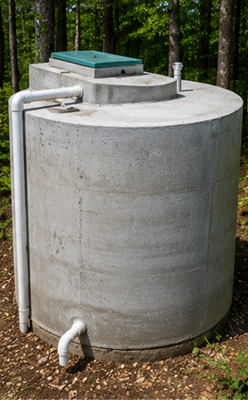 Benefits include:
- Extremely durable
- Long lifespan
- Suitable for large systems
- Resistant to physical damage
- Excellent thermal stability
Concrete’s thermal mass can also help moderate temperature fluctuations, which may benefit biological activity in some climates.
However, concrete systems generally require more labor and planning during construction and are not easily relocated once completed.
Fiberglass Tanks
Fiberglass tanks offer another durable option for medium and large filtration systems.
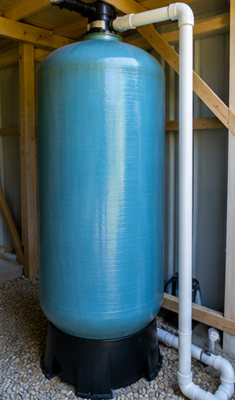 Advantages include:
- Corrosion resistance
- Lightweight compared to concrete
- Long service life
- Smooth interior surfaces
- Structural strength
Fiberglass tanks are commonly used in commercial water treatment applications and can provide decades of reliable service when properly maintained.
Large PVC Pipe Sections
For smaller systems, large-diameter PVC pipe can be used to create compact vertical filters.
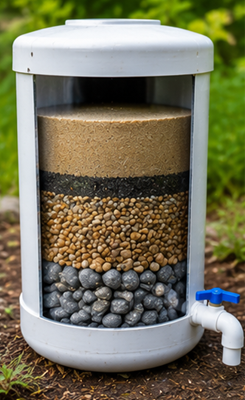 These systems offer:
- Simple construction
- Small footprint
- Lightweight design
- Easy transportation
PVC-based filters are often used in experimental, educational, or emergency preparedness applications where space is limited.
Important Characteristics to Consider
Regardless of the container type selected, several key characteristics should always be evaluated before construction begins.
Food Safety
Perhaps the most important consideration is ensuring the container is safe for potable water applications.
The container should:
- Be food-grade or drinking-water approved
- Not leach harmful chemicals
- Be free from toxic residues
- Be suitable for long-term water contact
Avoid containers that previously held:
- Pesticides
- Herbicides
- Fuels
- Solvents
- Industrial chemicals
Even trace contamination can compromise water quality.
Structural Strength
Many first-time builders underestimate the weight of a completed filter.
A slow sand filter contains:
- Several inches of gravel
- Multiple feet of sand
- Standing water
- Constant moisture
Wet sand is extremely heavy. The container must be capable of supporting this load continuously without cracking, bowing, or deforming.
Consider the total weight when selecting:
- Container material
- Wall thickness
- Base support
- Installation location
Resistance to Sunlight
Ultraviolet radiation can damage many plastics over time. Containers exposed to direct sunlight may become brittle, crack, or degrade after years of exposure.
To extend service life:
- Choose UV-resistant materials when possible.
- Paint exterior surfaces if appropriate.
- Install protective coverings.
- Place filters under shelters or roof structures.
Protecting the container from excessive sunlight can significantly increase its lifespan.
Accessibility for Maintenance
Slow sand filters require occasional maintenance, including removal of accumulated material from the upper sand surface.
A good container design should allow:
- Easy access to the top of the filter
- Simple inspection of water levels
- Convenient cleaning procedures
- Access to plumbing connections
Filters that are difficult to access often receive less maintenance, which can reduce performance over time.
Shape and Dimensions
The shape of the container can influence filter performance.
In general:
- Wider filters provide greater filtration area.
- Larger surface area supports more biological activity.
- Extremely narrow filters may clog more quickly.
- Greater diameter usually improves water production.
For this reason, wider containers are often preferred over very tall, narrow designs when space allows.
Why the 55-Gallon Drum Is So Popular
Among all available options, the 55-gallon food-grade drum remains one of the most common choices for homestead-scale slow sand filters.
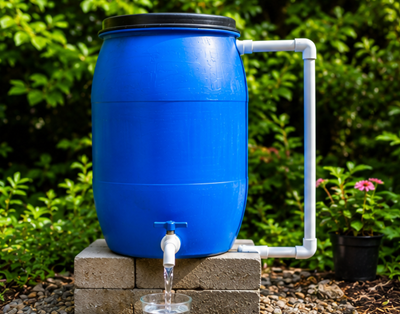 Its popularity comes from a combination of factors:
- Readily available
- Affordable
- Easy to modify
- Durable
- Portable
- Suitable for most household projects
For many people building their first slow sand filter, a 55-gallon drum provides an excellent balance between size, simplicity, and performance.
Building for the Long Term
The container is more than just a vessel to hold sand and gravel—it is the backbone of the entire filtration system. Choosing a durable, food-safe, and properly sized container helps ensure that the filter remains reliable for many years. Investing a little extra time in selecting the right container can improve safety, reduce maintenance issues, and contribute significantly to the long-term success of an off-grid water treatment system.
10. Materials Required
One of the reasons slow sand filters have remained popular for centuries is that they can be constructed using relatively simple and widely available materials. Unlike many modern water treatment systems that depend on specialized equipment, proprietary filter cartridges, or complex electronics, a slow sand filter can often be built using materials that are readily available from farm supply stores, hardware stores, landscaping suppliers, or local construction suppliers.
Although the design itself is straightforward, the quality of the materials used can have a significant impact on the performance and longevity of the filter. Careful material selection during construction can improve water quality, reduce maintenance requirements, and help ensure reliable operation for many years.
Before beginning construction, it is important to gather all required materials and verify that they are clean, suitable for potable water use, and free from contamination.
A typical slow sand filter requires the following components:
- Fine filtration sand
- Multiple sizes of gravel
- A suitable container
- Outlet plumbing
- Bulkhead fittings
- Screen or separator material
- Basic plumbing supplies
- Optional pre-filtration components
Each of these materials serves a specific purpose within the overall filtration system.
Fine Filtration Sand
The sand is the heart of the filter and represents the primary filtration medium. Selecting the proper sand is one of the most important decisions in the entire construction process.
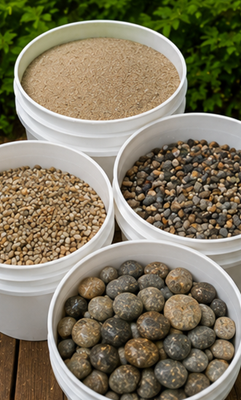 The sand serves several critical functions:
- Supports the biological layer
- Removes suspended particles
- Improves water clarity
- Provides additional biological treatment zones
- Helps reduce turbidity
The ideal filtration sand should be:
- Clean and washed
- Free from organic material
- Uniform in size
- Free from clay and silt
- Free from chemical contamination
Sand that contains excessive dust, clay, or organic debris can reduce performance and lead to clogging.
Common sources include:
- Filter sand suppliers
- Pool filter sand suppliers
- Landscaping suppliers
- Aggregate suppliers
- Water treatment suppliers
Not all sand is suitable for filtration. Construction sand, beach sand, and unwashed sand may contain contaminants or particle sizes that reduce effectiveness.
Gravel
Gravel serves as the support structure beneath the sand bed and helps distribute water evenly throughout the lower portion of the filter.
Several gravel sizes are typically used to create a gradual transition between the sand and the drainage system.
Typical gravel layers may include:
- Fine gravel
- Medium gravel
- Coarse gravel
The gravel performs several important functions:
- Supports the sand bed
- Prevents sand from entering the drainage system
- Promotes even water flow
- Improves drainage
- Protects outlet piping
Like the sand, all gravel should be thoroughly washed before installation.
Gravel should be:
- Clean
- Free from dirt
- Free from clay
- Free from organic material
- Free from chemical contamination
Dirty gravel can introduce contaminants and reduce filter performance.
Container
The container forms the outer structure of the filter and supports the considerable weight of the filtration media.
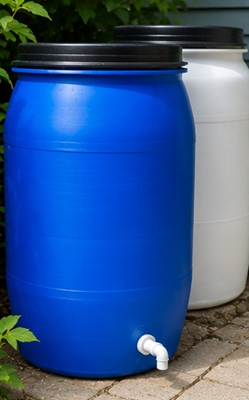 Several container options may be suitable, including:
- Food-grade plastic barrels
- Polyethylene water tanks
- Fiberglass tanks
- Concrete structures
- Large PVC pipe sections
The container should meet several requirements:
- Food safe
- Watertight
- Durable
- Structurally strong
- Resistant to weather and sunlight
A standard 55-gallon food-grade drum remains one of the most common choices for homestead and preparedness applications because it is affordable, readily available, and easy to modify.
Outlet Pipe
The outlet pipe carries treated water from the drainage system to a storage tank or collection point.
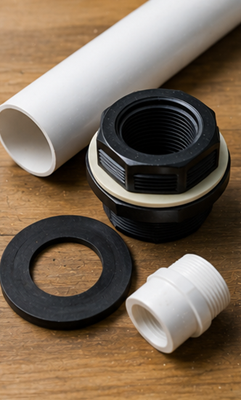 PVC pipe is commonly used because it is:
- Inexpensive
- Easy to install
- Corrosion resistant
- Widely available
- Suitable for potable water systems
The outlet pipe must be properly sized to maintain the desired water level inside the filter and allow consistent flow.
Depending on the design, common pipe sizes include:
- ½ inch PVC
- ¾ inch PVC
- 1 inch PVC
The exact size depends on the filter dimensions and desired flow rate.
Bulkhead Fitting
A bulkhead fitting creates a watertight connection where the outlet pipe passes through the wall of the container.
This component may seem minor, but it is critical for preventing leaks and maintaining proper operation.
A quality bulkhead fitting provides:
- Reliable sealing
- Structural support
- Easy plumbing connections
- Long-term durability
Bulkhead fittings are commonly available through:
- Plumbing suppliers
- Irrigation suppliers
- Water system suppliers
- Online retailers
Choosing a high-quality fitting can prevent many future maintenance issues.
Screen Material
A screen or separator material is typically placed between media layers and around the drainage system.
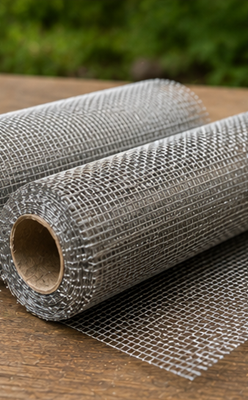 Its primary purpose is to prevent media migration, which occurs when sand or gravel shifts into lower layers over time.
Suitable screen materials may include:
- Stainless steel mesh
- Food-grade plastic mesh
- Geotextile fabric
- Perforated filter screens
The screen material should:
- Allow unrestricted water flow
- Resist clogging
- Resist corrosion
- Remain durable under constant moisture
Properly installed screen material helps preserve the integrity of the filtration layers and extends the service life of the system.
Additional Plumbing Components
Most filters also require a few basic plumbing supplies.
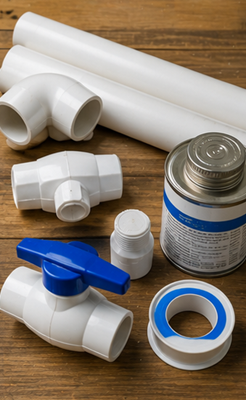 These may include:
- PVC elbows
- Couplings
- Ball valves
- Pipe cement
- Thread seal tape
- Hose adapters
These components help connect the filter to storage tanks, distribution systems, or collection containers.
Optional Pre-Filtration Materials
In situations where source water contains large amounts of sediment, adding a simple pre-filtration stage can improve performance.
Optional materials may include:
- Settling tanks
- Sediment buckets
- Leaf screens
- First-flush diverters
- Coarse filter media
Pre-filtration can significantly reduce the amount of debris entering the slow sand filter and extend maintenance intervals.
Water Quality Begins With Material Quality
One of the most important principles when building a slow sand filter is that every material that comes into contact with the water has the potential to affect water quality. Materials should always be selected with safety, durability, and long-term reliability in mind.
 Before construction begins, verify that all materials are:
- Clean
- Food safe
- Free from contamination
- Structurally sound
- Suitable for long-term water contact
By using quality materials and taking the time to prepare them properly, you create the foundation for a slow sand filter that can provide dependable service for many years. In many cases, the extra effort spent selecting and cleaning materials during construction will pay dividends through improved water quality and reduced maintenance throughout the life of the system.
11. Preparing the Sand
Of all the steps involved in building a slow sand filter, preparing the sand is arguably one of the most important and most frequently overlooked. Many first-time builders spend considerable time selecting containers, plumbing components, and gravel layers, only to underestimate the importance of properly cleaning the filtration sand. Unfortunately, even the highest-quality filter design can perform poorly if the sand is not adequately prepared before installation.
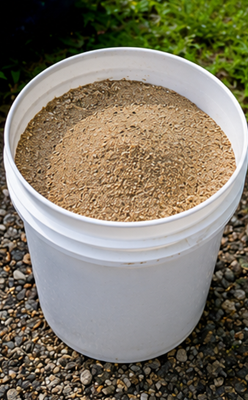 Freshly purchased sand often appears clean at first glance, but appearances can be deceiving. Sand particles are typically coated with fine materials that accumulate during mining, transportation, storage, and handling. These materials may not be visible when the sand is dry, but they can become obvious once water is added.
Common contaminants found in unwashed sand include:
- Dust
- Clay particles
- Silt
- Fine organic material
- Soil residue
- Small stones and debris
- Plant matter
If these contaminants are left in the sand, they can significantly reduce the effectiveness of the filter and create problems during startup.
Why Sand Washing Is Necessary
The purpose of washing the sand is not to sterilize it or remove every microscopic particle. Instead, the goal is to remove excessive fines that could interfere with water flow and filtration performance.
When dirty sand is installed without proper washing, several problems can occur:
- Reduced water flow rates
- Premature clogging
- Cloudy filtered water
- Longer startup periods
- Uneven water movement through the filter
- Increased maintenance requirements
Clay and silt particles are particularly troublesome because they are much smaller than the sand grains themselves. These tiny particles can fill the spaces between sand grains and dramatically reduce the permeability of the filter bed.
In severe cases, poorly prepared sand can make a newly built filter almost unusable.
Understanding Fine Particles
Sand grains are designed to create millions of tiny pathways that allow water to move slowly through the filter. These pathways are essential for both filtration and biological treatment.
When excessive fines are present, they begin filling these spaces.
Common fine particles include:
- Clay
- Silt
- Rock dust
- Powdered mineral fragments
These materials can create a dense, compacted layer that restricts water movement. Instead of flowing evenly through the filter, water may begin to channel through a few preferred pathways, reducing overall treatment efficiency.
Proper washing restores the open structure of the sand bed and promotes uniform water flow.
The Washing Process
Preparing filtration sand is usually a simple but labor-intensive task. Depending on the amount of sand being used, the process can take several hours or even an entire day.
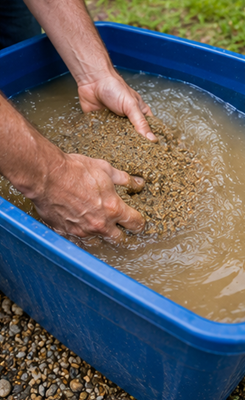 A typical washing procedure involves:
- Place a portion of the sand into a large container.
- Add clean water.
- Stir the sand vigorously.
- Allow heavier sand grains to settle.
- Pour off the cloudy water.
- Repeat the process multiple times.
The first few rinse cycles often produce water that appears extremely muddy. This is normal and indicates that fine particles are being removed.
Continue washing until the rinse water becomes substantially clearer.
Don’t Expect Crystal-Clear Water Immediately
Many builders become discouraged because the rinse water remains cloudy after several washes. This is normal.
Depending on the source of the sand, multiple rinse cycles may be required before acceptable cleanliness is achieved.
Factors affecting washing time include:
- Sand source
- Particle size
- Amount of clay present
- Storage conditions
- Transportation contamination
Patience is important. The cleaner the sand becomes during preparation, the better the filter will perform once operational.
Screening the Sand
While washing the sand, it is also a good opportunity to inspect it for unwanted materials.
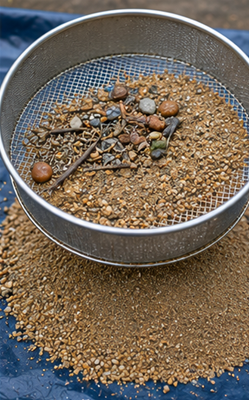 Look for:
- Stones
- Twigs
- Roots
- Leaves
- Plastic fragments
- Other debris
Removing larger materials helps ensure a uniform filter bed and prevents future maintenance issues.
Some builders use screens or sieves to separate oversized particles before washing begins.
Water Requirements for Washing
Many people are surprised by how much water may be needed to properly prepare filtration sand.
Depending on the quantity of sand, washing may require:
- Several buckets of water
- Garden hose access
- Temporary holding tanks
- Drainage areas for rinse water
It is often easier to perform this task outdoors where muddy rinse water can be safely discharged without creating a mess.
Planning ahead for water usage can make the process much easier.
Signs That the Sand Is Ready
While there is no exact point at which sand becomes perfectly clean, several indicators suggest the sand is ready for installation.
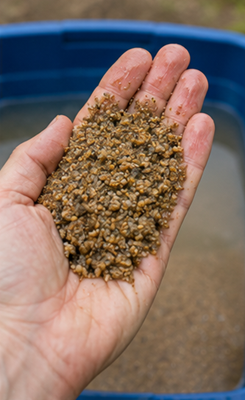 Properly prepared sand typically:
- Produces only slightly cloudy rinse water
- Contains minimal visible dust
- Feels clean when handled
- Contains few or no visible contaminants
- Settles evenly when submerged
The goal is not perfection but rather the removal of enough fine material to allow proper filter operation.
Common Mistakes to Avoid
Several common mistakes can create problems later.
Avoid:
- Skipping the washing process entirely.
- Using construction sand without cleaning.
- Assuming new sand is already clean.
- Installing sand while still heavily contaminated with clay.
- Mixing cleaned and uncleaned sand together.
- Rushing through the rinsing process.
The temptation to save time during construction is understandable, but shortcuts during sand preparation often create larger problems after the filter is assembled.
An Investment in Long-Term Performance
Preparing the sand is not the most exciting part of building a slow sand filter, but it is one of the most important. A few extra hours spent washing and inspecting the sand can dramatically improve filtration performance, reduce maintenance requirements, and extend the life of the system.
Many experienced builders consider sand preparation to be the foundation of a successful slow sand filter. Once the filter is assembled, correcting problems caused by poorly cleaned sand can be difficult and time-consuming. By taking the time to prepare the sand properly from the beginning, you create the conditions necessary for efficient water flow, healthy biological activity, and long-term reliable operation.
In short, this is one step that should never be rushed. The quality of the finished filter often begins with the quality of the sand preparation.
12. Preparing the Gravel
While much of the attention in a slow sand filter is focused on the sand layer, the gravel is equally important to the overall performance of the system. Gravel serves as the foundation that supports the filtration media, promotes proper drainage, and protects the drainage system from becoming clogged with sand. If the gravel is not properly prepared before installation, contaminants trapped within the gravel can negatively affect water quality and reduce the efficiency of the filter.
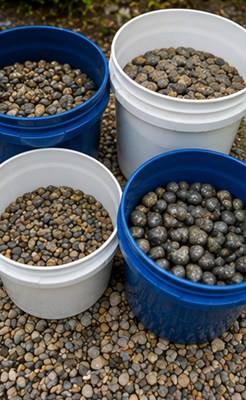 Like sand, gravel often appears clean when purchased or collected. However, gravel commonly contains dirt, dust, clay particles, and organic debris that can create problems if introduced into the filter. These materials may not seem significant during construction, but once water begins flowing through the system, they can migrate into the filtration layers and interfere with normal operation.
For this reason, all gravel should be thoroughly washed before it is placed into the filter.
Common contaminants found in unwashed gravel include:
- Dirt
- Clay
- Silt
- Dust
- Leaves
- Twigs
- Plant material
- Small roots
- Organic debris
- Construction residue
Removing these contaminants before installation helps ensure that the filter starts with clean media and performs as intended.
Why Gravel Cleaning Matters
The gravel layers perform several important functions within the filter. They support the weight of the sand bed, promote even water distribution, and provide a pathway for treated water to move toward the drainage system.
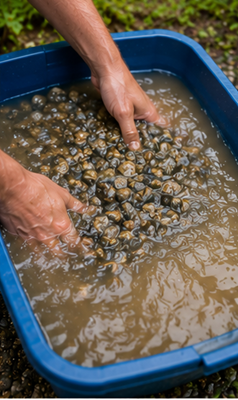 If the gravel contains excessive dirt or clay, several problems may occur:
- Reduced drainage efficiency
- Clogged drainage pipes
- Restricted water flow
- Increased maintenance requirements
- Cloudy water during startup
- Migration of fine particles into lower layers
Many builders focus heavily on washing the sand while giving little attention to the gravel. In reality, dirty gravel can introduce a surprising amount of contamination into a newly constructed filter.
Understanding the Role of Gravel
A typical slow sand filter contains several gravel layers of different sizes. These layers create a gradual transition between the fine sand above and the drainage system below.
The gravel layers help:
- Support the filtration media
- Prevent sand from entering the drainage system
- Maintain consistent water flow
- Improve drainage performance
- Protect outlet plumbing
Because water eventually passes through all of these layers, it is important that they remain as clean as possible.
Washing the Gravel
The cleaning process for gravel is generally easier than cleaning sand because gravel particles are larger and heavier. However, the process is still important and should not be skipped.
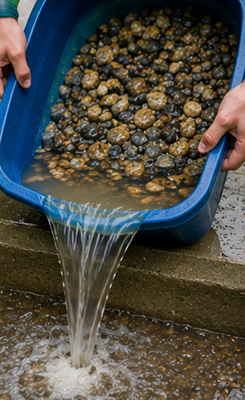 A typical cleaning procedure includes:
- Place the gravel in a large container, wheelbarrow, or bucket.
- Add clean water.
- Stir or agitate the gravel thoroughly.
- Pour off the dirty water.
- Repeat until the rinse water becomes relatively clear.
The first rinse often removes a surprising amount of dirt and fine material. Depending on the source of the gravel, multiple wash cycles may be required.
Sorting Gravel by Size
Many slow sand filter designs use multiple gravel sizes arranged in layers. If different gravel sizes are being used, it is often helpful to sort and wash them separately.
Typical gravel categories include:
- Fine gravel
- Medium gravel
- Coarse gravel
Keeping the sizes separated during cleaning makes installation easier and helps maintain the proper layer structure within the filter.
Inspecting for Organic Material
During the washing process, carefully inspect the gravel for organic material.
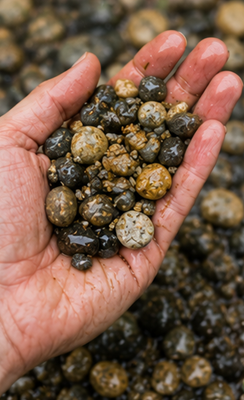 Remove any:
- Leaves
- Sticks
- Bark
- Grass
- Roots
- Seeds
Organic debris can decompose over time and potentially contribute to unwanted biological growth or water quality issues.
If gravel is collected from natural sources such as riverbeds or gravel pits, additional inspection is particularly important.
Removing Clay and Fine Sediment
Clay is one of the most common contaminants found in gravel and one of the most problematic.
Clay particles can:
- Fill spaces between gravel pieces
- Restrict water movement
- Increase turbidity
- Migrate into the sand layer
- Contribute to clogging
If rinse water remains muddy after several washes, continue cleaning until most of the fine material has been removed.
The cleaner the gravel, the better the drainage performance of the finished filter.
Water Flow Depends on Clean Gravel
The lower portion of a slow sand filter functions much like the foundation of a building. Although it remains hidden from view after construction, it plays a critical role in supporting the entire system.
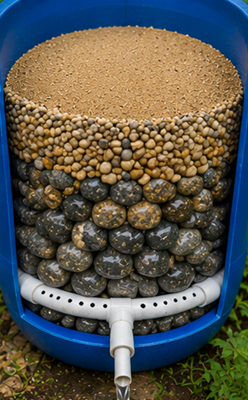 Clean gravel helps ensure:
- Even water distribution
- Efficient drainage
- Stable filtration layers
- Reduced maintenance
- Consistent flow rates
Poorly cleaned gravel can create problems that may not become apparent until weeks or months after the filter is placed into service.
Common Mistakes to Avoid
Several common mistakes can reduce the effectiveness of the gravel layer.
Avoid:
- Installing gravel directly from the bag without washing.
- Mixing large amounts of dirt into the gravel layers.
- Using gravel contaminated with chemicals.
- Leaving organic debris in the gravel.
- Failing to separate gravel sizes when required.
- Assuming gravel is clean simply because it looks clean.
A little extra effort during preparation can prevent many future maintenance issues.
Building a Strong Foundation
The gravel layers may not receive as much attention as the biological layer or the sand bed, but they are essential components of a successful slow sand filter. Clean, properly prepared gravel promotes efficient drainage, protects the outlet system, and helps maintain the structural stability of the filter over time.
By thoroughly washing the gravel and removing dirt, clay, and organic debris before installation, you create a solid foundation for the entire filtration system. Combined with properly prepared sand, clean gravel helps ensure that water can move smoothly through the filter while supporting the long-term reliability and effectiveness that make slow sand filtration such a valuable tool for off-grid living.
13. Installing the Drainage System
The drainage system is one of the most important components of a slow sand filter, yet it is often overlooked during construction. While the biological layer and sand bed receive most of the attention, the drainage system serves a critical function by collecting the filtered water and directing it out of the filter without disturbing the filtration media above.
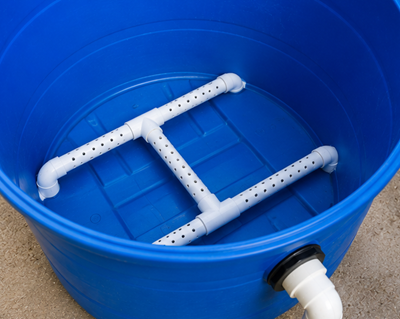 A well-designed drainage system ensures that water is collected evenly from the entire bottom surface of the filter. This promotes uniform flow throughout the sand bed and helps maintain consistent filtration performance. If the drainage system is poorly designed or improperly installed, water may begin to favor certain pathways, reducing treatment efficiency and potentially shortening the life of the filter.
Think of the drainage system as the foundation of the filter. Once the sand and gravel are installed, accessing the drainage components becomes difficult and time-consuming. For this reason, careful planning and proper installation are essential before any filtration media is added.
The drainage system performs several important functions:
- Collects treated water from the filter.
- Supports even water movement through the media.
- Prevents dead zones within the filter.
- Reduces channeling and uneven flow.
- Protects against media loss.
- Directs filtered water to storage or distribution systems.
Without an effective drainage system, even a well-constructed filter may fail to perform as intended.
Why Even Water Collection Matters
One of the primary goals of slow sand filtration is to force water to travel evenly through the entire sand bed. This maximizes contact with the biological layer and ensures that all portions of the filter contribute to treatment.
If water is only collected from one small area at the bottom, several problems can develop:
- Uneven filtration.
- Reduced biological effectiveness.
- Preferential flow paths.
- Areas of stagnant water.
- Lower water quality.
- Increased maintenance requirements.
A properly designed drainage system encourages water to move uniformly through the filter from top to bottom.
Perforated Pipe Systems
One of the most common drainage methods for small and medium-sized slow sand filters uses perforated PVC pipe.
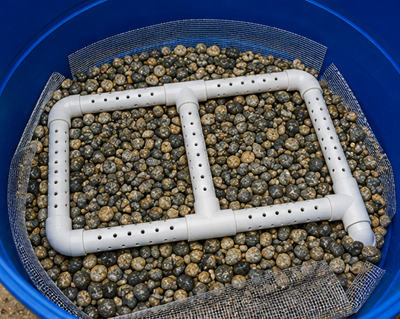 In this design, PVC pipe is installed near the bottom of the container and drilled with a series of small holes. As filtered water reaches the gravel layer, it enters the perforations and flows toward the outlet.
Advantages of perforated pipe systems include:
- Simple construction.
- Low cost.
- Readily available materials.
- Easy installation.
- Suitable for most homestead-scale filters.
Typical materials include:
- PVC pipe
- PVC fittings
- Drill and drill bits
- Bulkhead fittings
- Pipe caps
The holes should be evenly spaced to encourage uniform water collection throughout the filter.
When drilling holes:
- Use consistent spacing.
- Avoid excessively large holes.
- Position holes downward or sideways.
- Remove burrs after drilling.
Proper hole placement helps prevent gravel from entering the pipe while maintaining good water flow.
Manifold Drainage Systems
For larger filters, a manifold system is often preferred.
A manifold consists of multiple interconnected pipes arranged in a grid or branching pattern. Instead of relying on a single collection pipe, the manifold gathers water from many locations across the bottom of the filter.
Benefits include:
- Improved water collection.
- More uniform flow distribution.
- Better performance in larger filters.
- Reduced risk of dead zones.
- Greater hydraulic efficiency.
A typical manifold may include:
- A central collection pipe.
- Several branch lines.
- Perforated sections.
- Connection fittings.
The design resembles the root system of a tree, allowing water to be collected evenly from a large area.
Many municipal slow sand filters and larger homestead systems use manifold designs because of their superior performance.
Collection Chambers
Large community-scale or commercial slow sand filters often incorporate a collection chamber beneath the gravel layers.
In these systems, filtered water enters an open space or chamber before flowing to the outlet.
Advantages include:
- Excellent water collection.
- Easy flow control.
- Reduced outlet restrictions.
- Simplified maintenance access.
- Improved hydraulic performance.
Collection chambers are generally more complex to construct but provide excellent performance in larger installations.
For most homestead-scale projects, perforated pipes or manifold systems are usually sufficient.
Protecting the Drainage System
Once the drainage system is installed, it must be protected from the movement of sand and gravel.
Without protection, fine filtration media may eventually enter the drainage pipes and create blockages.
Several methods are commonly used:
- Layered gravel transitions.
- Stainless steel mesh screens.
- Plastic screening material.
- Geotextile fabrics.
- Slotted pipe covers.
These protective measures help maintain free water flow while preventing media migration.
Proper Outlet Placement
The outlet connection is another critical design consideration.
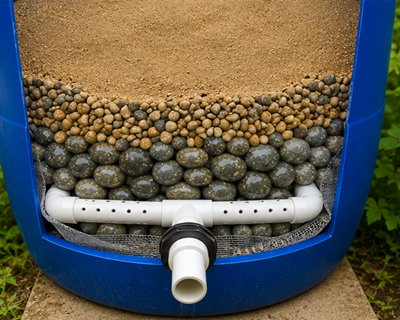 The outlet should:
- Maintain the desired water level.
- Allow consistent drainage.
- Remain accessible for maintenance.
- Prevent leaks.
Many builders use a bulkhead fitting to create a watertight connection through the container wall.
The outlet location also determines the standing water depth above the sand bed, which is important for maintaining biological activity.
Avoiding Common Drainage Problems
Several mistakes can reduce the effectiveness of a drainage system.
Common problems include:
- Too few collection points.
- Uneven pipe spacing.
- Undersized outlet pipes.
- Improper slope.
- Clogged perforations.
- Lack of gravel protection layers.
- Poorly sealed outlet connections.
Taking the time to carefully design and install the drainage system helps prevent these issues from developing later.
Testing Before Adding Media
Before adding gravel and sand, it is wise to test the drainage system.
A simple test may include:
- Installing the drainage components.
- Filling the bottom of the container with water.
- Checking for leaks.
- Verifying even drainage.
- Confirming proper outlet flow.
Making corrections at this stage is much easier than after several hundred pounds of sand and gravel have been installed.
Building for Long-Term Reliability
The drainage system may never be visible once the filter is complete, but it remains one of the most important components in the entire design. Its job is to quietly and consistently collect treated water while supporting even filtration throughout the media bed.
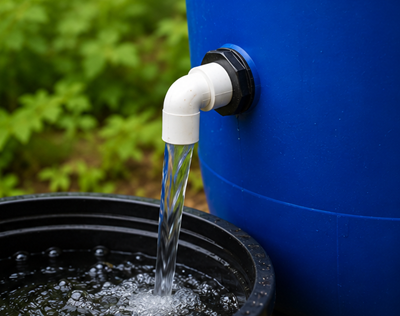 A properly installed drainage system provides:
- Consistent water collection.
- Stable filter performance.
- Reduced maintenance.
- Improved treatment efficiency.
- Long-term reliability.
When combined with properly prepared sand, clean gravel, and a healthy biological layer, an effective drainage system helps ensure that the slow sand filter can continue producing cleaner water for many years. For this reason, investing extra time and attention during this phase of construction is one of the best decisions a builder can make.
14. Layer Construction
The arrangement of the filtration layers is one of the most important aspects of building a successful slow sand filter. While the filter may appear to be nothing more than a container filled with sand and gravel, each layer serves a specific purpose and contributes to the overall performance of the system. The order, thickness, and quality of these layers directly affect water flow, filtration efficiency, maintenance requirements, and the long-term reliability of the filter.
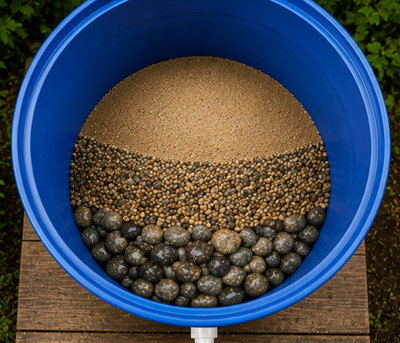 A properly constructed filter uses progressively smaller materials as you move upward from the drainage system toward the filtration surface. This gradual transition allows water to flow freely while preventing finer materials from migrating into lower layers. The result is a stable filtration bed that can operate effectively for many years.
Think of the layer arrangement as a support system. Each layer supports the one above it while also performing its own role in the filtration process. If layers are installed incorrectly or mixed together, water flow can become uneven and the filter may not function as intended.
A typical slow sand filter is arranged as follows:
- Drainage system
- Large gravel layer
- Medium gravel layer
- Fine gravel layer
- Fine sand layer
- Biological layer
- Standing water reservoir
Together, these layers create a highly effective treatment system that combines physical filtration, biological treatment, and natural water purification processes.
The Bottom Gravel Layer
The lowest filtration layer sits directly above the drainage system and consists of large gravel.
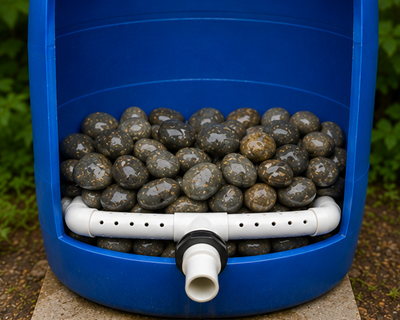 Typical depth:
- 4–6 inches (10–15 cm)
Typical gravel size:
- Approximately ¾ to 1½ inches (20–40 mm)
The primary purpose of this layer is to support the upper media while allowing filtered water to move freely into the drainage system.
Functions of the bottom gravel layer include:
- Protecting drainage pipes
- Preventing clogging of the outlet system
- Supporting the weight of upper layers
- Promoting unrestricted water flow
- Providing structural stability
This layer essentially acts as the foundation of the filter. Because water has already passed through the sand and upper gravel layers before reaching this point, its main role is drainage rather than filtration.
The Intermediate Gravel Layer
Above the large gravel is a layer of medium-sized gravel.
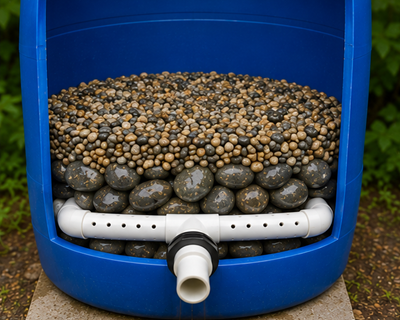 Typical depth:
- 3–4 inches (7–10 cm)
Typical gravel size:
- Approximately ¼ to ¾ inch (6–20 mm)
The intermediate gravel layer serves as a transition zone between the large drainage gravel and the finer materials above.
Its functions include:
- Supporting upper media
- Preventing gravel migration
- Improving flow distribution
- Creating a gradual particle-size transition
- Reducing movement of filtration materials
Without this transition layer, smaller materials could gradually settle into the larger gravel below, reducing the effectiveness of the filter and potentially creating drainage problems.
The Fine Gravel Layer
Above the intermediate gravel lies the fine gravel layer.
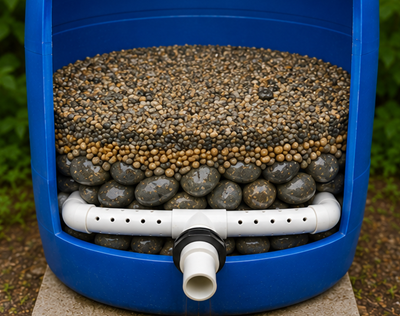 Typical depth:
- 2–3 inches (5–8 cm)
Typical gravel size:
- Approximately ⅛ to ¼ inch (3–6 mm)
This layer creates the final transition between the sand bed and the larger support layers below.
The fine gravel serves several important purposes:
- Supports the sand bed
- Prevents sand from entering lower layers
- Maintains even water flow
- Improves filter stability
- Protects the drainage system
The transition from sand to gravel is one of the most critical points in the filter. Proper sizing helps ensure that sand remains in place while still allowing water to move freely downward.
The Fine Sand Layer
The fine sand layer is the heart of the slow sand filter and typically occupies the largest portion of the filter’s internal volume.
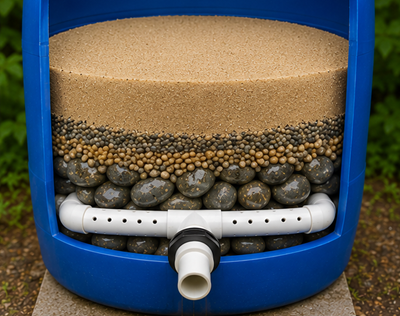 Typical depth:
- 24–36 inches (60–90 cm)
In some larger systems, sand depths may exceed 36 inches.
This layer serves as the primary filtration zone and is responsible for much of the filter’s effectiveness.
Functions of the fine sand layer include:
- Physical filtration of suspended particles
- Support of biological activity
- Reduction of turbidity
- Improvement of water clarity
- Pathogen reduction
- Organic matter removal
As water slowly moves through the sand, contaminants become trapped between sand grains while beneficial microorganisms continue treating the water biologically.
The thickness of this layer is important because it determines how much contact time the water has with the filtration media.
Why Sand Depth Matters
Many first-time builders are tempted to reduce the depth of the sand layer to save space or reduce material costs. However, sand depth directly influences treatment performance.
A deeper sand bed generally provides:
- Better filtration
- Greater biological activity
- Longer maintenance intervals
- More stable operation
- Improved water quality
The sand layer is where the majority of the treatment process occurs. For this reason, it should never be viewed as an area where shortcuts are appropriate.
Maintaining Distinct Layers
One of the most important goals during construction is maintaining clear separation between the different media layers.
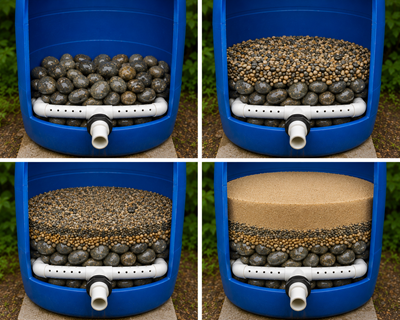 The layers should remain distinct and avoid excessive mixing.
Benefits of maintaining separation include:
- Improved drainage
- Better filtration efficiency
- Reduced clogging
- More predictable performance
- Easier maintenance
To achieve this:
- Add media carefully.
- Avoid dumping materials from excessive heights.
- Add water during construction.
- Level each layer before adding the next.
Taking extra care during installation helps preserve the integrity of the entire system.
Layer Thickness and Filter Performance
The exact thickness of each layer can vary depending on the filter size and intended application. However, maintaining proper proportions is generally more important than achieving precise measurements.
The overall goal is to create:
- Adequate drainage capacity
- Stable support layers
- Sufficient sand depth
- Consistent water flow
- Long-term reliability
Minor variations in gravel thickness are usually acceptable, but the sand layer should remain deep enough to provide effective treatment.
Building the Filter One Layer at a Time
Constructing the filter in stages allows each layer to be inspected and leveled before proceeding.
A typical installation sequence includes:
- Install the drainage system.
- Add the large gravel layer.
- Add the medium gravel layer.
- Add the fine gravel layer.
- Add the fine sand layer.
- Fill with water.
- Begin filter maturation.
Working slowly and carefully during construction often results in a more reliable and efficient filter.
Creating the Foundation for Effective Filtration
The layer structure is what transforms a simple container of sand and gravel into a functioning water treatment system. Each layer supports the next, creating a stable environment where water can move slowly and evenly through the filter while biological and physical treatment processes occur.
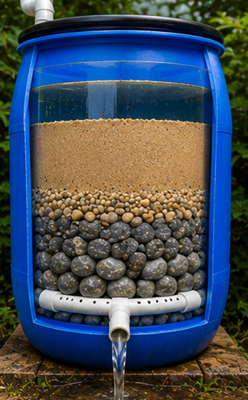 When properly constructed, the gravel layers provide drainage and support, while the sand layer becomes the primary treatment zone. Together, these carefully arranged materials form the foundation of a slow sand filter capable of producing cleaner water for years with minimal maintenance.
The success of the entire system depends on getting these layers right. Taking the time to install them properly is one of the best investments you can make in the long-term performance of your off-grid water filtration system.
15. Filling the Filter
Once the drainage system, gravel layers, and filtration sand have been properly prepared, the next step is assembling the filter by carefully filling the container. Although this may seem like a simple task, the filling process plays an important role in determining how well the filter performs once it is placed into service.
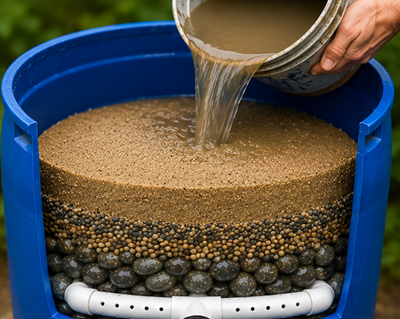 Many construction problems that appear later can often be traced back to mistakes made during this stage. Rushing the filling process, dumping materials too aggressively, or allowing layers to become mixed can compromise the effectiveness of the entire filtration system. Taking the time to fill the filter carefully helps preserve the integrity of the media layers and creates the conditions necessary for efficient water treatment.
The goal is to create a stable, well-organized filter bed with clearly defined layers that allow water to move evenly from top to bottom. Every effort should be made to prevent disturbance of the materials during installation.
Why Water Should Be Added During Construction
One of the most effective techniques when building a slow sand filter is adding water as the layers are installed. Rather than placing all of the gravel and sand into a dry container, many experienced builders maintain several inches of water within the filter throughout construction.
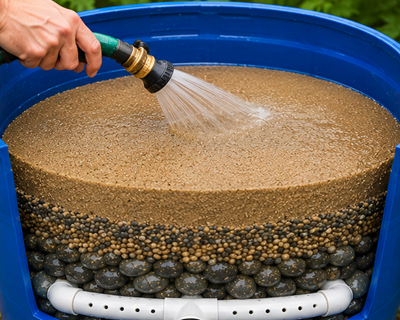 Adding water during assembly provides several important benefits:
- Reduces sand compaction
- Prevents excessive settling
- Minimizes layer disturbance
- Reduces dust
- Eliminates trapped air pockets
- Helps maintain layer separation
The water acts as a cushion, allowing the media to settle gently into place rather than impacting the lower layers with full force.
This simple step can greatly improve the final quality of the filter bed.
Preventing Sand Compaction
One of the primary reasons for using water during installation is to reduce compaction of the sand layer.
When dry sand is poured directly into the filter from a height, the weight of the falling material can cause the lower portions of the sand bed to become excessively compacted. Excessive compaction reduces the spaces between sand grains and can negatively affect water flow.
Potential problems include:
- Reduced filtration rates
- Uneven flow patterns
- Increased startup time
- More frequent maintenance
- Poor biological development
Adding water allows the sand particles to settle more naturally and helps preserve the pore spaces that are essential for effective filtration.
Preventing Layer Mixing
Each layer within a slow sand filter has a specific purpose. The gravel layers support the sand bed, the sand provides filtration, and the biological layer develops near the surface. If these layers become mixed during installation, overall performance may suffer.
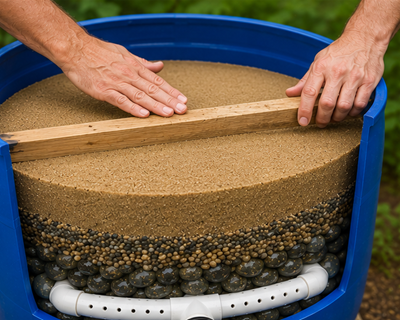 Layer mixing can occur when:
- Materials are dumped too quickly.
- Media is poured from excessive heights.
- The filter is assembled dry.
- Construction is rushed.
Water helps cushion the impact of incoming material and reduces the likelihood of disturbing lower layers.
The objective is to maintain clear transitions between:
- Large gravel
- Medium gravel
- Fine gravel
- Fine sand
Distinct layers promote proper water movement and long-term stability.
Eliminating Air Pockets
Air pockets are another issue that can develop during filter construction.
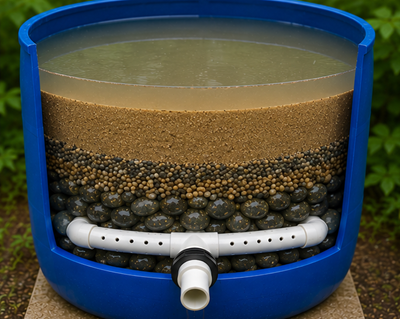 As gravel and sand are added to the container, pockets of trapped air can form between particles. These pockets may interfere with water movement and create uneven flow paths once the filter becomes operational.
Problems associated with trapped air include:
- Uneven water distribution
- Reduced filtration efficiency
- Localized dry zones
- Inconsistent biological activity
Maintaining water within the filter during construction helps displace trapped air and allows media to settle more uniformly.
Building the Filter in Stages
The filling process should be approached as a series of careful steps rather than a single operation.
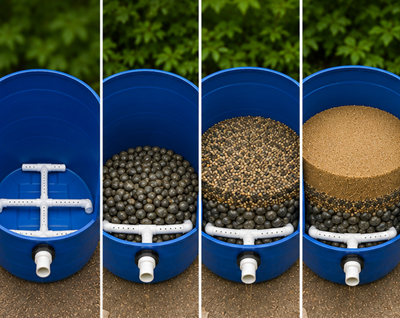 A typical sequence might include:
- Install the drainage system.
- Add several inches of water.
- Install the large gravel layer.
- Add additional water if needed.
- Install the medium gravel layer.
- Add the fine gravel layer.
- Slowly add the filtration sand.
- Maintain water above the media surface.
- Level each layer before proceeding.
Working in stages makes it easier to inspect the filter and correct any problems before additional material is added.
Adding Gravel Carefully
Although gravel is less sensitive than sand, it should still be placed carefully.
When adding gravel:
- Lower buckets close to the surface.
- Avoid throwing material into the container.
- Spread gravel evenly.
- Check for levelness frequently.
These simple practices help maintain an even foundation for the upper filtration layers.
Adding Sand Carefully
The sand layer deserves special attention because it serves as the primary filtration zone.
To protect the lower layers:
- Add sand gradually.
- Use small batches.
- Pour gently.
- Avoid creating large piles.
- Level the surface periodically.
Some builders place a temporary board, bucket lid, or tray on top of the gravel while adding sand. This helps distribute the impact and further reduces disturbance.
Maintaining Level Surfaces
Each layer should be leveled before adding the next.
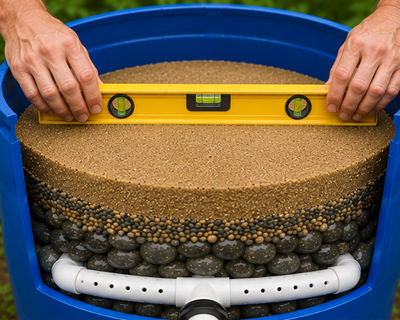 Uneven layers can create:
- Uneven water flow
- Preferential flow paths
- Reduced treatment efficiency
- Localized settling
A level surface promotes uniform filtration and helps ensure that water moves evenly through the entire filter bed.
Simple tools that may be helpful include:
- A straight board
- A level
- A garden rake
- A trowel
Perfect precision is not necessary, but major unevenness should be corrected.
Avoid Aggressive Filling Methods
One of the most common mistakes made by first-time builders is attempting to speed up construction by dumping large amounts of material into the filter at once.
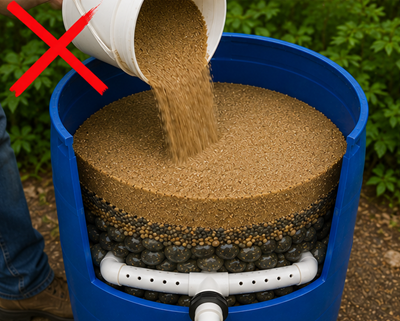 Avoid:
- Pouring from excessive heights.
- Dumping entire wheelbarrows into the container.
- Using machinery without proper control.
- Dropping heavy loads directly onto lower layers.
These actions can destroy carefully prepared layers and create problems that may not become apparent until the filter is operating.
Inspecting Before Startup
After all media has been installed, take time to inspect the filter before introducing regular water flow.
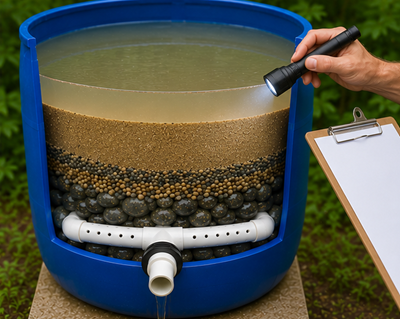 Check for:
- Distinct layer separation
- Proper sand depth
- Level media surfaces
- Secure outlet connections
- Proper drainage system alignment
- Absence of visible debris
Correcting problems now is far easier than rebuilding portions of the filter later.
Taking Your Time Pays Off
The filling stage is where all of the preparation work comes together. Properly washed sand, clean gravel, and a carefully installed drainage system can only perform well if the filter is assembled correctly.
A few extra hours spent filling the filter slowly and carefully can provide years of improved performance. By adding water during construction, maintaining distinct layers, preventing compaction, and eliminating air pockets, you create a stable foundation for the biological and physical treatment processes that make slow sand filtration so effective.
Like many aspects of off-grid living, patience often leads to better results. Taking your time during construction helps ensure that the filter begins its service life in the best possible condition and provides reliable water treatment for many years to come.
16. Starting the Filter
Completing the construction of a slow sand filter is a significant milestone, but the filter is not yet ready to perform at its full potential. Unlike many mechanical filtration systems that begin operating immediately after installation, a slow sand filter requires a startup period during which the biological treatment processes gradually develop.
Many first-time builders expect the filter to produce its best water as soon as water begins flowing through it. In reality, a newly constructed filter is more like a garden than a machine. Just as a garden requires time for plants to establish themselves, a slow sand filter requires time for beneficial microorganisms to colonize the upper sand layer and create the biological ecosystem that makes the system so effective.
The startup period is often referred to as the maturation phase or ripening period. During this time, the filter gradually transitions from functioning primarily as a mechanical filter to becoming a highly effective biological treatment system.
Once construction is complete, the basic startup procedure is relatively simple:
- Fill the filter with water.
- Establish a slow, steady flow.
- Continue operating the filter regularly.
- Allow the biological layer to develop naturally.
- Monitor performance over time.
Patience during this phase is extremely important.
Filling the Filter for the First Time
The first step is slowly filling the filter with water. This should be done carefully to avoid disturbing the sand surface and mixing the media layers that were carefully installed during construction.
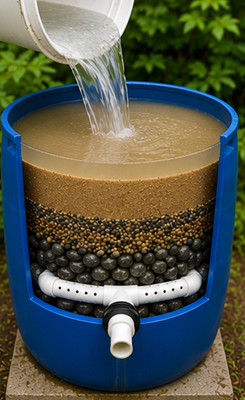 When filling the filter:
- Add water gradually.
- Avoid directing strong streams onto the sand.
- Maintain the standing water layer above the sand.
- Check for leaks.
- Verify proper outlet operation.
The initial filling allows the filtration media to settle naturally while also helping remove any remaining trapped air within the system.
It is normal for the first batches of water leaving the filter to appear somewhat cloudy. Small amounts of residual dust and fine particles may still be present despite careful washing of the media.
Establishing a Slow Flow Rate
One of the most important aspects of startup is maintaining an appropriately slow flow rate.
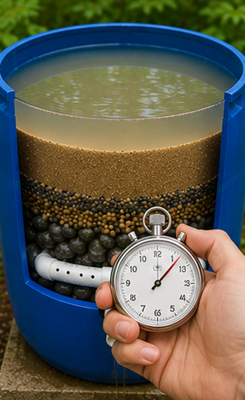 Slow sand filters are designed to operate gradually. Water should move through the system at a pace that allows adequate contact time between the water, the biological layer, and the sand bed.
During startup:
- Avoid excessive flow rates.
- Maintain consistent water levels.
- Prevent rapid surges of water.
- Allow the filter to operate continuously whenever possible.
A steady flow encourages biological development and helps establish stable operating conditions.
The Filter Is Not Yet Fully Mature
A newly constructed filter may look complete, but biologically it is still in its infancy.
At this stage:
- The biological layer has not yet formed.
- Beneficial microorganisms are still colonizing the sand.
- Pathogen removal may be limited.
- Treatment performance may be inconsistent.
The filter is essentially beginning the process of creating its own miniature ecosystem.
This biological community develops naturally from microorganisms already present in the incoming water and the surrounding environment. No special inoculation is usually required.
Understanding the Biological Layer
As water continues flowing through the system, microscopic organisms begin attaching themselves to the upper sand surface. Over time, these organisms multiply and form the biologically active layer responsible for much of the filter’s treatment capability.
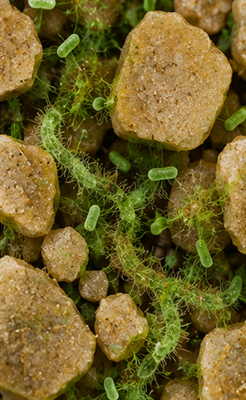 This developing layer eventually becomes populated by:
- Beneficial bacteria
- Protozoa
- Algae
- Rotifers
- Other microscopic organisms
Together, these organisms help:
- Consume organic matter
- Reduce pathogen levels
- Improve water quality
- Support biological filtration processes
The biological layer is the reason a mature filter often performs significantly better than a newly constructed one.
The Maturation Period
The maturation period varies depending on several factors, including:
- Source water quality
- Water temperature
- Flow rate
- Filter size
- Environmental conditions
In many cases, meaningful biological development begins within a few days, but full maturation often requires:
- Two weeks
- Three weeks
- Four weeks
- Occasionally longer
Cooler temperatures generally slow biological growth, while warmer temperatures may accelerate development.
Daily Operation Is Important
Consistent operation plays a major role in helping the biological layer establish itself.
During the startup period:
- Operate the filter daily if possible.
- Maintain standing water above the sand.
- Avoid allowing the filter to dry out.
- Monitor flow rates regularly.
Frequent interruptions can slow biological development and extend the maturation period.
The microorganisms responsible for treatment depend on moisture and a steady supply of nutrients carried by the incoming water.
What to Expect During Startup
The first few weeks may involve gradual changes in filter performance.
Common observations include:
- Slightly cloudy initial water
- Changing flow rates
- Improved water clarity over time
- Reduced odors
- More stable operation as the filter matures
These changes are normal and usually indicate that biological activity is developing successfully.
Monitoring the Filter
The startup period provides an excellent opportunity to monitor the filter and identify any construction issues before the system enters long-term service.
Things to observe include:
- Water clarity
- Flow consistency
- Leaks
- Water levels
- Outlet performance
- Sand surface condition
If problems are detected early, they are generally easier to correct.
Avoid Common Startup Mistakes
Several common mistakes can delay biological development or reduce filter effectiveness.
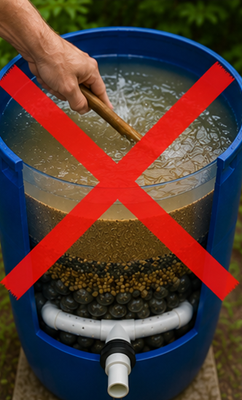 Avoid:
- Allowing the filter to dry out.
- Running water through too quickly.
- Constantly disturbing the sand surface.
- Frequently draining the filter.
- Performing unnecessary cleaning.
- Expecting immediate peak performance.
Remember that biological filtration requires time to develop.
Building a Living System
One of the unique aspects of slow sand filtration is that the filter becomes more effective as it ages. Unlike disposable filters that gradually lose performance over time, a properly maintained slow sand filter often improves as the biological layer matures and stabilizes.
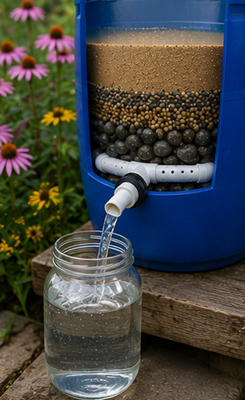 The startup period marks the beginning of this process. During these first few weeks, the filter transforms from a simple collection of sand, gravel, and plumbing into a living water treatment system capable of producing remarkably clean water using natural biological processes.
By filling the filter carefully, maintaining slow and consistent operation, and allowing sufficient time for maturation, you create the conditions necessary for long-term success. Patience during startup is rewarded with improved water quality, more reliable performance, and a healthier biological layer that can continue serving the filter for many years to come.
17. Maturation Period
One of the most important concepts to understand about slow sand filtration is that the filter does not reach peak performance immediately after construction. Unlike a mechanical filter cartridge that works at full capacity the moment it is installed, a slow sand filter must first develop the living biological community that makes the system so effective. This development process is known as the maturation period.
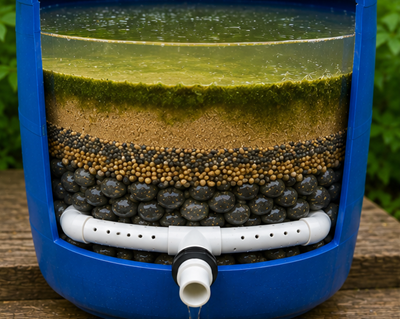 Many first-time builders become concerned when their newly constructed filter does not seem to perform as well as expected during the first few days or weeks. In most cases, this is completely normal. The filter is still undergoing a natural biological transformation. During this period, microorganisms gradually colonize the upper layers of the sand and establish the biological ecosystem that will ultimately become responsible for much of the water treatment process.
The maturation period is often compared to establishing a healthy garden. Seeds do not become mature plants overnight, and beneficial microorganisms do not instantly populate a new filter. Both require time, stable conditions, and consistent care. The same patience that is required for gardening is also required for successful slow sand filtration.
What Happens During Maturation?
When a filter is first placed into operation, the sand is essentially sterile from a biological standpoint. While it may be physically capable of trapping some particles, the biological treatment processes have not yet developed.
As water continues flowing through the filter, naturally occurring microorganisms begin to colonize the upper sand layer. These organisms arrive through:
- Source water
- Airborne microorganisms
- Organic material in the water
- Natural environmental exposure
Over time, these microorganisms establish a complex biological community that eventually forms the biologically active layer known as the schmutzdecke or biofilm.
This developing ecosystem begins to:
- Consume organic matter
- Break down contaminants
- Reduce pathogen populations
- Improve water quality
- Support natural biological treatment processes
As the biological layer grows, the filter gradually becomes more efficient.
How Long Does Maturation Take?
The exact length of the maturation period varies depending on several factors. There is no universal timeline that applies to every filter because biological development depends heavily on local conditions.
In many cases, meaningful biological activity begins within:
- 1 to 2 weeks
Good performance is often achieved within:
- 2 to 4 weeks
Complete maturation may require:
- 4 to 8 weeks
- Occasionally longer under challenging conditions
Several factors influence how quickly the biological layer develops:
- Water temperature
- Source water quality
- Flow rate
- Filter size
- Climate conditions
- Consistency of operation
Warm conditions generally accelerate biological growth, while colder temperatures often slow the process considerably.
Early Performance May Be Limited
During the first days of operation, the filter functions primarily as a physical filter rather than a biological treatment system.
Early-stage performance may include:
- Basic sediment removal
- Improved water clarity
- Limited pathogen reduction
- Inconsistent treatment effectiveness
As the biological layer develops, performance gradually improves.
Users may notice:
- Clearer water
- More stable flow rates
- Better odor reduction
- Improved taste
- Increased biological treatment
This gradual improvement is one of the normal signs that maturation is progressing successfully.
Consistency Is Critical
One of the most important factors influencing successful maturation is consistency.
The biological community developing within the filter thrives when operating conditions remain stable. Frequent interruptions can slow development and delay the establishment of the biological layer.
For best results:
- Operate the filter daily.
- Maintain a consistent water level.
- Avoid large fluctuations in flow.
- Keep source water reasonably consistent.
- Protect the filter from drying out.
Regular use provides a steady supply of nutrients that support biological growth.
The Filter Must Remain Wet
Perhaps the most important rule during the maturation period is to keep the filter wet at all times.
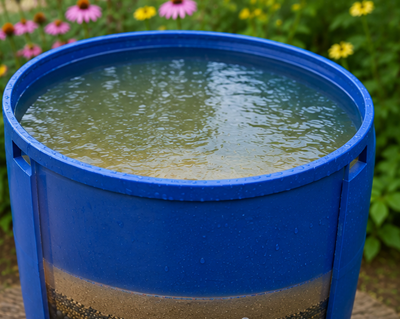 The biological layer depends on moisture to survive. If the upper sand layer dries out completely, many of the microorganisms responsible for treatment may die or become inactive.
Potential consequences of drying include:
- Loss of biological activity
- Reduced treatment performance
- Extended recovery periods
- Delayed maturation
- Increased startup time
To protect the biological layer:
- Maintain standing water above the sand.
- Avoid draining the filter unnecessarily.
- Protect the filter during maintenance.
- Monitor water levels regularly.
A consistently moist environment encourages healthy biological development.
Signs That Maturation Is Progressing
Several indicators may suggest that the filter is developing properly.
Positive signs often include:
- Improved water clarity
- Stable water flow
- Reduced turbidity
- Better taste and odor
- Consistent operation
Over time, a thin biological layer may become visible near the sand surface. This is usually a sign that the filter ecosystem is becoming established.
Factors That Can Slow Maturation
Several conditions may delay biological development.
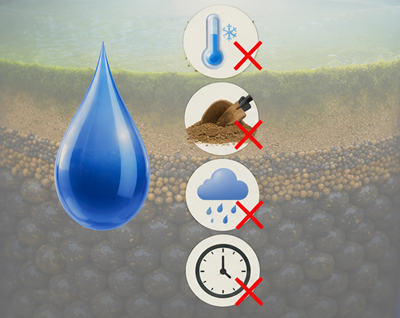 Common causes include:
- Cold temperatures
- Infrequent operation
- Extremely low nutrient levels
- Excessive cleaning
- Drying of the sand surface
- Highly variable water quality
In colder climates, biological growth may occur much more slowly, particularly during winter months.
Avoid the Temptation to Interfere
A common mistake made by new filter owners is trying to “help” the maturation process by constantly inspecting, cleaning, or adjusting the filter.
Avoid:
- Stirring the sand surface.
- Scraping the biological layer prematurely.
- Frequently draining the filter.
- Excessive maintenance.
- Constant flow adjustments.
The biological layer develops best when left undisturbed.
In many cases, patience is the most important maintenance activity during this stage.
A Living System That Improves With Time
One of the remarkable characteristics of slow sand filtration is that the filter often becomes more effective as it matures. Unlike many filtration systems that gradually lose performance from the moment they are installed, a slow sand filter follows the opposite pattern. Performance improves as the biological community becomes larger, more diverse, and more stable.
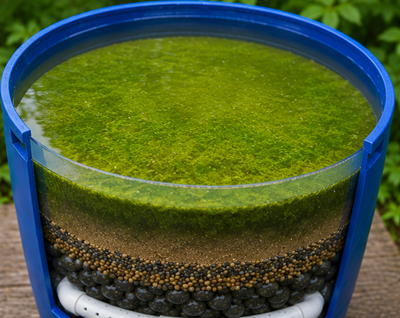 This maturation period is what transforms the filter from a simple collection of sand and gravel into a living water treatment system. The microorganisms that develop within the filter become active participants in the purification process, working continuously to improve water quality.
By maintaining consistent operation, keeping the filter wet, and allowing sufficient time for biological development, you create the conditions necessary for long-term success. The patience invested during these early weeks is rewarded with improved filtration performance, greater treatment efficiency, and a healthier biological layer that can continue serving the filter for years to come.
18. Operating the Filter
Once the maturation period has passed and the biological layer has become established, the slow sand filter enters its normal operating phase. At this point, the filter becomes a living water treatment system capable of providing reliable and consistent performance for many years. However, achieving long-term success depends on proper operation and routine attention to a few important principles.
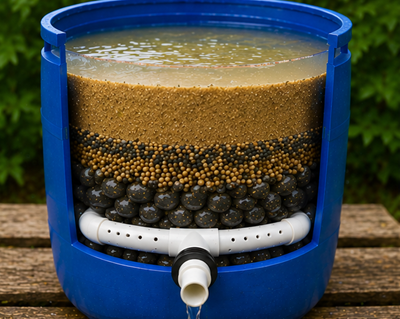 Unlike many modern filtration systems that can be turned on and off as needed, slow sand filters perform best when operated consistently. The microorganisms responsible for much of the filtration process depend on stable conditions. Sudden changes in water levels, interruptions in operation, or periods of drying can reduce effectiveness and potentially damage the biological community that has taken weeks to develop.
The goal of day-to-day operation is relatively simple: maintain a stable environment that allows the biological layer to remain healthy while ensuring water continues moving slowly and evenly through the filter.
Maintaining Water Above the Sand Surface
One of the most important operating principles is maintaining a standing layer of water above the sand surface at all times.
This layer of water serves several critical functions:
- Keeps the biological layer moist
- Provides consistent hydraulic pressure
- Promotes even water flow
- Protects the sand surface from disturbance
- Supports healthy microbial activity
Without this protective water layer, the upper sand surface can dry out, damaging the microorganisms responsible for much of the filter’s treatment capability.
Most slow sand filters are designed to maintain a standing water depth of approximately:
- 2–8 inches (5–20 cm)
The exact depth is not usually critical, but maintaining some water above the sand is essential.
Why the Water Layer Matters
The standing water above the sand is sometimes referred to as the supernatant water layer. While it may appear to simply be stored water, it plays an active role in filter operation.
Benefits of maintaining this water layer include:
- Stabilized flow rates
- Protection of biological activity
- Reduced disturbance during water additions
- Improved treatment consistency
- Enhanced biological development
The water layer acts as a buffer between incoming water and the sensitive biological layer beneath it.
If water is poured directly onto exposed sand, the surface can become disturbed, reducing filtration effectiveness.
Avoid Allowing the Sand to Dry
One of the most common causes of reduced filter performance is allowing the sand surface to dry out.
The biological layer depends on constant moisture to survive. When exposed to air for extended periods, many beneficial microorganisms begin to die or become inactive.
Potential consequences of drying include:
- Reduced biological activity
- Lower pathogen removal efficiency
- Slower filtration performance
- Loss of biological diversity
- Extended recovery periods
In severe cases, a completely dried filter may require weeks to regain full effectiveness.
What Happens if the Filter Dries Out?
If the filter accidentally dries out, it does not necessarily mean the system must be rebuilt. However, some degree of biological recovery will likely be necessary.
The extent of recovery depends on:
- How long the filter remained dry
- Environmental conditions
- Temperature
- Degree of biological damage
A filter that dries for a few hours may recover quickly, while one that remains dry for several days or weeks may require a partial re-maturation period.
Whenever possible, avoid allowing the water level to drop below the sand surface.
Maintaining Consistent Flow
Slow sand filters are designed to operate continuously at relatively low flow rates. Consistency is often more important than volume.
A stable flow rate helps:
- Maintain biological activity
- Prevent hydraulic shock
- Improve treatment effectiveness
- Reduce stress on microorganisms
- Produce more predictable results
Rapid changes in flow can disrupt the delicate balance within the biological layer.
For best performance:
- Introduce water gradually.
- Avoid sudden surges.
- Maintain consistent operating conditions.
- Monitor water levels regularly.
Monitoring Water Levels
Regular observation is one of the simplest forms of filter maintenance.
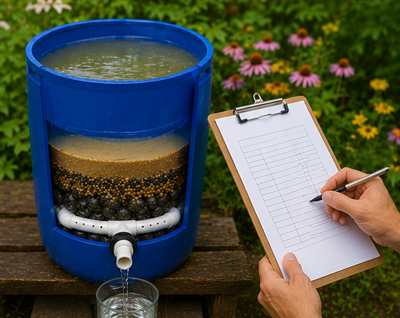 Operators should periodically check:
- Water depth above the sand
- Flow rate
- Water clarity
- Outlet performance
- Surface condition of the sand
These simple observations can often identify developing problems before they become serious.
Signs that warrant further investigation may include:
- Unusually low water levels
- Excessively slow flow
- Sudden flow increases
- Cloudy filtered water
- Visible disturbances in the sand surface
Seasonal Operating Considerations
Environmental conditions can influence filter performance throughout the year.
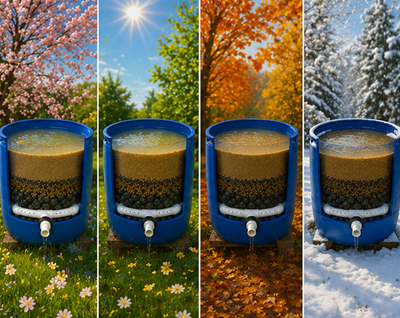 Seasonal factors may include:
- Summer heat
- Winter freezing temperatures
- Heavy rainfall
- Drought conditions
- Changes in source water quality
In colder climates, biological activity naturally slows during winter months. Although the filter can continue operating, treatment processes may proceed more slowly.
Protecting the filter from freezing is particularly important because ice formation can damage plumbing components and disrupt biological activity.
Avoid Disturbing the Biological Layer
The biological layer is the engine that drives the filtration process. Once established, it should be disturbed as little as possible.
Avoid:
- Stirring the sand surface
- Scraping unnecessarily
- Digging into the sand
- Aggressive cleaning
- High-pressure water streams
Routine operation should allow the biological layer to remain stable and continue developing naturally.
Only perform maintenance when flow rates decline significantly or when other problems arise.
Establishing a Routine
Many successful off-grid water systems benefit from a simple operating routine.
Daily or weekly checks might include:
- Verifying water levels
- Observing flow rates
- Inspecting the outlet
- Checking for leaks
- Monitoring water quality
These inspections typically require only a few minutes but can greatly improve long-term reliability.
The Value of Consistent Operation
Slow sand filtration is based on biological processes, and biological systems thrive on stability. Consistent operation helps create a healthy environment where microorganisms can flourish and continue performing their treatment functions effectively.
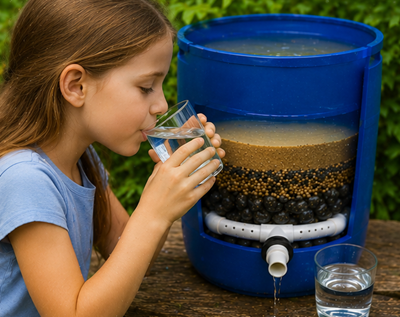 The most successful filters typically share several characteristics:
- Stable water levels
- Continuous operation
- Minimal disturbance
- Regular observation
- Proper maintenance
By maintaining water above the sand surface, preventing the filter from drying out, and operating the system consistently, you allow the biological layer to remain healthy and productive. Over time, this stability results in better water quality, improved filtration performance, and a slow sand filter that can continue serving an off-grid household reliably for many years.
19. Maintenance and Cleaning
One of the reasons slow sand filters have remained in use for more than two centuries is their relatively simple maintenance requirements. Unlike many modern filtration systems that depend on replacement cartridges, specialized equipment, or chemical treatments, slow sand filters can often operate for months before requiring attention. When maintenance is eventually needed, it is usually straightforward and can be performed using basic tools.
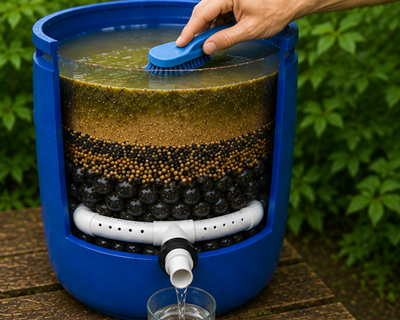 Understanding how and when to maintain the filter is essential for preserving water quality and ensuring long-term performance. Fortunately, slow sand filters provide clear signs when maintenance is becoming necessary. The most common indicator is a gradual reduction in water flow.
It is important to understand that a slowing flow rate is not necessarily a sign that something is wrong. In fact, it often indicates that the biological layer is functioning exactly as intended.
Why Flow Rates Decrease Over Time
As the filter operates, suspended particles, organic matter, and microorganisms accumulate near the top of the sand bed. At the same time, the biological layer continues to grow and mature.
This process is beneficial because the biological layer is responsible for much of the filter’s treatment capability. However, as the layer becomes thicker, it gradually restricts water movement through the upper portion of the filter.
Over time, several factors contribute to reduced flow:
- Accumulation of suspended solids
- Growth of the biological layer
- Trapping of organic material
- Fine sediment buildup
- Natural compaction of surface materials
As these materials collect, water encounters greater resistance when moving through the filter.
A gradual reduction in flow is normal and should be expected.
Slower Flow Does Not Mean Poor Performance
One common misconception is that a slower filter is a failing filter. In reality, many mature slow sand filters perform exceptionally well even as flow rates decrease.
In fact, a well-developed biological layer often improves treatment effectiveness.
Benefits of a mature filter may include:
- Improved pathogen reduction
- Better organic matter removal
- Greater water clarity
- Enhanced biological activity
- More consistent treatment performance
The goal is not necessarily to maximize flow but rather to balance water production with effective treatment.
Recognizing When Maintenance Is Needed
Eventually, the buildup on the sand surface becomes significant enough that water production declines beyond acceptable levels.
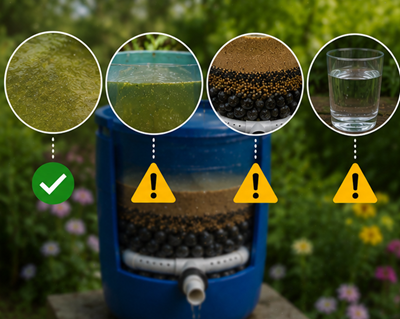 Signs that maintenance may be necessary include:
- Noticeably slower filtration rates
- Rising water levels above the sand surface
- Reduced daily water production
- Longer refill times
- Difficulty meeting household water demands
Flow reduction generally occurs gradually, making it easy to monitor changes over time.
Many operators choose to keep simple records of:
- Water production
- Flow rates
- Maintenance dates
- Water quality observations
These records can help identify trends and establish maintenance schedules.
The Surface Scraping Method
The most common maintenance procedure for slow sand filters is surface scraping.
Unlike cartridge filters that require replacement, slow sand filters are typically restored by removing a thin layer of accumulated material from the top of the sand bed.
A typical maintenance procedure includes:
- Stop water flow.
- Drain water to expose the sand surface.
- Gently scrape away the upper layer of sand.
- Remove contaminated material.
- Refill the filter.
- Resume normal operation.
This process removes the material responsible for restricting water flow while preserving the deeper filtration layers.
How Much Sand Should Be Removed?
One of the most important principles during maintenance is removing only the minimum amount of sand necessary.
Typically, only:
- ½ inch to 1 inch (1–2.5 cm)
of surface material is removed during a cleaning cycle.
The objective is to eliminate the clogged layer while preserving as much of the biological system as possible.
Removing excessive amounts of sand can:
- Reduce filtration depth
- Disrupt biological activity
- Increase recovery time
- Shorten the lifespan of the sand bed
Gentle, conservative cleaning is usually the best approach.
Avoid Disturbing Deeper Layers
The deeper portions of the sand bed contain established biological communities and important filtration structures that have developed over months or years.
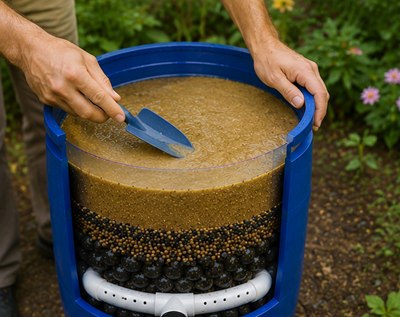 For this reason, maintenance should be limited to the uppermost surface whenever possible.
Avoid:
- Digging deeply into the sand
- Mixing lower layers
- Stirring the sand bed
- Removing large amounts of media
- Disturbing the gravel layers
The deeper filtration zone should remain intact.
The goal is to preserve the filter’s internal structure while restoring flow capacity.
Removing the Scraped Material
The material removed from the surface typically contains:
- Organic debris
- Trapped sediment
- Biological growth
- Fine particles
- Accumulated contaminants
This material should be discarded away from water collection areas and source water supplies.
Some operators add the removed material to compost piles, while others dispose of it separately.
Avoid placing removed material where it could wash back into the water supply.
Refilling the Filter
Once the clogged surface material has been removed, the filter can be returned to service.
Refilling should be performed carefully to avoid disturbing the remaining sand bed.
Recommended practices include:
- Add water slowly.
- Maintain standing water above the sand.
- Avoid directing strong streams onto the surface.
- Allow the filter to stabilize before heavy use.
In many cases, flow rates improve immediately after cleaning.
Recovery After Cleaning
Although surface scraping restores water flow, it also removes part of the biological layer.
As a result, the filter may experience a short recovery period.
During this time:
- Biological activity rebuilds.
- Treatment efficiency gradually improves.
- Water quality stabilizes.
- The biological layer re-establishes itself.
Recovery is usually much faster than the original maturation period because most of the biological ecosystem remains intact within the deeper layers.
Long-Term Sand Management
After multiple cleaning cycles, the sand bed gradually becomes shallower.
Over the years, repeated scraping removes small amounts of material from the surface.
Eventually, additional sand may need to be added to restore the original depth.
Indicators that replenishment may be necessary include:
- Significantly reduced sand depth
- Repeated maintenance intervals becoming shorter
- Reduced treatment performance
- Exposure of lower layers
Fortunately, this process typically occurs slowly and may take years to become necessary.
Preventive Maintenance
In addition to cleaning, several simple practices can extend the life of the filter and reduce maintenance requirements.
Helpful measures include:
- Using cleaner source water
- Installing settling tanks
- Removing large debris before filtration
- Protecting the filter from contamination
- Monitoring flow rates regularly
- Keeping the biological layer undisturbed
Reducing the amount of sediment entering the filter can significantly extend the time between cleanings.
A System Designed for Longevity
One of the greatest strengths of slow sand filtration is that maintenance is simple, predictable, and sustainable. There are no cartridges to replace, no membranes to purchase, and no specialized equipment required. Most maintenance involves little more than carefully removing a thin layer of accumulated material from the sand surface and allowing the biological system to recover.
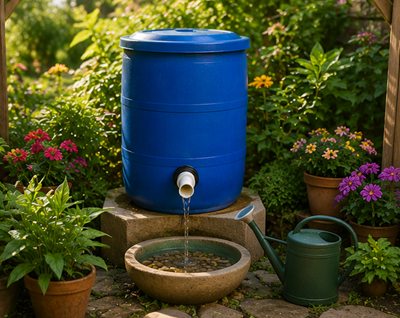 With proper care, a slow sand filter can continue operating for many years while providing reliable water treatment. By monitoring flow rates, cleaning only when necessary, and avoiding disturbance of the deeper filtration layers, operators can preserve both the physical structure and the biological effectiveness of the system.
The key principle is simple: maintain the surface, protect the biological layer, and allow the filter to continue doing what it was designed to do—clean water naturally through gravity, sand, and biology.
20. Winter Considerations
Operating a slow sand filter during the winter presents unique challenges that are rarely encountered in warmer climates. While slow sand filtration is remarkably reliable throughout much of the year, freezing temperatures can interfere with biological activity, restrict water flow, damage plumbing components, and potentially render the entire system inoperable if proper precautions are not taken.
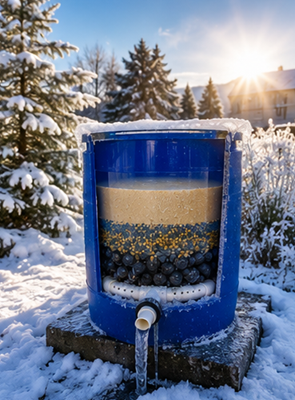 For off-grid households in northern regions, winter planning should be considered during the design phase rather than after cold weather arrives. This is particularly true in areas such as rural Canada, Alaska, the northern United States, and other regions where temperatures may remain below freezing for extended periods.
A slow sand filter is fundamentally a biological system. The microorganisms responsible for much of the filtration process are living organisms that depend on liquid water and stable environmental conditions. While many of these microorganisms can tolerate cool temperatures, prolonged freezing can severely disrupt their activity or destroy portions of the biological layer entirely.
Winter preparation is therefore not simply about protecting pipes—it is about protecting the entire filtration ecosystem.
Why Freezing Is a Problem
Water expands as it freezes. This simple fact creates several potential problems within a slow sand filtration system.
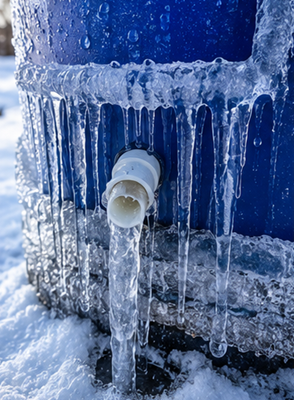 Frozen water can:
- Crack containers
- Split PVC plumbing
- Damage bulkhead fittings
- Disturb filtration layers
- Restrict water flow
- Destroy biological activity
Even partial freezing can create operational issues by reducing flow rates or causing water to bypass portions of the filter.
The biological layer is particularly vulnerable because it exists near the upper surface of the sand bed where temperatures are often coldest.
Effects on Biological Activity
Even before actual freezing occurs, cold temperatures can affect filter performance.
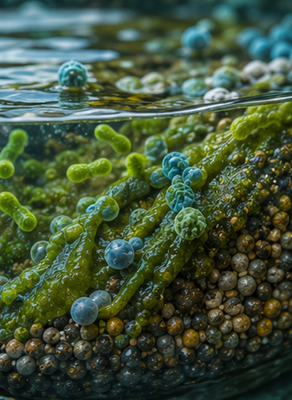 As temperatures decline:
- Biological activity slows.
- Microbial growth decreases.
- Organic matter decomposition slows.
- Pathogen reduction rates may decline.
- Filter maturation takes longer.
This does not mean the filter stops working during winter. Physical filtration continues, and biological treatment still occurs, but the overall process often becomes less efficient.
In many cases, operators notice:
- Slower flow rates
- Reduced biological growth
- Longer recovery periods after maintenance
- Seasonal changes in performance
These changes are generally normal for cold-weather operation.
Insulated Filter Housing
One of the most common methods of winter protection is enclosing the filter within an insulated structure.
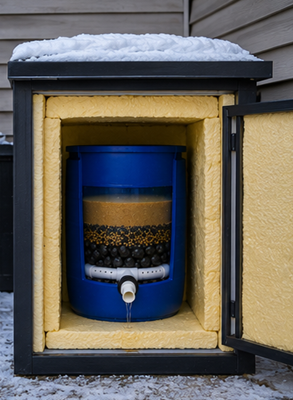 An insulated housing helps:
- Moderate temperature fluctuations
- Reduce heat loss
- Protect plumbing components
- Shield the filter from wind
- Extend the operating season
Depending on the installation, housing options may include:
- Small insulated sheds
- Utility rooms
- Pump houses
- Mechanical rooms
- Dedicated filtration enclosures
Even modest insulation can significantly improve winter performance.
Root Cellar Installation
Root cellars are often excellent locations for slow sand filters because they naturally maintain relatively stable temperatures throughout the year.
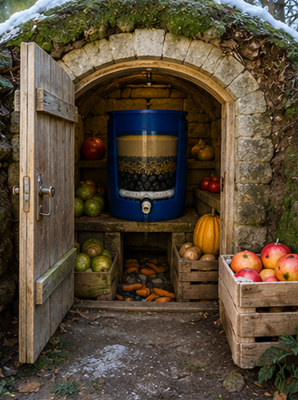 Benefits of root cellar installation include:
- Protection from freezing temperatures
- Stable humidity levels
- Reduced temperature swings
- Natural insulation from surrounding soil
- Minimal energy requirements
In many regions, underground spaces remain well above freezing even when outdoor temperatures fall far below zero.
For homesteaders and preparedness-minded individuals, integrating a slow sand filter into an existing root cellar can provide a highly reliable year-round solution.
Heated Utility Rooms
Where practical, placing the filter inside a heated utility room provides one of the simplest methods of winter protection.
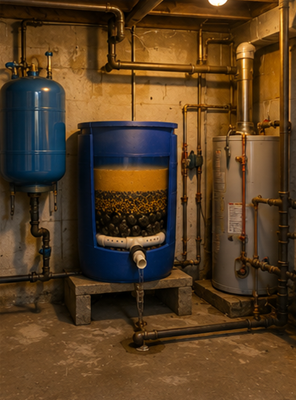 Advantages include:
- Consistent temperatures
- Easy access for maintenance
- Protection from weather
- Improved biological stability
- Reduced freezing risk
Many off-grid homes already contain mechanical spaces used for:
- Water systems
- Pressure tanks
- Batteries
- Solar equipment
- Water treatment systems
These spaces often provide an ideal environment for a slow sand filter.
Frost-Protected Enclosures
For outdoor installations, frost-protected enclosures may provide sufficient protection without requiring a fully heated building.
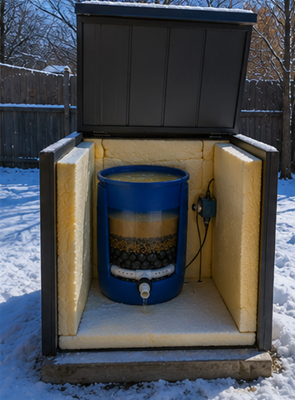 Common approaches include:
- Buried installations
- Insulated boxes
- Earth-bermed structures
- Frost-protected utility vaults
- Hybrid underground systems
These designs take advantage of soil temperatures, insulation, and thermal mass to maintain temperatures above freezing.
In some cases, passive protection is sufficient without requiring supplemental heat.
Protecting Plumbing Components
The filter itself is only part of the system that requires protection. Plumbing components are often the first elements to fail during freezing weather.
 Areas requiring special attention include:
- Inlet pipes
- Outlet pipes
- Valves
- Bulkhead fittings
- Storage tanks
- Distribution lines
Protection strategies may include:
- Pipe insulation
- Heat tracing
- Burial below frost depth
- Heated enclosures
- Drain-back systems
A frozen pipe can disable an otherwise healthy filtration system.
Water Storage Considerations
Winter operation often benefits from incorporating insulated water storage into the overall system design.
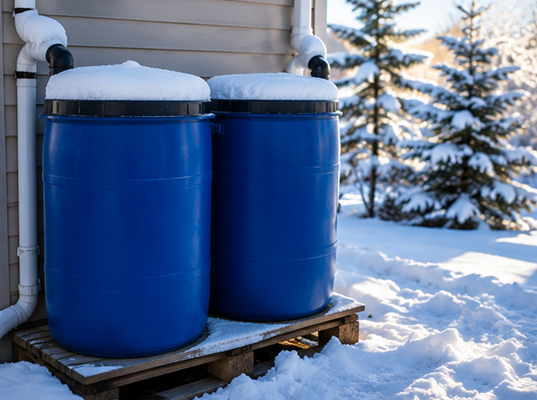 Benefits of storage include:
- Reduced strain on the filter
- Greater reserve capacity
- More stable operation
- Improved emergency preparedness
Storage tanks may be located:
- Indoors
- Underground
- In insulated utility spaces
- Within heated structures
Stored water provides an additional buffer during periods of extreme cold or maintenance.
Reduced Flow Rates in Winter
Even when freezing is prevented, many operators notice slower flow rates during winter.
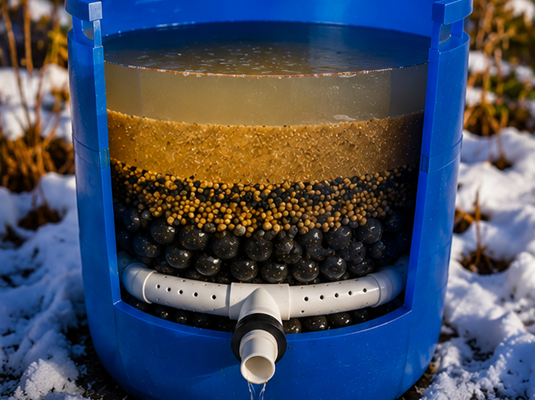 This occurs because:
- Water becomes more viscous at lower temperatures.
- Biological activity slows.
- Microbial metabolism decreases.
These changes are generally normal and do not necessarily indicate a problem.
Patience and consistent operation are often sufficient to maintain satisfactory performance.
Monitoring During Cold Weather
Winter operation requires somewhat closer observation than operation during warmer months.
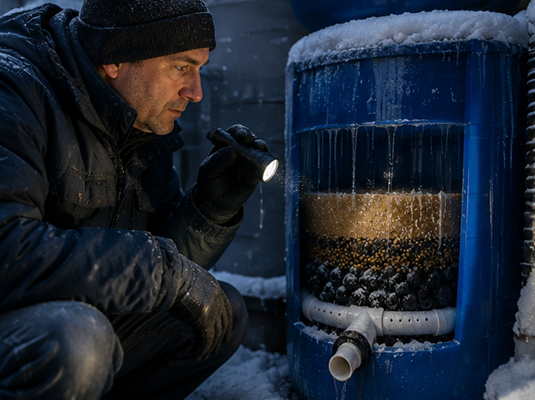 Regular inspections should include:
- Water levels
- Flow rates
- Ice formation
- Pipe condition
- Insulation integrity
- Signs of freezing damage
Early detection of problems can prevent major repairs later.
Emergency Winter Shutdown
In some situations, maintaining year-round operation may not be practical.
Seasonal cabins, hunting camps, and remote properties may occasionally require winter shutdown procedures.
If shutdown is necessary:
- Drain exposed plumbing.
- Remove standing water from vulnerable components.
- Protect the container from freeze damage.
- Secure openings against contamination.
- Plan for re-maturation when restarting.
A properly winterized system is far easier to restart than one damaged by freezing.
Designing for Canadian Conditions
For many off-grid residents in Canada, winter conditions are simply part of life. Temperatures of -20°C, -30°C, or even colder are not uncommon in many regions. Under these conditions, winter protection is not optional—it is a critical design requirement.
Successful cold-climate installations typically incorporate multiple protective measures such as:
- Insulation
- Frost protection
- Protected plumbing
- Indoor or underground placement
- Adequate water storage
Combining these strategies creates a system that can continue functioning reliably throughout the winter months.
Planning Ahead Prevents Problems
The best time to address winter challenges is before the filter is built. By considering cold-weather operation during the design phase, builders can select appropriate locations, install adequate insulation, and protect vulnerable components from freezing temperatures.
 A slow sand filter can function very effectively in cold climates when properly protected. However, freezing temperatures introduce risks that should never be ignored. Protecting the biological layer, maintaining liquid water, and safeguarding plumbing components are essential for reliable year-round operation.
For off-grid households in northern climates, winter planning is not merely a convenience—it is an essential part of ensuring a dependable water supply when it may be needed most.
21. Integrating a Slow Sand Filter Into an Off-Grid Water System
A slow sand filter is an excellent water treatment tool, but it should not be viewed as a complete water system by itself. Like many preparedness and homesteading solutions, it works best when combined with other components that support water collection, storage, treatment, and distribution. When integrated into a properly designed off-grid water system, a slow sand filter can become a highly reliable source of cleaner water for daily living and emergency preparedness.
One of the most common mistakes people make is focusing entirely on filtration while overlooking the other stages of water management. Water treatment begins long before water reaches the filter and continues even after filtration is complete. Every stage of the process contributes to the overall quality and safety of the water supply.
A well-designed off-grid water system typically follows a multi-barrier approach. Rather than relying on a single treatment method, multiple stages work together to improve water quality and reduce risks. This layered strategy creates redundancy and provides greater protection against a wide variety of contaminants.
A practical off-grid water system may include:
- Water collection
- Sediment removal
- Slow sand filtration
- Water storage
- Final disinfection
- Household distribution
Each stage serves a specific purpose within the overall treatment process.
Step 1 – Water Collection
Every water system begins with a source of raw water. The quality of this source has a significant impact on the performance of the entire treatment system.
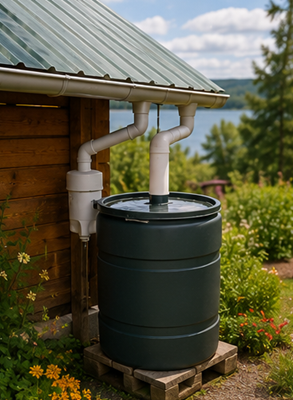 Potential water sources include:
- Rainwater harvesting
- Springs
- Creeks
- Streams
- Rivers
- Lakes
- Ponds
- Wells
Whenever possible, choose the cleanest and most reliable source available. Cleaner source water reduces the workload placed on the filter and helps improve long-term system performance.
Important considerations when selecting a source include:
- Year-round availability
- Water quality
- Ease of collection
- Protection from contamination
- Seasonal reliability
For many off-grid properties, rainwater collection and protected springs are among the most desirable options because they often contain lower levels of sediment and contamination.
Step 2 – Settling Tank
Before water enters the slow sand filter, it is often beneficial to pass it through a settling tank.
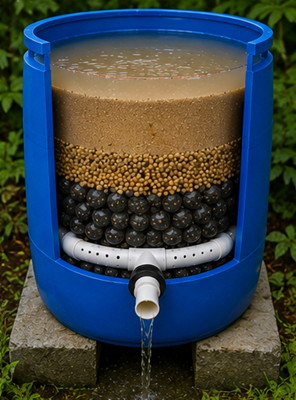 A settling tank is a simple chamber where water is allowed to sit undisturbed for a period of time. During this process, heavier particles naturally settle to the bottom under the force of gravity.
A settling tank helps remove:
- Sand
- Silt
- Mud
- Organic debris
- Leaves
- Small suspended particles
Benefits include:
- Reduced filter loading
- Longer maintenance intervals
- Improved filter performance
- Increased water clarity
- Longer filter lifespan
Settling tanks can be constructed from:
- Plastic barrels
- Water tanks
- Concrete cisterns
- Polyethylene tanks
Even a simple settling chamber can significantly improve the overall effectiveness of the filtration system.
Step 3 – Slow Sand Filter
Once large sediment has been removed, water enters the slow sand filter for biological and physical treatment.
This stage is responsible for:
- Removing fine suspended particles
- Reducing turbidity
- Improving water clarity
- Reducing many pathogens
- Breaking down organic matter
- Improving taste and odor
As water slowly moves through the biological layer and sand bed, contaminants are trapped, consumed, or broken down through natural processes.
The slow sand filter serves as the heart of the treatment system and often provides the greatest overall improvement in water quality.
Benefits include:
- No electricity required
- Low maintenance
- Long service life
- Sustainable operation
- Proven effectiveness
For many off-grid systems, this stage provides the primary treatment barrier.
Step 4 – Storage Tank
After filtration, treated water should ideally be stored in a dedicated clean-water storage tank.
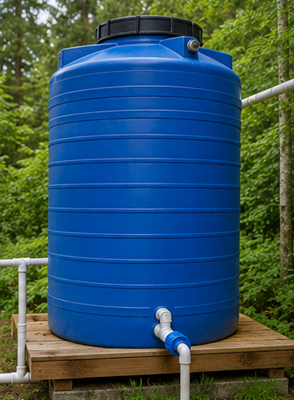 Storage serves several important purposes:
- Creates a reserve supply
- Balances daily demand fluctuations
- Provides emergency reserves
- Allows continuous filter operation
- Reduces pressure on the treatment system
Storage options may include:
- Polyethylene tanks
- Fiberglass tanks
- Stainless steel tanks
- Underground cisterns
- Food-grade barrels
Proper storage tank design should include:
- Covered access
- Protection from contamination
- Insect screening
- Overflow protection
- Easy cleaning access
The storage tank acts as a buffer between water treatment and household use.
Step 5 – Final Disinfection
Although a mature slow sand filter can significantly reduce many biological contaminants, many experts recommend a final disinfection step before water is used for drinking and cooking.
This creates an additional layer of protection and helps address contaminants that may remain after filtration.
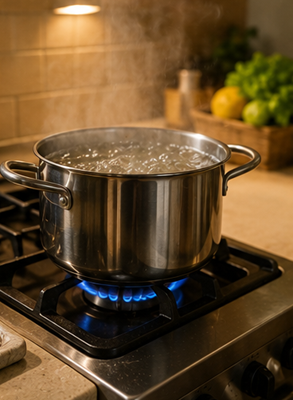 Common disinfection methods include:
- Boiling
- Ultraviolet (UV) treatment
- Chlorination
- Water purification tablets
- Ozone treatment
Each method offers advantages and limitations.
Boiling
Boiling remains one of the most reliable methods of disinfection.
Benefits include:
- Highly effective
- Simple to perform
- No specialized equipment required
Limitations include:
- Fuel consumption
- Time requirements
- Cooling period before use
UV Treatment
Ultraviolet systems use light to neutralize microorganisms.
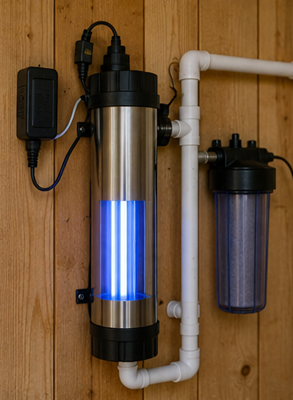 Advantages include:
- Rapid treatment
- No chemical taste
- Effective against many pathogens
Limitations include:
- Electricity requirements
- Bulb maintenance
- Clear water required for effectiveness
Chlorination
Chlorine treatment remains widely used around the world.
Benefits include:
- Effective disinfection
- Residual protection in storage
- Low cost
Limitations include:
- Chemical handling
- Potential taste and odor concerns
The appropriate method depends on individual circumstances, water quality concerns, and available resources.
Step 6 – Household Use
Once filtration and disinfection are complete, water is ready for distribution throughout the household.
 Treated water may be used for:
- Drinking
- Cooking
- Food preparation
- Dish washing
- Personal hygiene
- Bathing
- Laundry
- Household cleaning
Depending on the quality of the source water and treatment process, some households may choose to reserve fully treated water for drinking and cooking while using less-treated water for other purposes.
This strategy can help conserve treatment capacity and reduce overall system demands.
Designing for Redundancy
One of the key principles of preparedness is avoiding single points of failure. A resilient water system should continue functioning even if one component experiences problems.
Additional backup options may include:
- Emergency water storage
- Portable water filters
- Backup disinfection supplies
- Alternate water sources
- Rainwater collection systems
- Water hauling capability
Multiple layers of protection create greater reliability during emergencies.
Example Off-Grid Water System
A typical off-grid setup might operate as follows:
- Rainwater is collected from a metal roof.
- Water enters a first-flush diverter.
- Water flows into a settling tank.
- Sediment settles naturally.
- Water enters the slow sand filter.
- Filtered water enters a clean storage tank.
- UV treatment disinfects the water before use.
- Water is distributed throughout the home.
This type of system combines multiple treatment barriers while remaining relatively simple and sustainable.
Building a Complete Water Strategy
A slow sand filter is a powerful tool, but it is most effective when viewed as one component within a larger water management strategy. Water collection, sediment removal, filtration, storage, and disinfection all contribute to creating a dependable and resilient supply of cleaner water.
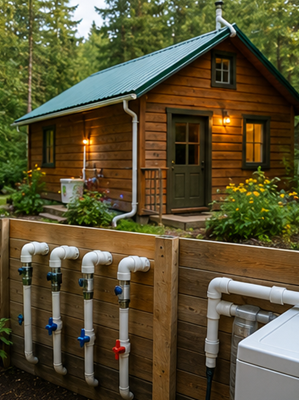 By integrating a slow sand filter into a thoughtfully designed off-grid water system, homeowners can dramatically improve water quality while reducing dependence on electricity, complex equipment, and external infrastructure. The result is a practical, sustainable system capable of supporting daily living, emergency preparedness, and long-term self-reliance.
In many ways, the slow sand filter serves as the bridge between raw water and usable water—transforming what nature provides into a resource that can safely support an off-grid lifestyle for years to come.
22. In Summary
Slow sand filtration has stood the test of time because it is based on simple, proven principles that continue to work as effectively today as they did hundreds of years ago. In an age where many water treatment systems rely on electricity, electronic controls, specialized replacement parts, and complex infrastructure, the slow sand filter offers a refreshingly different approach. It demonstrates that effective water treatment does not always require advanced technology. Sometimes the most reliable solutions are also the simplest.
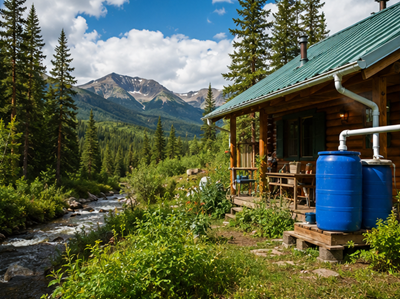 At its core, a slow sand filter relies on gravity, carefully selected filtration media, and naturally occurring biological processes. There are no pumps forcing water through membranes, no sophisticated control panels, and no expensive cartridges that must be replaced every few months. Instead, water moves slowly through layers of sand and gravel while a living biological community works continuously to improve water quality.
This simplicity is one of the reasons slow sand filtration has remained relevant for more than two centuries. While technologies have evolved dramatically over the years, the basic principles behind slow sand filtration have changed very little because they continue to deliver reliable results.
Throughout this guide, we have explored how a slow sand filter functions as more than just a container of sand. It is a living treatment system that combines physical filtration and biological activity to remove sediment, improve clarity, reduce many pathogens, and enhance overall water quality. When properly designed, constructed, and maintained, it can provide years of dependable service with minimal operating costs.
Some of the key advantages of slow sand filtration include:
- No electricity required
- Minimal operating expenses
- Long service life
- Low maintenance requirements
- Sustainable operation
- Locally available construction materials
- Reliable performance
- Scalability for different household needs
- Compatibility with off-grid lifestyles
These characteristics make slow sand filters particularly attractive for homesteaders, preparedness-minded families, remote cabins, farms, and anyone seeking greater self-reliance.
A Tool for Resilience
One of the most valuable aspects of slow sand filtration is resilience. Modern life depends heavily on infrastructure that many people rarely think about until it becomes unavailable. Municipal water systems, electrical grids, supply chains, and treatment facilities generally work well under normal conditions, but they can become vulnerable during emergencies, natural disasters, severe weather events, or extended disruptions.
A properly constructed slow sand filter offers a measure of independence from these systems.
Because it relies on:
- Gravity
- Sand
- Gravel
- Biological activity
it can continue functioning under conditions that might disable more complex treatment systems.
For those pursuing off-grid living or preparedness goals, this level of independence can provide significant peace of mind.
Understanding the Limitations
At the same time, it is important to recognize that slow sand filtration is not a universal solution for every water quality challenge.
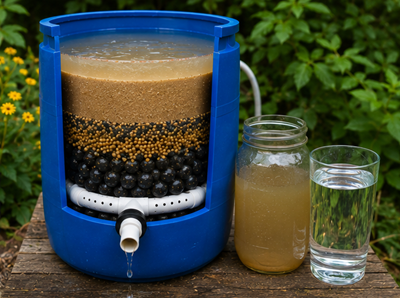 As discussed throughout this guide, slow sand filters are highly effective against many biological contaminants and suspended particles, but they generally do not remove:
- Dissolved salts
- Heavy metals
- Industrial chemicals
- Petroleum products
- Many dissolved contaminants
For this reason, source water selection, water testing, and additional treatment methods may still be necessary depending on local conditions.
The most successful off-grid water systems use a layered approach that combines multiple barriers and treatment methods rather than relying on a single solution.
The Importance of Proper Operation
A slow sand filter is not a “build it and forget it” system. While maintenance requirements are relatively low, proper operation remains essential.
Long-term success depends on:
- Careful construction
- Clean media preparation
- Consistent operation
- Protection from freezing
- Routine observation
- Occasional maintenance
When these requirements are met, the filter can remain productive for many years.
In many ways, operating a slow sand filter is similar to maintaining a healthy garden. The system benefits from patience, observation, and regular care. The biological processes that make the filter effective require time to develop and stable conditions to thrive.
A Technology That Fits the Off-Grid Mindset
Perhaps the greatest strength of slow sand filtration is how naturally it aligns with the principles of off-grid living and preparedness.
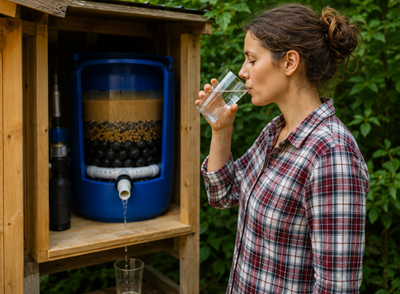 Many people pursue self-reliance because they value:
- Simplicity
- Sustainability
- Independence
- Practical skills
- Long-term resilience
A slow sand filter embodies all of these principles.
It uses materials that are often available locally. It requires little energy. It can be repaired and maintained without specialized equipment. Most importantly, it transforms raw water into cleaner water using natural processes that have been proven over generations.
Looking Beyond Technology
Modern society often encourages the belief that every problem requires a more sophisticated technological solution. Slow sand filtration serves as a reminder that some of the most effective systems are based on understanding and working with nature rather than attempting to replace it.
The filter harnesses:
- Gravity instead of pumps
- Biology instead of chemicals
- Natural processes instead of complex machinery
This approach not only reduces dependence on external resources but also creates a system that is remarkably durable and adaptable.
Final Thoughts
Access to clean water remains one of the most important requirements for health, safety, and long-term survival. Whether you are building an off-grid homestead, preparing for emergencies, maintaining a remote cabin, or simply seeking a more sustainable lifestyle, water treatment deserves careful consideration.
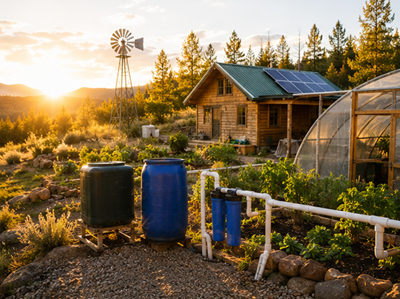 A slow sand filter may not solve every water quality problem, but it remains one of the most effective low-tech water treatment systems ever developed. Its ability to provide meaningful water treatment using little more than sand, gravel, gravity, and biology is a testament to the power of simple, well-designed systems.
In a world increasingly dependent on technology and infrastructure, the slow sand filter offers something increasingly valuable: reliability through simplicity.
And when modern systems become unavailable, it is often the simple systems—the ones we can build, understand, maintain, and repair ourselves—that become the most valuable of all.
© Prepping Communities. This content is for informational purposes only and not professional advice. Use at your own risk.
Terms | Privacy | Guidelines