
Lights Out, Still Lit
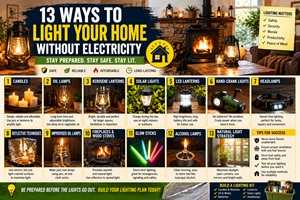
13 Ways to Light Your Home Without Electricity
Why Lighting Matters More Than You Think
When the power goes out, most people reach for a flashlight and assume they’re covered. But after a few hours or days lighting becomes more than convenience. It affects:
- Safety (avoiding injuries)
- Security (visibility and awareness)
- Morale (darkness wears on people fast)
- Productivity (you can’t do much in the dark)
Lighting is one of the first systems to fail—and one of the most important to replace properly.
This guide walks through 13 proven, non-grid lighting methods, from simple to advanced, with real-world use cases.
The Fundamentals of Off-Grid Lighting
Before jumping into methods, understand what makes a good lighting system:
- Reliability – works every time
- Fuel availability – easy to maintain long-term
- Safety – low fire and fume risk
- Light output – enough to function, not just see
- Sustainability – can you keep it running for weeks/months?
The best setups combine multiple methods—not just one.
1. Candles (But Done Right)
Candles are the most common backup—and also the most underestimated.
Why They Work
- Simple
- Long shelf life
- Easy to store
How to Improve Them
- Use wide-base candles for stability
- Place inside glass jars or lanterns to amplify light
- Use multiple candles together to increase output
Example Setup
Three candles placed in a reflective tray can light an entire small room.
2. Oil Lamps
Oil lamps are one of the best long-term lighting options.
Fuel Options
- Lamp oil
- Olive oil
- Vegetable oil
- Animal fat (in emergencies)
Why They’re Powerful
- Long burn times
- Adjustable brightness
- More stable than candles
Practical Tip
Keep spare wicks—they wear out faster than you think.
3. Kerosene Lanterns
These are brighter and more rugged than standard oil lamps.
Benefits
- Strong light output
- Durable
- Works in cold environments
Downsides
- Requires ventilation
- Fuel storage needed
Best Use
- Workshops
- Garages
- Outdoor lighting
4. Solar Lights (Indoor Use Hack)
Most people only think of solar lights for outside—but they’re powerful indoors.
How To Use Them
- Place solar lights outside during the day
- Bring them inside at night
Why This Works
- No fuel required
- Rechargeable daily
- Long lifespan
Pro Tip
Garden stake lights can light multiple rooms if rotated.
5. Battery-Powered LED Lanterns
Modern LED lanterns are extremely efficient.
Advantages
- Bright light
- Long battery life
- Safe (no flame)
Strategy
Use rechargeable batteries and rotate charging.
6. Hand-Crank Lanterns
Perfect for emergencies when everything else fails.
Benefits
- No fuel
- No batteries required
- Always available
Reality Check
They require effort—but they work when nothing else does.
7. Headlamps
Underrated but extremely useful.
Why They Matter
- Hands-free
- Focused light
- Great for tasks
Best Use
- Repairs
- Cooking
- Night movement
8. Reflective Lighting Techniques
You can multiply your light without using more fuel.
Methods
- Use mirrors
- Aluminum foil behind light sources
- White walls reflect better
Result
A single candle can feel twice as bright.
9. Improvised Oil Lamps
You can make a lamp from basic materials.
Simple Setup
- Jar or container
- Oil (any cooking oil)
- Cloth wick
Why It Matters
In a real emergency, you won’t rely on store-bought gear.
10. Fireplaces and Wood Stoves
Not just for heat—they provide light.
Benefits
- Dual purpose (heat + light)
- No extra fuel needed
Tip
Use reflective surfaces nearby to spread the light.
11. Glow Sticks
Short-term but useful.
Use Cases
- Emergency signaling
- Temporary lighting
- Kids or safe zones
12. Alcohol Lamps
Simple, clean-burning option.
Fuel
- Isopropyl alcohol
- Ethanol
Benefits
- Less smoke than kerosene
- Easy to store fuel
13. Natural Lighting Strategy (Daytime Optimization)
Lighting isn’t just about night.
Maximize Daylight
- Open curtains early
- Use reflective surfaces
- Position workspaces near windows
Why It Matters
The less artificial light you need, the longer your supplies last.
Building a Layered Lighting System
The best approach combines multiple methods:
Primary Lighting
- Solar lights
- LED lanterns
Backup Lighting
- Oil lamps
- Candles
Emergency Lighting
- Headlamps
- Hand-crank lights
This creates redundancy.
Real-World Scenario
Imagine a 7-day outage:
- Day 1–2: Batteries and flashlights
- Day 3–4: Solar rotation + oil lamps
- Day 5+: Candles + improvised lighting
If you plan ahead, you never hit “total darkness.”
Safety Considerations
This is critical.
- Never leave flames unattended
- Keep lighting away from curtains
- Store fuel properly
- Ventilate when using kerosene or oil
Preparedness without safety creates new problems.
Common Mistakes
- Relying only on flashlights
- Not having spare fuel
- Ignoring fire risks
- Not testing equipment beforehand
How Much Lighting Do You Actually Need?
You don’t need to light your entire house.
Focus on:
- Kitchen
- Bathroom
- Main living area
Keep other areas dark to conserve resources.
Storage and Prep Strategy
Keep a dedicated lighting kit:
- Candles
- Matches/lighters
- Oil + wicks
- Batteries
- Backup lanterns
Rotate and test regularly.
Final Thoughts
When the lights go out, most people react.
If you’re prepared, you don’t react—you switch systems.
Lighting isn’t just about seeing. It’s about maintaining control, safety, and normalcy when everything else feels uncertain.
Build your system now, test it, and refine it.
Because when the grid goes down…
You don’t want to be figuring it out in the dark.
© Prepping Communities. This content is for informational purposes only and not professional advice. Use at your own risk.
Terms | Privacy | Guidelines