
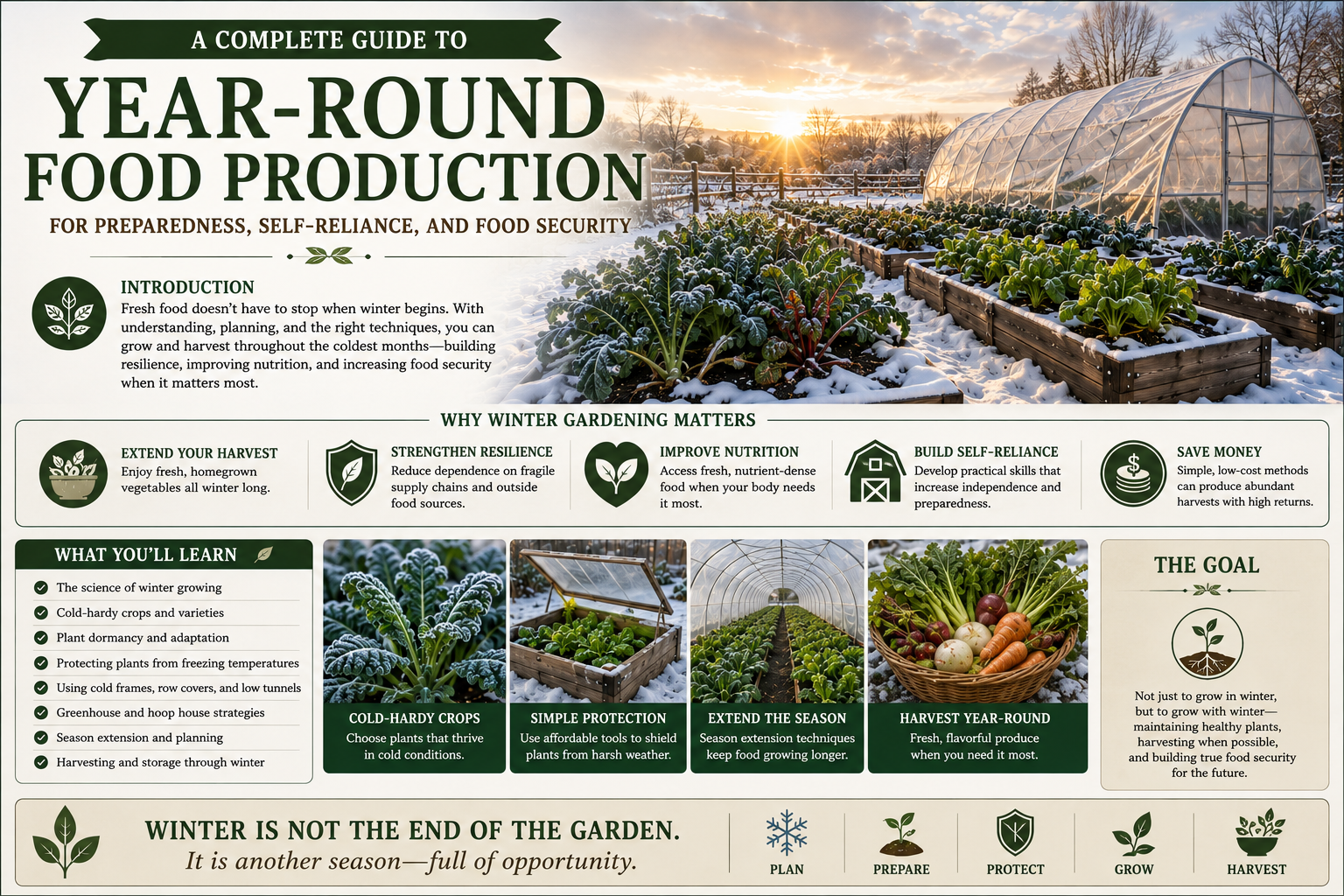
A Complete Guide to Year-Round Food Production for Preparedness, Self-Reliance, and Food Security
Introduction
For most of human history, winter represented one of the greatest challenges to survival. Long before grocery stores, refrigerated transportation, and global food distribution networks existed, communities depended almost entirely upon what they could produce during the growing season and preserve for the colder months ahead. A poor harvest often meant hardship, hunger, or worse.
Today, modern food systems have largely insulated us from seasonal food shortages. Fresh produce can be purchased year-round, often imported from thousands of miles away. Grocery store shelves remain stocked regardless of snowstorms, frozen ground, or seasonal changes. As a result, many people have lost touch with the reality that food production does not stop simply because winter arrives.
Yet winter remains one of the most underutilized growing seasons available to gardeners, homesteaders, and preparedness-minded individuals.
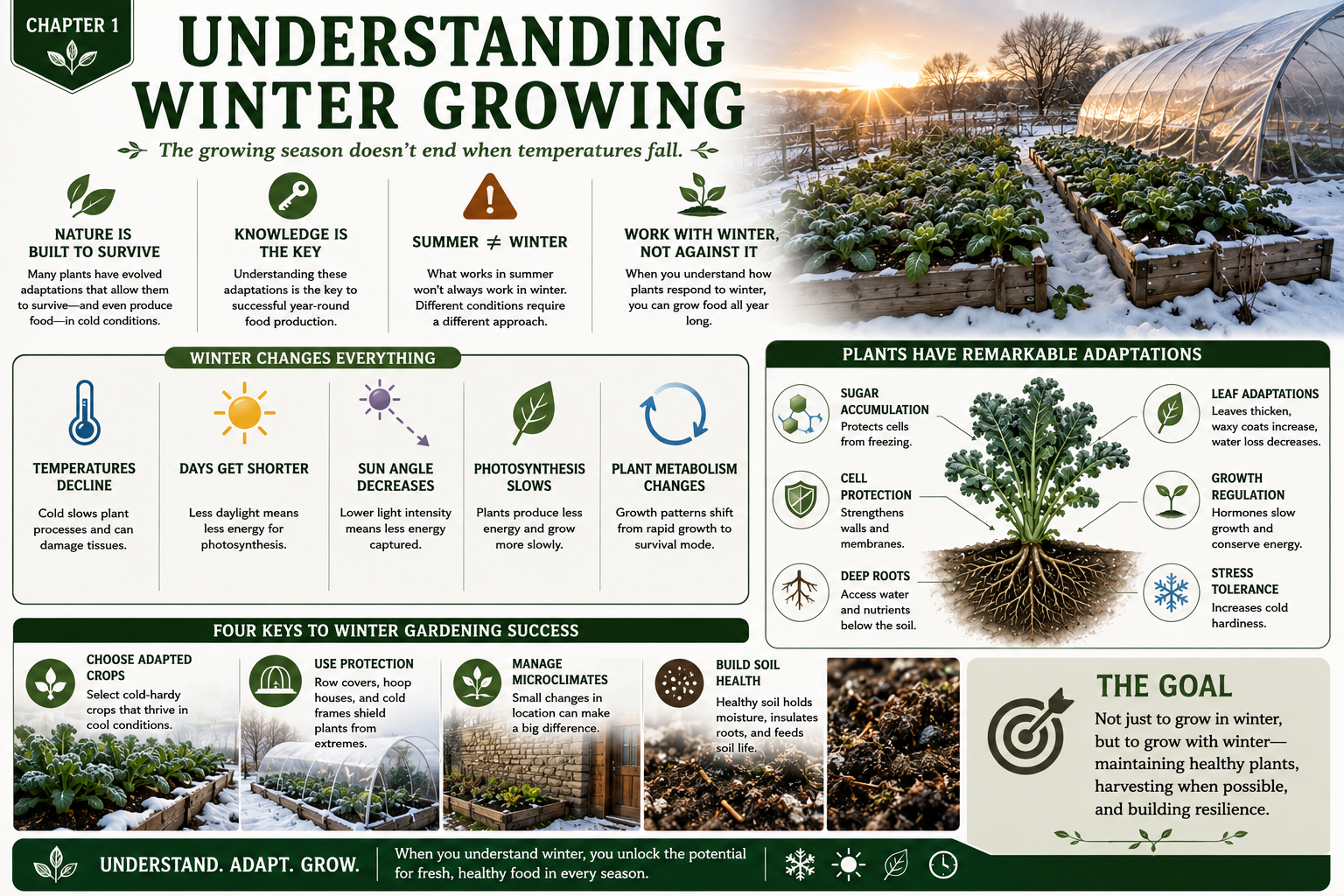
Contrary to popular belief, food production does not have to end with the first frost. Across the world, people successfully grow vegetables throughout winter in climates ranging from mild coastal regions to areas experiencing prolonged freezing temperatures and heavy snowfall. Through an understanding of plant biology, seasonal planning, and protective growing techniques, it is possible to harvest fresh food when most gardens lie dormant.
For those interested in preparedness and self-reliance, winter food production provides benefits far beyond simply extending the gardening season. Every pound of food harvested during winter reduces dependence on outside supply chains. Fresh vegetables produced during cold months increase nutritional diversity, improve food security, and provide valuable experience that may become important during times of economic uncertainty, transportation disruptions, or emergency situations.
Growing food through winter is not merely a gardening technique. It is a skill that strengthens resilience.
Many beginning gardeners assume winter production requires expensive heated greenhouses and sophisticated equipment. While such systems can certainly increase production, they are not required. Some of the most successful winter growers use relatively simple methods including cold frames, row covers, low tunnels, and careful crop selection. In many regions, winter gardening can be surprisingly affordable and accessible.
This manual was created to provide a complete guide to winter food production for gardeners of all experience levels. Whether you maintain a small backyard garden, manage a homestead, operate a greenhouse, or simply want to supplement your family’s food supply during the colder months, the principles contained in these pages can help you develop a productive year-round growing system.
Throughout this manual, we will examine the science behind winter growing, the crops best suited to cold conditions, techniques for protecting plants from extreme weather, and methods for creating reliable food production systems even when temperatures fall below freezing.
Winter should not be viewed as the end of the growing season.
Instead, it should be viewed as a different growing season with its own opportunities, challenges, and rewards.
Those who learn to work with winter rather than against it often discover that some of the sweetest carrots, most flavorful kale, and most productive greens are harvested during the coldest months of the year.
The ability to grow food through winter is one of the most valuable skills a self-reliant person can develop.
© Prepping Communities. This content is for informational purposes only and not professional advice. Use at your own risk.
Terms | Privacy | Guidelines