
Most people don’t think much about fire.
If the house gets cold, you turn up the thermostat.
If you want hot food, you use the stove or microwave.
If the lights go out, you grab a flashlight.
Modern life has made fire feel almost unnecessary.
Until something goes wrong.
A winter storm knocks out power.
A camping trip takes an unexpected turn.
Your vehicle breaks down miles from help.
Suddenly, the ability to build a fire becomes much more than an outdoor skill.
Fire can provide warmth, light, cooked food, safe drinking water, and a sense of comfort during a stressful situation. It remains one of the few preparedness skills that can solve multiple problems at the same time.
The good news is that building a fire is not complicated.
Like most preparedness skills, it starts with understanding a few basic principles and practicing them before you actually need them.
 Why Fire Still Matters
Fire has helped people survive for thousands of years, and despite all of our modern technology, it remains just as valuable today.
A properly built fire can help you stay warm during cold weather, boil water when clean drinking water is unavailable, cook food safely, dry wet clothing, and even signal for help in an emergency.
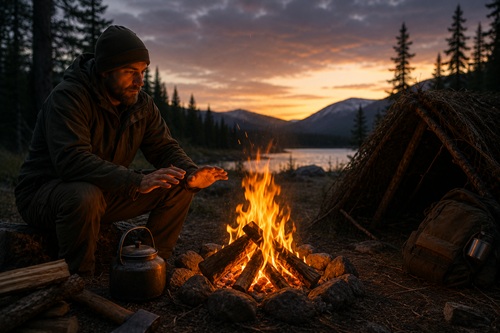
It can also provide something that often gets overlooked during difficult situations: comfort.
Anyone who has spent time outdoors knows there is something reassuring about sitting beside a fire at the end of a long day. In an emergency, that boost in morale can be almost as valuable as the heat itself.
While many preparedness skills require specialized equipment, firecraft can be practiced almost anywhere and costs very little to learn.
That makes it one of the most practical skills a prepper can develop.
 Understanding the Fire Triangle
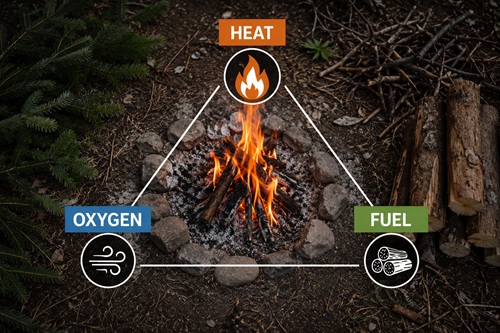
Every successful fire requires three things:
- Heat
- Fuel
- Oxygen
Remove any one of these and the fire goes out.
Understanding this simple concept makes troubleshooting much easier when a fire refuses to start.
If your fuel is wet, the fire may not have enough usable fuel.
If your fire is packed too tightly, it may not be getting enough oxygen.
If your ignition source isn’t producing enough heat, the fuel may never ignite.
Nearly every fire-starting problem can be traced back to one side of the fire triangle.
Once you understand that, building a fire becomes much easier.
Start Small and Build Up
One of the most common mistakes beginners make is trying to light large pieces of wood right away.
Successful fires are built in stages.
The process begins with tinder.
Tinder consists of small, highly combustible materials that ignite easily and burn quickly.
Common examples include:
- Dry grass
- Fine bark fibers
- Pine needles
- Cotton balls
- Dryer lint
- Commercial fire starters
- Feather sticks
Once the tinder ignites, it transfers heat to kindling.
Kindling consists of small twigs and branches that are slightly larger than tinder but still easy to ignite.
Only after a strong flame has developed should larger pieces of wood be added.
Many failed fires happen because people try to skip these stages.
Finding Dry Materials
One of the biggest challenges in firecraft is finding dry fuel.
After rain or snow, it can seem like everything is wet.
However, dry materials are often still available if you know where to look.
Look for:
- Dead branches still attached to trees
- Dry bark beneath outer layers
- Dead standing timber
- Sheltered pine needles
- Dry material beneath dense evergreen trees
A simple trick is to break a stick.
Dry wood usually snaps with a sharp crack.
Wet wood often bends or splinters.
Learning to identify dry materials quickly is one of the most valuable firecraft skills you can develop.
Carry More Than One Way to Start a Fire
Preparedness is about redundancy.
The same principle applies to fire starting.
Many people carry a lighter and consider the problem solved.
While a lighter is one of the best fire-starting tools available, it should not be your only option.
Consider carrying:
- A disposable lighter
- Waterproof matches
- A ferro rod
- Fire-starting tinder
- Backup ignition methods
A simple backup can prevent a minor inconvenience from becoming a major problem.
The more options you have, the better prepared you become.
 Different Fire Structures Have Different Purposes
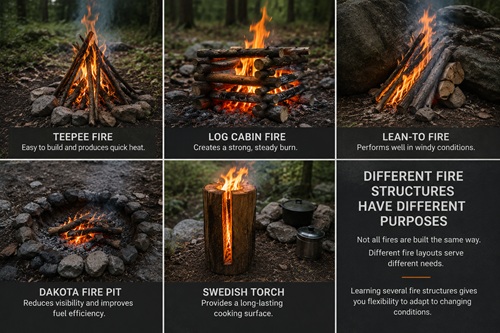
Not all fires are built the same way.
Different fire layouts serve different needs.
A teepee fire is easy to build and produces quick heat.
A log cabin fire creates a strong, steady burn.
A lean-to fire performs well in windy conditions.
A Dakota fire pit reduces visibility and improves fuel efficiency.
A Swedish torch can provide a long-lasting cooking surface.
Learning several fire structures gives you flexibility to adapt to changing conditions.
Weather Changes Everything
Starting a fire on a warm summer afternoon is very different from starting one during a cold rainstorm.
Wind, rain, snow, and humidity all affect fire building.
When conditions are poor:
- Gather extra tinder.
- Collect more kindling than you think you need.
- Protect your ignition source.
- Build windbreaks when necessary.
- Keep fuel off wet ground.
One lesson many experienced outdoorsmen learn is that preparation becomes more important as conditions become more difficult.
Fire Safety Matters
Every year, preventable fires cause property damage, injuries, and wildfires.
Firecraft includes learning how to manage a fire responsibly.
Before building a fire:
- Clear away flammable materials.
- Consider wind direction.
- Maintain a safe perimeter.
- Keep extinguishing materials nearby.
Never leave a fire unattended.
When you are finished, fully extinguish the fire using water, dirt, or both.
A fire is not out simply because the flames are gone.
Hidden embers can remain hot for hours and may reignite under the right conditions.
Always verify that the fire is completely cold before leaving the area.
Practice Before You Need It
Reading about firecraft is valuable.
Practicing firecraft is even better.
The best time to learn how to build a fire is not during an emergency.
Practice in different weather conditions.
Experiment with different tinder materials.
Learn which methods work best in your environment.
The experience gained today can make a significant difference when conditions become challenging.
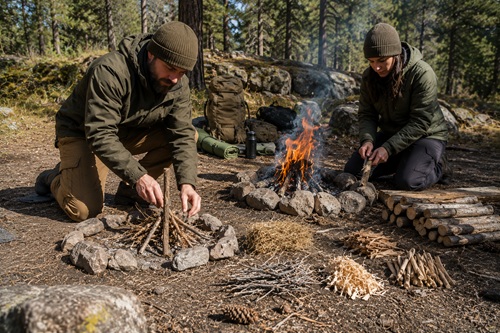 Building Confidence Through Practice
© Prepping Communities. This content is for informational purposes only and not professional advice. Use at your own risk.
Terms | Privacy | Guidelines