
Design Your Food Storage System
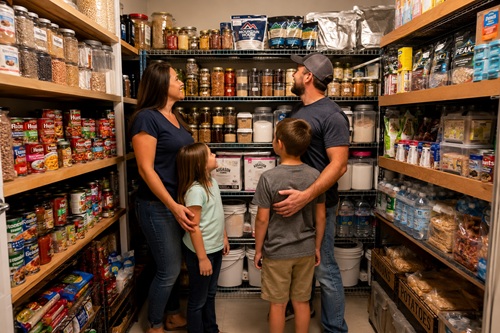
Build a Food Supply That Works for Your Family
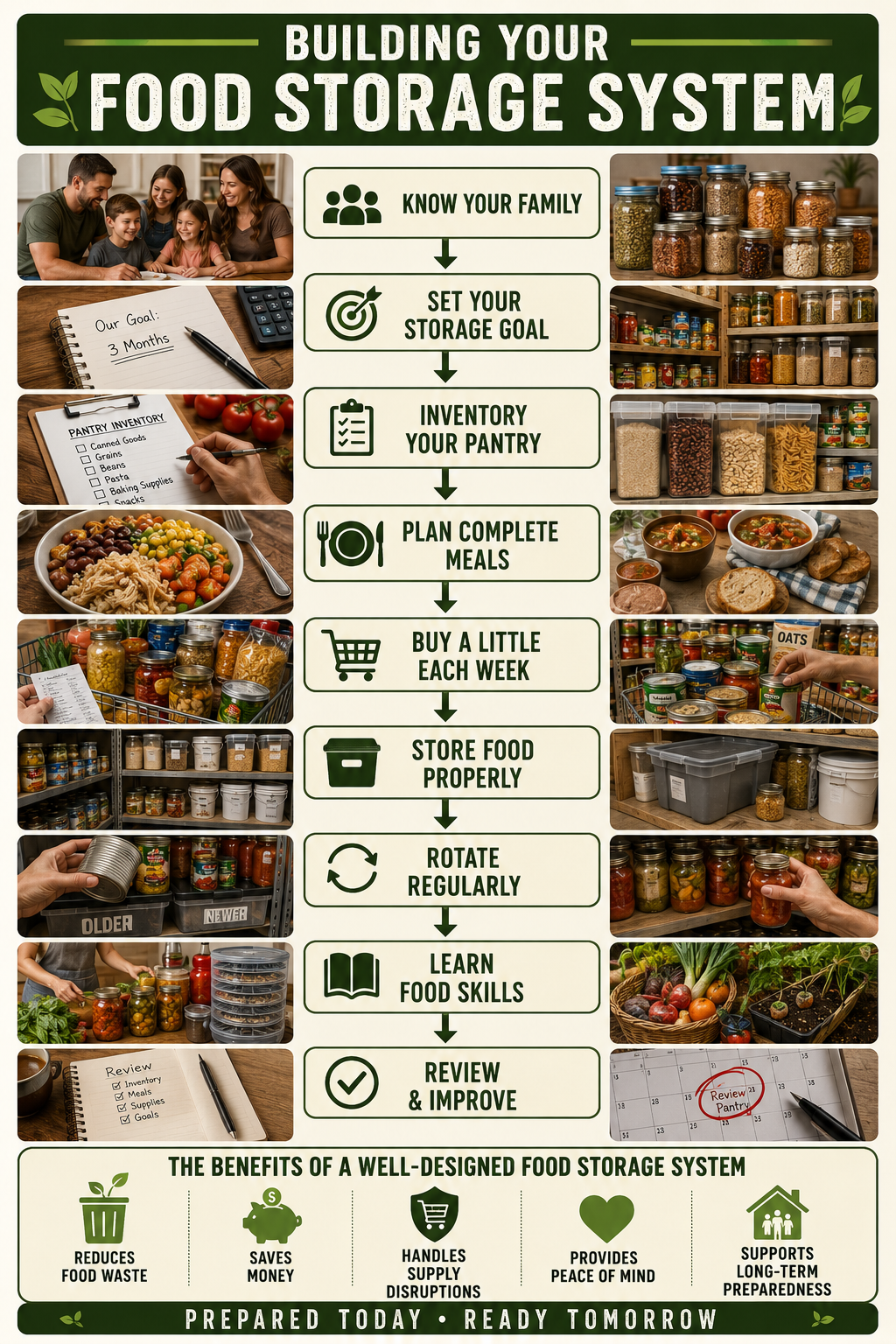
Every family stores food for different reasons. Some people want enough supplies to get through a weekend power outage, while others are preparing for severe weather, job loss, inflation, supply chain disruptions, or longer emergencies. Whatever your reason, one thing remains the same: successful food storage begins with a plan rather than impulse buying.
Designing a food storage system isn’t about filling shelves as quickly as possible. It’s about creating a pantry that matches your family’s eating habits, nutritional needs, available storage space, and budget. When you take the time to think through these factors before making purchases, you’ll build a food supply that is both practical and sustainable.
Many people make the mistake of buying foods simply because someone else recommends them or because they happen to be on sale. While this may increase the amount of food in storage, it doesn’t necessarily improve preparedness. Emergency food only has value if your family is willing to eat it, knows how to prepare it, and can safely store it for the long term.
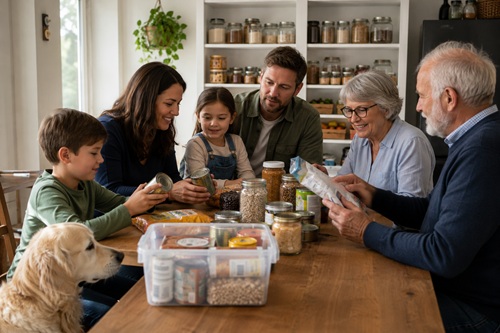
Start by thinking about the people who will actually rely on your food storage. Consider the number of family members, their ages, dietary restrictions, allergies, medical needs, and personal preferences. Young children, seniors, pets, and family members with special dietary requirements may all need foods that differ from a standard emergency pantry. The more closely your food storage reflects your family’s normal eating habits, the easier it will be to rotate supplies and avoid waste.
Next, decide how long you want your food storage to last. Your goal doesn’t need to be one year overnight. Many preparedness experts recommend building gradually. Begin with enough food for several days, expand to a few weeks, then work toward one or three months of everyday foods before investing heavily in long-term storage items. Building in stages spreads out the cost while allowing you to learn what works best for your family.
Before buying anything new, take inventory of what you already have. Most households already possess more emergency food than they realize. Check your pantry, freezer, refrigerator, and cupboards. Make a list of staple foods, canned goods, baking supplies, grains, proteins, snacks, beverages, and cooking essentials. Identifying what you already own helps you recognize gaps while avoiding unnecessary duplicate purchases.
As you build your pantry, think in terms of complete meals instead of individual ingredients. Ask yourself whether you could prepare breakfast, lunch, and dinner using only your stored food for several days or weeks. Planning meals first often reveals missing ingredients and helps create a pantry that is both balanced and enjoyable to use during an emergency.
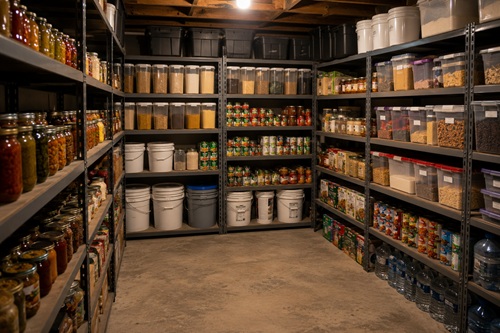
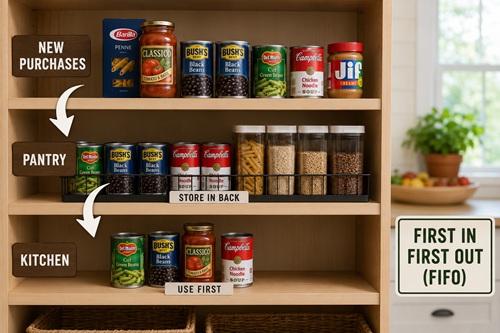
Storage conditions are just as important as the food itself. Heat, moisture, light, and pests can dramatically shorten shelf life. Whenever possible, store food in a cool, dry, dark location using sturdy shelving and containers designed to protect your investment. Organizing your pantry also makes it much easier to rotate older items before they expire.
A good food storage system is never truly finished. Instead, it becomes part of your normal routine. As you use food from storage, replace it during your regular shopping trips. This “store what you eat and eat what you store” approach keeps your pantry fresh while reducing waste and ensuring your emergency supplies remain ready whenever they’re needed.
Finally, remember that food storage is only one part of food preparedness. The ability to cook without electricity, purify water, preserve fresh foods, garden, bake from basic ingredients, and safely store harvests all strengthen your overall resilience. Every new skill you learn makes your food storage system more valuable and less dependent on modern conveniences.
Use the following worksheet to evaluate your current pantry, identify your priorities, and create a food storage system that grows with your family’s needs. The goal isn’t perfection – it’s steady progress. Every meal you store, every skill you develop, and every improvement you make increases your family’s ability to face unexpected challenges with confidence.
Worksheet
Design Your Food Storage System
Personal Food Storage Planner
Name: ________________________________________
Date: _________________________________________
Part 1 – Your Preparedness Goal
Why are you building a food storage system? (Check all that apply.)
☐ Severe weather
☐ Power outages
☐ Job loss
☐ Inflation
☐ Supply chain disruptions
☐ Natural disasters
☐ Pandemic
☐ Long-term emergency
☐ Other
My primary goal is:
Part 2 – Family Assessment
How many people will your food storage support?
Adults _______
Children _______
Infants _______
Pets _______
Does anyone have:
☐ Food allergies
☐ Diabetes
☐ Gluten intolerance
☐ Lactose intolerance
☐ Special medical diet
☐ Other dietary restrictions
If yes, explain:
Part 3 – Food Storage Goal
How long would you like your food supply to last?
☐ 3 Days
☐ 2 Weeks
☐ 1 Month
☐ 3 Months
☐ 6 Months
☐ 1 Year
☐ Longer
Why did you choose this goal?
Part 4 – Pantry Assessment
Rate your current preparedness.
| Category | Poor | Fair | Good | Excellent |
|---|---|---|---|---|
| Drinking Water | ☐ | ☐ | ☐ | ☐ |
| Canned Foods | ☐ | ☐ | ☐ | ☐ |
| Dry Foods | ☐ | ☐ | ☐ | ☐ |
| Cooking Supplies | ☐ | ☐ | ☐ | ☐ |
| Emergency Cooking | ☐ | ☐ | ☐ | ☐ |
| Snacks | ☐ | ☐ | ☐ | ☐ |
| Long-Term Storage | ☐ | ☐ | ☐ | ☐ |
Part 5 – What Does Your Family Actually Eat?
List ten meals your family regularly enjoys.
Question:
Could you prepare these meals using only your stored food?
☐ Yes
☐ Mostly
☐ No
Part 6 – Foods You Need More Of
Write down foods you should begin storing.
Protein
Vegetables
Fruit
Grains
Baking Supplies
Comfort Foods
Drinks
Other
Part 7 – Storage Space
Where can you safely store additional food?
☐ Pantry
☐ Basement
☐ Spare Room
☐ Closet
☐ Under Beds
☐ Shelving
☐ Root Cellar
☐ Other
Will temperature, moisture, or pests be an issue?
Part 8 – Budget
Monthly Budget
$__________________
Weekly Budget
$__________________
How much can you comfortably spend without affecting your regular finances?
Part 9 – Skills Assessment
Check the skills you already have.
☐ Gardening
☐ Canning
☐ Dehydrating
☐ Vacuum Sealing
☐ Freeze Drying
☐ Bread Baking
☐ Outdoor Cooking
☐ Dutch Oven Cooking
☐ Seed Saving
☐ Food Rotation
Skills I’d like to learn next:
Part 10 – My Biggest Weaknesses
What are the three biggest weaknesses in your current food preparedness?
Part 11 – My Action Plan
What will I do this week?
☐ Inventory my pantry.
☐ Buy extra drinking water.
☐ Purchase additional canned foods.
☐ Purchase staple foods (rice, beans, pasta).
☐ Organize my pantry.
☐ Label food with purchase dates.
☐ Begin rotating stored food.
☐ Learn one new food preservation skill.
☐ Build a one-month meal plan.
☐ Research long-term food storage.
Other:
My 30-Day Goal
By the end of the next month I will have:
Notes
Final Thoughts
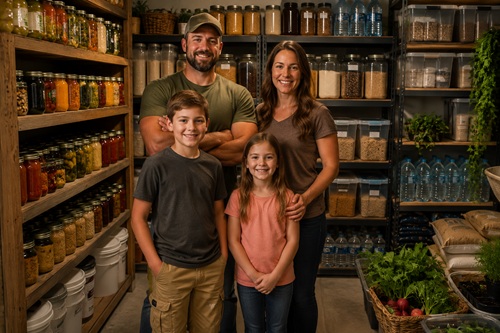
A strong food storage system isn’t measured by how many shelves you fill – it’s measured by how well it supports your family when normal food supplies become disrupted. Start with realistic goals, build steadily, and focus on storing foods you already eat. Every improvement you make today increases your family’s resilience tomorrow.
© Prepping Communities. This content is for informational purposes only and not professional advice. Use at your own risk.
Terms | Privacy | Guidelines