
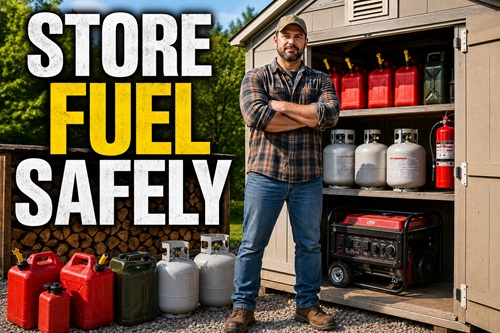
Store Fuel Safely. Use It Wisely. Be Ready When You Need It.
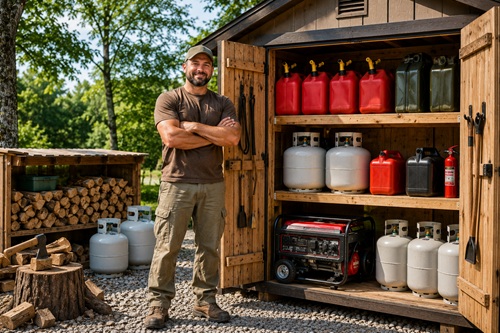
Fuel is one of the most valuable resources during an emergency. It provides the energy needed to cook meals, heat living spaces, power generators, operate tools, run vehicles, boil water, and support countless other essential tasks. Without a reliable fuel supply, even well-stocked emergency equipment can quickly become difficult or impossible to use.
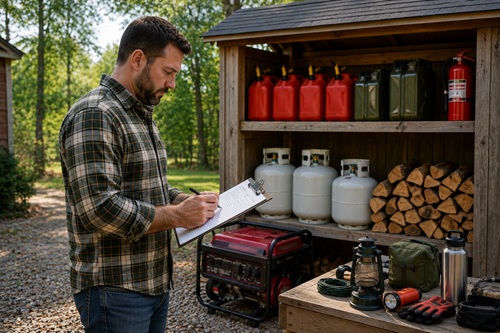
Unlike food and water, however, fuel presents unique risks. Many fuels are highly flammable, produce dangerous vapors, or can deteriorate over time if stored improperly. Poor storage practices increase the risk of fire, explosion, carbon monoxide poisoning, environmental contamination, and accidental injury. A successful preparedness plan balances the need for fuel with the responsibility of storing and handling it safely.
Every preparedness situation is different. Someone living in an apartment may only be able to safely store a small amount of fuel, while a rural homeowner may have dedicated outdoor storage buildings, larger propane tanks, or fuel supplies for tractors and generators. Understanding your local regulations, available storage space, and personal needs will help you develop a practical fuel strategy that fits your circumstances.
It is also important to recognize that no single fuel source meets every need. Gasoline is excellent for vehicles and portable generators but has a relatively short storage life. Propane stores much longer and works well for cooking and heating. Firewood provides dependable heat where wood-burning appliances are available, while charcoal, kerosene, diesel, alcohol fuels, and butane each offer unique advantages depending on the equipment you own. Building preparedness around multiple fuel sources provides flexibility if one type becomes unavailable.
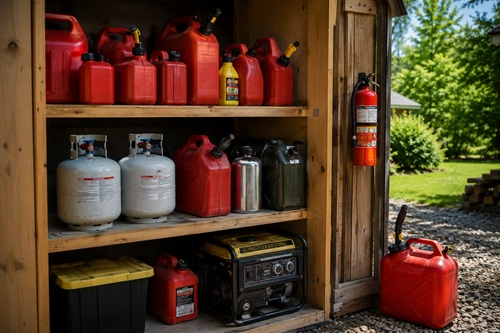
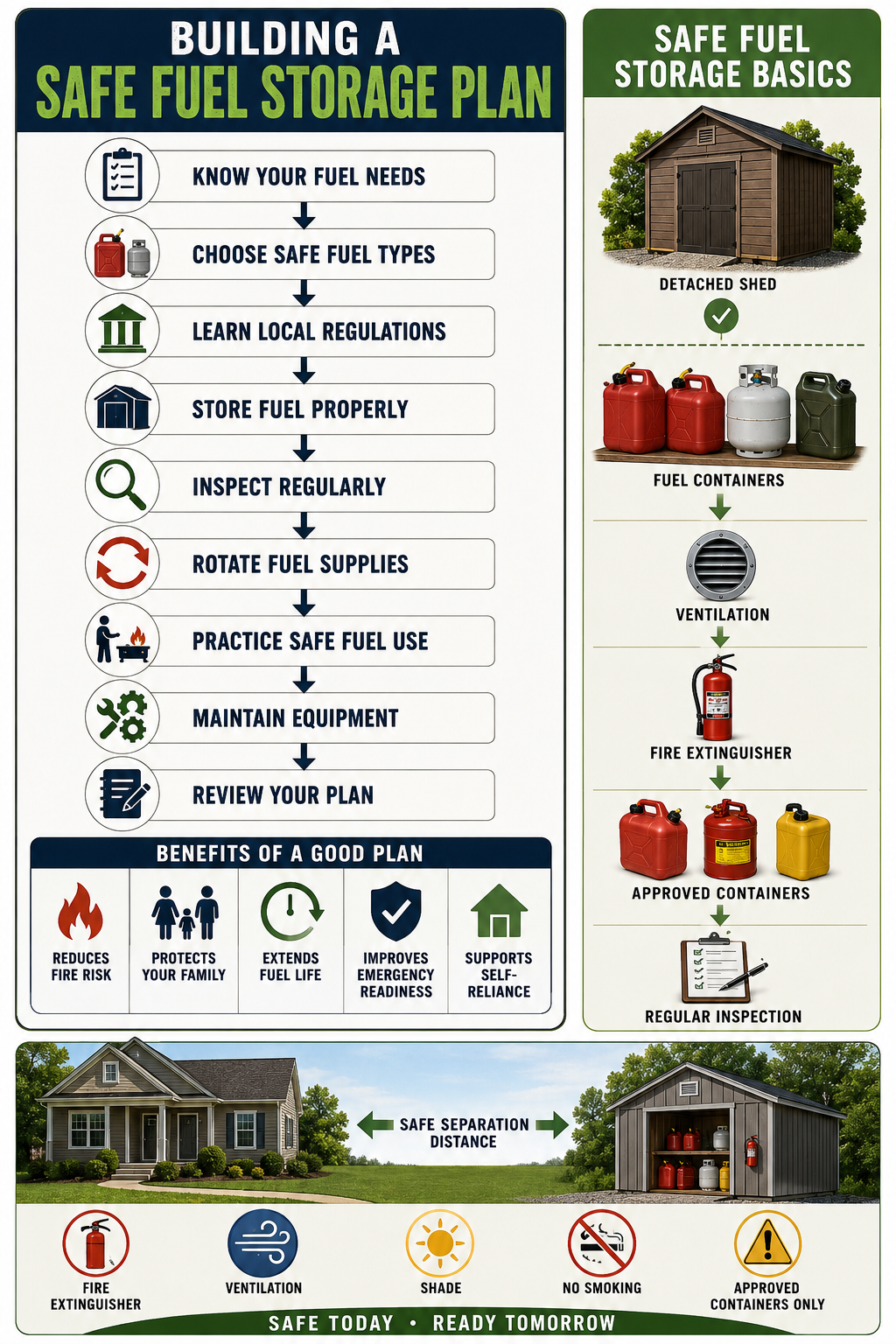
Fuel should always be stored in approved containers designed specifically for that product. Containers should be clearly labeled, tightly sealed, and kept away from direct sunlight, excessive heat, sparks, open flames, and ignition sources. Outdoor storage in a cool, well-ventilated location is generally the safest option for flammable liquids. Never transfer fuel into beverage bottles or other containers that could be mistaken for drinking water or food.
Safe fuel use extends beyond storage. Equipment should always be operated according to the manufacturer’s instructions. Portable generators should never be used indoors or inside garages because of the danger of carbon monoxide poisoning. Fuel-powered heaters require proper ventilation, and refueling should only be performed after engines have been shut down and allowed to cool. Taking a few extra minutes to follow safe operating procedures can prevent serious accidents.
Preparedness also means planning ahead for maintenance. Fuel supplies should be inspected regularly for leaks, damaged containers, expired stabilizers, or signs of deterioration. Stored gasoline should be rotated periodically, propane cylinders should be checked for corrosion or damage, and fire extinguishers should be readily available anywhere fuels are stored or used.
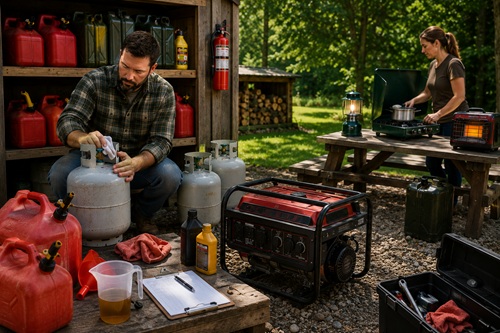
Finally, remember that fuel is only useful if you know how to use it safely before an emergency occurs. Practice operating camp stoves, generators, lanterns, heaters, and other fuel-powered equipment during normal conditions. Familiarity builds confidence and allows you to identify potential problems before they become emergencies.
The following worksheet will help you evaluate your current fuel needs, understand safe storage practices, identify areas for improvement, and develop a practical fuel storage plan that supports your overall preparedness strategy.
Worksheet – Design Your Fuel Storage and Safety Plan
Personal Fuel Preparedness Planner
Name: _______________________________________
Date: ________________________________________
Part 1 – Why Are You Storing Fuel?
Check all the reasons that apply.
☐ Cooking
☐ Home Heating
☐ Generator
☐ Vehicle
☐ Chainsaw
☐ Water Pump
☐ Farm Equipment
☐ Emergency Lighting
☐ Camping
☐ Other
My primary fuel priorities are:
Part 2 – Emergency Fuel Needs
If normal services were interrupted, which fuel-powered equipment would you depend on?
| Equipment | Fuel Type | Essential? |
|---|---|---|
| Generator | __________ | ☐ |
| Vehicle | __________ | ☐ |
| Camp Stove | __________ | ☐ |
| BBQ | __________ | ☐ |
| Heater | __________ | ☐ |
| Chainsaw | __________ | ☐ |
| Lantern | __________ | ☐ |
| Other | __________ | ☐ |
Part 3 – Current Fuel Inventory
List the fuel you currently store.
| Fuel Type | Quantity | Storage Location | Rotation Date |
|---|---|---|---|
| Gasoline | |||
| Diesel | |||
| Propane | |||
| Kerosene | |||
| Firewood | |||
| Charcoal | |||
| Butane | |||
| Alcohol Fuel | |||
| Other |
Part 4 – Storage Safety Assessment
Check each item that applies.
☐ Stored outdoors whenever practical
☐ Stored in approved fuel containers
☐ Containers clearly labeled
☐ Protected from sunlight
☐ Away from ignition sources
☐ Well ventilated
☐ Locked from children
☐ Protected from accidental damage
☐ Fire extinguisher nearby
☐ Spill cleanup supplies available
Items needing improvement:
Part 5 – Know Your Local Rules
Fuel storage regulations vary depending on where you live.
Local Fire Department
Phone Number
Website
Date Contacted
Important storage regulations
Part 6 – Fuel Rotation Plan
How often will you inspect your fuel?
☐ Monthly
☐ Every 3 Months
☐ Every 6 Months
☐ Annually
How will you rotate gasoline or diesel?
Do propane cylinders require inspection?
☐ Yes
☐ No
Last inspection:
Part 7 – Safe Fuel Handling
Check the practices you already follow.
☐ Shut engines off before refueling
☐ Allow equipment to cool
☐ Never smoke near fuel
☐ Never refuel indoors
☐ Keep containers tightly sealed
☐ Use fuel stabilizer when appropriate
☐ Read equipment manuals
☐ Keep children away while refueling
☐ Store fuels separately from living areas
☐ Keep generators outdoors only
Practices I need to improve:
Part 8 – Emergency Backup Options
If one fuel becomes unavailable, what alternatives do you have?
| Need | Primary Fuel | Backup Option |
|---|---|---|
| Cooking | ||
| Heating | ||
| Electricity | ||
| Vehicle | ||
| Water Boiling |
Preparedness is stronger when you have multiple ways to accomplish the same task.
Part 9 – Fuel Storage Risks
Identify any potential hazards.
☐ Fuel stored too close to home
☐ Containers showing signs of damage
☐ No ventilation
☐ Excessive heat exposure
☐ Moisture problems
☐ Fuel not rotated
☐ No fire extinguisher nearby
☐ Unknown storage limits
☐ Improper containers
☐ Fuel leaks
My highest priority safety concern:
Part 10 – Skills Assessment
Rate your confidence.
| Skill | Low | Medium | High |
|---|---|---|---|
| Safely storing gasoline | ☐ | ☐ | ☐ |
| Connecting propane cylinders | ☐ | ☐ | ☐ |
| Operating a camp stove | ☐ | ☐ | ☐ |
| Running a generator | ☐ | ☐ | ☐ |
| Fuel rotation | ☐ | ☐ | ☐ |
| Fire safety | ☐ | ☐ | ☐ |
Skills I want to improve:
Part 11 – My Fuel Preparedness Action Plan
This week I will:
☐ Check all fuel containers.
☐ Label storage containers.
☐ Rotate older fuel.
☐ Purchase approved fuel cans.
☐ Buy fuel stabilizer.
☐ Inspect propane cylinders.
☐ Service my generator.
☐ Test my camp stove.
☐ Purchase a fire extinguisher.
☐ Learn local fuel storage regulations.
Other:
My 30-Day Goal
By the end of the next month I will:
Notes
Final Reflection
Fuel can make the difference between simply surviving an emergency and remaining comfortable, productive, and self-reliant. A well-planned fuel storage system isn’t just about having enough fuel—it’s about storing it safely, rotating it regularly, understanding how to use it properly, and maintaining backup options if your primary fuel becomes unavailable. Every improvement you make today helps reduce risk while increasing your family’s resilience during future emergencies.
© Prepping Communities. This content is for informational purposes only and not professional advice. Use at your own risk.
Terms | Privacy | Guidelines