

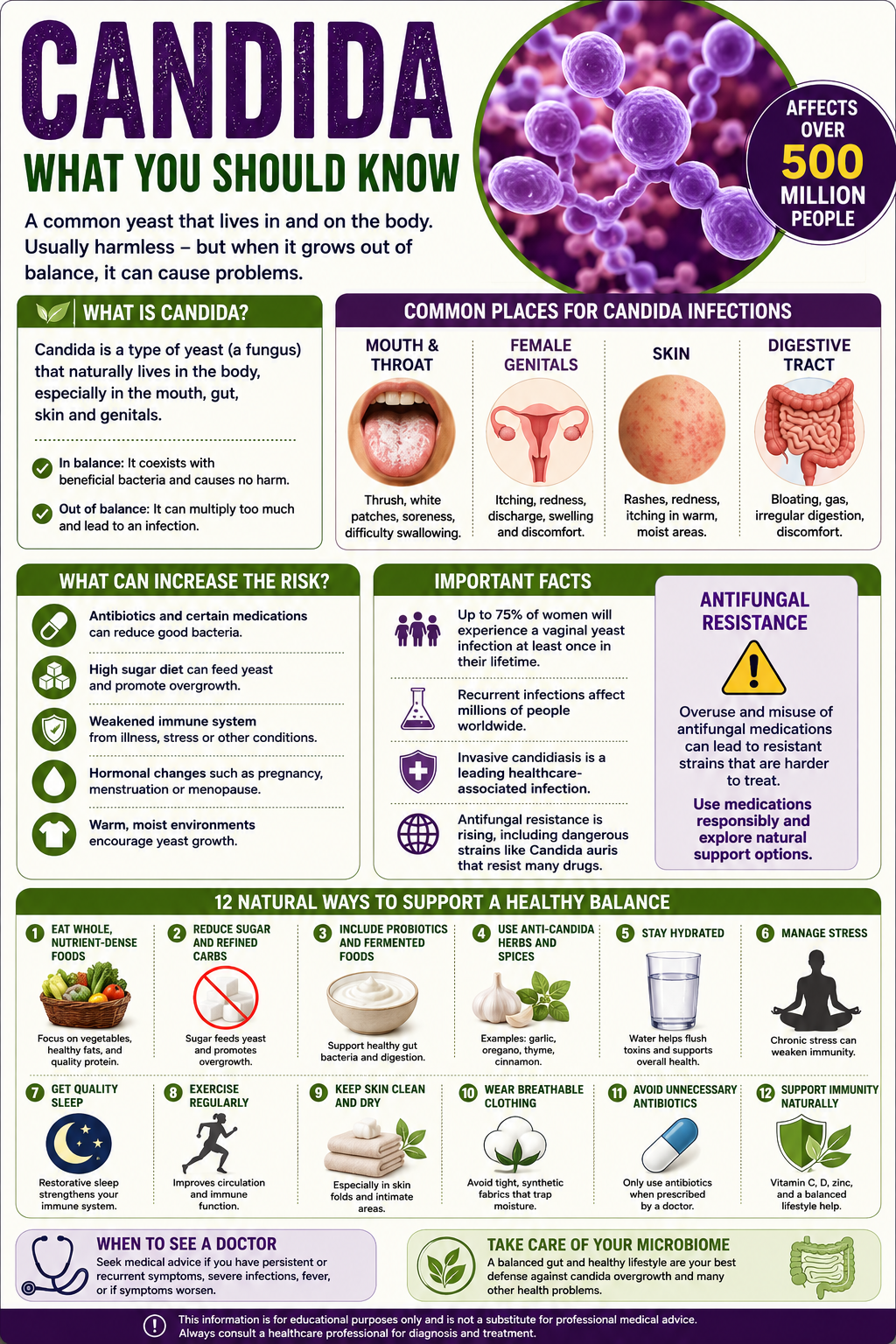
Candida is a type of yeast that naturally lives in and on the human body, including the digestive tract. Most of the time it causes no problems because other microorganisms and the immune system help keep it under control. Under certain circumstances, however, Candida can multiply and cause an infection. Common examples include oral thrush, vaginal yeast infections and some skin infections.
Several things can make Candida infections more likely, including antibiotic use, certain medications and conditions that weaken the body’s normal defenses. Symptoms depend on where the infection develops. Oral thrush may cause white patches and soreness in the mouth, while vaginal candidiasis can cause itching, redness, discomfort and discharge. Most common Candida infections can be treated, but persistent or recurring symptoms are worth discussing with a healthcare professional rather than assuming Candida is responsible.
Good hygiene, keeping skin clean and dry, changing damp clothing and socks, maintaining good oral hygiene and using antibiotics only as medically appropriate can all help reduce conditions that encourage fungal growth. A balanced diet and overall health also support the body’s normal defenses. Serious invasive Candida infections are very different from ordinary yeast infections and require medical treatment, particularly because antifungal resistance has become an increasing concern.
© Prepping Communities. This content is for informational purposes only and not professional advice. Use at your own risk.
Terms | Privacy | Guidelines