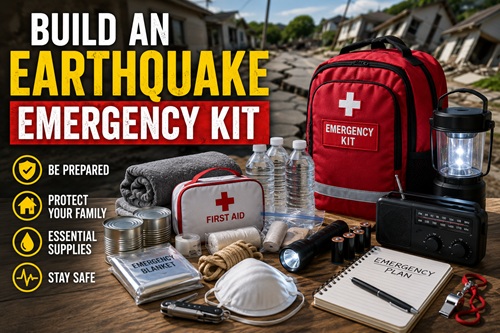
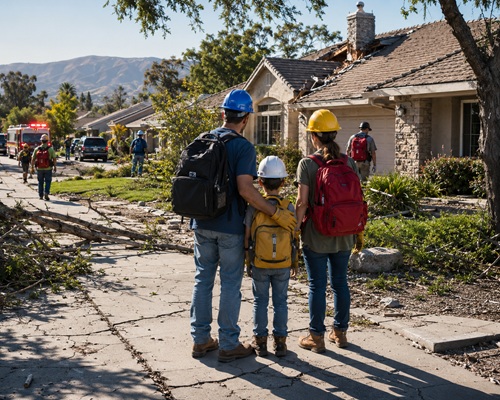
Build an Earthquake Emergency Kit

General Information

e4b066a6-5d6c-4cd3-babf-825273160576

Earthquakes are among the few natural disasters that can strike without warning. One moment life is normal, and the next the ground begins to shake. Within seconds, furniture may topple, windows can shatter, power may fail, and roads or bridges can become damaged. Unlike hurricanes, floods, or severe winter storms that often provide hours or days to prepare, earthquakes rarely offer enough time to gather supplies once the shaking begins. Whatever you have already prepared is likely to be what you depend on during the critical hours that follow.

For many families, surviving the earthquake itself is only the beginning. Aftershocks can continue for days or even weeks, damaged gas lines may ignite fires, drinking water systems can become contaminated, and communication networks may become overloaded or fail altogether. Grocery stores, pharmacies, and fuel stations often experience long lines or empty shelves as people rush to purchase the supplies they wish they had already stored. Depending on the severity of the disaster, emergency responders may need to prioritize life-threatening situations first, leaving many households to care for themselves until assistance becomes available.

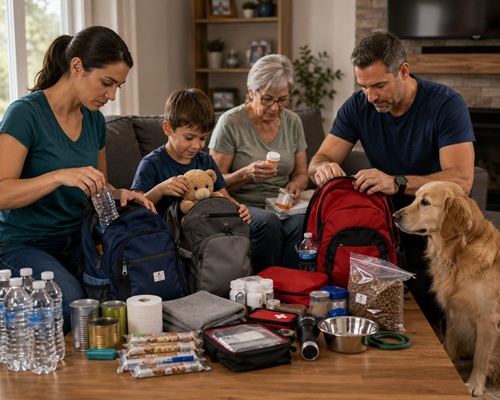
An earthquake emergency kit helps bridge the gap between the disaster and the return of normal services. It provides the essential supplies needed to treat injuries, stay informed, prepare food, maintain sanitation, and remain comfortable while infrastructure is being restored. More importantly, it gives your family time. Instead of making rushed decisions under stressful conditions, you can focus on protecting your loved ones and adapting to whatever challenges the earthquake has created.

Building an emergency kit is not about expecting disaster every day. It is about reducing uncertainty. Every item prepared before an emergency represents one less problem that must be solved afterward. Whether your home remains safe to occupy or you need to evacuate with very little notice, a carefully planned emergency kit provides confidence, flexibility, and peace of mind when they are needed most.


Understanding Earthquake Risks

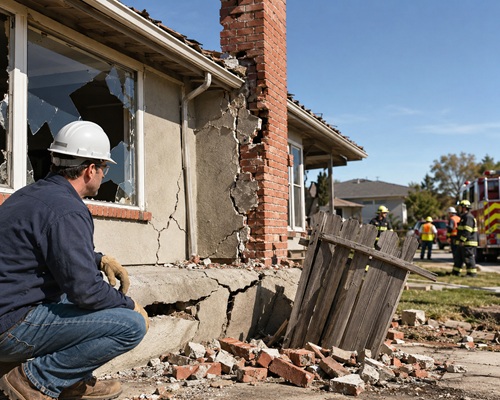
Although the violent shaking receives the most attention, the greatest challenges often begin after it stops. Earthquakes frequently trigger a series of secondary hazards that can disrupt daily life for hours, days, or even weeks. Understanding these risks helps explain why a well-designed emergency kit contains much more than food and bottled water.
fc4a01c6-8c04-4864-878c-bf35eb8f5a26

One of the most common dangers is the occurrence of aftershocks. These smaller earthquakes may continue long after the initial event and can cause already weakened buildings, chimneys, retaining walls, and bridges to collapse. Structures that appear stable immediately after the earthquake may become unsafe during a later aftershock, making caution essential whenever visible damage is present.

Utility failures create another set of challenges. Electrical outages can leave homes without lighting, heating, cooling, refrigeration, or internet access. Underground water mains may rupture, reducing water pressure or contaminating drinking water supplies. Damaged natural gas lines increase the risk of fires and explosions, while broken sewer lines create sanitation concerns that may persist until repairs are completed.

Transportation and communication networks are also vulnerable. Cracked roads, damaged bridges, and disabled traffic signals can slow emergency response while making travel difficult. At the same time, cellular networks often become overloaded as thousands of people attempt to contact family members at once. Even if your phone has battery power, you may still be unable to place a call.

Your location also influences the challenges you may face. Urban areas often experience greater congestion, higher building densities, and increased demand for emergency services. Rural communities may have fewer damaged structures but often wait longer for outside assistance because emergency responders must travel greater distances. Coastal regions face an additional concern following large offshore earthquakes, where tsunamis may require immediate evacuation to higher ground.

Because every earthquake is different, no emergency kit can be built for only one scenario. Instead, preparedness should focus on flexibility. A well-prepared household can adapt whether it remains safely at home, evacuates temporarily, or supports neighbors during the recovery process.

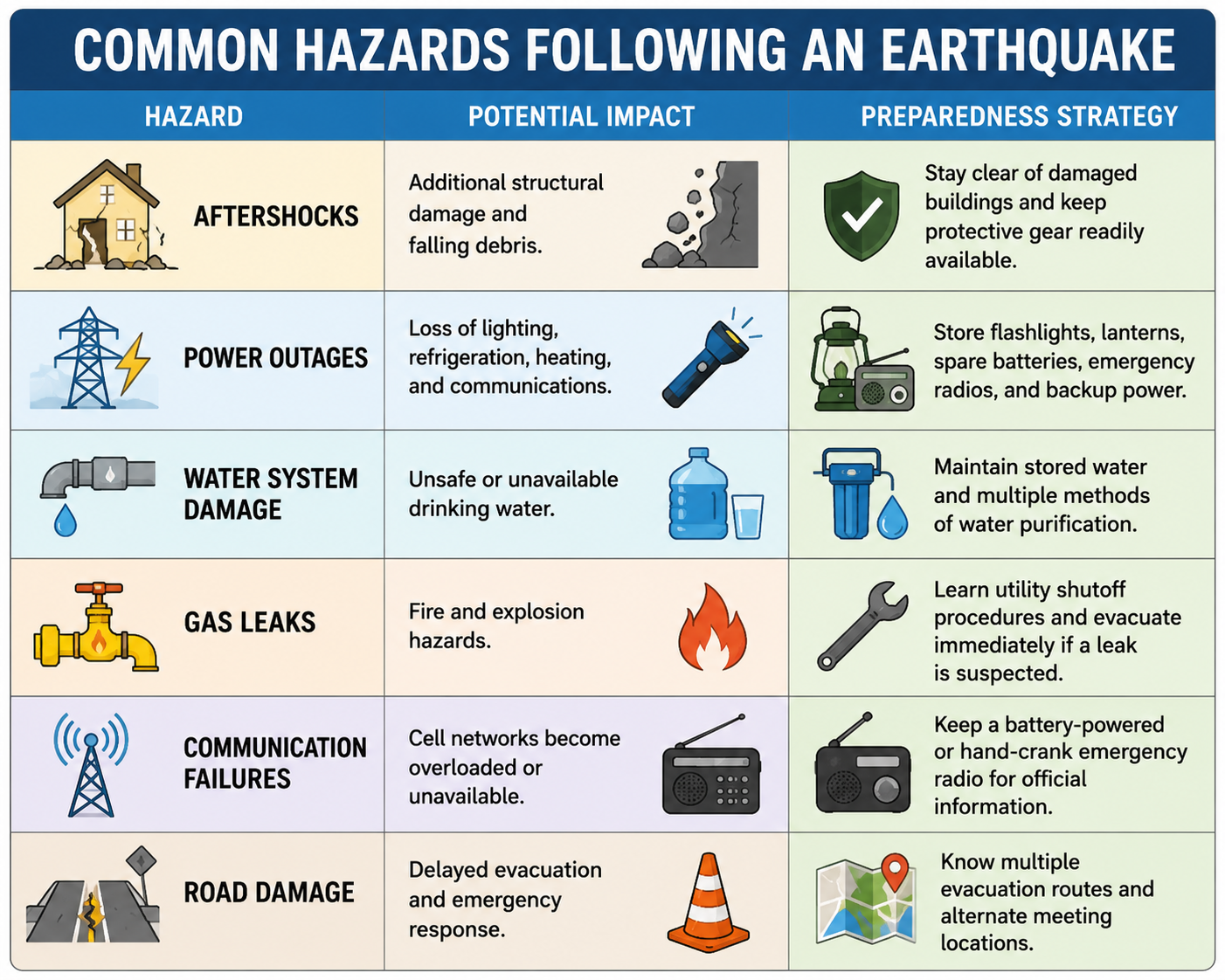
Common Hazards Following an Earthquake

Hazard Potential Impact Preparedness Strategy
Aftershocks Additional structural damage and falling debris Stay clear of damaged buildings and keep protective gear readily available.
Power Outages Loss of lighting, refrigeration, heating, and communications Store flashlights, lanterns, spare batteries, emergency radios, and backup power.
Water System Damage Unsafe or unavailable drinking water Maintain stored water and multiple methods of water purification.
Gas Leaks Fire and explosion hazards Learn utility shutoff procedures and evacuate immediately if a leak is suspected.
Communication Failures Cell networks become overloaded or unavailable Keep a battery-powered or hand-crank emergency radio for official information.
Road Damage Delayed evacuation and emergency response Know multiple evacuation routes and prepare to remain self-sufficient.
Supply Shortages Food, fuel, and household necessities become difficult to obtain Build emergency food, water, and household supplies before an emergency occurs.

Back To Top


The First Five Minutes After an Earthquake

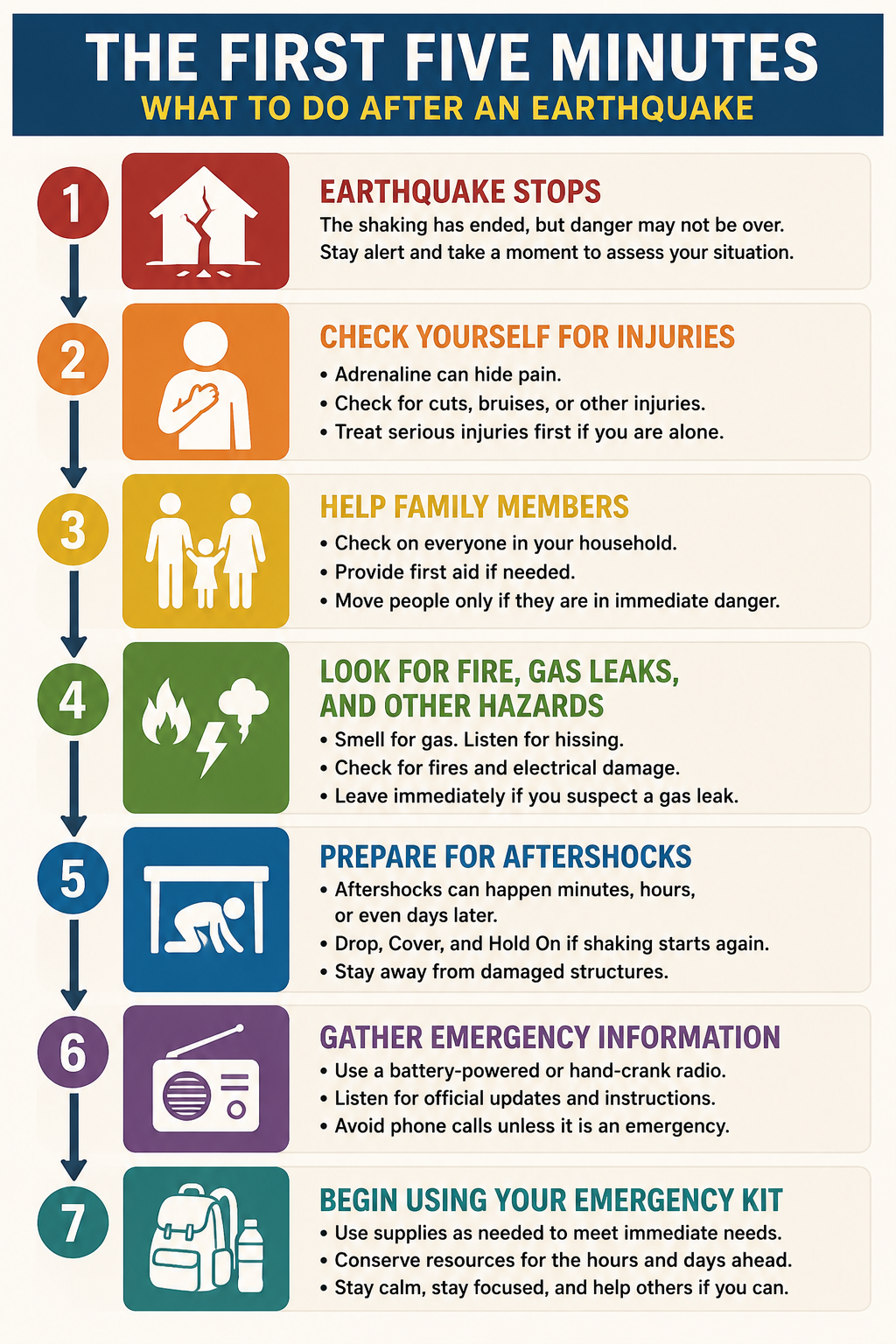
The first few minutes after an earthquake are often the most confusing. Adrenaline is high, aftershocks may still be occurring, and it can be difficult to determine whether your home is safe to remain in. Having a simple plan before an earthquake occurs helps prevent rushed decisions that could place you or your family in greater danger.

Your first priority should always be personal safety. Before moving around, check yourself for injuries. Adrenaline can temporarily mask pain, making cuts, sprains, or other injuries less noticeable immediately after the shaking stops. If you are injured, assess the severity before attempting to move or assist others.

Next, check on everyone else in your household. Children, older adults, and anyone with mobility limitations may require assistance. If serious injuries are present, provide first aid while avoiding unnecessary movement unless remaining in place presents an immediate danger.

As you begin moving through your home, remain alert for hazards created by the earthquake itself. Broken glass, unstable furniture, damaged walls, exposed wiring, and leaking water are all common dangers. If possible, put on sturdy shoes before walking through debris and wear work gloves while moving smaller objects.

Pay particular attention to signs of a natural gas leak. The smell of gas, the sound of escaping gas, or visible damage to gas appliances should be treated as an immediate warning. Leave the building without using electrical switches or creating sparks, then notify emergency services or your utility provider once you are safely outside.

Finally, prepare for aftershocks. Continue avoiding damaged structures, monitor official emergency broadcasts, and begin using your emergency supplies if utilities have been interrupted. The actions taken during these first few minutes establish the foundation for the hours and days that follow.
bd8f03ed-02c4-4c30-9276-1777e3a3aae28OByzUn

Back To Top


Three Layers of Earthquake Preparedness

Once the immediate dangers have been addressed, your focus shifts from surviving the earthquake to managing its aftermath. Whether you remain safely at home or are forced to evacuate, the supplies you prepared beforehand will determine how comfortably and effectively your family can respond. Rather than relying on one large emergency kit to solve every problem, experienced preparedness planners organize their equipment into three distinct layers. Each layer serves a different purpose while supporting the others.

The first layer is your Immediate Response Kit. These are the supplies you may need within the first few minutes after the shaking stops. Because earthquakes frequently occur at night, these items should be stored where they can be reached without delay, such as beside each bed or in another easily accessible location. A pair of sturdy shoes protects your feet from broken glass and debris before you begin walking through your home. Work gloves reduce the risk of cuts while moving obstacles, safety glasses protect your eyes from dust and falling particles, and a flashlight restores visibility if the power has failed. A whistle can be used to attract attention if you become trapped, while a small first aid kit allows you to treat minor injuries immediately.

The second layer is your Grab-and-Go Backpack. If your home becomes unsafe because of structural damage, fire, gas leaks, or mandatory evacuation orders, you may have only minutes to leave. Every member of the household should have a backpack that contains enough essential supplies to remain self-sufficient for at least seventy-two hours. These packs should be comfortable to carry, organized for quick access, and light enough that they can be transported over long distances if necessary.

The final layer is your Home Emergency Supply. Fortunately, not every earthquake requires evacuation. If your home remains structurally sound, sheltering in place is often the safest and most practical option. Larger emergency supplies provide the resources needed to remain independent while utility services are restored and emergency crews focus on the hardest-hit areas. Water storage, emergency food, sanitation supplies, cooking equipment, emergency lighting, backup power, and household tools all belong in this layer because they support long-term living rather than rapid evacuation.

Organizing your preparedness into these three layers creates flexibility. The Immediate Response Kit supports the first few minutes after the earthquake. The Grab-and-Go Backpack supports a rapid evacuation if conditions become unsafe. The Home Emergency Supply supports extended sheltering in place if leaving is unnecessary or impossible. Together they provide a complete preparedness system capable of adapting to many different situations.

1aeda959-7dde-4aba-ba8a-1080bc69025a

Three Layers of Preparedness

Preparedness Layer Purpose Where to Store It Typical Contents
Immediate Response Kit Protect yourself during the first few minutes after the earthquake Beside each bed, hall closet, or main living area Sturdy shoes, flashlight, work gloves, safety glasses, whistle, first aid kit
Grab-and-Go Backpack Support evacuation for at least 72 hours Near the primary exit or inside your vehicle Water, food, clothing, medications, emergency radio, flashlight, hygiene supplies, important documents
Home Emergency Supply Support sheltering in place for days or weeks Basement, garage, storage room, or utility area Water storage, long-term food, sanitation supplies, cooking equipment, backup power, fuel, tools

Many people unknowingly place too much emphasis on one of these layers while neglecting the others. Some invest heavily in a seventy-two-hour backpack but have very little stored at home if they are unable to leave. Others build an impressive emergency pantry but have nothing prepared should evacuation become necessary. Effective preparedness recognizes that earthquakes are unpredictable. By developing all three layers over time, your household is better prepared regardless of how the situation unfolds.

Back To Top


Building Your Earthquake Emergency Kit

Once you understand how the three preparedness layers work together, the next step is deciding what belongs in each one. A common mistake is trying to purchase everything at once. This often leads to overspending on equipment that may never be used while overlooking the supplies that will almost certainly become important during the first few days after a disaster.

The most effective emergency kits are built around priorities rather than products. Clean water, medical care, shelter, communication, food, sanitation, and lighting all support basic human needs. Once those essentials have been addressed, additional equipment can improve comfort, convenience, and long-term resilience. Building your kit in this order ensures that your time and budget are focused on the supplies that provide the greatest benefit.

Every household is different. A family with young children will have different needs than a retired couple, while someone living in a downtown apartment may prepare differently than someone on a rural property. Medical conditions, pets, local climate, and the likelihood of remaining at home versus evacuating should all influence the contents of your emergency kit. The goal is not to own the same equipment as everyone else—it is to build a kit that supports your household’s unique circumstances.

Although every preparedness plan is different, most earthquake emergency kits can be organized into several essential categories. Beginning with these core supplies creates a solid foundation that can be expanded over time as your family’s needs and preparedness goals evolve.
Water: Your First Survival Priority

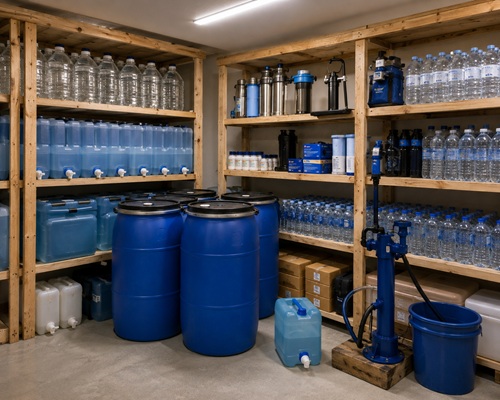
Water is the single most important resource in any emergency. While food shortages usually develop gradually, a lack of safe drinking water can become a serious health concern within only a few days. Earthquakes frequently damage underground water mains, treatment facilities, pumping stations, and storage reservoirs. Even when water continues flowing from the tap, it may no longer be safe to drink until public health officials confirm that the system has been inspected and contamination has not occurred.

541a4c04-d38f-44ef-ad4d-d6cbe57bf961

Because municipal water systems are interconnected, damage several miles away can affect neighborhoods that experienced little or no structural damage themselves. A broken transmission line, loss of electrical power, or damaged treatment facility may interrupt service long before repairs can be completed. For this reason, every household should maintain its own emergency water supply instead of assuming municipal water will always be available.

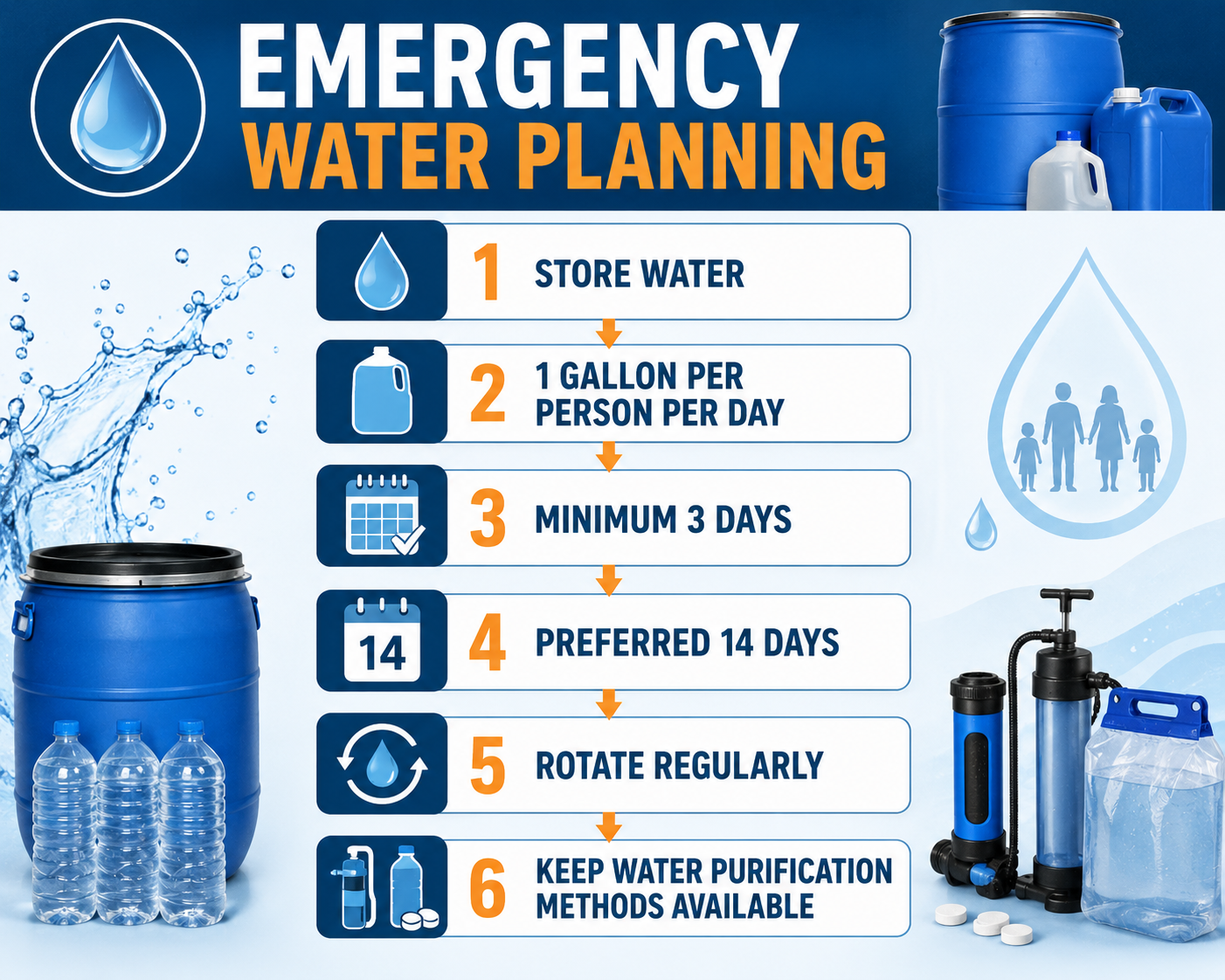
Emergency management agencies commonly recommend storing enough water for at least three days, but many preparedness experts suggest planning for two weeks whenever practical. Recovery following a major earthquake is unpredictable. Minor events may allow utilities to resume normal operation within a day or two, while larger disasters can leave entire communities without reliable water for much longer. Having additional reserves provides valuable flexibility if repairs take longer than expected.

Water planning should also account for more than drinking alone. Clean water is needed for preparing meals, washing hands, brushing teeth, cleaning wounds, taking medications, and maintaining basic sanitation. Pets also require fresh water each day, and households with infants may need additional supplies for preparing formula and cleaning bottles. When these everyday needs are considered together, most families quickly discover that they require more water than they originally expected.

Store water in food-grade containers designed for long-term storage whenever possible. Containers should remain tightly sealed and be kept in a cool, dry location away from direct sunlight, chemicals, fuels, or other contaminants. Commercially bottled water is another excellent option because it is already packaged for long-term storage, although it should still be rotated periodically according to the manufacturer’s recommendations.

Stored water, however, is only one part of a complete preparedness plan. Every household should also have one or more methods of producing additional safe drinking water if supplies begin running low. Portable water filters, chemical disinfectants, chlorine-based treatment methods, and boiling all provide effective ways to reduce the risk of waterborne illness when used correctly. Relying on only one purification method creates unnecessary risk, while maintaining multiple options provides valuable redundancy during longer emergencies.

Water is one resource that is rarely regretted after a disaster. Families almost never complain that they stored too much clean water, but many wish they had prepared more. By making water your highest priority, you establish a solid foundation for every other aspect of earthquake preparedness.

Recommended Emergency Water Storage

Household Size Minimum (3 Days) Recommended (14 Days)
1 Person 3 gallons 14 gallons
2 People 6 gallons 28 gallons
4 People 12 gallons 56 gallons
6 People 18 gallons 84 gallons

These amounts represent drinking water only. Additional water should be stored for cooking, hygiene, sanitation, and pets whenever possible.

16a187fd-1922-437f-828e-3624746bef09

Back To Top


Food: Planning for Nutrition and Convenience

Once your drinking water needs have been addressed, food becomes the next priority. Fortunately, most people can tolerate temporary reductions in food far better than a lack of clean water. Even so, maintaining adequate nutrition helps preserve energy, supports the immune system, improves concentration, and reduces the physical and emotional stress that often accompanies a major disaster.

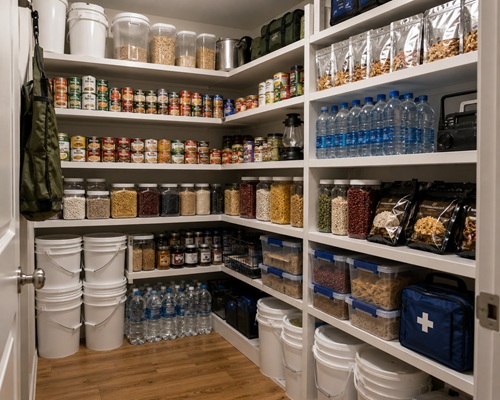
An earthquake emergency food supply should focus on practicality rather than variety. Foods that require little preparation, minimal cooking, and little or no refrigeration are usually the best choices. During a prolonged power outage, preparing elaborate meals becomes less important than ensuring everyone receives enough calories and proper nutrition to remain healthy.

Shelf stability is one of the most important factors when selecting emergency food. Canned meats, canned vegetables, soups, peanut butter, nuts, dried fruit, granola bars, instant oatmeal, crackers, rice, pasta, freeze-dried meals, and ready-to-eat meals all store well when kept under proper conditions. Choose foods your family already enjoys eating whenever possible. An emergency is not the ideal time to introduce unfamiliar foods that children may refuse or that family members cannot tolerate.

b325f907-56ee-476d-8319-4f1002d73baa

Many households also overlook the importance of foods that require little water to prepare. If your emergency water supply is limited, foods that can be eaten directly from the package or require only a small amount of water become much more practical than meals that consume several cups of water for cooking and cleanup.

Remember to consider special dietary requirements when planning your emergency food supply. Infants, older adults, individuals with food allergies, and those with medical conditions such as diabetes may require specialized foods that are not readily available during a disaster. Planning for these needs in advance prevents unnecessary stress when stores may be closed or supplies unavailable.

Emergency food should never become a forgotten collection of expired cans sitting in the back of a closet. Instead, rotate stored food into your normal household meals and replace it as it is used. This simple habit keeps your emergency supplies fresh while reducing waste and ensuring your family remains familiar with the foods they may depend on during an actual emergency.

Suggested Emergency Food Supply

Food Category Examples Why It Works
Ready-to-Eat Foods Granola bars, nuts, dried fruit, crackers No cooking required and immediately available.
Canned Foods Soups, vegetables, beans, tuna, chicken Long shelf life and easy to prepare.
Staple Foods Rice, pasta, oatmeal Economical and calorie-dense for longer emergencies.
Freeze-Dried Meals Commercial emergency meals Lightweight, compact, and excellent for extended storage.
Comfort Foods Coffee, tea, chocolate, hard candy Helps improve morale during stressful situations.

A well-planned food supply does more than satisfy hunger. It provides energy, stability, and a sense of normalcy during a time when many other aspects of daily life have been disrupted.

Back To Top


Medical Supplies: Preparing for Common Injuries

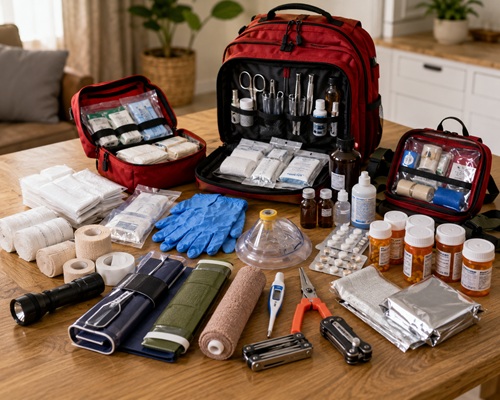
Earthquakes often cause injuries that can be treated at home if the proper supplies are available. Broken glass, falling objects, damaged furniture, and unstable structures commonly result in cuts, scrapes, burns, sprains, and other minor injuries. While emergency medical services will always respond to life-threatening situations first, they may be delayed for hours if roads are damaged or responders are assisting larger numbers of casualties. A well-stocked first aid kit allows your family to care for many routine injuries while waiting for professional medical assistance if it becomes necessary.

A basic first aid kit should include adhesive bandages in multiple sizes, sterile gauze pads, roller bandages, adhesive tape, antiseptic wipes, antibiotic ointment, tweezers, scissors, disposable gloves, and a digital thermometer. These supplies allow you to clean wounds, control bleeding, reduce the risk of infection, and treat many of the injuries most commonly seen following an earthquake.

063cd651-7e99-4cc1-b429-846f11854fd2

Households should also consider their individual medical needs. Prescription medications should be maintained in sufficient quantities whenever possible, and essential medical devices such as inhalers, insulin supplies, blood glucose testing equipment, hearing aid batteries, or mobility aids should be incorporated into the emergency plan. If a family member relies on electrically powered medical equipment, backup power solutions should also be considered.

First aid supplies are only as valuable as the knowledge used to apply them. Consider taking a certified first aid and CPR course through a recognized training organization. Learning how to control bleeding, recognize shock, treat burns, and respond to common medical emergencies builds confidence while increasing your ability to assist both family members and neighbors during a disaster.

Emergency medical supplies should be inspected regularly. Replace expired medications, replenish items that have been used, and verify that everything remains organized and easy to locate. During an emergency, you should never have to search through an unorganized container looking for a single bandage or pair of gloves.

Basic First Aid Kit Checklist

Category Recommended Items
Wound Care Adhesive bandages, sterile gauze pads, roller bandages, adhesive tape
Cleaning & Infection Prevention Antiseptic wipes, antibiotic ointment, saline solution
Medical Tools Tweezers, trauma shears, digital thermometer, instant cold packs
Personal Protection Disposable gloves, CPR face shield, hand sanitizer
Medications Pain relievers, antihistamines, anti-diarrheal medication, prescription medications
Reference Basic first aid guide and emergency contact information

A thoughtfully prepared first aid kit can often prevent a minor injury from becoming a more serious medical problem. More importantly, it allows your household to remain self-sufficient while emergency medical resources are focused on the most critical situations.

Back To Top


Communication and Emergency Information

Reliable information becomes one of your most valuable resources following an earthquake. Rumors spread quickly, social media may contain inaccurate information, and cellular networks often become overloaded as thousands of people attempt to contact family members simultaneously. Receiving accurate updates from official sources helps you make informed decisions while avoiding unnecessary risks.

df21d31b-7756-4901-92a2-b9463c501602-1

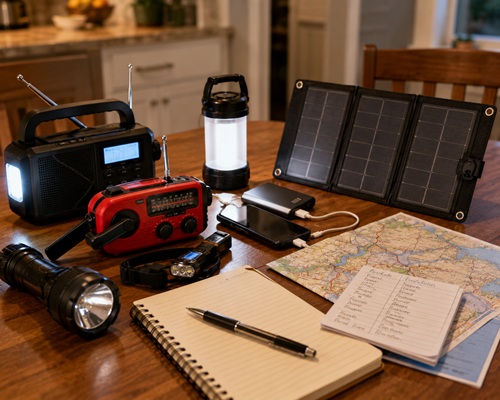
A battery-powered or hand-crank emergency radio should be considered essential equipment in every earthquake emergency kit. Local emergency management agencies frequently broadcast evacuation orders, shelter locations, boil-water advisories, road closures, weather information, and recovery updates over emergency radio networks. Unlike internet services, emergency radio broadcasts often remain operational even during widespread power outages.

Communication within your own family is equally important. If household members are separated when the earthquake occurs, everyone should already know where to meet and how to communicate if telephone service is unavailable. Establishing an out-of-area emergency contact can also be helpful, as long-distance calls occasionally connect when local networks remain congested.

Portable charging equipment helps extend the usefulness of mobile devices during prolonged outages. Power banks, portable power stations, vehicle charging adapters, and small solar charging systems all provide additional ways to keep essential electronics operating when electrical service has been interrupted. While smartphones provide tremendous convenience, they should never be considered the only source of emergency information.

Keep printed copies of important telephone numbers, addresses, and emergency contact information with your emergency supplies. If your phone is lost, damaged, or its battery becomes depleted, having critical information available on paper can make reconnecting with family members much easier.

Communication Equipment Checklist

Equipment Purpose
Battery-powered or hand-crank radio Receive emergency broadcasts and official updates
Extra batteries Power radios, flashlights, and other small electronics
Portable power bank Recharge phones and small electronic devices
Vehicle charging adapter Recharge electronics while traveling
Printed emergency contact list Access important phone numbers if devices fail
Notepad and waterproof pen Record important information and messages

Maintaining communication is about more than convenience. Accurate information reduces uncertainty, helps prioritize decisions, and allows your family to respond confidently as conditions continue to change following an earthquake.

Back To Top


Shelter, Clothing, and Personal Comfort

While water, food, and medical supplies address immediate survival needs, shelter and personal comfort become increasingly important as the days pass. A family that remains warm, dry, rested, and reasonably comfortable is better able to make good decisions, perform physical tasks, and cope with the emotional stress that often follows a major disaster.

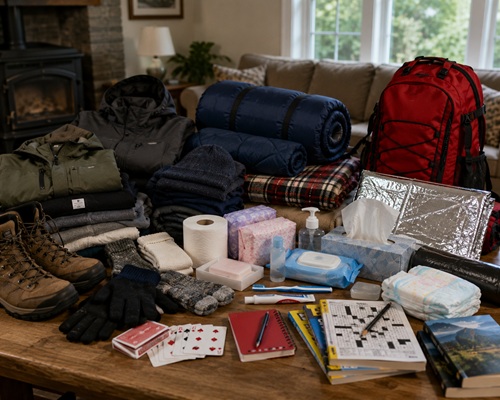
If your home remains structurally sound, it will usually provide the best shelter available. Even so, power outages may leave the home without heat or air conditioning depending on the season. During colder months, dressing in layers allows body heat to be retained more effectively than relying on a single heavy coat. Thermal underwear, warm socks, hats, gloves, and insulated blankets can significantly improve comfort while reducing the amount of supplemental heat required.

e3e57b6b-b56e-4371-8220-f20528394e80

If evacuation becomes necessary, lightweight emergency blankets, sleeping bags, and compact sleeping pads help maintain body temperature while providing a more comfortable place to rest. Although these items may seem like luxuries when assembling an emergency kit, adequate sleep plays an important role in maintaining both physical health and sound decision-making during stressful situations.

Rain protection should also be included in every emergency kit. Waterproof jackets, ponchos, and sturdy footwear help prevent hypothermia during wet weather while allowing household members to continue working outside if cleanup or evacuation becomes necessary. Even in warmer climates, becoming cold and wet can quickly reduce energy levels and increase fatigue.

Personal hygiene deserves equal consideration. Toothbrushes, toothpaste, soap, wet wipes, toilet paper, feminine hygiene products, diapers, and garbage bags all contribute to maintaining health and morale during an extended disruption. These supplies are frequently overlooked until they are needed, yet they can greatly improve comfort while reducing the risk of illness.

Small comfort items should not be underestimated. A favorite blanket for a child, a deck of cards, books, crossword puzzles, or other quiet activities can provide welcome distractions during stressful periods when electricity, television, and internet access are unavailable. Maintaining a sense of normalcy helps reduce anxiety while improving overall resilience.

Shelter and Personal Comfort Supplies

Category Recommended Items
Bedding Sleeping bags, blankets, sleeping pads, emergency blankets
Clothing Extra clothing, sturdy footwear, rain gear, hats, gloves
Hygiene Soap, toothbrushes, toothpaste, toilet paper, wet wipes, feminine hygiene products
Sanitation Garbage bags, zip-top bags, bucket toilet supplies if appropriate
Comfort Books, cards, small games, children’s comfort items

Remaining comfortable during an emergency is not simply about convenience. It helps preserve health, supports emotional well-being, and allows your family to remain focused on the tasks necessary for recovery.

Back To Top


Important Documents and Emergency Cash

Modern households depend heavily on electronic systems for banking, identification, insurance, and communication. Following a major earthquake, however, internet access may be interrupted, power outages can disable electronic payment systems, and damaged buildings may prevent access to important records. Preparing copies of essential documents in advance can save considerable time and frustration during the recovery process.

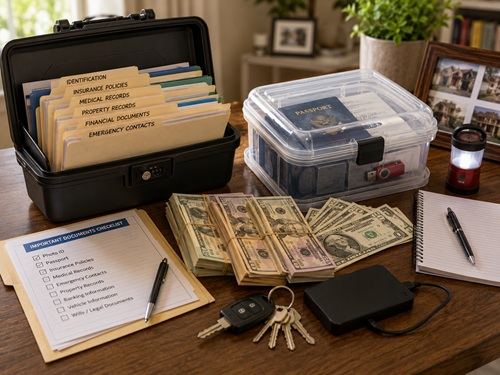
Store copies of identification documents, insurance policies, medical information, emergency contacts, property records, and other critical paperwork in a waterproof, portable container. Digital copies stored on an encrypted USB drive provide an additional layer of protection, but printed copies remain valuable when electronic devices cannot be charged or internet access is unavailable.

7689ea12-d324-4054-b89c-81cfd455b10e

Cash is another frequently overlooked preparedness item. Many businesses rely entirely on electronic payment systems, which may stop functioning during extended power outages. Keeping a reasonable amount of cash in small bills allows you to purchase food, fuel, or other necessities when credit and debit card systems are unavailable. Exact amounts vary by household, but smaller denominations are generally more practical than large bills because businesses may have limited ability to make change.

Households should also maintain an up-to-date inventory of valuable possessions for insurance purposes. Photographs or videos of each room, along with records of major purchases, can simplify insurance claims if property damage occurs. These records should be updated periodically and stored in a secure location separate from the originals.

Important Documents Checklist

Document Category Examples
Identification Driver’s licenses, passports, birth certificates
Insurance Home, renter’s, vehicle, health insurance policies
Medical Prescription information, allergies, medical history
Financial Bank account information, emergency cash, account numbers
Property Home ownership documents, vehicle titles, inventory photographs
Emergency Contacts Family members, physicians, insurance agents, utility providers

Preparing these documents before an emergency reduces unnecessary stress and allows your family to focus on recovery instead of searching for paperwork when time and resources are limited.

Back To Top


Preparing Children, Seniors, and Pets

Every member of the household has unique needs during an emergency. A standard emergency kit may provide everything required for a healthy adult, yet still leave important gaps for young children, older adults, individuals with disabilities, or family pets. Considering these needs while building your emergency kit helps ensure no one is overlooked when an earthquake occurs.

Young children often require diapers, formula, baby food, bottles, medications, and comfort items that may not be readily available after a disaster. Familiar toys, books, or blankets can help reduce anxiety while providing a sense of stability during an otherwise frightening experience.

563593a1-2eb2-4c50-a850-a863886db84a

Older adults may depend on prescription medications, mobility equipment, hearing aids, eyeglasses, or medical devices that require electricity. Maintaining extra supplies whenever possible reduces the likelihood of interruptions if pharmacies remain closed or transportation becomes difficult.

Pets are equally dependent on their owners during emergencies. Food, water, medications, leashes, carriers, waste disposal supplies, and vaccination records should all be included in your emergency planning. Not all emergency shelters accept animals, making advance planning especially important for pet owners.

Households should periodically review their emergency supplies as family circumstances change. Children grow, medications change, pets age, and new medical conditions may develop over time. Updating your emergency kit ensures it continues to meet your family’s needs rather than reflecting circumstances from several years earlier.

Well-planned preparedness considers every member of the household. By accounting for individual needs before disaster strikes, families can respond more confidently while reducing unnecessary stress during an already challenging situation.


Maintaining Your Earthquake Emergency Kit

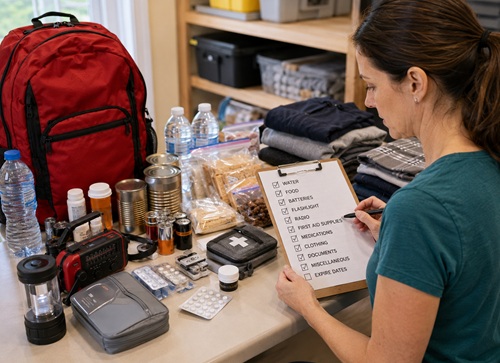
Building an earthquake emergency kit is only the first step. A kit that sits untouched for years may not perform as expected when it is finally needed. Batteries lose their charge, food expires, medications become ineffective, clothing no longer fits growing children, and important documents may no longer be accurate. Regular maintenance ensures your emergency supplies remain reliable and ready for use.

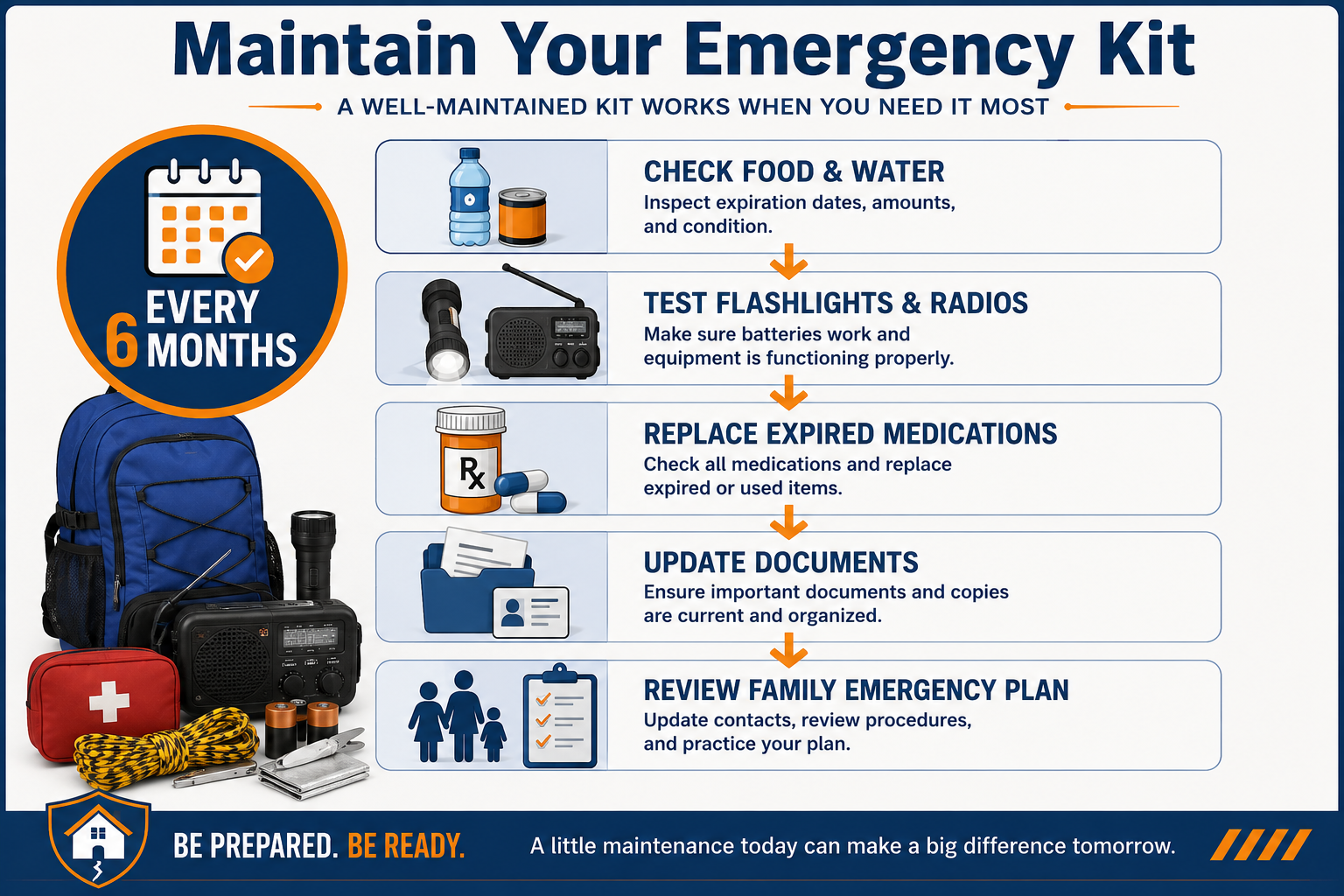
A simple inspection two or three times each year is usually sufficient for most households. Many people find it convenient to perform these inspections when daylight saving time begins and ends, while others choose dates that coincide with seasonal changes. Whatever schedule you choose, consistency is far more important than the exact timing.

5accb708-f2f2-43bd-bd14-7f707293bb90

Begin by inspecting food and water supplies. Replace anything that has expired or shows signs of damage. Commercially bottled water and commercially packaged food generally remain reliable when stored under proper conditions, but they should still be rotated into normal household use and replaced periodically. This practice minimizes waste while ensuring your emergency supplies remain fresh.

Next, test battery-powered equipment. Flashlights, emergency radios, lanterns, portable power stations, and rechargeable batteries should all be checked to confirm they remain operational. Recharge batteries as needed and replace disposable batteries that have reached the end of their service life. A flashlight that fails during a nighttime power outage provides little value, regardless of how expensive it was.

Medical supplies deserve similar attention. Inspect your first aid kit to ensure commonly used items such as adhesive bandages, antiseptic wipes, and medications remain fully stocked and within their expiration dates. If prescription medications are part of your emergency plan, verify that replacement supplies remain current and discuss refill options with your healthcare provider whenever appropriate.

Finally, review your family’s changing needs. Children grow, medications change, pets require different supplies, and important documents are updated throughout the years. An emergency kit should evolve with your household rather than remaining frozen in time.

Preparedness is not a one-time purchase. It is an ongoing process of maintaining the resources that allow your family to respond confidently when emergencies occur.

a2a92458-6282-4cdc-8b7b-daef581e8308ZrPYjZ4

Emergency Kit Maintenance Schedule

Task Recommended Frequency
Inspect food and water supplies Every 6 months
Replace expired food or medications As needed
Test flashlights and emergency radios Every 6 months
Recharge portable power stations and power banks Every 3–6 months
Replace disposable batteries As needed or annually
Review important documents Annually
Update children’s clothing and personal supplies Annually or as needed
Review family emergency plans At least once each year

Back To Top


Common Mistakes to Avoid

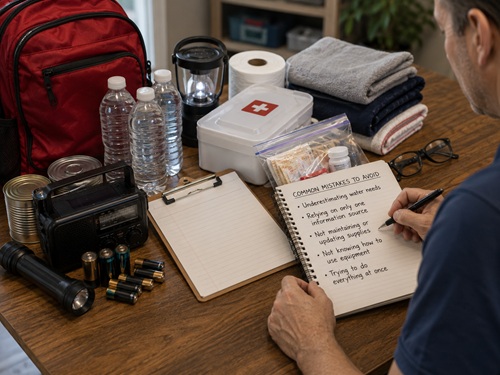
Building an emergency kit is relatively straightforward, but several common mistakes reduce its effectiveness. Recognizing these issues before an emergency occurs allows you to correct them while conditions remain calm.

One of the most common mistakes is underestimating how much water your household actually needs. Many people store only enough drinking water while forgetting about cooking, hygiene, medications, and pets. During an extended disruption, these additional needs quickly consume available supplies.

f08506cb-da89-4dc9-96c1-f1bf4640ea03

Another frequent mistake is relying entirely on one source of emergency information. Smartphones provide tremendous convenience, but they depend on batteries, cellular networks, and internet connectivity. A battery-powered or hand-crank emergency radio provides an independent source of official information when other communication systems become unreliable.

Many emergency kits are also assembled once and then forgotten. Food expires, batteries leak, medications lose effectiveness, and important documents become outdated. Regular inspections prevent these problems and ensure your supplies remain ready for use.

Some households purchase expensive equipment without learning how to use it. Water filters, camp stoves, generators, portable power stations, and first aid supplies all require some familiarity before an emergency occurs. Practicing with your equipment beforehand builds confidence while reducing mistakes during stressful situations.

Finally, avoid trying to prepare for everything at once. Preparedness is a long-term project rather than a single shopping trip. Building your emergency kit gradually allows you to purchase better-quality equipment, spread the cost over time, and thoughtfully organize your supplies instead of filling storage bins with items you may never use.


Preparedness Action Plan

Preparedness becomes much more manageable when broken into smaller, achievable steps. Rather than attempting to build a complete emergency kit in a single weekend, focus on making steady progress over time.

Begin by evaluating your current level of preparedness. Identify which essential supplies you already have and which areas require improvement. Water, first aid supplies, emergency lighting, and communication equipment should receive the highest priority because they address the most immediate needs following an earthquake.

2600b7a3-2536-4704-8d0a-75fc84c21ecb

Next, establish realistic goals based on your household and budget. Even purchasing one or two important items each month can result in a comprehensive emergency kit within a relatively short period. Consistent progress is far more valuable than waiting until you can afford everything at once.

Once your kit has been assembled, organize it so every family member knows where essential supplies are located. Practice retrieving emergency equipment, review your household emergency plan, and discuss evacuation routes and meeting locations. Familiarity reduces confusion and allows everyone to respond more confidently if an earthquake occurs.

Finally, remember that preparedness is never truly finished. Continue learning new skills, improving your supplies, and adapting your emergency plans as your family and circumstances change. Small improvements made today can have a significant impact when unexpected events occur tomorrow.

Back To Top


3c2c8702-2af1-49c6-947e-91385782457d

Skills Learned

After completing this lesson, you should now be able to:

  • Understand the hazards that commonly follow a major earthquake.
  • Identify the most important actions to take during the first few minutes after the shaking stops.
  • Organize emergency supplies into Immediate Response, Grab-and-Go, and Home Emergency preparedness layers.
  • Build a practical earthquake emergency kit based on priorities rather than impulse purchases.
  • Calculate appropriate water and food supplies for your household.
  • Assemble a basic first aid kit capable of treating common earthquake-related injuries.
  • Prepare reliable communication and backup power solutions.
  • Organize important documents and emergency cash for quick access.
  • Plan for the unique needs of children, older adults, and household pets.
  • Maintain and improve your emergency kit so it remains ready whenever it is needed.

Preparedness is not measured by the amount of equipment you own, but by your ability to respond calmly and effectively when circumstances suddenly change. A thoughtfully planned earthquake emergency kit provides more than supplies – it provides confidence, flexibility, and the ability to protect yourself and those who depend on you when every minute matters.


Final Thoughts

An earthquake emergency kit is more than a collection of supplies—it is a practical investment in your family’s safety and resilience. While no one can predict when the next earthquake will occur or how severe it will be, everyone can take steps today to reduce the challenges that follow. By storing essential supplies, organizing them into practical preparedness layers, and maintaining them regularly, you greatly increase your ability to remain safe and self-sufficient during the critical hours and days after a disaster.

e80c24f8-67f6-486c-92bf-94483dcf1c49

Preparedness does not happen overnight, nor does it require purchasing everything at once. Every gallon of water stored, every flashlight tested, every first aid supply added, and every family discussion about emergency plans strengthens your ability to respond confidently when unexpected events occur. Small, consistent improvements made over time often provide far greater value than last-minute preparations made under pressure.

The goal is not to eliminate every risk. The goal is to reduce uncertainty, improve decision-making, and provide your household with the resources needed to adapt when circumstances suddenly change. A well-prepared family is better equipped to protect one another, assist neighbors when appropriate, and recover more quickly as their community begins rebuilding.

506052fb-c8d1-4aa3-86c1-79d594c1a4ec

© Prepping Communities. This content is for informational purposes only and not professional advice. Use at your own risk.
Terms | Privacy | Guidelines

Leave a Reply

top