
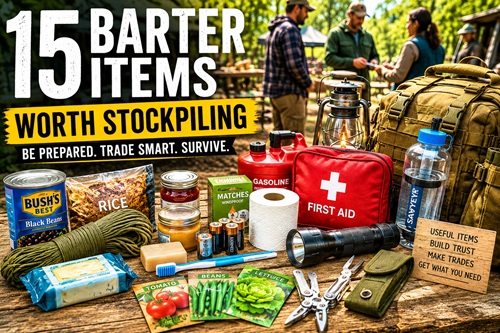
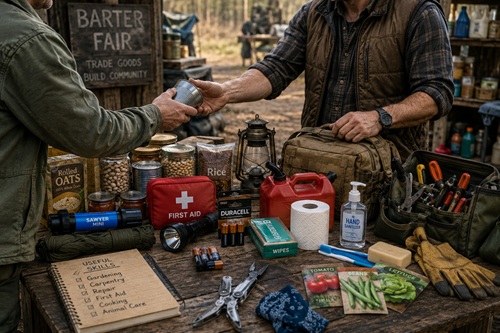
Bartering has been a practical method of obtaining needed goods for thousands of years, and it often becomes even more valuable during times of economic uncertainty, supply shortages, or disruptions to traditional commerce. While money is convenient when markets are functioning normally, valuable goods and useful skills frequently become the preferred currency when access to cash, banking systems, or retail stores is limited. Understanding which everyday items consistently hold trade value allows individuals and families to prepare more effectively for a wide range of emergencies.
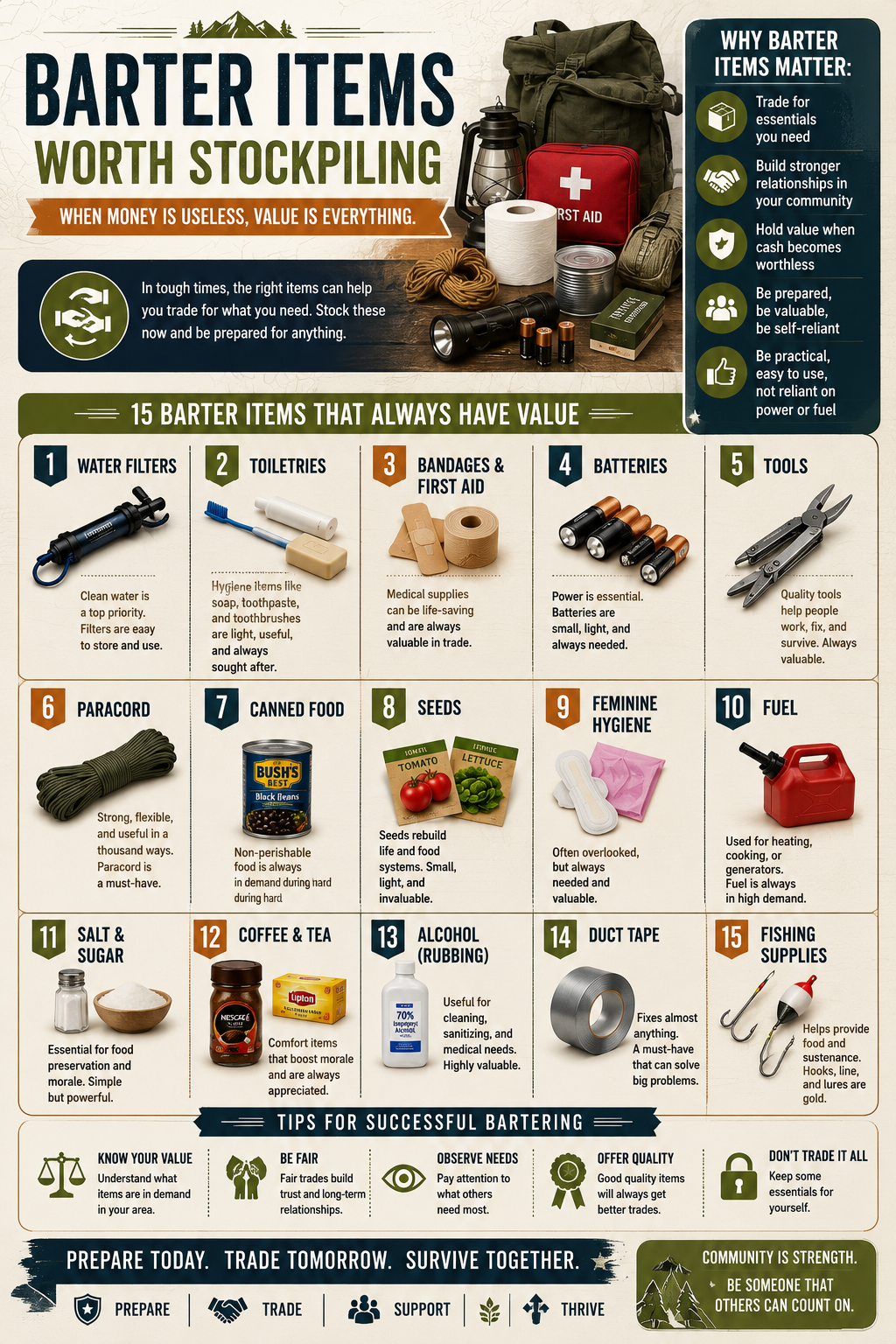
Many of the most sought-after barter items are inexpensive to purchase, easy to store, and useful in everyday life. Medical supplies, water filtration equipment, batteries, fuel, hygiene products, tools, food, seeds, and repair materials all solve practical problems that people may encounter during difficult times. Consumable items are especially valuable because they are continually used and eventually need to be replaced. Stocking a variety of practical goods rather than focusing on a single item creates greater flexibility when trading with others.
Successful bartering depends on more than simply accumulating supplies. Fairness, honesty, and an understanding of what other people actually need help build trust and strengthen long-term relationships within a community. The most successful exchanges benefit both parties, preserving goodwill while meeting immediate needs. Knowing the value of your items, paying attention to changing circumstances, and avoiding trading away essential supplies can help ensure that bartering remains a sustainable preparedness strategy rather than a short-term solution.
Ultimately, one of the greatest assets during any emergency is a resilient community. People who combine practical supplies with useful skills, good judgment, and strong relationships are often far better positioned than those relying solely on stockpiles. Bartering encourages cooperation, resource sharing, and mutual support, helping communities become more adaptable when traditional systems are strained. Preparing today by building practical reserves and learning valuable skills increases both individual resilience and the ability to support others when it matters most.
© Prepping Communities. This content is for informational purposes only and not professional advice. Use at your own risk.
Terms | Privacy | Guidelines