
Most people do not realize how dependent they are on modern systems until one of those systems stops working.
A power outage lasts longer than expected.
A winter storm closes roads.
A wildfire forces evacuations.
A major accident shuts down transportation routes.
Within hours, simple tasks become much more difficult.
You cannot charge your phone. Stores become crowded. Fuel stations develop long lineups. Information becomes harder to verify. People who never thought much about preparedness suddenly find themselves asking the same question:
Do we have what we need to get through this?
The good news is that most emergencies do not require extreme survival skills. In many situations, basic supplies, practical planning, and a calm mindset can make a major difference.
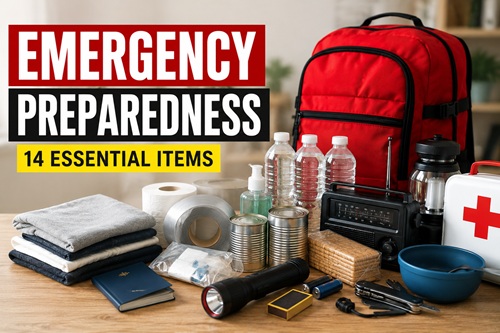
The following items form the foundation of a practical emergency stockpile.
 1. Water:
The First Priority
Most people think about food first.
Experienced preppers usually think about water first.
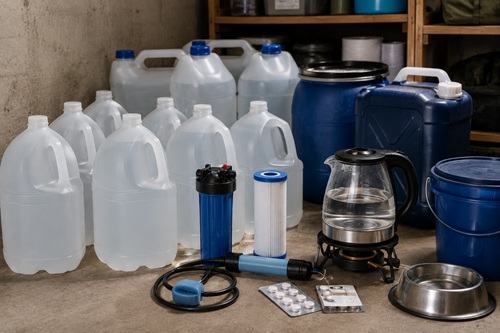
Water is needed for drinking, cooking, cleaning, hygiene, pets, and basic sanitation. If the water supply becomes unsafe or unavailable, daily life becomes difficult very quickly.
A good starting point is at least one gallon per person per day, with more stored when possible.
Also consider:
- Water filters
- Purification tablets
- Stored water containers
- A way to boil water
- Extra water for pets and hygiene
Water preparedness is not exciting, but it is one of the most important parts of any emergency plan.
2. Shelf-Stable Food
Food storage does not need to be complicated.
Start with foods your household already eats and gradually build from there.
Good options include:
- Canned meals
- Rice
- Beans
- Pasta
- Oats
- Peanut butter
- Dehydrated foods
- Freeze-dried meals
The best emergency food is food your family will actually use.
Avoid building a stockpile full of unfamiliar items no one wants to eat.
3. A Manual Can Opener
This small item is easy to forget.
If much of your emergency food is canned, a manual can opener becomes essential.
Keep one in the kitchen and another in your emergency kit.
 4. Emergency Lighting
Power outages often happen at the worst possible time.
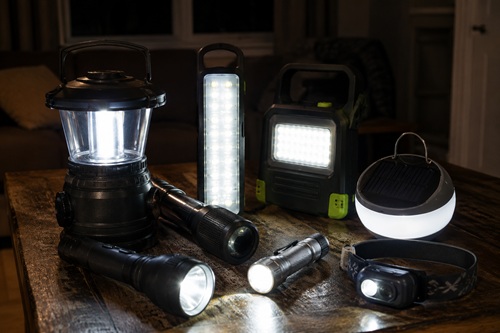
Reliable lighting helps you move safely, prepare food, check on family members, and avoid unnecessary accidents.
Useful options include:
- Flashlights
- Headlamps
- Lanterns
- Solar lights
- Rechargeable lights
Headlamps are especially useful because they keep both hands free.
5. Extra Batteries
Flashlights, radios, lanterns, and other emergency tools are only useful if they have power.
Store extra batteries in a cool, dry location and check them occasionally.
Whenever possible, standardize your devices around common battery sizes.
 6. Emergency Radio
During a crisis, accurate information matters.
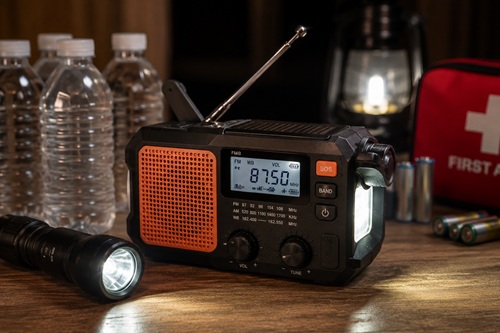
Cell networks and internet service can become unreliable during outages, storms, or large-scale disruptions.
A battery-powered, solar-powered, or hand-crank radio can help you receive emergency alerts and local updates when other systems fail.
7. First Aid Supplies
Minor injuries are much harder to manage when clinics are closed, roads are blocked, or emergency responders are overwhelmed.
A basic first aid kit should include:
- Bandages
- Gauze
- Medical tape
- Antiseptic wipes
- Gloves
- Pain relievers
- Tweezers
- Basic wound care supplies
Supplies matter, but training matters too.
Even basic first aid knowledge can make a stressful situation easier to handle.
8. Needed Medications and Medical Items
Many households depend on medications or medical supplies every day.
Preparedness should include:
- Prescription medications
- Over-the-counter medications
- Eyeglasses
- Contact lens supplies
- Medical device batteries
- Copies of important medical information
Talk with your healthcare provider about safe ways to maintain an emergency reserve where possible.
9. Backup Power for Small Electronics
Phones are used for communication, maps, weather alerts, banking, photos, documents, and emergency information.
A dead phone can create real problems.
Consider keeping:
- Power banks
- Solar chargers
- Vehicle chargers
- Charging cables
- Rechargeable battery packs
Keep power banks charged before storms or known disruptions.
10. Sanitation and Hygiene Supplies
Sanitation is often overlooked until normal services stop working.
Useful supplies include:
- Toilet paper
- Moist wipes
- Garbage bags
- Plastic ties
- Soap
- Hand sanitizer
- Feminine hygiene products
- Diapers if needed
Cleanliness helps prevent illness and keeps morale higher during stressful situations.
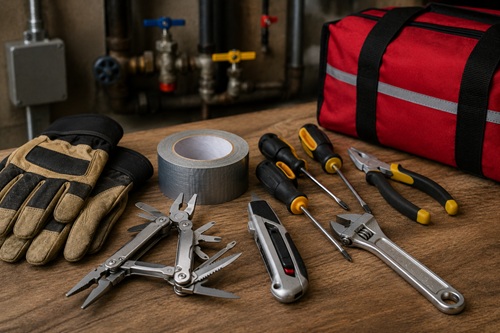 11. Basic Tools
Simple tools solve a lot of problems.
A household emergency kit should include:
- Multi-tool
- Pliers
- Adjustable wrench
- Screwdrivers
- Duct tape
- Utility knife
- Work gloves
It is also worth learning how to safely shut off water, gas, or electricity if your situation requires it.
12. Printed Maps
Most people rely completely on GPS.
That works until your phone is dead, cell service is unreliable, or roads are closed and you need another route.
Printed local and regional maps are inexpensive and useful.
Mark alternate routes, family meeting points, fuel locations, hospitals, and possible evacuation paths.
13. Family Communication Plan
One of the first things people worry about during an emergency is family.
Where is everyone?
Are they safe?
Can they get home?
A simple family communication plan should include:
- Emergency contact numbers
- Meeting locations
- Out-of-area contacts
- Backup communication methods
- Plans for children, seniors, and pets
Simple plans are usually the easiest to follow under stress.
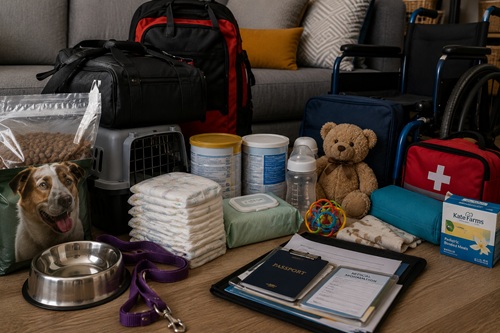 14. Supplies for Pets, Children, and Special Needs
Preparedness should reflect the people and animals in your household.
Consider:
- Pet food
- Leashes and carriers
- Baby formula
- Diapers
- Comfort items for children
- Mobility aids
- Special dietary needs
- Copies of important documents
A generic emergency kit is a starting point, not the finish line.
Your supplies should match your real life.
Common Preparedness Mistakes
Many people make the same mistakes when they first begin preparing.
They buy gear before building a plan.
They store food but forget water.
They buy emergency meals their family will not eat.
They forget medications, pets, sanitation, or documents.
They put supplies away and never check them again.
Preparedness works best when it becomes part of normal life.
Use what you store.
Rotate what expires.
Replace what gets used.
Review your plan a few times a year.
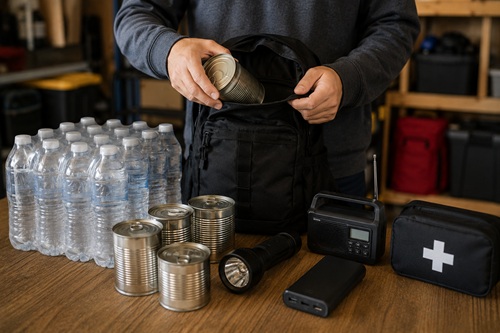 Build Preparedness Gradually
You do not need to buy everything at once.
Most prepared households are built slowly.
An extra case of water this week.
A few extra cans of food next week.
A flashlight.
A radio.
A first aid kit.
A power bank.
Small steps add up.
Preparedness is not about panic buying. It is about slowly reducing your dependence on systems that may not always be available.
Preparedness Gives You Options
The goal is not to prepare for every possible disaster.
That is impossible.
The goal is to create enough margin that a disruption does not immediately become a crisis.
If the power goes out, you have light.
If stores are closed, you have food.
If water service is interrupted, you have stored water.
If communication becomes difficult, your family has a plan.
Preparedness gives you options.
And when life becomes unpredictable, options are one of the most valuable things you can have.
© Prepping Communities. This content is for informational purposes only and not professional advice. Use at your own risk.
Terms | Privacy | Guidelines