
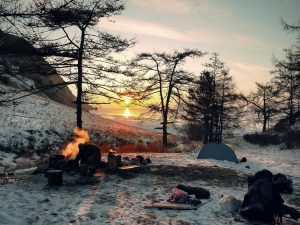
USMC Summer Survival Course Handbook is a comprehensive wilderness survival training manual developed by the United States Marine Corps Mountain Warfare Training Center in Bridgeport, California. The handbook teaches practical survival skills needed to endure and operate in harsh outdoor environments, especially mountainous terrain and remote wilderness areas. The manual emphasizes that survival is primarily a matter of mindset, discipline, leadership, and adaptability rather than equipment alone. Early sections focus heavily on maintaining a positive mental attitude, controlling fear and panic, managing stress, and understanding the priorities of survival such as shelter, fire, water, and signaling. One of the core concepts throughout the manual is the “SURVIVAL” acronym, which encourages careful planning, observation, improvisation, and mental resilience during emergencies.
Large portions of the handbook focus on practical field survival techniques. The manual explains how to construct survival kits using layered essential equipment including fire starters, water purification items, signaling devices, fishing gear, first aid supplies, cordage, and shelter materials. Detailed chapters cover water procurement, including rain collection, dew harvesting, water purification tablets, boiling methods, filtration systems, solar still construction, and the dangers of drinking unsafe fluids such as seawater or urine. The guide repeatedly emphasizes that dehydration is one of the greatest survival threats and provides extensive instructions for safely locating and disinfecting water in wilderness environments.
The shelter and firecraft sections provide detailed instructions for building expedient wilderness shelters using ponchos, tarps, saplings, lean-tos, A-frame shelters, and fallen tree bivouacs. The manual explains how to select safe shelter sites, avoid environmental hazards, improve insulation, and maintain concealment in tactical situations. Fire-building techniques include both modern and primitive methods such as matches, flint and steel, magnifying lenses, and the bow-and-drill method. Various fire lays including Dakota fire holes, teepee fires, and pyramid fires are described for cooking, warmth, signaling, and tactical concealment. Numerous diagrams throughout the manual illustrate shelter construction, solar stills, fire layouts, and survival techniques.
Beyond basic survival skills, the handbook also covers navigation, signaling, fishing, trapping, foraging, tracking, survival medicine, weather, leadership, and evasion techniques. The manual blends military fieldcraft with practical wilderness survival knowledge, making it valuable not only for military personnel but also for preppers, hikers, hunters, campers, homesteaders, and anyone interested in emergency preparedness and self-reliance. Overall, the handbook serves as an extensive field survival reference focused on adaptability, preparedness, discipline, and practical outdoor skills under demanding conditions.
© Prepping Communities. This content is for informational purposes only and not professional advice. Use at your own risk.
Terms | Privacy | Guidelines