
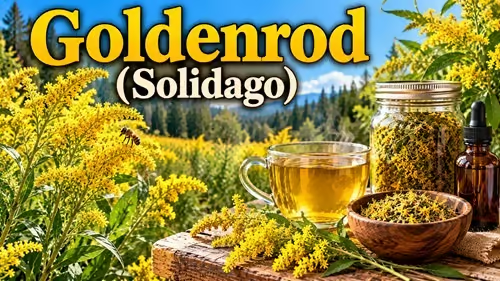
How to Identify, Harvest, Preserve, and Use This Traditional Medicinal Herb
Prepping Communities | Herbal Preparedness, Foraging, and Self-Sufficiency
Introduction: Why Goldenrod Is Worth Learning About
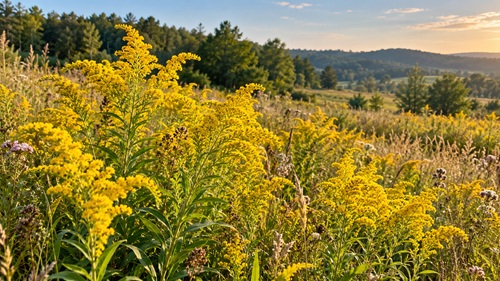
Goldenrod is one of those plants that many people walk past without giving it much thought. Its bright yellow flowers appear in fields, meadows, along roadsides, and at the edges of woodlands, often toward the end of summer when other wildflowers are beginning to disappear. In some places, it grows so abundantly that people consider it little more than a weed. Yet goldenrod has a long history in traditional herbal medicine, and for anyone interested in preparedness and self-sufficiency, it is a plant worth getting to know.
For preppers, learning about goldenrod is about much more than finding another natural remedy. It is an opportunity to develop practical skills that can be used throughout life, including identifying wild plants, understanding their properties, harvesting responsibly, drying and preserving herbs, and preparing traditional herbal products with basic household equipment. These skills become particularly useful when commercial supplies are expensive, unavailable, or difficult to obtain.
Goldenrod has traditionally been associated with urinary tract support, seasonal allergies, respiratory discomfort, and minor skin irritation. It also contains naturally occurring compounds that researchers have studied for their antioxidant, anti-inflammatory, and antimicrobial properties. However, traditional use and laboratory findings do not necessarily establish that a plant can successfully treat a medical condition. Understanding that difference is an important part of responsible herbal preparedness.
There is also something valuable about learning to work with plants that grow naturally in your own environment. Instead of depending entirely on purchased herbal products, a household can develop the knowledge to identify, harvest, dry, and preserve certain plants using relatively simple equipment. Over time, these skills can become part of a broader preparedness plan alongside gardening, food preservation, first aid, and emergency medical supplies.
Goldenrod is particularly useful for learning these skills because many species are relatively common, the flowering plants are easy to notice, and the above-ground portions can be preserved through ordinary drying methods. Once the correct species has been identified, the harvested material can be used to practise preparing herbal teas, tinctures, and infused oils. The objective is not to replace modern medicine with wild plants, but to develop practical knowledge, understand the limitations of traditional remedies, and become more capable of managing useful natural resources.
Understanding Goldenrod and Where It Grows
Goldenrod belongs to the Solidago genus within the Asteraceae family, which also includes daisies, sunflowers, and ragweed. There are more than 100 recognized species of goldenrod, with particularly high diversity in North America. Various species also occur naturally in Europe and Asia, while others have spread beyond their original ranges.
One of the first things to understand is that goldenrod is not a single, uniform medicinal plant. Different species can vary considerably in appearance, growing conditions, chemical composition, and traditional uses. European goldenrod (Solidago virgaurea), for example, has a documented history of traditional medicinal use in Europe, particularly for minor urinary complaints. Other species, including Canada goldenrod (Solidago canadensis) and sweet goldenrod (Solidago odora), have their own histories of traditional use. This distinction matters because information about one species should not automatically be applied to every other goldenrod.
Goldenrod generally prefers open areas where it receives plenty of sunlight. Depending on the species, it may grow in grasslands, prairies, disturbed ground, forest openings, and garden borders. Some species tolerate relatively poor soils and can establish themselves in places where more demanding plants struggle. Climate also plays a role. In temperate regions, goldenrod commonly flowers during late summer and autumn, while flowering times may vary in warmer climates or at different elevations.
For readers outside North America, regional botanical references are particularly important because local species, growing seasons, and harvesting regulations may differ. A prepper collecting wild plants needs to know exactly what is growing locally rather than assuming that all yellow-flowering plants labelled goldenrod have identical properties.
Goldenrod is also valuable to the surrounding ecosystem. Its flowers provide nectar and pollen for bees, butterflies, and other insects, often during a period when many earlier flowering plants have finished blooming. This makes it a useful addition to a self-sufficient garden where pollinator activity contributes to the health of vegetables, fruit trees, and other productive plants.
Some goldenrod species spread aggressively through underground rhizomes. This can be an advantage when establishing a dedicated patch, but it can also create problems if the plants are placed too close to vegetable beds or other areas where their spread is unwanted. Choosing a suitable species and planting location is therefore part of responsible garden management.
For preparedness purposes, goldenrod offers an opportunity to develop familiarity with the natural resources available in a particular region. A plant that grows reliably year after year can become part of a household’s long-term learning and preservation activities, provided it is correctly identified and harvested sustainably.
How to Identify Goldenrod Safely
Correct plant identification is the most important skill in herbal foraging. A mistake made during identification can carry through every later stage of harvesting, drying, storage, and preparation. For this reason, no wild plant should be consumed or used medicinally until its identity has been established with confidence.
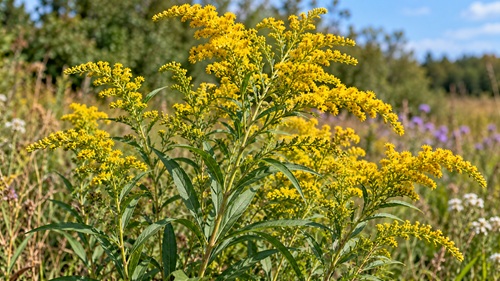
Goldenrod is best recognized by its clusters of small yellow flowers, which often appear in branching, plume-like arrangements near the tops of the stems. Some species produce arching flower clusters, while others have more upright or compact arrangements. The plants generally have elongated leaves, although leaf shape, texture, and arrangement vary considerably among species. The stems can also provide useful identification clues. Some goldenrods have smooth stems, while others are noticeably hairy. Leaf margins may be smooth or toothed, and the size of the leaves can change depending on their position along the stem.
Goldenrod is sometimes blamed for seasonal hay fever because it flowers at approximately the same time as ragweed. In reality, the two plants have different pollination characteristics. Ragweed releases large quantities of lightweight pollen that can travel through the air, while goldenrod is primarily pollinated by insects and produces heavier pollen that is less readily dispersed by wind. This does not mean goldenrod is incapable of causing allergic reactions. It belongs to the same broad plant family as ragweed, and some people may be sensitive to it.
The safest approach is to examine several identifying characteristics rather than relying on the flowers alone. A regional field guide should be used to compare the flower arrangement, leaves, stems, plant height, and habitat. Photographs can help, but they should not replace a reliable identification process. Plant-identification apps may suggest possibilities, yet their results should always be independently checked.
Wild Medicinal Plant Identification & Safety Checklist
Correctly identifying wild plants is one of the most important skills a prepper can learn. Before harvesting goldenrod or any other medicinal plant, take the time to examine its leaves, stems, flowers, growing conditions, and possible lookalikes. This printable worksheet helps you record those observations, check for contamination risks, and verify the plant’s identity before collecting it. It’s a useful addition to your offline preparedness binder and can be reused for other plants as you develop your foraging skills.
Step-by-Step Guide: Identifying Goldenrod in the Field
- Observe the entire plant. Begin by examining its overall height, growth pattern, and location. Record whether it grows as a single stem, in a cluster, or as part of a larger patch.
- Examine the flowers. Look closely at the small yellow flower heads and how they are arranged along the branches. Compare the structure with descriptions of goldenrod species known to grow in your region.
- Inspect the leaves. Check their shape, edges, texture, and arrangement along the stem. These characteristics can help distinguish similar species.
- Check the stem. Determine whether it is smooth, hairy, or otherwise distinctive. Compare the findings with a botanical reference.
- Confirm the habitat and flowering season. Consider whether the plant is growing in conditions typical of the suspected species.
- Verify the identification. Use a reputable regional field guide or consult an experienced botanist or forager before harvesting for consumption or medicinal preparation.
The purpose of this process is to develop confidence through observation and verification. A prepper should be able to explain why a plant has been identified as a particular species rather than simply recognizing that it resembles a photograph. If uncertainty remains, leave the plant where it is. There is no preparedness benefit in collecting something that cannot be identified safely.
Understanding Goldenrod’s Traditional Medicinal Uses
Goldenrod has been used in traditional herbal medicine for a variety of purposes, particularly in preparations intended to support urinary function, ease minor irritation, and provide general herbal care. Some of these uses have attracted scientific attention because goldenrod contains biologically active compounds, including flavonoids, phenolic acids, saponins, and other plant constituents.
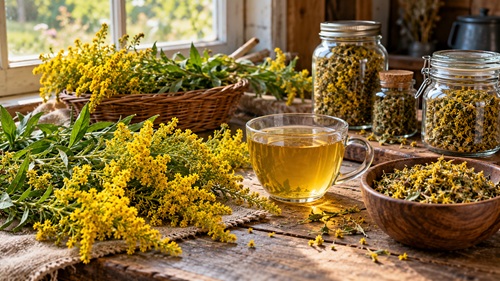
Among the compounds identified in certain goldenrod species are quercetin and kaempferol derivatives. These belong to a group of naturally occurring plant chemicals that have been investigated for antioxidant and anti-inflammatory activity. Laboratory studies have also explored antimicrobial and antifungal properties in some goldenrod extracts. However, laboratory activity does not automatically translate into an effective treatment for people. An extract tested under controlled conditions may contain concentrations that are very different from those found in a homemade tea or tincture.
The human body also absorbs, distributes, and metabolizes plant compounds in ways that cannot be predicted from a simple laboratory experiment. For preppers, understanding this difference helps prevent a common mistake: assuming that because a plant contains potentially beneficial compounds, it can reliably treat a particular illness. Herbal preparedness should be based on informed use, not exaggerated claims.
Urinary Tract and Kidney Support
One of goldenrod’s best-established traditional uses involves urinary tract support. Certain preparations, particularly those made from European goldenrod, have historically been used to encourage urine production and support the flushing of the urinary tract during minor urinary complaints. This traditional use is associated with the plant’s mild diuretic properties. A diuretic increases urine output, which may help explain why goldenrod became associated with urinary health in traditional European herbal practice.
Increasing urine production is not the same as eliminating an infection or improving kidney function in someone with kidney disease. A bacterial urinary tract infection may require antibiotics, and untreated infections can sometimes spread to the kidneys or bloodstream. People with kidney disease, heart failure, fluid restrictions, or conditions requiring careful fluid management should not use goldenrod medicinally without professional guidance. Symptoms such as fever, back or flank pain, vomiting, blood in the urine, or worsening urinary discomfort require prompt medical assessment.
Seasonal Allergies and Respiratory Discomfort
Goldenrod has also been used traditionally for seasonal allergies, runny noses, congestion, and respiratory irritation. Some herbalists describe it as having astringent properties, meaning certain plant constituents may produce a tightening effect on tissues. This traditional reputation has contributed to goldenrod’s use in herbal teas and other preparations intended to ease minor respiratory discomfort.
It is particularly interesting that goldenrod flowers during the same season when ragweed allergies become troublesome in many temperate regions, although this coincidence does not establish that goldenrod treats ragweed allergies. Some goldenrod compounds have demonstrated anti-inflammatory activity in laboratory research, but there is insufficient reliable clinical evidence to conclude that goldenrod tea effectively treats hay fever, colds, or respiratory infections.
Warm herbal tea may provide comfort during a mild illness and contribute to fluid intake, but that should not be confused with treating the underlying cause of an infection. Anyone experiencing breathing difficulties, chest pain, persistent high fever, or worsening respiratory symptoms should seek medical care.
Skin Irritation and Traditional Topical Uses
Goldenrod has a history of external use in herbal preparations intended for minor skin discomfort. Traditional herbalists have prepared washes, compresses, and infused oils using the plant’s flowering tops and leaves. Interest in these applications partly comes from laboratory findings involving certain anti-inflammatory and antimicrobial compounds, although there is not enough reliable clinical evidence to claim that homemade goldenrod preparations can heal infected wounds, cure skin diseases, or provide dependable pain relief.
For someone learning herbal preparation, a goldenrod-infused oil can be useful as an example of how dried plant material is extracted into a carrier oil. If used on intact skin, it should first be tested on a small area for irritation. Homemade herbal oils should not be applied to deep wounds, infected injuries, significant burns, or unexplained skin conditions, which require appropriate first aid or medical assessment.
Digestive Inflammation and Antifungal Claims
Goldenrod is sometimes promoted as a remedy for digestive irritation and fungal infections, including Candida. These claims are often based on traditional use or laboratory research examining extracts from particular goldenrod species. Some experimental studies suggest that certain goldenrod constituents may influence inflammatory processes or inhibit microorganisms under laboratory conditions, but those findings do not establish that ordinary household preparations can treat digestive diseases or fungal infections in people.
For preparedness purposes, these claims should be understood as areas of traditional practice and ongoing research rather than proven medical benefits. A household herbal reference should clearly distinguish between what a plant has historically been used for and what has been demonstrated through reliable clinical studies.
Harvesting Goldenrod for Herbal Preparations
Understanding goldenrod’s traditional uses is only part of the learning process. The next step is knowing when to collect the plant and how to handle it so that the harvested material remains suitable for drying and storage. Even a correctly identified plant can become unusable if it is collected from a contaminated location, harvested in poor condition, or left damp for too long.
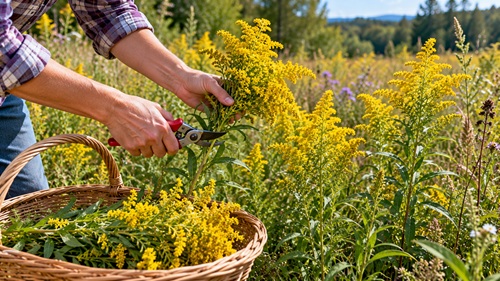
The flowering tops and leaves are the parts most commonly collected for traditional herbal preparations. In many species, the preferred harvesting period occurs when the flower buds are developing or the first flowers are beginning to open. At this stage, the leaves and flowering tops are generally in good condition, and the material can be dried before mature flower heads begin producing large amounts of fluffy seed.
A useful sign to look for is a flower cluster where some of the small yellow flowers have opened while others remain in bud. The leaves should still appear healthy, and the flowering tops should not have begun turning brown or producing noticeable seed fluff. Because flowering patterns vary among species and climates, these signs are more useful than relying on a particular calendar date.
Weather conditions can make a considerable difference. Plants collected during or immediately after heavy rain contain more surface moisture, increasing the work required to dry them properly. Harvesting during dry weather, after morning dew has evaporated, generally makes processing easier. Location is equally important. Goldenrod growing beside busy highways, industrial properties, chemically treated lawns, or contaminated waterways may have been exposed to substances that should not enter homemade herbal preparations.
Responsible harvesting also means leaving enough plants behind. Goldenrod provides valuable late-season nectar and pollen for insects, and removing entire patches can reduce those resources. For people practising long-term self-sufficiency, maintaining a productive natural environment is just as important as collecting useful materials from it.
Step-by-Step Guide: Harvesting Goldenrod
- Confirm the plant’s identity. Before cutting anything, identify the goldenrod species using a reliable regional field guide. Examine its flowers, leaves, stems, and growing conditions.
- Choose a clean harvesting location. Select healthy plants growing away from roads, industrial areas, agricultural spraying, and other potential contamination sources. Confirm that harvesting is permitted.
- Wait for suitable conditions. Choose a dry day when the plants are free from rainwater and heavy dew.
- Inspect the plant material. Look for healthy leaves and flowering tops without obvious disease, mould, or extensive insect damage. Ideally, some flowers should be opening while others remain in bud.
- Cut the upper flowering stems. Use clean scissors or pruning shears to remove a modest portion of the upper plant. Avoid pulling up the roots.
- Leave plenty of plants behind. Preserve enough flowering stems for pollinators and allow some plants to produce seeds.
- Transport the harvest carefully. Place the material loosely in a breathable basket or bag rather than compressing it into a sealed plastic container.
Once the harvest has been brought home, it should be inspected and processed as soon as practical. Fresh herbs left in a warm, damp pile can deteriorate quickly, especially in humid conditions. Harvesting only what can reasonably be dried and stored is a better approach than collecting large quantities that may eventually be wasted.
For preppers, this is an important lesson in resource management. A successful harvest is not measured by how much plant material is collected, but by how much can be safely preserved and used.
Drying Goldenrod for Long-Term Storage
Drying is one of the simplest and most useful methods of preserving herbs. Properly dried plant material can be stored without refrigeration, takes up relatively little space, and can remain available after the growing season has ended. These advantages make herb drying particularly useful for households developing emergency supplies or living in areas where seasonal access to fresh plants is limited.
The main challenge is removing moisture thoroughly without exposing the herb to excessive heat, direct sunlight, or contamination. Plant material that remains damp can develop mould, while poorly ventilated drying areas may allow moisture to accumulate. Excessive heat can also affect the aroma, colour, and chemical composition of the finished herb.
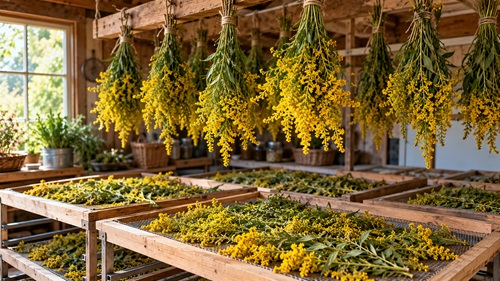
Goldenrod can be dried by hanging small bundles or spreading the leaves and flowering tops on clean drying screens. In dry climates, natural airflow may be sufficient. In humid regions, a food dehydrator operating at a suitable low temperature can provide more consistent results.
The drying process should not be rushed. Thick stems may retain moisture after the leaves appear dry, so checking the condition of the material before storage is essential. For example, goldenrod drying in a humid coastal environment may require considerably more time or mechanical airflow than the same plant harvested in a dry inland climate.
Where natural air drying is difficult, a dehydrator set to a low herb-drying temperature, often around 35–40°C (95–104°F), can help remove moisture more consistently. The appropriate setting depends on the equipment and the condition of the plant material. The objective is to remove moisture without cooking or scorching the herbs.
Step-by-Step Guide: Drying and Storing Goldenrod
- Sort the harvested material. Remove damaged leaves, insects, unwanted debris, and any plant material that appears diseased. If washing is necessary, drain thoroughly and remove surface moisture.
- Prepare the flowering tops and leaves. Separate useful material from thick stems and arrange it so air can circulate freely.
- Choose a drying method. Spread the herbs in a thin layer on a clean drying screen or hang small bundles in a shaded, well-ventilated location.
- Maintain suitable conditions. Keep the drying area away from damp surfaces, direct sunlight, and excessive heat. In humid conditions, consider using a food dehydrator at a low setting appropriate for delicate herbs.
- Check the drying progress. Examine the material regularly. Leaves should become brittle, and smaller stems should snap rather than bend.
- Confirm that the herbs are completely dry. Do not place material into airtight storage while moisture remains.
- Transfer the dried herbs into containers. Use clean, dry, airtight jars or other suitable containers that protect the material from humidity.
- Label the containers. Record the botanical species, harvesting location, plant parts, and drying date. This information is particularly useful when storing several different herbs or preparing multiple batches throughout the growing season.
9. Store and inspect. Keep the containers in a cool, dark, dry location. Check periodically for moisture, mould, or unusual odours. If the herbs show signs of contamination or spoilage, discard them rather than attempting to salvage the material.
A practical household approach is to review stored herbs each year and replace older material when fresh harvests become available. Dried herbs do not remain at their original quality indefinitely, and storage conditions can vary considerably between households. For ordinary home herbal storage, planning to use or replace dried goldenrod within approximately one year is a reasonable quality-management practice rather than a guaranteed expiration date.
Proper storage should protect the herbs from moisture, heat, direct sunlight, and insects while allowing the household to inspect and rotate supplies without difficulty. Glass jars with secure lids are useful because they make it easier to examine the contents without opening the container. Whatever storage method is chosen, the plant material must be completely dry before being sealed.
A household that maintains labelled, properly dried herbs has also developed a system that can be applied to other plants. The same principles of cleanliness, moisture control, labelling, and regular inspection apply to many useful herbs. Once these practices become routine, maintaining a small collection of dried plants becomes considerably easier.
Keeping records of harvesting and drying conditions can make this process more reliable from one season to the next. For example, noting how long a particular batch took to dry, whether a dehydrator was needed, and how well the material stored can help identify improvements for future harvests. These records become especially valuable when building an offline herbal reference collection.
Preparing Goldenrod Tea
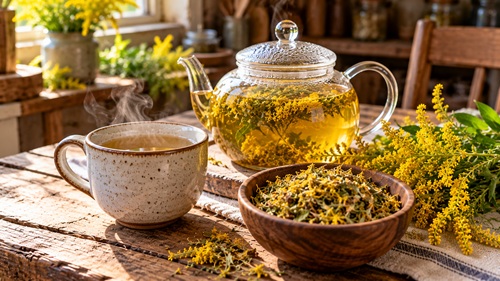
Goldenrod tea is one of the simplest traditional herbal preparations and a useful starting point for anyone learning how to work with dried plants. Unlike tinctures or infused oils, which require additional ingredients and longer preparation periods, herbal tea can be prepared with little more than hot water, correctly identified plant material, and a suitable container.
Making herbal tea is also an opportunity to understand how plant compounds are extracted. When hot water comes into contact with leaves and flowers, some water-soluble constituents move from the plant material into the surrounding liquid. The amount extracted depends on several factors, including the plant species, the quantity used, how finely the material is cut, water temperature, and steeping time.
Goldenrod tea has traditionally been associated with urinary tract support, mild respiratory discomfort, and seasonal allergies. Although certain goldenrod compounds have attracted scientific interest, reliable clinical evidence for treating these conditions remains limited. A homemade infusion also cannot be assumed to have a standardized medicinal strength because the concentration of plant compounds varies considerably.
The flavour of goldenrod tea differs between species. Some produce a mild, slightly grassy infusion, while others have a more noticeable herbal aroma. Sweet goldenrod (Solidago odora), for example, is known for its distinctive anise-like fragrance. The flavour may also change depending on whether fresh or dried plant material is used and how long the tea is allowed to steep.
For preppers, the practical advantage of learning to prepare herbal tea is that the process requires very little specialized equipment. A household with properly dried herbs, clean drinking water, and a means of heating that water can prepare a traditional infusion without relying on commercially packaged tea products. The same basic technique can be applied to other suitable herbs once their identification, preparation methods, and safety considerations have been researched.
Step-by-Step Guide: Making Goldenrod Tea
1. Gather the ingredients and equipment. You will need correctly identified fresh or dried goldenrod leaves and flowering tops, clean drinking water, a cup or teapot, and a strainer.
2. Measure the plant material. A commonly described traditional preparation uses approximately one teaspoon of dried goldenrod or one tablespoon of fresh material per cup of water. These are preparation proportions, not medically established treatment doses.
3. Prepare the herb. If using fresh goldenrod, inspect it carefully and rinse away any dirt or insects. Chop or tear the leaves and flowering tops into smaller pieces. Dried goldenrod can be gently crumbled before use.
4. Heat the water. Bring clean drinking water to a boil. If using water from an emergency supply, ensure it has been properly treated and is safe for consumption.
5. Combine the ingredients. Place the goldenrod in a clean cup or teapot and pour the hot water over the plant material.
6. Cover and steep. Allow the infusion to steep for approximately 10–15 minutes. Covering the container helps retain heat and reduces the loss of volatile aromatic compounds.
7. Strain the tea. Remove the plant material using a clean strainer or suitable cloth. Allow the liquid to cool to a comfortable temperature.
8. Evaluate before drinking. Consider possible allergies, medication interactions, and existing medical conditions. People with kidney or heart conditions, fluid restrictions, or other relevant health concerns should seek professional advice before using goldenrod internally.
One common mistake when preparing herbal tea is assuming that a stronger infusion must be more beneficial. Increasing the amount of plant material or extending the steeping time changes the concentration of extracted compounds, but it does not necessarily improve effectiveness or safety. In some cases, it may simply produce a more bitter beverage.
Another consideration is water quality. During an emergency, the availability of dried herbs is of little value if the household lacks safe drinking water. Herbal preparations should always be made with potable water, and boiling alone does not remove chemical contaminants. If a water supply has been affected by industrial pollution, fuel contamination, or other hazardous substances, boiling may not make it safe.
Freshly prepared herbal tea should generally be consumed promptly rather than left standing for extended periods at room temperature. If it is prepared in advance, refrigerate it promptly and use it within a short period. Unlike properly dried herbs, brewed tea contains water and can support microbial growth if handled or stored improperly.
From a preparedness perspective, learning to prepare herbal tea is a relatively simple skill that can be practised under ordinary conditions. The experience helps develop familiarity with plant handling, extraction methods, cleanliness, and the limitations of traditional preparations.
Making a Goldenrod Tincture
Tinctures are another traditional method of preparing and preserving herbs. Unlike tea, which relies on water to extract plant constituents, tinctures commonly use alcohol as a solvent. Alcohol can dissolve certain compounds that are not extracted as readily by water, while also helping preserve the finished preparation.
This makes tinctures interesting from a preparedness standpoint because they are compact, require relatively little storage space, and can remain stable for extended periods when properly prepared. However, their composition and strength depend on the plant species, the part harvested, the moisture content of the material, the alcohol concentration, and the ratio of herbs to solvent.
A tincture should not be considered interchangeable with herbal tea. The two preparations may contain different concentrations and combinations of plant constituents, even when made from the same herb. A preparation that extracts certain compounds efficiently may also concentrate substances that are undesirable for some individuals.
Traditional tincture making often uses what herbalists call the folk method. This involves placing plant material in a container, covering it with an appropriate solvent, and allowing the mixture to extract over several weeks. Although this method is relatively simple, it does not produce a standardized medicinal concentration.
For preppers, the value of learning tincture making is understanding the extraction and preservation process. It also teaches the importance of recording ingredients, proportions, preparation dates, and storage conditions. Without these records, it becomes difficult to compare batches or determine exactly what a stored preparation contains.
Step-by-Step Guide: Making a Traditional Goldenrod Tincture
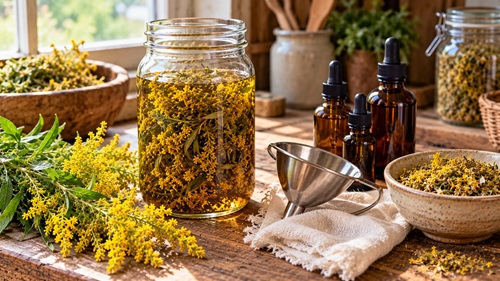
1. Gather the equipment. You will need correctly identified dried goldenrod leaves and flowering tops, a clean glass jar with a tight-fitting lid, suitable food-grade alcohol, a strainer or clean cloth, a funnel, and labelled glass storage bottles.
2. Prepare the plant material. Inspect the dried goldenrod to ensure it is free from moisture, mould, and contamination. Chop or crumble the leaves and flowering tops into smaller pieces to increase their surface area.
3. Fill the jar. Place the prepared goldenrod loosely into the clean jar, leaving enough space for the solvent to circulate around the plant material.
4. Add the alcohol. Pour suitable food-grade alcohol over the herbs until they are completely submerged. Dried plant material may absorb some liquid, so additional alcohol may be needed to keep everything covered. Record the alcohol concentration and quantities used.
5. Seal and label the jar. Record the botanical species, plant parts, solvent, preparation date, and any measured proportions.
6. Allow the mixture to extract. Store the sealed jar in a cool, dark location for approximately four to six weeks. Gently shake or rotate it every few days to redistribute the contents.
7. Check the liquid level. During extraction, ensure the plant material remains submerged. Exposure to air and moisture can affect the quality of the preparation.
8. Strain the tincture. When the extraction period is complete, pour the mixture through clean cloth or an appropriate filter to separate the liquid from the spent plant material.
9. Allow sediment to settle. If necessary, let the filtered liquid stand in a clean, covered container before carefully transferring the clearer portion into storage bottles.
10. Bottle and store. Use clean glass bottles, preferably protected from light, and label them with the preparation date, ingredients, solvent, and any known proportions. Store away from heat and direct sunlight.
One of the reasons tinctures became popular in traditional herbal practice is their potential for extended storage. Alcohol helps inhibit the growth of many microorganisms, but it does not guarantee that every homemade tincture will remain safe or chemically stable indefinitely. The actual storage life depends on several factors, including alcohol concentration, residual plant moisture, cleanliness, and storage conditions.
The alcohol concentration is particularly important. When fresh plant material is used, moisture from the plant can dilute the solvent. Even dried herbs contain some residual moisture, and different preparation methods can produce different final alcohol concentrations. A tincture prepared with insufficient alcohol may not have the preservation characteristics that the person making it expects.
The cleanliness of the equipment and the quality of the plant material also matter. Contaminated herbs, poorly cleaned containers, and unsuitable storage conditions can affect the finished preparation. Exposure to heat and light may also contribute to changes in some plant constituents over time.
For these reasons, the shelf life of a homemade tincture cannot be guaranteed without controlled preparation and appropriate testing. A preparation that looks and smells normal is not necessarily proof of microbial safety or chemical stability. This is especially important when storing homemade products as part of a long-term emergency supply.
A household maintaining tinctures for preparedness should record the ingredients, alcohol concentration, preparation date, and storage conditions. Containers should be inspected periodically, and any preparation showing unexpected changes, contamination, or damaged seals should be discarded.
It is also important to recognize that tincture strength cannot be determined by appearance alone. A darker liquid does not necessarily indicate a more effective preparation, and two batches made with different quantities of plant material may have substantially different concentrations.
Universal dosing recommendations should not be applied to homemade goldenrod tinctures. Internal medicinal use should be discussed with a qualified healthcare professional familiar with herbal preparations, particularly when prescription medications or existing health conditions are involved.
Alcohol-based tinctures are not appropriate for everyone. Children, pregnant or breastfeeding individuals, people avoiding alcohol, and those with certain medical conditions require particular caution. Only food-grade alcohol intended for consumption should ever be used in preparations that might be taken internally. Industrial alcohol, rubbing alcohol, denatured alcohol, and other non-food solvents must never be substituted.
For households interested in long-term preparedness, tincture making is best approached as a practical preservation skill that requires careful documentation and an understanding of its limitations. The goal is to learn a repeatable process rather than produce an unverified substitute for prescription medicine.
Making Goldenrod-Infused Oil
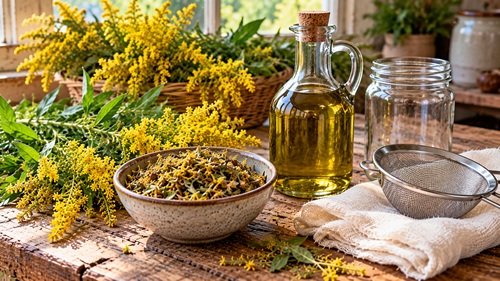
Goldenrod-infused oil is another traditional herbal preparation, but it differs considerably from both tea and tinctures. Instead of using water or alcohol, an infused oil uses a carrier oil, such as olive oil, to extract certain oil-soluble constituents from the plant.
Herbal oils have traditionally been used in skin-care preparations, massage oils, and homemade salves. Goldenrod has a history of topical use for minor skin discomfort, although reliable clinical evidence supporting specific medicinal benefits remains limited.
For preppers, learning to prepare infused oils can be useful because the same general process can be applied to several other herbs commonly grown or harvested for traditional skin-care preparations. It also teaches important lessons about moisture control, cleanliness, and preventing spoilage.
One of the most important differences between an infused oil and a tincture is that oil does not provide the same preservation environment as alcohol. Fresh plant material contains water, and introducing moisture into an oil preparation can encourage microbial growth. For this reason, thoroughly dried goldenrod is the better choice for beginners.
Olive oil is a practical carrier oil because it is widely available in many regions and generally has reasonable storage stability when protected from excessive heat and light. Other suitable cosmetic carrier oils may also be used, although their shelf lives and properties differ.
The preparation process is relatively straightforward, but attention to cleanliness and dryness is essential. An infused oil that develops an unusual smell, visible contamination, or signs of moisture should be discarded.
Herbal Preparation & Storage Safety Worksheet
Making herbal preparations is one thing, but knowing how to store them safely is just as important. Teas, tinctures, and infused oils all have different storage requirements, and mistakes involving moisture, contamination, or improper storage can make them unsafe. This printable worksheet helps you record your ingredients, preparation methods, storage conditions, and inspection results. It’s a useful addition to your preparedness binder and can be reused whenever you prepare other herbs.
Step-by-Step Guide: Preparing Goldenrod for an Infused Oil
1. Identify the goldenrod. Confirm the botanical species before collecting or purchasing plant material. Only use plants from clean, uncontaminated sources.
2. Select suitable plant material. Choose healthy leaves and flowering tops. Avoid damaged, mouldy, or questionable material.
3. Dry the herbs thoroughly. Remove moisture using an appropriate herb-drying method. Commercially dried herbs with controlled moisture levels offer greater consistency than freshly harvested material.
4. Choose a suitable carrier oil. Olive oil or another cosmetic-grade carrier oil may be appropriate for traditional topical preparations. Check its freshness and storage requirements before use.
5. Select a safe preparation method. Follow a validated herb-infusion procedure that specifies the type of plant material, moisture control, processing conditions, and storage requirements. Do not assume that leaving homemade goldenrod submerged in oil at room temperature for several weeks produces a shelf-stable product.
6. Label the preparation. Record the goldenrod species, carrier oil, preparation date, and method used.
7. Follow the appropriate storage instructions. Do not store homemade herbal oils at room temperature for extended periods unless the preparation method has been validated for that purpose. Refrigeration requirements and usable storage periods depend on the method.
8. Inspect before use. Discard products showing signs of contamination, moisture, or rancidity. Remember that dangerous microbial contamination is not always visible or detectable by smell.
Goldenrod-infused oil should be regarded as a traditional topical preparation rather than a sterile medical product. It should not be applied to open wounds, infected skin, serious burns, or unexplained skin conditions. Before applying it to intact skin, test a small area for irritation.
The shelf life of an herbal infused oil depends largely on the freshness and stability of the carrier oil. Oils gradually oxidize when exposed to air, heat, and light, eventually developing unpleasant odours and losing quality. Some carrier oils deteriorate more quickly than others, so choosing a reasonably stable oil and storing it correctly are important parts of the preparation process.
Moisture is another concern. Water introduced through inadequately dried herbs, damp utensils, or wet storage containers can create conditions that allow microbial contamination. Because homemade infused oils are not normally subjected to laboratory testing, their safety and storage life cannot be guaranteed.
For this reason, preparing modest quantities is generally more sensible than producing large batches intended to last for several years. A household should use fresh carrier oil, thoroughly dried herbs, and clean, dry equipment, then record the preparation date and inspect the finished product before use.
An oil that develops a rancid smell, visible mould, unusual cloudiness, or signs of water contamination should be discarded. However, the absence of these warning signs does not guarantee that the product is free from harmful microorganisms.
For preparedness purposes, the greatest benefit is learning how to prepare and preserve a simple topical herbal product while understanding the importance of cleanliness, proper storage, and realistic expectations.
Keeping Records of Your Herbal Preparations
One of the easiest mistakes when learning herbal preparation is failing to record what was done. A household may collect goldenrod during one growing season, dry several batches, and prepare a tincture or infused oil, only to discover months later that nobody remembers exactly when the material was harvested or which species was used.
This becomes particularly important when several different herbs are being stored together. Without accurate labels and preparation records, containers can become difficult to identify, and the reliability of the household’s herbal supplies begins to decline.
A simple herbal record should identify the plant by its confirmed botanical name, record where and when it was harvested, describe how it was dried, and document any preparations made from it. For tinctures and infused oils, recording the ingredients, solvent or carrier oil, approximate proportions, and preparation dates is especially useful.
These records help identify which methods worked well and which need improvement. For example, a household may discover that herbs harvested during humid weather require mechanical drying, or that certain storage containers provide better protection against moisture.
Keeping this information in a printed binder also provides an offline reference that remains available during power outages, internet disruptions, or other emergencies. The value of that reference increases as the household gains practical experience and adds observations from different growing seasons.
The accompanying Goldenrod Preparedness Field Worksheet is intended to help readers document plant identification, harvesting conditions, drying methods, storage information, preparation batches, and important safety checks. Completing it shortly after each activity is more reliable than trying to reconstruct the details weeks or months later.
A completed worksheet can be filed with other herbal reference materials, allowing household members to review what was collected, how it was processed, and whether the stored material remains suitable for use. Over time, these records become a practical resource for improving future harvesting and preservation methods.
Important Safety Considerations When Using Goldenrod
Natural plants contain chemical compounds capable of affecting the body. Some may have beneficial properties under particular conditions, while others can cause allergic reactions, interact with medications, or worsen existing medical problems. The fact that a plant grows naturally does not automatically make it safe for everyone.
Goldenrod belongs to the Asteraceae family, which includes ragweed, daisies, chrysanthemums, and several other plants associated with allergic reactions. People with known sensitivities to this family should exercise particular caution when handling or using goldenrod. Skin contact may cause irritation in susceptible individuals, while internal preparations may present additional concerns.
Pregnant or breastfeeding individuals should avoid medicinal use unless advised otherwise by a qualified healthcare professional because reliable safety information is insufficient. The same caution applies when considering herbal preparations for children, whose responses to plant compounds may differ from those of adults.
Goldenrod’s traditional association with increased urine production also creates concerns for people with kidney disease, heart failure, fluid restrictions, or conditions requiring careful management of fluid balance. Anyone taking diuretic medications or other prescription drugs should seek professional advice before using goldenrod internally. Increasing urine production is not necessarily beneficial for someone whose kidneys or cardiovascular system are already under strain, and additional fluid loss can create problems in certain medical circumstances.
The strength and composition of homemade herbal preparations can also vary considerably. A tea made from one goldenrod species may contain different concentrations of plant compounds than a tincture prepared from another. Growing conditions, harvesting time, drying methods, and extraction techniques all influence the finished product. This makes it difficult to predict how a particular preparation will affect an individual, especially when it is taken regularly or combined with other herbs and medications.
During emergencies, people may be tempted to rely more heavily on traditional remedies because access to healthcare is limited. This is precisely when understanding the limitations of herbal medicine becomes most important. A serious infection or injury does not become less dangerous simply because professional treatment is difficult to obtain. A urinary infection that spreads to the kidneys, for example, can become life-threatening without appropriate treatment, regardless of whether someone is drinking herbal tea or using other traditional preparations.
A well-prepared household should maintain appropriate first-aid supplies, reliable medical references, necessary prescription medications, and a plan for obtaining professional assistance whenever possible. Herbal preparations may form part of a broader self-sufficiency education, but they should not replace these essential resources. The most useful approach is to understand where traditional herbal practices may fit into everyday wellness while recognizing when a condition requires established medical treatment.
For preppers, this distinction is particularly important because emergency preparedness is ultimately about reducing risk. Learning how to identify and preserve goldenrod can improve self-sufficiency, but using an unfamiliar preparation without understanding its potential effects can introduce new problems. The goal should always be to increase household capability without creating unnecessary health risks.
Growing Goldenrod in a Preparedness Garden
Although goldenrod can be harvested from the wild in many regions, growing it in a household garden offers several advantages. It provides a more predictable source of plant material, makes identification easier once the species has been established, and reduces the need to collect from areas where contamination or harvesting restrictions may be a concern. For households interested in long-term self-sufficiency, growing useful herbs is generally more reliable than depending entirely on wild harvesting.
Goldenrod is a perennial in many temperate climates, meaning established plants can return year after year. Depending on the species, it may grow successfully in ordinary garden soil with relatively little maintenance once established. Some varieties tolerate dry conditions and relatively poor soils, while others prefer more consistent moisture. Understanding the growing requirements of the particular species is important, especially for readers living in regions with different climates and growing seasons.
Choosing a species suited to the local environment should be the first consideration. A goldenrod native to one region may not be appropriate for another, particularly where introduced species could become invasive or compete with native vegetation. Gardeners should consult regional horticultural guidance before planting. Where possible, selecting a locally native species helps support the surrounding ecosystem while reducing the risk of introducing an aggressive plant.
Sunlight is another consideration. Many goldenrod species grow best in full sun, although some tolerate partial shade. Soil requirements vary, but established plants are often reasonably adaptable. Good drainage is beneficial for many species, particularly where prolonged wet conditions could damage the roots. In regions with heavy rainfall, raised beds or naturally well-drained areas may provide better growing conditions.
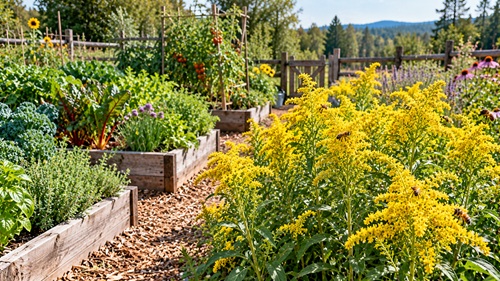
Some goldenrod species spread through underground rhizomes and can gradually occupy larger areas. This can be useful when establishing a dedicated patch, but it may become a problem if the plants spread into vegetable beds or other cultivated areas. A managed garden border, designated pollinator bed, or naturalized section of a property may be more suitable than planting goldenrod among crops that require frequent cultivation.
Goldenrod also provides ecological benefits that extend beyond its traditional herbal uses. Its late-season flowers support bees, butterflies, and other pollinating insects at a time when nectar sources may be declining. Maintaining a healthy population of pollinators contributes to the overall productivity of a garden, particularly where fruit trees, berries, and insect-pollinated vegetables are grown.
A household does not need a large property to grow goldenrod. Depending on the species and available space, a small garden bed, a dedicated pollinator area, or a suitable large container may provide enough plant material for learning harvesting and preservation techniques. The objective is not necessarily to produce large quantities of herbs, but to establish a manageable supply that can be harvested responsibly each year.
For example, someone with a modest backyard could establish several plants along the edge of a vegetable garden, provided the species is not likely to spread aggressively into cultivated beds. On a larger homestead, goldenrod could be incorporated into a managed wildflower strip or pollinator habitat. In either situation, the growing area should be accessible enough to monitor plant health, flowering, and spreading.
Medicinal Herb Garden Planning Worksheet
Growing your own medicinal herbs is a good way to become more self-sufficient, but a little planning makes a big difference. Different herbs have different needs when it comes to sunlight, soil, water, and growing space. This printable worksheet helps you plan your herbal garden, choose suitable plants for your climate, track planting and harvesting dates, and manage spreading plants while protecting pollinators. You can use it for goldenrod or other herbs you’re growing and keep the completed records in your preparedness binder.
Step-by-Step Guide: Establishing a Goldenrod Patch
1. Choose a suitable species. Research goldenrod varieties that grow naturally in your region. Consider climate, mature plant size, soil requirements, and whether the species is known to spread aggressively.
2. Select the growing location. Choose an area with appropriate sunlight and drainage. Allow enough room for mature plants without crowding nearby vegetables or other herbs.
3. Prepare the soil. Remove competing weeds and loosen compacted soil where necessary. Most suitable goldenrod species do not require heavily fertilized soil, but the requirements of the chosen species should guide preparation.
4. Plant seeds or nursery-grown plants. Follow species-specific planting recommendations. Some goldenrod seeds benefit from a period of cold, moist conditions before germination, while established nursery plants can often be transplanted during suitable growing weather.
5. Water during establishment. Keep the soil appropriately moist while young plants develop roots. Once established, watering requirements will depend on the species and local climate.
6. Monitor spreading. Inspect the growing area periodically for unwanted shoots or rhizome expansion. Divide or relocate plants where appropriate, and prevent aggressive varieties from spreading into other garden beds.
7. Observe flowering and plant health. Record when flower buds appear, when flowering begins, and how the plants respond to seasonal conditions.
8. Harvest selectively. Once plants are well established, collect modest quantities of healthy flowering tops and leaves while leaving plenty of flowers for pollinators.
9. Maintain the patch after flowering. Allow some plants to produce seeds and provide habitat for beneficial insects. Remove unwanted growth only where necessary to manage spreading.
10. Record the results. Note which species performed best, how much material was harvested, and whether the growing location needs improvement before the next season.
Once established, a goldenrod patch can become a useful part of a household’s ongoing preparedness activities. Each growing season provides an opportunity to improve plant identification, observe changes in flowering times, practise harvesting, and refine preservation techniques. Recording these observations also helps determine which growing conditions produce healthy plants and whether adjustments are needed.
One mistake gardeners sometimes make is harvesting too much from newly established plants. Allowing goldenrod to develop a strong root system before taking significant quantities of material helps maintain healthier plants for future seasons. It also ensures that the garden continues providing food for pollinators, which is particularly important late in the growing season.
For preppers, the greatest advantage of growing goldenrod is predictability. A managed patch provides an opportunity to practise herbal skills under controlled conditions rather than waiting until an emergency to locate and identify suitable plants. It also encourages the development of gardening knowledge that can be applied to other useful perennial herbs.
Building a Practical Herbal Preparedness System
Learning about a single plant is useful, but the greater preparedness benefit comes from developing a system for identifying, growing, harvesting, preserving, and documenting useful herbs. Without that system, even a collection of carefully dried plants can become difficult to manage over time. Containers may lose their labels, stored herbs may deteriorate, and preparation methods may be forgotten between growing seasons.
A household might begin with goldenrod and gradually expand its knowledge to include other regionally appropriate herbs. Each plant should be researched individually because identification requirements, traditional uses, safety considerations, and preparation methods can differ considerably. Understanding one plant does not automatically make another safe to harvest or use.
The first part of a reliable herbal preparedness system is accurate identification. A printed regional field guide provides information that remains available without electricity or internet access. Where possible, botanical descriptions should be supported by clear photographs or illustrations showing the leaves, stems, flowers, and other identifying characteristics. Keeping notes about the plants found locally can make these references more useful over time.
The second part involves harvesting and preservation. Clean harvesting equipment, drying screens, airtight storage containers, labels, and a suitable storage location are relatively simple resources that can support several different herbal activities. Maintaining these supplies together makes seasonal harvesting easier and reduces the chance of losing equipment or using unsuitable containers.
Documentation is equally important. A household should be able to identify what is stored in each container, when it was collected, how it was processed, and whether it remains suitable for use. This becomes particularly valuable when multiple family members participate in harvesting or when herbs are stored for extended periods. Accurate records also make it easier to compare results and improve preparation methods from one year to the next.
A practical herbal preparedness binder can contain plant identification records, harvesting notes, drying observations, preparation instructions, storage inventories, and safety information. It should also identify important medical limitations, including situations where professional treatment is necessary. Printed records are especially useful in emergencies because they do not depend on internet access, electronic devices, or batteries.
The purpose of this system is to preserve both the plant material and the knowledge required to handle it responsibly. A jar of dried goldenrod has limited value if nobody remembers which species it contains, whether it was harvested from a safe location, or how long it has been stored. Keeping the plant and its preparation history together makes the stored resource more useful and reduces the chance of mistakes.
There is also an important distinction between keeping traditional herbal preparations and maintaining an emergency medical kit. A household should continue to prioritize appropriate first-aid supplies, essential medications, wound-care materials, and reliable medical guidance. Herbal knowledge can complement these preparations, but it should not be treated as a replacement for proven medical care.
For families and preparedness groups, practising these skills together can help ensure that knowledge is not limited to one person. Teaching another household member how to identify goldenrod, inspect dried herbs, or complete a preparation record strengthens the group’s ability to maintain its resources over time. This is particularly useful when illness, travel, or other circumstances prevent the person who normally manages the supplies from being available.
A good preparedness system should also remain manageable. There is little benefit in collecting dozens of herbs if the household lacks the time or knowledge to identify, preserve, and monitor them properly. Beginning with a few well-understood plants and gradually expanding the collection is generally a more reliable approach.
Using the Goldenrod Preparedness Field Worksheet
Keeping accurate records is one of the simplest ways to turn herbal knowledge into a practical preparedness skill. A person may remember where goldenrod grows or how to prepare an infusion, but details such as harvesting dates, drying conditions, plant identification, and storage methods are easily forgotten between seasons.
The Goldenrod Preparedness Field Worksheet is intended to help readers record those details as they practise the skills covered in this lesson. It provides a place to document plant identification, harvesting conditions, drying methods, storage information, and preparation records. Rather than simply reading about herbal preparation, readers can use the worksheet to build a record of their own experience.
The worksheet is particularly useful when building an offline herbal reference binder. Rather than relying entirely on memory or information stored online, a household can maintain a written record of what was actually collected and prepared. This helps distinguish firsthand experience from information gathered through books, websites, or other sources.
Readers should complete the identification and harvesting portions while the information is still fresh. Drying and storage details can be added once the material has been processed, while preparation records should be completed whenever a new batch of herbs, tincture, or infused oil is prepared.
Over time, these records can reveal useful patterns. For example, a household may discover that goldenrod harvested during humid weather requires longer drying times or that certain storage locations maintain herb quality better than others. This information can be used to improve future harvesting and preservation practices.
The worksheet should be kept with the household’s other preparedness documents so it remains available during emergencies, power outages, or internet disruptions. Keeping completed worksheets from several growing seasons also provides a useful history of what has worked under local conditions.
The three-page worksheet covers plant identification, harvesting observations, drying and storage records, preparation details, and safety considerations. It is intended to support the lesson rather than repeat the article.
Download the Goldenrod Preparedness Field Worksheet (PDF)
Preparedness Action Plan
The best way to develop useful herbal skills is to practise them gradually, beginning with accurate plant identification and progressing toward harvesting, preservation, and preparation. There is no need to collect large quantities of goldenrod or prepare several different herbal products immediately. A small, carefully managed project can provide more useful experience than an ambitious harvest that becomes difficult to process.
Begin by researching which goldenrod species grow in your region. Obtain a reliable field guide and become familiar with the identifying characteristics of the plants you are likely to encounter. If possible, observe goldenrod at several stages of growth, from early leaf development through flowering and seed production. This helps build confidence in recognizing the plant throughout its growing season.
During the flowering period, locate a suitable patch growing in a clean environment where harvesting is permitted. Practise identifying the species before collecting anything. Record the location, growing conditions, and distinguishing characteristics in your preparedness worksheet. If identification remains uncertain, seek help from an experienced botanist or forager rather than taking unnecessary risks.
Once the plant has been positively identified, collect a modest quantity of healthy flowering tops and leaves. Choose a dry day and avoid removing too much material from any single patch. The goal of the first harvest should be to learn proper handling and preservation rather than to build a large supply.
After harvesting, practise drying the plant material using a suitable method for your climate. Pay attention to airflow, humidity, and drying time. Check the herbs regularly until they are completely dry, then transfer them into clean, airtight containers. Record the drying method, date, and storage location so the results can be compared with future harvests.
When the dried material is properly stored, review the preparation methods covered in this lesson. Learn how a water infusion differs from an alcohol tincture and how an infused oil extracts different plant constituents. Practise only those preparations that are appropriate for your circumstances, and do not assume that a homemade extract has a standardized medicinal strength.
If space is available, consider establishing a small goldenrod patch using a species suitable for your region. Growing the plant at home provides an opportunity to observe its development throughout the season and reduces dependence on wild harvesting. Manage spreading carefully and leave enough flowers to support pollinating insects.
As the household becomes more familiar with goldenrod, begin developing a small herbal reference collection. Include identification information, harvesting records, drying observations, preparation notes, and relevant safety guidance. Printed records are especially useful because they remain accessible when electronic devices or internet connections are unavailable.
Finally, review the household’s existing medical preparedness. Make sure appropriate first-aid supplies, essential medications, and reliable medical references are available. Identify how professional medical assistance would be obtained during an emergency, particularly for infections, serious injuries, and conditions that cannot be safely managed at home.
The objective is to finish the growing season with more than a few jars of dried herbs. A successful preparedness project should leave the household with better plant-identification skills, practical preservation experience, accurate records, and a clearer understanding of how traditional herbal preparations fit into a broader emergency plan.
Skills Learned
By completing this lesson, readers should have developed a practical understanding of goldenrod and its place in traditional herbal medicine. They should recognize that the Solidago genus includes numerous species and understand why identifying the correct plant is essential before harvesting or preparing herbal products.
Readers should also understand the differences between goldenrod’s traditional medicinal reputation and the scientific evidence supporting particular uses. Learning to distinguish laboratory findings from established medical treatments is an important skill when evaluating any herbal remedy, especially during emergencies when misleading information can lead to poor decisions.
The harvesting and preservation sections provide the knowledge needed to recognize suitable plant material, select safer harvesting locations, collect responsibly, and dry herbs without introducing unnecessary moisture or contamination. These skills are transferable to many other plants, provided each species is independently researched and identified.
The preparation sections explain how herbal teas, tinctures, and infused oils differ, including the basic equipment, extraction methods, storage considerations, and safety limitations associated with each. Readers should understand that different preparation methods extract different plant compounds and that homemade products cannot be assumed to have consistent medicinal concentrations.
Growing goldenrod provides an additional opportunity to develop practical gardening skills. Readers should now understand how to select an appropriate species, establish a manageable growing area, monitor plant development, control unwanted spreading, and harvest without removing essential resources from pollinators.
The lesson also reinforces the importance of documentation. Recording plant identification, harvesting conditions, drying methods, preparation dates, and storage information helps preserve knowledge and allows households to improve their methods over time.
Most importantly, readers should recognize that preparedness is not simply about collecting supplies. It is about developing the knowledge and practical ability to use resources responsibly. Learning to identify, grow, harvest, preserve, and document goldenrod is one small but useful part of becoming more self-sufficient.
The same approach can be applied to other herbs, edible plants, and natural resources as a household gradually develops a broader collection of practical preparedness skills.
© Prepping Communities. This content is for informational purposes only and not professional advice. Use at your own risk.
Terms | Privacy | Guidelines