
Water Cistern Construction for Small Houses is a practical engineering guide originally developed by the Norwegian Building Research Institute and later translated by the University of Alaska Fairbanks for use in northern and remote regions. The publication explains how homeowners can collect, store, protect, and maintain rainwater supplies using properly designed cistern systems. It was created for areas where reliable groundwater or municipal water systems may not be available and where rainwater collection is a practical source of household water.
The guide begins by discussing rainwater collection methods and the design of collection systems. It explains how roof surfaces, gutters, downspouts, sediment traps, filters, and overflow systems work together to direct rainwater into storage tanks. The publication emphasizes the importance of selecting suitable roofing materials, keeping collection surfaces clean, preventing contamination from birds and debris, and sizing gutters appropriately for expected rainfall. Detailed diagrams illustrate roof collection systems, sediment traps, and gutter installation techniques.
A large portion of the document focuses on cistern design and sizing. The guide provides formulas and recommendations for determining storage capacity based on rainfall patterns, household water consumption, and roof collection area. It examines several cistern construction options including:
- Cast-in-place concrete cisterns
- Masonry cisterns
- Plastic-lined cisterns
- Vinyl-lined cistern pools
- Prefabricated fiberglass and polyethylene tanks
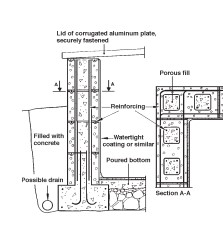
Numerous engineering drawings show construction details, tank placement options, manholes, drains, foundations, and water delivery systems.
The final sections address freeze protection and maintenance. Since the guide was adapted for Alaska and northern climates, considerable attention is given to insulation, burial depth, heat tape systems, frost protection methods, and winter operation. The publication concludes with maintenance procedures for cleaning cisterns, maintaining filters and gutters, protecting water quality, and operating systems year-round. Overall, it is a valuable reference for homesteaders, off-grid homeowners, cabin owners, and anyone interested in rainwater harvesting and long-term water security.
© Prepping Communities. This content is for informational purposes only and not professional advice. Use at your own risk.
Terms | Privacy | Guidelines