
What Every Outdoor Enthusiast and Prepper Should Know
Introduction
If you spend enough time outdoors, eventually you’ll find a tick crawling on your clothing—or worse, attached to your skin. Whether you’re hiking, camping, hunting, fishing, gardening, working around the homestead, or simply walking through tall grass, ticks have become a reality in many parts of North America.
Finding one can be unsettling, especially with all the news surrounding Lyme disease and other tick-borne illnesses. Fortunately, a tick bite doesn’t automatically mean you’ll become sick. In fact, most tick bites never result in disease. The key is knowing how to reduce your chances of being bitten, recognizing a tick before it has been attached for very long, removing it properly, and paying attention to any symptoms that may develop afterward.
For those interested in preparedness, tick awareness is simply another outdoor skill. Just as you learn how to filter water, build a fire, or navigate with a map and compass, it’s worth understanding how to protect yourself from one of nature’s smallest—but sometimes most troublesome—hazards. A few simple habits can significantly reduce your risk and help you enjoy the outdoors with greater confidence.
In this article, we’ll look at where ticks are commonly found, how to avoid them, the safest way to remove one if it becomes attached, the warning signs to watch for after a bite, and the basic supplies every outdoor enthusiast should consider carrying. Knowing what to do before, during, and after a tick encounter can make all the difference.
Why Ticks Deserve Your Attention
Ticks are easy to overlook. They’re small, quiet, and their bites are often painless, allowing them to remain unnoticed while they feed. Unlike mosquitoes, which bite and quickly fly away, ticks may stay attached for hours or even days if they aren’t discovered.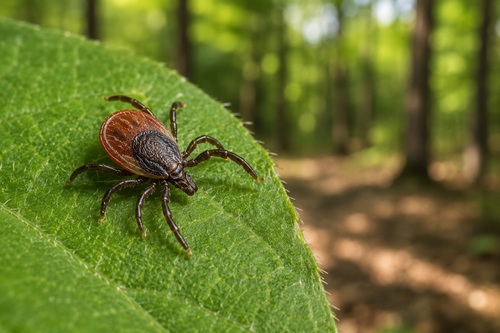
Not every tick carries disease, and not every bite results in illness. However, because it’s impossible to tell by appearance whether a tick is infected, every bite should be treated with care. Early detection and proper removal are among the most effective ways to reduce the risk of complications.
Another reason ticks deserve attention is that they are becoming more common in many areas. Changes in wildlife populations, expanding suburban development, and shifting climates have all contributed to ticks being found in places where they were once uncommon. Today, it’s not unusual to encounter them in neighborhood parks, backyards, walking trails, farms, or even your own garden.
The good news is that ticks are predictable. They don’t fly, they don’t jump, and they don’t chase people. Understanding how they live and where they wait for passing hosts gives you a significant advantage. With a little knowledge and a few simple precautions, you can greatly reduce your chances of bringing one home.
Understanding Ticks
Despite their tiny size, ticks are remarkably well adapted to surviving in the wild. They’re not insects but arachnids, making them close relatives of spiders and mites. Throughout their lives they rely on feeding from animals, birds, reptiles, and sometimes humans in order to survive and reproduce.
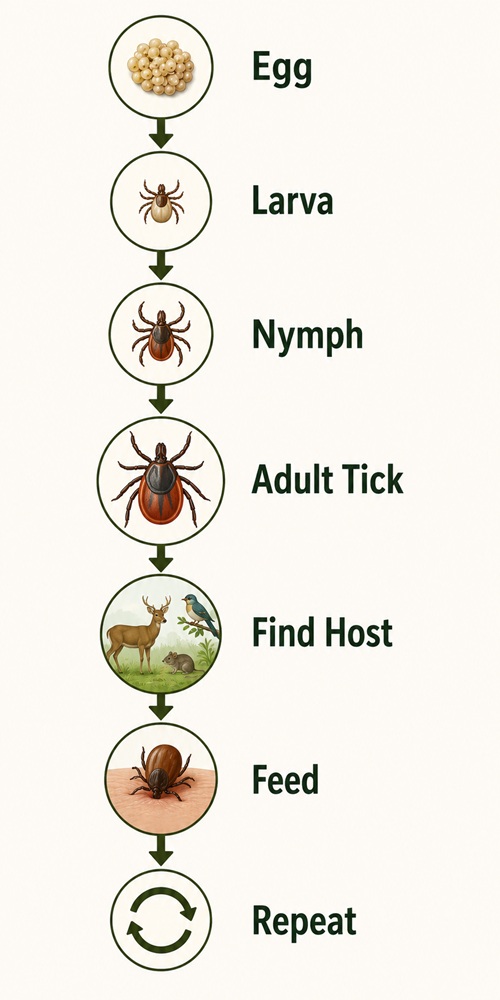
Unlike mosquitoes, which bite for only a few moments before flying away, a tick may remain attached for many hours or even several days while it slowly feeds. During that time, some species can transmit bacteria, viruses, or parasites capable of causing disease. Fortunately, not every tick carries disease, and even an infected tick doesn’t automatically mean a person will become ill. However, because there’s no practical way to tell simply by looking at one, every tick should be treated with caution.
One of the reasons ticks are so successful is that they’re incredibly patient. They don’t actively hunt people or animals. Instead, they wait.
How Ticks Find Their Hosts
Many people imagine ticks dropping from trees or jumping onto people as they walk by. In reality, neither of those things happens.
Most ticks climb onto tall grass, weeds, low shrubs, or other vegetation and simply wait for something to brush past. This behavior is known as questing. As a person, pet, or wild animal moves through the vegetation, the tick quickly grabs onto clothing, fur, or skin and begins looking for a suitable place to attach.
Once aboard, the tick may spend several minutes—or even a few hours—crawling to a location where the skin is warm, protected, and less likely to be disturbed. That’s why they’re commonly found behind the knees, under the arms, around the waist, along the hairline, behind the ears, and in the groin area.
Understanding this behavior explains why simple habits like staying on established trails and avoiding tall grass can significantly reduce your chances of picking up a tick.
Where You’re Most Likely to Encounter Ticks
Ticks aren’t limited to remote wilderness areas. Today they’re commonly found almost anywhere wildlife is present.
Woodland edges, overgrown fields, hiking trails, creek bottoms, brush piles, and tall grassy areas all provide excellent habitat. The edges where forests meet open spaces are particularly attractive because they offer both shade and a steady supply of animals moving between habitats.
Even suburban neighborhoods aren’t immune. Deer, rabbits, squirrels, raccoons, and birds regularly carry ticks into parks, greenbelts, and residential yards. If wildlife visits your property, there’s a good chance ticks do as well.
For preppers and outdoor enthusiasts, this means that routine activities such as gardening, collecting firewood, maintaining fences, caring for livestock, or walking the dog can expose you to ticks just as easily as a weekend camping trip.
Tick Season
Although many people think of ticks as a summer problem, they can be active during much of the year depending on where you live.
In many regions, activity begins in early spring as temperatures rise and continues through late fall. During mild winters, some species remain active whenever temperatures stay above freezing. Moist weather and moderate temperatures generally create the most favorable conditions for ticks, while extremely hot, dry weather tends to reduce their activity.
Because tick activity varies by climate and species, it’s better to think in terms of tick conditions rather than a fixed “tick season.” Anytime you’re spending time outdoors in suitable habitat, it’s worth taking a few simple precautions.
Why Prevention Is Better Than Treatment
One of the biggest advantages you have over ticks is that they usually don’t attach immediately. They often spend time crawling over clothing or gear before reaching exposed skin. This gives you an opportunity to remove them before they bite.
Good habits are your first line of defense. Wearing long pants, keeping to the center of trails, avoiding unnecessary contact with tall vegetation, and performing a quick tick check before getting into your vehicle or entering your home can dramatically reduce the likelihood of a tick remaining attached long enough to cause problems.
Most experienced hikers, hunters, and homesteaders don’t consider tick checks an inconvenience—they simply become part of the routine. Just as you clean your boots after working outdoors or wash your hands before eating, checking for ticks becomes another simple habit that takes only a few minutes but may prevent far greater problems later.
As you’ll see in the next section, preventing tick bites doesn’t require expensive equipment. A few practical choices before you head outdoors can greatly reduce your chances of ever having to remove a tick in the first place.
Preventing Tick Bites Before They Happen
The easiest tick to remove is the one that never reaches your skin.
While there’s no way to eliminate every encounter, a few simple habits can dramatically reduce your chances of bringing a tick home after spending time outdoors. Prevention doesn’t require expensive equipment or complicated procedures. Instead, it’s about understanding how ticks behave and making small adjustments before heading into areas where they’re commonly found.
One of the simplest things you can do is dress appropriately for the environment. Long pants, long sleeves, and sturdy footwear create barriers that make it more difficult for ticks to reach exposed skin. Tucking pant legs into socks may not be the height of fashion, but it can make it much harder for a tick crawling up your boot to continue toward your legs. Light-colored clothing also makes it easier to spot dark-colored ticks before they have a chance to attach.
Your choice of walking route also matters. Ticks usually wait on grasses, weeds, and low shrubs for a passing host. By staying in the center of established trails and avoiding unnecessary contact with overgrown vegetation, you greatly reduce the opportunities for ticks to climb onto your clothing.
Many outdoor enthusiasts also choose to use insect repellents designed to reduce tick exposure. Products should always be used according to the manufacturer’s directions, and many people treat their clothing and outdoor gear before heading into higher-risk areas. While repellents are not foolproof, they can become another useful layer of protection when combined with good outdoor habits.
Make Tick Checks Part of Your Routine
One of the most effective defenses against tick-borne illness takes less than five minutes.
After spending time outdoors, take a few moments to inspect yourself before getting into your vehicle or entering your home. Since ticks often crawl around before attaching, finding one early may prevent a bite altogether.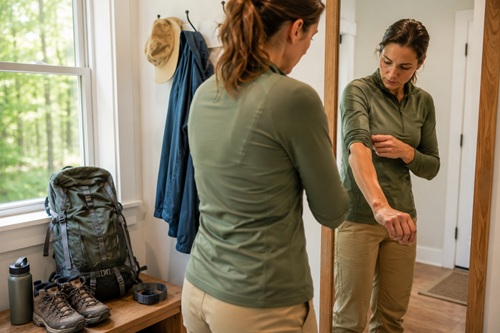
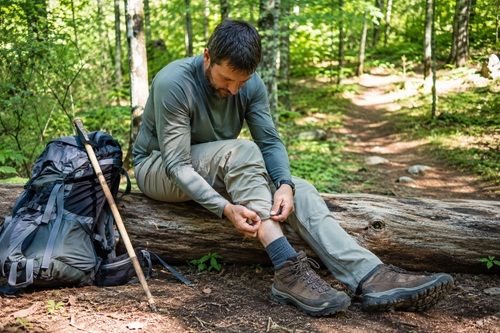
Once home, perform a more careful inspection in good lighting. Pay particular attention to warm, protected areas of the body where ticks commonly settle. Behind the knees, under the arms, around the waist, along the hairline, behind the ears, and around the groin deserve extra attention. If someone has difficulty checking these areas themselves, having another family member help can make the inspection more thorough.
Children should also be checked carefully after playing outdoors, especially if they’ve been exploring wooded areas, tall grass, or brush. Turning tick checks into a normal family routine helps ensure they’re not forgotten after a long day outside.
Don’t Forget Your Clothing and Gear
A tick doesn’t have to be attached to become a problem.
After returning home, take a close look at your clothing, backpacks, boots, hats, and other equipment. Ticks often remain hidden in folds of fabric or attached to gear long after you’ve left the trail.
Removing outdoor clothing soon after returning home helps prevent ticks from wandering through the house. Many people place their clothing directly into the laundry or dryer before wearing it again. Boots, backpacks, and camping equipment should also be inspected before being stored.
If you regularly use the same hunting pack, gardening apron, or camping chair, it’s worth giving those items a quick inspection before each use. A tick left behind from a previous outing may still be waiting.
Protecting Your Property
If you live in a rural area or spend much of your time around a homestead, reducing tick habitat around your home can lower the number of encounters throughout the year.
Keeping lawns trimmed, removing tall weeds, clearing brush piles, and reducing leaf litter all make your property less inviting to ticks. Creating clear walking paths through heavily vegetated areas also reduces the amount of contact people have with tick habitat.
Wildlife plays an important role in transporting ticks. Deer, mice, rabbits, and other animals frequently carry ticks across properties, so while you can’t eliminate every source, reducing areas where wildlife regularly lingers close to your home may help lower tick activity nearby.
These simple maintenance tasks not only improve the appearance of your property but also contribute to a healthier and safer outdoor environment.
Prevention Is a Habit
Experienced outdoorsmen rarely think about tick prevention because it has become second nature. Before heading outside, they dress appropriately. While outdoors, they avoid brushing through unnecessary vegetation. After returning home, they perform a quick inspection before settling in for the evening.
These habits require very little effort, yet they remain some of the most effective ways to reduce tick exposure.
Like many preparedness skills, success comes from consistency rather than complexity.
The next step is knowing what to do if, despite your best efforts, you discover a tick has already attached. Removing it correctly is simple, but using the wrong technique can increase the chance of irritation or infection. Understanding the proper method helps you respond confidently whenever a tick bite occurs.
What to Do If You Find a Tick
Even with the best prevention habits, you may eventually discover a tick attached to your skin. The first thing to remember is not to panic. While it’s natural to worry about Lyme disease or other tick-borne illnesses, most tick bites do not result in infection. Acting calmly allows you to remove the tick correctly and reduce the chance of further irritation.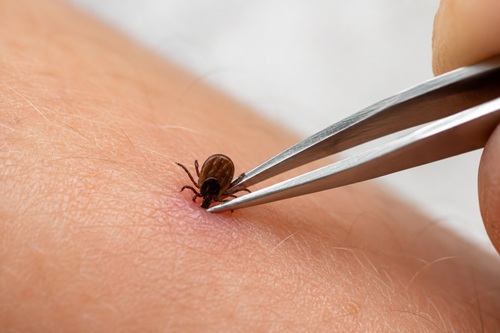
If you notice a tick crawling on your clothing or skin before it attaches, simply remove it and dispose of it safely. If the tick has already embedded its mouthparts into your skin, you’ll want to remove it as soon as practical using the proper technique.
The sooner an attached tick is removed, the lower the opportunity it has to continue feeding. For this reason, checking yourself after spending time outdoors is one of the most valuable habits you can develop.
Use the Right Tool
Fine-tipped tweezers are widely considered one of the best tools for removing an attached tick. They allow you to grip the tick close to the skin without crushing its body.
Some outdoor first-aid kits include specialized tick-removal tools that are designed for the same purpose. These compact tools are lightweight, inexpensive, and make a worthwhile addition to any hiking, camping, hunting, or preparedness kit.
Whatever tool you use, the goal is the same: remove the tick carefully while causing as little disturbance as possible.
Remove the Tick Carefully
Position the tweezers as close to the skin as possible, gripping the tick near its mouthparts rather than squeezing its swollen body.
Apply steady, even pressure and pull upward in a slow, controlled motion. Avoid twisting, jerking, or yanking the tick, as this may make removal more difficult and increase the chance that parts of the mouth remain embedded in the skin.
Once the tick has been removed, inspect the bite area. Sometimes a small amount of redness is simply the body’s normal reaction to the bite. If you believe portions of the tick remain in the skin or you’re unable to remove it completely, seek advice from a healthcare professional rather than repeatedly digging at the area.
Clean the Bite Area
After removing the tick, clean the bite site thoroughly using soap and water or another appropriate skin cleanser.
Washing your hands afterward is equally important, especially if you’ve handled the tick or touched the bite area during removal.
Cleaning the area won’t prevent every possible illness, but it helps reduce the risk of secondary skin infections and keeps the bite site clean while it heals.
Dispose of the Tick Safely
Once the tick has been removed, avoid crushing it with your bare fingers.
Instead, place it into rubbing alcohol, seal it inside a small container or plastic bag, wrap it securely before discarding it, or flush it if appropriate for your local plumbing system. Some people choose to keep the tick in a sealed container for a short time if a healthcare provider later recommends identification, particularly if symptoms develop. If you do this, clearly label the container with the date and approximate location where the bite occurred.
What You Should Never Do
Over the years, countless home remedies have circulated for removing ticks. Some involve petroleum jelly, nail polish, dish soap, gasoline, essential oils, or holding a lit match against the tick.
These methods continue to appear online, but they are generally not recommended. Delaying removal while trying home remedies only gives the tick more time to remain attached, and using heat or chemicals may irritate both your skin and the tick without making removal easier.
The simplest approach remains the best: remove the tick promptly using an appropriate tool and clean the bite area afterward.
Stay Calm and Pay Attention
Finding a tick can certainly be unpleasant, but it’s important to remember that discovering one early is actually good news. Most people who routinely check themselves after outdoor activities remove ticks long before they ever experience complications.
The bite itself is only one part of the story. What happens over the next several days is often more important than the few minutes it takes to remove the tick.
Monitoring your health after a bite allows you to recognize unusual symptoms early and seek medical advice if necessary.
The next section explains what you should watch for after a tick bite, how long symptoms may take to appear, and when it’s time to contact a healthcare professional.
What to Watch for After a Tick Bite
Once a tick has been removed, it’s tempting to forget about it and move on. In many cases, that’s exactly what happens. The bite heals, life continues, and nothing more comes of it.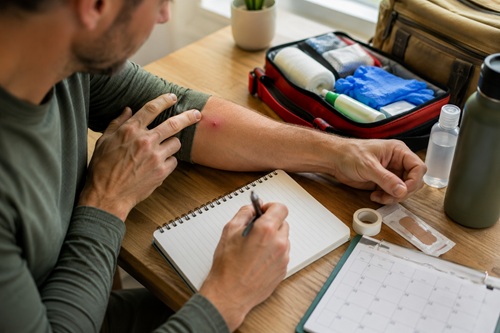
However, the next few days and weeks are a good time to pay closer attention to your health. While most tick bites never lead to illness, some tick-borne diseases don’t produce symptoms immediately. Recognizing early warning signs allows you to seek medical care promptly if something doesn’t seem right.
You don’t need to examine the bite every hour or assume the worst. Instead, simply make a habit of checking the area occasionally and paying attention to how you feel over the following days.
Normal Reactions
A small amount of redness, mild itching, or slight irritation around the bite is often a normal reaction. Like any insect bite, your body’s immune system responds to the tiny wound left behind after the tick is removed.
These minor symptoms usually improve over several days and gradually disappear without treatment.
Try to avoid scratching the area, as broken skin can increase the risk of a secondary skin infection.
When Something Doesn’t Look Right
Although many bites heal without issue, there are times when the bite deserves closer attention.
If the redness continues expanding instead of improving, if swelling becomes more pronounced, or if the area becomes increasingly painful or begins producing drainage, it’s wise to contact a healthcare provider.
Likewise, if the bite doesn’t appear to be healing after several days, professional evaluation may be appropriate.
Remember that the bite itself is only one piece of the picture.
Your overall health is even more important.
Pay Attention to How You Feel
Some tick-borne illnesses produce symptoms that resemble the flu.
Over the days or weeks following a bite, pay attention to symptoms such as fever, chills, unusual fatigue, headaches, muscle aches, joint pain, or swollen lymph nodes. These symptoms don’t necessarily mean you’ve contracted a tick-borne disease—many common illnesses cause similar complaints—but they shouldn’t be ignored if they develop after a known tick bite.
Some people also notice an unusual rash developing around the bite site or elsewhere on the body. Because rashes can have many different causes and appearances, any new or unusual rash following a tick bite should be discussed with a healthcare professional.
The important point isn’t trying to diagnose yourself.
It’s recognizing that something may have changed and seeking appropriate medical advice when necessary.
Keep a Simple Record
One habit that many experienced outdoors people recommend is making a quick note whenever you remove an attached tick.
Recording the date, the approximate location where you were, and where the bite occurred on your body takes only a minute. If symptoms develop later, this information can be helpful during a medical evaluation.
Some people even take a photograph of the bite shortly after removing the tick. A photo provides an easy way to compare any changes over the following days and may also be useful if you decide to consult a healthcare provider.
Don’t Ignore Persistent Symptoms
Many people dismiss fatigue or muscle aches because they’re busy or assume they simply overworked themselves outdoors.
If symptoms continue, worsen, or are accompanied by fever or other concerning changes after a tick bite, don’t delay seeking medical care. Early evaluation can make a significant difference for certain tick-borne illnesses.
It’s always better to have a healthcare provider determine that nothing serious is happening than to ignore symptoms that continue to progress.
Most Tick Bites End Here
It’s worth remembering that the overwhelming majority of tick bites never become a medical emergency.
Most people remove the tick, clean the area, monitor the bite for a short time, and experience no further problems.
Preparedness isn’t about expecting the worst outcome.
It’s about recognizing the small number of situations where early action matters and responding appropriately if they occur.
Knowing what to watch for allows you to enjoy the outdoors with greater confidence instead of unnecessary fear.
Understanding Tick-Borne Diseases
One reason ticks receive so much attention is their ability to carry diseases. Fortunately, only a small percentage of ticks carry disease-causing organisms, and the types of illnesses vary depending on where you live and the species of tick involved.
You don’t need to memorize every disease or every tick species to stay safe. Instead, it’s helpful to understand that different regions have different risks, which is why learning about the common ticks in your area is a valuable part of outdoor preparedness.
The next section provides an overview of some of the better-known tick-borne diseases, what they are, and why prevention remains the most effective defense.
Tick-Borne Diseases Every Outdoor Enthusiast Should Know About
One of the primary reasons ticks deserve respect is their ability to transmit disease. While only a small percentage of ticks carry disease-causing organisms, it’s impossible to know whether an individual tick is infected simply by looking at it.
The types of diseases carried by ticks also vary depending on where you live. A tick common in one region may carry different organisms than a tick found hundreds of miles away. That’s why it’s helpful to become familiar with the species and diseases that are most common in your local area.
The important takeaway isn’t memorizing long medical names.
It’s understanding that early prevention, prompt removal, and paying attention to symptoms remain your best defense regardless of where you live.
Lyme Disease
Lyme disease is the tick-borne illness that most people have heard about, and for good reason. It is reported in many parts of North America and Europe and has become increasingly common in some regions over the past several decades.
Early symptoms often resemble those of many other illnesses and may include fatigue, fever, headaches, muscle aches, or joint pain. Some people develop a distinctive expanding rash around the bite site, while others never experience a rash at all.
When recognized early, Lyme disease can often be treated successfully, which is why paying attention after a tick bite is so important.
Rocky Mountain Spotted Fever
Despite its name, Rocky Mountain spotted fever is not limited to the Rocky Mountain region.
This illness occurs in several parts of North America and can become serious if treatment is delayed.
Symptoms often begin with fever, headache, muscle pain, and general illness before a rash may appear. Not everyone develops the same symptoms, making early medical evaluation important whenever someone becomes ill after a known tick bite.
Anaplasmosis and Ehrlichiosis
These illnesses receive far less public attention than Lyme disease, but they are also transmitted by certain species of ticks.
Like many tick-borne diseases, they often begin with symptoms that resemble influenza, including fever, chills, muscle aches, headaches, and fatigue.
Because these symptoms overlap with many common illnesses, it’s helpful to tell your healthcare provider about any recent tick bites or significant outdoor exposure if you become sick.
Alpha-gal Syndrome
One of the more unusual conditions associated with certain tick bites is Alpha-gal syndrome.
Unlike an infection, Alpha-gal syndrome is an allergic reaction that may develop after the bite of certain ticks. People affected by this condition may experience allergic reactions after eating beef, pork, lamb, or other mammal-derived products.
Symptoms can vary widely and may occur several hours after eating, making the connection difficult to recognize.
Although Alpha-gal syndrome remains relatively uncommon, awareness has increased in recent years as more cases have been identified.
Your Pets Can Be Affected Too
Ticks don’t only affect people.
Dogs, cats, horses, and livestock can also suffer from tick-borne illnesses.
After spending time outdoors, it’s a good habit to inspect your pets, especially around the ears, neck, chest, legs, and between the toes where ticks often attach.
Regular veterinary care, along with veterinarian-recommended tick prevention products, can significantly reduce the risk of tick-borne illness in animals.
Healthy pets are an important part of every preparedness plan.
Knowledge Beats Fear
Reading about tick-borne diseases can sound intimidating, but it’s important to keep everything in perspective.
Millions of people spend time outdoors every year without becoming seriously ill.
The vast majority of tick bites never lead to disease, especially when ticks are discovered and removed promptly.
Preparedness isn’t about assuming every tick bite will become an emergency.
It’s about understanding the risks well enough to make smart decisions without letting fear keep you indoors.
A little knowledge, combined with consistent outdoor habits, goes a long way toward reducing your risk.
A Small Tick Kit That Makes a Big Difference
One of the easiest ways to prepare for tick season is to carry a small tick removal kit whenever you’re spending time outdoors.
It doesn’t need to be large or expensive.
In fact, a kit that fits inside a small zippered pouch can easily be kept in a backpack, vehicle, hunting pack, tackle box, first-aid kit, or even a jacket pocket.
Having the proper tools with you means you can deal with a tick promptly instead of improvising with whatever happens to be available.
In the next section, we’ll look at the simple items that belong in every tick removal kit and why each one earns its place.
Build a Simple Tick Removal Kit
If you spend time outdoors on a regular basis, carrying a small tick removal kit is one of the easiest ways to prepare for an unexpected encounter. It doesn’t require much space, costs very little to assemble, and can save valuable time when a tick is discovered far from home.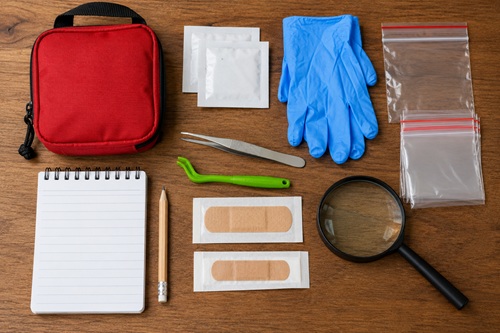
Unlike many emergency supplies that may never be used, a tick kit has a good chance of seeing regular use if you hike, camp, hunt, fish, garden, or work around a homestead.
The goal isn’t to create a complicated medical kit. Instead, you’re putting together a few basic items that allow you to safely remove a tick, clean the bite, and monitor it afterward.
A small zippered pouch or hard plastic container is usually all that’s needed to keep everything together and protected.
What Should Go Inside?
A practical tick removal kit can remain surprisingly simple.
Fine-tipped tweezers or a purpose-built tick removal tool should be the centerpiece of the kit. Add a few alcohol wipes or another suitable skin cleanser to clean the bite area after removal, along with several adhesive bandages for minor skin protection if needed.
A pair of disposable gloves can help reduce direct contact with blood or body fluids, while a small resealable plastic bag or specimen container provides a convenient way to store the tick temporarily if identification later becomes necessary.
Many people also include a small notepad and pencil to record the date and location of a bite, although a note on your phone works just as well. A small magnifying glass can also be useful for locating very small ticks that might otherwise go unnoticed.
Keep a Kit Where You Need It
Having a tick kit at home is useful, but having one with you is even better.
Many experienced outdoors people keep several small kits rather than relying on a single large one.
Consider placing one in your:
- First-aid kit
- Backpack
- Hunting pack
- Camping gear
- Vehicle
- Tackle box
- ATV or UTV
- Gardening supplies
Because the kits are inexpensive to assemble, keeping several available ensures you’ll rarely be without one when it’s needed.
Protecting Your Pets
Dogs are often the first members of the family to pick up ticks because they spend so much time exploring tall grass, brush, and wooded trails. Long-haired breeds can make ticks especially difficult to spot, allowing them to remain attached much longer than they might on people.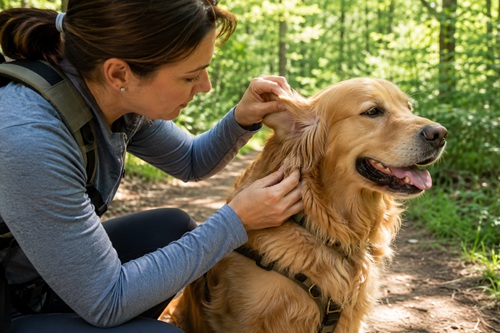
After returning from outdoor activities, take a few minutes to inspect your pets carefully. Run your hands through their coat while checking around the ears, neck, chest, under the collar, between the toes, beneath the tail, and along the belly. These are some of the most common places ticks like to hide.
If you find a tick on your pet, remove it carefully using an appropriate tick removal tool or consult your veterinarian if you’re unsure how to proceed.
Routine veterinary examinations and veterinarian-recommended tick prevention products can also help reduce your pet’s risk of tick-borne illnesses.
Healthy pets are an important part of every family’s preparedness plan.
Common Tick Removal Myths
Despite decades of public education, several myths about tick removal continue to circulate.
One of the oldest suggestions is covering the tick with petroleum jelly, nail polish, or cooking oil in hopes that it will “back out” on its own. Others recommend holding a lit match, cigarette, or other heat source near the tick.
These methods are not recommended. They often delay proper removal and may irritate the tick or your skin without providing any real benefit.
Another common misconception is that every tick bite leads to Lyme disease. Fortunately, this simply isn’t true. Most ticks do not carry disease, and most bites never result in illness.
The best response remains the simplest one: remove the tick promptly using the proper technique, clean the bite area, monitor your health, and seek medical advice if concerning symptoms develop.
Key Takeaways
Ticks are a natural part of spending time outdoors, but they don’t have to keep you from enjoying hiking, camping, hunting, gardening, or working around your property. A little awareness and a few consistent habits can greatly reduce your chances of experiencing problems after a tick bite.
Learning where ticks are commonly found, dressing appropriately, performing routine tick checks, and carrying a simple tick removal kit are among the easiest and most effective preventive measures you can take. If you do discover an attached tick, removing it promptly and properly while monitoring your health afterward gives you the best opportunity for a positive outcome.
Preparedness is often about mastering small skills before they’re needed. Knowing how to recognize, remove, and respond to a tick bite may seem like a minor skill, but it’s one that can make a meaningful difference for anyone who enjoys spending time outdoors.
The more time you spend outside, the more likely you’ll eventually encounter a tick. When that day comes, you’ll know exactly what to do—and just as importantly, what not to do.
© Prepping Communities. This content is for informational purposes only and not professional advice. Use at your own risk.
Terms | Privacy | Guidelines